


×

Fiji🇫🇯 | regionsNausori HighlandsCloud-filled valleys, sevusevu welcome, pine ridges, highland homestays | things to do and best time to go

Explore Coral CoastExplore Qamea Island

Backpacking in Nausori Highlands
👌 Worth visitingregion ranked #9
By Johan Kruseman 🇳🇱 | Updated October 15, 2026

Go with a village host, because the Nausori Highlands sit on customary land and a guide who knows the family and the ridge paths gets you through the gate and the mud. The highlands rise inland of Nadi and Lautoka in western Viti Levu, Fiji, a rugged plateau of grassland, pine and river gorges. Cell signal comes and goes. Sunrise is when the valleys fill with cloud, so start before dawn rather than at breakfast. Roads are rough and wet, so hire a 4WD with a driver instead of trusting a rental sedan. Wildlife is modest, mostly birds, and facilities are basic. Unlike busy Koroyanitu National Heritage Park, you may share the ridges with nobody.

Discover everything you want to know in the 📖 Fiji Travel Guide.


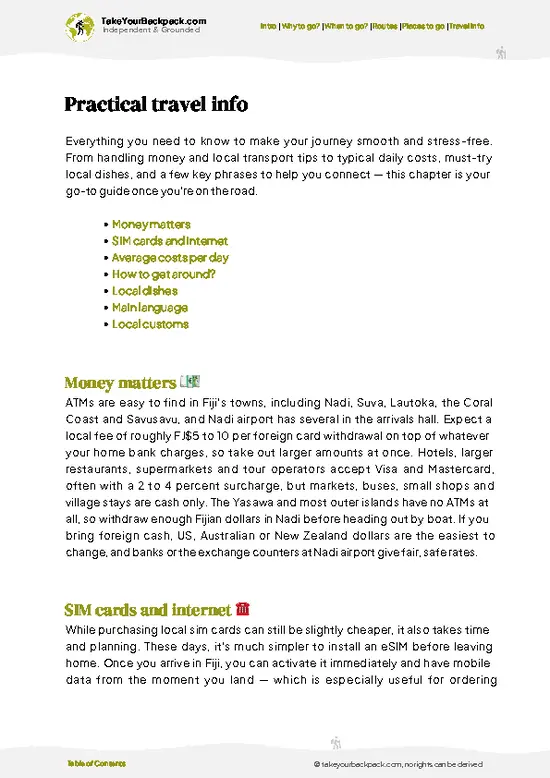
example page 0 from our offline Travel Guide for Fiji
example page 1 from our offline Travel Guide for Fiji
example page 2 from our offline Travel Guide for Fiji
example page 3 from our offline Travel Guide for Fiji
example page 4 from our offline Travel Guide for Fiji
example page 5 from our offline Travel Guide for Fiji
example page 6 from our offline Travel Guide for Fiji
example page 7 from our offline Travel Guide for Fiji
Loading the map 🌍
CLICK TO FILTER
cities
towns
villages
landmarks
national parks
hikes
beaches
attractions
festivals
regions
SHOW COUNTRY’S BESTSHOW ALL

✨ Why go?
Ranked #9 region in Fiji
The unique appeal for travelers

Backpackers come for the Nausori Highlands because this is Viti Levu with the volume turned down. You can wander grassy ridges and drop into river valleys without a ticketed trail system, though you should always arrange a village host first. A homestay or sevusevu ceremony with kava is how you are welcomed, and that exchange is the real draw. The Ba River headwaters and the high pine slopes give you distance from the resort coast, yet the area is within reach of Nadi. It suits self-guided travelers who can organize their own driver and pack their own food. Tours exist, but independent arrangements let you linger at a village, swim in a cold pool and walk at your own pace.

💡 HighlightsDon't-miss highlights and experiences

  1. Ridge sunrise viewpoints: Clouds pool in the valleys below the plateau at first light, with peaks stretching toward the interior.
  2. Village sevusevu welcome: Presenting kava to the headman is the proper way in, and it opens doors to everything else.
  3. Ba River headwaters: Cold, clear water runs through steep valleys, good for a swim after a hot walk.
  4. Pine forest slopes: Plantation pines give a cool, resinous shade unlike the lowland coast.
  5. Highland grassland walks: Open, rolling hills give wide views and easy navigation with a local guide.
  6. Birdwatching along forest edges: Fijian parrots and honeyeaters turn up in the remnant forest patches near the villages.
  7. Highland homestay evenings: Meals cooked over fire and kava rounds under a starry sky, with no resort noise.
The sunrise viewpoints and the Ba River … read more 👉
  1. Ridge sunrise viewpoints: Clouds pool in the valleys below the plateau at first light, with peaks stretching toward the interior.
  2. Village sevusevu welcome: Presenting kava to the headman is the proper way in, and it opens doors to everything else.
  3. Ba River headwaters: Cold, clear water runs through steep valleys, good for a swim after a hot walk.
  4. Pine forest slopes: Plantation pines give a cool, resinous shade unlike the lowland coast.
  5. Highland grassland walks: Open, rolling hills give wide views and easy navigation with a local guide.
  6. Birdwatching along forest edges: Fijian parrots and honeyeaters turn up in the remnant forest patches near the villages.
  7. Highland homestay evenings: Meals cooked over fire and kava rounds under a starry sky, with no resort noise.
The sunrise viewpoints and the Ba River headwaters combine well in one day, with the climb in the dark and the swim once the sun is high.
Spotted a mistake or missing something? Contact us.

Things to do near Nausori Highlands

Ratings based on Tripadvisor reviews. When you book through this link, you support our work at no extra cost to you.

⌛️ 5 daysHow to make the most of Nausori Highlands

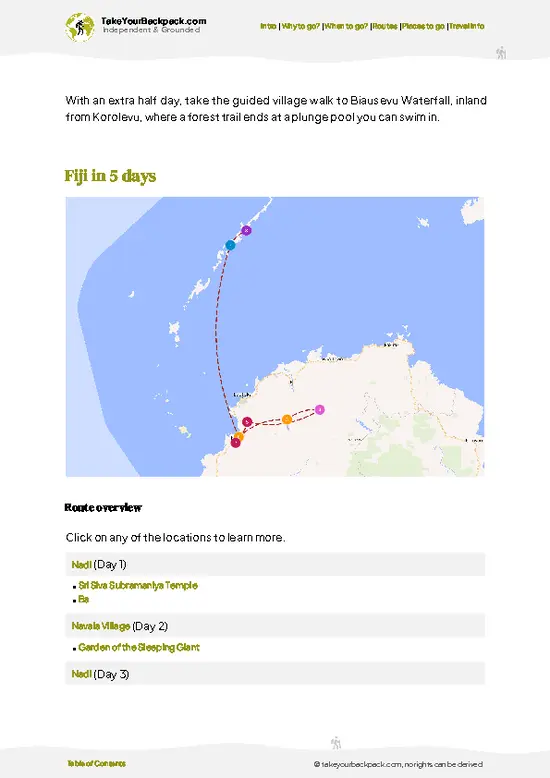
Day 1: Nadi: Markets run early here, so the first morning is a produce-and-kava-root morning in Nadi town, with vendors stacking dalo and cassava before the heat arrives. Stock up on sevusevu (a bundle of kava root) as a gift for village hosts, then continue inland. Highland roads are rough, and carrier trucks and 4WD shuttles set the schedule, so you move when they do, not when you feel like it.
Day 2: Navala Village: Base yourself here for two nights, because the road in takes most of the morning and you want a full day on foot. Navala is the village of thatched bure houses with no concrete in sight. Present your sevusevu to the chief, then walk the riverbank and watch the thatching.
Day 3: Koroyanitu Trails: Use this day for a guided hike toward the ridgelines, where forest opens onto views … read more 👉
Day 1: Nadi: Markets run early here, so the first morning is a produce-and-kava-root morning in Nadi town, with vendors stacking dalo and cassava before the heat arrives. Stock up on sevusevu (a bundle of kava root) as a gift for village hosts, then continue inland. Highland roads are rough, and carrier trucks and 4WD shuttles set the schedule, so you move when they do, not when you feel like it.
Day 2: Navala Village: Base yourself here for two nights, because the road in takes most of the morning and you want a full day on foot. Navala is the village of thatched bure houses with no concrete in sight. Present your sevusevu to the chief, then walk the riverbank and watch the thatching.
Day 3: Koroyanitu Trails: Use this day for a guided hike toward the ridgelines, where forest opens onto views toward the Yasawa chain on clear mornings. Guides are local, which means their timing, not yours, shapes the walk. Return to the village by afternoon, since trucks stop running by dusk.
Day 4: Detour to Savuione Waterfall: Add a half-day side trip to a waterfall pool set in forest, reached by short walks from a nearby village. It costs little extra time and fits the same truck-and-shuttle loop, so the logistics stay simple. Swim, then head back down toward the coast.
Day 5: Return to Nadi: Ride out early to catch onward buses with a buffer. Slow, unhurried hours make the exit easy.

If you only get one day, make it Day 2. Sitting through a kava ceremony in Navala, after that walk among the bure, is the moment that justifies the rough road.

🌤️ When to go?Seasonal considerations and timing

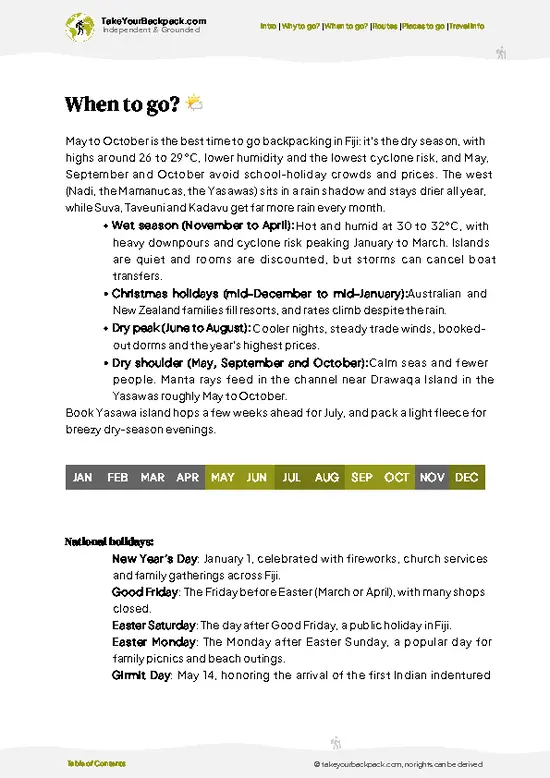
May to October is the best window for hiking the Nausori Highlands, when tracks are firmest and skies clearest.
  • Dry Season (May to October): Days run 22 to 29°C (72 to 84°F) on the lower slopes and cooler up high, with nights around 14 to 18°C (57 to 64°F). Sunrise comes near 6:15 am and sunset near 5:45 pm. Village visits and treks are at their easiest, and this is when most visitors come.
  • Wet Season (November to April): Expect 25 to 32°C (77 to 90°F), heavy humidity and afternoon downpours. Red clay tracks turn slick, rivers swell, and the cyclone risk peaks from January to March. Daylight stretches to about 7 pm in December.
  • Prices: Tour operators and Nadi hotels charge more from July to August and around Christmas. Wet months bring discounts.
Book a guide a few days ahead, and aim for early starts to beat the afternoon cloud.

source: climatestotravel.comJANJanuary: fair for travelingFEBFebruary: fair for travelingMARMarch: fair for travelingAPRApril: good for travelingMAYMay: highly recommended for travelingJUNJune: excellent for travelingJULJuly: excellent for travelingAUGAugust: excellent for travelingSEPSeptember: highly recommended for travelingOCTOctober: excellent for travelingNOVNovember: good for travelingDECDecember: fair for traveling
fiji-region-nausori-highlands
© Google | Peter L

✈️ The backpacker research shortcutFiji Travel Guide

An offline-friendly backpacking guide with optimized travel routes, ranked highlights, transport advice, and the best areas to stay.
example page 0 from our offline Travel Guide for Fiji
example page 1 from our offline Travel Guide for Fiji
example page 2 from our offline Travel Guide for Fiji
example page 3 from our offline Travel Guide for Fiji
example page 4 from our offline Travel Guide for Fiji
example page 5 from our offline Travel Guide for Fiji
example page 6 from our offline Travel Guide for Fiji
example page 7 from our offline Travel Guide for Fiji
The digital guide (159 pages) contains:
✅ 41 highlights, ranked by travel appeal
✅ Optimized 2, 3 & 5-day travel routes
✅ Cities, national parks, landmarks, beaches
✅ How to get around
✅ Offline-friendly for travel without Wi-Fi
👉 Click to see all 30+ guide features

📅 Plan smarter in minutes, not weeks
✅ Month by month travel advice
✅ Festivals & national holidays
✅ Budget expectations

🗺️ Go to the right places, skip the overrated ones
✅ Honest pros & cons of destinations
✅ Top hikes, parks & viewpoints
✅ Lesser-known places most travelers miss
✅ Clear “worth it vs skip it” guidance

🛏️ Travel smoothly without rookie mistakes
✅ Best areas to stay
✅ Transport systems explained simply
✅ Common scams & safety advice
✅ SIM cards, money & practical tips

🌍 Understand the country, not just visit it
✅ Culture & traditions
✅ 52 Essential phrases & customs
✅ Festivals worth planning around
✅ Traveler-friendly historical context
✅ Insights that make places more meaningful

📱 Built for real travel conditions
✅ Fully downloadable PDF
✅ Works completely offline
✅ Optimized for phone use
✅ Useful in remote areas & buses
✅ Everything in one place
Stop searching, start planning
Get instant access to your full guide. 30‑day money-back guarantee.
+ Add another guide for just

By proceeding you agree to our terms.
Sent to your inbox immediately after payment • 100% Secure Checkout
Best Backpacking Travel Advisor 2025 tourism awardBest Backpacking
Travel Advisor
2025
What others say about Take Your Backpack Guides:
⭐⭐⭐⭐⭐
Fantastic, amazing amount of information!
⭐⭐⭐⭐⭐
My goodness this is amazing, it's what I've been looking for hats off too you!
⭐⭐⭐⭐⭐
I think this is absolutely BRILLIANT
⭐⭐⭐⭐
Very complete and informative. It's still missing places, but I gotta to commend you
⭐⭐⭐⭐⭐
This is truly amazing, thank you, can't wait to explore it with my kids!
⭐⭐⭐⭐⭐
Awesome resource, thank you!
⭐⭐⭐⭐⭐
This is amazing! Can't wait to explore the ones I haven't seen
⭐⭐⭐⭐
I love this! Well done, great idea.
⭐⭐⭐⭐⭐
Thanks for taking the time to make this gem!
⭐⭐⭐⭐⭐
This might be the best website I've ever seen.
⭐⭐⭐⭐⭐
Congratulations, and thank you so much for your work; it's incredibly valuable.
⭐⭐⭐⭐
In all seriousness I think you did a great job pointing out the important spots
⭐⭐⭐⭐⭐
10/10 very good
⭐⭐⭐⭐⭐
As someone who's only just starting to visit regularly this is awesome, thank you.
⭐⭐⭐⭐
Thank you very much! I'm going to visit my dad, it's going to be very useful!
⭐⭐⭐⭐⭐
This is really cool! We'll be travelling for the first time and this definitely come in handy.
⭐⭐⭐⭐⭐
You are now our minister of culture, congratulations 👨‍💼
⭐⭐⭐⭐⭐
Just wanted to tell you that this is a pearl! Going to follow your recommendations.
⭐⭐⭐⭐⭐
This is so cool. I'll definitely be using the resource for my travels soon.
⭐⭐⭐⭐⭐
This is very impressive! Good work.
⭐⭐⭐⭐⭐
This is an amazing and informative site. Very well done!

🛏️ Where to stay?Where staying makes the most sense

Nadi is the practical base for the Nausori Highlands, about 45 minutes to 1.5 hours by road depending on the village you are heading to. No campgrounds or hostels exist inside the highlands, and the interior has no standard accommodation. The main exception is a village homestay arranged through a tour operator or a local contact, where you sleep on woven mats in a family home and bring a kava bundle (sevusevu) as a gift for the chief. Nadi has the widest choice, with backpacker hostels around Martintar and Wailoaloa Beach, many with dorms, kitchens and pools, and these also handle tour pickups. … read more 👉
Nadi is the practical base for the Nausori Highlands, about 45 minutes to 1.5 hours by road depending on the village you are heading to. No campgrounds or hostels exist inside the highlands, and the interior has no standard accommodation. The main exception is a village homestay arranged through a tour operator or a local contact, where you sleep on woven mats in a family home and bring a kava bundle (sevusevu) as a gift for the chief. Nadi has the widest choice, with backpacker hostels around Martintar and Wailoaloa Beach, many with dorms, kitchens and pools, and these also handle tour pickups. Lautoka, roughly 30 minutes north of Nadi, is a quieter working town with a few budget guesthouses and cheaper food. Both suit a day trip into the hills. For overnight trips, ask your hostel to link you with an established guide, since village stays are not bookable like regular lodging.

🚌 Getting aroundGetting around like a local

Trying to reach the Nausori Highlands on a Sunday or after lunch is the mistake that burns the most time and money, because the carriers and local buses thin out fast and a missed ride can mean a pricey taxi or a night you hadn’t planned. Most backpackers go up from Nadi or Lautoka in the morning, using a carrier or a village tour arranged a day ahead, and the road in is rough but the routine is dependable once you’re booked.
  • Local bus to the Nausori turnoff: Buses from Nadi and Lautoka run along the Queens Road for about US$2 to 4 and leave regularly until mid-afternoon. You step off dusty and happy at the junction, with the hills already rising ahead.
  • Open carrier truck: The usual way up the dirt road to villages like Navala, Bukuya and Nausori village is a 4WD carrier, around US$5 to 15 a
… read more 👉
Trying to reach the Nausori Highlands on a Sunday or after lunch is the mistake that burns the most time and money, because the carriers and local buses thin out fast and a missed ride can mean a pricey taxi or a night you hadn’t planned. Most backpackers go up from Nadi or Lautoka in the morning, using a carrier or a village tour arranged a day ahead, and the road in is rough but the routine is dependable once you’re booked.
  • Local bus to the Nausori turnoff: Buses from Nadi and Lautoka run along the Queens Road for about US$2 to 4 and leave regularly until mid-afternoon. You step off dusty and happy at the junction, with the hills already rising ahead.
  • Open carrier truck: The usual way up the dirt road to villages like Navala, Bukuya and Nausori village is a 4WD carrier, around US$5 to 15 a seat depending on the village and how full it is. Expect 1.5 to 3 hours of bumps, and the reward is standing in the back with wind on your face and cane fields falling away below.
  • Taxi or private 4WD: From Nadi, a driver costs roughly US$60 to 120 each way, depending on the village and road. It saves a day of waiting, and you can stop at a roadside stand for cold coconuts.
  • Walking between villages: Trails link settlements through ridgelines, rivers and bamboo, with stretches of two to five hours. Go with a village guide, who costs about US$10 to 25, and you arrive to a bowl of kava and a view over thatched bure roofs.
Book your return ride the moment you arrive, ideally with the same driver, and leave by early afternoon, since rain turns the clay road slick and slow after about 3 pm. Carry small cash, because nothing up here takes cards.

👛 Costs (as of 15 October 2026)Travel costs and budget guide for Nausori Highlands

A realistic daily budget for Nausori Highlands is about US$85 per person, with most of that going to a guided trek, a village homestay and a lot of starchy home cooking. The highlands sit inland from Nadi and Lautoka in western Viti Levu, and you pay in Fijian dollars everywhere.
CategoryBudget RangeLocal Reality
Entrance and village feesUS$10 to 25There is no national park gate. Villages charge a visitor or trekking fee, often paid to the headman along with a sevusevu offering.
GuideUS$20 to 40A local guide is expected on most routes, and the fee is usually split if you are in a group.
Accommodation (high season)US$20 to 35Village homestays or simple lodges, usually including a mattress on the floor and a mosquito net. Rates dip slightly in the wetter months.
Local transportUS$8 to 20Bus or carrier
… read more 👉
A realistic daily budget for Nausori Highlands is about US$85 per person, with most of that going to a guided trek, a village homestay and a lot of starchy home cooking. The highlands sit inland from Nadi and Lautoka in western Viti Levu, and you pay in Fijian dollars everywhere.
CategoryBudget RangeLocal Reality
Entrance and village feesUS$10 to 25There is no national park gate. Villages charge a visitor or trekking fee, often paid to the headman along with a sevusevu offering.
GuideUS$20 to 40A local guide is expected on most routes, and the fee is usually split if you are in a group.
Accommodation (high season)US$20 to 35Village homestays or simple lodges, usually including a mattress on the floor and a mosquito net. Rates dip slightly in the wetter months.
Local transportUS$8 to 20Bus or carrier from Nadi or Lautoka to the road end, then a shared truck or 4WD hire for the rough final stretch.
Food and suppliesUS$8 to 15Meals are often included with homestays. Stock up on snacks, water purification and cash in Nadi, as nothing is sold up here.
Total Daily BudgetUS$66 to 135About US$85 is typical for a guided trek with an overnight stay in a village.
⚠️ Prices can change and everyone travels differently, so take this as a rough guide. Hope it helps you plan your adventure!

🍲 FoodLocal Flavors for Backpackers

Up in the Nausori Highlands, meals come from the village garden. Expect dalo (taro) boiled or fried, cassava with a floury, almost chestnut bite, and rourou, taro leaves simmered in coconut milk until silky and green. A lovo feast, with meat and root crops steamed underground, shows up when a village hosts guests, and the smoky smell drifts across the yard long before you eat.

Most backpackers eat with their host family, usually around US$10 to 20 a day with lodging, so food comes in a communal spread on a mat. Small village shops sell tinned fish, noodles and biscuits. Bring snacks for hikes.

The drink that matters is yaqona, or kava, served in a coconut shell. It tastes peppery and earthy, and numbs your tongue slightly. Clap once before you drink, say “bula,” then clap three times after. … read more 👉
Up in the Nausori Highlands, meals come from the village garden. Expect dalo (taro) boiled or fried, cassava with a floury, almost chestnut bite, and rourou, taro leaves simmered in coconut milk until silky and green. A lovo feast, with meat and root crops steamed underground, shows up when a village hosts guests, and the smoky smell drifts across the yard long before you eat.

Most backpackers eat with their host family, usually around US$10 to 20 a day with lodging, so food comes in a communal spread on a mat. Small village shops sell tinned fish, noodles and biscuits. Bring snacks for hikes.

The drink that matters is yaqona, or kava, served in a coconut shell. It tastes peppery and earthy, and numbs your tongue slightly. Clap once before you drink, say “bula,” then clap three times after. Bring a bundle of kava roots as sevusevu, a gift for the village chief. Sit cross-legged, never point your feet at the food, and remove your hat indoors.

🛡️ SafetyStaying Safe: What Travelers Should Know

The highlands are straightforward when you go with a local guide, and that is the norm since the land is owned by villages. The main hazard is footing. Clay tracks turn greasy after rain and river crossings can rise quickly, so wear shoes with grip and skip crossings if the water is brown and fast. Heat and humidity drain you, so carry at least 2 liters of water and start early. Cloud can settle in the afternoon and hide the paths, which is another reason not to wander alone. Wild animals are not a concern, though dogs in villages can be noisy. Dress modestly, remove your hat in villages, and follow your guide’s lead on etiquette. Tell your hostel your plan, and pack sunscreen, insect repellent and a rain jacket.

FAQFrequently asked questions about Nausori Highlands

One full day is enough for a guided trek and village visit, while two to three days lets you do an overnight homestay. Most people go from Nadi, about 45 minutes to 1.5 hours by road. Add a day in wet months in case rain delays your plans.
Reaching the highlands without a car is possible but needs arranging. Taxis and shared vans run from Nadi toward the foothills for roughly US$10 to 20, and many guided tours include hotel pickup. Local buses stop at the edge of the highlands, so you still need a guide or village contact for the interior.
There is no national park gate fee, but the land belongs to villages, so you pay a community or guide fee of about US$20 to 40 per person. Bring a sevusevu gift of kava roots, which costs around US$10 to 15 at Nadi market. Arrange access through a guide or tour operator, since turning up unannounced is not appropriate.
⚠️ Things can change over time, so always validate details locally before you go.

Other Fijian regions near Nausori Highlands

Explore more nearby:

  • Coral Coast—Fringing reef, tide-ruled swims, Queens Road, sand dunes| 45 km away
  • Waya Island—Ridge viewpoint, sheltered coves, kava villages, one-resort stays| 77 km away
  • Beqa Island—Volcanic coastline, shark dive reef, firewalking villages, kava bowls| 83 km away

💡 Not sure where to go next?
Create a personalized itinerary for Fiji including Nausori Highlands and the places that fit your trip.

Generate my itinerary

👉 Discover all regions

Or checkout all Fiji has to offer (think cities, towns, villages, national parks, hikes, beaches, festivals)
Country photo of Fiji

We 💚 feedbackParting advice and final tips

Be on the ridge before sunrise in the drier months from May to October, when the valleys fill with cloud and the air is cold enough for a sweater. Afternoons turn hazy and muddy quickly. I would sleep up there and walk at dawn rather than rush a day trip.

✍️ Help improve this page!
The information on this page is based on in-depth research, insights shared by experienced travelers, and feedback from the local travel community in Fiji. While every effort is made to keep the information accurate and current, conditions can change — so if you spot anything incorrect or outdated, please get in touch.


🙋‍♂️ Give feedback

👋 Meet the founderWho’s Behind Take Your Backpack?

Johan, backpacker and founder of TakeYourBackpackHi, I’m Johan (Netherlands 🇳🇱), the creator of TakeYourBackpack. Over the past 3 decades, I’ve backpacked through 90+ countries across six continents, gaining extensive experience with independent travel, long-term trips, and overland routes.

This site is built on a combination of firsthand travel experience and carefully curated insights from other backpackers. Many guides are based on places I’ve personally visited, while others bring together tips, observations, and practical advice shared by trusted travelers I’ve met along the way.

The goal is to provide realistic, experience-driven guidance — not generic itineraries — so you can explore destinations with better context, clearer expectations, and more confidence.