×

Fiji🇫🇯 | regionsQamea IslandNo town or shop, beachfront dorm lodge, Somosomo Strait views, house reef | things to do and best time to go

Explore Nausori HighlandsExplore Taveuni Island

Backpacking in Qamea Island
🌟 Highlightregion ranked #3
By Johan Kruseman 🇳🇱 | Updated October 15, 2026

Qamea has no town, no bank and no shop, yet it has a beachfront budget lodge with dorm beds, which is rare in this corner of Fiji. The island lies in the north of Fiji, just off Taveuni’s eastern coast. The good side is plain: forested hills, quiet beaches, clear water for snorkeling and a village life that carries on without an audience. The bad side is just as plain. Everything arrives by boat, you eat where you sleep, and rough weather can reshuffle your days. Do not expect nightlife, and bring cash and any supplies you need. What you get in return is silence broken only by surf, roosters and the odd hammering of a coconut. Spend your first day like this: arrive, drop your bag, walk the shoreline at low tide for the clearest water, then get in the lagoon before lunch and watch the sun drop behind Taveuni’s ridge.

Discover everything you want to know in the 📖 Fiji Travel Guide.


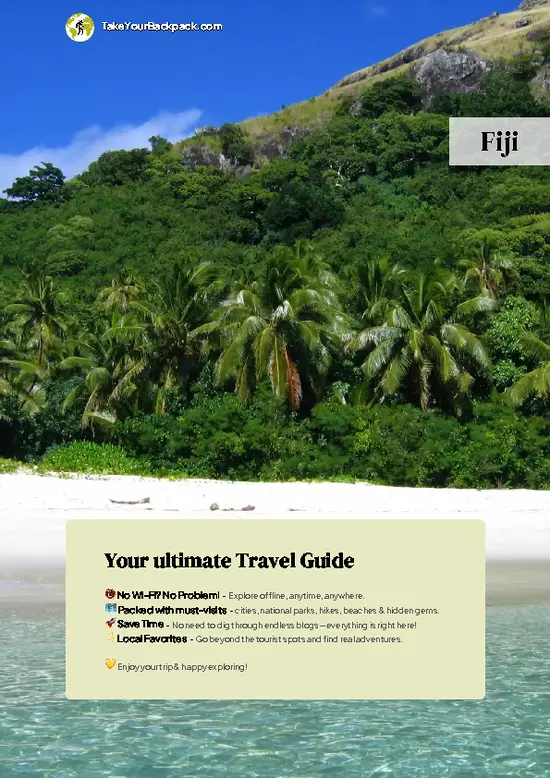
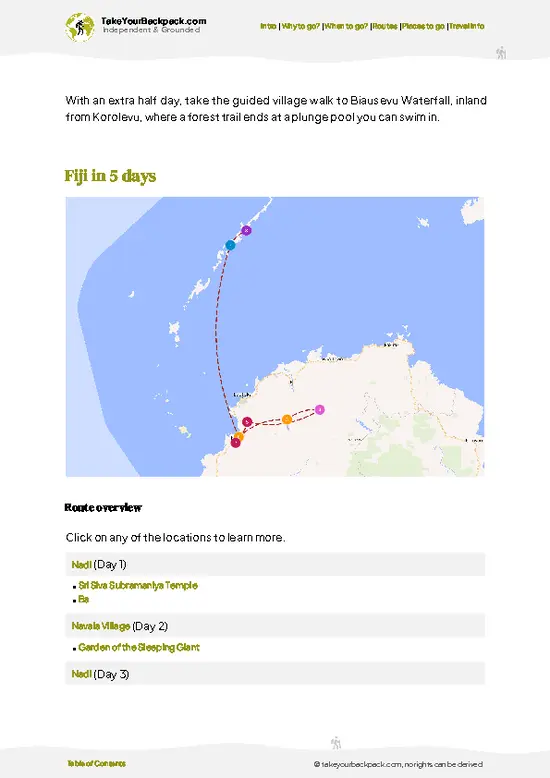
example page 0 from our offline Travel Guide for Fiji
example page 1 from our offline Travel Guide for Fiji
example page 2 from our offline Travel Guide for Fiji
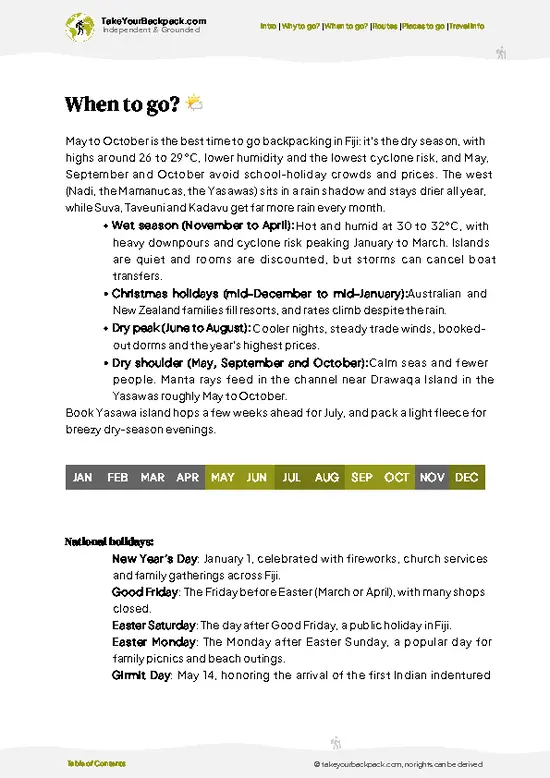
example page 3 from our offline Travel Guide for Fiji
example page 4 from our offline Travel Guide for Fiji
example page 5 from our offline Travel Guide for Fiji
example page 6 from our offline Travel Guide for Fiji
example page 7 from our offline Travel Guide for Fiji
Loading the map 🌍
CLICK TO FILTER
cities
towns
villages
landmarks
national parks
hikes
beaches
attractions
festivals
regions
SHOW COUNTRY’S BESTSHOW ALL

✨ Why go?
Ranked #3 region in Fiji
Reasons people choose to visit here

Qamea works for backpackers who want to stop moving for a while. The island sits close to Taveuni’s Somosomo Strait, so serious reef and dive sites are within a boat ride, while your base stays calm and cheap compared with the resort islands around it. You can snorkel the fringing reef in the morning, walk to a village in the afternoon and still be asleep early without having packed a bag.

The second reason is access to real village life. Qamea is home to small Fijian communities, and a respectful visit with a kava offering shows you daily routines rather than a staged show. Slow travel works here because the island is small and the days settle into a rhythm of tides and meals.

Third, Qamea pairs well with the neighboring island. A stay at Maqai Beach followed by a few days on Taveuni gives … read more 👉
Qamea works for backpackers who want to stop moving for a while. The island sits close to Taveuni’s Somosomo Strait, so serious reef and dive sites are within a boat ride, while your base stays calm and cheap compared with the resort islands around it. You can snorkel the fringing reef in the morning, walk to a village in the afternoon and still be asleep early without having packed a bag.

The second reason is access to real village life. Qamea is home to small Fijian communities, and a respectful visit with a kava offering shows you daily routines rather than a staged show. Slow travel works here because the island is small and the days settle into a rhythm of tides and meals.

Third, Qamea pairs well with the neighboring island. A stay at Maqai Beach followed by a few days on Taveuni gives you reef, rainforest and waterfalls without long hauls. Boat schedules dictate timing, so build in a spare day and treat it as a bonus.

💡 HighlightsMust-see experiences and standout moments

  1. Maqai Beach: The island’s best-known stretch, a long curve of pale sand with palms leaning over it and a backpacker lodge set right on it. Swim at high tide, walk it at low.
  2. House reef snorkeling off Maqai: Coral begins close to shore, so you can float over small reef fish and giant clams without a boat. Go at midday when the light reaches the bottom.
  3. Kayaking the shoreline: Paddle the calm lagoon side early, when the water is flat and the Taveuni ridge sits clear across the strait.
  4. Somosomo Strait dive and snorkel sites: The Somosomo Strait between Taveuni and Vanua Levu is known for current-fed soft coral and a dense fish population. Dive operators run boat trips from the area, and the best days depend on the tide.
  5. Village visit and sevusevu: Ask the lodge to arrange a visit to a Qamea village.
… read more 👉
  1. Maqai Beach: The island’s best-known stretch, a long curve of pale sand with palms leaning over it and a backpacker lodge set right on it. Swim at high tide, walk it at low.
  2. House reef snorkeling off Maqai: Coral begins close to shore, so you can float over small reef fish and giant clams without a boat. Go at midday when the light reaches the bottom.
  3. Kayaking the shoreline: Paddle the calm lagoon side early, when the water is flat and the Taveuni ridge sits clear across the strait.
  4. Somosomo Strait dive and snorkel sites: The Somosomo Strait between Taveuni and Vanua Levu is known for current-fed soft coral and a dense fish population. Dive operators run boat trips from the area, and the best days depend on the tide.
  5. Village visit and sevusevu: Ask the lodge to arrange a visit to a Qamea village. You bring kava roots as a gift, sit cross-legged, and take part in a short welcome ceremony. Dress modestly and remove your hat.
  6. Interior forest walks: Trails climb through coconut groves and into thicker forest on the hills behind the coast. A local guide shows you the plants, the paths and the lookouts you would miss alone.
  7. Sunset on the western shore: The light turns the strait gold and Taveuni’s silhouette sharpens. Few people are about, and it costs nothing.
  8. Fishing with locals: Handline fishing from a small boat lets you try the way islanders catch dinner. Your catch often ends up grilled that night.
  9. Night sky from the beach: With no street lighting anywhere, the Milky Way stands out clearly on moonless nights. Lie on the sand and let your eyes adjust for ten minutes.
Allow three to four days to take in all of it at an easy pace.
Spotted a mistake or missing something? Contact us.

⌛️ 5 days5-day itinerary for Qamea Island

Day 1: Maqai Beach: Arrive by boat from Taveuni, because the sea sets your schedule here and a rough day can delay everything. Settle into the lodge, walk the beach at low tide and take a first snorkel off the reef. Keep the afternoon free, since the boat ride alone is enough for most people.

Day 2: Naiviivi Village: Spend the morning on foot with a local guide through coconut groves and forest paths, then visit a village in the afternoon with a kava gift. Visiting on foot lets you see gardens and homes at the island’s own pace, and the ceremony is easier to enjoy after a day of walking. Wear a sulu or long shorts and cover your shoulders.

Day 3: Somosomo Strait: Book a dive or snorkel trip into the strait. Boats depend on tide and current, so the lodge picks the day. This is the one outing … read more 👉
Day 1: Maqai Beach: Arrive by boat from Taveuni, because the sea sets your schedule here and a rough day can delay everything. Settle into the lodge, walk the beach at low tide and take a first snorkel off the reef. Keep the afternoon free, since the boat ride alone is enough for most people.

Day 2: Naiviivi Village: Spend the morning on foot with a local guide through coconut groves and forest paths, then visit a village in the afternoon with a kava gift. Visiting on foot lets you see gardens and homes at the island’s own pace, and the ceremony is easier to enjoy after a day of walking. Wear a sulu or long shorts and cover your shoulders.

Day 3: Somosomo Strait: Book a dive or snorkel trip into the strait. Boats depend on tide and current, so the lodge picks the day. This is the one outing where you should pay for a professional operator. The reef here is strong and the currents are not for casual swimmers.

Day 4: Detour to Taveuni: Take the boat across and spend a day on Taveuni’s forested east coast. Walk to a waterfall, eat at a local café and return before the afternoon wind builds. The detour works because the same boat link carries you there and back, so you need no extra planning.

Day 5: Maqai Beach: Kayak the lagoon at dawn, swim, nap in a hammock and watch the sun set from the western shore. Keep a buffer for the boat out.

If you can only have one day, make it Day 3. The strait’s currents, soft corals and fish life give you something no other island in the group matches.

🌤️ When to go?Best time to visit Qamea Island

May to October is the drier stretch, and it suits most backpackers best.
  • Dry Season (May to October): Highs of 25 to 28°C (77 to 82°F), cooler nights near 20°C (68°F), and about 11 to 12 hours of daylight. Visibility on the reefs is at its best and showers are brief. Boat transfers and resort rates peak in July and August.
  • Wet Season (November to April): Expect 28 to 31°C (82 to 88°F), thick humidity, and 13 to 13.5 hours of daylight in December. Rain on this side of Fiji comes in heavy afternoon bursts, and cyclones are possible from December to April. Prices soften, but boats can be canceled in rough weather.
  • Shoulder Months (May, June, October): Fewer visitors, warm seas of about 26 to 28°C (79 to 82°F), and the easiest chance of a spare seat on a transfer boat.
Book a few buffer days around … read more 👉
May to October is the drier stretch, and it suits most backpackers best.
  • Dry Season (May to October): Highs of 25 to 28°C (77 to 82°F), cooler nights near 20°C (68°F), and about 11 to 12 hours of daylight. Visibility on the reefs is at its best and showers are brief. Boat transfers and resort rates peak in July and August.
  • Wet Season (November to April): Expect 28 to 31°C (82 to 88°F), thick humidity, and 13 to 13.5 hours of daylight in December. Rain on this side of Fiji comes in heavy afternoon bursts, and cyclones are possible from December to April. Prices soften, but boats can be canceled in rough weather.
  • Shoulder Months (May, June, October): Fewer visitors, warm seas of about 26 to 28°C (79 to 82°F), and the easiest chance of a spare seat on a transfer boat.
Book a few buffer days around any flight out of Taveuni, since sea conditions can shift your boat schedule.


source: climatestotravel.comJANJanuary: fair for travelingFEBFebruary: fair for travelingMARMarch: fair for travelingAPRApril: good for travelingMAYMay: highly recommended for travelingJUNJune: excellent for travelingJULJuly: excellent for travelingAUGAugust: excellent for travelingSEPSeptember: highly recommended for travelingOCTOctober: highly recommended for travelingNOVNovember: fair for travelingDECDecember: fair for traveling
when-to-go

✈️ The backpacker research shortcutFiji Travel Guide

An offline-friendly backpacking guide with optimized travel routes, ranked highlights, transport advice, and the best areas to stay.
example page 0 from our offline Travel Guide for Fiji
example page 1 from our offline Travel Guide for Fiji
example page 2 from our offline Travel Guide for Fiji
example page 3 from our offline Travel Guide for Fiji
example page 4 from our offline Travel Guide for Fiji
example page 5 from our offline Travel Guide for Fiji
example page 6 from our offline Travel Guide for Fiji
example page 7 from our offline Travel Guide for Fiji
The digital guide (159 pages) contains:
✅ 41 highlights, ranked by travel appeal
✅ Optimized 2, 3 & 5-day travel routes
✅ Cities, national parks, landmarks, beaches
✅ How to get around
✅ Offline-friendly for travel without Wi-Fi
👉 Click to see all 30+ guide features

📅 Plan smarter in minutes, not weeks
✅ Month by month travel advice
✅ Festivals & national holidays
✅ Budget expectations

🗺️ Go to the right places, skip the overrated ones
✅ Honest pros & cons of destinations
✅ Top hikes, parks & viewpoints
✅ Lesser-known places most travelers miss
✅ Clear “worth it vs skip it” guidance

🛏️ Travel smoothly without rookie mistakes
✅ Best areas to stay
✅ Transport systems explained simply
✅ Common scams & safety advice
✅ SIM cards, money & practical tips

🌍 Understand the country, not just visit it
✅ Culture & traditions
✅ 52 Essential phrases & customs
✅ Festivals worth planning around
✅ Traveler-friendly historical context
✅ Insights that make places more meaningful

📱 Built for real travel conditions
✅ Fully downloadable PDF
✅ Works completely offline
✅ Optimized for phone use
✅ Useful in remote areas & buses
✅ Everything in one place
Stop searching, start planning
Get instant access to your full guide. 30‑day money-back guarantee.
+ Add another guide for just

By proceeding you agree to our terms.
Sent to your inbox immediately after payment • 100% Secure Checkout
Best Backpacking Travel Advisor 2025 tourism awardBest Backpacking
Travel Advisor
2025
What others say about Take Your Backpack Guides:
⭐⭐⭐⭐⭐
Fantastic, amazing amount of information!
⭐⭐⭐⭐⭐
My goodness this is amazing, it's what I've been looking for hats off too you!
⭐⭐⭐⭐⭐
I think this is absolutely BRILLIANT
⭐⭐⭐⭐
Very complete and informative. It's still missing places, but I gotta to commend you
⭐⭐⭐⭐⭐
This is truly amazing, thank you, can't wait to explore it with my kids!
⭐⭐⭐⭐⭐
Awesome resource, thank you!
⭐⭐⭐⭐⭐
This is amazing! Can't wait to explore the ones I haven't seen
⭐⭐⭐⭐
I love this! Well done, great idea.
⭐⭐⭐⭐⭐
Thanks for taking the time to make this gem!
⭐⭐⭐⭐⭐
This might be the best website I've ever seen.
⭐⭐⭐⭐⭐
Congratulations, and thank you so much for your work; it's incredibly valuable.
⭐⭐⭐⭐
In all seriousness I think you did a great job pointing out the important spots
⭐⭐⭐⭐⭐
10/10 very good
⭐⭐⭐⭐⭐
As someone who's only just starting to visit regularly this is awesome, thank you.
⭐⭐⭐⭐
Thank you very much! I'm going to visit my dad, it's going to be very useful!
⭐⭐⭐⭐⭐
This is really cool! We'll be travelling for the first time and this definitely come in handy.
⭐⭐⭐⭐⭐
You are now our minister of culture, congratulations 👨‍💼
⭐⭐⭐⭐⭐
Just wanted to tell you that this is a pearl! Going to follow your recommendations.
⭐⭐⭐⭐⭐
This is so cool. I'll definitely be using the resource for my travels soon.
⭐⭐⭐⭐⭐
This is very impressive! Good work.
⭐⭐⭐⭐⭐
This is an amazing and informative site. Very well done!

🛏️ Where to stay?Where staying makes the most sense

The best base for backpackers is Taveuni, not Qamea itself. Qamea’s accommodation runs from the small Maqai Beach Eco Surf Resort, which has a three-bed dorm, to upscale resorts at US$300 and up a night, plus a few village visits, so budget travelers sleep across the water and cross over for the day. The stretch around Matei, at the island’s northern tip, is the most practical. It is a short walk from the airstrip, has a small cluster of simple guesthouses and dorm-style stays, and puts you closest to the boat departures toward Qamea. Evenings are social, with travelers swapping notes over cold … read more 👉
The best base for backpackers is Taveuni, not Qamea itself. Qamea’s accommodation runs from the small Maqai Beach Eco Surf Resort, which has a three-bed dorm, to upscale resorts at US$300 and up a night, plus a few village visits, so budget travelers sleep across the water and cross over for the day. The stretch around Matei, at the island’s northern tip, is the most practical. It is a short walk from the airstrip, has a small cluster of simple guesthouses and dorm-style stays, and puts you closest to the boat departures toward Qamea. Evenings are social, with travelers swapping notes over cold drinks and shared dinners. Waiyevo, the main town about 20 to 30 minutes south by bus, has the bank, supermarket, hospital and the most dependable transport links, so it suits the first or last night of your trip. Down the coast in Bouma, quieter lodgings sit close to the national park, the waterfall walks and rainforest trails. It is calmer and less social, and ideal if you want early starts for hiking. Everywhere on Taveuni is generally safe and friendly, with villagers who greet you by name by the second day. If you want a village stay on Qamea, arrange it through a Taveuni operator who knows the chief and the protocols.

🚌 Getting aroundHow to get around Qamea Island

Qamea has no bus station, no taxis and almost no roads, so the boat landing is where everything starts. Boats from Taveuni pull up on the beach, and from there a short sandy walk or a village footpath takes you to wherever you are sleeping. Getting here depends on Taveuni, and once you arrive you mostly move on foot or by water. It is slow, quiet and dependable as long as the sea behaves. Mornings are calmest, so plan crossings early. Here are the options you will actually use.
  • Boat transfer from Taveuni: The crossing from the Taveuni coast takes roughly 20 to 40 minutes, depending on your starting point and the swell. Resorts run their own transfers, usually included or about F$80 to 200 (US$35 to 90) per person return if you are a day visitor. You skim over blue water with Taveuni’s green
… read more 👉
Qamea has no bus station, no taxis and almost no roads, so the boat landing is where everything starts. Boats from Taveuni pull up on the beach, and from there a short sandy walk or a village footpath takes you to wherever you are sleeping. Getting here depends on Taveuni, and once you arrive you mostly move on foot or by water. It is slow, quiet and dependable as long as the sea behaves. Mornings are calmest, so plan crossings early. Here are the options you will actually use.
  • Boat transfer from Taveuni: The crossing from the Taveuni coast takes roughly 20 to 40 minutes, depending on your starting point and the swell. Resorts run their own transfers, usually included or about F$80 to 200 (US$35 to 90) per person return if you are a day visitor. You skim over blue water with Taveuni’s green ridge growing smaller behind you.
  • Chartered local boat: Villagers and Taveuni boatmen will take small groups for about F$150 to 350 (US$65 to 155) a trip, which is easiest to split between four people. It is the cheapest way to reach a beach or a reef spot on your own schedule, and you come back with sun on your face and a story from the driver.
  • Walking: Village tracks and beach paths link the landing, the villages and the coast, and most walks take under an hour. Wear sandals you can wet. You pass kids playing rugby, drying copra and the cooking smoke from kitchen huts.
  • Taveuni local bus: Buses run along the single coastal road from Waiyevo to Matei and beyond for about F$1 to 5 (US$0.45 to 2.20), with few services on Sundays. Get one to the departure point, and watch coconut groves and waterfalls pass from an open window.
  • Flights to Taveuni: Fiji Airways links Taveuni’s Matei airstrip with Nadi and Suva, with a flight of around an hour. Fares start near F$150 to 350 (US$65 to 155) one way. The strip sits just above the water, and the descent gives you a view of Qamea on a clear morning.
Confirm your boat time the evening before and ask what time the tide is turning, because a low tide on the shallow beach can mean a wet walk with your pack.

🍲 FoodLocal Flavors for Backpackers

Fijian food here is built on root crops and the sea. Expect kokoda, raw fish cured in lime juice and swirled with coconut cream, chili and diced tomato, bright and cool on a hot afternoon. The village favorite is lovo, a feast cooked in an earth oven. Pork, fish and cassava come out smoky and soft, wrapped in banana leaf. Rourou, taro leaves simmered in coconut milk, tastes earthy and slightly sweet, and cassava and dalo fill the plate beside it.

On Qamea, meals come mostly from your resort or a family who has agreed to host you. Backpackers stocking up on Taveuni can buy fruit, bread and tinned fish at Waiyevo’s market and shops, and eat from small cafés and roadside stands for around F$8 to 20 (US$3.50 to 9). The drink to try is kava, called yaqona. It is muddy gray, slightly numbing on the … read more 👉
Fijian food here is built on root crops and the sea. Expect kokoda, raw fish cured in lime juice and swirled with coconut cream, chili and diced tomato, bright and cool on a hot afternoon. The village favorite is lovo, a feast cooked in an earth oven. Pork, fish and cassava come out smoky and soft, wrapped in banana leaf. Rourou, taro leaves simmered in coconut milk, tastes earthy and slightly sweet, and cassava and dalo fill the plate beside it.

On Qamea, meals come mostly from your resort or a family who has agreed to host you. Backpackers stocking up on Taveuni can buy fruit, bread and tinned fish at Waiyevo’s market and shops, and eat from small cafés and roadside stands for around F$8 to 20 (US$3.50 to 9). The drink to try is kava, called yaqona. It is muddy gray, slightly numbing on the tongue and shared from a coconut shell. Clap once, say “bula”, drink in one go, then clap three times. Bring a bundle of kava roots as sevusevu when visiting a village. Cover your shoulders and knees, remove your hat and sandals before entering a home, and never touch a person’s head. Fresh coconut water from the tree is sold for a dollar or two, and tastes best straight from the husk.

FAQCommon questions from travelers

Two to three days is enough for Qamea itself, if you add a few extra for Taveuni. That gives you a day for snorkeling and diving the reefs, a day for beaches and village walks, and a spare day for weather. Most budget travelers add three to four days on Taveuni for Bouma’s waterfalls and the 180 degree meridian marker near Waiyevo, so a total of five to six days works well.
Without a car, you travel by boat and on foot. Qamea has no roads to speak of, so you cross from Taveuni on a resort transfer or a charter boat, usually 20 to 40 minutes and roughly F$80 to 350 (US$35 to 155) depending on whether you share. Once there, village paths and beaches are walkable in under an hour. On Taveuni, local buses run along the coastal road between Waiyevo and Matei for about F$1 to 5 (US$0.45 to 2.20).
Qamea is known for its coral reefs and dive sites near the Somosomo Strait and the Rainbow Reef region, rich in soft corals and sheltered by steep jungle hills. It is also known for quiet white-sand beaches, waterfalls inland, and a small number of upscale private resorts. Villagers keep traditions such as kava ceremonies and lovo feasts, and you can reach it by boat in 20 to 40 minutes from Taveuni.
⚠️ Things can change over time, so always validate details locally before you go.

Other Fijian regions near Qamea Island

Explore more nearby:

  • Taveuni Island—Rainforest waterfalls, Bouma park, Great White Wall, 180th meridian| 19 km away
  • Nananu-i-Ra Island—Kitesurf bays, dorm kitchens, small pale coves, summit lookout| 222 km away
  • Beqa Island—Volcanic coastline, shark dive reef, firewalking villages, kava bowls| 287 km away

💡 Not sure where to go next?
Create a personalized itinerary for Fiji including Qamea Island and the places that fit your trip.

Generate my itinerary

👉 Discover all regions

Or checkout all Fiji has to offer (think cities, towns, villages, national parks, hikes, beaches, festivals)
Country photo of Fiji

We 💚 feedbackSumming up the experience

Come in the dry months, roughly May to October, when the sea is calmer and the boat crossing is less of a gamble. Within a day, aim for early morning, when the lagoon is flat and you have the beach to yourself. Pack extra cash and a small stock of snacks, because nothing sells them here.

✍️ Help improve this page!
The information on this page is based on in-depth research, insights shared by experienced travelers, and feedback from the local travel community in Fiji. While every effort is made to keep the information accurate and current, conditions can change — so if you spot anything incorrect or outdated, please get in touch.


🙋‍♂️ Give feedback

👋 Meet the founderWho’s Behind Take Your Backpack?

Johan, backpacker and founder of TakeYourBackpackHi, I’m Johan (Netherlands 🇳🇱), the creator of TakeYourBackpack. Over the past 3 decades, I’ve backpacked through 90+ countries across six continents, gaining extensive experience with independent travel, long-term trips, and overland routes.

This site is built on a combination of firsthand travel experience and carefully curated insights from other backpackers. Many guides are based on places I’ve personally visited, while others bring together tips, observations, and practical advice shared by trusted travelers I’ve met along the way.

The goal is to provide realistic, experience-driven guidance — not generic itineraries — so you can explore destinations with better context, clearer expectations, and more confidence.