×

Fiji🇫🇯 | townsSuvaurban markets, colonial buildings, university campus | things to do and best time to go

Explore NadiExplore Taveuni

Backpacking in Suva
👍 Recommendedtown ranked #4
By Johan Kruseman 🇳🇱 | Updated September 4, 2026

Suva used to feel rougher around the edges: fewer cafés, more exhaust, a port city where you passed through, not lingered. Today it’s still gritty, but the edges are softer—more coffee smells drifting out of small shops, more students and office workers filling the streets when the afternoon light hits the harbor. Suva sits on the southeast coast of Viti Levu, Fiji’s main island, and it’s the country’s political and cultural brain, not its beach postcard. For backpackers, that’s the trade: less sand, more real life. It works best as a practical base and cultural stop—markets, curry houses, the museum, nightlife that actually goes late—before you jump to Pacific Harbour, the Coral Coast, or island ferries. Buses in and out are easy, the center is walkable, and cheap eateries keep costs sane. It’s busier and more urban than Nadi, less resorty than the Coral Coast, and feels social but not backpacker-saturated.

Discover everything you want to know in the 📖 Fiji Travel Guide.


Get your Fiji guide
50 ranked highlights, routes & tips, works offline (208 pages)
Loading the map 🌍
CLICK TO FILTER
towns
villages
landmarks
national parks
hikes
beaches
attractions
festivals
regions
SHOW COUNTRY’S BESTSHOW ALL

✨ Why go?
Ranked #4 town in Fiji
Why visitors keep coming back

Backpackers flock to Suva for its role as a convenient hub in Fiji’s backpacking route. This town is a gateway to nearby hikes and beaches, making it easy to explore the lush landscapes and stunning coastlines. The walkable streets invite you to wander, with small-scale hostels and guesthouses offering cozy, budget-friendly stays. You’ll find a vibrant local food scene, where the scent of fresh seafood and tropical fruits fills the air, creating a sensory feast that’s hard to resist.

Travelers often linger for a few days, soaking in the friendly social atmosphere that encourages connection. Whether you’re a slow traveler savoring the local culture or a solo adventurer seeking camaraderie, Suva caters to both. It’s not a party town, but the laid-back vibe makes it easy to meet fellow backpackers … read more 👉
Backpackers flock to Suva for its role as a convenient hub in Fiji’s backpacking route. This town is a gateway to nearby hikes and beaches, making it easy to explore the lush landscapes and stunning coastlines. The walkable streets invite you to wander, with small-scale hostels and guesthouses offering cozy, budget-friendly stays. You’ll find a vibrant local food scene, where the scent of fresh seafood and tropical fruits fills the air, creating a sensory feast that’s hard to resist.

Travelers often linger for a few days, soaking in the friendly social atmosphere that encourages connection. Whether you’re a slow traveler savoring the local culture or a solo adventurer seeking camaraderie, Suva caters to both. It’s not a party town, but the laid-back vibe makes it easy to meet fellow backpackers over a shared meal or a stroll through the markets. This balance of quiet charm and accessibility makes Suva a perfect stop for those looking to dive deeper into Fiji’s heart before heading to more remote destinations.
Want to include Suva in your Fiji route?
Create a personalized Fiji itinerary that includes Suva and the places that fit your trip — based on your travel style, budget, and available time. Get your route in seconds.

Generate my trip

💡 HighlightsPlaces and moments you shouldn't skip

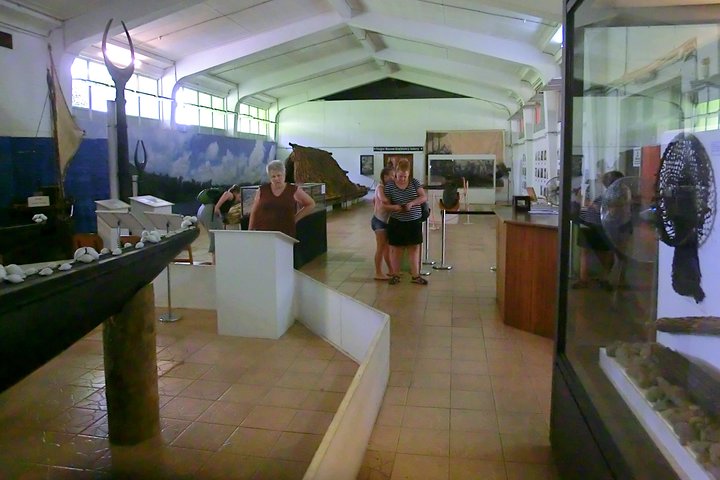
  • Fiji Museum (Thurston Gardens) — The best single place to understand Fiji: well-curated displays of Indigenous, Indian and colonial history, neat archaeological collections and artifacts you won’t see elsewhere. It sits inside Thurston Gardens so you can combine history and a slow walk.
  • Thurston Gardens — A shady colonial-era botanical garden with big tropical trees, quiet paths and displays of local plants. Good for shelter from the midday sun and to spot fruit bats or read the museum plaques without the crowds.
  • Suva Municipal Market (Makete) — Loud, colourful and utterly honest: traders selling fish, tropical fruit, root crops and street food. Go early, poke through the piles of yaqona (kava) and watch vendors pack up the freshest catch.
  • Grand Pacific Hotel — A restored colonial icon
read more 👉
  • Fiji Museum (Thurston Gardens) — The best single place to understand Fiji: well-curated displays of Indigenous, Indian and colonial history, neat archaeological collections and artifacts you won’t see elsewhere. It sits inside Thurston Gardens so you can combine history and a slow walk.
  • Thurston Gardens — A shady colonial-era botanical garden with big tropical trees, quiet paths and displays of local plants. Good for shelter from the midday sun and to spot fruit bats or read the museum plaques without the crowds.
  • Suva Municipal Market (Makete) — Loud, colourful and utterly honest: traders selling fish, tropical fruit, root crops and street food. Go early, poke through the piles of yaqona (kava) and watch vendors pack up the freshest catch.
  • Grand Pacific Hotel — A restored colonial icon on the waterfront. You don’t need to stay there to walk the veranda, sip a drink in the lobby bar and feel the old Suva atmosphere; it’s the place for people-watching and history wrapped in polished wood.
  • Old Government Buildings — That long, ornate timber façade you see downtown. It’s a striking piece of colonial architecture and a reminder of Suva’s administrative role; good for photos and for appreciating the city’s built heritage.
  • Albert Park — Central green used for public events, ceremonies and the occasional big rugby crowd. It’s where locals gather, and a short visit tells you more about civic life in Suva than any guidebook paragraph.
  • Prince Charles Park (sports ground) — The city’s main stadium for rugby and football. Catch a local match if you can — the noise, the chants and the food stalls are proper Suva experiences.
  • Royal Suva Yacht Club & Suva Waterfront — Walk the marina at sunset, grab a drink at the club if it’s a clubhouse night, and watch ferries and fishing boats come and go. The harbourfront is relaxed and gives a good feel for island life linked to the sea.
  • Suva Handicraft / Craft Market (waterfront stalls) — Small stalls selling masi (tapa), wood carvings, woven goods and affordable souvenirs. Better for seeing local artisans’ work and supporting small sellers than the generic airport shops.
  • Parliament/Cenotaph precinct — The parliamentary grounds and nearby war memorials make for a compact civic-history walk: public sculptures, memorial plaques and politically important buildings that explain Fiji’s modern story when you stand among them.
If you’ve got a day to spare outside Suva, the nearby Colo-i-Suva Forest Park (cool rainforest hikes and swimming holes), Pacific Harbour/Beqa (adventure diving and village tours) and the Kula Eco Park/Sigatoka area (wildlife and coastal villages) are all easy day trips from the city.
Spotted a mistake or missing something? Contact us.

Things to do around Suva

Ratings based on Tripadvisor reviews. When you book through this link, you support our work at no extra cost to you.

🏘️ NeighborhoodsWhere things are and how it's laid out

Suva, the capital of Fiji, is a vibrant hub where the pulse of local life meets the rhythm of island culture. Each neighborhood offers a unique flavor, making it essential for backpackers to choose wisely.

City Center: This is the heart of Suva, buzzing with energy. It’s walkable, with markets, shops, and eateries lining the streets. Expect a mix of local and international cuisine at reasonable prices. The nightlife here is lively, with bars and clubs that cater to a young crowd. Perfect for short stays, but the constant activity might wear you out if you’re looking for peace.

Toorak: A quieter residential area, Toorak offers a more laid-back vibe. It’s a bit further from the main attractions, but the trade-off is tranquility. You’ll find cozy cafes and local shops, ideal for longer stays … read more 👉
Suva, the capital of Fiji, is a vibrant hub where the pulse of local life meets the rhythm of island culture. Each neighborhood offers a unique flavor, making it essential for backpackers to choose wisely.

City Center: This is the heart of Suva, buzzing with energy. It’s walkable, with markets, shops, and eateries lining the streets. Expect a mix of local and international cuisine at reasonable prices. The nightlife here is lively, with bars and clubs that cater to a young crowd. Perfect for short stays, but the constant activity might wear you out if you’re looking for peace.

Toorak: A quieter residential area, Toorak offers a more laid-back vibe. It’s a bit further from the main attractions, but the trade-off is tranquility. You’ll find cozy cafes and local shops, ideal for longer stays if you want to immerse yourself in everyday Fijian life. Public transport is accessible, but walking can be a challenge due to limited sidewalks.

Laucala Beach: For those craving sun and sand, Laucala Beach is a short bus ride away. It’s less about nightlife and more about relaxation. The beach is stunning, and you can find budget-friendly accommodations nearby. This area is best for longer stays, especially if you want to unwind after exploring the city.

Choose your neighborhood wisely, and you’ll unlock the true essence of Suva.

⌛️ 1 daySeeing the highlights in 24 hours

Suva, the capital of Fiji, pulses with a unique blend of cultures, vibrant markets, and a rich history that invites exploration. It’s not just a stopover; it’s a place where the rhythm of life unfolds in colorful layers.

Start your morning at the bustling Suva Municipal Market. The air is thick with the scent of fresh produce and spices. Vendors call out, their voices mingling with the laughter of locals. Grab a breakfast of roti and curry from a stall—trust me, it’s a flavor explosion that’ll fuel your day. Afterward, wander through the nearby Botanical Gardens. The lush greenery and towering palms create a serene escape. Take a moment to breathe in the floral scents and listen to the rustling leaves; it’s a refreshing contrast to the market’s energy.

In the afternoon, head to the Fiji … read more 👉
Suva, the capital of Fiji, pulses with a unique blend of cultures, vibrant markets, and a rich history that invites exploration. It’s not just a stopover; it’s a place where the rhythm of life unfolds in colorful layers.

Start your morning at the bustling Suva Municipal Market. The air is thick with the scent of fresh produce and spices. Vendors call out, their voices mingling with the laughter of locals. Grab a breakfast of roti and curry from a stall—trust me, it’s a flavor explosion that’ll fuel your day. Afterward, wander through the nearby Botanical Gardens. The lush greenery and towering palms create a serene escape. Take a moment to breathe in the floral scents and listen to the rustling leaves; it’s a refreshing contrast to the market’s energy.

In the afternoon, head to the Fiji Museum, located in the picturesque Thurston Gardens. This spot often gets overlooked by tourists, but it’s a treasure trove of Fijian history. The exhibits are engaging, and the building itself is a charming colonial structure. After soaking in the culture, stroll through the nearby neighborhoods, like the historic area of Toorak, where colonial architecture tells stories of the past.

As evening approaches, make your way to the waterfront. The sun dips low, casting a golden hue over the harbor. Find a local eatery, perhaps one that serves fresh seafood caught that day. Savor the grilled fish while listening to the gentle lapping of waves.

End your day with a leisurely walk along the promenade, where the sounds of laughter and music from nearby bars fill the air. Suva isn’t just a destination; it’s an experience that lingers long after you leave.
Turn your Suva visit into an Fiji adventure
Build a complete Fiji route with Suva, hidden gems, must-see destinations, and realistic travel times included.

Generate my trip

🌤️ When to go?Choosing the right time of year


  • Topic: Weather – Suva’s tropical climate means warm, humid days year-round, but the dry season from May to October offers clearer skies and less sticky air. Rainfall drops sharply, making trails and streets easier to navigate without the constant dampness that can weigh on your energy.

  • Topic: Temperature – Expect highs around 27–30°C (81–86°F) in the dry months, which feels like a warm embrace rather than a sweat trap. The wet season (November to April) can push temps above 31°C (88°F), paired with humidity that can sap your stamina on long hikes or city strolls.

  • Topic: Daylight Hours – Near the equator, daylight is steady, roughly 11 to 12 hours year-round. This consistency means you can plan your days confidently without worrying about early sunsets cutting your adventures short.

read more 👉

  • Topic: Weather – Suva’s tropical climate means warm, humid days year-round, but the dry season from May to October offers clearer skies and less sticky air. Rainfall drops sharply, making trails and streets easier to navigate without the constant dampness that can weigh on your energy.

  • Topic: Temperature – Expect highs around 27–30°C (81–86°F) in the dry months, which feels like a warm embrace rather than a sweat trap. The wet season (November to April) can push temps above 31°C (88°F), paired with humidity that can sap your stamina on long hikes or city strolls.

  • Topic: Daylight Hours – Near the equator, daylight is steady, roughly 11 to 12 hours year-round. This consistency means you can plan your days confidently without worrying about early sunsets cutting your adventures short.

  • Topic: Crowds – Peak tourist season aligns with the dry months, especially July and August, when international travelers flock here. Suva feels livelier but also pricier and busier, so if you prefer a quieter vibe, shoulder months like May or September offer a sweet spot.

  • Topic: Seasonal Activities – The dry season is prime for diving, snorkeling, and exploring Suva’s outdoor markets without the interruption of sudden downpours. Cultural festivals, like the Hibiscus Festival in August, bring vibrant energy but also pack the town with visitors.

  • Topic: Price Fluctuations – Accommodation and flights peak during the dry season and festival times, sometimes doubling in cost. Booking in shoulder seasons can save you a chunk of cash while still enjoying decent weather and fewer crowds.


Pro-tip: Aim for late May or early September—when the air is fresh, the crowds thin, and prices soften—so you get Suva’s charm without the usual tourist hustle or tropical downpours.


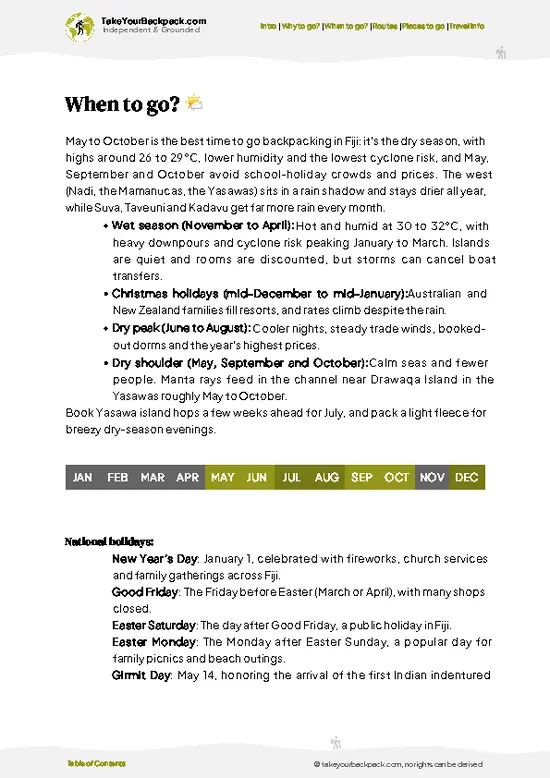
source: climatestotravel.comJANJanuary: fair for travelingFEBFebruary: fair for travelingMARMarch: fair for travelingAPRApril: fair for travelingMAYMay: highly recommended for travelingJUNJune: excellent for travelingJULJuly: excellent for travelingAUGAugust: excellent for travelingSEPSeptember: highly recommended for travelingOCTOctober: highly recommended for travelingNOVNovember: fair for travelingDECDecember: fair for traveling
when-to-go

✈️ The backpacker research shortcutFiji Travel Guide

An offline-friendly backpacking guide with optimized travel routes, ranked highlights, transport advice, and the best areas to stay.
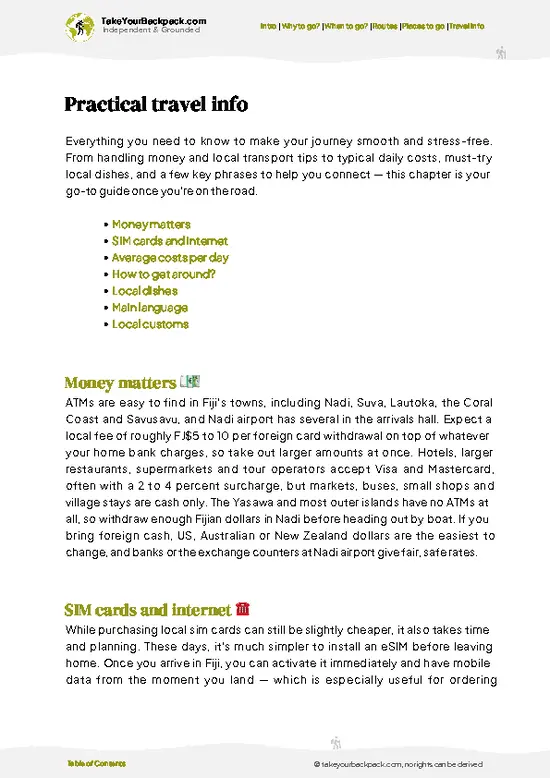
example page 0 from our offline Travel Guide for Fiji
example page 1 from our offline Travel Guide for Fiji
example page 2 from our offline Travel Guide for Fiji
example page 3 from our offline Travel Guide for Fiji
example page 4 from our offline Travel Guide for Fiji
example page 5 from our offline Travel Guide for Fiji
example page 6 from our offline Travel Guide for Fiji
example page 7 from our offline Travel Guide for Fiji
The digital guide (208 pages) contains:
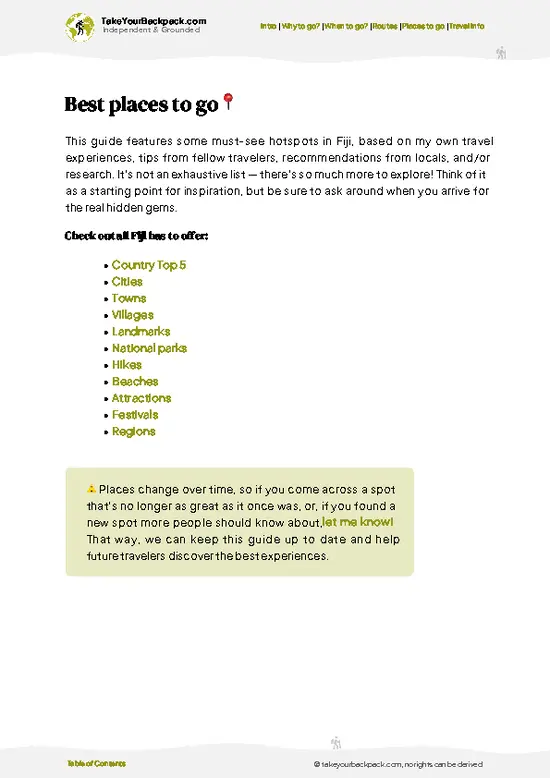
50 highlights, ranked by travel appeal
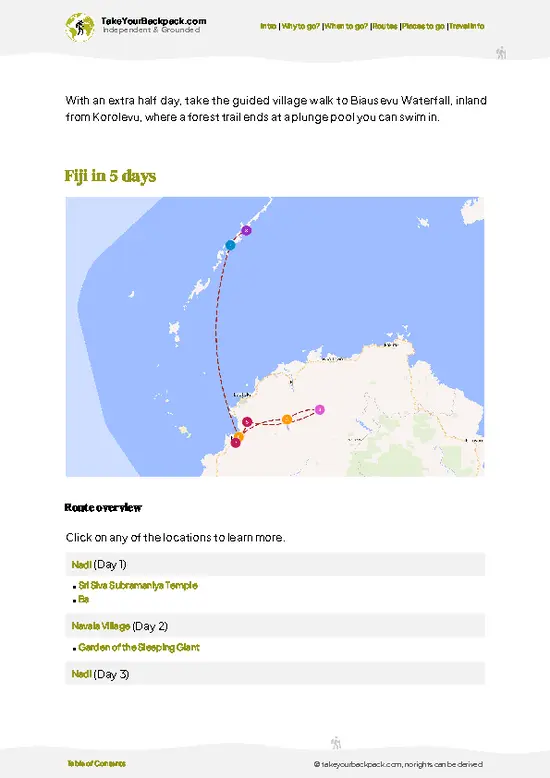
Optimized 2, 3 & 5-day travel routes
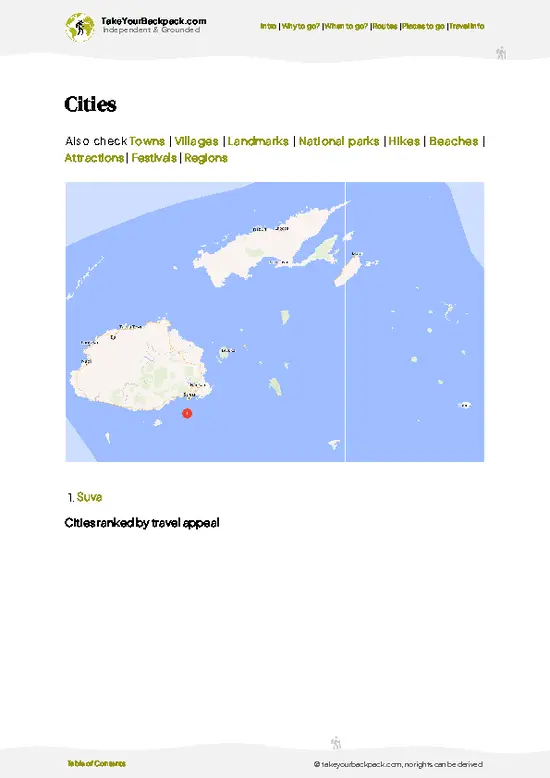
Cities, national parks, landmarks, beaches
How to get around
Offline-friendly for travel without Wi-Fi
👉 Click to see all 30+ guide features

📅 Plan smarter in minutes, not weeks
Month by month travel advice
Festivals & national holidays
Budget expectations

🗺️ Go to the right places, skip the overrated ones
Honest pros & cons of destinations
Top hikes, parks & viewpoints
Lesser-known places most travelers miss
Clear “worth it vs skip it” guidance

🛏️ Travel smoothly without rookie mistakes
Best areas to stay
Transport systems explained simply
Common scams & safety advice
SIM cards, money & practical tips

🌍 Understand the country, not just visit it
Culture & traditions
52 Essential phrases & customs
Festivals worth planning around
Traveler-friendly historical context
Insights that make places more meaningful

📱 Built for real travel conditions
Fully downloadable PDF
Works completely offline
Optimized for phone use
Useful in remote areas & buses
Everything in one place
Save weeks of stressful planning
Get instant access to your full guide. 30‑day money-back guarantee.
+ Add another guide for just US$7.80

By proceeding you agree to our terms.
Sent to your inbox immediately after payment • 100% Secure Checkout
Best Backpacking Travel Advisor 2025 tourism awardBest Backpacking
Travel Advisor
2025
What others say about Take Your Backpack Guides:
⭐⭐⭐⭐⭐
Fantastic, amazing amount of information!
⭐⭐⭐⭐⭐
My goodness this is amazing, it's what I've been looking for hats off too you!
⭐⭐⭐⭐⭐
I think this is absolutely BRILLIANT
⭐⭐⭐⭐
Very complete and informative. It's still missing places, but I gotta to commend you
⭐⭐⭐⭐⭐
This is truly amazing, thank you, can't wait to explore it with my kids!
⭐⭐⭐⭐⭐
Awesome resource, thank you!
⭐⭐⭐⭐⭐
This is amazing! Can't wait to explore the ones I haven't seen
⭐⭐⭐⭐
I love this! Well done, great idea.
⭐⭐⭐⭐⭐
Thanks for taking the time to make this gem!
⭐⭐⭐⭐⭐
This might be the best website I've ever seen.
⭐⭐⭐⭐⭐
Congratulations, and thank you so much for your work; it's incredibly valuable.
⭐⭐⭐⭐
In all seriousness I think you did a great job pointing out the important spots
⭐⭐⭐⭐⭐
10/10 very good
⭐⭐⭐⭐⭐
As someone who's only just starting to visit regularly this is awesome, thank you.
⭐⭐⭐⭐
Thank you very much! I'm going to visit my dad, it's going to be very useful!
⭐⭐⭐⭐⭐
This is really cool! We'll be travelling for the first time and this definitely come in handy.
⭐⭐⭐⭐⭐
You are now our minister of culture, congratulations 👨‍💼
⭐⭐⭐⭐⭐
Just wanted to tell you that this is a pearl! Going to follow your recommendations.
⭐⭐⭐⭐⭐
This is so cool. I'll definitely be using the resource for my travels soon.
⭐⭐⭐⭐⭐
This is very impressive! Good work.
⭐⭐⭐⭐⭐
This is an amazing and informative site. Very well done!

🛏️ Where to stay?Choosing the right base

Suva’s best backpacker turf centers around the central business district and the nearby suburb of Toorak. This isn’t a sprawling city where you’ll get lost in endless neighborhoods, but these pockets offer a practical blend of safety, social buzz, and budget-friendly options. The CBD hums with local life—markets, street food stalls, and a steady flow of Fijians and travelers crossing paths. It’s where you’ll find hostels that cater to solo adventurers looking to swap stories over a cold drink or plan the next island hop. The streets here are busy but manageable, with enough foot traffic to feel … read more 👉
Suva’s best backpacker turf centers around the central business district and the nearby suburb of Toorak. This isn’t a sprawling city where you’ll get lost in endless neighborhoods, but these pockets offer a practical blend of safety, social buzz, and budget-friendly options. The CBD hums with local life—markets, street food stalls, and a steady flow of Fijians and travelers crossing paths. It’s where you’ll find hostels that cater to solo adventurers looking to swap stories over a cold drink or plan the next island hop. The streets here are busy but manageable, with enough foot traffic to feel secure after dark without the chaos of a big city.

Toorak, just a short walk or bus ride from the CBD, offers a quieter vibe with leafy streets and a more residential feel. It’s a smart choice if you want to recharge in a calm spot but still be close enough to the action. Hostels here tend to be smaller and more intimate, perfect for meeting fellow travelers without the noise of the city center. Both areas give you a real slice of Suva life—think warm ocean breezes mixing with the scent of tropical fruit and the distant hum of reggae beats—without the hassle of sketchy zones or overpriced tourist traps. Staying here means you’re plugged into the pulse of the city, with easy access to transport, markets, and the kind of local hangouts that make Fiji feel like more than just a postcard.

🚌 Getting aroundHow to get around Suva

Suva moves at its own rhythm—part laid-back island time, part bustling capital pulse. The air carries a salty tang from the harbor, mingling with the scent of roadside grilled fish and the occasional waft of diesel from buses. Streets hum with a mix of purposeful locals and curious visitors, but don’t expect strict timetables or polished transit hubs. Instead, you’ll find a system that leans on intuition, local knowledge, and a bit of patience. This isn’t a place where everything clicks like clockwork; it’s a place where knowing when to hop on a bus or flag down a taxi can turn a frustrating wait into a smooth ride. The payoff is real: vibrant markets, colonial architecture softened by tropical light, and the pulse of a city that’s both a gateway and a destination.


  • Local Buses (Public
read more 👉
Suva moves at its own rhythm—part laid-back island time, part bustling capital pulse. The air carries a salty tang from the harbor, mingling with the scent of roadside grilled fish and the occasional waft of diesel from buses. Streets hum with a mix of purposeful locals and curious visitors, but don’t expect strict timetables or polished transit hubs. Instead, you’ll find a system that leans on intuition, local knowledge, and a bit of patience. This isn’t a place where everything clicks like clockwork; it’s a place where knowing when to hop on a bus or flag down a taxi can turn a frustrating wait into a smooth ride. The payoff is real: vibrant markets, colonial architecture softened by tropical light, and the pulse of a city that’s both a gateway and a destination.


  • Local Buses (Public Minibuses): These are the backbone of Suva’s transit, cheap and frequent but not always predictable. They run roughly from 6:00 AM to 7:00 PM, with fares around FJD 1–2 (about 50 cents to $1 USD). Expect crowded, sometimes noisy rides with stops on demand—flag them down anywhere along the route. The buses don’t follow strict schedules, so timing is flexible but can mean waiting under the tropical sun.


  • Walking: Suva’s core is surprisingly walkable if you’re ready for tropical heat and occasional humidity. Streets are lined with shops, markets, and eateries, making walking a sensory experience—think the scent of fresh bread from bakeries and the chatter of vendors. Stick to daylight hours for safety and comfort, and bring water. Walking lets you soak in the city’s texture at your own pace, avoiding the chaos of traffic.


  • Shared Taxis: These operate like minibuses but with fewer passengers and a bit more comfort. They’re slightly pricier (around FJD 3–5) but faster and more direct, especially during off-peak hours. Shared taxis don’t have fixed stops; you negotiate your drop-off with the driver. They run mainly from early morning until about 8:00 PM, making them a solid option for budget travelers who want a bit more control over timing.


  • Private Taxis: More expensive and less budget-friendly, but sometimes necessary if you’re traveling late or with heavy gear. Fares start around FJD 15 and can climb depending on distance and negotiation skills. Use these sparingly—better for airport runs or late-night returns when other options have dried up.


  • Bicycle Rentals: Not widespread but available through a few local shops, renting a bike is a quiet, flexible way to explore Suva beyond the center. Prices hover around FJD 10–15 per day. The city’s flat terrain and coastal breezes make cycling pleasant, but watch for uneven pavement and traffic that doesn’t always respect lanes.

👛 Costs (as of 4 September 2026)What things cost and how to budget

Backpacking in Suva, Fiji, means balancing the laid-back island vibe with practical costs that keep your trip smooth and stress-free. Here’s the real deal on daily expenses to help you plan smart.
  • Dorm Accommodation: Hostels and budget guesthouses in Suva typically charge between $10 and $20 USD per night for a dorm bed. The rooms are basic but clean, often with shared bathrooms and a fan or simple AC. It’s not luxury, but it’s comfortable enough to recharge after a day exploring.
  • Meals: Eating local is both a cultural dive and a budget saver. Street food stalls and small eateries offer meals for around $3 to $7 USD. Expect hearty portions of fish, root vegetables, and rice or roti. If you opt for a sit-down restaurant, prices rise to $10-$15 USD per meal, especially for seafood or Western-style
read more 👉
Backpacking in Suva, Fiji, means balancing the laid-back island vibe with practical costs that keep your trip smooth and stress-free. Here’s the real deal on daily expenses to help you plan smart.
  • Dorm Accommodation: Hostels and budget guesthouses in Suva typically charge between $10 and $20 USD per night for a dorm bed. The rooms are basic but clean, often with shared bathrooms and a fan or simple AC. It’s not luxury, but it’s comfortable enough to recharge after a day exploring.
  • Meals: Eating local is both a cultural dive and a budget saver. Street food stalls and small eateries offer meals for around $3 to $7 USD. Expect hearty portions of fish, root vegetables, and rice or roti. If you opt for a sit-down restaurant, prices rise to $10-$15 USD per meal, especially for seafood or Western-style dishes.
  • Local Transport: Getting around Suva is straightforward and cheap. Shared minibuses (called “buses” locally) cost about $0.50 to $1 USD per ride within the city. Taxis are pricier, around $5 to $10 USD for short trips, so reserve those for late nights or when you’re hauling gear.
  • Basic Activities/Entry Fees: Suva’s main draws—museums, markets, and botanical gardens—charge modest entry fees, usually between $2 and $5 USD. Guided tours or cultural shows can push this to $15 or $20 USD, but they’re worth it for the deeper insight into Fijian life and history.
  • Miscellaneous Expenses: Budget around $2 to $5 USD daily for essentials like bottled water, snacks, or a local SIM card top-up. Internet cafes and laundry services are affordable, typically under $5 USD per use, keeping your trip connected and fresh without breaking the bank.

All told, a realistic daily budget for backpacking in Suva falls between $20 and $45 USD. This range covers the basics without skimping on comfort or experience, letting you soak in the island’s atmosphere without constant money stress.


source: fiji.travel
⚠️ Prices can change and everyone travels differently, so take this as a rough guide. Hope it helps you plan your adventure!

🚌 Day tripsExploring the surroundings

Suva, Fiji, is more than just the capital; it’s a launchpad for unforgettable day trips that blend adventure with local culture. Here’s how to make the most of your time.

1. Colo-i-Suva Forest Park
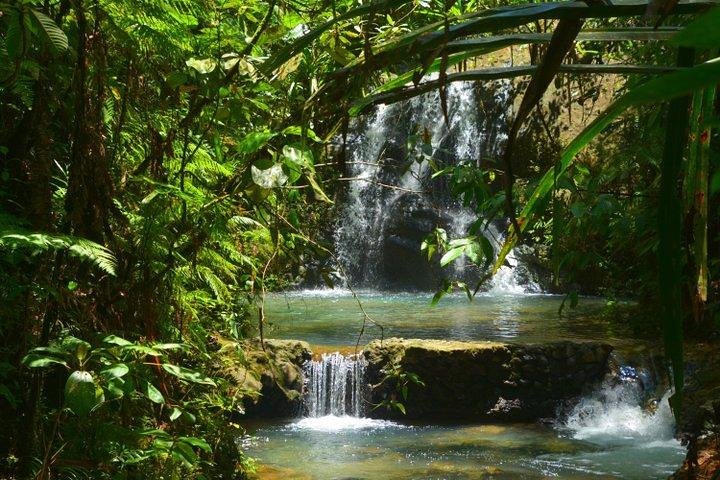
Just a 30-minute bus ride from Suva, this lush rainforest is a paradise for nature lovers. The air is thick with the scent of damp earth and blooming hibiscus. Spend your day hiking the well-marked trails, where you’ll encounter cascading waterfalls and vibrant birdlife. Bring a picnic to enjoy by the water; it’s a great way to recharge. The entrance fee is minimal, usually around FJD 5, making it a budget-friendly escape. Avoid the mistake of underestimating the humidity—pack plenty of water and wear sturdy shoes.
👉 Explore Colo-i-Suva Forest Park

2. Pacific Harbour
About an hour’s drive … read more 👉
Suva, Fiji, is more than just the capital; it’s a launchpad for unforgettable day trips that blend adventure with local culture. Here’s how to make the most of your time.

1. Colo-i-Suva Forest Park
Just a 30-minute bus ride from Suva, this lush rainforest is a paradise for nature lovers. The air is thick with the scent of damp earth and blooming hibiscus. Spend your day hiking the well-marked trails, where you’ll encounter cascading waterfalls and vibrant birdlife. Bring a picnic to enjoy by the water; it’s a great way to recharge. The entrance fee is minimal, usually around FJD 5, making it a budget-friendly escape. Avoid the mistake of underestimating the humidity—pack plenty of water and wear sturdy shoes.
👉 Explore Colo-i-Suva Forest Park

2. Pacific Harbour
About an hour’s drive from Suva, Pacific Harbour is known as the adventure capital of Fiji. Here, you can try white-water rafting on the Navua River, where the thrill of navigating rapids is matched only by the stunning scenery of towering cliffs and dense jungle. Expect to spend around FJD 150 for a full-day tour, which often includes lunch. The best time to go is during the dry season, from May to October, when the river is at its most manageable. A common rookie mistake? Not booking in advance—these tours fill up fast!


3. Levuka
This UNESCO World Heritage site is a bit further afield, about a 90-minute ferry ride from Suva. Levuka offers a glimpse into Fiji’s colonial past, with its charming wooden buildings and laid-back vibe. Spend your day exploring the town, visiting the old courthouse, and soaking in the local culture. The ferry costs around FJD 30 each way, and it’s best to go during the week when it’s less crowded. Many first-timers miss the chance to chat with locals—don’t be shy; they love sharing stories!
👉 Explore Levuka

4. Beqa Island
Just a short boat ride from Pacific Harbour, Beqa Island is famous for its diving and snorkeling spots. The underwater world here is vibrant, teeming with colorful fish and coral gardens. A day trip typically costs around FJD 200, including gear rental. The best time to dive is during the dry season, when visibility is at its peak. A common oversight is not checking the tide schedule; it can affect your diving experience.


5. Taveuni Island
Though a bit ambitious for a day trip, Taveuni is worth mentioning for those who want to push their limits. A quick flight from Suva, this island is known as the “Garden Island” for its lush landscapes and stunning waterfalls. Plan for a long day, as you’ll want to maximize your time exploring. Flights can be found for around FJD 200, but be mindful of the weather—cloud cover can delay flights. Many travelers miss out on the best views by sticking to the main trails; venture off the beaten path for a more authentic experience.
👉 Explore Taveuni Island
Want to know what more Fiji offers?
The Fiji Travel Guide describes 50 highlights, from cities to national parks, from beaches to hikes

Get the Travel Guide -

🛡️ SafetyTraveler Safety Guide

Suva is generally safe, but a few practical tips can enhance your experience. Stick to well-lit areas after dark, especially around the waterfront and markets. Solo travelers should be mindful of their surroundings; it’s easy to get lost in the vibrant energy, but keep your wits about you.

Watch for common scams, like overly friendly locals offering unsolicited help or guiding you to shops where they earn a commission. Politely decline and trust your instincts. Everyday annoyances can include aggressive taxi drivers; agree on a fare before you hop in to avoid surprises.

Carry yourself confidently. A relaxed demeanor can deter unwanted attention. Embrace the local culture, but stay aware of your belongings in crowded spots. With these simple strategies, you can navigate Suva smoothly and enjoy its unique charm.

FAQTraveler FAQ

Yes, Suva is worth visiting for its vibrant cultural scene, colonial architecture, and local markets. It offers a genuine urban Fijian experience beyond typical beach resorts. Plan to explore the Fiji Museum and the Municipal Market for a full taste of the city.
2 to 3 days are sufficient to see Suva's main attractions and get a feel for the city. This allows time for museum visits, market shopping, and sampling local cuisine without rushing. Additional days are only needed if you want to explore nearby villages or attend events.
No, Suva is not typically visited as a day trip from nearby cities because it is the main urban center on Viti Levu island. The closest major city, Nadi, is about 200 kilometers away, requiring at least 3 to 4 hours of travel each way. Staying overnight in Suva is recommended to make the most of your visit.
⚠️ Things can change over time, so always validate details locally before you go.

Other Fijian towns near Suva

Explore more nearby:

  • Ba—sugar cane fields, Indo-Fijian shops, Saturday market| 95 km away
  • Nadi—international airport, Hindu temple, backpacker hostels| 113 km away
  • Savusavu—harborfront market, geothermal springs, yacht anchorage| 180 km away

💡 Not sure where to go next?
Create a personalized itinerary for Fiji including Suva and the places that fit your trip.

Generate my itinerary

👉 Discover all towns

Or checkout all Fiji has to offer (think cities, towns, villages, national parks, hikes, beaches, festivals)
Country photo of Fiji

We 💚 feedbackSumming up the experience

Suva has a pulse that’s both vibrant and laid-back, a rare combo. The best surprise? The local markets. The colors, scents, and chatter create a sensory feast. You’ll find fresh produce and handmade crafts that tell stories. Just a heads-up: the humidity can hit hard, so stay hydrated and take it slow. Embrace the rhythm of the city. It’s not just about the sights; it’s about the moments that linger long after you leave.

✍️ Help improve this page!
The information on this page is based on in-depth research, insights shared by experienced travelers, and feedback from the local travel community in Fiji. While every effort is made to keep the information accurate and current, conditions can change — so if you spot anything incorrect or outdated, please get in touch.


🙋‍♂️ Give feedback

👋 Meet the founderWho’s Behind Take Your Backpack?

Johan, backpacker and founder of TakeYourBackpackHi, I’m Johan (Netherlands 🇳🇱), the creator of TakeYourBackpack. Over the past decade, I’ve backpacked through 80+ countries across six continents, gaining extensive experience with independent travel, long-term trips, and overland routes.

This site is built on a combination of firsthand travel experience and carefully curated insights from other backpackers. Many guides are based on places I’ve personally visited, while others bring together tips, observations, and practical advice shared by trusted travelers I’ve met along the way.

The goal is to provide realistic, experience-driven guidance — not generic itineraries — so you can explore destinations with better context, clearer expectations, and more confidence.

Get full Fiji guide •
Instant download • 50 highlights • Full Offline guide