×

Fiji🇫🇯 | national parksColo-i-Suva Forest ParkRope-swing pools, Suva hill forest, tree ferns, musk parrot | things to do and best time to go

Explore Bouma National Heritage ParkExplore Koroyanitu National Heritage Park

Backpacking in Colo-i-Suva Forest Park
👍 Recommendednational park ranked #4
By Johan Kruseman 🇳🇱 | Updated October 15, 2026

The swimming holes at Colo-i-Suva are fed by a stream that runs clear on dry mornings and turns tea-brown after heavy rain, so the first pool you reach after the Lower Pool track can look different on two visits. The park sits in Fiji’s Central Division, in the hills a short drive north of Suva, and it feels cooler and damper than the capital below. Trails are short, muddy and well signed, the rainforest is loud with birds, and rope swings hang over the water. Wildlife is mostly birds and frogs, so don’t expect big sightings. Weekends bring local families and picnics, while weekday mornings are quiet. A good first day: arrive around 8:30 am, walk the Lower Pool loop before the crowds, swim the deep pool, then dry off with a slow climb to the viewpoint for a cold drink after.

Discover everything you want to know in the 📖 Fiji Travel Guide.


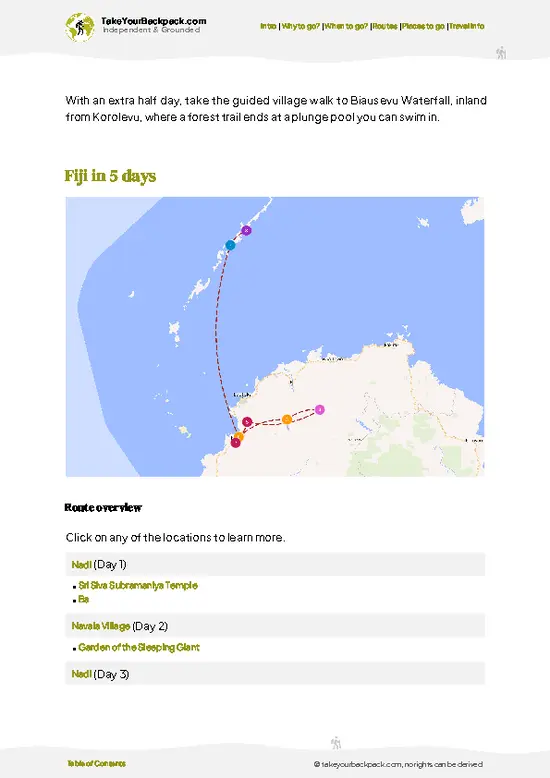
example page 0 from our offline Travel Guide for Fiji
example page 1 from our offline Travel Guide for Fiji
example page 2 from our offline Travel Guide for Fiji
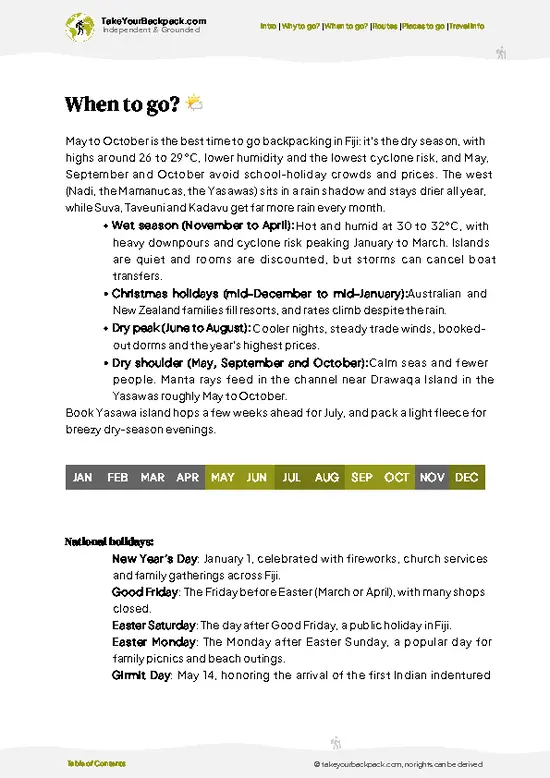
example page 3 from our offline Travel Guide for Fiji
example page 4 from our offline Travel Guide for Fiji
example page 5 from our offline Travel Guide for Fiji
example page 6 from our offline Travel Guide for Fiji
example page 7 from our offline Travel Guide for Fiji
Loading the map 🌍
CLICK TO FILTER
cities
towns
villages
landmarks
national parks
hikes
beaches
attractions
festivals
regions
SHOW COUNTRY’S BESTSHOW ALL

✨ Why go?
Ranked #4 national park in Fiji
What makes it a must-see national park

Backpackers choose Colo-i-Suva because it gives you real rainforest without a tour, a guide or a booking. The park is run as a self-guided network, so you pick your own pace, stop at the Lower Pool for a swim, and decide on the spot whether to keep climbing. Signs are clear, the trails loop back to the entrance, and nothing demands a full day, which suits a rainy Suva afternoon or an unplanned gap between ferries and flights. The second draw is the birdlife. The park is known for the masked shining parrot and other forest species, and the quiet early hours reward anyone who sits still with ears open. Camping is not the point here. Most travelers stay in Suva and treat the forest as an easy outing, packing a towel, a dry shirt and sturdy shoes.

💡 HighlightsKey sights and experiences for travelers

  1. Lower Pool: The park’s best-known spot, a deep, green swimming hole beneath a rope swing. It is cold, clear in dry spells, and the place most people head for first.
  2. Upper Pool: Smaller and quieter than the lower one, reached by a short forest walk. Good for a calm dip when the main pool is busy.
  3. Middle Pool: A shaded pool between the other two, with a little cascade and flat rocks for sitting.
  4. Waisila Creek track: A walk along the creek, passing ferns, buttress-rooted trees and tiny waterfalls. You get the full sound of frogs and cicadas here.
  5. Tree fern groves: Towering tree ferns and thick vines make a dim green canopy that cools the trail noticeably.
  6. Birdwatching on the ridge trails: The forest holds many bird species, including the masked shining parrot, and early morning is best for calls and
… read more 👉
  1. Lower Pool: The park’s best-known spot, a deep, green swimming hole beneath a rope swing. It is cold, clear in dry spells, and the place most people head for first.
  2. Upper Pool: Smaller and quieter than the lower one, reached by a short forest walk. Good for a calm dip when the main pool is busy.
  3. Middle Pool: A shaded pool between the other two, with a little cascade and flat rocks for sitting.
  4. Waisila Creek track: A walk along the creek, passing ferns, buttress-rooted trees and tiny waterfalls. You get the full sound of frogs and cicadas here.
  5. Tree fern groves: Towering tree ferns and thick vines make a dim green canopy that cools the trail noticeably.
  6. Birdwatching on the ridge trails: The forest holds many bird species, including the masked shining parrot, and early morning is best for calls and sightings.
  7. Viewpoint and picnic shelters: A short climb leads to open spots with views over the forest, with sheltered tables handy for lunch during a downpour.
All of it fits comfortably into a relaxed half day, or three to four hours if you swim and stop often.
Spotted a mistake or missing something? Contact us.

🌤️ When to go?Choosing the right time of year

May to October is the easiest window for Colo-i-Suva, with the driest trails and the least mud underfoot. Suva sits on the wet side of Viti Levu, so no month is truly dry.
  • Dry Season (May to October): Days run 24 to 28°C (75 to 82°F), nights dip to 18 to 20°C (64 to 68°F). Rain still falls on many days but in shorter bursts. Trails and the Waisila Falls swimming holes are at their best.
  • Wet Season (November to April): Expect 26 to 31°C (79 to 88°F), heavy humidity and downpours that turn clay paths slick. Cyclone risk peaks January to March. Pools are fuller and the forest is loud with birds, but leeches and mosquitoes increase.
  • Crowds and Daylight: Weekends bring local families to the pools, so weekdays are quieter. Daylight runs about 11 hours in June and 13 in December, and the park closes
… read more 👉
May to October is the easiest window for Colo-i-Suva, with the driest trails and the least mud underfoot. Suva sits on the wet side of Viti Levu, so no month is truly dry.
  • Dry Season (May to October): Days run 24 to 28°C (75 to 82°F), nights dip to 18 to 20°C (64 to 68°F). Rain still falls on many days but in shorter bursts. Trails and the Waisila Falls swimming holes are at their best.
  • Wet Season (November to April): Expect 26 to 31°C (79 to 88°F), heavy humidity and downpours that turn clay paths slick. Cyclone risk peaks January to March. Pools are fuller and the forest is loud with birds, but leeches and mosquitoes increase.
  • Crowds and Daylight: Weekends bring local families to the pools, so weekdays are quieter. Daylight runs about 11 hours in June and 13 in December, and the park closes around 4:30 pm.
  • Prices: Suva lodging barely shifts with the season, though July to August and December bring higher rates.
Start your hike by 9 am, before afternoon cloud and rain settle in.


source: climatestotravel.comJANJanuary: fair for travelingFEBFebruary: fair for travelingMARMarch: fair for travelingAPRApril: fair for travelingMAYMay: highly recommended for travelingJUNJune: excellent for travelingJULJuly: excellent for travelingAUGAugust: excellent for travelingSEPSeptember: excellent for travelingOCTOctober: highly recommended for travelingNOVNovember: fair for travelingDECDecember: fair for traveling
fiji-national-park-colo-i-suva-forest-park
© Google | Ajleeblog

✈️ The backpacker research shortcutFiji Travel Guide

An offline-friendly backpacking guide with optimized travel routes, ranked highlights, transport advice, and the best areas to stay.
example page 0 from our offline Travel Guide for Fiji
example page 1 from our offline Travel Guide for Fiji
example page 2 from our offline Travel Guide for Fiji
example page 3 from our offline Travel Guide for Fiji
example page 4 from our offline Travel Guide for Fiji
example page 5 from our offline Travel Guide for Fiji
example page 6 from our offline Travel Guide for Fiji
example page 7 from our offline Travel Guide for Fiji
The digital guide (159 pages) contains:
✅ 41 highlights, ranked by travel appeal
✅ Optimized 2, 3 & 5-day travel routes
✅ Cities, national parks, landmarks, beaches
✅ How to get around
✅ Offline-friendly for travel without Wi-Fi
👉 Click to see all 30+ guide features

📅 Plan smarter in minutes, not weeks
✅ Month by month travel advice
✅ Festivals & national holidays
✅ Budget expectations

🗺️ Go to the right places, skip the overrated ones
✅ Honest pros & cons of destinations
✅ Top hikes, parks & viewpoints
✅ Lesser-known places most travelers miss
✅ Clear “worth it vs skip it” guidance

🛏️ Travel smoothly without rookie mistakes
✅ Best areas to stay
✅ Transport systems explained simply
✅ Common scams & safety advice
✅ SIM cards, money & practical tips

🌍 Understand the country, not just visit it
✅ Culture & traditions
✅ 52 Essential phrases & customs
✅ Festivals worth planning around
✅ Traveler-friendly historical context
✅ Insights that make places more meaningful

📱 Built for real travel conditions
✅ Fully downloadable PDF
✅ Works completely offline
✅ Optimized for phone use
✅ Useful in remote areas & buses
✅ Everything in one place
Stop searching, start planning
Get instant access to your full guide. 30‑day money-back guarantee.
+ Add another guide for just

By proceeding you agree to our terms.
Sent to your inbox immediately after payment • 100% Secure Checkout
Best Backpacking Travel Advisor 2025 tourism awardBest Backpacking
Travel Advisor
2025
What others say about Take Your Backpack Guides:
⭐⭐⭐⭐⭐
Fantastic, amazing amount of information!
⭐⭐⭐⭐⭐
My goodness this is amazing, it's what I've been looking for hats off too you!
⭐⭐⭐⭐⭐
I think this is absolutely BRILLIANT
⭐⭐⭐⭐
Very complete and informative. It's still missing places, but I gotta to commend you
⭐⭐⭐⭐⭐
This is truly amazing, thank you, can't wait to explore it with my kids!
⭐⭐⭐⭐⭐
Awesome resource, thank you!
⭐⭐⭐⭐⭐
This is amazing! Can't wait to explore the ones I haven't seen
⭐⭐⭐⭐
I love this! Well done, great idea.
⭐⭐⭐⭐⭐
Thanks for taking the time to make this gem!
⭐⭐⭐⭐⭐
This might be the best website I've ever seen.
⭐⭐⭐⭐⭐
Congratulations, and thank you so much for your work; it's incredibly valuable.
⭐⭐⭐⭐
In all seriousness I think you did a great job pointing out the important spots
⭐⭐⭐⭐⭐
10/10 very good
⭐⭐⭐⭐⭐
As someone who's only just starting to visit regularly this is awesome, thank you.
⭐⭐⭐⭐
Thank you very much! I'm going to visit my dad, it's going to be very useful!
⭐⭐⭐⭐⭐
This is really cool! We'll be travelling for the first time and this definitely come in handy.
⭐⭐⭐⭐⭐
You are now our minister of culture, congratulations 👨‍💼
⭐⭐⭐⭐⭐
Just wanted to tell you that this is a pearl! Going to follow your recommendations.
⭐⭐⭐⭐⭐
This is so cool. I'll definitely be using the resource for my travels soon.
⭐⭐⭐⭐⭐
This is very impressive! Good work.
⭐⭐⭐⭐⭐
This is an amazing and informative site. Very well done!

🛏️ Where to stay?Choosing the right base

Stay in Suva, about 11 km (7 miles) away, because Colo-i-Suva has no campsite or dorm inside the park. Local buses run from the Suva bus station along Princes Road to the park gate in roughly 25 to 40 minutes.
Backpackers will find the most choice in Suva. Hostels and budget guesthouses cluster around Toorak and the downtown waterfront, with dorm beds and cheap kitchens, handy for stocking up on food before the trail. Mid-range hotels sit along the seafront if you want air conditioning and a pool.
If you want to wake up in the trees, a few guesthouses and lodges stand along the road beside the park, … read more 👉
Stay in Suva, about 11 km (7 miles) away, because Colo-i-Suva has no campsite or dorm inside the park. Local buses run from the Suva bus station along Princes Road to the park gate in roughly 25 to 40 minutes.
Backpackers will find the most choice in Suva. Hostels and budget guesthouses cluster around Toorak and the downtown waterfront, with dorm beds and cheap kitchens, handy for stocking up on food before the trail. Mid-range hotels sit along the seafront if you want air conditioning and a pool.
If you want to wake up in the trees, a few guesthouses and lodges stand along the road beside the park, in Colo-i-Suva village. Choices here are limited and fill up on weekends, so book ahead. The reward is waking to birdsong and being first through the gate. Evening food options are thin, so bring supplies or eat in Suva.
Most visitors simply base a few nights in Suva and treat the forest as a half-day trip, then continue to Pacific Harbour or the Coral Coast by bus.

👛 Costs (as of 15 October 2026)What things cost and how to budget

A day at Colo-i-Suva Forest Park costs about US$27 to 60 per person for a backpacker based in Suva, with the entrance fee a small part of that. Everything is paid in Fiji dollars, and card machines at the park gate are not something to rely on, so carry cash.
CategoryBudget RangeLocal Reality
Entrance feeUS$5 to 8Charged per adult at the park gate, with a lower rate for children. It covers the walking trails and swimming holes.
Accommodation (high season)US$12 to 25Dorm beds in Suva run roughly US$12 to 20, and private rooms start near US$30. Nothing is needed inside the park for a day visit.
Local transportUS$2 to 8Local buses from Suva toward Colo-i-Suva cost under US$2 each way. A taxi from the city runs about US$8 to 12 one way.
Food and suppliesUS$8 to 15Cheap curry or noodle lunches in Suva
… read more 👉
A day at Colo-i-Suva Forest Park costs about US$27 to 60 per person for a backpacker based in Suva, with the entrance fee a small part of that. Everything is paid in Fiji dollars, and card machines at the park gate are not something to rely on, so carry cash.
CategoryBudget RangeLocal Reality
Entrance feeUS$5 to 8Charged per adult at the park gate, with a lower rate for children. It covers the walking trails and swimming holes.
Accommodation (high season)US$12 to 25Dorm beds in Suva run roughly US$12 to 20, and private rooms start near US$30. Nothing is needed inside the park for a day visit.
Local transportUS$2 to 8Local buses from Suva toward Colo-i-Suva cost under US$2 each way. A taxi from the city runs about US$8 to 12 one way.
Food and suppliesUS$8 to 15Cheap curry or noodle lunches in Suva cost US$3 to 6. Bring water and snacks, since options near the trailheads are limited.
Guides and extrasUS$0 to 4The marked trails are easy to follow without a guide. Budget a little for a drink or a small donation.
Total Daily BudgetUS$27 to 60Mid-range figure of about US$37 using the dorm bed, the bus, the entrance fee and cheap meals.
⚠️ Prices can change and everyone travels differently, so take this as a rough guide. Hope it helps you plan your adventure!

🥾 TrailsPlan your hike in Colo-i-Suva Forest Park: routes, terrain, and sights

The park’s trails are short and interlinked, with muddy, root-laced paths, wooden steps and a few steep sections.
  • Lower Pool Track: A short, mostly downhill walk of roughly 20 to 30 minutes from the entrance area to the main swimming hole. Easy, with stairs that get slick after rain. Return is uphill and warm.
  • Waisila Creek Track: A moderate loop of about one to two hours. It follows the stream through dense forest with ferns, vines and frogs. Expect mud and a few steep sections.
  • Ridge and Viewpoint Trails: Moderate climbs of roughly 45 minutes to an hour with filtered views over the canopy. Good
… read more 👉
The park’s trails are short and interlinked, with muddy, root-laced paths, wooden steps and a few steep sections.
  • Lower Pool Track: A short, mostly downhill walk of roughly 20 to 30 minutes from the entrance area to the main swimming hole. Easy, with stairs that get slick after rain. Return is uphill and warm.
  • Waisila Creek Track: A moderate loop of about one to two hours. It follows the stream through dense forest with ferns, vines and frogs. Expect mud and a few steep sections.
  • Ridge and Viewpoint Trails: Moderate climbs of roughly 45 minutes to an hour with filtered views over the canopy. Good for birds in early light.
  • Upper and Middle Pool Walks: Easy to moderate forest paths of 30 to 45 minutes, passing smaller pools and cascades.
Terrain is wet clay and roots, so shoes with grip matter more than any gear. Wildlife is mainly birds, frogs, insects and the occasional lizard. Rain falls often in the hills, which keeps the pools full and the forest loud.
The park is easy to reach from Suva by local bus or taxi, and buses run along the main road past the entrance. Entry requires a modest fee at the gate. Weekends and holidays draw families and school groups, especially at the Lower Pool. Weekday mornings are calm. Keep valuables out of sight in parked vehicles and carry water.
⚠️ Hiking info can sometimes be outdated or inaccurate. Before you hit the trail, check the latest conditions with locals. If you do spot anything that's off, I'd love to hear from you, so I can update it for fellow travelers.

🛡️ SafetyTraveler Safety Guide

Colo-i-Suva is a short, well-marked park where the main hazards are mud and rain, not wildlife. Trails of 1 to 3 km (0.6 to 2 miles) loop through the forest, with stairs and boardwalk in places, and the red clay turns slippery after showers. Wear shoes with real grip rather than flip-flops, and use the handrails on the steeper sections. Swimming holes rise quickly after heavy rain, and rocks around the pools are slick, so check depth before jumping and avoid swimming when the water turns brown. There are no dangerous large animals. Mosquitoes are the main nuisance, so bring repellent. Birdlife is plentiful, including the Fiji goshawk and the orange-breasted myzomela. Don’t leave valuables in parked cars or on the riverbanks, since petty theft from unattended bags has been reported at the car … read more 👉
Colo-i-Suva is a short, well-marked park where the main hazards are mud and rain, not wildlife. Trails of 1 to 3 km (0.6 to 2 miles) loop through the forest, with stairs and boardwalk in places, and the red clay turns slippery after showers. Wear shoes with real grip rather than flip-flops, and use the handrails on the steeper sections. Swimming holes rise quickly after heavy rain, and rocks around the pools are slick, so check depth before jumping and avoid swimming when the water turns brown. There are no dangerous large animals. Mosquitoes are the main nuisance, so bring repellent. Birdlife is plentiful, including the Fiji goshawk and the orange-breasted myzomela. Don’t leave valuables in parked cars or on the riverbanks, since petty theft from unattended bags has been reported at the car park and pools. Carry water, a rain layer and a charged phone, and plan to be out before the gate closes in the late afternoon.

FAQTraveler FAQ

Half a day is enough for Colo-i-Suva. The main loops, including the Lower Pool and Waisila Falls, take 2 to 4 hours at an easy pace. If you want to swim and watch birds, stay for a full day, and plan to be out by about 4:30 pm.
Yes, the park is easy to reach without a car. Local buses leave Suva’s main bus station for Colo-i-Suva and take about 25 to 40 minutes, costing roughly FJD 2 to 3. Taxis from central Suva cost about FJD 15 to 25 one way, and the 11 km (7 mile) ride is straightforward.
Yes, there is an entrance fee, paid at the park gate. Foreign adults pay around FJD 10 to 15, with lower rates for children and Fijian residents. No hiking permit is needed for the marked trails, but bring cash since card payment is not reliable.
⚠️ Things can change over time, so always validate details locally before you go.

Other Fijian national parks near Colo-i-Suva Forest Park

Explore more nearby:


💡 Not sure where to go next?
Create a personalized itinerary for Fiji including Colo-i-Suva Forest Park and the places that fit your trip.

Generate my itinerary

👉 Discover all national parks

Or checkout all Fiji has to offer (think cities, towns, villages, national parks, hikes, beaches, festivals)
Country photo of Fiji

We 💚 feedbackWhat to keep in mind

Go on a weekday morning in the drier months, when the trail is firmer and the pools clearer, and be at the gate when it opens. The birds are loudest then, and you will have the Lower Pool nearly to yourself. Bring a dry shirt and a plastic bag for muddy shoes.

✍️ Help improve this page!
The information on this page is based on in-depth research, insights shared by experienced travelers, and feedback from the local travel community in Fiji. While every effort is made to keep the information accurate and current, conditions can change — so if you spot anything incorrect or outdated, please get in touch.


🙋‍♂️ Give feedback

👋 Meet the founderWho’s Behind Take Your Backpack?

Johan, backpacker and founder of TakeYourBackpackHi, I’m Johan (Netherlands 🇳🇱), the creator of TakeYourBackpack. Over the past 3 decades, I’ve backpacked through 90+ countries across six continents, gaining extensive experience with independent travel, long-term trips, and overland routes.

This site is built on a combination of firsthand travel experience and carefully curated insights from other backpackers. Many guides are based on places I’ve personally visited, while others bring together tips, observations, and practical advice shared by trusted travelers I’ve met along the way.

The goal is to provide realistic, experience-driven guidance — not generic itineraries — so you can explore destinations with better context, clearer expectations, and more confidence.