×

France🇫🇷 | regionsJuralimestone gorges, secluded forests, cheese farms | things to do and best time to go

Explore NormandyExplore Cassis

Backpacking in Jura
👀 For curious travelersregion ranked #7
By Johan Kruseman 🇳🇱 | Updated October 15, 2026

Your boots crunch on damp pine needles, cowbells clink somewhere in the fog, and your fingers smell faintly of Comté you just tore apart on a trail-side rock. A paraglider drifts over a limestone cliff, and below, Lac de Chalain flashes that weird turquoise that looks Photoshopped until you’re standing in it. This is the Jura, that quiet strip of eastern France between Burgundy and the Swiss border.

For backpackers, Jura is the anti-French Riviera: cheap-ish, green, and slow. You trade nightlife and easy trains for empty trails, family-run refuges, and hitchhiking between small towns like Lons-le-Saunier, Arbois, and the wine-mad hills around Château-Chalon. It’s less polished than nearby Annecy or the Alps, but also less crowded and more genuinely rural. If you like cheese, forest, and long days walking ridge to ridge, it’s a very fair deal.

Discover everything you want to know in the 📖 France Travel Guide.


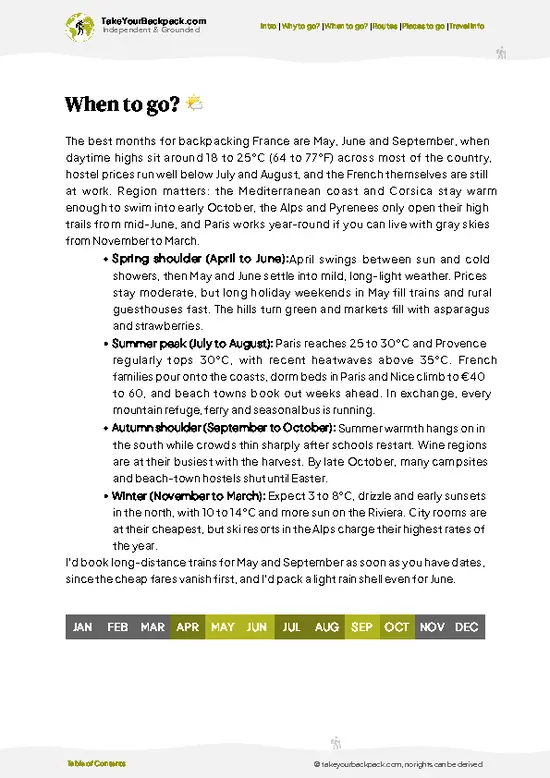
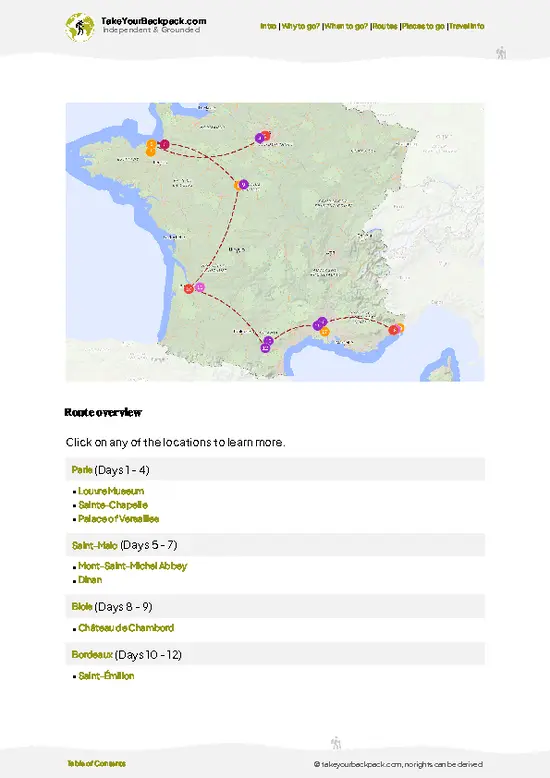
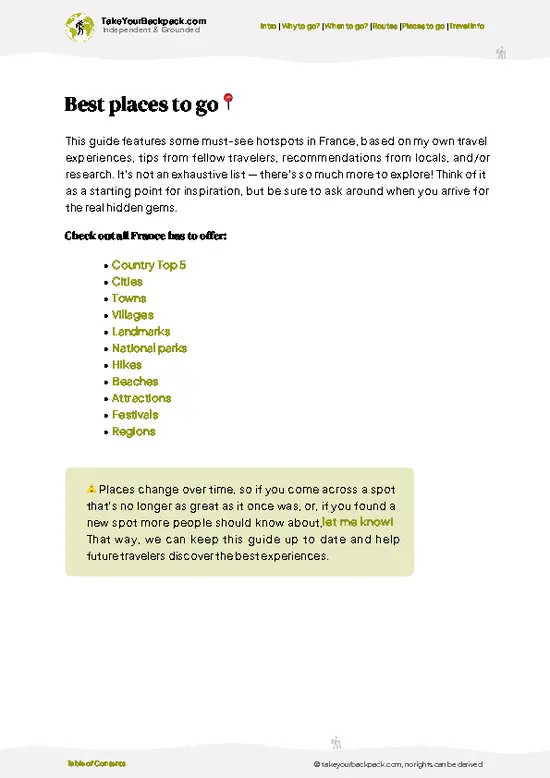
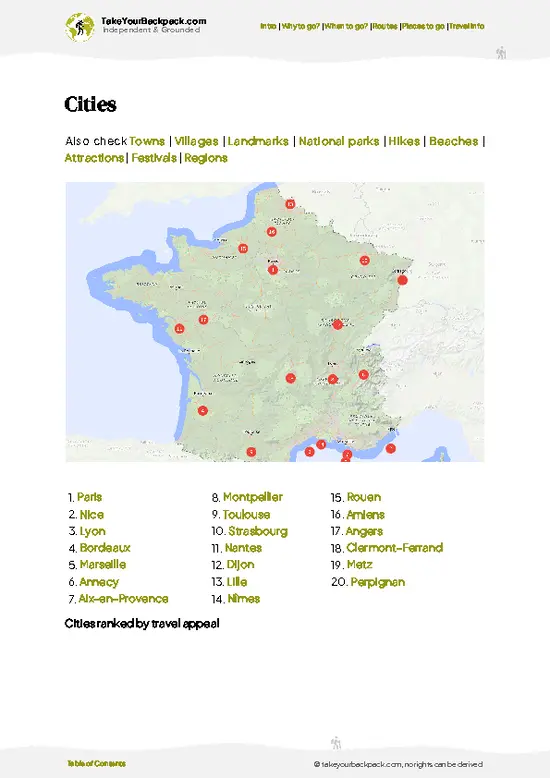
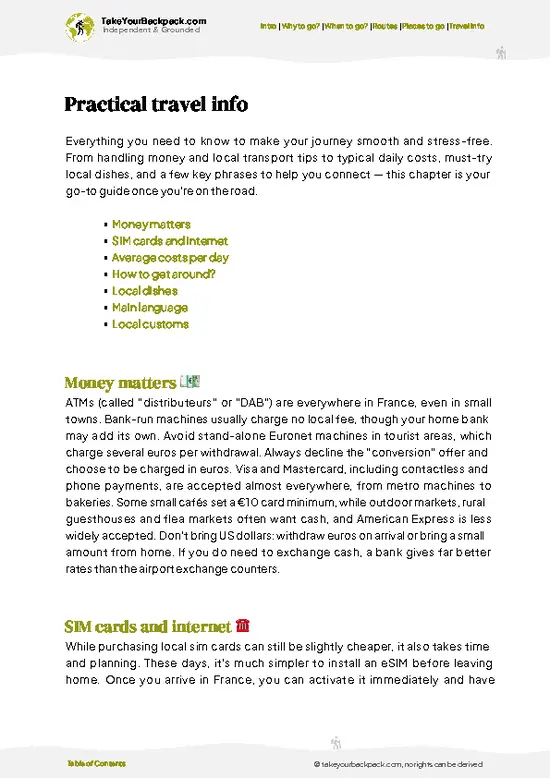
example page 0 from our offline Travel Guide for France
example page 1 from our offline Travel Guide for France
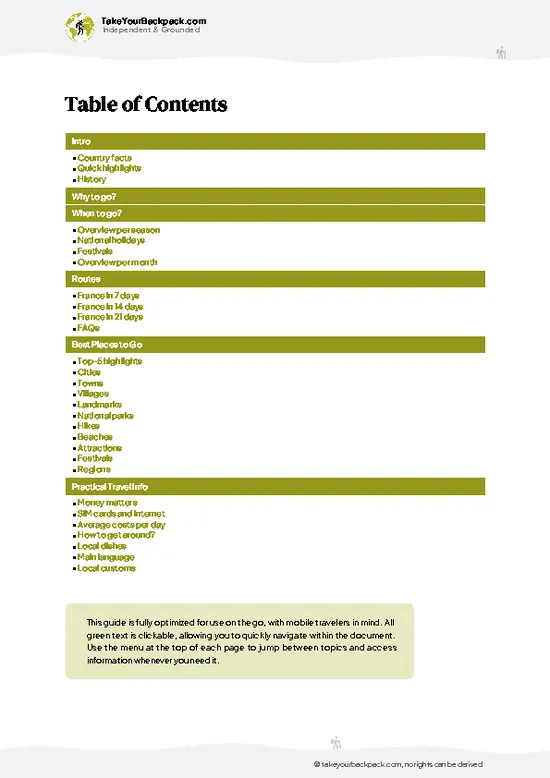
example page 2 from our offline Travel Guide for France
example page 3 from our offline Travel Guide for France
example page 4 from our offline Travel Guide for France
example page 5 from our offline Travel Guide for France
example page 6 from our offline Travel Guide for France
example page 7 from our offline Travel Guide for France
Loading the map 🌍
CLICK TO FILTER
cities
towns
villages
landmarks
national parks
hikes
beaches
attractions
festivals
regions
SHOW COUNTRY’S BESTSHOW ALL

✨ Why go?
Ranked #7 region in France
Why visitors keep coming back

In the Jura region of France, backpackers find a treasure trove of experiences without the hassle of constant relocation. Picture this: rolling hills, crystal-clear lakes, and dense forests all within a few hours’ hike. You can dive into nature one day and explore charming villages the next.

Transport is a breeze here. Trains and buses connect you to key spots, making it easy to hop from one stunning vista to another. You can savor the slow travel vibe, soaking in the local culture at your own pace.

Want a taste of the local cuisine? You’ll find delightful cheese makers and vineyards that invite you to linger. This region is all about variety—from hiking trails to cultural sites, you won’t feel rushed.

So, if you’re after a mix of adventure and authenticity, the Jura is your playground. … read more 👉
In the Jura region of France, backpackers find a treasure trove of experiences without the hassle of constant relocation. Picture this: rolling hills, crystal-clear lakes, and dense forests all within a few hours’ hike. You can dive into nature one day and explore charming villages the next.

Transport is a breeze here. Trains and buses connect you to key spots, making it easy to hop from one stunning vista to another. You can savor the slow travel vibe, soaking in the local culture at your own pace.

Want a taste of the local cuisine? You’ll find delightful cheese makers and vineyards that invite you to linger. This region is all about variety—from hiking trails to cultural sites, you won’t feel rushed.

So, if you’re after a mix of adventure and authenticity, the Jura is your playground. You’ll leave feeling like a local, not just another tourist.

💡 HighlightsDon't-miss highlights and experiences

Baume-les-Messieurs
This isn’t just another pretty village. It’s a limestone amphitheater with a medieval abbey tucked into a deep, green valley. Waterfalls thunder nearby, and the caves below are cool even in July. Arrive early to watch the morning mist burn off—locals know that’s when the light is pure magic.

Château-Chalon
Perched on a cliff, this wine village is the spiritual home of Vin Jaune. Skip the main square and wander the back lanes, where you’ll find tiny cellars pouring Jura’s nutty, golden wine. The view over the vineyards at sunset is the kind of thing you’ll remember when you’re stuck in traffic back home.

Lac de Chalain
Forget the Riviera crowds. This glacial lake is turquoise in summer, ringed by forest, and perfect for a swim or a lazy picnic. The water is so clear … read more 👉
Baume-les-Messieurs
This isn’t just another pretty village. It’s a limestone amphitheater with a medieval abbey tucked into a deep, green valley. Waterfalls thunder nearby, and the caves below are cool even in July. Arrive early to watch the morning mist burn off—locals know that’s when the light is pure magic.

Château-Chalon
Perched on a cliff, this wine village is the spiritual home of Vin Jaune. Skip the main square and wander the back lanes, where you’ll find tiny cellars pouring Jura’s nutty, golden wine. The view over the vineyards at sunset is the kind of thing you’ll remember when you’re stuck in traffic back home.

Lac de Chalain
Forget the Riviera crowds. This glacial lake is turquoise in summer, ringed by forest, and perfect for a swim or a lazy picnic. The water is so clear you’ll see fish darting around your toes. If you’re up for it, rent a kayak and hug the wild, undeveloped shoreline.

Salins-les-Bains Saltworks
Salt built this town, and the Royal Saltworks (Saline Royale) is a UNESCO site for good reason. The industrial architecture is grand, but the real trick is timing your visit for a guided tour—stories of salt smugglers and revolution-era intrigue make the place come alive.

Cirque de Ladoye(Hidden Gem)
Most people drive right past. Don’t. This collapsed valley is a geological oddity, with sheer cliffs and a sense of total isolation. Hike in the early evening and you’ll likely have the place to yourself, save for a few goats and the echo of your own footsteps.

Poligny’s Comté Cheese Cellars
Poligny is the cheese capital of Jura. The aging caves here are cool, damp, and smell like heaven if you love Comté. Book a tasting with a local affineur—this is the real deal, not the supermarket stuff.

Les Cascades du Hérisson
A chain of waterfalls tumbling through mossy forest. The main trail can get busy, but if you start at the lesser-known Saut Girard entrance, you’ll dodge the crowds and catch the best photo ops. Bring shoes you don’t mind getting muddy.

Arbois’ Wine Bars(Personal Favorite)
Arbois is the beating heart of Jura wine. Skip the big producers and duck into a tiny bar like La Finette, where the bartender will pour you a glass of Savagnin and tell you which winemaker is pouring tonight. This is where you’ll feel like you’ve cracked the code.

Fort des Rousses(Hidden Gem)
A Napoleonic fortress turned cheese cave. It’s massive, echoing, and stacked with wheels of Comté aging in the cool air. The tour is part history lesson, part sensory overload. Not many tourists make it up here, but locals swear by it.

La Reculée de Baume(Hidden Gem)
A dramatic, horseshoe-shaped valley carved by glaciers. Hike the rim for dizzying views, or descend into the lush bottom where wildflowers and ancient trees crowd the path. It’s the Jura at its wildest—untamed, quiet, and absolutely worth the detour.
Spotted a mistake or missing something? Contact us.

Things to do near Jura

Ratings based on Tripadvisor reviews. When you book through this link, you support our work at no extra cost to you.

⌛️ 5 daysA smart one-week plan

Day 1: Dole
The journey kicks off in Dole, a charming town with a rich history. You’ll want to start here because it’s well-connected by train, making it easy to hop into the Jura region. Spend the day wandering the old town, where the canals and half-timbered houses whisper stories of the past. Grab a bite at a local bistro; the regional cheese is a must-try. This sets the tone for your adventure, blending culture with culinary delights.

Day 2: Besançon
A quick train ride brings you to Besançon, the capital of the Jura. The city’s citadel is a UNESCO World Heritage site, and trust me, the views are worth the climb. The transport here is efficient, allowing you to maximize your time exploring the winding streets and vibrant markets. Don’t miss the chance to sample the local absinthe; it’s … read more 👉
Day 1: Dole
The journey kicks off in Dole, a charming town with a rich history. You’ll want to start here because it’s well-connected by train, making it easy to hop into the Jura region. Spend the day wandering the old town, where the canals and half-timbered houses whisper stories of the past. Grab a bite at a local bistro; the regional cheese is a must-try. This sets the tone for your adventure, blending culture with culinary delights.

Day 2: Besançon
A quick train ride brings you to Besançon, the capital of the Jura. The city’s citadel is a UNESCO World Heritage site, and trust me, the views are worth the climb. The transport here is efficient, allowing you to maximize your time exploring the winding streets and vibrant markets. Don’t miss the chance to sample the local absinthe; it’s a rite of passage.

Day 3: Arbois
From Besançon, a scenic train ride leads you to Arbois, the heart of Jura wine country. This is where the region’s terroir shines. Spend the day visiting vineyards and tasting the unique wines. The pace slows down here, allowing you to savor every sip.

Day 4: Off-Path Reward: Château-Chalon
Take a short bus ride to Château-Chalon, a picturesque village perched on a cliff. This detour is worth it for the breathtaking views and the chance to taste Vin Jaune, a local specialty. It’s a hidden treasure that adds depth to your experience without straying far from your route.

Day 5: Lons-le-Saunier
Finish your journey in Lons-le-Saunier, where you can unwind in the thermal baths. The transport links are solid, making it easy to wrap up your trip. Reflect on your adventure while indulging in the soothing waters.

If you can only pick one day, make it Day 2 in Besançon. The blend of history, culture, and stunning views justifies the entire trip.

🌤️ When to go?Seasonal considerations and timing

  • Weather: Jura’s weather swings with the seasons. Summers (June to August) bring mild warmth, around 20-25°C (68-77°F), perfect for hiking without sweating buckets. Winters dive below freezing, often blanketing trails in snow—great if you’re into winter sports but less so for backpacking.
  • Temperature: Spring and early autumn offer cool, crisp days between 10-18°C (50-64°F), ideal for long treks without overheating or freezing. Avoid late autumn; it’s damp and unpredictable.
  • Daylight Hours: Peak summer gives you up to 16 hours of daylight—more time to explore. Shoulder seasons drop to 10-12 hours, which means planning your hikes carefully but also enjoying quieter trails.
  • Crowds: Summer attracts weekenders from nearby cities, especially around lakes and popular peaks. Spring and autumn
… read more 👉
  • Weather: Jura’s weather swings with the seasons. Summers (June to August) bring mild warmth, around 20-25°C (68-77°F), perfect for hiking without sweating buckets. Winters dive below freezing, often blanketing trails in snow—great if you’re into winter sports but less so for backpacking.
  • Temperature: Spring and early autumn offer cool, crisp days between 10-18°C (50-64°F), ideal for long treks without overheating or freezing. Avoid late autumn; it’s damp and unpredictable.
  • Daylight Hours: Peak summer gives you up to 16 hours of daylight—more time to explore. Shoulder seasons drop to 10-12 hours, which means planning your hikes carefully but also enjoying quieter trails.
  • Crowds: Summer attracts weekenders from nearby cities, especially around lakes and popular peaks. Spring and autumn see fewer tourists, giving you more solitude and a chance to connect with locals.
  • Seasonal Activities: Summer is prime for hiking, biking, and lake swimming. Autumn turns the forests into a colorful spectacle and is hunting season—expect some trail closures. Winter is ski territory, not backpacker-friendly.
  • Price Fluctuations: Accommodation and transport costs spike in July and August. Booking in shoulder seasons (May-June, September) nets better deals and still decent weather.
Pro-tip: Hit Jura in late May or early September—fewer crowds, wallet-friendly prices, and that sweet spot of weather that lets you hike all day without melting or shivering.


source: climatestotravel.comJANJanuary: fair for travelingFEBFebruary: fair for travelingMARMarch: good for travelingAPRApril: good for travelingMAYMay: highly recommended for travelingJUNJune: highly recommended for travelingJULJuly: good for travelingAUGAugust: good for travelingSEPSeptember: highly recommended for travelingOCTOctober: fair for travelingNOVNovember: fair for travelingDECDecember: fair for traveling
when-to-go

✈️ The backpacker research shortcutFrance Travel Guide

An offline-friendly backpacking guide with optimized travel routes, ranked highlights, transport advice, and the best areas to stay.
example page 0 from our offline Travel Guide for France
example page 1 from our offline Travel Guide for France
example page 2 from our offline Travel Guide for France
example page 3 from our offline Travel Guide for France
example page 4 from our offline Travel Guide for France
example page 5 from our offline Travel Guide for France
example page 6 from our offline Travel Guide for France
example page 7 from our offline Travel Guide for France
The digital guide (501 pages) contains:
✅ 135 highlights, ranked by travel appeal
✅ Optimized 7, 14 & 21-day travel routes
✅ Cities, national parks, landmarks, beaches
✅ How to get around
✅ Offline-friendly for travel without Wi-Fi
👉 Click to see all 30+ guide features

📅 Plan smarter in minutes, not weeks
✅ Month by month travel advice
✅ Festivals & national holidays
✅ Budget expectations

🗺️ Go to the right places, skip the overrated ones
✅ Honest pros & cons of destinations
✅ Top hikes, parks & viewpoints
✅ Lesser-known places most travelers miss
✅ Clear “worth it vs skip it” guidance

🛏️ Travel smoothly without rookie mistakes
✅ Best areas to stay
✅ Transport systems explained simply
✅ Common scams & safety advice
✅ SIM cards, money & practical tips

🌍 Understand the country, not just visit it
✅ Culture & traditions
✅ 52 Essential phrases & customs
✅ Festivals worth planning around
✅ Traveler-friendly historical context
✅ Insights that make places more meaningful

📱 Built for real travel conditions
✅ Fully downloadable PDF
✅ Works completely offline
✅ Optimized for phone use
✅ Useful in remote areas & buses
✅ Everything in one place
Stop searching, start planning
Get instant access to your full guide. 30‑day money-back guarantee.
+ Add another guide for just

By proceeding you agree to our terms.
Sent to your inbox immediately after payment • 100% Secure Checkout
Best Backpacking Travel Advisor 2025 tourism awardBest Backpacking
Travel Advisor
2025
What others say about Take Your Backpack Guides:
⭐⭐⭐⭐⭐
Fantastic, amazing amount of information!
⭐⭐⭐⭐⭐
My goodness this is amazing, it's what I've been looking for hats off too you!
⭐⭐⭐⭐⭐
I think this is absolutely BRILLIANT
⭐⭐⭐⭐
Very complete and informative. It's still missing places, but I gotta to commend you
⭐⭐⭐⭐⭐
This is truly amazing, thank you, can't wait to explore it with my kids!
⭐⭐⭐⭐⭐
Awesome resource, thank you!
⭐⭐⭐⭐⭐
This is amazing! Can't wait to explore the ones I haven't seen
⭐⭐⭐⭐
I love this! Well done, great idea.
⭐⭐⭐⭐⭐
Thanks for taking the time to make this gem!
⭐⭐⭐⭐⭐
This might be the best website I've ever seen.
⭐⭐⭐⭐⭐
Congratulations, and thank you so much for your work; it's incredibly valuable.
⭐⭐⭐⭐
In all seriousness I think you did a great job pointing out the important spots
⭐⭐⭐⭐⭐
10/10 very good
⭐⭐⭐⭐⭐
As someone who's only just starting to visit regularly this is awesome, thank you.
⭐⭐⭐⭐
Thank you very much! I'm going to visit my dad, it's going to be very useful!
⭐⭐⭐⭐⭐
This is really cool! We'll be travelling for the first time and this definitely come in handy.
⭐⭐⭐⭐⭐
You are now our minister of culture, congratulations 👨‍💼
⭐⭐⭐⭐⭐
Just wanted to tell you that this is a pearl! Going to follow your recommendations.
⭐⭐⭐⭐⭐
This is so cool. I'll definitely be using the resource for my travels soon.
⭐⭐⭐⭐⭐
This is very impressive! Good work.
⭐⭐⭐⭐⭐
This is an amazing and informative site. Very well done!

🛏️ Where to stay?How to pick the right area

In the Jura region, you’ll find some stellar spots for backpackers that balance time, money, and comfort like a pro.

Start with Dole. This charming town is a hub for solo travelers. Its vibrant market scene and riverside cafés create a social atmosphere. You can stroll through the old town, soaking in the history without spending a dime.

Next up is Lons-le-Saunier. Known for its thermal springs, it’s a great base for exploring the surrounding nature. The town is compact, making it easy to navigate on foot. Plus, the local cheese scene is a must-try—perfect for budget-friendly snacking.

Don’t … read more 👉
In the Jura region, you’ll find some stellar spots for backpackers that balance time, money, and comfort like a pro.

Start with Dole. This charming town is a hub for solo travelers. Its vibrant market scene and riverside cafés create a social atmosphere. You can stroll through the old town, soaking in the history without spending a dime.

Next up is Lons-le-Saunier. Known for its thermal springs, it’s a great base for exploring the surrounding nature. The town is compact, making it easy to navigate on foot. Plus, the local cheese scene is a must-try—perfect for budget-friendly snacking.

Don’t overlook Saint-Claude. Nestled in the mountains, it’s a paradise for outdoor enthusiasts. The hiking trails are right at your doorstep, and you’ll find a friendly community of fellow backpackers.

Finally, Arbois offers a unique blend of wine culture and stunning landscapes. The vineyards are a short walk away, and you can often find tastings that won’t break the bank.

Each of these spots gives you a taste of the Jura’s charm while keeping your budget intact. Choose wisely, and you’ll have stories to tell for years.

🚌 Getting aroundMoving around without the hassle

The Jura region of France is a tapestry of rolling hills, dense forests, and charming villages, where time feels fluid rather than rigid. Here, the rhythm of life flows like the rivers that carve through the landscape. Schedules can be a bit loose, and spontaneity reigns supreme. You might find yourself lingering over a cheese tasting in a local fromagerie or getting sidetracked by a breathtaking view. This isn’t a place for the tightly wound; it’s for those who embrace the unexpected. But don’t worry, you can still navigate this enchanting region without losing your way or your wallet.
  • Train: The regional trains are your best bet for hopping between towns. They run from early morning until around 9 PM, with tickets averaging €10-€20 depending on distance. Expect a comfortable ride with scenic
… read more 👉
The Jura region of France is a tapestry of rolling hills, dense forests, and charming villages, where time feels fluid rather than rigid. Here, the rhythm of life flows like the rivers that carve through the landscape. Schedules can be a bit loose, and spontaneity reigns supreme. You might find yourself lingering over a cheese tasting in a local fromagerie or getting sidetracked by a breathtaking view. This isn’t a place for the tightly wound; it’s for those who embrace the unexpected. But don’t worry, you can still navigate this enchanting region without losing your way or your wallet.
  • Train: The regional trains are your best bet for hopping between towns. They run from early morning until around 9 PM, with tickets averaging €10-€20 depending on distance. Expect a comfortable ride with scenic views, but check the schedule ahead of time to avoid long waits.
  • Bicycle: Renting a bike is a fantastic way to explore the Jura at your own pace. Daily rentals typically cost around €15-€25. The region is crisscrossed with well-marked cycling paths, making it easy to stop and savor the local sights. Just be prepared for some hills!
  • Car Rental: If you want to cover more ground, renting a car is a solid option. Prices start around €30 per day, and you can pick up a vehicle at major towns like Dole or Lons-le-Saunier. This gives you the freedom to explore off-the-beaten-path spots, but factor in fuel costs and parking fees.
  • Bus: Local buses connect smaller villages, but they can be sporadic. Fares are cheap, usually under €5, but check the timetable carefully. Buses are best for those who enjoy a slower pace and don’t mind waiting a bit.

For a tactical tip: download the local transit app before you arrive. It’ll give you real-time updates on train and bus schedules, helping you navigate the region like a local. Embrace the flow, and let the Jura reveal its secrets at your own pace.

🍲 FoodWhat to Eat & Drink

In the Jura region, food is a celebration of local flavors and traditions. You can’t miss the Comté cheese, aged to perfection in the region’s caves, with a nutty, buttery taste that lingers. Pair it with a glass of Vin Jaune, a unique yellow wine that’s both rich and complex, perfect for sipping while you soak in the scenery.

For a true local experience, hit up the markets in towns like Arbois. The air is thick with the scent of fresh bread and cured meats. Grab a saucisse de Morteau, a smoked sausage that’s a staple here, and enjoy it with a crusty baguette. Street food is also a treat; look for crêpes filled with local ingredients, served hot and drizzled with homemade sauces.

Dining here is relaxed. Locals often linger over meals, so don’t rush. When you’re at a café, it’s customary … read more 👉
In the Jura region, food is a celebration of local flavors and traditions. You can’t miss the Comté cheese, aged to perfection in the region’s caves, with a nutty, buttery taste that lingers. Pair it with a glass of Vin Jaune, a unique yellow wine that’s both rich and complex, perfect for sipping while you soak in the scenery.

For a true local experience, hit up the markets in towns like Arbois. The air is thick with the scent of fresh bread and cured meats. Grab a saucisse de Morteau, a smoked sausage that’s a staple here, and enjoy it with a crusty baguette. Street food is also a treat; look for crêpes filled with local ingredients, served hot and drizzled with homemade sauces.

Dining here is relaxed. Locals often linger over meals, so don’t rush. When you’re at a café, it’s customary to order at the counter and find your own seat. Embrace the slow pace; it’s part of the charm. Enjoy the flavors, the company, and the stories shared over a hearty meal.

FAQTraveler FAQ

3 to 5 days are sufficient to explore the main highlights of Jura, including its lakes, vineyards, and hiking trails. This allows time to visit key spots like the Cascades du Hérisson and the town of Arbois. More days are needed if you plan extensive hiking or wine tasting tours.
Getting around Jura without a car is possible but limited; regional buses connect major towns like Lons-le-Saunier and Saint-Claude. Biking is popular, especially on marked routes such as the Voie Verte, a 70 km greenway. Walking and local taxis can fill gaps where public transport is sparse.
Jura is known for its unique wines, especially Vin Jaune and Vin de Paille, and its Comté cheese production. The region also features dramatic limestone landscapes, including caves and waterfalls, and is famous for outdoor activities like hiking and cross-country skiing.
⚠️ Things can change over time, so always validate details locally before you go.

Other French regions near Jura

Explore more nearby:

  • French Alps—glacier peaks, alpine lakes, high-altitude hamlets| 71 km away
  • French Riviera—Mediterranean bays, Belle Époque towns, coastal promenades| 333 km away
  • Loire Valley—château gardens, riverbanks, Renaissance estates| 390 km away

💡 Not sure where to go next?
Create a personalized itinerary for France including Jura and the places that fit your trip.

Generate my itinerary

👉 Discover all regions

Or checkout all France has to offer (think cities, towns, villages, national parks, hikes, beaches, festivals)
Country photo of France

We 💚 feedbackSumming up the experience

The Jura is a treasure trove of wild beauty, with its rolling hills and crystal-clear lakes that feel like nature’s best-kept secret. But here’s the kicker: it’s remote. Public transport can be sparse, so having a car is almost essential. If you’re up for the adventure, you’ll find peace and stunning views. Just know that getting there might take a bit more planning than your average trip.

✈️ When did I visit France?
Being close to The Netherlands, my home base, I visited France many times.

✍️ Help improve this page!
The information on this page is based on my own backpacking experience in France, supplemented with up-to-date research and feedback from other travelers. Travel details can change, so if you notice anything outdated or incomplete, feel free to let me know.


🙋‍♂️ Give feedback

👋 Meet the founderWho’s Behind Take Your Backpack?

Johan, backpacker and founder of TakeYourBackpackHi, I’m Johan (Netherlands 🇳🇱), the creator of TakeYourBackpack. Over the past 3 decades, I’ve backpacked through 90+ countries across six continents, gaining extensive experience with independent travel, long-term trips, and overland routes.

This site is built on a combination of firsthand travel experience and carefully curated insights from other backpackers. Many guides are based on places I’ve personally visited, while others bring together tips, observations, and practical advice shared by trusted travelers I’ve met along the way.

The goal is to provide realistic, experience-driven guidance — not generic itineraries — so you can explore destinations with better context, clearer expectations, and more confidence.