×

France🇫🇷 | national parksLes Calanqueslimestone cliffs, turquoise inlets, Mediterranean flora | things to do and best time to go

Explore Ecrins National ParkExplore Mercantour National Park

Backpacking in Les Calanques
🏆 Top picknational park ranked #1
By Johan Kruseman 🇳🇱 | Updated May 17, 2026

Your boots slide half a step on the white limestone dust, fingers brushing hot rock as a gust throws sea salt in your face; below, the water is so sharply blue it looks fake until a wave slaps the cliff and you smell cold, clean Mediterranean. This is Les Calanques, the coastal national park squeezed between Marseille and Cassis in southern France. For backpackers, it’s a high-reward, medium-hassle zone: steep, spectacular trails, brutal sun, almost no shade, and no casual water sources once you’re in. The scenery feels closer to a Greek island than mainland France, with cliffs, scrub, and goats, plus protected birdlife that sometimes closes paths. Access is easy by bus or metro + walk, but summer fire restrictions, crowd control, and occasional reservations complicate things, and there’s no camping in the park, so you’re stuck with Marseille/Cassis hostels or cheap rooms. Compared with nearby Sainte-Baume or Verdon, Les Calanques is harsher, busier, more coastal drama, less solitude.

Discover everything you want to know in the 📖 France Travel Guide.
Loading the map 🌍
CLICK TO FILTER
city
town
village
unique site
national park
hike
beach
attraction
festival
region
SHOW COUNTRY’S BESTSHOW ALL

✨ Why go?
Ranked #1 national park in France
Reasons people choose to explore here

Les Calanques in France draws backpackers for several compelling reasons. First, the independent exploration is a major draw. You can wander through dramatic cliffs and turquoise waters without the constraints of a tour group. This freedom allows you to soak in the scenery at your own pace.

Budget-conscious travelers appreciate the camping and hostel options nearby. Affordable accommodations make it easier to stretch your funds, leaving more for local cuisine or a refreshing swim. The park’s layout offers a variety of trails, catering to different skill levels. Whether you’re a novice or a seasoned hiker, you’ll find paths that challenge and inspire.

Self-guided travelers thrive here. The well-marked trails and accessible maps mean you won’t feel lost or overwhelmed. You can choose your … read more 👉
Les Calanques in France draws backpackers for several compelling reasons. First, the independent exploration is a major draw. You can wander through dramatic cliffs and turquoise waters without the constraints of a tour group. This freedom allows you to soak in the scenery at your own pace.

Budget-conscious travelers appreciate the camping and hostel options nearby. Affordable accommodations make it easier to stretch your funds, leaving more for local cuisine or a refreshing swim. The park’s layout offers a variety of trails, catering to different skill levels. Whether you’re a novice or a seasoned hiker, you’ll find paths that challenge and inspire.

Self-guided travelers thrive here. The well-marked trails and accessible maps mean you won’t feel lost or overwhelmed. You can choose your own adventure, whether that’s a leisurely stroll or a more strenuous hike.

However, be mindful of the seasonal crowds. Visiting during peak times can lead to busy trails and limited camping spots. Arriving early or opting for shoulder seasons can enhance your experience. By planning wisely, you’ll preserve your energy and budget for the moments that truly matter.
Get the complete Travel Guide for France
Everything organized for offline planning — routes, highlights, costs & tips

See what’s inside 👉

Get the Travel Guide -

💡 HighlightsTop highlights of Les Calanques

  • Calanque d’En-Vau — The postcard calanque: a narrow gorge with sheer white limestone walls falling into impossibly blue water. Brilliant for photos, cliff-hopping, rock climbing and a long swim; reachable by a rewarding hike or by boat, so you’ll pay in sweat or sand on the trail (or both).
  • Calanque de Sormiou — The big sandy bowl with a working fishing harbour and those photogenic low stone “cabanes.” Easier approach from Marseille than some calanques, with good swimming and picnic spots; think wide open bay rather than a tight canyon.
  • Calanque de Morgiou — A tiny, authentic fishing port with a sheltered cove and an old-world feel. It’s also the area tied to the famous Cosquer cave (real cave access is restricted, but its art is a unique cultural note to the landscape) and is a solid
read more 👉
  • Calanque d’En-Vau — The postcard calanque: a narrow gorge with sheer white limestone walls falling into impossibly blue water. Brilliant for photos, cliff-hopping, rock climbing and a long swim; reachable by a rewarding hike or by boat, so you’ll pay in sweat or sand on the trail (or both).
  • Calanque de Sormiou — The big sandy bowl with a working fishing harbour and those photogenic low stone “cabanes.” Easier approach from Marseille than some calanques, with good swimming and picnic spots; think wide open bay rather than a tight canyon.
  • Calanque de Morgiou — A tiny, authentic fishing port with a sheltered cove and an old-world feel. It’s also the area tied to the famous Cosquer cave (real cave access is restricted, but its art is a unique cultural note to the landscape) and is a solid base for local hikes and sea trips.
  • Calanque de Port-Miou — The long, narrow inlet that looks more like a fjord than your typical Mediterranean cove. It’s the easiest to reach from Cassis, popular for kayaking and short strolls along the water, and gives a different, quieter vibe than the cliff-gouged calanques.
  • Calanque de Sugiton — Short, steep, and addictive: a favorite day-hike for Marseille students. Big panoramic views into a horseshoe-shaped cirque, great snorkeling off tiny pebble beaches and usually less crowded than En-Vau if you go early or late in the day.
  • Cap Canaille (Belvédère) — One of the highest coastal cliffs in France, the belvédère above Cassis delivers killer panoramas over the calanques and the sea. No strenuous hiking needed to appreciate the view — just a short stop that pays off spectacularly at sunset.
  • Archipel du Riou & the marine reserve — The small islands off the coast are a biodiversity hotspot: Posidonia meadows, colorful gorgonians, schooling fish and seabirds. Best experienced by kayak or a dive/snorkel trip; boat access is limited to protect the life below the surface, so go mindful and leave it cleaner than you found it.
Spotted a mistake or missing something? Contact us.

Things to do around Les Calanques

Ratings based on Tripadvisor reviews. When you book through this link, you support our work at no extra cost to you.

🌤️ When to go?When to go for the best experience


  • Weather: Spring (April to June) and early autumn (September to October) offer mild, stable weather. Expect temperatures between 15-25°C (59-77°F), perfect for hiking without overheating or freezing. Summer can be brutally hot, often exceeding 30°C (86°F), which drains energy fast.

  • Temperature: Winter months drop to 8-12°C (46-54°F), which is manageable but less inviting for swimming or long days outdoors. Summer highs can spike, making midday treks uncomfortable and increasing dehydration risk.

  • Daylight Hours: Long days in late spring and summer provide up to 15 hours of light, giving you more time on the trails. Winter days shrink to around 9 hours, limiting exploration and forcing earlier stops.

  • Crowds: Peak summer months (July and August) bring heavy crowds, especially on weekends.
read more 👉

  • Weather: Spring (April to June) and early autumn (September to October) offer mild, stable weather. Expect temperatures between 15-25°C (59-77°F), perfect for hiking without overheating or freezing. Summer can be brutally hot, often exceeding 30°C (86°F), which drains energy fast.

  • Temperature: Winter months drop to 8-12°C (46-54°F), which is manageable but less inviting for swimming or long days outdoors. Summer highs can spike, making midday treks uncomfortable and increasing dehydration risk.

  • Daylight Hours: Long days in late spring and summer provide up to 15 hours of light, giving you more time on the trails. Winter days shrink to around 9 hours, limiting exploration and forcing earlier stops.

  • Crowds: Peak summer months (July and August) bring heavy crowds, especially on weekends. Trails and calanques fill up, which can kill the sense of solitude and slow your pace. Shoulder seasons are quieter, letting you enjoy the park’s rugged charm without elbowing tourists.

  • Seasonal Activities: Summer is prime for swimming and kayaking, but if you’re after hiking and photography, spring and autumn offer clearer skies and fewer bugs. Winter’s off-season means fewer services and some trails may be closed for maintenance or safety.

  • Price Fluctuations: Accommodation and transport costs spike in summer. Booking early helps, but off-peak months see better deals and less competition for budget options.


Pro-tip: Aim for late May or early October—weather’s solid, crowds thin, and you’ll save cash while still enjoying long daylight and access to most trails.


source: climatestotravel.comJANJanuary: fair for travelingFEBFebruary: fair for travelingMARMarch: good for travelingAPRApril: excellent for travelingMAYMay: excellent for travelingJUNJune: highly recommended for travelingJULJuly: fair for travelingAUGAugust: fair for travelingSEPSeptember: excellent for travelingOCTOctober: excellent for travelingNOVNovember: good for travelingDECDecember: fair for traveling
when-to-go

✈️ The backpacker research shortcutFrance Travel Guide

An offline-friendly backpacking guide with optimized travel routes, ranked highlights, transport advice, and the best areas to stay.
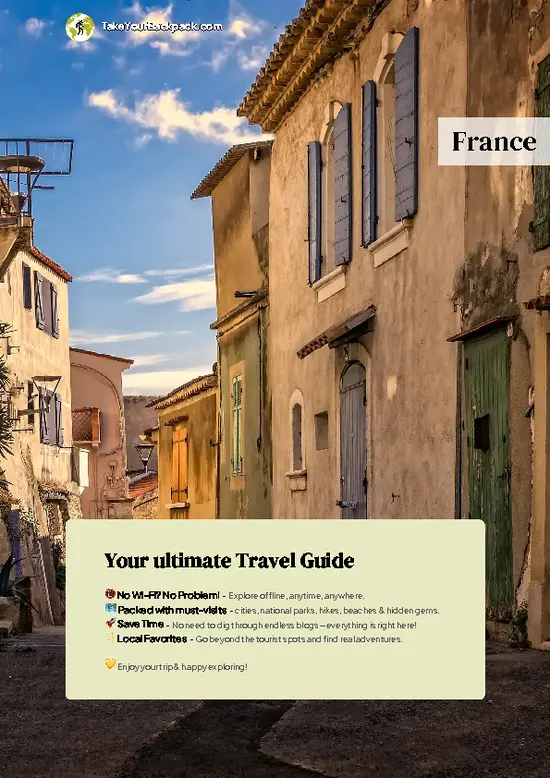
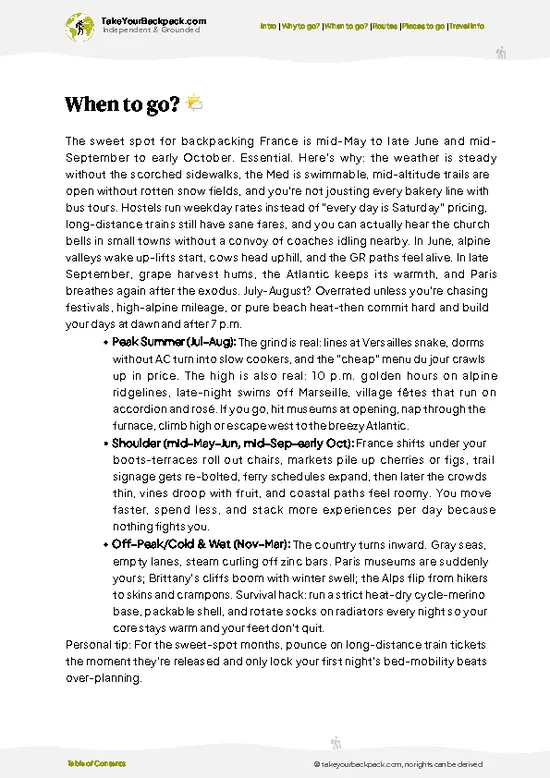
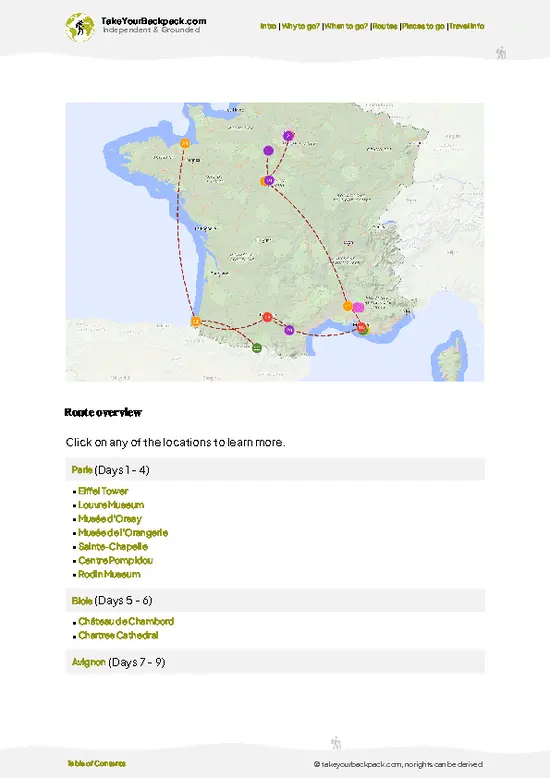
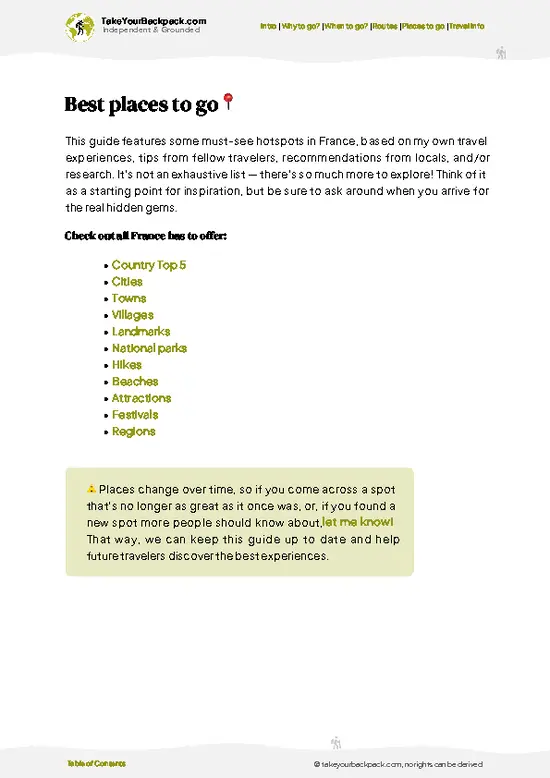
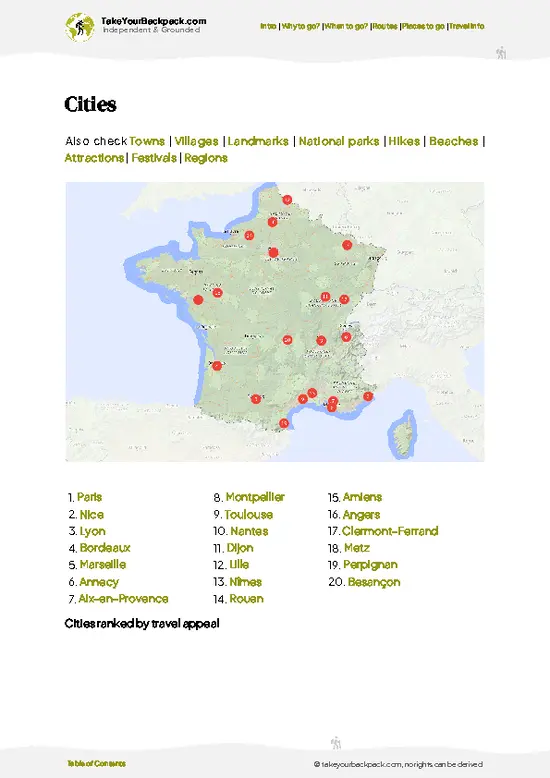
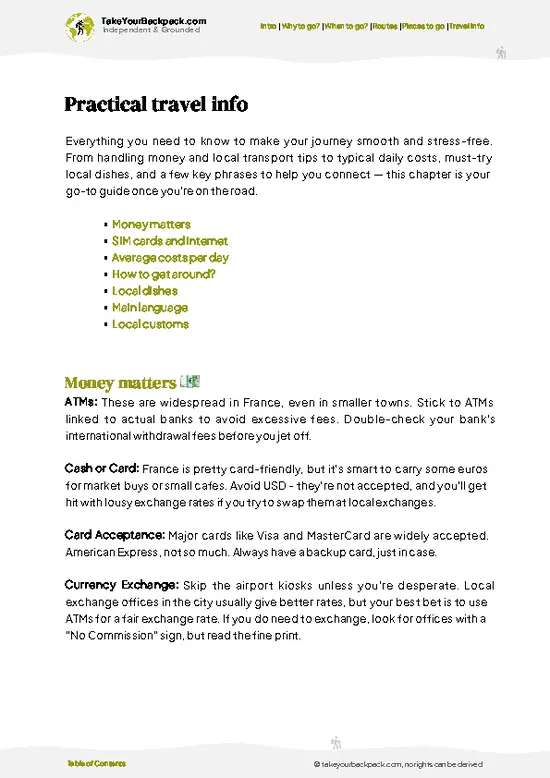
example page 0 from our offline Travel Guide for Franceexample page 1 from our offline Travel Guide for Franceexample page 2 from our offline Travel Guide for Franceexample page 3 from our offline Travel Guide for Franceexample page 4 from our offline Travel Guide for Franceexample page 5 from our offline Travel Guide for Franceexample page 6 from our offline Travel Guide for Franceexample page 7 from our offline Travel Guide for France
The digital guide (475 pages) contains:
144 highlights, ranked by travel appeal
Optimized 7, 14 & 21-day travel routes
Cities, national parks, beaches, historical sites, ...
How to get around
Offline-friendly for travel without Wi-Fi
👉 Click to see all 30+ guide features

📅 Plan smarter in minutes, not weeks
Month by month travel advice
Festivals & national holidays
Budget expectations

🗺️ Go to the right places, skip the overrated ones
Honest pros & cons of destinations
Top hikes, parks & viewpoints
Lesser-known places most travelers miss
Clear “worth it vs skip it” guidance

🛏️ Travel smoothly without rookie mistakes
Best areas to stay
Transport systems explained simply
Common scams & safety advice
SIM cards, money & practical tips

🌍 Understand the country, not just visit it
Culture & traditions
52 Essential phrases & customs
Festivals worth planning around
Traveler-friendly historical context
Insights that make places more meaningful

📱 Built for real travel conditions
Fully downloadable PDF
Works completely offline
Optimized for phone use
Useful in remote areas & buses
Everything in one place
Save weeks of stressful planning
Get instant access to the full guide directly. 30-day money-back guarantee.


Sent to your inbox immediately after payment • 100% Secure Checkout
Best Backpacking Travel Advisor 2025 tourism awardBest Backpacking
Travel Advisor
2025
What others say about Take Your Backpack Guides:
⭐⭐⭐⭐⭐
Fantastic, amazing amount of information!
⭐⭐⭐⭐⭐
My goodness this is amazing, it's what I've been looking for hats off too you!
⭐⭐⭐⭐⭐
I think this is absolutely BRILLIANT
⭐⭐⭐⭐
Very complete and informative. It's still missing places, but I gotta to commend you
⭐⭐⭐⭐⭐
This is truly amazing, thank you, can't wait to explore it with my kids!
⭐⭐⭐⭐⭐
Awesome resource, thank you!
⭐⭐⭐⭐⭐
This is amazing! Can't wait to explore the ones I haven't seen
⭐⭐⭐⭐
I love this! Well done, great idea.
⭐⭐⭐⭐⭐
Thanks for taking the time to make this gem!
⭐⭐⭐⭐⭐
This might be the best website I've ever seen.
⭐⭐⭐⭐⭐
Congratulations, and thank you so much for your work; it's incredibly valuable.
⭐⭐⭐⭐
In all seriousness I think you did a great job pointing out the important spots
⭐⭐⭐⭐⭐
10/10 very good
⭐⭐⭐⭐⭐
As someone who's only just starting to visit regularly this is awesome, thank you.
⭐⭐⭐⭐
Thank you very much! I'm going to visit my dad, it's going to be very useful!
⭐⭐⭐⭐⭐
This is really cool! We'll be travelling for the first time and this definitely come in handy.
⭐⭐⭐⭐⭐
You are now our minister of culture, congratulations 👨‍💼
⭐⭐⭐⭐⭐
Just wanted to tell you that this is a pearl! Going to follow your recommendations.
⭐⭐⭐⭐⭐
This is so cool. I'll definitely be using the resource for my travels soon.
⭐⭐⭐⭐⭐
This is very impressive! Good work.
⭐⭐⭐⭐⭐
This is an amazing and informative site. Very well done!

🛏️ Where to stay?How to pick the right area

When it comes to staying near Les Calanques, your best bet is to look at the towns of Cassis and Marseille. Both offer a range of options that cater to backpackers without breaking the bank.

Cassis is charming and closer to the park. You’ll find several hostels and budget hotels here, like the Hôtel de la Plage, which provides a cozy atmosphere and easy access to the trails. Plus, the local vibe is relaxed, perfect for unwinding after a day of hiking.

Marseille, while a bit further, has a wider variety of accommodations. Check out the HI Marseille Hostel for a friendly, communal atmosphere. … read more 👉
When it comes to staying near Les Calanques, your best bet is to look at the towns of Cassis and Marseille. Both offer a range of options that cater to backpackers without breaking the bank.

Cassis is charming and closer to the park. You’ll find several hostels and budget hotels here, like the Hôtel de la Plage, which provides a cozy atmosphere and easy access to the trails. Plus, the local vibe is relaxed, perfect for unwinding after a day of hiking.

Marseille, while a bit further, has a wider variety of accommodations. Check out the HI Marseille Hostel for a friendly, communal atmosphere. It’s a great base if you want to explore the city’s vibrant culture before or after your park adventures. Just keep in mind that public transport to the Calanques can be a bit tricky, especially in peak season, so plan your trips accordingly.

Inside the national park, options are limited. There are a few campsites, but they fill up quickly, especially in summer. If you’re considering camping, reserve in advance. Otherwise, sticking to Cassis or Marseille will give you the flexibility to enjoy both the park and the local scene without the stress of last-minute accommodations.

👛 Costs (as of 15 September 2025)How expensive it really is

Visiting Les Calanques National Park in France can be a rewarding experience, but it’s essential to be aware of the costs involved to avoid surprises.

Entry to the park itself is free. However, if you plan to park your vehicle, expect to pay around €10 to €15 per day for parking in popular areas. This can add up quickly, especially during peak season.

If you’re considering guided tours or boat trips, prices vary significantly. A half-day boat tour can range from €30 to €60 per person, depending on the season and the provider. Full-day excursions may cost between €70 and €120, often including meals or snorkeling gear.

For those looking to hike, the trails are free, but be prepared for potential costs related to gear. Renting equipment like kayaks or snorkeling gear can set you back €20 to … read more 👉
Visiting Les Calanques National Park in France can be a rewarding experience, but it’s essential to be aware of the costs involved to avoid surprises.

Entry to the park itself is free. However, if you plan to park your vehicle, expect to pay around €10 to €15 per day for parking in popular areas. This can add up quickly, especially during peak season.

If you’re considering guided tours or boat trips, prices vary significantly. A half-day boat tour can range from €30 to €60 per person, depending on the season and the provider. Full-day excursions may cost between €70 and €120, often including meals or snorkeling gear.

For those looking to hike, the trails are free, but be prepared for potential costs related to gear. Renting equipment like kayaks or snorkeling gear can set you back €20 to €40 per day.

Dining options in nearby towns can also impact your budget. A casual meal might cost around €15 to €25 per person, while a sit-down restaurant could easily reach €30 to €50.

Plan ahead to manage these costs effectively. Being aware of parking fees, tour prices, and dining expenses will help you focus on enjoying the stunning landscapes without financial stress.


source: parcs-naturels-regionaux.fr
⚠️ Prices can change and everyone travels differently, so take this as a rough guide. Hope it helps you plan your adventure!

🥾 TrailsHiking Les Calanques national park: highlights and difficulty

The hiking opportunities in Les Calanques National Park are nothing short of breathtaking. Picture rugged limestone cliffs plunging into the turquoise Mediterranean, with hidden coves and lush vegetation all around. The trails here offer a mix of coastal views and inland paths, showcasing the stunning contrasts of the landscape. Wildlife enthusiasts can spot a range of birds, like the Bonelli’s eagle, and maybe even some playful dolphins offshore.

One of the standout trails is the Calanque de Sugiton. Here are the details:
  • Length: 3 km
  • Estimated Duration: 1.5 - 2 hours
  • Difficulty Level: Moderate
  • Key
read more 👉
The hiking opportunities in Les Calanques National Park are nothing short of breathtaking. Picture rugged limestone cliffs plunging into the turquoise Mediterranean, with hidden coves and lush vegetation all around. The trails here offer a mix of coastal views and inland paths, showcasing the stunning contrasts of the landscape. Wildlife enthusiasts can spot a range of birds, like the Bonelli’s eagle, and maybe even some playful dolphins offshore.

One of the standout trails is the Calanque de Sugiton. Here are the details:
  • Length: 3 km
  • Estimated Duration: 1.5 - 2 hours
  • Difficulty Level: Moderate
  • Key Features: Stunning views of the calanque, crystal-clear waters, and a chance to swim
  • Terrain: Rocky paths with some steep sections

Another great option is the Calanque d’En-Vau:
  • Length: 6 km
  • Estimated Duration: 2.5 - 3 hours
  • Difficulty Level: Moderate to Challenging
  • Key Features: Dramatic cliffs, secluded beach, and a picturesque setting
  • Terrain: Steep and rocky, with some scrambling required

Getting to Les Calanques is pretty straightforward via public transport. You can hop on a train or bus from Marseille, and it’s usually a quick ride. Just keep in mind that it can get crowded, especially in the summer months, so an early start is a good idea. As for entrance fees, the park itself is free, but some specific areas might have parking fees if you’re driving. Pack plenty of water and snacks, and enjoy the stunning scenery!
⚠️ Hiking info can sometimes be outdated or inaccurate. Before you hit the trail, check the latest conditions with locals. If you do spot anything that's off, I'd love to hear from you, so I can update it for fellow travelers.

🛡️ SafetyTraveler Safety Guide

Les Calanques is a stunning playground for backpackers, but it’s wise to stay grounded about what to expect. The weather can shift quickly, especially in spring and fall. Be prepared for sun and sudden rain; pack a lightweight, waterproof jacket.

The trails vary from well-maintained paths to steep, rocky sections. Good footwear is essential. A sturdy pair of hiking boots will help you navigate the uneven terrain and avoid slips. Some routes may require basic navigation skills, so a map or GPS app is handy.

Wildlife encounters are rare but possible. If you spot a wild boar or a snake, keep your distance and don’t provoke them. Respect their space, and they’ll likely move along.

Timing is crucial. Start your hikes early to avoid the midday heat and crowds. Lastly, practice trail etiquette: … read more 👉
Les Calanques is a stunning playground for backpackers, but it’s wise to stay grounded about what to expect. The weather can shift quickly, especially in spring and fall. Be prepared for sun and sudden rain; pack a lightweight, waterproof jacket.

The trails vary from well-maintained paths to steep, rocky sections. Good footwear is essential. A sturdy pair of hiking boots will help you navigate the uneven terrain and avoid slips. Some routes may require basic navigation skills, so a map or GPS app is handy.

Wildlife encounters are rare but possible. If you spot a wild boar or a snake, keep your distance and don’t provoke them. Respect their space, and they’ll likely move along.

Timing is crucial. Start your hikes early to avoid the midday heat and crowds. Lastly, practice trail etiquette: yield to those climbing uphill and keep noise to a minimum. This respect enhances the experience for everyone.

Other French national parks near Les Calanques

Explore more nearby:


👉 Discover all national parks

Or checkout all France has to offer (think cities, towns, villages, national parks, hikes, beaches, festivals)
Country photo of France
film
0
0
0a
Pyrenees
Ara Ara I Ara
film
1
1
1a
Vanoise
Parc National De La Vanoise
film
2
2
2a
Ecrins
Randolfo Santos
film
3
3
3a
Mercantour
Julien 44
film
4
4
4a
Cevennes
Pierre-yves Kogane
film
5
5
5a
Regional Nature Park of Corsica
Aymeric B.

We 💚 feedbackParting advice and final tips

Les Calanques is a slice of paradise where azure waters meet rugged cliffs, making every hike feel like a postcard. You’ll find yourself captivated by the scenery and the sense of adventure. But here’s the catch: the trails can be steep and tricky, especially in the summer heat. Bring plenty of water and start early to avoid the crowds. Embrace the challenge; it’s part of what makes this place so rewarding.

✈️ When did I visit France?
Being close to The Netherlands, my home base, I visited France many times.

✍️ Help improve this page!
The information on this page is based on my own backpacking experience in France, supplemented with up-to-date research and feedback from other travelers. Travel details can change, so if you notice anything outdated or incomplete, feel free to let me know.


🙋‍♂️ Give feedback

👋 Meet the founderWho’s Behind Take Your Backpack?

Johan, backpacker and founder of TakeYourBackpackHi, I’m Johan (Netherlands 🇳🇱), the creator of TakeYourBackpack. Over the past decade, I’ve backpacked through 80+ countries across six continents, gaining extensive experience with independent travel, long-term trips, and overland routes.

This site is built on a combination of firsthand travel experience and carefully curated insights from other backpackers. Many guides are based on places I’ve personally visited, while others bring together tips, observations, and practical advice shared by trusted travelers I’ve met along the way.

The goal is to provide realistic, experience-driven guidance — not generic itineraries — so you can explore destinations with better context, clearer expectations, and more confidence.

Get full France guide •
Instant download • 144 highlights • Full Offline guide