v2.webp)
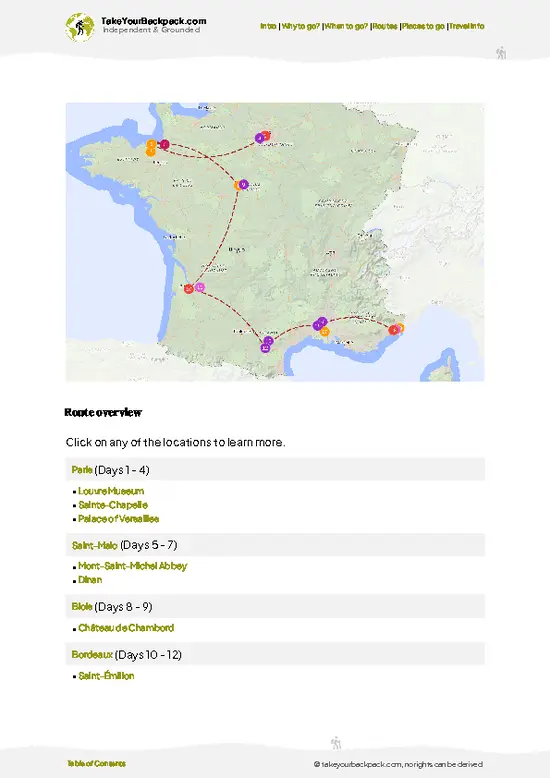
- Place de la Comédie — The city’s living room: huge square, the Three Graces fountain, street performers and cafés. It’s where Montpellier breathes; perfect for people-watching and orienting yourself.
- Musée Fabre — A surprisingly impressive fine-arts collection (from Renaissance to 19th-century French painting) in a beautiful, light-filled museum. Great for a serious cultural fix without leaving the center.
- Jardin des Plantes — France’s oldest botanical garden, tied to Montpellier’s medical school. Ancient trees, medicinal plants and quiet paths make it refreshingly peaceful right by the university quarter.
- Promenade du Peyrou & Arc de Triomphe — An 18th-century terrace with a classical triumphal arch, aqueduct views and wide skyline panoramas. Sunset here is simple and rewarding: locals
- Place de la Comédie — The city’s living room: huge square, the Three Graces fountain, street performers and cafés. It’s where Montpellier breathes; perfect for people-watching and orienting yourself.
- Musée Fabre — A surprisingly impressive fine-arts collection (from Renaissance to 19th-century French painting) in a beautiful, light-filled museum. Great for a serious cultural fix without leaving the center.
- Jardin des Plantes — France’s oldest botanical garden, tied to Montpellier’s medical school. Ancient trees, medicinal plants and quiet paths make it refreshingly peaceful right by the university quarter.
- Promenade du Peyrou & Arc de Triomphe — An 18th-century terrace with a classical triumphal arch, aqueduct views and wide skyline panoramas. Sunset here is simple and rewarding: locals stroll, picnics happen, vistas impress.
- Les Arceaux (Aqueduc des Arceaux) — The elegant stone aqueduct that threads the northern neighborhoods; nearby the lively Marché des Arceaux on market mornings. It feels like Montpellier’s quieter, backyard side — great for local food and atmosphere.
- Cathédrale Saint-Pierre — Massive twin towers and a dramatic gate mark this medieval Gothic cathedral next to the historic university. The interior and the cloistered feel give a strong sense of the city’s long history.
- Quartier Antigone — Ricardo Bofill’s neo-classical, geometric experiment along the Lez river. It’s an unusual, photogenic contrast to the medieval center and a good place to see how modern Montpellier reinvents urban space.
- MO.CO. (La Panacée & Hôtel des Collections) — Montpellier’s contemporary art hub with rotating shows and experimental exhibits. Small but thoughtful; perfect when you want current art without the crowds of bigger cities.
- Pavillon Populaire — A dedicated photography space that often has high-quality, rotating exhibitions and is sometimes free. Easy cultural stop right near the main squares when you need something bite-sized and visually striking.
- Muséum de Montpellier (Natural History Museum) — Classic cabinets, skeletons and regional natural history, located close to the Jardin des Plantes. It’s a compact, well-curated museum that pairs nicely with the botanical garden visit.
Spotted a mistake or missing something? Contact us.

Marylou (Horror) - Escape Game Montpellier

Prison Break - Escape game in Montpellier

School of Magic - Escape game Montpellier

Mission Possible - Escape game Montpellier

Bertrand Bosc wine and food tour in Pic St Loup

Discovery of the Grands Sites de l'Hérault from Montpellier

Small-Group Half-Day Languedoc Pic Saint-Loup Wine Tour from Montpellier

The force to escape - Escape game in Montpellier

Legendary Montpellier, flexible legends and storytelling tour


 Best Backpacking
.jpg) Hi, I’m Johan (Netherlands 🇳🇱), the creator of TakeYourBackpack. Over the past 3 decades, I’ve backpacked through 90+ countries across six continents, gaining extensive experience with independent travel, long-term trips, and overland routes.
Hi, I’m Johan (Netherlands 🇳🇱), the creator of TakeYourBackpack. Over the past 3 decades, I’ve backpacked through 90+ countries across six continents, gaining extensive experience with independent travel, long-term trips, and overland routes.