×

France🇫🇷 | best citiesThe 10 Top cities in France

France has no single city type, and that is the first thing to understand. Paris sits in a class of its own on price and crowds, while the rest of the country splits into distinct kinds. The Mediterranean south is warm, busy and expensive in summer. The Atlantic west is milder, calmer and cheaper. The Rhône and Alsace cities in the east are compact, cultured and easy to walk. Regional capitals in the interior are the best value, with bed prices often a third below Paris. Access is the easy part, because the TGV network radiates from Paris and links most major cities in two to four hours. For backpacking or independent travel, that means you can skip the car entirely. Skip the idea that every famous name deserves two days. Some cities reward a long weekend, others a single afternoon, and the right pick depends on whether you want food, architecture, nightlife or sea air.

By Johan Kruseman 🇳🇱 | Updated October 18, 2026
Explore the best towns in France

Why go?What Makes Them Special

France is built around its cities in a way few countries match. Centuries of centralized rule concentrated art, power and money in urban centers, and each region still keeps a strong capital with its own cathedral, market hall, university and food identity. That history means almost every large city has a walkable medieval or classical core, a proper museum, and a daily produce market. The country is also geographically varied: Atlantic, Mediterranean, Alpine and continental influences give each city a different climate, cuisine and pace, so two cities three hours apart can feel like different countries.

Infrastructure is the other big advantage. The high-speed rail network and dense regional trains (TER) make city-hopping simple without a car, and most centers have trams and cheap local … read more 👉
France is built around its cities in a way few countries match. Centuries of centralized rule concentrated art, power and money in urban centers, and each region still keeps a strong capital with its own cathedral, market hall, university and food identity. That history means almost every large city has a walkable medieval or classical core, a proper museum, and a daily produce market. The country is also geographically varied: Atlantic, Mediterranean, Alpine and continental influences give each city a different climate, cuisine and pace, so two cities three hours apart can feel like different countries.

Infrastructure is the other big advantage. The high-speed rail network and dense regional trains (TER) make city-hopping simple without a car, and most centers have trams and cheap local transport. Public museums are often free on certain days or for under-26 EU residents, which cuts costs.

Before choosing France, know the limits. It is not a cheap country. Restaurants, hostel beds and train fares run well above Southern or Eastern Europe, and booking rail tickets late can double the price. Many shops and some museums close on Sundays and Mondays, and lunch breaks of two hours are normal outside Paris. Smaller cities empty out in August as locals take holiday, which can leave favorite restaurants shuttered. English is spoken in tourist zones but not reliably elsewhere, and a few words of French (bonjour first, always) change how you are treated. Finally, big-name cities are crowded in summer, so a lesser-known regional capital often gives you more for less money.
How the List Was Created
The list of best cities in France is created based on culture, vibe, attractions, transport ease, and local charm. If you feel a city is missing in this list, please let us know.

When to go?Optimal Periods for Travel

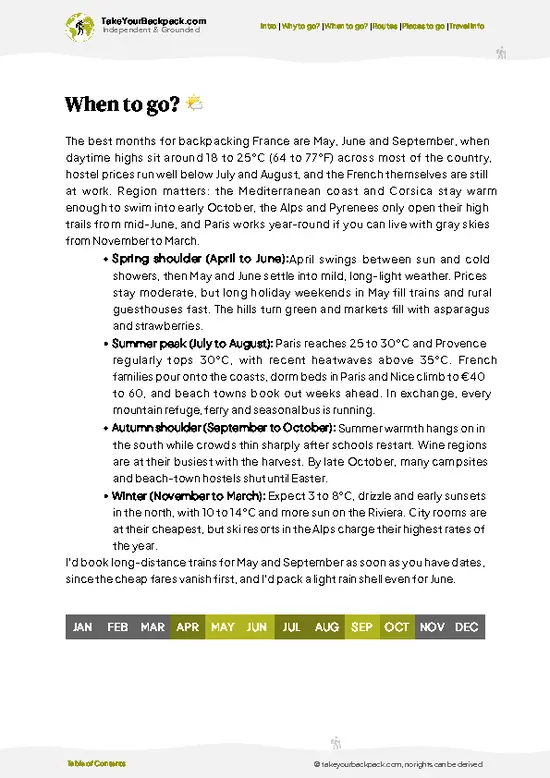
Best months for French cities: The best months are May, June and September, when daytime highs sit between 18 and 26°C across most of the country, terraces are open, and prices have not hit their summer peak. Rain is moderate in these months, usually 50 to 70 mm in Paris, with short showers rather than all-day gray.
Shoulder and low seasons: April and October are good value, with highs of 13 to 19°C, lower hotel rates (often 15 to 30 percent below summer) and thinner queues. Expect more rain in the Atlantic west and the north. Winter, from November to March, brings highs of 4 to 10°C in the north and east, and colder, sharper days in Alsace and the Alps, but the Mediterranean coast stays at 10 to 15°C with plenty of sun. Winter is cheap for beds and museums, though Christmas markets in the … read more 👉
Best months for French cities: The best months are May, June and September, when daytime highs sit between 18 and 26°C across most of the country, terraces are open, and prices have not hit their summer peak. Rain is moderate in these months, usually 50 to 70 mm in Paris, with short showers rather than all-day gray.
Shoulder and low seasons: April and October are good value, with highs of 13 to 19°C, lower hotel rates (often 15 to 30 percent below summer) and thinner queues. Expect more rain in the Atlantic west and the north. Winter, from November to March, brings highs of 4 to 10°C in the north and east, and colder, sharper days in Alsace and the Alps, but the Mediterranean coast stays at 10 to 15°C with plenty of sun. Winter is cheap for beds and museums, though Christmas markets in the east push prices up in December.
Peak periods that change plans: July and August are worth avoiding for the south. Mediterranean cities hit 30 to 35°C, beds cost far more, and beaches and old towns are packed. Paris dips in August as locals leave, so some independent restaurants and bakeries close for two to four weeks, even though tourist sites stay open. Interior regional cities get hot but quieter. Book trains and beds early around 14 July, 15 August and the Easter and All Saints holidays, when rail demand spikes and fares rise sharply. Skip the first week of May if you want flexibility, as public holidays on 1 and 8 May shut many shops and stretch transport.

city hoppingOptimizing Your Multi-Stop Itinerary

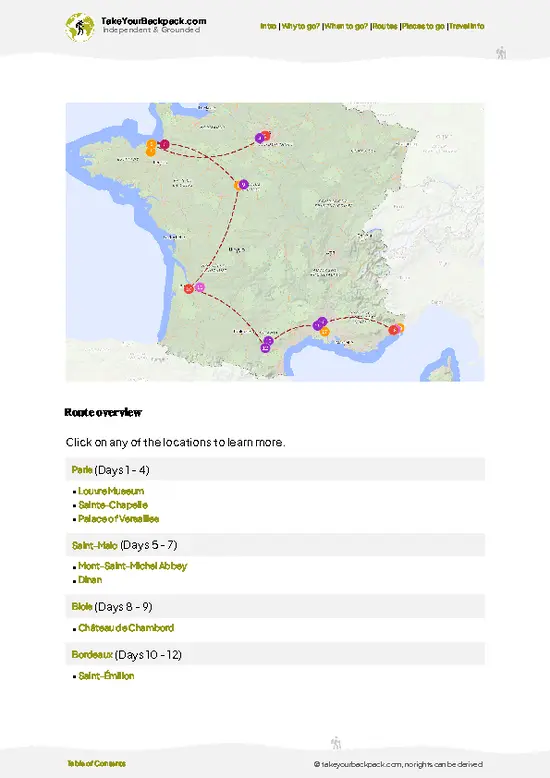
How many days a multi-city trip needs: A trip combining several French cities needs 10 to 16 days. Anything shorter turns into a rail timetable exercise, with more hours on trains than in streets.
Grouping regions and direction of travel: Group by region and avoid crisscrossing. Paris with the north and east (Alsace, Lorraine) pairs well, as does Lyon with the Alps and Rhône valley, and the Mediterranean arc from Marseille to Nice. The Atlantic west, around Nantes, Bordeaux and the southwest, works as a separate loop. A sensible shape is to start in Paris, swing through the east or Loire, drop down the Rhône corridor, and finish on the Mediterranean. Reverse it in winter, when the south is a gentler place to end up. Most routes run through hubs: Paris has six main stations, and Lyon Part-Dieu … read more 👉
How many days a multi-city trip needs: A trip combining several French cities needs 10 to 16 days. Anything shorter turns into a rail timetable exercise, with more hours on trains than in streets.
Grouping regions and direction of travel: Group by region and avoid crisscrossing. Paris with the north and east (Alsace, Lorraine) pairs well, as does Lyon with the Alps and Rhône valley, and the Mediterranean arc from Marseille to Nice. The Atlantic west, around Nantes, Bordeaux and the southwest, works as a separate loop. A sensible shape is to start in Paris, swing through the east or Loire, drop down the Rhône corridor, and finish on the Mediterranean. Reverse it in winter, when the south is a gentler place to end up. Most routes run through hubs: Paris has six main stations, and Lyon Part-Dieu and Marseille Saint-Charles are the key southern junctions.
Time per stop and travel times: Give a major city two to three nights, and a smaller regional capital one to two. One night in a big city wastes the day you arrive and the morning you leave. TGV journeys between regions take roughly 2 to 4 hours (Paris to Lyon about 2 hours, Paris to Marseille about 3 hours 20 minutes), while cross-country links that avoid Paris, such as Bordeaux to Lyon, can take 5 to 7 hours with a change.
Common planning mistakes: The biggest mistake is routing everything through Paris, which adds hours on diagonal trips. Check for direct intercity or night services, and use regional TER trains for cross links. Another is booking too many hops: more than one transfer day every three nights drains the trip. Many travelers also buy tickets on the day, paying double for TGV seats that open about three months ahead. Book early, or choose cheaper Ouigo or bus options when flexibility matters.

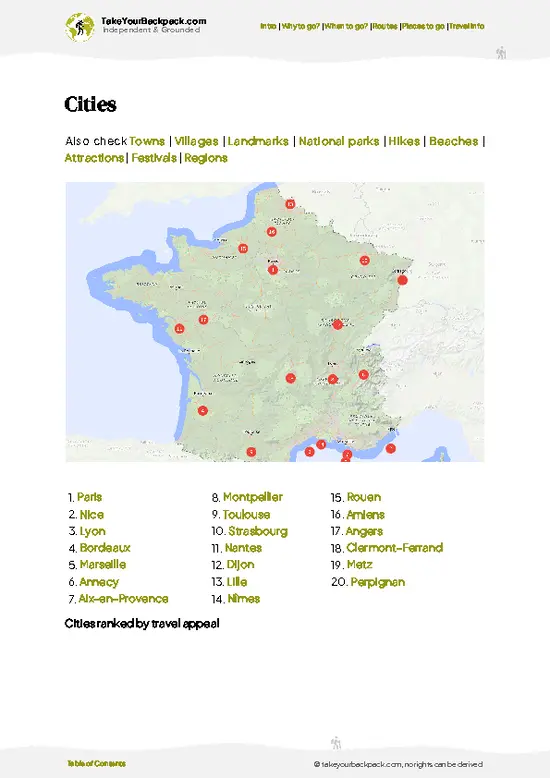
The ListMust-Visit cities in France

1 Paris

River Seine, arrondissements, world-class museums

Cross iconic bridges, explore diverse neighborhoods, and experience a city where art, food, and daily life converge at every corner.

France - Paris

2 Nice

Promenade des Anglais, pebble beaches, Belle Époque villas

Swim in turquoise waters, stroll seaside boulevards, and discover a city shaped by Italian influences and a mild coastal climate.

france-city-nice
© Google | Lionel Mariette

3 Lyon

Silk passageways, hilltop basilica, rivers confluence

Navigate hidden traboules and sample local cuisine in a city where two rivers meet and history shapes every neighborhood.

france-city-lyon
© Google | Alby Set

4 Bordeaux

Wine warehouses, neoclassical facades, Garonne quays

Taste regional wines in riverside districts and walk broad avenues lined with 18th-century architecture and lively cafés.

france-city-bordeaux
© Google | Alamine Hadrati

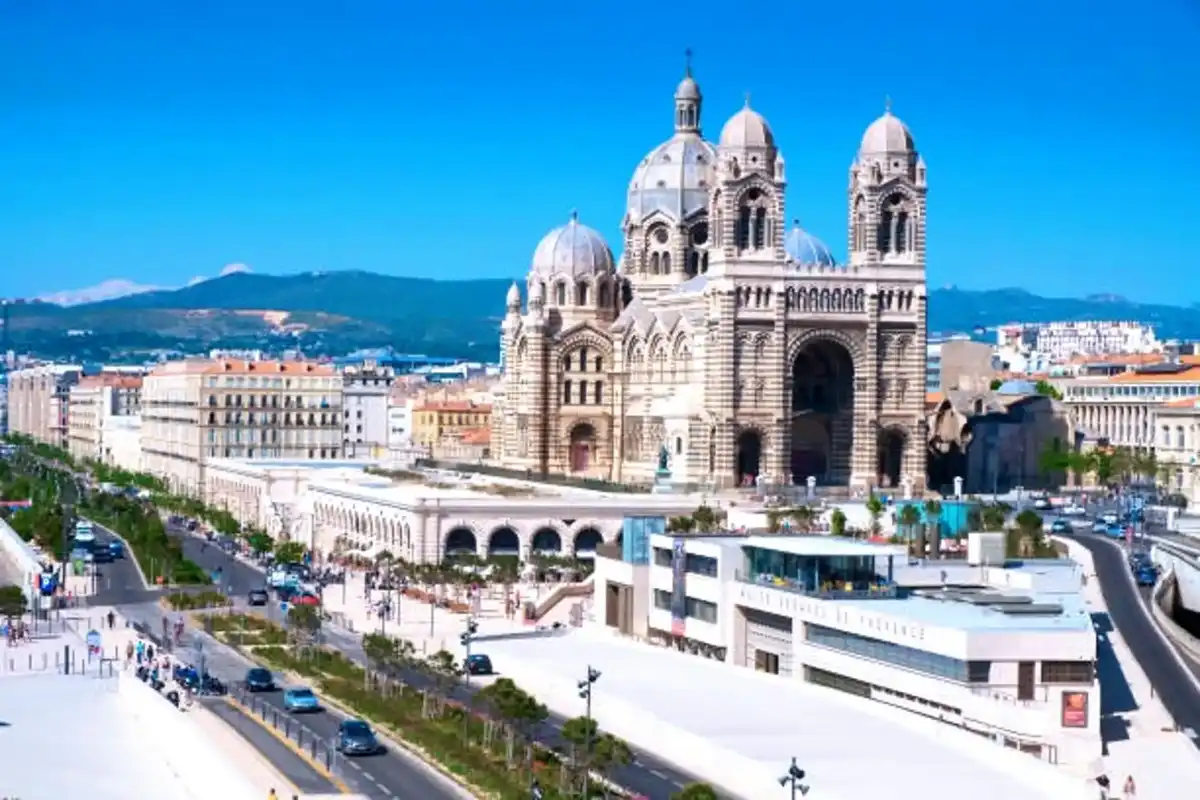
5 Marseille

Old Port, North African markets, limestone calanques

Watch fishing boats unload at dawn, then explore neighborhoods where Mediterranean and migrant cultures intersect.

6 Annecy

Alpine lake, pastel canals, mountain backdrop

Swim or paddle in clear waters, then wander cobbled streets framed by peaks and flower-decked bridges.

france-city-annecy
© Google | Malika Aissani

7 Aix-en-Provence

Plane tree boulevards, fountains, Cézanne’s studio

Spend afternoons in shaded squares, browsing markets and galleries in a city known for its artistic legacy and gentle climate.

8 Montpellier

Medieval lanes, student nightlife, Mediterranean light

Experience a city where centuries-old streets lead to lively plazas, and outdoor cafés fill with conversation late into the evening.

france-city-montpellier
© Google |

9 Toulouse

Garonne riverbanks, aerospace hub, pink brick facades

Wander through neighborhoods where aviation history meets student energy, and evenings spill out onto riverside terraces and sun-warmed squares.

10 Strasbourg

half-timbered houses, canals, Gothic cathedral

Wander a city where French and German influences meet, visible in architecture, waterways, and local traditions.

france-city-strasbourg
© Google | Lika “angi”

11 Nantes

Loire estuary, creative installations, shipyard heritage

Trace the city’s industrial past along repurposed docks, then discover public art and green spaces woven into daily urban life.

12 Dijon

Burgundian rooftops, mustard shops, ducal palace

Sample regional specialties in covered markets and stroll shaded streets lined with timbered houses and Renaissance courtyards.

13 Lille

Flemish architecture, grand squares, market culture

Absorb the cross-border influences in ornate buildings, bustling food markets, and a calendar filled with local festivals.

14 Nîmes

Roman arena, olive groves, limestone fountains

Walk between ancient monuments and leafy squares, where the city’s southern rhythm is shaped by its Roman legacy.

15 Rouen

Gothic cathedral, half-timbered houses, Seine quays

Follow winding alleys from riverside promenades to striking church towers, with layers of history visible at every turn.

16 Amiens

Floating gardens, Gothic cathedral, canal paths

Cycle or stroll along waterways lined with market gardens, and pause in quiet squares near the city’s monumental cathedral.

17 Angers

Slate roofs, medieval fortress, Loire vineyards

Sample local wines in riverside bars and explore a city where castle walls and contemporary art coexist.

18 Clermont-Ferrand

Volcanic stone, panoramic viewpoints, Michelin legacy

Climb to hilltop parks for views of volcanic peaks, then explore a city shaped by industry and a strong regional identity.

19 Metz

Moselle river, stained glass, imperial quarter

Move between riverside promenades, modern art spaces, and neighborhoods marked by both French and German architectural styles.

20 Perpignan

Catalan quarter, palm-lined boulevards, fortress walls

Notice the blend of French and Catalan influences in local markets, architecture, and the city’s relaxed coastal pace.

21 Besançon

Citadel ramparts, watchmaking roots, river loop

Circle the city’s natural curve to find leafy parks, museums, and a calm pace set by the Doubs river.

Think you know France?

Prove you’re a true local — uncover 11 lesser-known cities in France that locals tend to keep to themselves.
Loading the map 🌍

Expert viewTips and Advice from Travelers

How Many Cities to Pick: Three to four cities is the right number for a trip of two weeks, and two is plenty for a week. French cities repay a slow second day, when the market, the neighborhood bar and the back streets start to make sense. Stack six cities into ten days and you spend roughly a third of your time on platforms and in check-in queues, which is a poor trade for a quick look at each. Every extra city also adds a rail fare of about €25 to 90 and a half-day of lost sightseeing. Skip the idea of collecting as many names as possible.

Which Kind Suits Your Style: France has four kinds of city, and they suit different travelers. The capital is the one to include if this is your first visit. Its museums, architecture and street life have no equal elsewhere in the country, but it is also … read more 👉
How Many Cities to Pick: Three to four cities is the right number for a trip of two weeks, and two is plenty for a week. French cities repay a slow second day, when the market, the neighborhood bar and the back streets start to make sense. Stack six cities into ten days and you spend roughly a third of your time on platforms and in check-in queues, which is a poor trade for a quick look at each. Every extra city also adds a rail fare of about €25 to 90 and a half-day of lost sightseeing. Skip the idea of collecting as many names as possible.

Which Kind Suits Your Style: France has four kinds of city, and they suit different travelers. The capital is the one to include if this is your first visit. Its museums, architecture and street life have no equal elsewhere in the country, but it is also the most expensive and the most hurried. Limit it to three or four days. Beyond that, you are paying capital prices for diminishing returns.

Large regional cities are the best value for most backpackers. They have real nightlife, student populations, cheaper dorms and plenty of free sights, and they sit on fast rail lines. Choose these if you want to meet people and eat well on a tight budget.

Small walled and medieval towns look wonderful on a postcard, but many are finished in half a day. They are worth an overnight only if you want quiet evenings. Most make better stops of a few hours than bases.

Mediterranean coastal cities are the weakest value in summer. Beaches are crowded, dorm prices rise sharply and the best swimming is often outside the city. Visit in May, June or September, or skip them.

What It Costs: A backpacker spending US$65 to 100 a day (about €60 to 90) can live comfortably in regional cities. In Paris, plan on €90 to 130. A dorm bed runs €25 to 45 in the capital and €22 to 35 elsewhere. Private budget rooms start around €60 to 80.

Food is where you save. A bakery sandwich or quiche costs €4 to 8, and a lunchtime plat du jour in a neighborhood restaurant is €14 to 20, often with a starter or dessert included. The same meal in the evening costs €10 to 20 more. Make lunch your main meal. Supermarket and market picnics bring a day’s food down to €15 to 25.

Sights add up quickly. Major museums charge €12 to 22, and cathedral towers and castles €8 to 15. EU residents under 26 often enter state museums free, and many national museums are free on the first Sunday of certain months. Check which apply before buying tickets. Budget €10 to 20 a day for sights, and skip any audio guide or tour you can replace with a free walking route.

City transit is cheap. A single metro or tram ticket is about €2 to 2.50, and day passes run €8 to 15. Walking covers most historic centers. Between cities, advance TGV fares range from €20 to 90, and the low-cost Ouigo trains start around €10 to 35 but charge extra for large bags. Buses on intercity routes are slower but often €8 to 25. Over a three-city trip, expect €100 to 250 on transport. A hostel stay of three nights, food and sights add up to roughly €200 to 330 per city visit, or €300 to 450 in the capital.

Add the tourist tax, charged per person per night, usually €1 to 5 and paid at the accommodation.

Safety and Local Etiquette: French cities are safe for solo travelers, including women at night in central areas. The real risk is pickpocketing. It is concentrated on crowded metro lines, around major monuments and at station entrances. Carry your phone in a front pocket, keep a zipped bag in front of you on trains and never put a phone on a café table. The petition clipboard, the “found” gold ring and the friendship-bracelet approach are common scams. Walk past, and do not sign or accept anything.

Rail and transit strikes are a regular feature of French life. They are usually announced days ahead, so check the operator’s app and book flexible fares for any travel day that matters. Keep a cushion before any flight home.

Manners matter more than visitors expect. Say “bonjour” when entering any shop, café or hostel reception before asking anything, and “merci, au revoir” when leaving. Skipping the greeting is the single fastest way to get cold service. Kitchens often close between about 2:30 and 7 p.m., many shops shut on Sunday and some on Monday, so plan meals and supplies accordingly. Tap water is safe and free in restaurants if you ask for “une carafe d’eau.” Tipping is not expected beyond rounding up, because service is already included in menu prices.

✈️ The backpacker research shortcutFrance Travel Guide

An offline-friendly backpacking guide with optimized travel routes, ranked highlights, transport advice, and the best areas to stay.
example page 0 from our offline Travel Guide for France
example page 1 from our offline Travel Guide for France
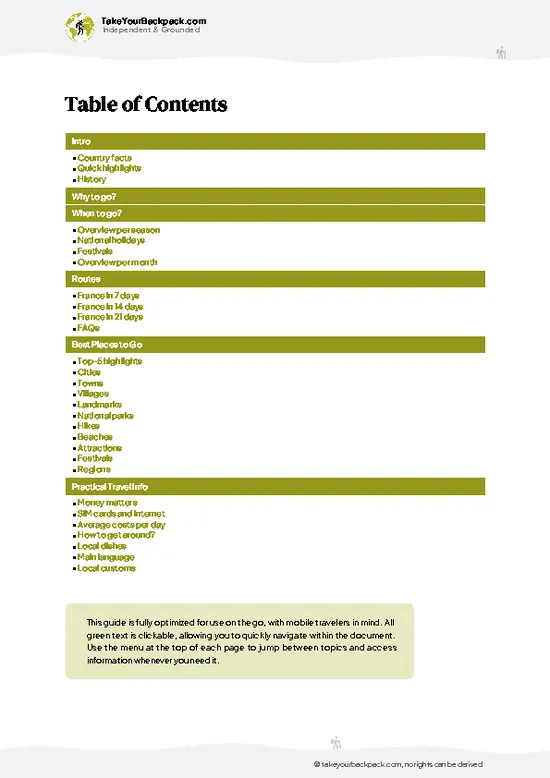
example page 2 from our offline Travel Guide for France
example page 3 from our offline Travel Guide for France
example page 4 from our offline Travel Guide for France
example page 5 from our offline Travel Guide for France
example page 6 from our offline Travel Guide for France
example page 7 from our offline Travel Guide for France
The digital guide (501 pages) contains:
✅ 135 highlights, ranked by travel appeal
✅ Optimized 7, 14 & 21-day travel routes
✅ Cities, national parks, landmarks, beaches
✅ How to get around
✅ Offline-friendly for travel without Wi-Fi
👉 Click to see all 30+ guide features

📅 Plan smarter in minutes, not weeks
✅ Month by month travel advice
✅ Festivals & national holidays
✅ Budget expectations

🗺️ Go to the right places, skip the overrated ones
✅ Honest pros & cons of destinations
✅ Top hikes, parks & viewpoints
✅ Lesser-known places most travelers miss
✅ Clear “worth it vs skip it” guidance

🛏️ Travel smoothly without rookie mistakes
✅ Best areas to stay
✅ Transport systems explained simply
✅ Common scams & safety advice
✅ SIM cards, money & practical tips

🌍 Understand the country, not just visit it
✅ Culture & traditions
✅ 52 Essential phrases & customs
✅ Festivals worth planning around
✅ Traveler-friendly historical context
✅ Insights that make places more meaningful

📱 Built for real travel conditions
✅ Fully downloadable PDF
✅ Works completely offline
✅ Optimized for phone use
✅ Useful in remote areas & buses
✅ Everything in one place
Stop searching, start planning
Get instant access to your full guide. 30‑day money-back guarantee.
+ Add another guide for just

By proceeding you agree to our terms.
Sent to your inbox immediately after payment • 100% Secure Checkout
Best Backpacking Travel Advisor 2025 tourism awardBest Backpacking
Travel Advisor
2025
What others say about Take Your Backpack Guides:
⭐⭐⭐⭐⭐
Fantastic, amazing amount of information!
⭐⭐⭐⭐⭐
My goodness this is amazing, it's what I've been looking for hats off too you!
⭐⭐⭐⭐⭐
I think this is absolutely BRILLIANT
⭐⭐⭐⭐
Very complete and informative. It's still missing places, but I gotta to commend you
⭐⭐⭐⭐⭐
This is truly amazing, thank you, can't wait to explore it with my kids!
⭐⭐⭐⭐⭐
Awesome resource, thank you!
⭐⭐⭐⭐⭐
This is amazing! Can't wait to explore the ones I haven't seen
⭐⭐⭐⭐
I love this! Well done, great idea.
⭐⭐⭐⭐⭐
Thanks for taking the time to make this gem!
⭐⭐⭐⭐⭐
This might be the best website I've ever seen.
⭐⭐⭐⭐⭐
Congratulations, and thank you so much for your work; it's incredibly valuable.
⭐⭐⭐⭐
In all seriousness I think you did a great job pointing out the important spots
⭐⭐⭐⭐⭐
10/10 very good
⭐⭐⭐⭐⭐
As someone who's only just starting to visit regularly this is awesome, thank you.
⭐⭐⭐⭐
Thank you very much! I'm going to visit my dad, it's going to be very useful!
⭐⭐⭐⭐⭐
This is really cool! We'll be travelling for the first time and this definitely come in handy.
⭐⭐⭐⭐⭐
You are now our minister of culture, congratulations 👨‍💼
⭐⭐⭐⭐⭐
Just wanted to tell you that this is a pearl! Going to follow your recommendations.
⭐⭐⭐⭐⭐
This is so cool. I'll definitely be using the resource for my travels soon.
⭐⭐⭐⭐⭐
This is very impressive! Good work.
⭐⭐⭐⭐⭐
This is an amazing and informative site. Very well done!

🛏️ Where to stay?Top Places to Consider Staying

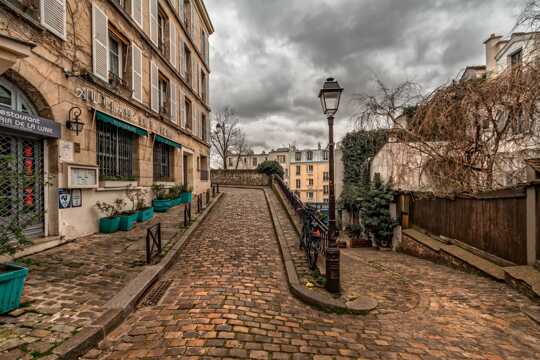
France has plenty of hostels and budget rooms, with dorm beds running roughly €30 to 55 in Paris and €20 to 40 in most other cities. In Paris, the Canal Saint-Martin area and Belleville in the northeast hold the densest cluster of large hostels, with cheap bars and good metro links but a scruffy edge after dark, while Montmartre puts you near Sacré-Cœur and the Pigalle nightlife at the cost of steep hills and pickpockets around the main stations. Elsewhere, look at Vieux Lyon in Lyon for cobbled-lane atmosphere and walkable sights, the Vieux-Port and Cours Julien in Marseille for late nights (stay alert around the station), and the Old Town of Nice for beach access, though its narrow streets … read more 👉
France has plenty of hostels and budget rooms, with dorm beds running roughly €30 to 55 in Paris and €20 to 40 in most other cities. In Paris, the Canal Saint-Martin area and Belleville in the northeast hold the densest cluster of large hostels, with cheap bars and good metro links but a scruffy edge after dark, while Montmartre puts you near Sacré-Cœur and the Pigalle nightlife at the cost of steep hills and pickpockets around the main stations. Elsewhere, look at Vieux Lyon in Lyon for cobbled-lane atmosphere and walkable sights, the Vieux-Port and Cours Julien in Marseille for late nights (stay alert around the station), and the Old Town of Nice for beach access, though its narrow streets stay noisy until late in summer.

If you enjoy meeting fellow travelers, consider choosing hostels with high ratings for atmosphere. On the other hand, if you prefer having your own space, a hotel might be a better option.

FranceMore Places Across France

👋 Meet the founderWho’s Behind Take Your Backpack?

Johan, backpacker and founder of TakeYourBackpackHi, I’m Johan (Netherlands 🇳🇱), the creator of TakeYourBackpack. Over the past 3 decades, I’ve backpacked through 90+ countries across six continents, gaining extensive experience with independent travel, long-term trips, and overland routes.

This site is built on a combination of firsthand travel experience and carefully curated insights from other backpackers. Many guides are based on places I’ve personally visited, while others bring together tips, observations, and practical advice shared by trusted travelers I’ve met along the way.

The goal is to provide realistic, experience-driven guidance — not generic itineraries — so you can explore destinations with better context, clearer expectations, and more confidence.