×

France🇫🇷 | attractionsMUCEMMediterranean cultures, lattice façade, harbor views, bridge access | things to do and best time to go

Explore La VilletteExplore Grande Plage de Biarritz

Backpacking in MUCEM
👌 Worth visitingattraction ranked #15
By Johan Kruseman 🇳🇱 | Updated September 23, 2026

Here’s the curveball: MUCEM isn’t just a museum—it’s a sun-drenched fortress where you can sprawl on the ramparts for free, picnic with locals, and watch the Mediterranean crash against Marseille’s old port. Most guides sell you on the architecture and the exhibitions (which are solid, don’t get me wrong), but the real backpacker gold is the open-air maze of walkways and terraces that blur the line between art space and public hangout. MUCEM sits right on the edge of Marseille, southern France’s wildest port city—a place that’s always a little rough around the edges, and proud of it. Yes, the ticketed galleries can feel overpriced if you’re on a shoestring, and in peak season, the selfie-stick crowd is real. But unlike the Louvre’s polished hush or Versailles’ velvet ropes, MUCEM’s vibe is raw, salty, and alive. You’re as likely to meet a street poet as a curator. If you want a museum that feels like it belongs to the city, not just its tourists, this is it.

Discover everything you want to know in the 📖 France Travel Guide.


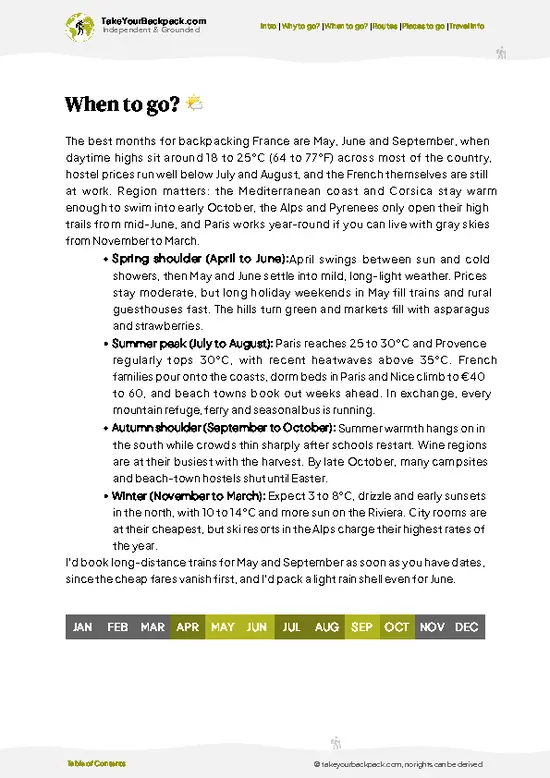
example page 0 from our offline Travel Guide for France
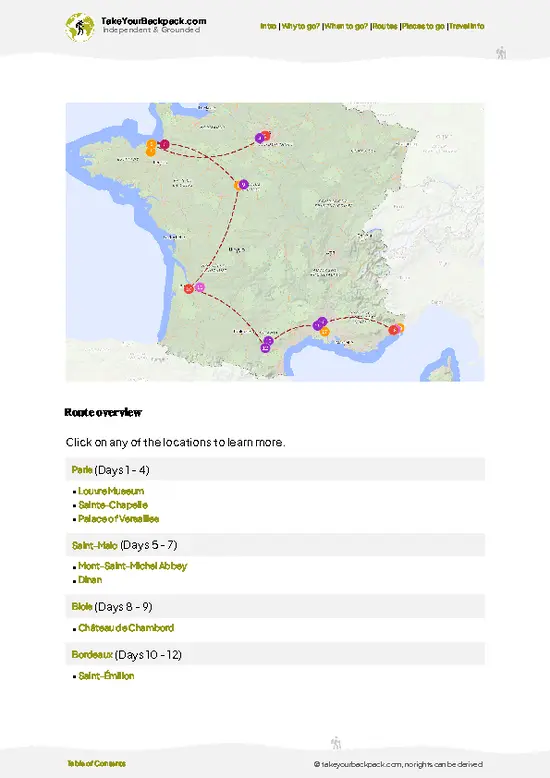
example page 1 from our offline Travel Guide for France
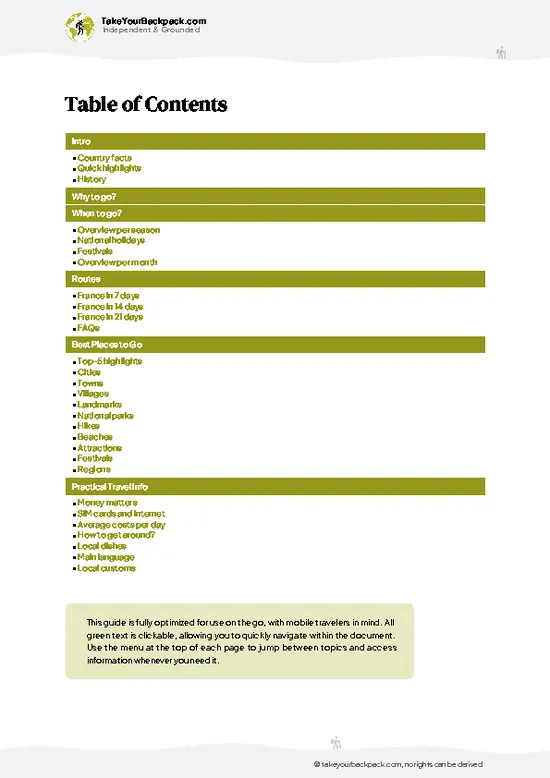
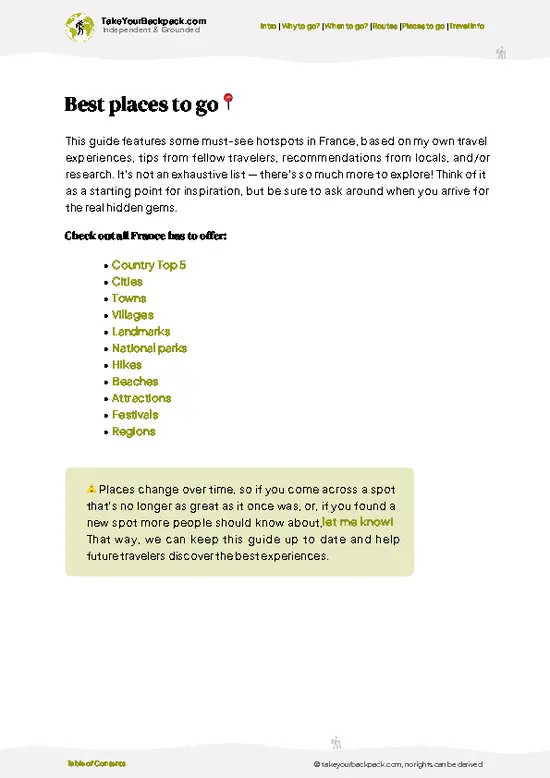
example page 2 from our offline Travel Guide for France
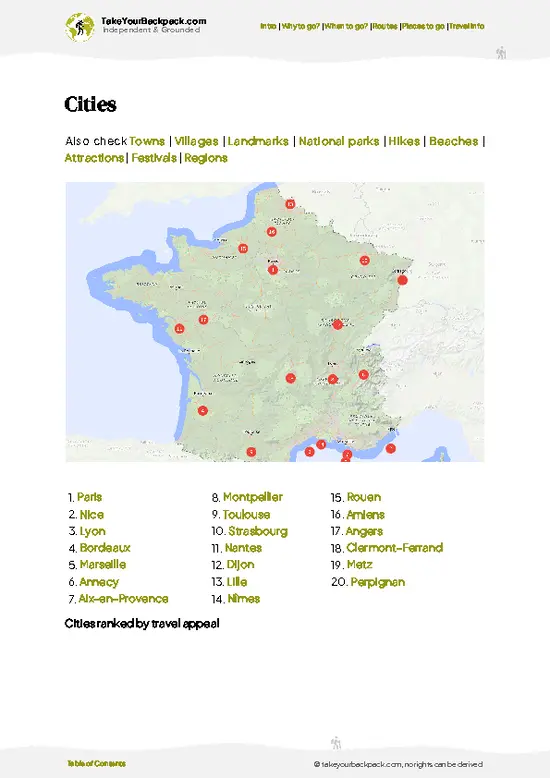
example page 3 from our offline Travel Guide for France
example page 4 from our offline Travel Guide for France
example page 5 from our offline Travel Guide for France
example page 6 from our offline Travel Guide for France
example page 7 from our offline Travel Guide for France
Loading the map 🌍
CLICK TO FILTER
cities
towns
villages
landmarks
national parks
hikes
beaches
attractions
festivals
regions
SHOW COUNTRY’S BESTSHOW ALL

✨ Why go?
Ranked #15 attraction in France
What makes it a must-see attraction

MUCEM in Marseille isn’t just another museum you tick off because it looks good on Instagram. Sure, the building’s sharp, modern lines clash with the old port’s gritty vibe, but that’s exactly the point. It’s a bold statement about France’s complex relationship with the Mediterranean—its history, culture, and ongoing social currents. Backpackers make time here because MUCEM isn’t about pretty pictures; it’s about raw, layered stories that hit you in the gut. You’ll find exhibits that dig into colonial legacies, migration, and the everyday lives of Mediterranean people, all framed in a way that challenges the usual tourist gloss.

Yes, it can get crowded, especially in summer, and the entry fee isn’t dirt cheap. But the payoff is real. This place is a milestone on any serious France route because … read more 👉
MUCEM in Marseille isn’t just another museum you tick off because it looks good on Instagram. Sure, the building’s sharp, modern lines clash with the old port’s gritty vibe, but that’s exactly the point. It’s a bold statement about France’s complex relationship with the Mediterranean—its history, culture, and ongoing social currents. Backpackers make time here because MUCEM isn’t about pretty pictures; it’s about raw, layered stories that hit you in the gut. You’ll find exhibits that dig into colonial legacies, migration, and the everyday lives of Mediterranean people, all framed in a way that challenges the usual tourist gloss.

Yes, it can get crowded, especially in summer, and the entry fee isn’t dirt cheap. But the payoff is real. This place is a milestone on any serious France route because it forces you to confront the region’s contradictions and beauty without sugarcoating. The views from the rooftop terrace alone—over the port and the sea—are worth the climb. MUCEM is where history, art, and social reality collide, making it a rare cultural heavyweight that rewards the effort with perspective, not just pretty photos. If you want to understand Marseille beyond the postcard, this is your stop.

💡 HighlightsEssential experiences to have while visiting MUCEM

The Rooftop Panorama
Forget the Instagram shots of the latticed cube at sunset—yes, the architecture is wild, but the real showstopper is the rooftop. You get a 360-degree sweep of Marseille: the old port, the Mediterranean, the city’s chaos and color all at once. It’s not just a view; it’s a front-row seat to the city’s contradictions—ancient and modern, gritty and grand. You’ll find locals up here, not just tourists, and if there’s a breeze, you’ll taste salt on your lips. This is the spot where Marseille feels infinite and alive. (Personal favorite—nothing else at MUCEM makes you feel this plugged into the city’s pulse.)


The J4 Building’s Lattice Facade
You’ve seen it in a thousand filtered photos, but standing inside the shadow-play of Rudy Ricciotti’s concrete lattice is a different … read more 👉
The Rooftop Panorama
Forget the Instagram shots of the latticed cube at sunset—yes, the architecture is wild, but the real showstopper is the rooftop. You get a 360-degree sweep of Marseille: the old port, the Mediterranean, the city’s chaos and color all at once. It’s not just a view; it’s a front-row seat to the city’s contradictions—ancient and modern, gritty and grand. You’ll find locals up here, not just tourists, and if there’s a breeze, you’ll taste salt on your lips. This is the spot where Marseille feels infinite and alive. (Personal favorite—nothing else at MUCEM makes you feel this plugged into the city’s pulse.)


The J4 Building’s Lattice Facade
You’ve seen it in a thousand filtered photos, but standing inside the shadow-play of Rudy Ricciotti’s concrete lattice is a different animal. The sun cuts through the geometric skin, throwing patterns across the floors and walls. It’s not just a backdrop; it’s interactive art. Walk the exterior ramp and you’ll feel like you’re floating between sea and sky, with the Mediterranean crashing below. This is architecture that doesn’t just house art—it becomes the art.


The Footbridge to Fort Saint-Jean
Here’s where MUCEM stops being a museum and becomes an adventure. The footbridge is a narrow, slightly vertigo-inducing walkway suspended over the water, linking the ultra-modern J4 building to the 17th-century Fort Saint-Jean. Crossing it, you’re straddling centuries. The fort itself is a maze of stone corridors, wild gardens, and city views that feel earned, not staged. It’s the rare museum where getting from one exhibit to the next is half the fun.


The Mediterranean Gallery (Galerie de la Méditerranée)
This isn’t your standard artifact parade. The permanent collection dives into the messy, fascinating history of Mediterranean civilizations—trade, migration, conflict, food, faith. You’ll see everything from ancient amphorae to pop-culture relics. The curation is sharp, sometimes provocative, and always rooted in the real, lived experience of the region. If you want to understand why Marseille is Marseille, start here.


The Temporary Exhibitions
MUCEM doesn’t coast on its looks. The rotating exhibitions are where the museum flexes its intellectual muscle. Past shows have tackled everything from Algerian independence to the politics of food. The topics are often edgy, sometimes divisive, and never boring. If you’re lucky, you’ll catch a show that makes you rethink what a museum can do. Check what’s on before you go—this is where the locals come to argue, not just admire.


The Seaside Promenade
Most people rush inside, but the promenade wrapping around the museum is pure Marseille: fishermen casting lines, teenagers skateboarding, old men playing pétanque. The sea is right there, sometimes rough, sometimes glassy. It’s the city’s living room, and you’re invited. If you want to feel the city’s heartbeat, skip the café and walk this stretch at dusk.
Spotted a mistake or missing something? Contact us.

Things to do around MUCEM

Ratings based on Tripadvisor reviews. When you book through this link, you support our work at no extra cost to you.

🌤️ When to go?Seasonal considerations and timing

  • Weather: The Mediterranean climate means mild winters and hot summers. From November to February, expect chilly, damp days around 8-12°C (46-54°F). April to June offers pleasant warmth, 18-24°C (64-75°F), perfect for wandering without sweating buckets.
  • Temperature: July and August hit highs of 28-32°C (82-90°F), which can make museum visits less comfortable unless you’re a heat lover. Shoulder seasons—March, May, and September—strike a balance with 15-25°C (59-77°F), ideal for exploring both indoors and outdoors.
  • Daylight Hours: Long summer days stretch up to 15 hours in June, giving you plenty of time to soak in the museum and nearby waterfront. Winter days shrink to about 9 hours, so plan indoor activities accordingly.
  • Crowds: Peak tourist season is July and August. Expect packed galleries
… read more 👉
  • Weather: The Mediterranean climate means mild winters and hot summers. From November to February, expect chilly, damp days around 8-12°C (46-54°F). April to June offers pleasant warmth, 18-24°C (64-75°F), perfect for wandering without sweating buckets.
  • Temperature: July and August hit highs of 28-32°C (82-90°F), which can make museum visits less comfortable unless you’re a heat lover. Shoulder seasons—March, May, and September—strike a balance with 15-25°C (59-77°F), ideal for exploring both indoors and outdoors.
  • Daylight Hours: Long summer days stretch up to 15 hours in June, giving you plenty of time to soak in the museum and nearby waterfront. Winter days shrink to about 9 hours, so plan indoor activities accordingly.
  • Crowds: Peak tourist season is July and August. Expect packed galleries and longer lines. Spring (April-May) and early fall (September-October) offer fewer tourists, letting you enjoy the exhibits without the elbow jostle.
  • Seasonal Activities: Summer brings outdoor events and festivals around the museum, but these also draw crowds. Winter is quieter, with fewer events but more space to appreciate the architecture and permanent collections.
  • Price Fluctuations: Entry fees stay mostly stable year-round, but accommodation and flights spike in summer. Visiting off-peak months like November or February can save you serious cash on lodging.
Pro-tip: Aim for late spring or early fall—when the weather’s just right, the crowds thin out, and you get the full MUCEM experience without the tourist circus or melting in the heat.


source: climatestotravel.comJANJanuary: good for travelingFEBFebruary: good for travelingMARMarch: highly recommended for travelingAPRApril: excellent for travelingMAYMay: excellent for travelingJUNJune: excellent for travelingJULJuly: fair for travelingAUGAugust: fair for travelingSEPSeptember: excellent for travelingOCTOctober: highly recommended for travelingNOVNovember: good for travelingDECDecember: good for traveling
when-to-go

✈️ The backpacker research shortcutFrance Travel Guide

An offline-friendly backpacking guide with optimized travel routes, ranked highlights, transport advice, and the best areas to stay.
example page 0 from our offline Travel Guide for France
example page 1 from our offline Travel Guide for France
example page 2 from our offline Travel Guide for France
example page 3 from our offline Travel Guide for France
example page 4 from our offline Travel Guide for France
example page 5 from our offline Travel Guide for France
example page 6 from our offline Travel Guide for France
example page 7 from our offline Travel Guide for France
The digital guide (501 pages) contains:
✅ 135 highlights, ranked by travel appeal
✅ Optimized 7, 14 & 21-day travel routes
✅ Cities, national parks, landmarks, beaches
✅ How to get around
✅ Offline-friendly for travel without Wi-Fi
👉 Click to see all 30+ guide features

📅 Plan smarter in minutes, not weeks
✅ Month by month travel advice
✅ Festivals & national holidays
✅ Budget expectations

🗺️ Go to the right places, skip the overrated ones
✅ Honest pros & cons of destinations
✅ Top hikes, parks & viewpoints
✅ Lesser-known places most travelers miss
✅ Clear “worth it vs skip it” guidance

🛏️ Travel smoothly without rookie mistakes
✅ Best areas to stay
✅ Transport systems explained simply
✅ Common scams & safety advice
✅ SIM cards, money & practical tips

🌍 Understand the country, not just visit it
✅ Culture & traditions
✅ 52 Essential phrases & customs
✅ Festivals worth planning around
✅ Traveler-friendly historical context
✅ Insights that make places more meaningful

📱 Built for real travel conditions
✅ Fully downloadable PDF
✅ Works completely offline
✅ Optimized for phone use
✅ Useful in remote areas & buses
✅ Everything in one place
Stop searching, start planning
Get instant access to your full guide. 30‑day money-back guarantee.
+ Add another guide for just

By proceeding you agree to our terms.
Sent to your inbox immediately after payment • 100% Secure Checkout
Best Backpacking Travel Advisor 2025 tourism awardBest Backpacking
Travel Advisor
2025
What others say about Take Your Backpack Guides:
⭐⭐⭐⭐⭐
Fantastic, amazing amount of information!
⭐⭐⭐⭐⭐
My goodness this is amazing, it's what I've been looking for hats off too you!
⭐⭐⭐⭐⭐
I think this is absolutely BRILLIANT
⭐⭐⭐⭐
Very complete and informative. It's still missing places, but I gotta to commend you
⭐⭐⭐⭐⭐
This is truly amazing, thank you, can't wait to explore it with my kids!
⭐⭐⭐⭐⭐
Awesome resource, thank you!
⭐⭐⭐⭐⭐
This is amazing! Can't wait to explore the ones I haven't seen
⭐⭐⭐⭐
I love this! Well done, great idea.
⭐⭐⭐⭐⭐
Thanks for taking the time to make this gem!
⭐⭐⭐⭐⭐
This might be the best website I've ever seen.
⭐⭐⭐⭐⭐
Congratulations, and thank you so much for your work; it's incredibly valuable.
⭐⭐⭐⭐
In all seriousness I think you did a great job pointing out the important spots
⭐⭐⭐⭐⭐
10/10 very good
⭐⭐⭐⭐⭐
As someone who's only just starting to visit regularly this is awesome, thank you.
⭐⭐⭐⭐
Thank you very much! I'm going to visit my dad, it's going to be very useful!
⭐⭐⭐⭐⭐
This is really cool! We'll be travelling for the first time and this definitely come in handy.
⭐⭐⭐⭐⭐
You are now our minister of culture, congratulations 👨‍💼
⭐⭐⭐⭐⭐
Just wanted to tell you that this is a pearl! Going to follow your recommendations.
⭐⭐⭐⭐⭐
This is so cool. I'll definitely be using the resource for my travels soon.
⭐⭐⭐⭐⭐
This is very impressive! Good work.
⭐⭐⭐⭐⭐
This is an amazing and informative site. Very well done!

🛏️ Where to stay?Best areas to stay in France

MUCEM sits smack in the middle of Marseille’s Old Port, a spot that’s as touristy as it is essential. If you want to be close, the Old Port area is your best bet. It’s lively, safe enough if you stick to the main streets, and packed with backpackers and solo travelers who want to swap stories over cheap pastis or fresh seafood. But don’t expect quiet nights—this place buzzes well into the early hours. For a bit more chill, the Panier district is just a short walk away. It’s the city’s oldest neighborhood, full of narrow alleys and street art, where you can find affordable spots that feel more … read more 👉
MUCEM sits smack in the middle of Marseille’s Old Port, a spot that’s as touristy as it is essential. If you want to be close, the Old Port area is your best bet. It’s lively, safe enough if you stick to the main streets, and packed with backpackers and solo travelers who want to swap stories over cheap pastis or fresh seafood. But don’t expect quiet nights—this place buzzes well into the early hours. For a bit more chill, the Panier district is just a short walk away. It’s the city’s oldest neighborhood, full of narrow alleys and street art, where you can find affordable spots that feel more local and less tourist trap. Both areas put you within easy reach of MUCEM’s jaw-dropping architecture and exhibitions without breaking the bank or losing the social vibe.

👛 Costs (as of 23 September 2026)Money, prices, and spending tips

The entrance fee to MUCEM typically ranges from €10 for a standard ticket to €15 for temporary exhibitions or combined tickets. Additional costs may include guided tours or special exhibitions, which can vary but generally add a few euros to the base ticket price.

source: mucem.org
⚠️ Prices can change and everyone travels differently, so take this as a rough guide. Hope it helps you plan your adventure!

FAQTraveler FAQ

2 to 3 hours is sufficient to visit MUCEM, allowing time to explore the permanent collections and temporary exhibitions. Allocate extra time if you want to attend special events or visit the rooftop terrace for views of the Mediterranean. The museum is compact but rich in content, so plan accordingly.
Yes, MUCEM is worth the entrance fee of around 11 euros for adults. It offers unique insights into Mediterranean cultures with high-quality exhibitions and a striking modern architectural setting. The combination of history, art, and location justifies the cost for most visitors.
MUCEM is located in Marseille near the Old Port. You can reach it by taking the metro line 2 to Vieux-Port station, then walking about 10 minutes. Several bus lines also serve the area, and there is limited parking nearby if you drive.
⚠️ Things can change over time, so always validate details locally before you go.

Other French attractions near MUCEM

Explore more nearby:

  • Puy du Fou—historical shows, open-air arenas, costumed performers, themed villages| 635 km away
  • Disneyland Paris—theme park, fairy-tale castles, costumed characters, thrill rides| 650 km away
  • Panthéon—neoclassical dome, crypt, Foucault pendulum, national mausoleum| 659 km away

💡 Not sure where to go next?
Create a personalized itinerary for France including MUCEM and the places that fit your trip.

Generate my itinerary

👉 Discover all attractions

Or checkout all France has to offer (think cities, towns, villages, national parks, hikes, beaches, festivals)
Country photo of France

We 💚 feedbackIs it worth it?

MUCEM isn’t your typical museum cookie-cutter experience—it’s a bold mashup of history, culture, and architecture that grabs you by the eyeballs. The real draw? Its raw, gritty connection to Mediterranean life, not just polished artifacts behind glass. But heads up: it can get packed, especially in summer, and the entry fee isn’t pocket change. If you’re after something glossy and quiet, look elsewhere. If you want a place that challenges and sticks with you, MUCEM delivers.

✈️ When did I visit France?
Being close to The Netherlands, my home base, I visited France many times.

✍️ Help improve this page!
The information on this page is based on my own backpacking experience in France, supplemented with up-to-date research and feedback from other travelers. Travel details can change, so if you notice anything outdated or incomplete, feel free to let me know.


🙋‍♂️ Give feedback

👋 Meet the founderWho’s Behind Take Your Backpack?

Johan, backpacker and founder of TakeYourBackpackHi, I’m Johan (Netherlands 🇳🇱), the creator of TakeYourBackpack. Over the past 3 decades, I’ve backpacked through 90+ countries across six continents, gaining extensive experience with independent travel, long-term trips, and overland routes.

This site is built on a combination of firsthand travel experience and carefully curated insights from other backpackers. Many guides are based on places I’ve personally visited, while others bring together tips, observations, and practical advice shared by trusted travelers I’ve met along the way.

The goal is to provide realistic, experience-driven guidance — not generic itineraries — so you can explore destinations with better context, clearer expectations, and more confidence.