×

France🇫🇷 | attractionsMusée du quai Branly – Jacques Chiracindigenous art, living wall, global artifacts, riverside building | things to do and best time to go

Explore Rodin MuseumExplore Cité des Sciences et de l’Industrie

Backpacking in Musée du quai Branly – Jacques Chirac
👍 Recommendedattraction ranked #10
By Johan Kruseman 🇳🇱 | Updated September 23, 2026

Here’s what nobody tells you: the Musée du quai Branly - Jacques Chirac is one of the only major Paris museums where you can actually find a quiet corner to yourself, even in peak season. Forget the Louvre’s elbow-to-elbow Mona Lisa scrum—here, you’re steps from the Eiffel Tower, but the crowds are thinner and the vibe is almost meditative. This museum sits right in the 7th arrondissement, a short walk from the Seine, but it feels a world away from the Parisian postcard circuit. The collection? It’s a wild, globe-spanning journey through Indigenous art from Africa, Asia, Oceania, and the Americas—stuff you won’t see in most European museums, and a total reset if you’re burnt out on marble statues and Impressionists. Yes, the entry fee stings a bit for a backpacker, and the security lines can drag, but the payoff is real: you get raw, unfiltered creativity and a building that feels like a living jungle. If you want to see what France looks like when it’s genuinely curious about the rest of the world, this is the spot.

Discover everything you want to know in the 📖 France Travel Guide.


example page 0 from our offline Travel Guide for France
example page 1 from our offline Travel Guide for France
example page 2 from our offline Travel Guide for France
example page 3 from our offline Travel Guide for France
example page 4 from our offline Travel Guide for France
example page 5 from our offline Travel Guide for France
example page 6 from our offline Travel Guide for France
example page 7 from our offline Travel Guide for France
Loading the map 🌍
CLICK TO FILTER
cities
towns
villages
landmarks
national parks
hikes
beaches
attractions
festivals
regions
SHOW COUNTRY’S BESTSHOW ALL

✨ Why go?
Ranked #10 attraction in France
What makes this attraction worth visiting

The Musée du quai Branly - Jacques Chirac isn’t your typical Parisian museum packed with Renaissance paintings or dusty relics of European history. It’s a bold detour into the raw, often overlooked cultures of Africa, Asia, Oceania, and the Americas. Yes, it draws crowds, especially during peak tourist seasons, and the entry fee isn’t pocket change for a backpacker. But here’s the kicker: this museum is a rare, immersive dive into the art and artifacts that shaped entire civilizations outside the Western canon. It’s not about ticking a box; it’s about expanding your worldview in a way few places in France dare to offer.

The building itself is a statement—modern, sprawling, and designed to challenge your expectations. Inside, you’ll find objects that pulse with history and meaning, from ritual … read more 👉
The Musée du quai Branly - Jacques Chirac isn’t your typical Parisian museum packed with Renaissance paintings or dusty relics of European history. It’s a bold detour into the raw, often overlooked cultures of Africa, Asia, Oceania, and the Americas. Yes, it draws crowds, especially during peak tourist seasons, and the entry fee isn’t pocket change for a backpacker. But here’s the kicker: this museum is a rare, immersive dive into the art and artifacts that shaped entire civilizations outside the Western canon. It’s not about ticking a box; it’s about expanding your worldview in a way few places in France dare to offer.

The building itself is a statement—modern, sprawling, and designed to challenge your expectations. Inside, you’ll find objects that pulse with history and meaning, from ritual masks to intricate textiles, each telling stories that textbooks often skip. For backpackers threading through France, it’s a cultural milestone that breaks the Paris mold and adds serious depth to the journey. The effort to get here pays off with a fresh perspective that lingers long after you leave. This isn’t just a museum visit; it’s a chance to connect with the global human story in a way that’s as eye-opening as it is humbling.

💡 HighlightsWhat this place is best known for

The Living Wall (Le Mur Végétal)
Let’s get real: most museums don’t hit you with a vertical jungle before you even step inside. Quai Branly’s living wall is a 200-meter-long, four-story botanical riot, dripping with over 15,000 plants. It’s not just a green gimmick—this lush façade sets the tone for a museum that’s alive, unpredictable, and refuses to be boxed in by Parisian tradition. It’s a visual shock to the system, especially if you’re coming from the buttoned-up world of the Eiffel Tower just down the street.


The Main Collections Gallery
Forget the sterile glass cases and hushed reverence of most art museums. Here, the lighting is low, the walls curve, and the artifacts—masks, totems, textiles, musical instruments—are displayed with a sense of drama that borders on theatrical. You’re … read more 👉
The Living Wall (Le Mur Végétal)
Let’s get real: most museums don’t hit you with a vertical jungle before you even step inside. Quai Branly’s living wall is a 200-meter-long, four-story botanical riot, dripping with over 15,000 plants. It’s not just a green gimmick—this lush façade sets the tone for a museum that’s alive, unpredictable, and refuses to be boxed in by Parisian tradition. It’s a visual shock to the system, especially if you’re coming from the buttoned-up world of the Eiffel Tower just down the street.


The Main Collections Gallery
Forget the sterile glass cases and hushed reverence of most art museums. Here, the lighting is low, the walls curve, and the artifacts—masks, totems, textiles, musical instruments—are displayed with a sense of drama that borders on theatrical. You’re not just looking at objects; you’re walking through a world tour of indigenous creativity, from Papua New Guinea to the Andes. The curation is immersive, sometimes disorienting, and always a reminder that “world culture” isn’t code for “old stuff from somewhere else.” It’s alive, and it’s got teeth.


The Multimedia Installations
This is where Quai Branly flexes its tech muscle. Interactive screens, soundscapes, and video projections aren’t just window dressing—they’re woven into the experience, letting you hear the music of a Cameroonian mask dance or zoom in on the beadwork of a Plains Indian vest. It’s not about showing off gadgets; it’s about making the stories stick in your brain. If you’ve ever zoned out in a museum, this place will snap you back to attention.


The River Path (La Rivière)
Winding through the main gallery, this illuminated “river” isn’t just a design flourish—it’s a navigational lifeline. The path pulls you through the space, guiding you from continent to continent without the usual museum fatigue. It’s a subtle but genius move that keeps you moving, curious, and just a little bit off-balance. I love it because it makes the whole visit feel like an adventure, not a checklist. This one’s my personal favorite.


The Rooftop Terrace
Most people miss this, which is a crime. The terrace isn’t just a place to catch your breath—it’s a panoramic perch with a killer view of the Eiffel Tower and the Seine. No crowds, no selfie sticks, just a quiet spot to process everything you’ve seen. If you want a Paris moment that isn’t already on a million postcards, this is it.


Temporary Exhibitions
Quai Branly’s rotating exhibitions are where the curators get bold. These shows dive deep into themes like tattoo culture, shamanism, or the politics of indigenous art. They’re not afraid to challenge you, and they often feature contemporary artists from the cultures represented in the permanent collection. If you time your visit right, you’ll get a jolt of something unexpected—sometimes provocative, always memorable.
Spotted a mistake or missing something? Contact us.

Things to do around Musée du quai Branly – Jacques Chirac

Ratings based on Tripadvisor reviews. When you book through this link, you support our work at no extra cost to you.

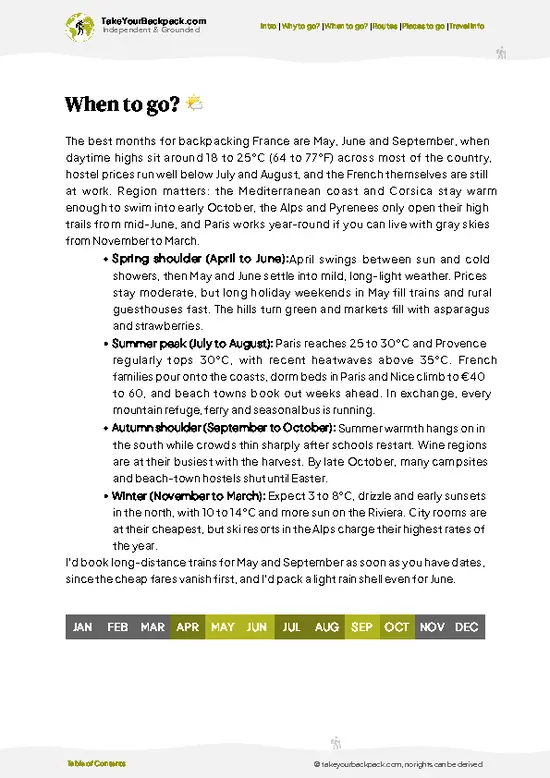
🌤️ When to go?Choosing the right time of year

  • Weather & Temperature: The best weather hits from May to September, with temps ranging from 15°C to 25°C (59°F to 77°F). It’s warm enough to enjoy the outdoor garden but not scorching. Winters (December to February) are cold and gray, hovering around 5°C (41°F), which can make the visit feel a bit gloomy.
  • Daylight Hours: Long daylight in June and July means you can linger in the garden until late evening. In winter, daylight shrinks to about 8 hours, so plan your visit midday to catch the most natural light inside the museum’s airy spaces.
  • Crowds: Peak tourist season in July and August brings heavy crowds, especially on weekends. If you want to dodge the selfie sticks and school groups, aim for late April or October when the museum is quieter but still pleasant weather-wise.
  • Seasonal
… read more 👉
  • Weather & Temperature: The best weather hits from May to September, with temps ranging from 15°C to 25°C (59°F to 77°F). It’s warm enough to enjoy the outdoor garden but not scorching. Winters (December to February) are cold and gray, hovering around 5°C (41°F), which can make the visit feel a bit gloomy.
  • Daylight Hours: Long daylight in June and July means you can linger in the garden until late evening. In winter, daylight shrinks to about 8 hours, so plan your visit midday to catch the most natural light inside the museum’s airy spaces.
  • Crowds: Peak tourist season in July and August brings heavy crowds, especially on weekends. If you want to dodge the selfie sticks and school groups, aim for late April or October when the museum is quieter but still pleasant weather-wise.
  • Seasonal Activities: Summer sometimes hosts evening events or open-air concerts in the garden, adding a unique vibe. These are worth timing your visit for if you want more than just the exhibits.
  • Price Fluctuations: Entry fees stay steady year-round, but accommodation and flights spike in summer. Visiting shoulder months like May or September can save you a chunk on travel costs without sacrificing the experience.

Pro-tip: Hit the museum on a weekday morning in late spring or early fall—cool weather, fewer crowds, and the garden’s alive without the tourist circus.


source: climatestotravel.comJANJanuary: fair for travelingFEBFebruary: fair for travelingMARMarch: good for travelingAPRApril: highly recommended for travelingMAYMay: excellent for travelingJUNJune: excellent for travelingJULJuly: highly recommended for travelingAUGAugust: good for travelingSEPSeptember: excellent for travelingOCTOctober: highly recommended for travelingNOVNovember: good for travelingDECDecember: fair for traveling
france-attraction-musee-du-quai-branly-jacques-chirac
© Google |

✈️ The backpacker research shortcutFrance Travel Guide

An offline-friendly backpacking guide with optimized travel routes, ranked highlights, transport advice, and the best areas to stay.
example page 0 from our offline Travel Guide for France
example page 1 from our offline Travel Guide for France
example page 2 from our offline Travel Guide for France
example page 3 from our offline Travel Guide for France
example page 4 from our offline Travel Guide for France
example page 5 from our offline Travel Guide for France
example page 6 from our offline Travel Guide for France
example page 7 from our offline Travel Guide for France
The digital guide (501 pages) contains:
✅ 135 highlights, ranked by travel appeal
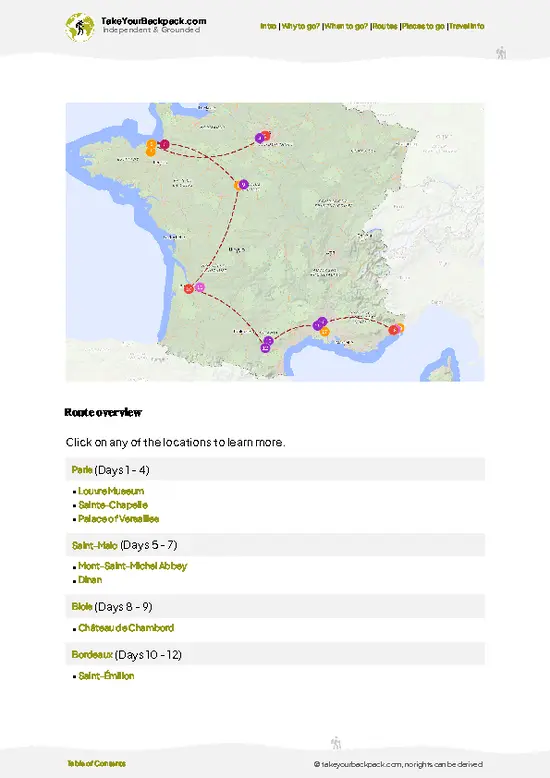
✅ Optimized 7, 14 & 21-day travel routes
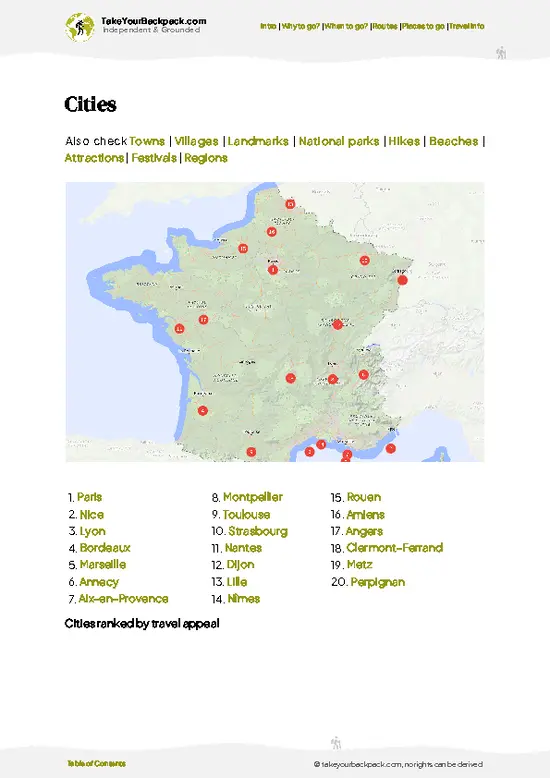
✅ Cities, national parks, landmarks, beaches
✅ How to get around
✅ Offline-friendly for travel without Wi-Fi
👉 Click to see all 30+ guide features

📅 Plan smarter in minutes, not weeks
✅ Month by month travel advice
✅ Festivals & national holidays
✅ Budget expectations

🗺️ Go to the right places, skip the overrated ones
✅ Honest pros & cons of destinations
✅ Top hikes, parks & viewpoints
✅ Lesser-known places most travelers miss
✅ Clear “worth it vs skip it” guidance

🛏️ Travel smoothly without rookie mistakes
✅ Best areas to stay
✅ Transport systems explained simply
✅ Common scams & safety advice
✅ SIM cards, money & practical tips

🌍 Understand the country, not just visit it
✅ Culture & traditions
✅ 52 Essential phrases & customs
✅ Festivals worth planning around
✅ Traveler-friendly historical context
✅ Insights that make places more meaningful

📱 Built for real travel conditions
✅ Fully downloadable PDF
✅ Works completely offline
✅ Optimized for phone use
✅ Useful in remote areas & buses
✅ Everything in one place
Stop searching, start planning
Get instant access to your full guide. 30‑day money-back guarantee.
+ Add another guide for just

By proceeding you agree to our terms.
Sent to your inbox immediately after payment • 100% Secure Checkout
Best Backpacking Travel Advisor 2025 tourism awardBest Backpacking
Travel Advisor
2025
What others say about Take Your Backpack Guides:
⭐⭐⭐⭐⭐
Fantastic, amazing amount of information!
⭐⭐⭐⭐⭐
My goodness this is amazing, it's what I've been looking for hats off too you!
⭐⭐⭐⭐⭐
I think this is absolutely BRILLIANT
⭐⭐⭐⭐
Very complete and informative. It's still missing places, but I gotta to commend you
⭐⭐⭐⭐⭐
This is truly amazing, thank you, can't wait to explore it with my kids!
⭐⭐⭐⭐⭐
Awesome resource, thank you!
⭐⭐⭐⭐⭐
This is amazing! Can't wait to explore the ones I haven't seen
⭐⭐⭐⭐
I love this! Well done, great idea.
⭐⭐⭐⭐⭐
Thanks for taking the time to make this gem!
⭐⭐⭐⭐⭐
This might be the best website I've ever seen.
⭐⭐⭐⭐⭐
Congratulations, and thank you so much for your work; it's incredibly valuable.
⭐⭐⭐⭐
In all seriousness I think you did a great job pointing out the important spots
⭐⭐⭐⭐⭐
10/10 very good
⭐⭐⭐⭐⭐
As someone who's only just starting to visit regularly this is awesome, thank you.
⭐⭐⭐⭐
Thank you very much! I'm going to visit my dad, it's going to be very useful!
⭐⭐⭐⭐⭐
This is really cool! We'll be travelling for the first time and this definitely come in handy.
⭐⭐⭐⭐⭐
You are now our minister of culture, congratulations 👨‍💼
⭐⭐⭐⭐⭐
Just wanted to tell you that this is a pearl! Going to follow your recommendations.
⭐⭐⭐⭐⭐
This is so cool. I'll definitely be using the resource for my travels soon.
⭐⭐⭐⭐⭐
This is very impressive! Good work.
⭐⭐⭐⭐⭐
This is an amazing and informative site. Very well done!

🛏️ Where to stay?Best areas and accommodation options

If you’re backpacking near the Musée du quai Branly - Jacques Chirac, forget the tourist-packed Champs-Élysées or the pricey Left Bank. Instead, zero in on the 7th arrondissement’s quieter pockets or the lively 15th arrondissement just across the Seine. The 7th is safe and classy without the suffocating crowds, offering a real Parisian vibe with local cafés and markets where you can blend in rather than stand out as a tourist. It’s perfect if you want to soak in the museum’s atmosphere without feeling like you’re in a postcard.

Cross the river to the 15th, and you’ll find a neighborhood that’s … read more 👉
If you’re backpacking near the Musée du quai Branly - Jacques Chirac, forget the tourist-packed Champs-Élysées or the pricey Left Bank. Instead, zero in on the 7th arrondissement’s quieter pockets or the lively 15th arrondissement just across the Seine. The 7th is safe and classy without the suffocating crowds, offering a real Parisian vibe with local cafés and markets where you can blend in rather than stand out as a tourist. It’s perfect if you want to soak in the museum’s atmosphere without feeling like you’re in a postcard.

Cross the river to the 15th, and you’ll find a neighborhood that’s less polished but more authentic and wallet-friendly. It’s buzzing with locals, affordable eateries, and social spots where solo travelers can easily strike up conversations. Both areas have solid metro connections, so you’re never far from the city’s pulse. These neighborhoods don’t scream “tourist trap,” but they deliver the real Paris experience—safe, social, and surprisingly affordable for the proximity to such a unique cultural landmark.

👛 Costs (as of 23 September 2026)Money, prices, and spending tips

As of the most recent estimates, the Musée du quai Branly - Jacques Chirac in Paris offers the following admission fees: €14 for full access to permanent collections and temporary exhibitions, and €20 for combined access to permanent collections, temporary exhibitions, and additional activities such as shows and concerts. Reduced rates are available for certain visitors, including €11 for reduced-rate tickets and €8 for specific activities. Free admission is granted to visitors under 18, residents of the European Economic Area under 26, and holders of the 'Large Families' card. Please note that prices are subject to change, and it's advisable to consult the official museum website for the most current information.

source: quaibranly.fr
⚠️ Prices can change and everyone travels differently, so take this as a rough guide. Hope it helps you plan your adventure!

FAQTraveler FAQ

2 to 3 hours is sufficient to visit Musée du quai Branly – Jacques Chirac to see the main exhibits and enjoy the garden. Allocate more time if you want to explore temporary exhibitions or attend workshops. The museum is compact but rich in diverse collections.
Yes, the entrance fee is worth it for the unique collection of indigenous art and cultures from Africa, Asia, Oceania, and the Americas. Tickets cost around 12 euros for adults, with discounts for students and free entry on the first Sunday of each month. The museum offers a distinctive cultural experience not found in typical European art museums.
The museum is located near the Eiffel Tower in Paris. The easiest way to get there is by metro, using line 9 to Alma-Marceau or line 6 to Bir-Hakeim station, both within a 5-10 minute walk. Several bus lines also serve the area, and it is accessible by foot or bike from central Paris.
⚠️ Things can change over time, so always validate details locally before you go.

Other French attractions near Musée du quai Branly – Jacques Chirac

Explore more nearby:

  • Rodin Museum—sculpture gardens, artist’s studio, marble and bronze works, mansion setting| 1 km away
  • Musée de l’Orangerie—water lily murals, natural light, compact galleries, Tuileries Garden| 2 km away
  • Musée d’Orsay—Beaux-Arts station, Impressionist paintings, grand clock, riverfront setting| 2 km away

💡 Not sure where to go next?
Create a personalized itinerary for France including Musée du quai Branly – Jacques Chirac and the places that fit your trip.

Generate my itinerary

👉 Discover all attractions

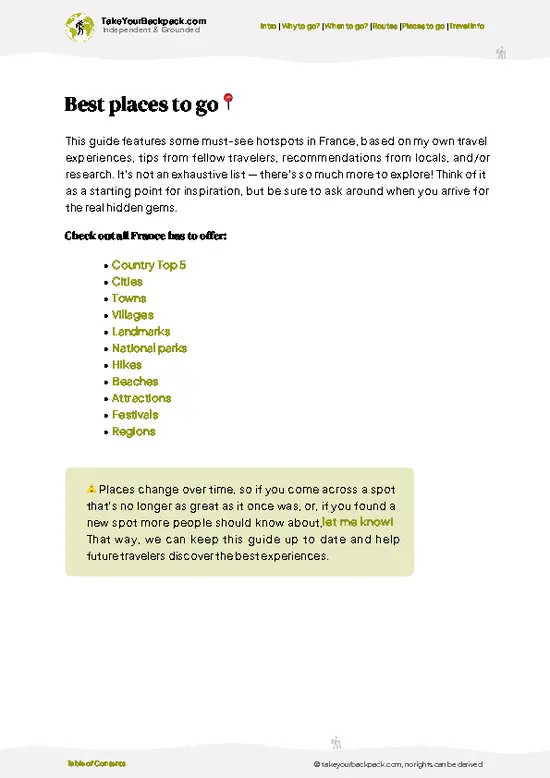
Or checkout all France has to offer (think cities, towns, villages, national parks, hikes, beaches, festivals)
Country photo of France

We 💚 feedbackIs it worth it?

Musée du quai Branly – Jacques Chirac isn’t your typical Paris museum packed with Renaissance paintings and marble busts. It’s a deep dive into the art and cultures of Africa, Asia, Oceania, and the Americas—raw, often challenging, and refreshingly different. But heads up: it can get crowded, especially on weekends, and the layout isn’t the easiest to navigate. Still, if you want to shake off the usual Paris museum fatigue, this place hits a rare, thoughtful groove that sticks with you.

✈️ When did I visit France?
Being close to The Netherlands, my home base, I visited France many times.

✍️ Help improve this page!
The information on this page is based on my own backpacking experience in France, supplemented with up-to-date research and feedback from other travelers. Travel details can change, so if you notice anything outdated or incomplete, feel free to let me know.


🙋‍♂️ Give feedback

👋 Meet the founderWho’s Behind Take Your Backpack?

Johan, backpacker and founder of TakeYourBackpackHi, I’m Johan (Netherlands 🇳🇱), the creator of TakeYourBackpack. Over the past 3 decades, I’ve backpacked through 90+ countries across six continents, gaining extensive experience with independent travel, long-term trips, and overland routes.

This site is built on a combination of firsthand travel experience and carefully curated insights from other backpackers. Many guides are based on places I’ve personally visited, while others bring together tips, observations, and practical advice shared by trusted travelers I’ve met along the way.

The goal is to provide realistic, experience-driven guidance — not generic itineraries — so you can explore destinations with better context, clearer expectations, and more confidence.