French Guiana is doable to backpack independently, but it feels more like an expedition than a casual hop-on-hop-off trip. Distances are long, public transport is thin, and English is rare outside Cayenne and Kourou, so a bit of French plus a flexible mindset go a long way. You trade easy logistics for real frontier energy: river towns, jungle trails, and a mix of French, Creole, and Brazilian culture that feels very different from mainland France.
For a budget traveler, the main challenge is moving between towns and into the interior without blowing money on private transfers. If you plan ahead, use shared taxis, and base yourself in a few hubs instead of trying to “see it all,” you can keep costs under control and still feel like you’re properly out there.
If you only have
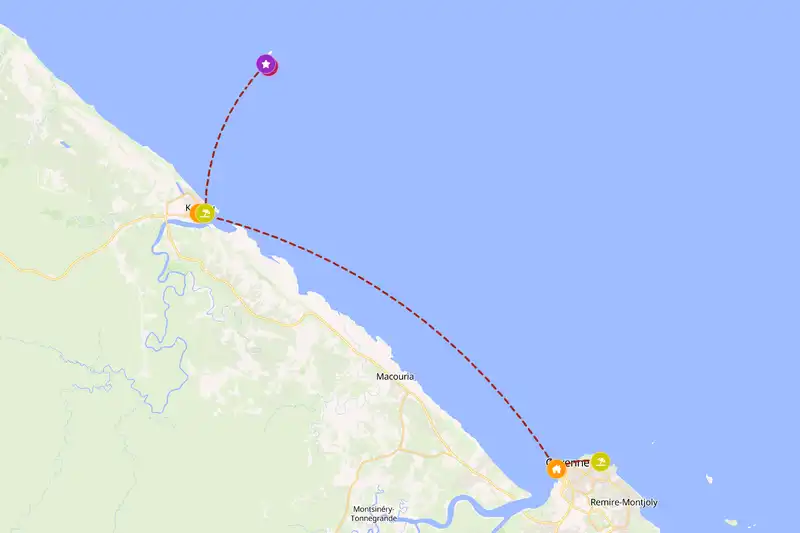
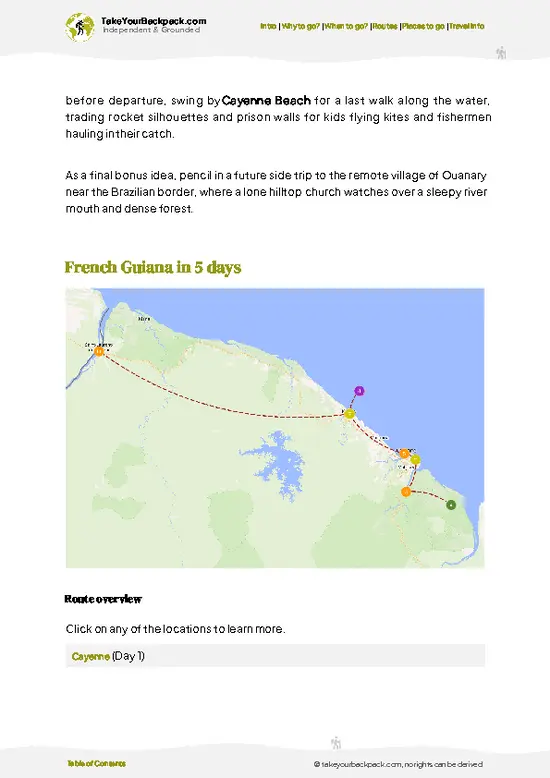
4–5 days, focus on Cayenne, a day or two in Kourou, and maybe a quick escape to the Kaw marshes or Cacao; you’ll get a taste of the coast, markets, and a bit of nature without wasting time in transit. This is enough for a first impression, not a deep dive.
For a backpacker who actually wants to feel the Amazon side of French Guiana,
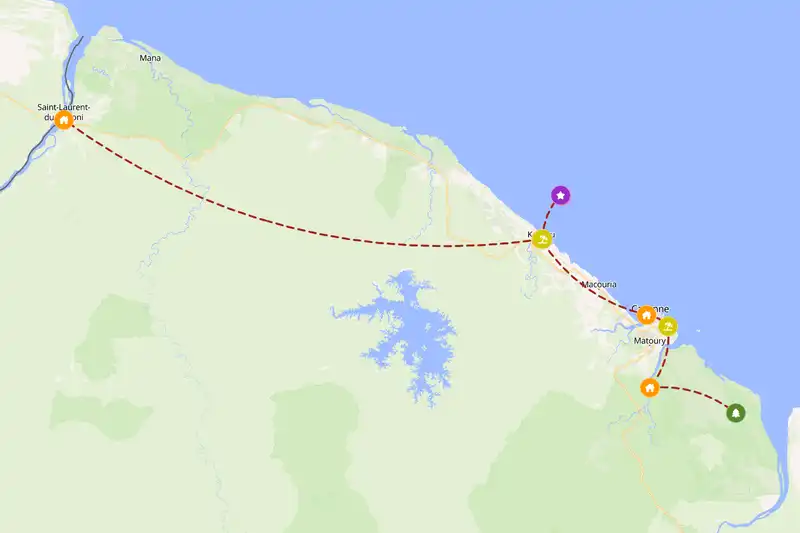
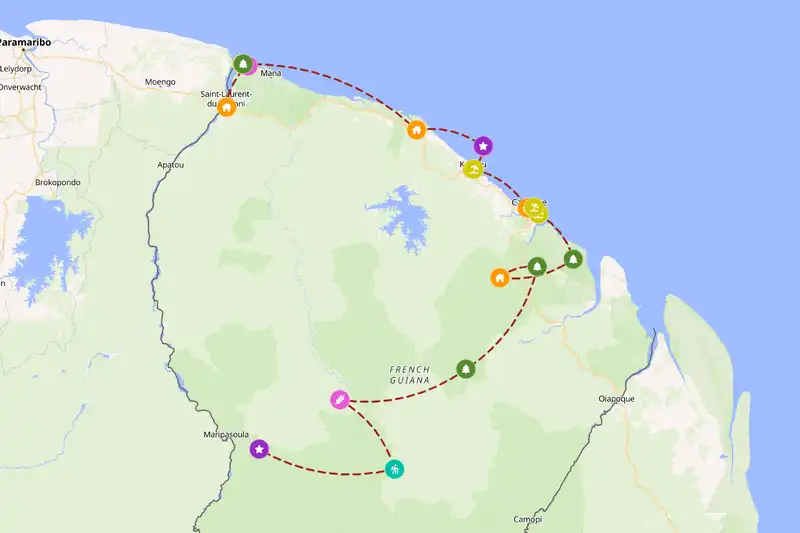
10–14 days is the sweet spot. That gives you time for Cayenne and Kourou, plus at least one proper river trip (like Saint-Laurent-du-Maroni or the Oyapock area) and a couple of days in the forest without rushing every transfer.
You can technically get around French Guiana without a car, but you need patience and a loose schedule. Along the main coastal road between Cayenne, Kourou, and Saint-Laurent-du-Maroni there are shared taxis and occasional buses, and river towns are reached by regular pirogues, which are cheap and very backpacker-friendly if you’re not in a hurry.
The catch is that schedules are irregular, services thin out on Sundays and evenings, and reaching trailheads, remote beaches, or small villages often requires hitchhiking or arranging a lift. If you’re short on time or hate uncertainty, renting a car for a few days around the coast and using boats for the rivers is the most efficient combo.
For a first-time backpacker,
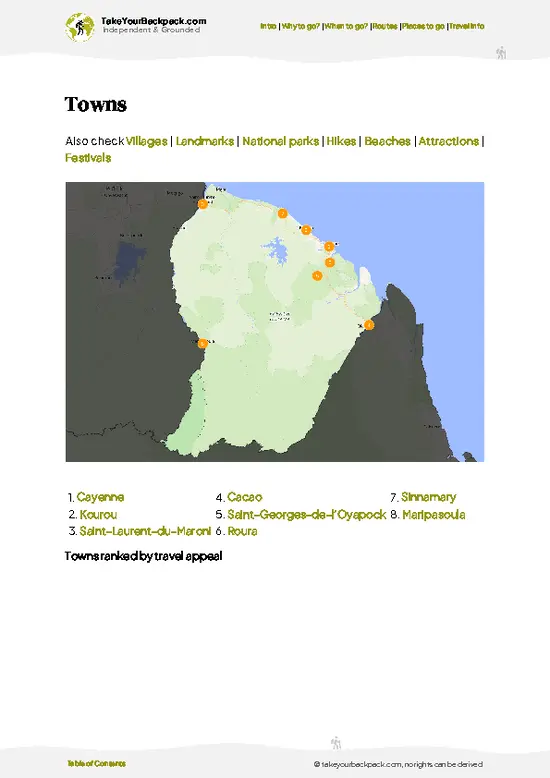
Cayenne is your base camp: markets, street food, and enough street life to understand how French, Creole, and Brazilian cultures mesh.
Kourou is worth it for the Guiana Space Centre tours if they’re running, plus access to the Îles du Salut, where you can walk around old penal colony ruins and swim off rocky coves that feel far from the mainland humidity.
If you want the “I’m really in the Amazon” feeling, aim for
Saint-Laurent-du-Maroni and the Maroni River villages, or a simple jungle stay via Kaw or Cacao. These are the places where your money buys actual experience: river travel, forest walks, and evenings in hammocks instead of just another coastal town.
If you’re short on time, skip trying to zigzag the entire coast; the scenery between major towns is repetitive, and long bus or taxi rides eat days without adding much. It’s better to choose one interior focus, like the Maroni River or Kaw marshes, than to half-do both and spend your trip in transit.
You can also skip deep-forest expeditions that require expensive guides and multiple days of logistics unless that’s your main reason for coming. For most budget travelers,
one well-chosen river or jungle base plus Cayenne and Kourou gives a fuller picture than chasing every remote village or paying a lot just to say you reached the farthest possible outpost.
Yes, our itinerary-planner does exactly that. Set your trip length in days, give your interests and travel style, optionally give start- and end location and/or some mandatory stops you would like to include and the itinerary planner creates your personalized routes for French Guiana in seconds. Try it out!
Try the itinerary plannerv2.webp)
 Best Backpacking