×

French Guiana🇬🇫 | townsCayenneurban center, Creole markets, coastal fort | things to do and best time to go

Explore CacaoExplore Kourou

Backpacking in Cayenne
🏆 Top picktown ranked #1
By Johan Kruseman 🇳🇱 | Updated June 6, 2026

Your first real fork in Cayenne is this: do you treat it as a quick logistical pit stop, or slow down and let it be your soft landing into the Guianese tropics? That choice matters, because Cayenne quietly sets the tone for everything deeper and wilder you’ll do in French Guiana. The town sits on the Atlantic coast in the north, on its own little peninsula, and it’s the main urban hub before you push inland toward jungle rivers or west toward the border towns.

Cayenne itself is low-rise, humid, and a bit scruffy, with salty air, bright shutters, and the smell of grilled fish and spices around the central market. It’s not a big-sights city; it’s a base. You come here to sort cash, SIM cards, and transport, to wander the compact center on foot, to climb up to Fort Cépérou for a hazy sunset, then plan your escape to beaches like Montjoly or further afield. Buses and shared taxis radiate out, but they’re slow and irregular, so you feel every kilometer. Nights are more quiet-porch than bar-crawl, and while there are a few hostels and budget guesthouses, this isn’t a classic backpacker social hub like Kourou on launch days or Saint-Laurent with its river-border energy. Costs run higher than mainland South America and safety is mostly about street smarts after dark, which nudges Cayenne firmly into “functional, mildly charming base camp” rather than “destination city” on your route.

Discover everything you want to know in the 📖 French Guiana Travel Guide.
Loading the map 🌍
CLICK TO FILTER
towns
villages
landmarks
national parks
hikes
beaches
attractions
festivals
SHOW COUNTRY’S BESTSHOW ALL

✨ Why go?
Ranked #1 town in French Guiana
Why visitors keep coming back

Cayenne, the capital of French Guiana, serves as a gateway for backpackers seeking both adventure and culture. Its walkable streets invite exploration, where the scent of street food mingles with the salty air from the nearby beaches. You’ll find small-scale hostels and guesthouses that foster a friendly atmosphere, perfect for solo travelers or small groups looking to connect.

Many backpackers use Cayenne as a base to access nearby hikes in the lush rainforest or to dive into the rich history at local cultural sites. The convenience of public transport makes it easy to venture out for day trips, but don’t be surprised if you linger a few days. The pace here is relaxed, allowing for spontaneous conversations with fellow travelers over a bowl of cari or a refreshing coconut water.

While … read more 👉
Cayenne, the capital of French Guiana, serves as a gateway for backpackers seeking both adventure and culture. Its walkable streets invite exploration, where the scent of street food mingles with the salty air from the nearby beaches. You’ll find small-scale hostels and guesthouses that foster a friendly atmosphere, perfect for solo travelers or small groups looking to connect.

Many backpackers use Cayenne as a base to access nearby hikes in the lush rainforest or to dive into the rich history at local cultural sites. The convenience of public transport makes it easy to venture out for day trips, but don’t be surprised if you linger a few days. The pace here is relaxed, allowing for spontaneous conversations with fellow travelers over a bowl of cari or a refreshing coconut water.

While nightlife isn’t the main draw, the social vibe is palpable, especially in the evenings when locals and travelers gather. This town suits slow travelers who appreciate the balance of urban and natural experiences, making it a worthwhile stop on your journey through this unique region.
Want to include Cayenne in your French Guiana route?
Create a personalized French Guiana itinerary that includes Cayenne and the places that fit your trip — based on your travel style, budget, and available time. Get your route in seconds.

Generate my trip

💡 HighlightsWhat this place is best known for

  1. Fort Cépérou — Ruined colonial fort perched on a little hill with sweeping views over the bay and town; great for photos and to get a sense of Cayenne’s strategic past and how the river and sea shaped the city.
  2. Place des Palmistes — The town’s social living room: a shady palm-lined square surrounded by colonial façades, cafés and the prefecture. Perfect for people-watching and feeling the old-town rhythm.
  3. Cathédrale Saint-Sauveur de Cayenne — The main cathedral in the center of town; notable for its wooden colonial architecture, local religious art and the role it still plays in community life.
  4. Marché central de Cayenne (Grand Marché) — Noisy, colourful market where you can smell spices, sample fruits, see fresh catch and buy local crafts; a great place to taste real Creole-Guyanese everyday
read more 👉
  1. Fort Cépérou — Ruined colonial fort perched on a little hill with sweeping views over the bay and town; great for photos and to get a sense of Cayenne’s strategic past and how the river and sea shaped the city.
  2. Place des Palmistes — The town’s social living room: a shady palm-lined square surrounded by colonial façades, cafés and the prefecture. Perfect for people-watching and feeling the old-town rhythm.
  3. Cathédrale Saint-Sauveur de Cayenne — The main cathedral in the center of town; notable for its wooden colonial architecture, local religious art and the role it still plays in community life.
  4. Marché central de Cayenne (Grand Marché) — Noisy, colourful market where you can smell spices, sample fruits, see fresh catch and buy local crafts; a great place to taste real Creole-Guyanese everyday life.
  5. Musée départemental Alexandre-Franconie — Small but solid museum covering Guiana’s history, indigenous cultures, and colonial era; good context if you want to understand the weird mix of influences you see around town.
  6. Vieux Cayenne (Old Town wooden-house district) — Walkable cluster of creole wooden houses, shuttered balconies and narrow streets; the architecture and small cafés here give you the most characterful, human-scale side of Cayenne.
  7. Cayenne waterfront and fish quay — Stroll the quayside to watch fishermen, check out the daily fish market, and take in sunrise/sunset over the estuary; a practical slice of local life and easy to reach from the center.
  8. Jardin botanique / Parc municipal — A small municipal green space where local flora and shady paths offer a break from the heat and traffic; quiet, useful for a picnic or short nature fix inside the city.
  9. Maison de la Culture / local arts venues — The cultural hub for exhibitions, concerts and theatre in Cayenne; even if you only catch a small show or a rotating exhibit, it’s the best place to see living local arts and music scenes up close.
  10. Ancien cimetière et monuments coloniaux — The old cemetery and nearby memorials are full of stories: colonial-era graves, inscriptions and monuments that reveal the city’s layered past if you take the time to read and reflect.
If you’ve got an extra day, easy local day trips include Îlet la Mère (the former penal island with a monkey reserve), the marshes of Kaw-Roura for river wildlife and sunsets, and the long sandy stretch at Montjoly just outside Cayenne — Kourou’s Space Centre is also doable if you want something very different.
Spotted a mistake or missing something? Contact us.

🏘️ NeighborhoodsUnderstanding the local layout

Cayenne is a vibrant blend of cultures, history, and nature, making it a captivating stop for backpackers. Here’s how to navigate its neighborhoods for the best experience.

Centre Ville: This is the heart of Cayenne. You’ll find bustling markets, street food stalls, and colonial architecture. The vibe is lively, perfect for those who thrive on energy. It’s walkable, with plenty of cafes to recharge. Nightlife here is vibrant, with bars and music spilling into the streets. Ideal for short stays, as you can soak up the local culture quickly.

Remire-Montjoly: A bit quieter, this area offers a more laid-back atmosphere. It’s known for its beautiful beaches and scenic views. If you’re looking to unwind, this is your spot. The cost of living is slightly higher, but the tranquility is worth it. … read more 👉
Cayenne is a vibrant blend of cultures, history, and nature, making it a captivating stop for backpackers. Here’s how to navigate its neighborhoods for the best experience.

Centre Ville: This is the heart of Cayenne. You’ll find bustling markets, street food stalls, and colonial architecture. The vibe is lively, perfect for those who thrive on energy. It’s walkable, with plenty of cafes to recharge. Nightlife here is vibrant, with bars and music spilling into the streets. Ideal for short stays, as you can soak up the local culture quickly.

Remire-Montjoly: A bit quieter, this area offers a more laid-back atmosphere. It’s known for its beautiful beaches and scenic views. If you’re looking to unwind, this is your spot. The cost of living is slightly higher, but the tranquility is worth it. Public transport connects you easily to the city center, making it suitable for longer stays where relaxation is key.

Matoury: This neighborhood is more residential and offers a glimpse into local life. It’s less touristy, which means you can find authentic experiences. The vibe is calm, making it great for those who want to escape the hustle. While it’s not as walkable, the bus system is reliable. Perfect for longer stays, especially if you want to immerse yourself in the local culture.

Saint-Laurent-du-Maroni: A bit further afield, this area is rich in history and offers a unique perspective on French Guiana’s past. The vibe is more rustic, with a slower pace. It’s a longer trip from Cayenne, but worth it for those interested in the penal colony history. Accommodations are budget-friendly, making it suitable for longer explorations.

⌛️ 1 dayWhat you can realistically do in a day

Cayenne, the capital of French Guiana, pulses with a unique blend of cultures, colors, and scents. The air is thick with the aroma of spices and the sound of lively conversations in French, Creole, and even Portuguese. This town is a vibrant tapestry of history, from its colonial architecture to the bustling markets that showcase local life.

Start your day at the Marché Central, where the sun filters through the open-air stalls, illuminating fresh fruits, fish, and handmade crafts. Grab a cup of café au lait from a local vendor and savor the rich, nutty flavor while you wander. The market is not just a feast for the eyes; it’s a sensory experience that immerses you in the local rhythm.

Afterward, stroll through the historic neighborhood of La Crique. The pastel-colored buildings, remnants … read more 👉
Cayenne, the capital of French Guiana, pulses with a unique blend of cultures, colors, and scents. The air is thick with the aroma of spices and the sound of lively conversations in French, Creole, and even Portuguese. This town is a vibrant tapestry of history, from its colonial architecture to the bustling markets that showcase local life.

Start your day at the Marché Central, where the sun filters through the open-air stalls, illuminating fresh fruits, fish, and handmade crafts. Grab a cup of café au lait from a local vendor and savor the rich, nutty flavor while you wander. The market is not just a feast for the eyes; it’s a sensory experience that immerses you in the local rhythm.

Afterward, stroll through the historic neighborhood of La Crique. The pastel-colored buildings, remnants of colonial times, stand proudly against the backdrop of swaying palm trees. Take your time here; the charm lies in the details—the intricate ironwork, the vibrant murals, and the occasional friendly nod from a local.

In the afternoon, head to the Îles du Salut, a short boat ride away. While many tourists flock to the more famous Devil’s Island, consider exploring Île Royale. The lush greenery and haunting ruins of the former penal colony tell stories of resilience. The gentle lapping of waves against the shore creates a serene atmosphere, perfect for reflection.

As evening approaches, return to Cayenne and make your way to the waterfront. The sunset casts a golden hue over the bay, and the local food stalls come alive with the sizzling sounds of grilled fish and the sweet scent of tropical fruits. Try a plate of bouillon d’awara, a traditional dish that encapsulates the region’s flavors.

End your day at Place des Palmistes, where you can enjoy live music and mingle with locals. The energy here is infectious, a perfect capstone to a day spent diving deep into the heart of Cayenne. Each moment, from the market’s bustle to the quiet of the islands, weaves together a rich tapestry of experiences that make this town unforgettable.
Turn your Cayenne visit into an French Guiana adventure
Build a complete French Guiana route with Cayenne, hidden gems, must-see destinations, and realistic travel times included.

Generate my trip

🌤️ When to go?Seasonal considerations and timing


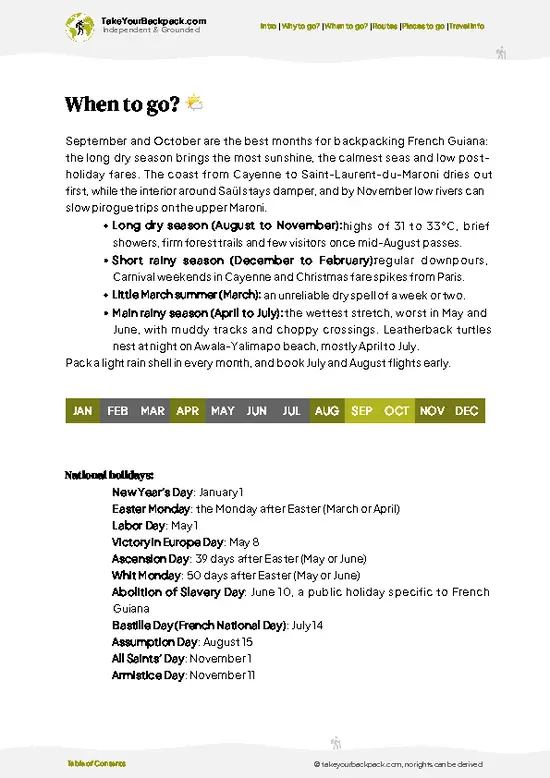
  • Weather: Cayenne’s tropical climate means it’s hot and humid year-round, but the dry season from August to November offers a break from the relentless rain. Expect fewer downpours, making trails and streets less slippery and more inviting for exploring.

  • Temperature: Temperatures hover between 24°C and 31°C (75°F to 88°F) throughout the year. The dry season feels slightly cooler and less oppressive, which means your sweat won’t soak through your shirt every five minutes.

  • Daylight Hours: Near the equator, daylight stays steady—about 12 hours year-round. This consistency lets you plan hikes and city strolls without worrying about early sunsets cutting your adventures short.

  • Crowds: Tourist traffic spikes during the dry season and local festivals, but Cayenne never feels overrun. Visiting
read more 👉

  • Weather: Cayenne’s tropical climate means it’s hot and humid year-round, but the dry season from August to November offers a break from the relentless rain. Expect fewer downpours, making trails and streets less slippery and more inviting for exploring.

  • Temperature: Temperatures hover between 24°C and 31°C (75°F to 88°F) throughout the year. The dry season feels slightly cooler and less oppressive, which means your sweat won’t soak through your shirt every five minutes.

  • Daylight Hours: Near the equator, daylight stays steady—about 12 hours year-round. This consistency lets you plan hikes and city strolls without worrying about early sunsets cutting your adventures short.

  • Crowds: Tourist traffic spikes during the dry season and local festivals, but Cayenne never feels overrun. Visiting off-peak means quieter streets and better chances to chat with locals without the rush.

  • Seasonal Activities: The dry months coincide with cultural events like the Cayenne Carnival (usually February or March), which is worth timing your visit for if you want to dive into local rhythms and colors.

  • Price Fluctuations: Accommodation and flights tend to be pricier during the dry season and festival periods. Booking early or aiming for shoulder months like July or December can save you a few euros without sacrificing comfort.


Pro-tip: Aim for the tail end of the dry season—October to November—when the weather is still kind, crowds thin, and prices start to dip, giving you the best balance of comfort and value.


source: climatestotravel.comJANJanuary: good for travelingFEBFebruary: highly recommended for travelingMARMarch: highly recommended for travelingAPRApril: fair for travelingMAYMay: fair for travelingJUNJune: fair for travelingJULJuly: good for travelingAUGAugust: highly recommended for travelingSEPSeptember: excellent for travelingOCTOctober: excellent for travelingNOVNovember: excellent for travelingDECDecember: good for traveling
french-guiana-city-cayenne
© Google | Serge Herzberg

✈️ The backpacker research shortcutFrench Guiana Travel Guide

An offline-friendly backpacking guide with optimized travel routes, ranked highlights, transport advice, and the best areas to stay.
example page 0 from our offline Travel Guide for French Guiana
example page 1 from our offline Travel Guide for French Guiana
example page 2 from our offline Travel Guide for French Guiana
example page 3 from our offline Travel Guide for French Guiana
example page 4 from our offline Travel Guide for French Guiana
example page 5 from our offline Travel Guide for French Guiana
example page 6 from our offline Travel Guide for French Guiana
example page 7 from our offline Travel Guide for French Guiana
The digital guide (182 pages) contains:
42 highlights, ranked by travel appeal
Optimized 2, 3 & 5-day travel routes
Cities, national parks, landmarks, beaches
How to get around
Offline-friendly for travel without Wi-Fi
👉 Click to see all 30+ guide features

📅 Plan smarter in minutes, not weeks
Month by month travel advice
Festivals & national holidays
Budget expectations

🗺️ Go to the right places, skip the overrated ones
Honest pros & cons of destinations
Top hikes, parks & viewpoints
Lesser-known places most travelers miss
Clear “worth it vs skip it” guidance

🛏️ Travel smoothly without rookie mistakes
Best areas to stay
Transport systems explained simply
Common scams & safety advice
SIM cards, money & practical tips

🌍 Understand the country, not just visit it
Culture & traditions
52 Essential phrases & customs
Festivals worth planning around
Traveler-friendly historical context
Insights that make places more meaningful

📱 Built for real travel conditions
Fully downloadable PDF
Works completely offline
Optimized for phone use
Useful in remote areas & buses
Everything in one place
Save weeks of stressful planning
Get instant access to your full guide. 30‑day money-back guarantee.


By proceeding you agree to our terms.
Sent to your inbox immediately after payment • 100% Secure Checkout
Best Backpacking Travel Advisor 2025 tourism awardBest Backpacking
Travel Advisor
2025
What others say about Take Your Backpack Guides:
⭐⭐⭐⭐⭐
Fantastic, amazing amount of information!
⭐⭐⭐⭐⭐
My goodness this is amazing, it's what I've been looking for hats off too you!
⭐⭐⭐⭐⭐
I think this is absolutely BRILLIANT
⭐⭐⭐⭐
Very complete and informative. It's still missing places, but I gotta to commend you
⭐⭐⭐⭐⭐
This is truly amazing, thank you, can't wait to explore it with my kids!
⭐⭐⭐⭐⭐
Awesome resource, thank you!
⭐⭐⭐⭐⭐
This is amazing! Can't wait to explore the ones I haven't seen
⭐⭐⭐⭐
I love this! Well done, great idea.
⭐⭐⭐⭐⭐
Thanks for taking the time to make this gem!
⭐⭐⭐⭐⭐
This might be the best website I've ever seen.
⭐⭐⭐⭐⭐
Congratulations, and thank you so much for your work; it's incredibly valuable.
⭐⭐⭐⭐
In all seriousness I think you did a great job pointing out the important spots
⭐⭐⭐⭐⭐
10/10 very good
⭐⭐⭐⭐⭐
As someone who's only just starting to visit regularly this is awesome, thank you.
⭐⭐⭐⭐
Thank you very much! I'm going to visit my dad, it's going to be very useful!
⭐⭐⭐⭐⭐
This is really cool! We'll be travelling for the first time and this definitely come in handy.
⭐⭐⭐⭐⭐
You are now our minister of culture, congratulations 👨‍💼
⭐⭐⭐⭐⭐
Just wanted to tell you that this is a pearl! Going to follow your recommendations.
⭐⭐⭐⭐⭐
This is so cool. I'll definitely be using the resource for my travels soon.
⭐⭐⭐⭐⭐
This is very impressive! Good work.
⭐⭐⭐⭐⭐
This is an amazing and informative site. Very well done!

🛏️ Where to stay?How to pick the right area

Cayenne’s heart for backpackers beats strongest in the downtown district, especially around Avenue de la Liberté and the nearby streets. This area hums with life—street vendors grilling spicy creole snacks, the scent of fresh bread wafting from local boulangeries, and the chatter of locals and travelers blending into a lively soundtrack. It’s compact, walkable, and packed with budget-friendly hostels that double as social hubs. Here, you’ll find fellow solo travelers swapping tips over strong coffee or planning jungle excursions together. The vibe is relaxed but energized, a perfect balance for … read more 👉
Cayenne’s heart for backpackers beats strongest in the downtown district, especially around Avenue de la Liberté and the nearby streets. This area hums with life—street vendors grilling spicy creole snacks, the scent of fresh bread wafting from local boulangeries, and the chatter of locals and travelers blending into a lively soundtrack. It’s compact, walkable, and packed with budget-friendly hostels that double as social hubs. Here, you’ll find fellow solo travelers swapping tips over strong coffee or planning jungle excursions together. The vibe is relaxed but energized, a perfect balance for those who want to dive into the city’s pulse without feeling overwhelmed.

Compared to the quieter, more residential neighborhoods like Montabo or the outskirts near the port, downtown Cayenne offers a safer, more engaging environment after dark. The streets are well-lit and patrolled, which means you can wander without the usual city-edge tension. Plus, being close to markets and bus stops means you can easily catch rides to the rainforest or the beaches without complicated transfers.

If you stray too far into the industrial zones or the less touristy suburbs, you’ll lose that easy access to community and the vibrant street life that makes Cayenne feel like a lived-in place rather than just a stopover. Staying downtown isn’t just about convenience—it’s about plugging into the city’s rhythm, where every corner smells of spices and every evening promises new stories.

🚌 Getting aroundMoving around without the hassle

Cayenne moves at its own rhythm—less a clockwork machine and more a laid-back dance where the sun’s angle and the humidity dictate your pace. The streets hum with a mix of honking scooters, the occasional rumble of a bus, and the chatter of locals weaving through markets. It’s not a place where you’ll find rigid schedules or punctual public transit; instead, you’ll learn to read the flow, catch the right moment, and embrace a bit of improvisation. The air carries the scent of grilled fish and tropical fruit, and the heat can slow your steps, so planning your transit around cooler parts of the day pays off. This is a town where walking isn’t just transport—it’s a way to soak in the colors, sounds, and smells that no bus window can capture.


  • Walking: The heart of Cayenne is compact enough
read more 👉
Cayenne moves at its own rhythm—less a clockwork machine and more a laid-back dance where the sun’s angle and the humidity dictate your pace. The streets hum with a mix of honking scooters, the occasional rumble of a bus, and the chatter of locals weaving through markets. It’s not a place where you’ll find rigid schedules or punctual public transit; instead, you’ll learn to read the flow, catch the right moment, and embrace a bit of improvisation. The air carries the scent of grilled fish and tropical fruit, and the heat can slow your steps, so planning your transit around cooler parts of the day pays off. This is a town where walking isn’t just transport—it’s a way to soak in the colors, sounds, and smells that no bus window can capture.


  • Walking: The heart of Cayenne is compact enough to explore on foot, especially the central market, waterfront, and colonial architecture. Walking is free, flexible, and lets you absorb the city’s pulse, but be ready for sticky heat and occasional sudden downpours—carry water and a lightweight rain jacket.


  • Local Buses (Bus de Ville): These are the cheapest way to cover longer distances, with fares around €1.50. Buses don’t run on strict timetables—expect irregular intervals from early morning (around 6:00 AM) until early evening (about 7:00 PM). They’re slow and often crowded, but a solid choice if you want to blend in and save cash. Keep small change ready and watch your belongings; pickpocketing can happen in the crush.


  • Shared Taxis (Taxi Collectif): These minibuses or vans follow fixed routes but only leave when full, which means waiting times can vary wildly. They’re faster than buses and cost a bit more (around €2-3), offering a middle ground between speed and budget. The ride is often lively, with locals chatting or playing music, so it’s a cultural experience as much as transport.


  • Regular Taxis: Metered taxis are available but expensive compared to other options, with fares starting around €5 just to get going. They’re best for late-night trips or when you’re carrying heavy gear. Negotiate or confirm the fare upfront if the meter isn’t used, and keep in mind that drivers might not always speak English.


  • Bicycle Rentals: For the adventurous, renting a bike is a great way to cover more ground while still feeling the city’s atmosphere. Roads can be uneven and traffic unpredictable, so it’s best for confident riders. Rentals cost about €10-15 per day, and early mornings or late afternoons offer the best light and cooler temperatures for cycling.

👛 Costs (as of 4 April 2026)What things cost and how to budget

Backpacking in Cayenne, French Guiana, carries a price tag that reflects its unique blend of South American and French influences—expect a bit more than typical South American towns, thanks to its overseas French territory status.
  • Dorm Accommodation: Hostels and budget guesthouses hover around €20 to €35 per night. Options are limited, so booking ahead is smart. The rooms are basic but clean, often with a fan rather than air conditioning, which is a relief in the humid heat.
  • Meals: Street food and local eateries offer meals for about €5 to €10. Think fresh fish or chicken with rice and beans, often served with a side of spicy Creole sauce. If you opt for a café or bistro, expect to pay closer to €12-€18 for a full meal. Groceries for self-catering can be pricier, especially imported goods.
read more 👉
Backpacking in Cayenne, French Guiana, carries a price tag that reflects its unique blend of South American and French influences—expect a bit more than typical South American towns, thanks to its overseas French territory status.
  • Dorm Accommodation: Hostels and budget guesthouses hover around €20 to €35 per night. Options are limited, so booking ahead is smart. The rooms are basic but clean, often with a fan rather than air conditioning, which is a relief in the humid heat.
  • Meals: Street food and local eateries offer meals for about €5 to €10. Think fresh fish or chicken with rice and beans, often served with a side of spicy Creole sauce. If you opt for a café or bistro, expect to pay closer to €12-€18 for a full meal. Groceries for self-catering can be pricier, especially imported goods.
  • Local Transport: Public buses are scarce and irregular, so most travelers rely on shared taxis or moto-taxis, which cost around €1 to €3 per short ride within town. Renting a scooter or bike is an option but can push your budget higher.
  • Basic Activities/Entry Fees: Many natural attractions like beaches or hiking spots are free, but guided tours or entry to cultural sites can range from €5 to €15. Boat trips or wildlife excursions tend to be pricier, often €30 and up, so plan accordingly if you want to explore beyond the town.
  • Miscellaneous Expenses: Expect to spend €3 to €7 on bottled water, snacks, or small souvenirs. Internet cafes or SIM cards are affordable, around €10 for a decent data package, which is crucial since Wi-Fi can be spotty.

All told, a realistic daily budget for backpacking in Cayenne falls between €35 and €60. This range covers the essentials without cutting corners but leaves room for a few local experiences that make the trip worthwhile. The slightly higher costs compared to mainland South America reflect the French connection, but the payoff is a rich cultural mix and access to wild, untamed nature just outside town.
⚠️ Prices can change and everyone travels differently, so take this as a rough guide. Hope it helps you plan your adventure!

🚌 Day tripsShort trips worth adding

Cayenne, French Guiana, is a vibrant launchpad for unforgettable day trips. The town itself pulses with a mix of French and Creole cultures, but the surrounding landscapes offer a treasure trove of experiences just waiting to be explored.

Îles du Salut
A short boat ride from the bustling port of Cayenne, the Îles du Salut beckons with tales of history and haunting beauty. Once a notorious penal colony, these islands now offer lush trails and remnants of the past. The journey takes about 15 minutes, and you can expect to spend around €30 for the round trip. Bring a picnic; the serene beaches are perfect for lounging after a morning of exploration. Many first-timers underestimate the power of the sun here—don’t forget sunscreen!
👉 Explore Îles du Salut

Guiana Space Centre
Just a 20-minute … read more 👉
Cayenne, French Guiana, is a vibrant launchpad for unforgettable day trips. The town itself pulses with a mix of French and Creole cultures, but the surrounding landscapes offer a treasure trove of experiences just waiting to be explored.

Îles du Salut
A short boat ride from the bustling port of Cayenne, the Îles du Salut beckons with tales of history and haunting beauty. Once a notorious penal colony, these islands now offer lush trails and remnants of the past. The journey takes about 15 minutes, and you can expect to spend around €30 for the round trip. Bring a picnic; the serene beaches are perfect for lounging after a morning of exploration. Many first-timers underestimate the power of the sun here—don’t forget sunscreen!
👉 Explore Îles du Salut

Guiana Space Centre
Just a 20-minute drive from Cayenne, the Guiana Space Centre is a must for anyone intrigued by space exploration. The guided tours provide a fascinating glimpse into rocket launches and the technology behind them. Tickets are around €15, and the best time to visit is during the launch season, typically from January to June. Arrive early to snag a good spot for photos; the launch pads are a sight to behold. A common mistake? Skipping the visitor center—it’s packed with interactive exhibits that make the science come alive.


Parc Amazonien de Guyane
For those craving a taste of the Amazon, head to Parc Amazonien de Guyane, about an hour’s drive from Cayenne. This sprawling park is a biodiversity hotspot, teeming with exotic flora and fauna. Entry is free, but guided tours can range from €10 to €50, depending on the depth of your adventure. The best time to visit is during the dry season, from July to December, when trails are more accessible. Many backpackers miss out on the early morning hikes—this is when the wildlife is most active, and the air is crisp and fragrant with earth and leaves.
👉 Explore Parc Amazonien de Guyane

Rémire-Montjoly Beach
Just a 15-minute bus ride from Cayenne, Rémire-Montjoly Beach offers a perfect blend of relaxation and local culture. The beach is lined with palm trees and vibrant shacks serving fresh seafood. A meal here will set you back about €10. The best time to go is during the late afternoon when the sun dips low, casting a golden glow over the water. Many first-timers head to the beach too late; arriving early allows you to soak in the atmosphere and enjoy a leisurely swim before the crowds arrive.
Want to know what more French Guiana offers?
The French Guiana Travel Guide describes 42 highlights, from cities to national parks, from beaches to hikes

Get the Travel Guide -

🛡️ SafetyScams, Hazards, and Annoyances

Cayenne, French Guiana, is generally safe, but like any vibrant town, it has its quirks. The bustling markets and lively streets are a joy, but keep your wits about you, especially in crowded areas like Place des Palmistes. Pickpockets can be a concern, so wear a crossbody bag and keep your phone tucked away when not in use.

If you’re venturing out solo at night, stick to well-lit areas and avoid deserted streets. The waterfront can be charming after dark, but it’s best to travel with a buddy or take a taxi if you’re unsure.

Scams are rare, but be cautious of overly friendly strangers offering unsolicited help or guiding you to shops. Politely decline and trust your instincts. Everyday annoyances include the heat and humidity, which can sap your energy. Stay hydrated and take breaks in the … read more 👉
Cayenne, French Guiana, is generally safe, but like any vibrant town, it has its quirks. The bustling markets and lively streets are a joy, but keep your wits about you, especially in crowded areas like Place des Palmistes. Pickpockets can be a concern, so wear a crossbody bag and keep your phone tucked away when not in use.

If you’re venturing out solo at night, stick to well-lit areas and avoid deserted streets. The waterfront can be charming after dark, but it’s best to travel with a buddy or take a taxi if you’re unsure.

Scams are rare, but be cautious of overly friendly strangers offering unsolicited help or guiding you to shops. Politely decline and trust your instincts. Everyday annoyances include the heat and humidity, which can sap your energy. Stay hydrated and take breaks in the shade. Embrace the rhythm of Cayenne, and you’ll find that the little challenges only enhance the experience.

Other French Guianese towns near Cayenne

Explore more nearby:

  • Roura—wetlands reserve, canoe routes, forest lodges| 23 km away
  • Kourou—spaceport, Atlantic beaches, river islands| 42 km away
  • Cacao—Hmong community, Sunday market, agricultural valley| 47 km away

💡 Not sure where to go next?
Create a personalized itinerary for French Guiana including Cayenne and the places that fit your trip.

Generate my itinerary

👉 Discover all towns

Or checkout all French Guiana has to offer (think cities, towns, villages, national parks, hikes, beaches, festivals)
Country photo of French Guiana

We 💚 feedbackFinal thoughts on visiting Cayenne

Cayenne has a pulse that’s hard to ignore. The humid air carries the scent of spices and the distant sound of laughter from street vendors. You’ll be surprised by the vibrant markets; they’re alive with colors and flavors that make every bite an adventure. Just a heads-up: the heat can be relentless, so hydrate often and take it slow. Embrace the rhythm of the city, and you’ll find its charm in the little moments—like a sunset over the harbor that feels like a secret just for you.

✍️ Help improve this page!
The information on this page is based on in-depth research, insights shared by experienced travelers, and feedback from the local travel community in French Guiana. While every effort is made to keep the information accurate and current, conditions can change — so if you spot anything incorrect or outdated, please get in touch.


🙋‍♂️ Give feedback

👋 Meet the founderWho’s Behind Take Your Backpack?

Johan, backpacker and founder of TakeYourBackpackHi, I’m Johan (Netherlands 🇳🇱), the creator of TakeYourBackpack. Over the past decade, I’ve backpacked through 80+ countries across six continents, gaining extensive experience with independent travel, long-term trips, and overland routes.

This site is built on a combination of firsthand travel experience and carefully curated insights from other backpackers. Many guides are based on places I’ve personally visited, while others bring together tips, observations, and practical advice shared by trusted travelers I’ve met along the way.

The goal is to provide realistic, experience-driven guidance — not generic itineraries — so you can explore destinations with better context, clearer expectations, and more confidence.

Get full country guide •
Instant download • 42 highlights • Full Offline guide