×

French Guiana🇬🇫 | national parksNouragues Natural Reserveprimary rainforest, canopy towers, scientific stations | things to do and best time to go

Explore Kaw-Roura Natural ReserveExplore Parc Amazonien de Guyane

Backpacking in Nouragues Natural Reserve
🌟 Highlightnational park ranked #3
By Johan Kruseman 🇳🇱 | Updated May 16, 2026

Your first real decision with Nouragues Natural Reserve is whether to commit to the logistics and cost of getting deep into a research-focused rainforest, or to stick with easier, cheaper parks closer to Cayenne; that choice decides if your trip is raw expedition or casual side-quest. Nouragues sits in the remote interior of French Guiana, southeast of Cayenne, only reachable by chartered boat or helicopter, with access tightly controlled. For backpackers, it offers serious jungle trekking, dense primary forest, and high chances of seeing monkeys, macaws, and big trees that make other parks feel tame, but trails are limited, infrastructure is minimal, and you’re moving on scientists’ terms, not tourists’. No casual camping, no cheap lodges, no walk-up entrance gate, and very few crowds. Compared with more accessible reserves like Kaw-Roura or Trésor, Nouragues is wilder, pricier, harder to reach, and better suited to patient, logistics-savvy travelers than spontaneous wanderers.

Discover everything you want to know in the 📖 French Guiana Travel Guide.
Loading the map 🌍
CLICK TO FILTER
towns
villages
landmarks
national parks
hikes
beaches
attractions
festivals
SHOW COUNTRY’S BESTSHOW ALL

✨ Why go?
Ranked #3 national park in French Guiana
What sets this place apart

Backpackers flock to Nouragues Natural Reserve in French Guiana for a mix of independent exploration and affordable options. The park offers a chance to dive into the heart of the rainforest without the constraints of guided tours. You can set your own pace, whether you’re tackling a multi-day trek or enjoying a leisurely stroll through the lush surroundings.

Budget camping is a major draw. There are designated areas where you can pitch your tent, keeping costs low while immersing yourself in nature. If you prefer a roof over your head, nearby hostels provide a cozy alternative without breaking the bank.

The trail variety is impressive, catering to different skill levels and interests. From short loops to longer, more challenging routes, you can easily customize your experience.

For the … read more 👉
Backpackers flock to Nouragues Natural Reserve in French Guiana for a mix of independent exploration and affordable options. The park offers a chance to dive into the heart of the rainforest without the constraints of guided tours. You can set your own pace, whether you’re tackling a multi-day trek or enjoying a leisurely stroll through the lush surroundings.

Budget camping is a major draw. There are designated areas where you can pitch your tent, keeping costs low while immersing yourself in nature. If you prefer a roof over your head, nearby hostels provide a cozy alternative without breaking the bank.

The trail variety is impressive, catering to different skill levels and interests. From short loops to longer, more challenging routes, you can easily customize your experience.

For the self-guided traveler, Nouragues is a playground. The well-marked trails and informative signage make navigation straightforward. Just be prepared for the humidity and occasional rain; a solid plan will keep your energy up for the moments that truly matter.
Want to include Nouragues Natural Reserve in your French Guiana route?
Create a personalized French Guiana itinerary that includes Nouragues Natural Reserve and the places that fit your trip — based on your travel style, budget, and available time. Get your route in seconds.

Generate my trip

💡 HighlightsKey sights and experiences for travelers

  • Nouragues Research Station: The real hub of the reserve — a rustic scientific camp where researchers live and where visitors can join guided walks. It’s the best place to learn about local ecology, sleep simply, and plug into trails and boat trips run by people who actually know the place.
  • Granite inselbergs (rock outcrops): Sudden bare granite knolls rising out of the forest that give rare panoramic views over endless canopy. The plants and pools on the rocks are different from the surrounding rainforest, so you get unusual orchids, lichens and sun-loving species in a tiny patch.
  • Old-growth terra firme forest trails: Classic Amazonian hiking — tall emergent trees, buttressed trunks, and dense understory. Trails here feel remote and quiet, and you’ll see the structural diversity that supports
read more 👉
  • Nouragues Research Station: The real hub of the reserve — a rustic scientific camp where researchers live and where visitors can join guided walks. It’s the best place to learn about local ecology, sleep simply, and plug into trails and boat trips run by people who actually know the place.
  • Granite inselbergs (rock outcrops): Sudden bare granite knolls rising out of the forest that give rare panoramic views over endless canopy. The plants and pools on the rocks are different from the surrounding rainforest, so you get unusual orchids, lichens and sun-loving species in a tiny patch.
  • Old-growth terra firme forest trails: Classic Amazonian hiking — tall emergent trees, buttressed trunks, and dense understory. Trails here feel remote and quiet, and you’ll see the structural diversity that supports huge numbers of birds, insects and mammals.
  • Canopy birdwatching: The canopy is alive with parrots, toucans, cotingas and a host of smaller passerines. Early morning or late afternoon is when the canopy turns theatrical; bring binoculars and a patient ear for dawn chorus action.
  • Nocturnal wildlife walks: Night hikes reveal a different world — tree frogs calling, insects lighting up the understory, and slow-moving mammals you won’t spot by day. Guides know the best spots for listening in and watching the night shift.
  • River and tributary excursions: The reserve is bounded by rivers and small blackwater streams that are great for easy boat trips, birding along the banks, and spotting river-edge wildlife. The water habitats add variety to the otherwise dense forest scenery.
  • Leaf-litter and insect hotspots: Small things, big payoff — army-ant swarms, brilliant butterflies, leaf-cutter ants and a dizzying insect diversity that attracts antbirds and other predators. If you like bugs or want to watch the food chain in action, these microhabitats are gold.
Spotted a mistake or missing something? Contact us.

Things to do near Nouragues Natural Reserve

Ratings based on Tripadvisor reviews. When you book through this link, you support our work at no extra cost to you.

🌤️ When to go?Weather, crowds, and seasonal trade-offs


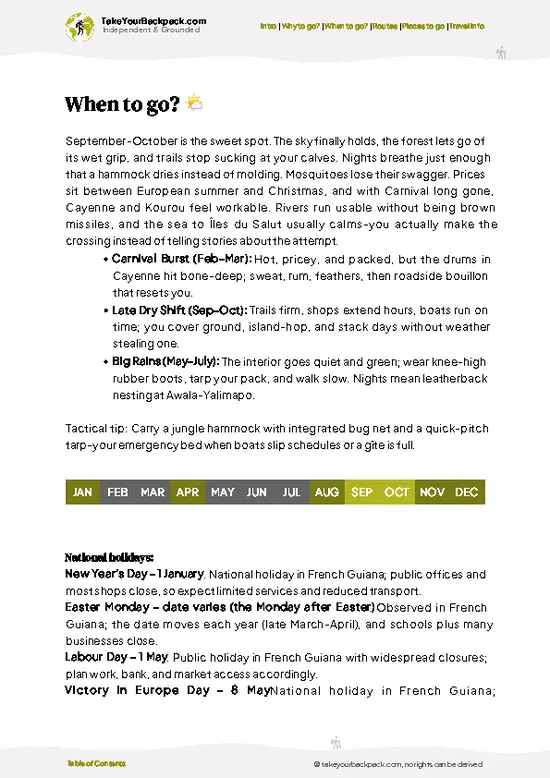
  • Weather: The dry season from August to December is your best bet. Expect less rain, which means trails won’t turn into mud baths and river crossings won’t become risky. The wet season (January to July) brings heavy downpours that can shut down access and make camping miserable.

  • Temperature: Temperatures hover between 24°C and 31°C (75°F to 88°F) year-round. It’s hot and humid, so pack lightweight, breathable gear. Nights cool slightly but rarely drop below 20°C (68°F), so a light layer is enough.

  • Daylight Hours: Near the equator, daylight is steady—about 12 hours daily. Sunrise and sunset times don’t shift much, so you can plan your hikes without worrying about losing daylight unexpectedly.

  • Crowds: The reserve is remote, so crowds are minimal year-round. However, the dry season sees
read more 👉

  • Weather: The dry season from August to December is your best bet. Expect less rain, which means trails won’t turn into mud baths and river crossings won’t become risky. The wet season (January to July) brings heavy downpours that can shut down access and make camping miserable.

  • Temperature: Temperatures hover between 24°C and 31°C (75°F to 88°F) year-round. It’s hot and humid, so pack lightweight, breathable gear. Nights cool slightly but rarely drop below 20°C (68°F), so a light layer is enough.

  • Daylight Hours: Near the equator, daylight is steady—about 12 hours daily. Sunrise and sunset times don’t shift much, so you can plan your hikes without worrying about losing daylight unexpectedly.

  • Crowds: The reserve is remote, so crowds are minimal year-round. However, the dry season sees a slight uptick in visitors, mostly researchers and serious trekkers, so expect some company but no tourist hordes.

  • Seasonal Activities: Wildlife spotting peaks in the dry season when animals gather around shrinking water sources. The wet season floods some trails but brings out unique amphibians and insects if you’re into that.

  • Price Fluctuations: Costs for guides and transport can rise 10-20% during the dry season due to demand. Booking early helps avoid last-minute price hikes and ensures availability.


Pro-tip: Aim for the tail end of the dry season—November to early December—when the weather is still stable, crowds thin, and prices start to ease.


source: climatestotravel.comJANJanuary: fair for travelingFEBFebruary: fair for travelingMARMarch: fair for travelingAPRApril: fair for travelingMAYMay: fair for travelingJUNJune: fair for travelingJULJuly: fair for travelingAUGAugust: highly recommended for travelingSEPSeptember: excellent for travelingOCTOctober: excellent for travelingNOVNovember: excellent for travelingDECDecember: highly recommended for traveling

✈️ The backpacker research shortcutFrench Guiana Travel Guide

An offline-friendly backpacking guide with optimized travel routes, ranked highlights, transport advice, and the best areas to stay.
example page 0 from our offline Travel Guide for French Guiana
example page 1 from our offline Travel Guide for French Guiana
example page 2 from our offline Travel Guide for French Guiana
example page 3 from our offline Travel Guide for French Guiana
example page 4 from our offline Travel Guide for French Guiana
example page 5 from our offline Travel Guide for French Guiana
example page 6 from our offline Travel Guide for French Guiana
example page 7 from our offline Travel Guide for French Guiana
The digital guide (182 pages) contains:
42 highlights, ranked by travel appeal
Optimized 2, 3 & 5-day travel routes
Cities, national parks, landmarks, beaches
How to get around
Offline-friendly for travel without Wi-Fi
👉 Click to see all 30+ guide features

📅 Plan smarter in minutes, not weeks
Month by month travel advice
Festivals & national holidays
Budget expectations

🗺️ Go to the right places, skip the overrated ones
Honest pros & cons of destinations
Top hikes, parks & viewpoints
Lesser-known places most travelers miss
Clear “worth it vs skip it” guidance

🛏️ Travel smoothly without rookie mistakes
Best areas to stay
Transport systems explained simply
Common scams & safety advice
SIM cards, money & practical tips

🌍 Understand the country, not just visit it
Culture & traditions
52 Essential phrases & customs
Festivals worth planning around
Traveler-friendly historical context
Insights that make places more meaningful

📱 Built for real travel conditions
Fully downloadable PDF
Works completely offline
Optimized for phone use
Useful in remote areas & buses
Everything in one place
Save weeks of stressful planning
Get instant access to your full guide. 30‑day money-back guarantee.


By proceeding you agree to our terms.
Sent to your inbox immediately after payment • 100% Secure Checkout
Best Backpacking Travel Advisor 2025 tourism awardBest Backpacking
Travel Advisor
2025
What others say about Take Your Backpack Guides:
⭐⭐⭐⭐⭐
Fantastic, amazing amount of information!
⭐⭐⭐⭐⭐
My goodness this is amazing, it's what I've been looking for hats off too you!
⭐⭐⭐⭐⭐
I think this is absolutely BRILLIANT
⭐⭐⭐⭐
Very complete and informative. It's still missing places, but I gotta to commend you
⭐⭐⭐⭐⭐
This is truly amazing, thank you, can't wait to explore it with my kids!
⭐⭐⭐⭐⭐
Awesome resource, thank you!
⭐⭐⭐⭐⭐
This is amazing! Can't wait to explore the ones I haven't seen
⭐⭐⭐⭐
I love this! Well done, great idea.
⭐⭐⭐⭐⭐
Thanks for taking the time to make this gem!
⭐⭐⭐⭐⭐
This might be the best website I've ever seen.
⭐⭐⭐⭐⭐
Congratulations, and thank you so much for your work; it's incredibly valuable.
⭐⭐⭐⭐
In all seriousness I think you did a great job pointing out the important spots
⭐⭐⭐⭐⭐
10/10 very good
⭐⭐⭐⭐⭐
As someone who's only just starting to visit regularly this is awesome, thank you.
⭐⭐⭐⭐
Thank you very much! I'm going to visit my dad, it's going to be very useful!
⭐⭐⭐⭐⭐
This is really cool! We'll be travelling for the first time and this definitely come in handy.
⭐⭐⭐⭐⭐
You are now our minister of culture, congratulations 👨‍💼
⭐⭐⭐⭐⭐
Just wanted to tell you that this is a pearl! Going to follow your recommendations.
⭐⭐⭐⭐⭐
This is so cool. I'll definitely be using the resource for my travels soon.
⭐⭐⭐⭐⭐
This is very impressive! Good work.
⭐⭐⭐⭐⭐
This is an amazing and informative site. Very well done!

🛏️ Where to stay?Best areas to stay in French Guiana

The Nouragues Natural Reserve in French Guiana is a wild paradise, but finding the right place to stay can be tricky. Inside the reserve, accommodations are limited. The main option is the Nouragues Research Station, which offers basic lodging for those looking to immerse themselves in the rainforest. It’s not luxurious, but it’s functional and puts you right in the heart of the action. Be prepared for communal living and a lack of modern amenities.

If you prefer a bit more comfort, head to the nearby town of Kourou. It’s about an hour’s drive from the reserve and offers a range of accommodations, … read more 👉
The Nouragues Natural Reserve in French Guiana is a wild paradise, but finding the right place to stay can be tricky. Inside the reserve, accommodations are limited. The main option is the Nouragues Research Station, which offers basic lodging for those looking to immerse themselves in the rainforest. It’s not luxurious, but it’s functional and puts you right in the heart of the action. Be prepared for communal living and a lack of modern amenities.

If you prefer a bit more comfort, head to the nearby town of Kourou. It’s about an hour’s drive from the reserve and offers a range of accommodations, from budget hostels to mid-range hotels. Kourou is also home to the Guiana Space Centre, which can be an interesting side trip.

Keep in mind that transportation can be a challenge. Renting a car or arranging a shuttle is often necessary, as public transport is limited. Factor in these logistics when planning your stay.

Lastly, always check for availability in advance, especially during peak seasons. This will save you from last-minute stress and ensure you have a spot waiting for you when you arrive.

👛 Costs (as of 17 March 2026)How expensive it really is

Visiting Nouragues Natural Reserve in French Guiana requires some planning, especially when it comes to costs.

Entry fees for the park are generally around €10 to €15 per person. This fee grants you access to the trails and the stunning biodiversity. However, keep in mind that this is just the starting point.

Accommodation options vary widely. If you’re looking to camp, expect to pay around €5 to €10 per night. For those preferring a more comfortable stay, eco-lodges can range from €50 to €150 per night, depending on the amenities and location.

Transportation is another factor. If you’re traveling from Cayenne, budget around €30 to €50 for a bus or shared taxi to the park entrance. Once there, guided tours can cost between €50 and €100, depending on the length and inclusivity of the … read more 👉
Visiting Nouragues Natural Reserve in French Guiana requires some planning, especially when it comes to costs.

Entry fees for the park are generally around €10 to €15 per person. This fee grants you access to the trails and the stunning biodiversity. However, keep in mind that this is just the starting point.

Accommodation options vary widely. If you’re looking to camp, expect to pay around €5 to €10 per night. For those preferring a more comfortable stay, eco-lodges can range from €50 to €150 per night, depending on the amenities and location.

Transportation is another factor. If you’re traveling from Cayenne, budget around €30 to €50 for a bus or shared taxi to the park entrance. Once there, guided tours can cost between €50 and €100, depending on the length and inclusivity of the experience.

Food options are limited within the reserve. Plan for around €10 to €20 per meal if you’re buying from local vendors or dining at lodges.

In summary, a basic visit can start at around €100 for a day trip, but if you’re looking for a more immersive experience, costs can easily climb to €300 or more. Being aware of these expenses will help you allocate your budget wisely, ensuring you can fully enjoy the natural beauty without financial stress.


source: guyane-amazonie.fr
⚠️ Prices can change and everyone travels differently, so take this as a rough guide. Hope it helps you plan your adventure!

🥾 TrailsDiscover Nouragues Natural Reserve's top trails and natural wonders

Nouragues Natural Reserve in French Guiana is a hidden gem for hikers looking for lush landscapes and a taste of the tropical rainforest. The scenery is nothing short of breathtaking, with towering trees, vibrant flora, and the occasional glimpse of wildlife like monkeys or colorful birds. The terrain can be challenging, with muddy paths and uneven ground, so prepare to get a little dirty.

One of the standout trails is the Sentier de la Réserve, which offers a solid introduction to the area’s biodiversity. Here are the details:
  • Length: 7 km
  • Estimated Duration: 3-4 hours
  • Difficulty Level: Moderate
  • Key
read more 👉
Nouragues Natural Reserve in French Guiana is a hidden gem for hikers looking for lush landscapes and a taste of the tropical rainforest. The scenery is nothing short of breathtaking, with towering trees, vibrant flora, and the occasional glimpse of wildlife like monkeys or colorful birds. The terrain can be challenging, with muddy paths and uneven ground, so prepare to get a little dirty.

One of the standout trails is the Sentier de la Réserve, which offers a solid introduction to the area’s biodiversity. Here are the details:
  • Length: 7 km
  • Estimated Duration: 3-4 hours
  • Difficulty Level: Moderate
  • Key Features: Scenic viewpoints, diverse plant life, and potential wildlife sightings
  • Terrain: Mostly flat with some muddy sections and roots

Getting to the park can be a bit of an adventure in itself. Public transport options are limited, so you might need to rely on a combination of buses and taxis to reach the entrance. The park isn’t usually packed, which is a plus for those who prefer a bit of solitude in nature. As for costs, there’s generally an entrance fee, but it’s pretty reasonable considering the experience you get. Just make sure to check the latest info before you go, as things can change.
⚠️ Hiking info can sometimes be outdated or inaccurate. Before you hit the trail, check the latest conditions with locals. If you do spot anything that's off, I'd love to hear from you, so I can update it for fellow travelers.

🛡️ SafetySafety Tips and Common Scams in Nouragues Natural Reserve

Nouragues Natural Reserve is a captivating place, but it’s essential to approach it with a clear head. The weather can shift quickly, so be prepared for sudden rain or humidity. Lightweight, breathable gear is your friend, and a good rain jacket can save your day.

The terrain varies. Some trails are well-marked, but others can be steep and slippery, especially after rain. Good hiking boots with solid grip are crucial. Pay attention to your footing, and don’t rush; the jungle has its own rhythm.

Wildlife encounters are part of the experience. While most animals will keep their distance, it’s wise to respect their space. If you spot a snake or a large mammal, give it room and observe quietly.

Navigation can be tricky, so a reliable map and a compass are must-haves. Cell service is spotty, … read more 👉
Nouragues Natural Reserve is a captivating place, but it’s essential to approach it with a clear head. The weather can shift quickly, so be prepared for sudden rain or humidity. Lightweight, breathable gear is your friend, and a good rain jacket can save your day.

The terrain varies. Some trails are well-marked, but others can be steep and slippery, especially after rain. Good hiking boots with solid grip are crucial. Pay attention to your footing, and don’t rush; the jungle has its own rhythm.

Wildlife encounters are part of the experience. While most animals will keep their distance, it’s wise to respect their space. If you spot a snake or a large mammal, give it room and observe quietly.

Navigation can be tricky, so a reliable map and a compass are must-haves. Cell service is spotty, so don’t rely on your phone. With the right preparation, you can focus on the beauty around you without unnecessary stress.

Other French Guianese national parks near Nouragues Natural Reserve

Explore more nearby:


💡 Not sure where to go next?
Create a personalized itinerary for French Guiana including Nouragues Natural Reserve and the places that fit your trip.

Generate my itinerary

👉 Discover all national parks

Or checkout all French Guiana has to offer (think cities, towns, villages, national parks, hikes, beaches, festivals)
Country photo of French Guiana

We 💚 feedbackIs it worth it?

Nouragues Natural Reserve is a wild symphony of life, where the air buzzes with the sounds of nature. The best surprise? Spotting a rare bird or a playful monkey swinging overhead. But here’s the catch: bring your patience. Trails can be muddy and signage sparse, so don’t rush. Embrace the slow pace; it’s part of the experience. This place rewards those who take their time. Keep your energy for the moments that matter, and you’ll leave with stories worth sharing.

✍️ Help improve this page!
The information on this page is based on in-depth research, insights shared by experienced travelers, and feedback from the local travel community in French Guiana. While every effort is made to keep the information accurate and current, conditions can change — so if you spot anything incorrect or outdated, please get in touch.


🙋‍♂️ Give feedback

👋 Meet the founderWho’s Behind Take Your Backpack?

Johan, backpacker and founder of TakeYourBackpackHi, I’m Johan (Netherlands 🇳🇱), the creator of TakeYourBackpack. Over the past decade, I’ve backpacked through 80+ countries across six continents, gaining extensive experience with independent travel, long-term trips, and overland routes.

This site is built on a combination of firsthand travel experience and carefully curated insights from other backpackers. Many guides are based on places I’ve personally visited, while others bring together tips, observations, and practical advice shared by trusted travelers I’ve met along the way.

The goal is to provide realistic, experience-driven guidance — not generic itineraries — so you can explore destinations with better context, clearer expectations, and more confidence.

Get full country guide •
Instant download • 42 highlights • Full Offline guide