×

French Polynesia🇵🇫 | festivalsFestival of the ArtsTo’ata Square stages, free stone lifting, roulotte dinners, Paofai gardens | things to do and best time to go

Explore Tiahura BeachExplore Heiva i Tahiti

Backpacking in of the Arts
By Johan Kruseman 🇳🇱 | Updated October 15, 2026

Most of the action is free, and the evenings are when the festival really starts, because the big dance and song contests only warm up after sunset. The Festival of the Arts, known locally as Heiva i Tahiti, takes place in Papeete on the island of Tahiti in French Polynesia, with the main stage at the To’ata Square waterfront and the Paofai gardens. It runs through July, a stretch of roughly three weeks, and draws Polynesian families, dance troupes from across the islands and a modest scatter of travelers. Walk the seafront and you hear drums before you see anything, and you get a plate of poisson cru from a roulotte for the price of a snack. Arrive early to the seated shows for a good bench. Unlike the Heiva on Bora Bora, which is small and village-scaled, this one is the capital’s full-size competition, with the biggest troupes and the loudest crowds.

Discover everything you want to know in the 📖 French Polynesia Travel Guide.


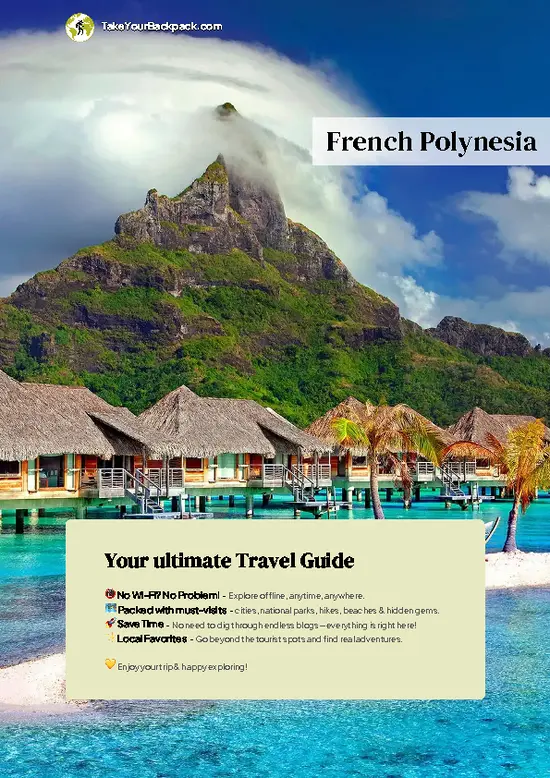
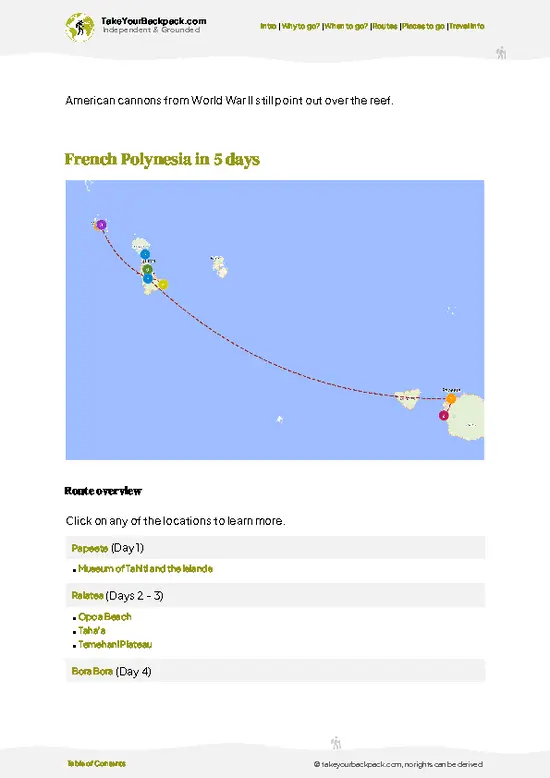
example page 0 from our offline Travel Guide for French Polynesia
example page 1 from our offline Travel Guide for French Polynesia
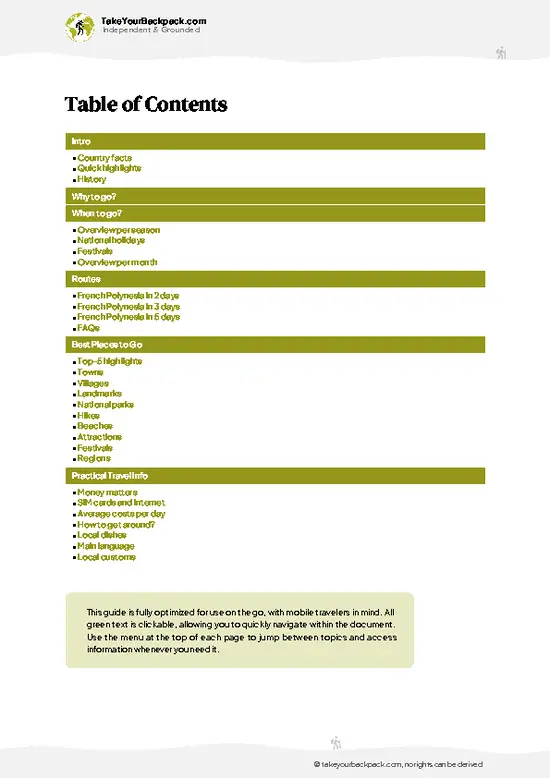
example page 2 from our offline Travel Guide for French Polynesia
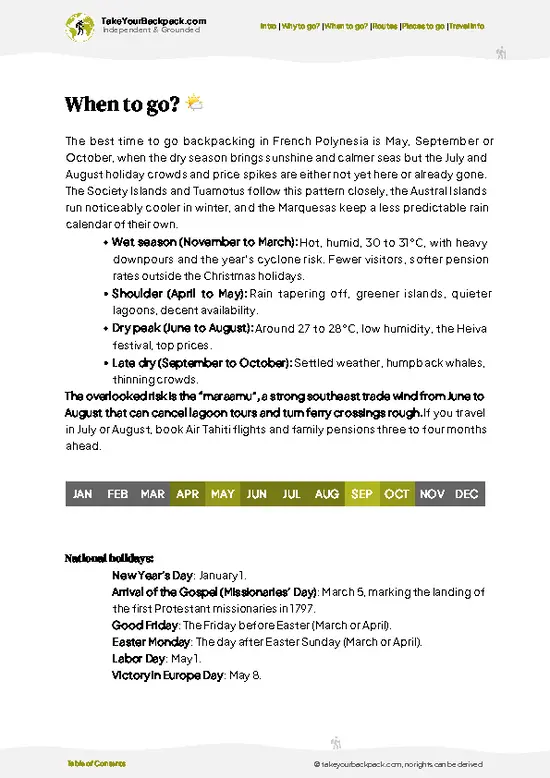
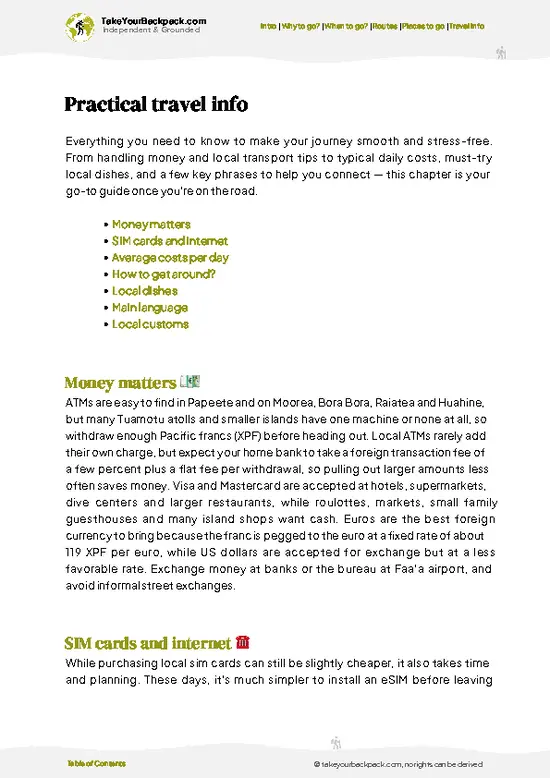
example page 3 from our offline Travel Guide for French Polynesia
example page 4 from our offline Travel Guide for French Polynesia
example page 5 from our offline Travel Guide for French Polynesia
example page 6 from our offline Travel Guide for French Polynesia
example page 7 from our offline Travel Guide for French Polynesia
Loading the map 🌍
CLICK TO FILTER
towns
villages
landmarks
national parks
hikes
beaches
attractions
festivals
regions
SHOW COUNTRY’S BESTSHOW ALL

✨ Why go?
Ranked #99 festival in French Polynesia
What makes it a must-see festival

Backpackers build a July route around this because it is the one time the best dance troupes from the Society Islands and beyond compete in the same place, and you can watch it without a package-tour budget. Standing among local families, you quickly pick up the rhythm of the place. People bring mats, share food and cheer for their own island. That is a temporary community you can join simply by sitting down and clapping at the right moment.

The festival also fits neatly into a longer island-hopping trip. Papeete is the hub for flights and ferries, so you can catch the evening shows, then head off to Moorea or the Tuamotus with real context for the culture. Compared with a resort dinner-and-dance night, the To’ata Square contests are the real thing, with serious costumes, trained choirs and … read more 👉
Backpackers build a July route around this because it is the one time the best dance troupes from the Society Islands and beyond compete in the same place, and you can watch it without a package-tour budget. Standing among local families, you quickly pick up the rhythm of the place. People bring mats, share food and cheer for their own island. That is a temporary community you can join simply by sitting down and clapping at the right moment.

The festival also fits neatly into a longer island-hopping trip. Papeete is the hub for flights and ferries, so you can catch the evening shows, then head off to Moorea or the Tuamotus with real context for the culture. Compared with a resort dinner-and-dance night, the To’ata Square contests are the real thing, with serious costumes, trained choirs and drummers, and tickets that stay modest. Many side events, like traditional sports on the waterfront, cost nothing at all.

💡 HighlightsTop highlights of of the Arts

  1. Heiva i Tahiti dance contests at To’ata Square: The headline event. Troupes of dozens perform ‘ori Tahiti, with hip-shaking women, powerful men and a wall of toere log drums behind them. Seats are tiered, and tickets are modest.
  2. Traditional sports at Venus Point: Stone lifting, javelin throwing at a coconut on a tall pole, and outrigger races. It is a free, sweaty, noisy contrast to the formal stage.
  3. Himene singing competitions: Choirs sing unaccompanied hymns in Tahitian, with layered voices that fill the whole venue. It is the least touristy part of the program and often the most moving.
  4. Papeete Market craft stalls and fair: Pareos, pearl jewelry, woven hats and monoi oil gather around the festival days. Bargain gently and buy from the makers.
  5. Roulottes on the Papeete waterfront: Food trucks
… read more 👉
  1. Heiva i Tahiti dance contests at To’ata Square: The headline event. Troupes of dozens perform ‘ori Tahiti, with hip-shaking women, powerful men and a wall of toere log drums behind them. Seats are tiered, and tickets are modest.
  2. Traditional sports at Venus Point: Stone lifting, javelin throwing at a coconut on a tall pole, and outrigger races. It is a free, sweaty, noisy contrast to the formal stage.
  3. Himene singing competitions: Choirs sing unaccompanied hymns in Tahitian, with layered voices that fill the whole venue. It is the least touristy part of the program and often the most moving.
  4. Papeete Market craft stalls and fair: Pareos, pearl jewelry, woven hats and monoi oil gather around the festival days. Bargain gently and buy from the makers.
  5. Roulottes on the Papeete waterfront: Food trucks serve poisson cru, grilled fish and chow mein at plastic tables just before and after shows. It is the cheapest and liveliest dinner in town.
Start with the dance contests at To’ata Square on an evening early in the run, because the crowds are thinner and the most polished troupes often open the schedule.
Spotted a mistake or missing something? Contact us.

Things to do around Festival of the Arts

Ratings based on Tripadvisor reviews. When you book through this link, you support our work at no extra cost to you.

🌤️ When to go?When is the celebration of Festival of the Arts?

The Festival of the Arts, known locally as Heiva i Tahiti, runs for several weeks from late June through July, with the main dance and song competitions staged at the To’ata Square amphitheater in Pape’ete, Tahiti; the exact dates shift each year and are set by the organizing committee.
  • Best nights: Go on a competition night in the first half of the run, when the top dance troupes perform full-scale stories with drummers and up to 100 dancers. Finals and prize nights draw the biggest crowds, while weeknights are easier for seats.
  • Weather: Evenings sit around 22 to 26°C (72 to 79°F), with dry skies most nights and sunset near 5:45 pm. Bring a light sweater, a rain shell for the odd shower and insect repellent.
  • Booking: Reserve a bed 2 to 3 months ahead, as Pape’ete rooms and flights from Los Angeles
… read more 👉
The Festival of the Arts, known locally as Heiva i Tahiti, runs for several weeks from late June through July, with the main dance and song competitions staged at the To’ata Square amphitheater in Pape’ete, Tahiti; the exact dates shift each year and are set by the organizing committee.
  • Best nights: Go on a competition night in the first half of the run, when the top dance troupes perform full-scale stories with drummers and up to 100 dancers. Finals and prize nights draw the biggest crowds, while weeknights are easier for seats.
  • Weather: Evenings sit around 22 to 26°C (72 to 79°F), with dry skies most nights and sunset near 5:45 pm. Bring a light sweater, a rain shell for the odd shower and insect repellent.
  • Booking: Reserve a bed 2 to 3 months ahead, as Pape’ete rooms and flights from Los Angeles and Auckland fill and rise roughly 20 to 40 percent. Tickets are modest and sold through the venue and local outlets.
  • Crowds: Arrive at To’ata by 5:30 pm for a good bench seat. Le Truck buses thin out after the late show, so arrange a taxi or walk back to the waterfront.
Stay in central Pape’ete so you can walk home after the shows.


source: climatestotravel.comJANJanuary: not recommended for travelingFEBFebruary: not recommended for travelingMARMarch: not recommended for travelingAPRApril: not recommended for travelingMAYMay: not recommended for travelingJUNJune: excellent for travelingJULJuly: not recommended for travelingAUGAugust: not recommended for travelingSEPSeptember: not recommended for travelingOCTOctober: not recommended for travelingNOVNovember: not recommended for travelingDECDecember: not recommended for traveling

✈️ The backpacker research shortcutFrench Polynesia Travel Guide

An offline-friendly backpacking guide with optimized travel routes, ranked highlights, transport advice, and the best areas to stay.
example page 0 from our offline Travel Guide for French Polynesia
example page 1 from our offline Travel Guide for French Polynesia
example page 2 from our offline Travel Guide for French Polynesia
example page 3 from our offline Travel Guide for French Polynesia
example page 4 from our offline Travel Guide for French Polynesia
example page 5 from our offline Travel Guide for French Polynesia
example page 6 from our offline Travel Guide for French Polynesia
example page 7 from our offline Travel Guide for French Polynesia
The digital guide (149 pages) contains:
✅ 41 highlights, ranked by travel appeal
✅ Optimized 2, 3 & 5-day travel routes
✅ Cities, national parks, landmarks, beaches
✅ How to get around
✅ Offline-friendly for travel without Wi-Fi
👉 Click to see all 30+ guide features

📅 Plan smarter in minutes, not weeks
✅ Month by month travel advice
✅ Festivals & national holidays
✅ Budget expectations

🗺️ Go to the right places, skip the overrated ones
✅ Honest pros & cons of destinations
✅ Top hikes, parks & viewpoints
✅ Lesser-known places most travelers miss
✅ Clear “worth it vs skip it” guidance

🛏️ Travel smoothly without rookie mistakes
✅ Best areas to stay
✅ Transport systems explained simply
✅ Common scams & safety advice
✅ SIM cards, money & practical tips

🌍 Understand the country, not just visit it
✅ Culture & traditions
✅ 52 Essential phrases & customs
✅ Festivals worth planning around
✅ Traveler-friendly historical context
✅ Insights that make places more meaningful

📱 Built for real travel conditions
✅ Fully downloadable PDF
✅ Works completely offline
✅ Optimized for phone use
✅ Useful in remote areas & buses
✅ Everything in one place
Stop searching, start planning
Get instant access to your full guide. 30‑day money-back guarantee.
+ Add another guide for just

By proceeding you agree to our terms.
Sent to your inbox immediately after payment • 100% Secure Checkout
Best Backpacking Travel Advisor 2025 tourism awardBest Backpacking
Travel Advisor
2025
What others say about Take Your Backpack Guides:
⭐⭐⭐⭐⭐
Fantastic, amazing amount of information!
⭐⭐⭐⭐⭐
My goodness this is amazing, it's what I've been looking for hats off too you!
⭐⭐⭐⭐⭐
I think this is absolutely BRILLIANT
⭐⭐⭐⭐
Very complete and informative. It's still missing places, but I gotta to commend you
⭐⭐⭐⭐⭐
This is truly amazing, thank you, can't wait to explore it with my kids!
⭐⭐⭐⭐⭐
Awesome resource, thank you!
⭐⭐⭐⭐⭐
This is amazing! Can't wait to explore the ones I haven't seen
⭐⭐⭐⭐
I love this! Well done, great idea.
⭐⭐⭐⭐⭐
Thanks for taking the time to make this gem!
⭐⭐⭐⭐⭐
This might be the best website I've ever seen.
⭐⭐⭐⭐⭐
Congratulations, and thank you so much for your work; it's incredibly valuable.
⭐⭐⭐⭐
In all seriousness I think you did a great job pointing out the important spots
⭐⭐⭐⭐⭐
10/10 very good
⭐⭐⭐⭐⭐
As someone who's only just starting to visit regularly this is awesome, thank you.
⭐⭐⭐⭐
Thank you very much! I'm going to visit my dad, it's going to be very useful!
⭐⭐⭐⭐⭐
This is really cool! We'll be travelling for the first time and this definitely come in handy.
⭐⭐⭐⭐⭐
You are now our minister of culture, congratulations 👨‍💼
⭐⭐⭐⭐⭐
Just wanted to tell you that this is a pearl! Going to follow your recommendations.
⭐⭐⭐⭐⭐
This is so cool. I'll definitely be using the resource for my travels soon.
⭐⭐⭐⭐⭐
This is very impressive! Good work.
⭐⭐⭐⭐⭐
This is an amazing and informative site. Very well done!

🛏️ Where to stay?Best areas and accommodation options

Pape’ete is the best base, because the performances happen on foot-friendly streets near the waterfront and you avoid late-night transport headaches. Stay within a 10 to 15 minute walk of the harbor and the main market, and you can reach the venue, supermarkets, and the Le Truck bus lines without a taxi. The streets around the market and Boulevard Pomare are lively by day and busy with festival-goers in the evening, though they quiet down late, so keep valuables close and take a taxi after midnight.
Backpackers meet others most easily in the central downtown guesthouse district, where small family-run … read more 👉
Pape’ete is the best base, because the performances happen on foot-friendly streets near the waterfront and you avoid late-night transport headaches. Stay within a 10 to 15 minute walk of the harbor and the main market, and you can reach the venue, supermarkets, and the Le Truck bus lines without a taxi. The streets around the market and Boulevard Pomare are lively by day and busy with festival-goers in the evening, though they quiet down late, so keep valuables close and take a taxi after midnight.
Backpackers meet others most easily in the central downtown guesthouse district, where small family-run pensions and a few dorm-style options cluster near the market. Shared kitchens there help you cut food costs and chat with other travelers heading to the shows.
Punaauia, a few kilometers west toward the airport, is a calmer alternative with beach access, supermarkets, and easy Le Truck links into town. It suits you if you want sleep and swimming between evenings out. Mahina and Pirae, east of the center, offer quieter residential stays with local feel, but you will rely more on buses and taxis after dark. Book early for all of them, since the festival fills the cheaper beds first.

👛 Costs (as of 15 October 2026)What things cost and how to budget

A realistic budget for the festival is about US$90 to 235 a day, covering a dorm or pension bed, evening shows, and street food.
CategoryBudget RangeLocal Reality
Festival ticketsUS$0 to 35Some open-air evenings are free to watch from standing areas, while reserved seating for main competition nights costs more.
AccommodationUS$50 to 110Dorms and simple pensions in Pape’ete cost less outside July; the festival period pushes prices to the top of this range.
Local transportUS$5 to 15Le Truck rides cost about 200 to 350 XPF (US$2 to 3), and a taxi late at night runs US$10 to 25.
Food & drinksUS$30 to 55Roulotte plates are US$11 to 16, bakery breakfasts are cheap, and a beer costs US$4.50 to 7.
MiscellaneousUS$5 to 20Covers sunscreen, repellent, a seat cushion, snacks, and small souvenirs such as monoi
… read more 👉
A realistic budget for the festival is about US$90 to 235 a day, covering a dorm or pension bed, evening shows, and street food.
CategoryBudget RangeLocal Reality
Festival ticketsUS$0 to 35Some open-air evenings are free to watch from standing areas, while reserved seating for main competition nights costs more.
AccommodationUS$50 to 110Dorms and simple pensions in Pape’ete cost less outside July; the festival period pushes prices to the top of this range.
Local transportUS$5 to 15Le Truck rides cost about 200 to 350 XPF (US$2 to 3), and a taxi late at night runs US$10 to 25.
Food & drinksUS$30 to 55Roulotte plates are US$11 to 16, bakery breakfasts are cheap, and a beer costs US$4.50 to 7.
MiscellaneousUS$5 to 20Covers sunscreen, repellent, a seat cushion, snacks, and small souvenirs such as monoi oil.
Total Daily BudgetUS$90 to 235Sharing a room and eating at roulottes keeps you near the lower end.
Prices are quoted in US dollars, but you pay in Pacific francs (XPF).
⚠️ Prices can change and everyone travels differently, so take this as a rough guide. Hope it helps you plan your adventure!

🍲 FoodWhat to Eat & Drink

The best eating happens at the roulottes, the food trucks that set up each evening along Pape’ete’s waterfront near the performances. Plates of poisson cru, raw tuna cured in lime and tossed with coconut milk, are the thing to order, and a plate usually costs about 1,200 to 1,800 XPF (US$11 to 16). Add chow mein, grilled fish, or steak frites if you are hungry, because portions are large and one plate often feeds a hungry traveler.
Look for firi firi, sweet Tahitian doughnuts, and po’e, a pudding of baked fruit and starch with coconut cream. These sell for around 100 to 400 XPF (US$1 to 4) at stalls and are good for sharing. Fresh coconut water and fruit juices are everywhere, and Hinano lager is the local beer, about 500 to 800 XPF (US$4.50 to 7) a glass.
Bring cash in Pacific francs, since … read more 👉
The best eating happens at the roulottes, the food trucks that set up each evening along Pape’ete’s waterfront near the performances. Plates of poisson cru, raw tuna cured in lime and tossed with coconut milk, are the thing to order, and a plate usually costs about 1,200 to 1,800 XPF (US$11 to 16). Add chow mein, grilled fish, or steak frites if you are hungry, because portions are large and one plate often feeds a hungry traveler.
Look for firi firi, sweet Tahitian doughnuts, and po’e, a pudding of baked fruit and starch with coconut cream. These sell for around 100 to 400 XPF (US$1 to 4) at stalls and are good for sharing. Fresh coconut water and fruit juices are everywhere, and Hinano lager is the local beer, about 500 to 800 XPF (US$4.50 to 7) a glass.
Bring cash in Pacific francs, since most roulottes and market stalls do not take cards. Lines form fast right before shows start, so eat early or grab a plate to carry in. Tables are shared, and a friendly nod is all it takes to sit. Tap water is generally safe in Pape’ete, but many travelers buy bottled water for the evening.

FAQTraveler FAQ

The festival takes place over several weeks, with its main performances falling between late June and July. Most shows are staged at To’ata Square in Pape’ete, Tahiti, in the evenings. Final competition and prize nights come near the end of the run, so plan a stay of at least three to four days.
Expect to spend about US$90 to 235 a day all in. Tickets range from free for open-air viewing to roughly US$10 to 35 for reserved seats, while a bed in Pape’ete costs US$50 to 110. Roulotte meals add around US$11 to 16 a plate.
Tickets are not needed for every evening, since some open-air viewing areas are free. Buy reserved seats a few days ahead for the busiest competition and final nights, as these sell out. Book your bed in Pape’ete four to eight weeks early, because July prices rise by 10 to 30 percent.
⚠️ Things can change over time, so always validate details locally before you go.

Other French Polynesian festivals near of the Arts

Explore more nearby:

  • Heiva i Tahiti—Judged troupes, ‘ōte’a and ‘aparima, outrigger races, tifaifai quilts| 2 km away
  • Tahiti Pearl Regatta—Raiatea start, Taha’a lagoon legs, pearl farms, dockside prizegiving| 218 km away
  • Marquesas Islands Festival—Tohua platform, warrior dances, Marquesan tattoo, pit-cooked feast

💡 Not sure where to go next?
Create a personalized itinerary for French Polynesia including of the Arts and the places that fit your trip.

Generate my itinerary

👉 Discover all festivals

Or checkout all French Polynesia has to offer (think cities, towns, villages, national parks, hikes, beaches, festivals)
Country photo of French Polynesia

We 💚 feedbackIs it worth it?

Go in July and aim for the evening shows, once the heat of the day has faded and the drums carry across the harbor. I would book the first week, when seats are easier and the energy is still building. Bring a light jacket for the sea breeze, and keep a little cash for roulotte dinners.

✍️ Help improve this page!
The information on this page is based on in-depth research, insights shared by experienced travelers, and feedback from the local travel community in French Polynesia. While every effort is made to keep the information accurate and current, conditions can change — so if you spot anything incorrect or outdated, please get in touch.


🙋‍♂️ Give feedback

👋 Meet the founderWho’s Behind Take Your Backpack?

Johan, backpacker and founder of TakeYourBackpackHi, I’m Johan (Netherlands 🇳🇱), the creator of TakeYourBackpack. Over the past 3 decades, I’ve backpacked through 90+ countries across six continents, gaining extensive experience with independent travel, long-term trips, and overland routes.

This site is built on a combination of firsthand travel experience and carefully curated insights from other backpackers. Many guides are based on places I’ve personally visited, while others bring together tips, observations, and practical advice shared by trusted travelers I’ve met along the way.

The goal is to provide realistic, experience-driven guidance — not generic itineraries — so you can explore destinations with better context, clearer expectations, and more confidence.