×

French Polynesia🇵🇫 | townsNuku Hivavolcanic peaks, archaeological sites, remote valleys, Marquesan culture | things to do and best time to go

Explore Faa’aExplore Papeete

Backpacking in Nuku Hiva
👍 Recommendedtown ranked #3
By Johan Kruseman 🇳🇱 | Updated May 26, 2026

Years ago, Nuku Hiva felt like the end of the world: one cargo ship a week, dim streetlights, and the smell of woodsmoke drifting over a bay with almost no yachts. Today you still get that raw, far‑edge feeling, but with a few more 4x4s, better guesthouses, and the quiet hum of satellite dishes. It sits in the northern Marquesas, far from the honeymoon lagoons of Bora Bora, and it feels it: the air is heavier, the mountains steeper, the ocean darker and wilder.

For backpackers, Taiohae (the main town on Nuku Hiva) is more launchpad than attraction. You come to base yourself for waterfall hikes, cliffy viewpoints, and village valleys, not for nightlife or café‑hopping. It’s walkable along the bay, but you’ll rely on lifts, arranged tours, or pricey taxis to reach the good stuff. It’s calm, safe, and low on hostels, so meeting other travelers is slower and more intentional than in busier Society Islands hubs.

Discover everything you want to know in the 📖 French Polynesia Travel Guide.
Loading the map 🌍
CLICK TO FILTER
towns
villages
landmarks
national parks
hikes
beaches
attractions
festivals
regions
SHOW COUNTRY’S BESTSHOW ALL

✨ Why go?
Ranked #3 town in French Polynesia
What sets this place apart

Nuku Hiva draws backpackers for its strategic location within the Marquesas, serving as a gateway to some of the most breathtaking hikes and cultural experiences in French Polynesia. The walkable streets invite exploration, where you can soak in the local vibe and grab a bite of fresh poisson cru at a nearby eatery. Small-scale hostels and guesthouses offer a cozy atmosphere, perfect for solo travelers or small groups looking to connect.

While some might breeze through in a day or two, many linger to savor the tranquility and friendly social scene. The town’s charm lies in its balance; you can hike to the dramatic cliffs of Hakaui Valley or relax on the serene beaches without feeling rushed. It’s ideal for slow travelers who appreciate the journey as much as the destination. The laid-back … read more 👉
Nuku Hiva draws backpackers for its strategic location within the Marquesas, serving as a gateway to some of the most breathtaking hikes and cultural experiences in French Polynesia. The walkable streets invite exploration, where you can soak in the local vibe and grab a bite of fresh poisson cru at a nearby eatery. Small-scale hostels and guesthouses offer a cozy atmosphere, perfect for solo travelers or small groups looking to connect.

While some might breeze through in a day or two, many linger to savor the tranquility and friendly social scene. The town’s charm lies in its balance; you can hike to the dramatic cliffs of Hakaui Valley or relax on the serene beaches without feeling rushed. It’s ideal for slow travelers who appreciate the journey as much as the destination. The laid-back pace allows for meaningful interactions with locals, making it a rewarding stop for those seeking authenticity over nightlife. If you’re after a mix of adventure and cultural immersion, Nuku Hiva is more than just a pit stop; it’s a place to breathe in the essence of the Marquesas.
Want to include Nuku Hiva in your French Polynesia route?
Create a personalized French Polynesia itinerary that includes Nuku Hiva and the places that fit your trip — based on your travel style, budget, and available time. Get your route in seconds.

Generate my trip

💡 HighlightsTop highlights of Nuku Hiva

  1. Taiohae Bay (the town harbor) — The tidal heart of Nuku Hiva: wide emerald bay ringed by steep cliffs, fishing boats, and the ferry/ship landing. Walking the shoreline gives an instant sense of island life and is the primary access point for town services and trips into the interior.
  2. Taiohae Waterfront Market — A compact, lively market by the wharf where fishermen and farmers sell fresh fish, tropical fruit, and basic local produce; you’ll also find simple handicrafts and friendly local traders. Best for morning visits to see the catch and sample local flavors.
  3. The Town Wharf and Boat Stands — Where longboats, supply launches, and passenger skiffs tie up; great for people-watching, catching the rhythm of arrivals/departures, and browsing artisans who set up near the pier. The wharf is
read more 👉
  1. Taiohae Bay (the town harbor) — The tidal heart of Nuku Hiva: wide emerald bay ringed by steep cliffs, fishing boats, and the ferry/ship landing. Walking the shoreline gives an instant sense of island life and is the primary access point for town services and trips into the interior.
  2. Taiohae Waterfront Market — A compact, lively market by the wharf where fishermen and farmers sell fresh fish, tropical fruit, and basic local produce; you’ll also find simple handicrafts and friendly local traders. Best for morning visits to see the catch and sample local flavors.
  3. The Town Wharf and Boat Stands — Where longboats, supply launches, and passenger skiffs tie up; great for people-watching, catching the rhythm of arrivals/departures, and browsing artisans who set up near the pier. The wharf is the practical hub for booking boat trips and island transport.
  4. Taiohae Catholic Church — The island’s principal Catholic church in town, a focal point for local ritual and community gatherings. Visiting during a service or simply seeing the carved religious art and local memorials offers real cultural context.
  5. Short Ridgeline Lookouts above Town — A handful of short, walkable paths climb from the town up to easy viewpoints that overlook Taiohae Bay and the surrounding peaks. These quick hikes are the fastest way to get panoramic photos and a proper sense of the island’s dramatic topography without a full-day trek.
You can day-trip from town to nearby gems like Hatiheu Bay and its marae, the huge Vaipo Waterfall in the Vaipo Valley, and the historic Taipivai Valley (Melville’s valley)—all visitable from Taiohae as organized trips or by road.
Spotted a mistake or missing something? Contact us.
🏘️ NeighborhoodsHow different areas shape the experience

Nuku Hiva offers a blend of rugged beauty and rich culture, perfect for backpackers seeking both adventure and authenticity.

Taiohae: This is the main town and your best bet for convenience. It’s walkable, with shops and eateries lining the streets. The vibe is laid-back, with a mix of locals and travelers. Prices here are moderate; you can find budget accommodations and street food that won’t break the bank. Nightlife is low-key, with a few bars where you can unwind after a day of exploring. Perfect for short stays, but longer visits can feel repetitive without venturing out.

Hatiheu: A quieter, picturesque village that feels like a step back in time. It’s less touristy, making it ideal for those seeking solitude. The scenery is breathtaking, with lush hills and a stunning bay. Accommodations … read more 👉
Nuku Hiva offers a blend of rugged beauty and rich culture, perfect for backpackers seeking both adventure and authenticity.

Taiohae: This is the main town and your best bet for convenience. It’s walkable, with shops and eateries lining the streets. The vibe is laid-back, with a mix of locals and travelers. Prices here are moderate; you can find budget accommodations and street food that won’t break the bank. Nightlife is low-key, with a few bars where you can unwind after a day of exploring. Perfect for short stays, but longer visits can feel repetitive without venturing out.

Hatiheu: A quieter, picturesque village that feels like a step back in time. It’s less touristy, making it ideal for those seeking solitude. The scenery is breathtaking, with lush hills and a stunning bay. Accommodations are limited but charming, often run by locals. Walkability is decent, but you’ll want to rent a bike or hitch a ride to explore further. This area suits longer stays for those who want to immerse themselves in local life and culture.

Hakaui: A hidden treasure for the adventurous. It’s remote, requiring a hike or boat ride to access, but the payoff is worth it. The atmosphere is serene, with waterfalls and untouched nature. Accommodations are basic, but the experience is raw and authentic. Ideal for longer stays if you’re looking to disconnect and recharge. Just be prepared for a bit of a trek to get there.

⌛️ 1 dayWhat you can realistically do in a day

Nuku Hiva, the largest island in the Marquesas, is a treasure trove of rugged beauty and rich culture. The air is thick with the scent of tropical flowers, and the landscape is a dramatic mix of steep cliffs and lush valleys. This isn’t just a stop on your journey; it’s a chance to dive into the heart of Polynesian life.

Start your morning at the bustling market in Taiohae. The vibrant colors of fresh fruits and handmade crafts create a feast for the eyes. Grab a coconut to sip on as you wander. The locals are friendly, and you might even catch a glimpse of traditional crafts being made. This is your chance to connect with the island’s spirit before heading to the iconic Cathedral of Notre Dame. Its unique architecture, blending French and Polynesian styles, is a sight to behold.

In the … read more 👉
Nuku Hiva, the largest island in the Marquesas, is a treasure trove of rugged beauty and rich culture. The air is thick with the scent of tropical flowers, and the landscape is a dramatic mix of steep cliffs and lush valleys. This isn’t just a stop on your journey; it’s a chance to dive into the heart of Polynesian life.

Start your morning at the bustling market in Taiohae. The vibrant colors of fresh fruits and handmade crafts create a feast for the eyes. Grab a coconut to sip on as you wander. The locals are friendly, and you might even catch a glimpse of traditional crafts being made. This is your chance to connect with the island’s spirit before heading to the iconic Cathedral of Notre Dame. Its unique architecture, blending French and Polynesian styles, is a sight to behold.

In the afternoon, make your way to the lesser-known village of Hatiheu. The drive is a winding adventure, with breathtaking views of the coastline. Once there, explore the ancient petroglyphs carved into the rocks. These tell stories of the island’s past and offer a quiet moment of reflection. Don’t miss the chance to dip your toes in the warm waters of the bay; the soft sand and gentle waves are a perfect reward for your efforts.

As the sun begins to set, return to Taiohae for dinner at a local eatery. Try the poisson cru, a dish of fresh fish marinated in coconut milk and lime. The flavors are a celebration of the ocean, and the atmosphere is relaxed, filled with laughter and the sound of waves.

End your day by strolling along the waterfront, where the sky transforms into a canvas of oranges and purples. This is Nuku Hiva—a place where every moment feels earned, and every experience is a step deeper into its vibrant soul.
Turn your Nuku Hiva visit into an French Polynesia adventure
Build a complete French Polynesia route with Nuku Hiva, hidden gems, must-see destinations, and realistic travel times included.

Generate my trip

🌤️ When to go?Seasonal considerations and timing


  • Weather: Nuku Hiva’s dry season runs from May to October, offering clearer skies and less humidity. This means hiking trails are less slippery, and the air feels fresher, not weighed down by tropical moisture. The wet season, November to April, brings heavy rains that can turn paths into muddy challenges and sometimes wash out remote spots.

  • Temperature: Expect daytime highs around 26-29°C (79-84°F) during the dry months, with nights cooling to 20-22°C (68-72°F). The wet season nudges temps slightly higher, but the humidity makes it feel hotter. This balance matters when you’re carrying a pack—too hot, and every step saps energy; too cool, and you’ll want layers for early mornings.

  • Daylight Hours: Daylight stays fairly steady year-round, roughly 11 to 12 hours. But during the dry season,
read more 👉

  • Weather: Nuku Hiva’s dry season runs from May to October, offering clearer skies and less humidity. This means hiking trails are less slippery, and the air feels fresher, not weighed down by tropical moisture. The wet season, November to April, brings heavy rains that can turn paths into muddy challenges and sometimes wash out remote spots.

  • Temperature: Expect daytime highs around 26-29°C (79-84°F) during the dry months, with nights cooling to 20-22°C (68-72°F). The wet season nudges temps slightly higher, but the humidity makes it feel hotter. This balance matters when you’re carrying a pack—too hot, and every step saps energy; too cool, and you’ll want layers for early mornings.

  • Daylight Hours: Daylight stays fairly steady year-round, roughly 11 to 12 hours. But during the dry season, the sun rises a bit earlier and sets later, giving you more daylight to explore the rugged valleys and ancient petroglyphs without rushing.

  • Crowds: Nuku Hiva is never overrun, but the dry season, especially July and August, sees a slight uptick in visitors. This means more fellow trekkers on trails and busier guesthouses, but also more chances to swap stories and find company for remote hikes.

  • Seasonal Activities: The Marquesas Festival in July is a cultural highlight, with traditional dance and crafts filling the air with vibrant energy. Timing your visit here means immersing in local life but also booking accommodations well in advance.

  • Price Fluctuations: Expect higher prices during the dry season’s peak months, especially July and August, when flights and lodging tick up. The wet season offers better deals but comes with the trade-off of unpredictable weather and limited access to some trails.


Pro-tip: Aim for late May or early October to catch the sweet spot—pleasant weather, fewer crowds, and better prices—so you can savor Nuku Hiva’s raw beauty without the usual hassles.


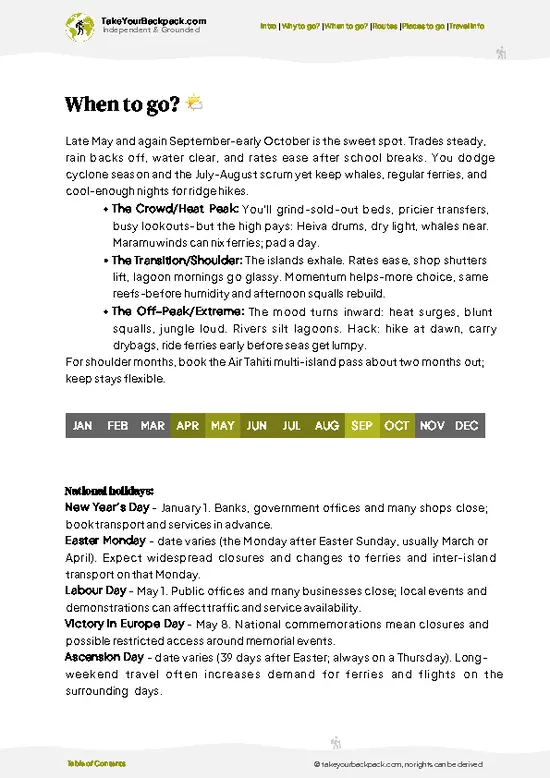
source: climatestotravel.comJANJanuary: fair for travelingFEBFebruary: fair for travelingMARMarch: fair for travelingAPRApril: fair for travelingMAYMay: highly recommended for travelingJUNJune: highly recommended for travelingJULJuly: highly recommended for travelingAUGAugust: highly recommended for travelingSEPSeptember: highly recommended for travelingOCTOctober: highly recommended for travelingNOVNovember: fair for travelingDECDecember: fair for traveling
when-to-go

✈️ The backpacker research shortcutFrench Polynesia Travel Guide

An offline-friendly backpacking guide with optimized travel routes, ranked highlights, transport advice, and the best areas to stay.
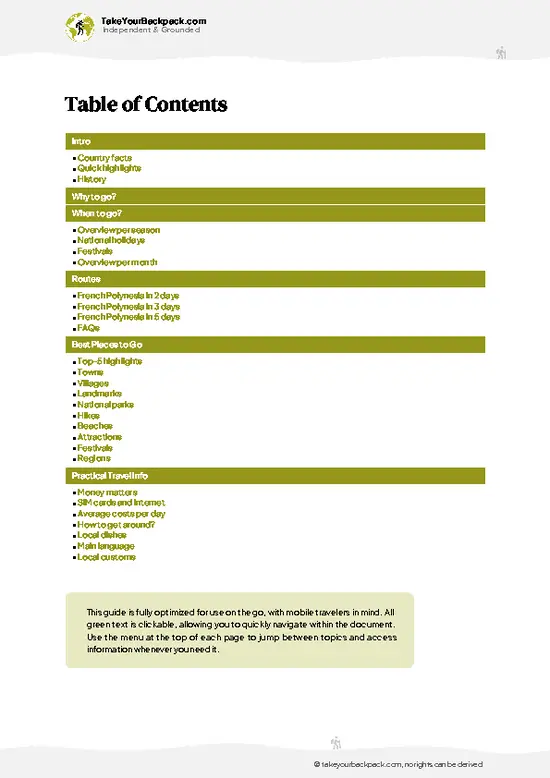
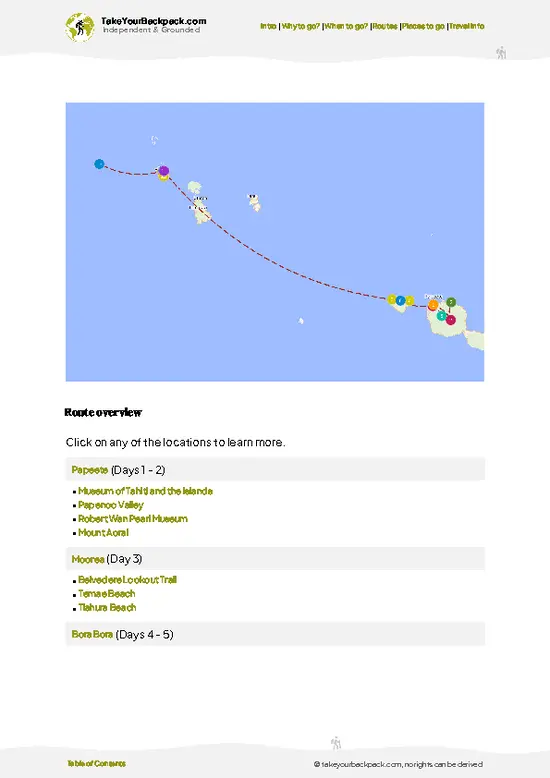
example page 0 from our offline Travel Guide for French Polynesiaexample page 1 from our offline Travel Guide for French Polynesiaexample page 2 from our offline Travel Guide for French Polynesiaexample page 3 from our offline Travel Guide for French Polynesiaexample page 4 from our offline Travel Guide for French Polynesiaexample page 5 from our offline Travel Guide for French Polynesiaexample page 6 from our offline Travel Guide for French Polynesiaexample page 7 from our offline Travel Guide for French Polynesia
The digital guide (183 pages) contains:
45 highlights, ranked by travel appeal
Optimized 2, 3 & 5-day travel routes
Cities, national parks, landmarks, beaches
How to get around
Offline-friendly for travel without Wi-Fi
👉 Click to see all 30+ guide features

📅 Plan smarter in minutes, not weeks
Month by month travel advice
Festivals & national holidays
Budget expectations

🗺️ Go to the right places, skip the overrated ones
Honest pros & cons of destinations
Top hikes, parks & viewpoints
Lesser-known places most travelers miss
Clear “worth it vs skip it” guidance

🛏️ Travel smoothly without rookie mistakes
Best areas to stay
Transport systems explained simply
Common scams & safety advice
SIM cards, money & practical tips

🌍 Understand the country, not just visit it
Culture & traditions
52 Essential phrases & customs
Festivals worth planning around
Traveler-friendly historical context
Insights that make places more meaningful

📱 Built for real travel conditions
Fully downloadable PDF
Works completely offline
Optimized for phone use
Useful in remote areas & buses
Everything in one place
Save weeks of stressful planning
Get instant access to your full guide. 30‑day money-back guarantee.


By proceeding you agree to our terms.
Sent to your inbox immediately after payment • 100% Secure Checkout
Best Backpacking Travel Advisor 2025 tourism awardBest Backpacking
Travel Advisor
2025
What others say about Take Your Backpack Guides:
⭐⭐⭐⭐⭐
Fantastic, amazing amount of information!
⭐⭐⭐⭐⭐
My goodness this is amazing, it's what I've been looking for hats off too you!
⭐⭐⭐⭐⭐
I think this is absolutely BRILLIANT
⭐⭐⭐⭐
Very complete and informative. It's still missing places, but I gotta to commend you
⭐⭐⭐⭐⭐
This is truly amazing, thank you, can't wait to explore it with my kids!
⭐⭐⭐⭐⭐
Awesome resource, thank you!
⭐⭐⭐⭐⭐
This is amazing! Can't wait to explore the ones I haven't seen
⭐⭐⭐⭐
I love this! Well done, great idea.
⭐⭐⭐⭐⭐
Thanks for taking the time to make this gem!
⭐⭐⭐⭐⭐
This might be the best website I've ever seen.
⭐⭐⭐⭐⭐
Congratulations, and thank you so much for your work; it's incredibly valuable.
⭐⭐⭐⭐
In all seriousness I think you did a great job pointing out the important spots
⭐⭐⭐⭐⭐
10/10 very good
⭐⭐⭐⭐⭐
As someone who's only just starting to visit regularly this is awesome, thank you.
⭐⭐⭐⭐
Thank you very much! I'm going to visit my dad, it's going to be very useful!
⭐⭐⭐⭐⭐
This is really cool! We'll be travelling for the first time and this definitely come in handy.
⭐⭐⭐⭐⭐
You are now our minister of culture, congratulations 👨‍💼
⭐⭐⭐⭐⭐
Just wanted to tell you that this is a pearl! Going to follow your recommendations.
⭐⭐⭐⭐⭐
This is so cool. I'll definitely be using the resource for my travels soon.
⭐⭐⭐⭐⭐
This is very impressive! Good work.
⭐⭐⭐⭐⭐
This is an amazing and informative site. Very well done!

🛏️ Where to stay?Choosing the right base

In Nuku Hiva, the heartbeat for backpackers pulses strongest around Taiohae Bay. This small town is the island’s main hub, where the scent of saltwater mingles with the fresh cut of tropical foliage. Staying here means you’re steps from the ferry dock and the handful of local markets, where vendors sell fresh bread and ripe mangoes—perfect fuel for your hikes. The vibe is laid-back but lively enough to meet fellow travelers swapping stories over a cold drink.

Compared to the quieter, more remote valleys or the scattered beach settlements, Taiohae offers a practical balance: safety, social energy, … read more 👉
In Nuku Hiva, the heartbeat for backpackers pulses strongest around Taiohae Bay. This small town is the island’s main hub, where the scent of saltwater mingles with the fresh cut of tropical foliage. Staying here means you’re steps from the ferry dock and the handful of local markets, where vendors sell fresh bread and ripe mangoes—perfect fuel for your hikes. The vibe is laid-back but lively enough to meet fellow travelers swapping stories over a cold drink.

Compared to the quieter, more remote valleys or the scattered beach settlements, Taiohae offers a practical balance: safety, social energy, and access to budget-friendly lodging. Hostels and guesthouses cluster near the waterfront, creating a natural meeting point without the isolation of more expensive resorts. The streets here feel safe even after dark, lit by warm street lamps and the occasional bonfire on the beach.

If you wander too far from Taiohae, you’ll find fewer backpacker-friendly options and a more solitary experience—great if you want to disconnect, but less ideal for first-timers or those craving community. So, for a smooth, social, and affordable stay, Taiohae Bay is your base camp to unlock Nuku Hiva’s wild beauty without the guesswork.

🚌 Getting aroundHow to get from A to B

Nuku Hiva moves at the pace of the ocean tides—unhurried, with a rhythm that’s part instinct, part necessity. There’s no rush here, no strict timetable etched in stone. Instead, you’ll find a blend of laid-back locals and travelers who’ve learned to read the subtle cues of island life: a boat’s horn in the distance, a truck’s slow grind up the hill, or the occasional motorbike weaving through the dust. The air carries the scent of salt and earth, and the light shifts gently as the sun arcs over the rugged cliffs. This isn’t a place where you catch a bus by the minute; it’s a place where you catch the moment, and that’s the secret to moving smart.


  • Walking: The heart of Nuku Hiva’s transit. The main village, Taiohae, is compact enough to explore on foot, with dirt roads that curve past colorful
read more 👉
Nuku Hiva moves at the pace of the ocean tides—unhurried, with a rhythm that’s part instinct, part necessity. There’s no rush here, no strict timetable etched in stone. Instead, you’ll find a blend of laid-back locals and travelers who’ve learned to read the subtle cues of island life: a boat’s horn in the distance, a truck’s slow grind up the hill, or the occasional motorbike weaving through the dust. The air carries the scent of salt and earth, and the light shifts gently as the sun arcs over the rugged cliffs. This isn’t a place where you catch a bus by the minute; it’s a place where you catch the moment, and that’s the secret to moving smart.


  • Walking: The heart of Nuku Hiva’s transit. The main village, Taiohae, is compact enough to explore on foot, with dirt roads that curve past colorful houses and open-air markets. Walking lets you soak in the island’s scents—frangipani, sea spray, and fresh bread from the local bakery. No cost, zero schedule, and the best way to stumble upon hidden viewpoints or roadside fruit stands.


  • Shared Taxis (Taxi Collectif): These are the island’s informal lifelines, usually pickup trucks or vans that run between Taiohae and outlying villages. They don’t have fixed schedules but tend to leave once full, so timing is flexible but unpredictable. Expect to pay around 300-500 XPF (roughly $3-$5 USD) for a ride lasting 20-40 minutes depending on your destination. It’s a bumpy, open-air experience—bring a hat and hold on tight.


  • Rental Scooters and Motorbikes: For budget travelers craving freedom, renting a scooter is a game-changer. Rates hover around 3,000-4,000 XPF per day ($30-$40 USD). The roads can be rough and narrow, so it’s not for the faint-hearted, but the payoff is huge: you control your schedule, can chase waterfalls, and stop for roadside snacks whenever you want. Early morning rides offer the best light and cooler air.


  • Boat Transfers: If you’re island-hopping or heading to remote bays, small boats run irregularly from Taiohae harbor. These aren’t scheduled ferries but more like shared rides arranged through local operators or guesthouses. Prices vary widely, often around 1,000-2,000 XPF ($10-$20 USD) depending on distance. The ride is scenic but weather-dependent—check conditions early and be ready for a splash of salt spray.


  • Local Buses: There’s no formal bus system on Nuku Hiva. If you hear someone mention a “bus,” they’re likely referring to a shared taxi or a private shuttle arranged through your accommodation. Don’t expect timetables or stops; these are more like personalized rides that require a bit of local networking.

👛 Costs (as of 21 November 2025)What things cost and how to budget

Backpacking in Nuku Hiva, French Polynesia, carries a price tag that reflects its remote beauty and limited infrastructure, but with smart choices, you can keep costs manageable.
  • Dorm Accommodation: Options are scarce and basic, often in small guesthouses or pensions rather than formal hostels. Expect to pay around $25 to $40 USD per night for a dorm bed or shared room. The rooms are simple, sometimes with fan-only cooling, and the charm lies in the island’s raw atmosphere rather than luxury.
  • Meals: Food costs lean toward the higher side due to import reliance. A local meal at a small eatery or market stall typically runs $8 to $15 USD. Cooking your own food from local markets can bring this down, but fresh produce is limited and often pricey. Expect to spend about $15 to $25 USD daily if
read more 👉
Backpacking in Nuku Hiva, French Polynesia, carries a price tag that reflects its remote beauty and limited infrastructure, but with smart choices, you can keep costs manageable.
  • Dorm Accommodation: Options are scarce and basic, often in small guesthouses or pensions rather than formal hostels. Expect to pay around $25 to $40 USD per night for a dorm bed or shared room. The rooms are simple, sometimes with fan-only cooling, and the charm lies in the island’s raw atmosphere rather than luxury.
  • Meals: Food costs lean toward the higher side due to import reliance. A local meal at a small eatery or market stall typically runs $8 to $15 USD. Cooking your own food from local markets can bring this down, but fresh produce is limited and often pricey. Expect to spend about $15 to $25 USD daily if you mix eating out and self-catering.
  • Local Transport: Public transport is minimal. Most travelers rely on rental scooters or shared taxis. Scooter rentals hover around $20 to $30 USD per day, which is the most flexible way to explore. Shared taxis or occasional boat rides can add $5 to $15 USD per trip depending on distance.
  • Basic Activities/Entry Fees: Many natural attractions like hiking trails and waterfalls are free, but guided tours or boat excursions start at about $30 and can go up to $70 USD. Visiting cultural sites or museums may have small entry fees around $5 to $10 USD.
  • Miscellaneous Expenses: Internet access is patchy and often costly, around $5 to $10 USD for a few hours at a café or guesthouse. Bottled water, snacks, and occasional souvenirs add another $5 to $10 USD daily.

The daily budget for backpacking in Nuku Hiva typically falls between $70 and $120 USD. This range balances the island’s higher costs with the simplicity of its offerings, rewarding those who embrace the slower pace and rugged charm with a genuinely immersive experience.


source: tahititourisme.com
⚠️ Prices can change and everyone travels differently, so take this as a rough guide. Hope it helps you plan your adventure!

🚌 Day tripsWhere to go beyond the main area

Nuku Hiva is a backpacker’s dream, offering a vibrant base for unforgettable day trips that dive deep into the heart of French Polynesia. Each adventure reveals the island’s raw beauty and rich culture, making the effort worthwhile.

Hike to the Vaipo Waterfall
This trek is a must. The trail winds through lush valleys, where the air is thick with the scent of wild ginger and the sounds of chirping birds. After about a two-hour hike, you’ll reach the waterfall, cascading down a rocky cliff into a turquoise pool. It’s the perfect spot for a refreshing dip. Budget around $10 for transport and snacks. The best time to go is during the dry season, from May to October, when the trail is less muddy. A common mistake? Underestimating the trail’s difficulty; sturdy shoes are essential.


Explore read more 👉
Nuku Hiva is a backpacker’s dream, offering a vibrant base for unforgettable day trips that dive deep into the heart of French Polynesia. Each adventure reveals the island’s raw beauty and rich culture, making the effort worthwhile.

Hike to the Vaipo Waterfall
This trek is a must. The trail winds through lush valleys, where the air is thick with the scent of wild ginger and the sounds of chirping birds. After about a two-hour hike, you’ll reach the waterfall, cascading down a rocky cliff into a turquoise pool. It’s the perfect spot for a refreshing dip. Budget around $10 for transport and snacks. The best time to go is during the dry season, from May to October, when the trail is less muddy. A common mistake? Underestimating the trail’s difficulty; sturdy shoes are essential.


Explore Taiohae Bay
A short ride from Nuku Hiva, Taiohae Bay is a picturesque spot where you can soak in the local vibe. Grab a fresh coconut from a roadside stand and stroll along the beach, taking in the dramatic cliffs that frame the bay. Spend a few hours here, enjoying the sun and perhaps chatting with locals. The total cost is minimal—around $5 for transport and snacks. The best time to visit is early morning when the light dances on the water. Many first-timers miss the chance to try the local poisson cru, a must-have dish.


Visit the Archaeological Site of Hikokua
This site is a treasure trove of ancient Polynesian culture. A 30-minute drive from Nuku Hiva leads you to the remnants of stone platforms and petroglyphs. The atmosphere is serene, with the scent of the ocean mingling with the earthy aroma of the surrounding forest. Spend a couple of hours exploring and reflecting on the history. Expect to spend about $15 for transport and entry fees. The best time to visit is during the cooler hours of the morning. A common oversight is not bringing enough water; it can get hot out there.


Snorkel at Anaho Bay
Anaho Bay is a snorkeling paradise, accessible by a scenic drive followed by a short hike. The vibrant coral reefs teem with colorful fish, and the water is crystal clear. Plan for a half-day trip, with costs around $20 for transport and gear rental. The best time to snorkel is during the morning when visibility is at its peak. Many newcomers forget to bring reef-safe sunscreen, which is crucial for protecting both your skin and the marine environment.


Each of these trips offers a unique glimpse into the soul of Nuku Hiva, making your backpacking experience richer and more rewarding.
Want to know what more French Polynesia offers?
The French Polynesia Travel Guide describes 45 highlights, from cities to national parks, from beaches to hikes

Get the Travel Guide -

🛡️ SafetyStaying Safe: What Travelers Should Know

Nuku Hiva is generally safe, but a few practical tips can enhance your experience. The town’s laid-back vibe is inviting, yet it’s wise to stay aware, especially in crowded markets or near the harbor. Keep your belongings close; petty theft can happen, particularly when distractions arise.

If you’re solo, enjoy the stunning sunsets, but stick to well-lit areas after dark. The locals are friendly, but it’s smart to avoid overly secluded spots at night.

Scams are rare, but be cautious with overly eager vendors. If a deal seems too good, it probably is. Everyday annoyances might include the occasional slow service at eateries—embrace it as part of the island’s rhythm.

Carry yourself with confidence and a smile. Engage with locals; they appreciate genuine interest. This openness can lead to authentic connections and enrich your journey.

Other French Polynesian towns near Nuku Hiva

Explore more nearby:

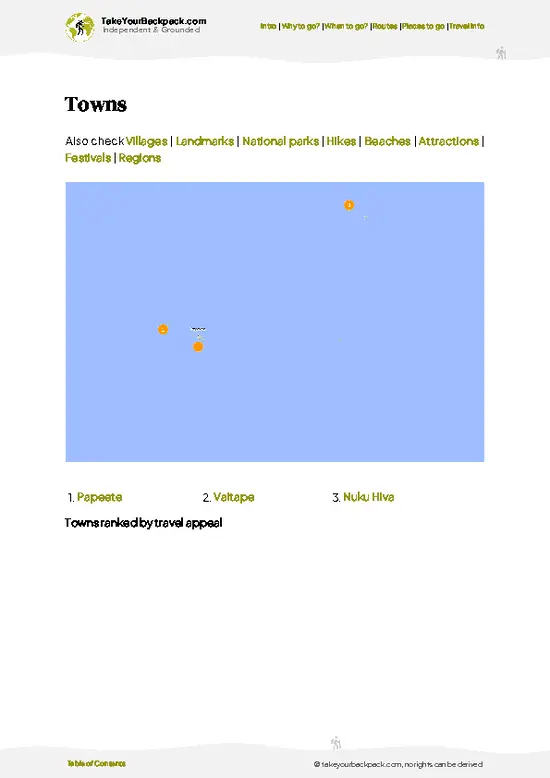
  • Papeete—central port, municipal market, street art, government buildings| 1402 km away
  • Faa’a—airport gateway, suburban neighborhoods, mountain foothills, local markets| 1408 km away
  • Vaitape—lagoon views, main pier, island shops, Bora Bora access| 1519 km away

💡 Not sure where to go next?
Create a personalized itinerary for French Polynesia including Nuku Hiva and the places that fit your trip.

Generate my itinerary

👉 Discover all towns

Or checkout all French Polynesia has to offer (think cities, towns, villages, national parks, hikes, beaches, festivals)
Country photo of French Polynesia

We 💚 feedbackKey takeaways before you go

Nuku Hiva has a raw, untamed vibe that feels like stepping back in time. The air is thick with the scent of tropical flowers and the ocean’s salty kiss. Don’t miss the hike to Hakaui Valley; the waterfalls are a reward that makes the sweat worth it. Just be ready for the humidity—it’s no joke. Embrace the slow pace; it’s part of the charm. You’ll leave with stories that linger longer than the sunburn. Trust me, it’s a place that gets under your skin.

✍️ Help improve this page!
The information on this page is based on in-depth research, insights shared by experienced travelers, and feedback from the local travel community in French Polynesia. While every effort is made to keep the information accurate and current, conditions can change — so if you spot anything incorrect or outdated, please get in touch.


🙋‍♂️ Give feedback

👋 Meet the founderWho’s Behind Take Your Backpack?

Johan, backpacker and founder of TakeYourBackpackHi, I’m Johan (Netherlands 🇳🇱), the creator of TakeYourBackpack. Over the past decade, I’ve backpacked through 80+ countries across six continents, gaining extensive experience with independent travel, long-term trips, and overland routes.

This site is built on a combination of firsthand travel experience and carefully curated insights from other backpackers. Many guides are based on places I’ve personally visited, while others bring together tips, observations, and practical advice shared by trusted travelers I’ve met along the way.

The goal is to provide realistic, experience-driven guidance — not generic itineraries — so you can explore destinations with better context, clearer expectations, and more confidence.

Get full country guide •
Instant download • 45 highlights • Full Offline guide