×

French Polynesia🇵🇫 | townsVaitapeFerry quay, black pearl shops, Otemanu views, Sunday hymns | things to do and best time to go

Explore PapeeteExplore Ahe Atoll

Backpacking in Vaitape
🌟 Highlighttown ranked #2
By Johan Kruseman 🇳🇱 | Updated October 16, 2026

Vaitape is not the resort strip you see in photos. It is the working village on the western shore of Bora Bora’s main island, in the Leeward group of French Polynesia, and the airport boat docks here because the runway sits on a separate islet. Most visitors step off the quay, climb into a resort shuttle and never look back. That is a mistake if you care about local life. The village is small, with a few snack counters, a bakery, supermarkets, a market and a church, and an hour or two covers it well. Skip the idea of staying here for nightlife, because evenings are quiet and shops close early. Go to the quay at first light for the best air and light on Mount Otemanu. Getting here is easy, meeting other travelers is easy too, but only at a few hostel-style stays. Budget travelers and slow wanderers will like it. Anyone chasing nightlife or lounging luxury will not.

Discover everything you want to know in the 📖 French Polynesia Travel Guide.


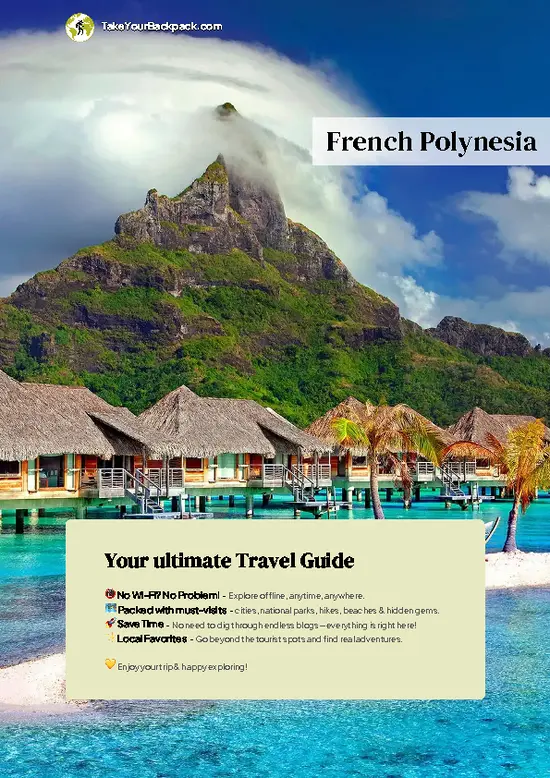
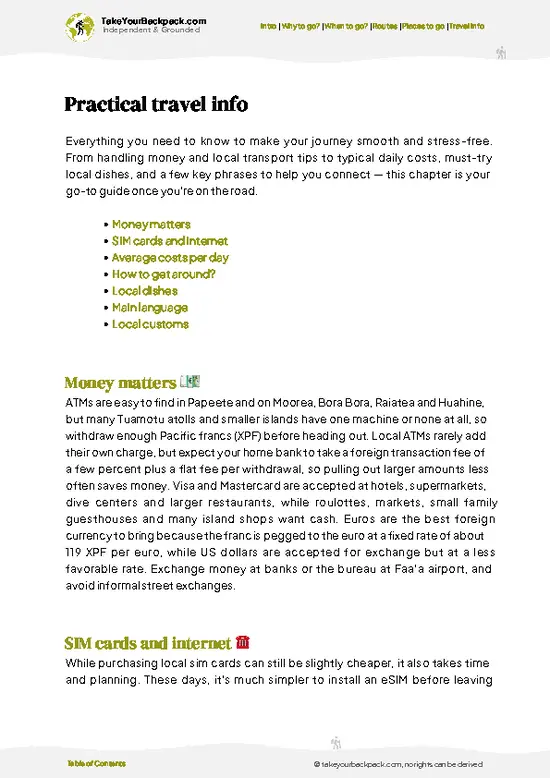
example page 0 from our offline Travel Guide for French Polynesia
example page 1 from our offline Travel Guide for French Polynesia
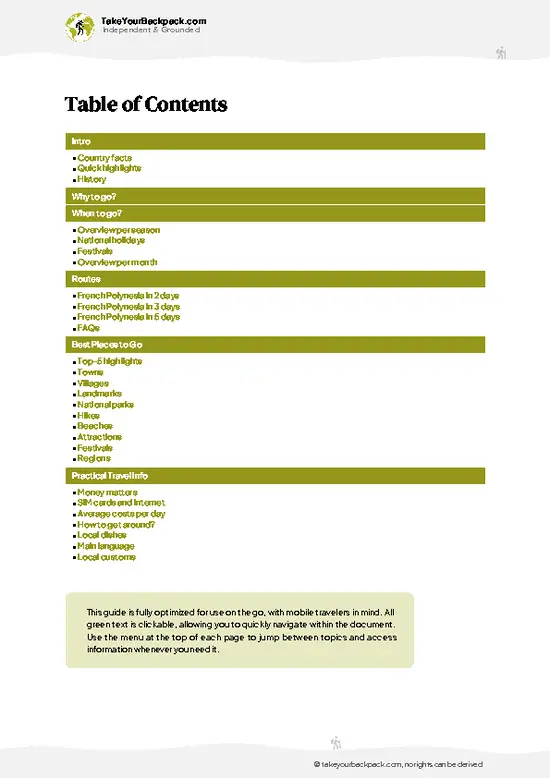
example page 2 from our offline Travel Guide for French Polynesia
example page 3 from our offline Travel Guide for French Polynesia
example page 4 from our offline Travel Guide for French Polynesia
example page 5 from our offline Travel Guide for French Polynesia
example page 6 from our offline Travel Guide for French Polynesia
example page 7 from our offline Travel Guide for French Polynesia
Loading the map 🌍
CLICK TO FILTER
towns
villages
landmarks
national parks
hikes
beaches
attractions
festivals
regions
SHOW COUNTRY’S BESTSHOW ALL

✨ Why go?
Ranked #2 town in French Polynesia
Why visitors keep coming back

Vaitape earns a place on a route because it is the one spot on Bora Bora where you can live like a resident rather than a hotel guest. It is the island’s supply point, so you stock up on groceries, change money, rent bikes or scooters and book lagoon tours without paying resort markups. Stay a night or two at a family guesthouse and you will notice how the day runs: boats leave early, the bakery sells out of baguettes by mid-morning, and kids hop off the school bus at the Vaitape quay around the same time every afternoon. It is also the best launching point for lagoon excursions, which depart from the wharf and from nearby landings along this coast. The trade-off is that real beaches such as Matira lie across the island, so you need a bike, a bus or a lift to reach them. Solo travelers and … read more 👉
Vaitape earns a place on a route because it is the one spot on Bora Bora where you can live like a resident rather than a hotel guest. It is the island’s supply point, so you stock up on groceries, change money, rent bikes or scooters and book lagoon tours without paying resort markups. Stay a night or two at a family guesthouse and you will notice how the day runs: boats leave early, the bakery sells out of baguettes by mid-morning, and kids hop off the school bus at the Vaitape quay around the same time every afternoon. It is also the best launching point for lagoon excursions, which depart from the wharf and from nearby landings along this coast. The trade-off is that real beaches such as Matira lie across the island, so you need a bike, a bus or a lift to reach them. Solo travelers and slow travelers get the most from it. Couples after privacy and anyone wanting a packed nightlife should look elsewhere.

💡 HighlightsThe experiences that define the visit

  1. Vaitape Quay: The village’s front door and the sight most people see first. The ferry from Motu Mute lands here, fishermen clean their catch on the dock, and Mount Otemanu rises behind the lagoon. Go at sunrise or around 5 PM when the light turns gold. Free, 30 to 45 minutes.
  2. Vaitape Protestant Church: A whitewashed waterfront church where Sunday morning services fill the building with Polynesian hymn harmonies. Visitors are welcome if they dress modestly and sit quietly at the back. Go on Sunday morning, free, about an hour.
  3. Vaitape Market and waterfront stalls: Small, but the best place on the island to see local produce, pareos and handmade crafts and to buy snacks, fruit and coconut-based treats. Arrive in the morning for the best choice. Entry is free, and 45 minutes to an hour is enough.
… read more 👉
  1. Vaitape Quay: The village’s front door and the sight most people see first. The ferry from Motu Mute lands here, fishermen clean their catch on the dock, and Mount Otemanu rises behind the lagoon. Go at sunrise or around 5 PM when the light turns gold. Free, 30 to 45 minutes.
  2. Vaitape Protestant Church: A whitewashed waterfront church where Sunday morning services fill the building with Polynesian hymn harmonies. Visitors are welcome if they dress modestly and sit quietly at the back. Go on Sunday morning, free, about an hour.
  3. Vaitape Market and waterfront stalls: Small, but the best place on the island to see local produce, pareos and handmade crafts and to buy snacks, fruit and coconut-based treats. Arrive in the morning for the best choice. Entry is free, and 45 minutes to an hour is enough.
  4. Black pearl shops along the waterfront road: Several family-run boutiques sell Tahitian black pearls straight from regional pearl farms, and staff will show you how color, luster and shape set the value. Browse before buying. Prices range from about 3,000 XPF (US$27) for a simple piece to hundreds of dollars. Plan 45 minutes.
  5. Coastal walk to Farepiti: A flat stretch of the island road north of the village passing gardens, outrigger canoes pulled onto the shore and lagoon views. Go early or late to avoid the heat. Free, about 2 hours return.
Matira Beach, a lagoon tour to feed rays and sharks, and the American WWII gun emplacements on the hills around the island are all easy day trips from the village, and the most skipped item here is the walk toward Farepiti, where the island’s ordinary life carries on without a single tour bus.
Spotted a mistake or missing something? Contact us.

Things to do around Vaitape

Ratings based on Tripadvisor reviews. When you book through this link, you support our work at no extra cost to you.

🏘️ NeighborhoodsKey areas and districts to know

Vaitape is the main village on Bora Bora’s main island, and it is small enough that you can grasp it in one afternoon. Here is how I would split your time.
  • Vaitape Waterfront and Quay: This is the ferry landing, the tourist office, a few snack trucks and the main supermarket. Spend twenty minutes here, not two hours. Arrive before the shuttle boats from the motu resorts unload mid-morning and it feels like an actual village.
  • Village Center and Church: A short stroll inland from the quay, with the Protestant church, a small post office, banks with ATMs and a few pearl and pareo shops. Browse the pearl shops if you want a real local piece, but skip the souvenir racks that sell imported trinkets. Grab a baguette and a pastry from the bakery early, before the good ones run out.
  • South Coast toward
… read more 👉
Vaitape is the main village on Bora Bora’s main island, and it is small enough that you can grasp it in one afternoon. Here is how I would split your time.
  • Vaitape Waterfront and Quay: This is the ferry landing, the tourist office, a few snack trucks and the main supermarket. Spend twenty minutes here, not two hours. Arrive before the shuttle boats from the motu resorts unload mid-morning and it feels like an actual village.
  • Village Center and Church: A short stroll inland from the quay, with the Protestant church, a small post office, banks with ATMs and a few pearl and pareo shops. Browse the pearl shops if you want a real local piece, but skip the souvenir racks that sell imported trinkets. Grab a baguette and a pastry from the bakery early, before the good ones run out.
  • South Coast toward Matira: Walk or ride about 5 km south and you reach Matira Point, the public beach with the shallow, pale water everyone photographs. This is the best place to spend your free time. Go late afternoon when the day-trippers thin out and the light turns gold. The roadside snack trucks here are where you eat well without resort pricing.
  • North Coast toward Anau and Faanui: Quieter, with old WWII American gun emplacements and marae (ancient temple sites) near Faanui Bay. Worth a half-day by bike if you like history, less so if you want swimming. Few people go, and that is the appeal.
Vaitape itself is walkable, but the real attractions are spread along the 32 km ring road.

⌛️ 1 daySeeing the highlights in 24 hours

7:00 AM, Vaitape Quay: Start on the wharf, when the air is cool, the lagoon is flat and the light on Mount Otemanu is sharpest for photos. Fishermen are unloading, and you can watch the first boats leave. Stay about 40 minutes, then walk a few minutes into the village.
8:00 AM, Bakery breakfast: Buy a fresh baguette, a coconut pastry or a ham sandwich and eat it on the seawall. Bakeries sell out early, so do not delay.
9:30 AM, Vaitape Market and waterfront stalls: Wander the produce tables, pareo stands and craft counters. Try local fruit such as pamplemousse or ripe mango, and buy small gifts directly from makers. Walk five minutes along the road to the pearl boutiques.
11:00 AM, Black pearl shops: Look at loose pearls under the lights and ask about the grades. No pressure is needed, and comparing … read more 👉
7:00 AM, Vaitape Quay: Start on the wharf, when the air is cool, the lagoon is flat and the light on Mount Otemanu is sharpest for photos. Fishermen are unloading, and you can watch the first boats leave. Stay about 40 minutes, then walk a few minutes into the village.
8:00 AM, Bakery breakfast: Buy a fresh baguette, a coconut pastry or a ham sandwich and eat it on the seawall. Bakeries sell out early, so do not delay.
9:30 AM, Vaitape Market and waterfront stalls: Wander the produce tables, pareo stands and craft counters. Try local fruit such as pamplemousse or ripe mango, and buy small gifts directly from makers. Walk five minutes along the road to the pearl boutiques.
11:00 AM, Black pearl shops: Look at loose pearls under the lights and ask about the grades. No pressure is needed, and comparing three shops teaches you more than any guide.
12:30 PM, Snack lunch: Eat poisson cru or grilled fish at a casual waterfront counter, then rest in the shade through the hottest hours.
3:00 PM, Coastal walk to Farepiti: Few visitors do this. Follow the lagoon road north past gardens, small family homes, pirogues drawn up on the shore and the occasional roadside fruit stall. The walk is flat, and you can catch a passing bus or hitch a lift back if your legs tire.
5:30 PM, Back at the quay: Sit on the dock as the sun drops behind the lagoon. The peaks turn orange, boats return and the village slows down.

🌤️ When to go?Seasonal considerations and timing

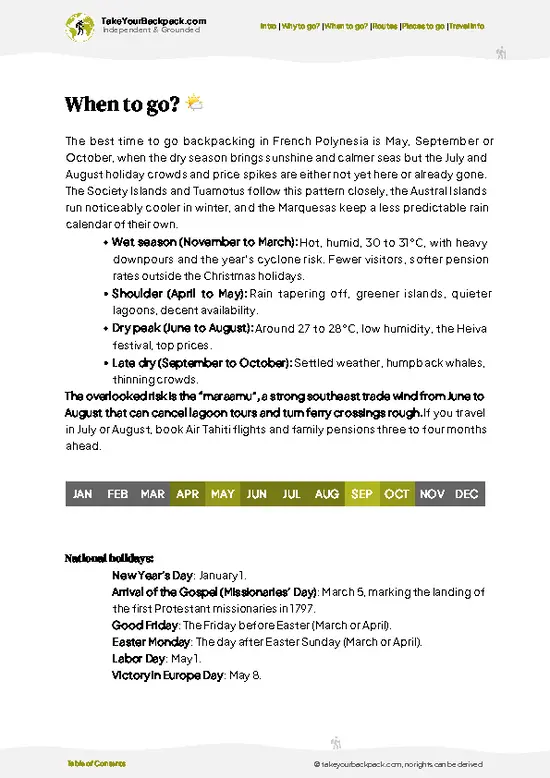
The best months for Vaitape are May to October, when the trade winds keep the air dry and clear.
  • Dry Season (May to October): Days run 27 to 29°C (81 to 84°F), nights drop to about 22°C (72°F), and rain is brief. Sunrise comes near 6:00 and sunset near 17:45. Peak crowds and top prices hit July and August, when flights and rooms cost the most.
  • Wet Season (November to April): Expect 29 to 32°C (84 to 90°F), heavy humidity and downpours that often arrive as short, loud afternoon bursts. Daylight stretches to about 18:45. Prices dip, boats run emptier and the lagoon stays warm enough for long snorkeling sessions, though cyclones are possible, mostly January to March.
  • Shoulder Months (May, June, October): Good weather with thinner crowds and noticeably lower rates than July and August. Manta ray
… read more 👉
The best months for Vaitape are May to October, when the trade winds keep the air dry and clear.
  • Dry Season (May to October): Days run 27 to 29°C (81 to 84°F), nights drop to about 22°C (72°F), and rain is brief. Sunrise comes near 6:00 and sunset near 17:45. Peak crowds and top prices hit July and August, when flights and rooms cost the most.
  • Wet Season (November to April): Expect 29 to 32°C (84 to 90°F), heavy humidity and downpours that often arrive as short, loud afternoon bursts. Daylight stretches to about 18:45. Prices dip, boats run emptier and the lagoon stays warm enough for long snorkeling sessions, though cyclones are possible, mostly January to March.
  • Shoulder Months (May, June, October): Good weather with thinner crowds and noticeably lower rates than July and August. Manta ray sightings are best from roughly May to September.
  • Whale Season (August to October): Humpbacks pass through the Bora Bora area, and boat tours can sometimes get close.
Book flights and any lagoon tours at least two to three months ahead if you plan to arrive in July.


source: climatestotravel.comJANJanuary: fair for travelingFEBFebruary: fair for travelingMARMarch: fair for travelingAPRApril: fair for travelingMAYMay: highly recommended for travelingJUNJune: excellent for travelingJULJuly: highly recommended for travelingAUGAugust: highly recommended for travelingSEPSeptember: highly recommended for travelingOCTOctober: excellent for travelingNOVNovember: fair for travelingDECDecember: fair for traveling

✈️ The backpacker research shortcutFrench Polynesia Travel Guide

An offline-friendly backpacking guide with optimized travel routes, ranked highlights, transport advice, and the best areas to stay.
example page 0 from our offline Travel Guide for French Polynesia
example page 1 from our offline Travel Guide for French Polynesia
example page 2 from our offline Travel Guide for French Polynesia
example page 3 from our offline Travel Guide for French Polynesia
example page 4 from our offline Travel Guide for French Polynesia
example page 5 from our offline Travel Guide for French Polynesia
example page 6 from our offline Travel Guide for French Polynesia
example page 7 from our offline Travel Guide for French Polynesia
The digital guide (149 pages) contains:
✅ 41 highlights, ranked by travel appeal
✅ Optimized 2, 3 & 5-day travel routes
✅ Cities, national parks, landmarks, beaches
✅ How to get around
✅ Offline-friendly for travel without Wi-Fi
👉 Click to see all 30+ guide features

📅 Plan smarter in minutes, not weeks
✅ Month by month travel advice
✅ Festivals & national holidays
✅ Budget expectations

🗺️ Go to the right places, skip the overrated ones
✅ Honest pros & cons of destinations
✅ Top hikes, parks & viewpoints
✅ Lesser-known places most travelers miss
✅ Clear “worth it vs skip it” guidance

🛏️ Travel smoothly without rookie mistakes
✅ Best areas to stay
✅ Transport systems explained simply
✅ Common scams & safety advice
✅ SIM cards, money & practical tips

🌍 Understand the country, not just visit it
✅ Culture & traditions
✅ 52 Essential phrases & customs
✅ Festivals worth planning around
✅ Traveler-friendly historical context
✅ Insights that make places more meaningful

📱 Built for real travel conditions
✅ Fully downloadable PDF
✅ Works completely offline
✅ Optimized for phone use
✅ Useful in remote areas & buses
✅ Everything in one place
Stop searching, start planning
Get instant access to your full guide. 30‑day money-back guarantee.
+ Add another guide for just

By proceeding you agree to our terms.
Sent to your inbox immediately after payment • 100% Secure Checkout
Best Backpacking Travel Advisor 2025 tourism awardBest Backpacking
Travel Advisor
2025
What others say about Take Your Backpack Guides:
⭐⭐⭐⭐⭐
Fantastic, amazing amount of information!
⭐⭐⭐⭐⭐
My goodness this is amazing, it's what I've been looking for hats off too you!
⭐⭐⭐⭐⭐
I think this is absolutely BRILLIANT
⭐⭐⭐⭐
Very complete and informative. It's still missing places, but I gotta to commend you
⭐⭐⭐⭐⭐
This is truly amazing, thank you, can't wait to explore it with my kids!
⭐⭐⭐⭐⭐
Awesome resource, thank you!
⭐⭐⭐⭐⭐
This is amazing! Can't wait to explore the ones I haven't seen
⭐⭐⭐⭐
I love this! Well done, great idea.
⭐⭐⭐⭐⭐
Thanks for taking the time to make this gem!
⭐⭐⭐⭐⭐
This might be the best website I've ever seen.
⭐⭐⭐⭐⭐
Congratulations, and thank you so much for your work; it's incredibly valuable.
⭐⭐⭐⭐
In all seriousness I think you did a great job pointing out the important spots
⭐⭐⭐⭐⭐
10/10 very good
⭐⭐⭐⭐⭐
As someone who's only just starting to visit regularly this is awesome, thank you.
⭐⭐⭐⭐
Thank you very much! I'm going to visit my dad, it's going to be very useful!
⭐⭐⭐⭐⭐
This is really cool! We'll be travelling for the first time and this definitely come in handy.
⭐⭐⭐⭐⭐
You are now our minister of culture, congratulations 👨‍💼
⭐⭐⭐⭐⭐
Just wanted to tell you that this is a pearl! Going to follow your recommendations.
⭐⭐⭐⭐⭐
This is so cool. I'll definitely be using the resource for my travels soon.
⭐⭐⭐⭐⭐
This is very impressive! Good work.
⭐⭐⭐⭐⭐
This is an amazing and informative site. Very well done!

🛏️ Where to stay?Where staying makes the most sense

The best budget base is the Matira Point area on the south side, about 5 km from Vaitape, with Vaitape itself as the practical backup. Matira has the island’s few guesthouses and pensions in the budget range, usually with simple private rooms or small bungalows in the US$100 to 200 range, and dorm beds are rare to nonexistent anywhere on Bora Bora. Many pensions include a kitchenette, which matters for cutting food costs. The area is calm and safe at night, with little noise beyond roosters and the occasional beach gathering. The public beach is a short walk, and Le Truck passes on the main road, … read more 👉
The best budget base is the Matira Point area on the south side, about 5 km from Vaitape, with Vaitape itself as the practical backup. Matira has the island’s few guesthouses and pensions in the budget range, usually with simple private rooms or small bungalows in the US$100 to 200 range, and dorm beds are rare to nonexistent anywhere on Bora Bora. Many pensions include a kitchenette, which matters for cutting food costs. The area is calm and safe at night, with little noise beyond roosters and the occasional beach gathering. The public beach is a short walk, and Le Truck passes on the main road, though service ends early, so a bicycle helps.

Vaitape is the other option. You are right at the ferry quay, close to the supermarket, banks and snack trucks, which makes arrival and departure days easy. It is quieter in the evening than you might expect, with little nightlife, and fewer places to swim directly. Rates tend to be slightly lower than at Matira, and the road noise is moderate during daylight.

Book early, especially July and August, since the handful of budget rooms fill well ahead. Avoid the private motu resorts unless you have a large budget, since the water transfer adds time and cost.

🚌 Getting aroundHow to get from A to B

Vaitape’s center is small enough to cross on foot in five minutes, but walking stops making sense once you leave it, because the sights sit spread along a 32 km ring road with little shade and no real sidewalks. Bora Bora has no metro and no city buses in the usual sense, and traffic is light but the road is narrow, so plan on picking a wheeled option for anything beyond the quay. Public transport exists but runs on a thin schedule, so I would build the day around your own ride.
  • Walking: Free and ideal for the quay, supermarket, church and ATMs. Past that, the heat and long gaps between stops make it a poor use of your energy. Skip walking the full ring road unless you enjoy sweating.
  • Bicycle: Rentals run about 1,500 to 2,500 XPF (US$14 to 23) a day. The road is mostly flat and the full loop
… read more 👉
Vaitape’s center is small enough to cross on foot in five minutes, but walking stops making sense once you leave it, because the sights sit spread along a 32 km ring road with little shade and no real sidewalks. Bora Bora has no metro and no city buses in the usual sense, and traffic is light but the road is narrow, so plan on picking a wheeled option for anything beyond the quay. Public transport exists but runs on a thin schedule, so I would build the day around your own ride.
  • Walking: Free and ideal for the quay, supermarket, church and ATMs. Past that, the heat and long gaps between stops make it a poor use of your energy. Skip walking the full ring road unless you enjoy sweating.
  • Bicycle: Rentals run about 1,500 to 2,500 XPF (US$14 to 23) a day. The road is mostly flat and the full loop takes 3 to 4 hours with stops. This is the best-value way to see the island and the one I would choose. Start by 7:30 to beat the midday sun.
  • Le Truck (public bus): The local open-sided bus runs on the main road with fares around 500 XPF (US$4.50) a ride. Service is sparse, mainly around the morning and early afternoon, and often stops by late afternoon. It works for a one-way trip to Matira, but do not rely on it for a return trip in the evening.
  • Scooter or electric buggy: Around 6,000 to 9,000 XPF (US$55 to 80) a day. Fast and fun, but pricey for a solo traveler. Worth it only if you want to cover the whole loop and the viewpoints in half a day.
  • Boat shuttle: The public ferry from the main airport on Motu Mute docks at Vaitape and is free for Air Tahiti passengers. It runs roughly 6:30 to 17:00, timed to flights, so check the last departure before wandering off.
For a private lift to Matira at night, ask your guesthouse to call a driver. Taxis are scarce and costly.

👛 Costs (as of 16 October 2026)How expensive it really is

Expect to spend roughly US$145 to 265 a day in Vaitape, since Bora Bora is one of the priciest places in the region.
CategoryBudget RangeLocal Reality
Dorm accommodationUS$90 to 160Dorms are essentially absent. This covers a simple guesthouse room or small bungalow, with a kitchenette in many cases. Rates drop by 20 to 30 percent in the wet season.
MealsUS$25 to 45Snack trucks serve plates of poisson cru, chow mein or grilled fish for about US$10 to 18. Self-catering from the supermarket brings costs down, but imported goods are expensive.
Local transportUS$5 to 15A bike rental runs US$14 to 23 a day, while Le Truck costs about US$4.50 a ride. Many travelers rent a bike only on the days they need it.
Basic activities/entry feesUS$15 to 30Beaches and the ring road are free. Shared lagoon tours cost
… read more 👉
Expect to spend roughly US$145 to 265 a day in Vaitape, since Bora Bora is one of the priciest places in the region.
CategoryBudget RangeLocal Reality
Dorm accommodationUS$90 to 160Dorms are essentially absent. This covers a simple guesthouse room or small bungalow, with a kitchenette in many cases. Rates drop by 20 to 30 percent in the wet season.
MealsUS$25 to 45Snack trucks serve plates of poisson cru, chow mein or grilled fish for about US$10 to 18. Self-catering from the supermarket brings costs down, but imported goods are expensive.
Local transportUS$5 to 15A bike rental runs US$14 to 23 a day, while Le Truck costs about US$4.50 a ride. Many travelers rent a bike only on the days they need it.
Basic activities/entry feesUS$15 to 30Beaches and the ring road are free. Shared lagoon tours cost US$55 to 90, so budget one per stay, and divide that cost over your days.
Miscellaneous expensesUS$10 to 15Sunscreen, reef shoes, drinks and the occasional beer, which costs about US$6 to 9 at a bar.
Total Daily BudgetUS$145 to 265Using high-season accommodation. Lower end assumes self-catering and a shared room.
Buy groceries at the Vaitape supermarket and cook in your pension kitchen to cut meal costs sharply.
⚠️ Prices can change and everyone travels differently, so take this as a rough guide. Hope it helps you plan your adventure!

🚌 Day tripsShort trips worth adding

Bora Bora is a small island, so most day trips from Vaitape are by boat on the lagoon or short hops by ferry, and none requires an overnight.Lagoon Tour of Manta Rays and Sharks: A full-day or half-day boat tour from the Vaitape quay takes you to snorkeling spots with blacktip reef sharks, rays and coral gardens. Expect 6,000 to 10,000 XPF (US$55 to 90) for a shared boat, and 3 to 5 hours on the water. The calmer, clearer months of May to October are best. First-timers often forget reef-safe sunscreen and a rash guard, and burn on the back.
👉 Explore Bora Bora LagoonMotu Tapu: This tiny islet with a white-sand beach sits across the lagoon, reached by a 15 to 20 minute boat ride, usually bundled into a tour. It looks like the postcard everybody imagines. Cost is often included in lagoon tours, … read more 👉
Bora Bora is a small island, so most day trips from Vaitape are by boat on the lagoon or short hops by ferry, and none requires an overnight.Lagoon Tour of Manta Rays and Sharks: A full-day or half-day boat tour from the Vaitape quay takes you to snorkeling spots with blacktip reef sharks, rays and coral gardens. Expect 6,000 to 10,000 XPF (US$55 to 90) for a shared boat, and 3 to 5 hours on the water. The calmer, clearer months of May to October are best. First-timers often forget reef-safe sunscreen and a rash guard, and burn on the back.
👉 Explore Bora Bora LagoonMotu Tapu: This tiny islet with a white-sand beach sits across the lagoon, reached by a 15 to 20 minute boat ride, usually bundled into a tour. It looks like the postcard everybody imagines. Cost is often included in lagoon tours, or around 3,000 to 6,000 XPF (US$27 to 55) for a standalone drop-off. Go on a weekday morning, when fewer boats arrive.
Mount Otemanu Viewpoint and Ring Road Loop: By bicycle from Vaitape the 32 km loop takes 3 to 4 hours and passes WWII gun emplacements, marae sites and open lagoon views beneath Mount Otemanu. Bike rental runs roughly 1,500 to 2,500 XPF (US$14 to 23). Start before 8:00 to avoid the heat. The summit itself is a technical climb and not a casual walk, so most people skip it.
Maupiti: The quieter neighboring island is reachable by a ferry that takes about 1 hour 45 minutes from Vaitape, with fares around 4,000 to 6,000 XPF (US$36 to 55) return, though schedules are limited and sailing can be cancelled in rough seas. Check that a return boat runs the same day before you commit. Maupiti’s calm lagoon and Tereia Beach reward the effort.
👉 Explore Maupiti

🛡️ SafetyStaying Safe: What Travelers Should Know

Vaitape is very safe, and the biggest hazards are the sun, the sea and the road rather than crime. Violent crime against travelers is rare. Leave valuables in your room, though, because petty theft from unattended bags on beaches, bicycles left unlocked and scooters does happen. Lock your bike when you swim.

Solo travelers, including women, generally report few problems. After dark the ring road has little lighting and no sidewalks, so avoid cycling at night, and carry a small flashlight if you walk back from a snack truck. Dogs are common on the roadside and occasionally bark or chase bikes, but they rarely bite.

The usual annoyance is price, not scams. Restaurants and activities cost far more than on neighboring islands, so confirm tour prices and what is included before you pay. In the … read more 👉
Vaitape is very safe, and the biggest hazards are the sun, the sea and the road rather than crime. Violent crime against travelers is rare. Leave valuables in your room, though, because petty theft from unattended bags on beaches, bicycles left unlocked and scooters does happen. Lock your bike when you swim.

Solo travelers, including women, generally report few problems. After dark the ring road has little lighting and no sidewalks, so avoid cycling at night, and carry a small flashlight if you walk back from a snack truck. Dogs are common on the roadside and occasionally bark or chase bikes, but they rarely bite.

The usual annoyance is price, not scams. Restaurants and activities cost far more than on neighboring islands, so confirm tour prices and what is included before you pay. In the lagoon, stay clear of boat traffic, wear a rash guard, and do not touch reef sharks or rays, and avoid stepping on coral or stonefish in the shallows by wearing reef shoes.

FAQTraveler FAQ

Vaitape is worth visiting as a base, though it is more a gateway than a destination in itself. The village has a ferry quay, supermarket, banks and snack trucks, but the real draws are Matira Beach, about 5 km south, and the lagoon. Plan on at least two nights to see the main sights without feeling rushed.
Three to four days works well for most backpackers. That gives one day for a lagoon snorkeling tour (about US$55 to 90), one for cycling the 32 km ring road in 3 to 4 hours, and one for beach time at Matira. A fourth day covers Maupiti or a quiet motu if the weather allows.
Day-tripping to Vaitape is possible from Raiatea or Taha’a but not practical from Tahiti, since the flight to Bora Bora takes about 50 minutes and costs roughly US$150 to 300 return. A same-day return leaves little time on the island. A better choice is to stay at least one night, especially since the last public boat from the airport motu leaves around 17:00.
⚠️ Things can change over time, so always validate details locally before you go.

Other French Polynesian towns near Vaitape

Explore more nearby:

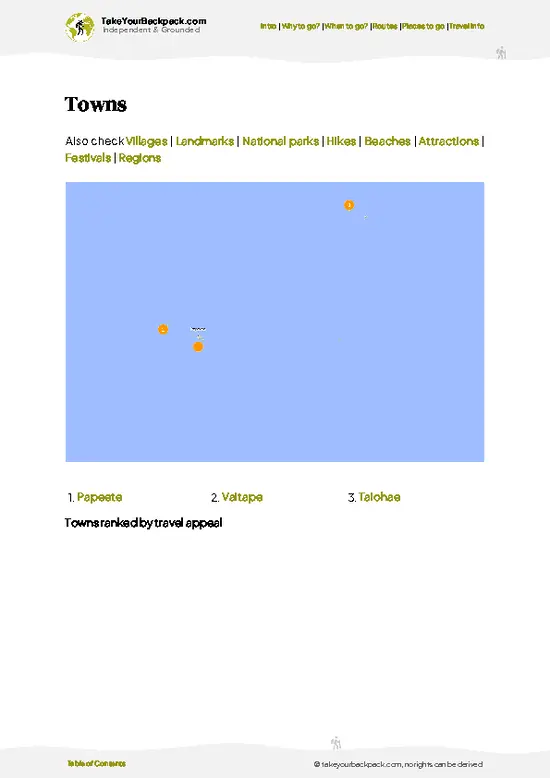
  • Papeete—Dawn market, roulotte food trucks, Moorea ferry harbor, Polynesian museum| 259 km away
  • Taiohae—Taiohae crater bay, Marquesan wood carvings, pension dinner tables, Hakaui valley| 1519 km away

💡 Not sure where to go next?
Create a personalized itinerary for French Polynesia including Vaitape and the places that fit your trip.

Generate my itinerary

👉 Discover all towns

Or checkout all French Polynesia has to offer (think cities, towns, villages, national parks, hikes, beaches, festivals)
Country photo of French Polynesia

We 💚 feedbackSumming up the experience

Come for late afternoon, when the day’s tours have returned, the heat eases and the quay turns amber while locals fish from the edge. Bring a small bag of coins for the market and a reusable bottle. I would stay two nights, skip the souvenir shops with the loudest signs, and save energy for a slow sunset on the wharf.

✍️ Help improve this page!
The information on this page is based on in-depth research, insights shared by experienced travelers, and feedback from the local travel community in French Polynesia. While every effort is made to keep the information accurate and current, conditions can change — so if you spot anything incorrect or outdated, please get in touch.


🙋‍♂️ Give feedback

👋 Meet the founderWho’s Behind Take Your Backpack?

Johan, backpacker and founder of TakeYourBackpackHi, I’m Johan (Netherlands 🇳🇱), the creator of TakeYourBackpack. Over the past 3 decades, I’ve backpacked through 90+ countries across six continents, gaining extensive experience with independent travel, long-term trips, and overland routes.

This site is built on a combination of firsthand travel experience and carefully curated insights from other backpackers. Many guides are based on places I’ve personally visited, while others bring together tips, observations, and practical advice shared by trusted travelers I’ve met along the way.

The goal is to provide realistic, experience-driven guidance — not generic itineraries — so you can explore destinations with better context, clearer expectations, and more confidence.