×

French Polynesia🇵🇫 | townsPapeetecentral port, municipal market, street art, government buildings | things to do and best time to go

Explore Nuku HivaExplore Vaitape

Backpacking in Papeete
🏆 Top picktown ranked #1
By Johan Kruseman 🇳🇱 | Updated May 31, 2026

Your first real fork in Papeete is this: do you treat it as a quick logistics stop or give it a full day or two of your trip? That choice matters, because Papeete is where the airport, ferries, and most services in French Polynesia converge, and how long you stay here shapes how smooth (or chaotic) the rest of your island-hopping feels. Papeete sits on the north coast of Tahiti, the main island in the Society Islands group, and it’s more working port town than postcard lagoon. For backpackers, it’s practical, a bit rough around the edges, and surprisingly human once you slow down. You get the covered market with its smell of poisson cru and flowers, a compact center that’s walkable in the evening heat, and easy ferries to Moorea. It’s not cheap, but it’s cheaper than the outer islands, and you’ll find a few hostels and casual snack bars where other travelers drift through. Compared with Moorea or Bora Bora, Papeete feels busier, less scenic, more “real life” — better as a launchpad and overnight hub than a long-stay beach escape.

Discover everything you want to know in the 📖 French Polynesia Travel Guide.
Loading the map 🌍
CLICK TO FILTER
towns
villages
landmarks
national parks
hikes
beaches
attractions
festivals
regions
SHOW COUNTRY’S BESTSHOW ALL

✨ Why go?
Ranked #1 town in French Polynesia
What makes this town worth visiting

Backpackers flock to Papeete not just for its charm but for its strategic role in the French Polynesian adventure. This town serves as a gateway to nearby hikes and stunning beaches, making it a practical base for exploring the islands. The walkable streets are lined with small-scale hostels and guesthouses, perfect for budget-conscious travelers seeking a cozy atmosphere. You’ll find yourself sharing stories over a plate of local poisson cru at a street-side eatery, where the scent of fresh coconut and lime fills the air.

While many pass through quickly, a few linger for a couple of days, soaking in the laid-back vibe. It’s a place where solo travelers and small groups can connect easily, thanks to the friendly locals and fellow backpackers. The atmosphere is more social than wild, ideal … read more 👉
Backpackers flock to Papeete not just for its charm but for its strategic role in the French Polynesian adventure. This town serves as a gateway to nearby hikes and stunning beaches, making it a practical base for exploring the islands. The walkable streets are lined with small-scale hostels and guesthouses, perfect for budget-conscious travelers seeking a cozy atmosphere. You’ll find yourself sharing stories over a plate of local poisson cru at a street-side eatery, where the scent of fresh coconut and lime fills the air.

While many pass through quickly, a few linger for a couple of days, soaking in the laid-back vibe. It’s a place where solo travelers and small groups can connect easily, thanks to the friendly locals and fellow backpackers. The atmosphere is more social than wild, ideal for those who appreciate a mix of cultural experiences and outdoor activities without the chaos of a party scene. If you’re a slow traveler or a hiker, Papeete offers the perfect blend of convenience and character, making it a worthwhile stop on your journey through paradise.
Want to include Papeete in your French Polynesia route?
Create a personalized French Polynesia itinerary that includes Papeete and the places that fit your trip — based on your travel style, budget, and available time. Get your route in seconds.

Generate my trip

💡 HighlightsTop highlights of Papeete

  1. Marché de Papeete (Municipal Market) — The beating heart of the city: piles of tropical fruit, black pearls, pareos, handcrafted wood carvings and a chaotic, friendly atmosphere that tells you more about daily Tahitian life than any guidebook.
  2. Les Roulottes (Vai’ete Square food trucks) — Nights here are different: a cluster of food trucks on the waterfront serving fresh poisson cru, grilled mahi-mahi, Chinese-Tahitian stalls and cheap beer. Great for local food, people-watching and sunset vibes without breaking the bank.
  3. Jardins de Paofai (Paofai Gardens) — A tidy beachfront park with sculptures, palm-lined promenades and views across the bay. Perfect for a relaxed stroll, a picnic or to catch a Tahitian sunset away from the traffic.
  4. Cathédrale Notre-Dame de Papeete — A small but evocative
read more 👉
  1. Marché de Papeete (Municipal Market) — The beating heart of the city: piles of tropical fruit, black pearls, pareos, handcrafted wood carvings and a chaotic, friendly atmosphere that tells you more about daily Tahitian life than any guidebook.
  2. Les Roulottes (Vai’ete Square food trucks) — Nights here are different: a cluster of food trucks on the waterfront serving fresh poisson cru, grilled mahi-mahi, Chinese-Tahitian stalls and cheap beer. Great for local food, people-watching and sunset vibes without breaking the bank.
  3. Jardins de Paofai (Paofai Gardens) — A tidy beachfront park with sculptures, palm-lined promenades and views across the bay. Perfect for a relaxed stroll, a picnic or to catch a Tahitian sunset away from the traffic.
  4. Cathédrale Notre-Dame de Papeete — A small but evocative colonial-era cathedral in the centre of town. The interior and stained glass reflect the island’s missionary history and it’s a calm spot to pause amid the market bustle.
  5. Musée de la Perle Robert Wan (Robert Wan Pearl Museum) — The best place in town to learn about Tahitian black pearls: the farming, the grading and some impressive specimens. Compact, informative and genuinely tied to local culture and economy.
  6. Port of Papeete & Ferry Terminal — More than transport: the harbour is where island life meets commerce. Watch the ferries to Moorea, the local boats, fish offloading and lively dockside trade—an authentic slice of maritime Tahiti.
  7. Complexe Culturel de To’ata (To’ata Cultural Center) — Where dance, music and the big Heiva performances happen. If your timing’s right you’ll catch traditional dance shows, music nights or exhibitions that give real cultural context beyond souvenirs.
  8. La Tour de l’Horloge and Waterfront Monuments — The clock tower and nearby memorials anchor the waterfront district. It’s a good short walk to get historical snapshots, photo ops and a sense of how Papeete’s public spaces have evolved.
  9. Marché aux Poissons (Fish Stalls) — Often grouped with the main market but worth a separate mention: noisy, colorful and very fresh. Watching local fishmongers and sampling tuna or marinated ceviche-style dishes is an essential, sensory experience.
  10. Hôtel de Ville & Colonial Boulevard (Boulevard Pomare area) — Stroll past the town hall and old colonial facades, pop into small galleries and cafes, and notice the daily rhythm of the city—shops opening, workers on break, vendors setting up. It’s low-key but tells you a lot about Papeete’s character.
A few easy day trips from Papeete: the island of Moorea (ferry), the historic Pointe Venus lighthouse and beach to the north, and the nearby James Norman Hall Museum in Arue.
Spotted a mistake or missing something? Contact us.

Things to do around Papeete

Ratings based on Tripadvisor reviews. When you book through this link, you support our work at no extra cost to you.

🏘️ NeighborhoodsUnderstanding the local layout

Papeete, the bustling capital of French Polynesia, offers a blend of vibrant culture and laid-back island life. Each neighborhood has its own character, catering to different backpacker needs.

Centre Ville: This is the heart of Papeete. You’ll find markets bursting with local produce and street food that fills the air with the scent of grilled fish and tropical fruits. It’s walkable, with plenty of budget accommodations nearby. The nightlife here is lively, with bars and music spilling into the streets. Perfect for short stays where you want to soak up the local vibe.

Vaima: Just a short stroll from the city center, Vaima is quieter but still accessible. It’s known for its boutique shops and cafes. The atmosphere is relaxed, making it ideal for longer stays if you want to unwind. The waterfront … read more 👉
Papeete, the bustling capital of French Polynesia, offers a blend of vibrant culture and laid-back island life. Each neighborhood has its own character, catering to different backpacker needs.

Centre Ville: This is the heart of Papeete. You’ll find markets bursting with local produce and street food that fills the air with the scent of grilled fish and tropical fruits. It’s walkable, with plenty of budget accommodations nearby. The nightlife here is lively, with bars and music spilling into the streets. Perfect for short stays where you want to soak up the local vibe.

Vaima: Just a short stroll from the city center, Vaima is quieter but still accessible. It’s known for its boutique shops and cafes. The atmosphere is relaxed, making it ideal for longer stays if you want to unwind. The waterfront views are stunning, especially at sunset. Budget options are available, but you might splurge on a nice meal here.

Arue: A bit further out, Arue offers a more residential feel. It’s less touristy, which means you can experience local life. The beaches are beautiful, and the hiking trails nearby are a bonus. Public transport can get you back to the city, but it’s best for those looking to escape the hustle and enjoy a slower pace.

Pirae: This area is a mix of residential and commercial. It’s not as walkable, but it has some great local eateries. The vibe is chill, with a focus on community. If you’re staying longer, you’ll find it’s a good base to explore the island while still being close enough to the action in Papeete.

⌛️ 1 day1-day itinerary for Papeete

Papeete, the vibrant capital of French Polynesia, pulses with a unique blend of Polynesian culture and French influence. The air is thick with the scent of frangipani and the salty tang of the ocean. This is a place where the rhythm of life slows down, inviting you to soak in the beauty around you.

Start your morning at the bustling Papeete Market. The sun filters through the open-air stalls, illuminating vibrant fruits, handmade crafts, and the chatter of locals. Grab a fresh coconut to sip on as you wander. The market is a sensory feast—listen to the laughter, feel the warmth of the sun, and taste the sweetness of ripe mango. This is where you’ll find the heart of the town, away from the typical tourist spots.

Afterward, stroll along the waterfront promenade. The gentle waves lap against … read more 👉
Papeete, the vibrant capital of French Polynesia, pulses with a unique blend of Polynesian culture and French influence. The air is thick with the scent of frangipani and the salty tang of the ocean. This is a place where the rhythm of life slows down, inviting you to soak in the beauty around you.

Start your morning at the bustling Papeete Market. The sun filters through the open-air stalls, illuminating vibrant fruits, handmade crafts, and the chatter of locals. Grab a fresh coconut to sip on as you wander. The market is a sensory feast—listen to the laughter, feel the warmth of the sun, and taste the sweetness of ripe mango. This is where you’ll find the heart of the town, away from the typical tourist spots.

Afterward, stroll along the waterfront promenade. The gentle waves lap against the shore, and you can catch glimpses of the distant islands. Stop by the iconic Notre-Dame Cathedral, with its striking stained glass and serene atmosphere. It’s a perfect spot for a moment of reflection before heading to the less-traveled neighborhood of Arue. Here, you’ll find the stunning black sand beaches, a rarity in the region. The contrast of the dark sand against the turquoise water is breathtaking, and it’s a great place to unwind.

As the afternoon fades, make your way back to the center for a late lunch at a local eatery. Try the poisson cru, a traditional dish of marinated fish that’s as fresh as it gets. The flavors burst in your mouth, a true taste of the islands.

When evening rolls in, head to the waterfront for the sunset. The sky ignites with hues of orange and pink, a perfect backdrop for your day. Grab a seat at a nearby café, sip on a local beer, and watch the world go by. Papeete isn’t just a stopover; it’s a place that invites you to linger, to connect, and to embrace the beauty of the moment.
Turn your Papeete visit into an French Polynesia adventure
Build a complete French Polynesia route with Papeete, hidden gems, must-see destinations, and realistic travel times included.

Generate my trip

🌤️ When to go?Weather, crowds, and seasonal trade-offs


  • Weather: Papeete’s tropical climate means warm, humid days year-round, but the dry season from May to October offers clearer skies and less sticky air, making hiking and exploring more comfortable.

  • Temperature: Expect highs around 28–30°C (82–86°F) during the dry season, dropping slightly at night to 22–24°C (72–75°F). The wet season (November to April) can push temps higher, with muggy nights that make sleeping without AC a challenge.

  • Daylight Hours: Near the equator, daylight is steady—roughly 12 hours year-round. This consistency means you can plan early starts or late strolls without worrying about losing light too soon.

  • Crowds: Peak tourist influx hits July and August, coinciding with European summer holidays. If you want to dodge the throngs, aim for shoulder months like May
read more 👉

  • Weather: Papeete’s tropical climate means warm, humid days year-round, but the dry season from May to October offers clearer skies and less sticky air, making hiking and exploring more comfortable.

  • Temperature: Expect highs around 28–30°C (82–86°F) during the dry season, dropping slightly at night to 22–24°C (72–75°F). The wet season (November to April) can push temps higher, with muggy nights that make sleeping without AC a challenge.

  • Daylight Hours: Near the equator, daylight is steady—roughly 12 hours year-round. This consistency means you can plan early starts or late strolls without worrying about losing light too soon.

  • Crowds: Peak tourist influx hits July and August, coinciding with European summer holidays. If you want to dodge the throngs, aim for shoulder months like May or September when the town feels more laid-back.

  • Seasonal Activities: The dry season hosts cultural festivals and outdoor markets that bring local life alive, while the wet season’s rain can dampen plans but also fills waterfalls and lush vegetation, rewarding those who don’t mind a little mud.

  • Price Fluctuations: Accommodation and flights spike during the dry season and holidays, especially July-August. Booking in shoulder seasons can save you a solid chunk of cash without sacrificing much on experience.


Pro-tip: Visit in May or September to catch the sweet spot—pleasant weather, fewer crowds, and better prices—letting you savor Papeete’s rhythms without the tourist buzz or sweat.


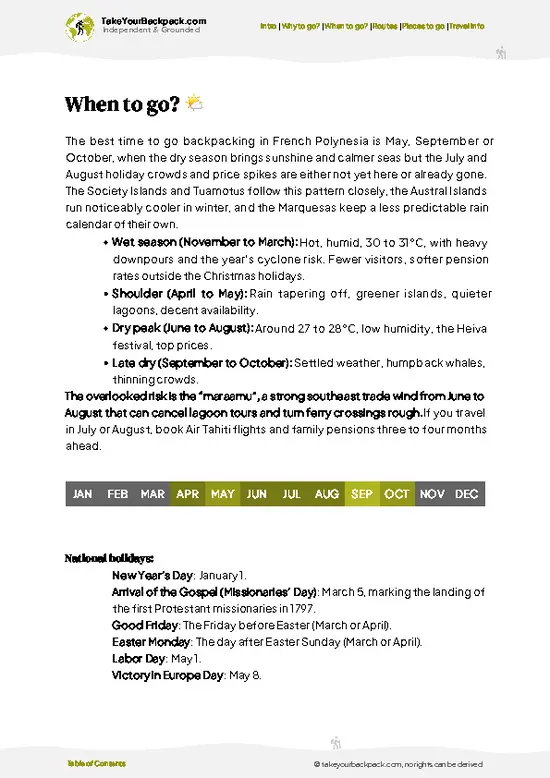
source: climatestotravel.comJANJanuary: fair for travelingFEBFebruary: fair for travelingMARMarch: fair for travelingAPRApril: fair for travelingMAYMay: excellent for travelingJUNJune: highly recommended for travelingJULJuly: good for travelingAUGAugust: good for travelingSEPSeptember: excellent for travelingOCTOctober: highly recommended for travelingNOVNovember: fair for travelingDECDecember: fair for traveling
french-polynesia-city-papeete
© Google | Georges Guillarm

✈️ The backpacker research shortcutFrench Polynesia Travel Guide

An offline-friendly backpacking guide with optimized travel routes, ranked highlights, transport advice, and the best areas to stay.
example page 0 from our offline Travel Guide for French Polynesia
example page 1 from our offline Travel Guide for French Polynesia
example page 2 from our offline Travel Guide for French Polynesia
example page 3 from our offline Travel Guide for French Polynesia
example page 4 from our offline Travel Guide for French Polynesia
example page 5 from our offline Travel Guide for French Polynesia
example page 6 from our offline Travel Guide for French Polynesia
example page 7 from our offline Travel Guide for French Polynesia
The digital guide (183 pages) contains:
45 highlights, ranked by travel appeal
Optimized 2, 3 & 5-day travel routes
Cities, national parks, landmarks, beaches
How to get around
Offline-friendly for travel without Wi-Fi
👉 Click to see all 30+ guide features

📅 Plan smarter in minutes, not weeks
Month by month travel advice
Festivals & national holidays
Budget expectations

🗺️ Go to the right places, skip the overrated ones
Honest pros & cons of destinations
Top hikes, parks & viewpoints
Lesser-known places most travelers miss
Clear “worth it vs skip it” guidance

🛏️ Travel smoothly without rookie mistakes
Best areas to stay
Transport systems explained simply
Common scams & safety advice
SIM cards, money & practical tips

🌍 Understand the country, not just visit it
Culture & traditions
52 Essential phrases & customs
Festivals worth planning around
Traveler-friendly historical context
Insights that make places more meaningful

📱 Built for real travel conditions
Fully downloadable PDF
Works completely offline
Optimized for phone use
Useful in remote areas & buses
Everything in one place
Save weeks of stressful planning
Get instant access to your full guide. 30‑day money-back guarantee.


By proceeding you agree to our terms.
Sent to your inbox immediately after payment • 100% Secure Checkout
Best Backpacking Travel Advisor 2025 tourism awardBest Backpacking
Travel Advisor
2025
What others say about Take Your Backpack Guides:
⭐⭐⭐⭐⭐
Fantastic, amazing amount of information!
⭐⭐⭐⭐⭐
My goodness this is amazing, it's what I've been looking for hats off too you!
⭐⭐⭐⭐⭐
I think this is absolutely BRILLIANT
⭐⭐⭐⭐
Very complete and informative. It's still missing places, but I gotta to commend you
⭐⭐⭐⭐⭐
This is truly amazing, thank you, can't wait to explore it with my kids!
⭐⭐⭐⭐⭐
Awesome resource, thank you!
⭐⭐⭐⭐⭐
This is amazing! Can't wait to explore the ones I haven't seen
⭐⭐⭐⭐
I love this! Well done, great idea.
⭐⭐⭐⭐⭐
Thanks for taking the time to make this gem!
⭐⭐⭐⭐⭐
This might be the best website I've ever seen.
⭐⭐⭐⭐⭐
Congratulations, and thank you so much for your work; it's incredibly valuable.
⭐⭐⭐⭐
In all seriousness I think you did a great job pointing out the important spots
⭐⭐⭐⭐⭐
10/10 very good
⭐⭐⭐⭐⭐
As someone who's only just starting to visit regularly this is awesome, thank you.
⭐⭐⭐⭐
Thank you very much! I'm going to visit my dad, it's going to be very useful!
⭐⭐⭐⭐⭐
This is really cool! We'll be travelling for the first time and this definitely come in handy.
⭐⭐⭐⭐⭐
You are now our minister of culture, congratulations 👨‍💼
⭐⭐⭐⭐⭐
Just wanted to tell you that this is a pearl! Going to follow your recommendations.
⭐⭐⭐⭐⭐
This is so cool. I'll definitely be using the resource for my travels soon.
⭐⭐⭐⭐⭐
This is very impressive! Good work.
⭐⭐⭐⭐⭐
This is an amazing and informative site. Very well done!

🛏️ Where to stay?Choosing the right base

In Papeete, the heartbeat for backpackers pulses strongest around the downtown core, especially near the waterfront and the central market. This area is your launchpad—safe enough to wander after dark, with a steady hum of local life that’s neither touristy nor sterile. The scent of fresh bread mingles with salty ocean air, and the early morning light hits the market stalls in a way that makes the colors pop—bright fruits, handwoven crafts, and the occasional burst of tropical flowers. It’s social without being overwhelming, where you can strike up conversations over a cheap plate of poisson cru … read more 👉
In Papeete, the heartbeat for backpackers pulses strongest around the downtown core, especially near the waterfront and the central market. This area is your launchpad—safe enough to wander after dark, with a steady hum of local life that’s neither touristy nor sterile. The scent of fresh bread mingles with salty ocean air, and the early morning light hits the market stalls in a way that makes the colors pop—bright fruits, handwoven crafts, and the occasional burst of tropical flowers. It’s social without being overwhelming, where you can strike up conversations over a cheap plate of poisson cru or swap island tips with other travelers.

Compared to the quieter, more residential neighborhoods that stretch inland, downtown Papeete offers the best mix of accessibility and atmosphere. You’re a short walk from ferry terminals, bus stops, and the handful of hostels that cater to budget travelers and solo adventurers. These hostels tend to cluster here because the vibe is right: communal spaces, easy access to street food, and a genuine sense of the city’s pulse.

If you stray too far into the suburbs, you lose that spontaneous social energy and the convenience of walking everywhere. The trade-off isn’t just about saving money—it’s about plugging into the rhythm of Papeete itself, where every corner feels like an invitation rather than a dead end.

🚌 Getting aroundMoving around without the hassle

Papeete moves at its own rhythm—neither frantic nor sluggish, but a laid-back pulse that matches the tropical humidity hanging in the air. The scent of salt and frangipani drifts through the streets, mixing with the occasional exhaust from scooters weaving through traffic. This isn’t a place where you’ll find strict timetables or orderly queues; instead, it’s a dance of intuition and local know-how. The town’s flow is shaped by the ocean breeze and the chatter of market vendors, so mastering its transit means embracing a bit of unpredictability while leaning on the most reliable options to keep your budget intact and your feet moving.

Walking: The heart of Papeete is compact enough to explore on foot, especially around the waterfront and the central market. Walking costs nothing, lets you … read more 👉
Papeete moves at its own rhythm—neither frantic nor sluggish, but a laid-back pulse that matches the tropical humidity hanging in the air. The scent of salt and frangipani drifts through the streets, mixing with the occasional exhaust from scooters weaving through traffic. This isn’t a place where you’ll find strict timetables or orderly queues; instead, it’s a dance of intuition and local know-how. The town’s flow is shaped by the ocean breeze and the chatter of market vendors, so mastering its transit means embracing a bit of unpredictability while leaning on the most reliable options to keep your budget intact and your feet moving.

Walking: The heart of Papeete is compact enough to explore on foot, especially around the waterfront and the central market. Walking costs nothing, lets you soak in the salty air and vibrant street life, and gives you the freedom to pause for a fresh coconut or a quick photo. The town’s flat layout and shaded sidewalks make this the most straightforward way to get a feel for the place, though midday heat can be intense—early mornings or late afternoons are your best bets.

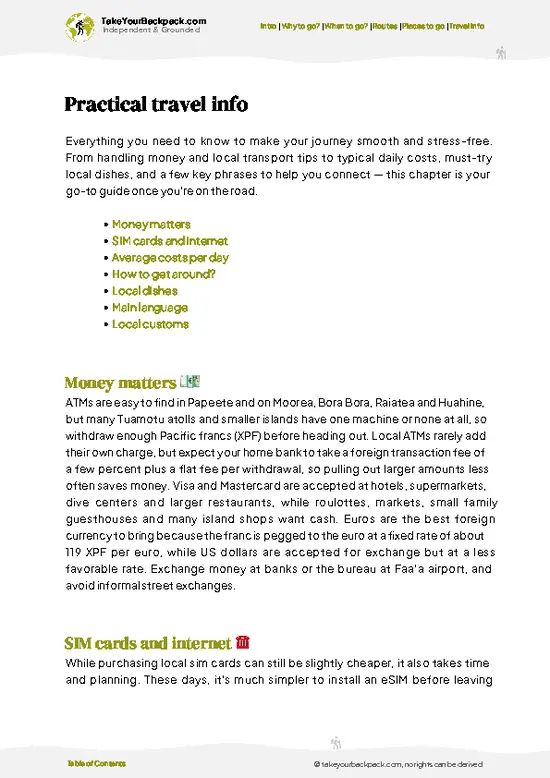
Public Buses (Le Truck): These colorful, open-air minibuses are the backbone of local transit. They run roughly from 6:00 AM to 7:00 PM and cost about 150 CFP (around $1.50 USD). The routes aren’t posted in English, so it helps to ask locals or watch where the bus is headed. They’re slow and stop frequently, but they’re a budget traveler’s best friend for reaching neighborhoods beyond the center without breaking the bank.

Scooter Rentals: If you’re comfortable on two wheels, renting a scooter can be a game-changer. Prices start around 3,000 CFP per day ($30 USD), and it lets you escape the town’s core to explore nearby beaches and hills at your own pace. Traffic can be chaotic, so this option suits confident riders who want speed and flexibility. Always check the condition of the scooter and wear a helmet—safety isn’t optional here.

Shared Taxis (Taxi Collectifs): These operate on fixed routes but leave only when full, blending budget and convenience. Fares hover around 200-300 CFP ($2-$3 USD). They’re faster than buses but less predictable in departure times. Perfect if you’re heading to popular spots like the ferry terminal or the airport and want to avoid the hassle of haggling with private taxis.

Private Taxis: The priciest option, with fares starting at 1,500 CFP ($15 USD) for short trips. They offer comfort and direct routes but can quickly drain your budget. Use them sparingly—reserve for early morning airport runs or late-night returns when other options aren’t available.

Mastering Papeete’s transit means balancing the slow charm of walking and buses with the speed and freedom of scooters or shared taxis. The town’s atmosphere rewards patience and curiosity, and each mode of transport offers a different slice of local life. Embrace the unpredictability, and you’ll find the rhythm that turns a simple ride into a memorable part of your adventure.

👛 Costs (as of 23 November 2025)Typical daily expenses

Backpacking in Papeete, French Polynesia, carries a price tag that reflects its remote island charm and limited budget infrastructure. It’s not a cheap stop, but knowing where your money goes helps you stretch each dollar without missing the essence of the place.
  • Dorm Accommodation: Expect to pay around $25 to $40 USD per night for a bed in a hostel dorm. Options are limited, and the vibe leans more toward basic comfort than luxury. Booking ahead is smart since spots fill quickly, especially in peak season.
  • Meals: Eating out can be pricey. A simple local meal at a food truck or market stall runs about $8 to $12 USD. If you hit a casual restaurant, expect $15 to $25 USD for a main dish. Buying groceries and cooking yourself can cut costs, but fresh produce and imported goods tend to be expensive.
read more 👉
Backpacking in Papeete, French Polynesia, carries a price tag that reflects its remote island charm and limited budget infrastructure. It’s not a cheap stop, but knowing where your money goes helps you stretch each dollar without missing the essence of the place.
  • Dorm Accommodation: Expect to pay around $25 to $40 USD per night for a bed in a hostel dorm. Options are limited, and the vibe leans more toward basic comfort than luxury. Booking ahead is smart since spots fill quickly, especially in peak season.
  • Meals: Eating out can be pricey. A simple local meal at a food truck or market stall runs about $8 to $12 USD. If you hit a casual restaurant, expect $15 to $25 USD for a main dish. Buying groceries and cooking yourself can cut costs, but fresh produce and imported goods tend to be expensive.
  • Local Transport: Public buses are rare and unreliable. Most travelers rely on shared minibuses or taxis, which can cost $2 to $5 USD for short rides around town. Renting a scooter is a popular, cost-effective way to explore, averaging $30 to $40 USD per day.
  • Basic Activities/Entry Fees: Many natural attractions like beaches and markets are free. Museums or cultural sites charge modest fees, usually $5 to $10 USD. Guided tours or water activities start around $40 USD and can climb quickly, so pick your splurges wisely.
  • Miscellaneous Expenses: Budget for essentials like bottled water ($1.50 to $2 USD), occasional snacks, and small souvenirs. Wi-Fi is often limited to cafes or accommodations, sometimes with a small fee. Phone SIM cards with data start around $20 USD for a basic package.

All told, a realistic daily budget for backpacking in Papeete hovers between $60 and $100 USD. This range balances the unavoidable costs of island life with savvy choices that keep you connected to the local rhythm without breaking the bank.


source: tahititourisme.pf
⚠️ Prices can change and everyone travels differently, so take this as a rough guide. Hope it helps you plan your adventure!

🚌 Day tripsWhere to go beyond the main area

Papeete, the vibrant capital of French Polynesia, is your launchpad for unforgettable day trips. With its bustling markets and laid-back vibe, it’s easy to forget that adventure awaits just beyond the city limits. Here are some standout excursions that will elevate your experience.

Moorea Island Adventure
Just a short ferry ride from Papeete, Moorea is a paradise of lush mountains and turquoise lagoons. The journey takes about 30 minutes, and once you arrive, rent a scooter to explore the island’s stunning coastline. Don’t miss the viewpoint at Belvedere Lookout for a panoramic view that makes the effort worthwhile. Budget around $50 for the ferry and scooter rental. The best time to visit is during the dry season, from May to October, when the skies are clear and the humidity is manageable. … read more 👉
Papeete, the vibrant capital of French Polynesia, is your launchpad for unforgettable day trips. With its bustling markets and laid-back vibe, it’s easy to forget that adventure awaits just beyond the city limits. Here are some standout excursions that will elevate your experience.

Moorea Island Adventure
Just a short ferry ride from Papeete, Moorea is a paradise of lush mountains and turquoise lagoons. The journey takes about 30 minutes, and once you arrive, rent a scooter to explore the island’s stunning coastline. Don’t miss the viewpoint at Belvedere Lookout for a panoramic view that makes the effort worthwhile. Budget around $50 for the ferry and scooter rental. The best time to visit is during the dry season, from May to October, when the skies are clear and the humidity is manageable. A common mistake? Many first-timers stick to the beaches; venture inland for hiking trails that reveal the island’s true beauty.
👉 Explore Moorea

Faarumai Waterfalls
A quick 30-minute drive from Papeete, the Faarumai Waterfalls are a refreshing escape into nature. The hike to the falls is relatively easy, taking about an hour, and you’ll be rewarded with the sound of cascading water and the scent of tropical flora. Entry is free, but consider bringing a picnic to enjoy in the serene surroundings. The best time to go is early morning to avoid crowds and catch the sunlight filtering through the trees. A common mistake is underestimating the trail; sturdy shoes are a must for navigating the rocky paths.


Teahupo’o Surf Spot
For those seeking thrills, Teahupo’o is a must-visit. Known for its massive waves, this surf spot is about an hour’s drive from Papeete. Even if you’re not a surfer, the atmosphere is electric, especially during the surf season from May to August. Grab a local meal at a nearby food truck for around $10 and soak in the energy of the surfers tackling the famous break. A common mistake is arriving too late; get there early to witness the surfers in action and enjoy the local vibe.
👉 Explore Teahupo’o

Taputapuātea Marae
A UNESCO World Heritage site, Taputapuātea is a sacred marae located on the island of Ra’iatea, about a 2-hour ferry ride from Papeete. This cultural site is rich in history and offers a glimpse into Polynesian spirituality. The ferry costs around $30, and the experience is priceless. Aim to visit during the cooler months for a more comfortable exploration. Many first-timers overlook the significance of the site; take time to engage with local guides to deepen your understanding of its cultural importance.
Want to know what more French Polynesia offers?
The French Polynesia Travel Guide describes 45 highlights, from cities to national parks, from beaches to hikes

Get the Travel Guide -

🛡️ SafetyScams, Hazards, and Annoyances

Papeete is generally safe, but like any vibrant city, it has its quirks. The waterfront area is lively during the day, but as night falls, it’s wise to stick to well-lit streets and avoid wandering too far from the main drag. Solo travelers should feel comfortable, but keep your belongings close—crossbody bags are a smart choice.

Watch for the occasional street vendor who might try to upsell you on souvenirs. If a deal seems too good to be true, it probably is. Be polite but firm if you’re not interested.

Annoyances can pop up, like the occasional aggressive taxi driver. Always agree on a fare before hopping in, or better yet, use a rideshare app if available.

The key is to stay aware and engaged. Enjoy the local culture, but keep your wits about you. The beauty of Papeete is in its … read more 👉
Papeete is generally safe, but like any vibrant city, it has its quirks. The waterfront area is lively during the day, but as night falls, it’s wise to stick to well-lit streets and avoid wandering too far from the main drag. Solo travelers should feel comfortable, but keep your belongings close—crossbody bags are a smart choice.

Watch for the occasional street vendor who might try to upsell you on souvenirs. If a deal seems too good to be true, it probably is. Be polite but firm if you’re not interested.

Annoyances can pop up, like the occasional aggressive taxi driver. Always agree on a fare before hopping in, or better yet, use a rideshare app if available.

The key is to stay aware and engaged. Enjoy the local culture, but keep your wits about you. The beauty of Papeete is in its authenticity, and navigating it with confidence will only deepen your experience.

Other French Polynesian towns near Papeete

Explore more nearby:

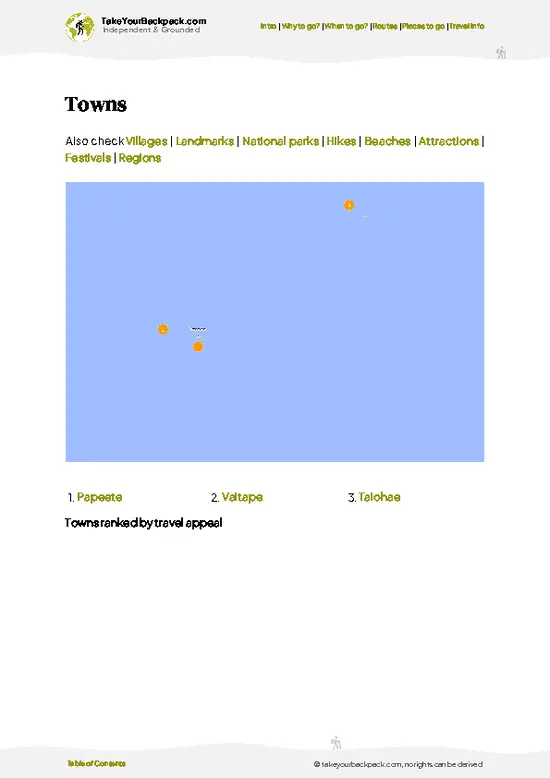
  • Faa’a—airport gateway, suburban neighborhoods, mountain foothills, local markets| 5 km away
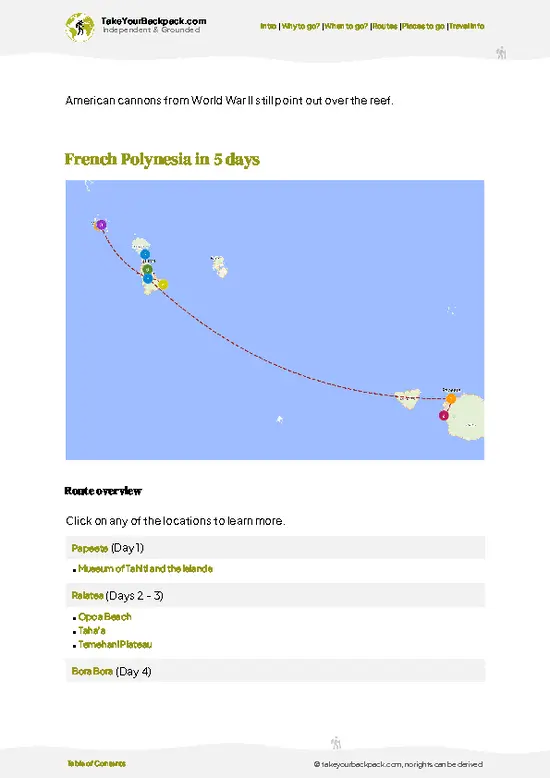
  • Vaitape—lagoon views, main pier, island shops, Bora Bora access| 259 km away
  • Nuku Hiva—volcanic peaks, archaeological sites, remote valleys, Marquesan culture| 1402 km away

💡 Not sure where to go next?
Create a personalized itinerary for French Polynesia including Papeete and the places that fit your trip.

Generate my itinerary

👉 Discover all towns

Or checkout all French Polynesia has to offer (think cities, towns, villages, national parks, hikes, beaches, festivals)
Country photo of French Polynesia

We 💚 feedbackSumming up the experience

Papeete pulses with a laid-back energy that’s hard to shake off. The market’s aroma of fresh fruit and fish is intoxicating, but don’t miss the local food trucks—try the poisson cru; it’s a revelation. A heads-up: the humidity can be intense, so hydrate and take it slow. The best surprise? The sunset over the harbor, where the sky ignites in colors you didn’t think possible. Embrace the rhythm, and let the island’s charm wash over you. You’ll leave with a piece of it in your heart.

✍️ Help improve this page!
The information on this page is based on in-depth research, insights shared by experienced travelers, and feedback from the local travel community in French Polynesia. While every effort is made to keep the information accurate and current, conditions can change — so if you spot anything incorrect or outdated, please get in touch.


🙋‍♂️ Give feedback

👋 Meet the founderWho’s Behind Take Your Backpack?

Johan, backpacker and founder of TakeYourBackpackHi, I’m Johan (Netherlands 🇳🇱), the creator of TakeYourBackpack. Over the past decade, I’ve backpacked through 80+ countries across six continents, gaining extensive experience with independent travel, long-term trips, and overland routes.

This site is built on a combination of firsthand travel experience and carefully curated insights from other backpackers. Many guides are based on places I’ve personally visited, while others bring together tips, observations, and practical advice shared by trusted travelers I’ve met along the way.

The goal is to provide realistic, experience-driven guidance — not generic itineraries — so you can explore destinations with better context, clearer expectations, and more confidence.

Get full country guide •
Instant download • 45 highlights • Full Offline guide