×

French Polynesia🇵🇫 | regionsMooreaJagged peaks, twin bays, pineapple roads, scooter loop | things to do and best time to go

Explore MaupitiExplore Raiatea

Backpacking in Moorea
🏆 Top pickregion ranked #2
By Johan Kruseman 🇳🇱 | Updated October 15, 2026

The ferry ramp clanks down, and the first thing that hits you is frangipani and two-stroke exhaust from the scooters waiting to race the crowd toward the coast road. That's Moorea, an island in the Society archipelago of French Polynesia, a short hop across the channel from Tahiti. It's all jagged green spires, pineapple fields and lagoon in a color that looks edited. The good: hiking, snorkeling and village life fit on one 60-kilometer loop. The bad: resorts and overwater bungalows hog the best sand, and the public beaches are thin. Don't judge it from the ferry dock; the quiet bays of the north-west and the roadside fruit stands are where it gets real. Most of the island is easy on a rented bike or scooter, so skip the tour vans. Take the early morning ferry, because the afternoon boats fill and the best rental scooters go first.

Discover everything you want to know in the 📖 French Polynesia Travel Guide.


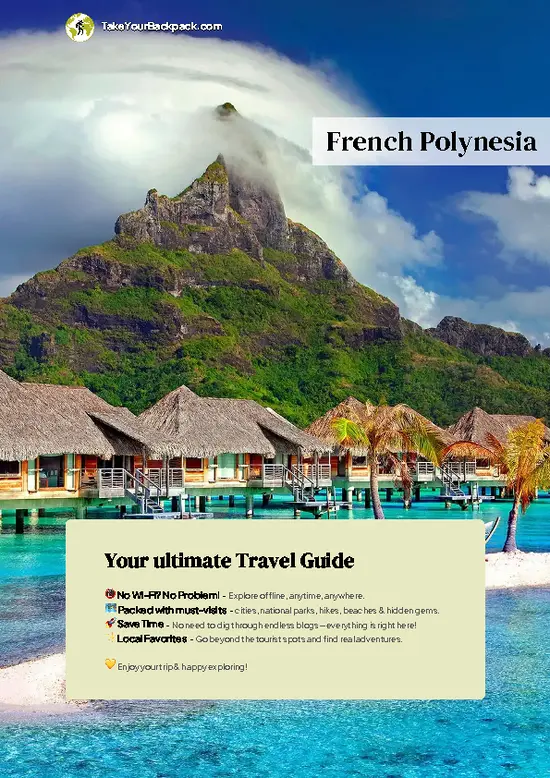
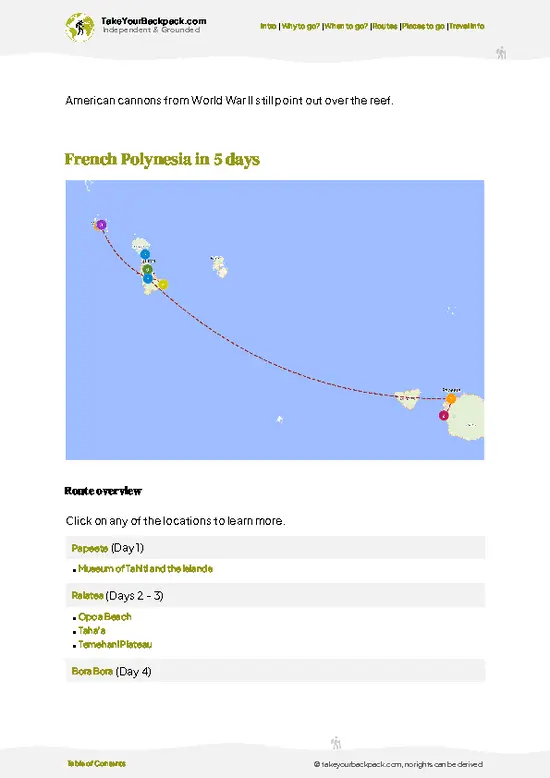
example page 0 from our offline Travel Guide for French Polynesia
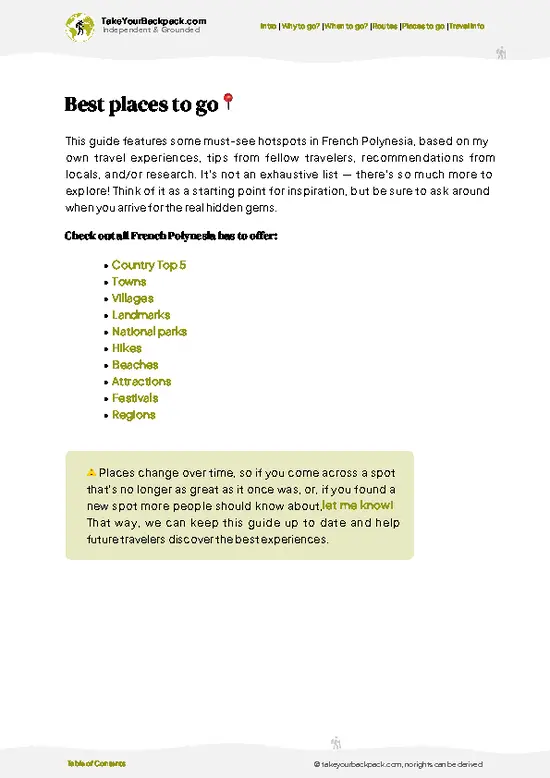
example page 1 from our offline Travel Guide for French Polynesia
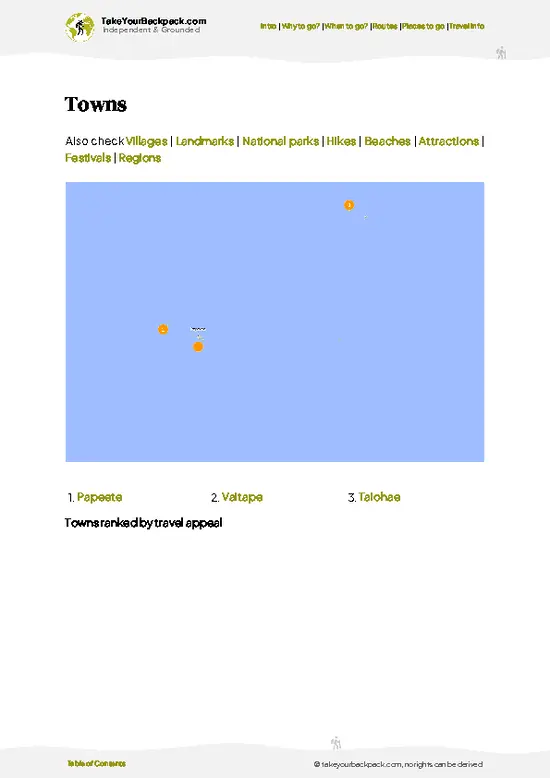
example page 2 from our offline Travel Guide for French Polynesia
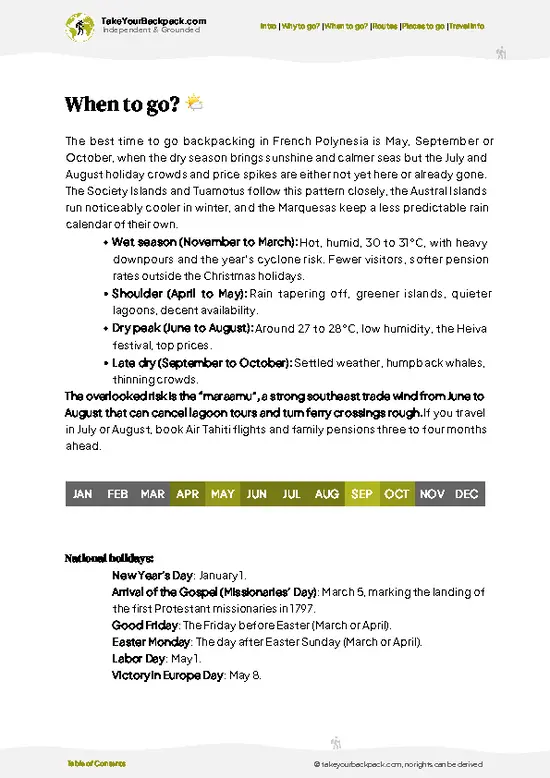
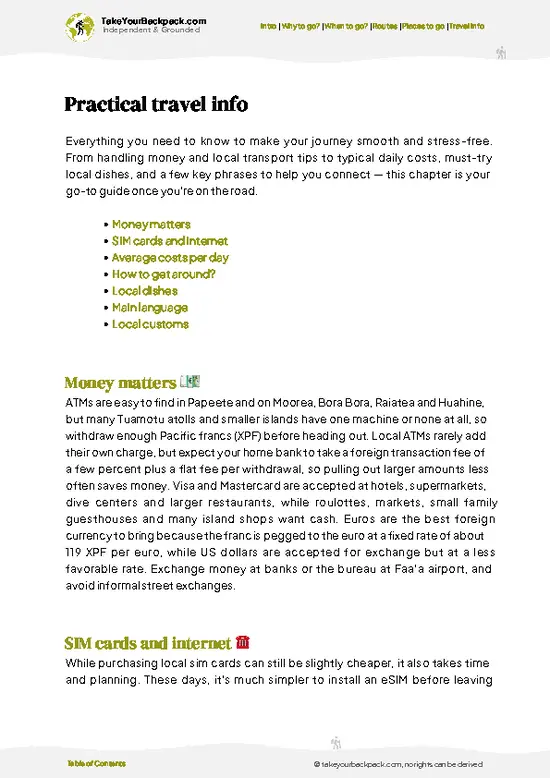
example page 3 from our offline Travel Guide for French Polynesia
example page 4 from our offline Travel Guide for French Polynesia
example page 5 from our offline Travel Guide for French Polynesia
example page 6 from our offline Travel Guide for French Polynesia
example page 7 from our offline Travel Guide for French Polynesia
Loading the map 🌍
CLICK TO FILTER
towns
villages
landmarks
national parks
hikes
beaches
attractions
festivals
regions
SHOW COUNTRY’S BESTSHOW ALL

✨ Why go?
Ranked #2 region in French Polynesia
Reasons people choose to visit here

Moorea gives you three Polynesias in one place, without packing a bag twice. The first is the mountain: Belvédère Lookout and the ridge trails climb through pine forest and old pineapple land to views over both Cook’s Bay and Opunohu Bay. The second is the water. The lagoon drops off to a reef edge where sharks, rays and turtles are routine, and Temae on the east side has a public beach where you can wade in with a mask for nothing. The third is the old culture, since the Opunohu Valley is dotted with stone temple platforms called marae that most visitors drive straight past.

The island is small enough to treat as a single base. A sealed road rings the coast, so you can sleep in one guesthouse, hit a different bay each day and be back for sunset. That slow rhythm suits anyone who wants nature … read more 👉
Moorea gives you three Polynesias in one place, without packing a bag twice. The first is the mountain: Belvédère Lookout and the ridge trails climb through pine forest and old pineapple land to views over both Cook’s Bay and Opunohu Bay. The second is the water. The lagoon drops off to a reef edge where sharks, rays and turtles are routine, and Temae on the east side has a public beach where you can wade in with a mask for nothing. The third is the old culture, since the Opunohu Valley is dotted with stone temple platforms called marae that most visitors drive straight past.

The island is small enough to treat as a single base. A sealed road rings the coast, so you can sleep in one guesthouse, hit a different bay each day and be back for sunset. That slow rhythm suits anyone who wants nature and culture without burning half the trip on transit. Guesthouses with kitchens also keep you eating well, with fresh tuna and fruit from roadside stalls.

💡 HighlightsMust-see experiences and standout moments

  1. Belvédère Lookout: the viewpoint everyone searches for, with Mount Rotui between Cook’s Bay and Opunohu Bay below. Go early, before cloud caps the peaks.
  2. Cook’s Bay: deep, calm water under steep spires, with a few cafés and a pleasant waterfront stroll.
  3. Opunohu Bay: wilder and quieter than its neighbor, with sailboats at anchor and sunset color on the water.
  4. Three Coconuts Trail: a forest hike through pine and fern that ends with a view of the island’s heart. Wear shoes with grip, since the soil gets slick.
  5. Marae Titiroa and Opunohu Valley: ancient stone temple platforms and an archery platform hidden among trees, usually empty of crowds.
  6. Temae Beach: a long public stretch on the east side with shallow, clear water. Locals picnic here on weekends, and the airstrip nearby adds a surprising plane
… read more 👉
  1. Belvédère Lookout: the viewpoint everyone searches for, with Mount Rotui between Cook’s Bay and Opunohu Bay below. Go early, before cloud caps the peaks.
  2. Cook’s Bay: deep, calm water under steep spires, with a few cafés and a pleasant waterfront stroll.
  3. Opunohu Bay: wilder and quieter than its neighbor, with sailboats at anchor and sunset color on the water.
  4. Three Coconuts Trail: a forest hike through pine and fern that ends with a view of the island’s heart. Wear shoes with grip, since the soil gets slick.
  5. Marae Titiroa and Opunohu Valley: ancient stone temple platforms and an archery platform hidden among trees, usually empty of crowds.
  6. Temae Beach: a long public stretch on the east side with shallow, clear water. Locals picnic here on weekends, and the airstrip nearby adds a surprising plane or two.
  7. Moorea Lagoon Snorkeling: swim with blacktip reef sharks and stingrays in the shallows off the north coast, ideally on a small boat tour.
  8. Pineapple Fields and Roadside Stalls: the interior road passes plantations, and the juice and fresh fruit are cheap and unmistakably local.
  9. Mount Mouaputa: the pierced peak behind Paopao, with a rugged hike for experienced walkers who want the pinnacle view few others reach.
  10. Haapiti and the west coast: a sleepy village stretch with a good surf break, a church and almost no tourists, ideal for an unhurried scooter detour.
Combine Belvédère Lookout in the morning with the Opunohu Valley marae, since the road to the viewpoint passes right through the valley.
Spotted a mistake or missing something? Contact us.

Things to do around Moorea

Ratings based on Tripadvisor reviews. When you book through this link, you support our work at no extra cost to you.

⌛️ 5 daysSeeing the highlights in 5 days

A scooter loop morning sets the pace, because Moorea has just one coastal road and no real public transport beyond a few buses timed to ferry arrivals. Rent your own wheels and the island opens up; rely on the bus and you lose half of it.

Day 1: Cook’s Bay: Arrive on the morning ferry, collect a scooter or bike and settle in near the bay. Walk the waterfront, eat fresh fish, then ride to the north shore for a first lagoon swim. This base keeps every other day within a short ride.

Day 2: Opunohu Valley: Go up early, when the air is cool and clear. Stop at the marae platforms, then continue to Belvédère Lookout for the view over both bays. Take the pineapple-field road back down and buy juice from a stall. Doing the high ground first means you will not lose it to afternoon cloud.

Day 3: Temae … read more 👉
A scooter loop morning sets the pace, because Moorea has just one coastal road and no real public transport beyond a few buses timed to ferry arrivals. Rent your own wheels and the island opens up; rely on the bus and you lose half of it.

Day 1: Cook’s Bay: Arrive on the morning ferry, collect a scooter or bike and settle in near the bay. Walk the waterfront, eat fresh fish, then ride to the north shore for a first lagoon swim. This base keeps every other day within a short ride.

Day 2: Opunohu Valley: Go up early, when the air is cool and clear. Stop at the marae platforms, then continue to Belvédère Lookout for the view over both bays. Take the pineapple-field road back down and buy juice from a stall. Doing the high ground first means you will not lose it to afternoon cloud.

Day 3: Temae and the east coast: Ride around to Temae for a calm beach day. The water is shallow and protected, which makes it a good rest day after the climb.

Detour: Spend the afternoon of Day 4 riding the quiet west coast to Haapiti, where the road empties and the surf breaks outside the reef. It adds a lot and costs only a longer ride, since you return along the same loop.

Day 4: Haapiti and the west: Take it slow, stop at roadside churches and swim wherever the water looks good.

Day 5: Lagoon day: Join a small snorkeling boat to swim with sharks and rays, then return your scooter and catch an afternoon ferry.

If you only keep one day, make it Day 2. The valley and the lookout together show the island’s layered history and landscape in a single sweep.

🌤️ When to go?When to go for the best experience

The best window for Moorea is May to October, when days are sunny and the trade winds keep things comfortable.
  • Dry Season (May to October): Daytime highs sit around 27 to 29°C (81 to 84°F), nights drop to 21 to 23°C (70 to 73°F), and humidity eases. Sunrise is near 6:00 and sunset near 17:30 to 18:00. Visibility for snorkeling and diving is at its best, and humpback whales pass between roughly July and October.
  • Wet Season (November to April): Expect 29 to 32°C (84 to 90°F), thick humidity and heavy downpours that often clear within an hour. Cyclones are rare but possible, mostly January to March. Days run slightly longer, to about 18:30 sunset. Rooms and flights are cheaper, and the island is quiet.
  • July and Heiva Season: Polynesian dance and canoe events on Tahiti and nearby islands draw visitors
… read more 👉
The best window for Moorea is May to October, when days are sunny and the trade winds keep things comfortable.
  • Dry Season (May to October): Daytime highs sit around 27 to 29°C (81 to 84°F), nights drop to 21 to 23°C (70 to 73°F), and humidity eases. Sunrise is near 6:00 and sunset near 17:30 to 18:00. Visibility for snorkeling and diving is at its best, and humpback whales pass between roughly July and October.
  • Wet Season (November to April): Expect 29 to 32°C (84 to 90°F), thick humidity and heavy downpours that often clear within an hour. Cyclones are rare but possible, mostly January to March. Days run slightly longer, to about 18:30 sunset. Rooms and flights are cheaper, and the island is quiet.
  • July and Heiva Season: Polynesian dance and canoe events on Tahiti and nearby islands draw visitors in July. Moorea fills up with European and North American travelers, and beds cost the most, especially around July and August school holidays and Christmas.
  • Shoulder Months (May, June, November): Weather is good, lodging is softer on price, and trails and lagoon spots are calm.
Book your ferry and accommodation early if you land in July or August.


source: climatestotravel.comJANJanuary: fair for travelingFEBFebruary: fair for travelingMARMarch: fair for travelingAPRApril: fair for travelingMAYMay: highly recommended for travelingJUNJune: excellent for travelingJULJuly: highly recommended for travelingAUGAugust: highly recommended for travelingSEPSeptember: highly recommended for travelingOCTOctober: excellent for travelingNOVNovember: good for travelingDECDecember: fair for traveling
french-polynesia-region-moorea
© Google | Efg Consulting

✈️ The backpacker research shortcutFrench Polynesia Travel Guide

An offline-friendly backpacking guide with optimized travel routes, ranked highlights, transport advice, and the best areas to stay.
example page 0 from our offline Travel Guide for French Polynesia
example page 1 from our offline Travel Guide for French Polynesia
example page 2 from our offline Travel Guide for French Polynesia
example page 3 from our offline Travel Guide for French Polynesia
example page 4 from our offline Travel Guide for French Polynesia
example page 5 from our offline Travel Guide for French Polynesia
example page 6 from our offline Travel Guide for French Polynesia
example page 7 from our offline Travel Guide for French Polynesia
The digital guide (149 pages) contains:
✅ 41 highlights, ranked by travel appeal
✅ Optimized 2, 3 & 5-day travel routes
✅ Cities, national parks, landmarks, beaches
✅ How to get around
✅ Offline-friendly for travel without Wi-Fi
👉 Click to see all 30+ guide features

📅 Plan smarter in minutes, not weeks
✅ Month by month travel advice
✅ Festivals & national holidays
✅ Budget expectations

🗺️ Go to the right places, skip the overrated ones
✅ Honest pros & cons of destinations
✅ Top hikes, parks & viewpoints
✅ Lesser-known places most travelers miss
✅ Clear “worth it vs skip it” guidance

🛏️ Travel smoothly without rookie mistakes
✅ Best areas to stay
✅ Transport systems explained simply
✅ Common scams & safety advice
✅ SIM cards, money & practical tips

🌍 Understand the country, not just visit it
✅ Culture & traditions
✅ 52 Essential phrases & customs
✅ Festivals worth planning around
✅ Traveler-friendly historical context
✅ Insights that make places more meaningful

📱 Built for real travel conditions
✅ Fully downloadable PDF
✅ Works completely offline
✅ Optimized for phone use
✅ Useful in remote areas & buses
✅ Everything in one place
Stop searching, start planning
Get instant access to your full guide. 30‑day money-back guarantee.
+ Add another guide for just

By proceeding you agree to our terms.
Sent to your inbox immediately after payment • 100% Secure Checkout
Best Backpacking Travel Advisor 2025 tourism awardBest Backpacking
Travel Advisor
2025
What others say about Take Your Backpack Guides:
⭐⭐⭐⭐⭐
Fantastic, amazing amount of information!
⭐⭐⭐⭐⭐
My goodness this is amazing, it's what I've been looking for hats off too you!
⭐⭐⭐⭐⭐
I think this is absolutely BRILLIANT
⭐⭐⭐⭐
Very complete and informative. It's still missing places, but I gotta to commend you
⭐⭐⭐⭐⭐
This is truly amazing, thank you, can't wait to explore it with my kids!
⭐⭐⭐⭐⭐
Awesome resource, thank you!
⭐⭐⭐⭐⭐
This is amazing! Can't wait to explore the ones I haven't seen
⭐⭐⭐⭐
I love this! Well done, great idea.
⭐⭐⭐⭐⭐
Thanks for taking the time to make this gem!
⭐⭐⭐⭐⭐
This might be the best website I've ever seen.
⭐⭐⭐⭐⭐
Congratulations, and thank you so much for your work; it's incredibly valuable.
⭐⭐⭐⭐
In all seriousness I think you did a great job pointing out the important spots
⭐⭐⭐⭐⭐
10/10 very good
⭐⭐⭐⭐⭐
As someone who's only just starting to visit regularly this is awesome, thank you.
⭐⭐⭐⭐
Thank you very much! I'm going to visit my dad, it's going to be very useful!
⭐⭐⭐⭐⭐
This is really cool! We'll be travelling for the first time and this definitely come in handy.
⭐⭐⭐⭐⭐
You are now our minister of culture, congratulations 👨‍💼
⭐⭐⭐⭐⭐
Just wanted to tell you that this is a pearl! Going to follow your recommendations.
⭐⭐⭐⭐⭐
This is so cool. I'll definitely be using the resource for my travels soon.
⭐⭐⭐⭐⭐
This is very impressive! Good work.
⭐⭐⭐⭐⭐
This is an amazing and informative site. Very well done!

🛏️ Where to stay?Best areas to stay in French Polynesia

Maharepa and Cook’s Bay on the north coast make the most practical base, with the biggest choice of budget beds, grocery stores and restaurants within walking distance. Eating, buying snacks and arranging snorkeling or shark and ray tours is easy there, and the ferry quay at Vaiare is about 15 to 20 minutes away by road.
Hauru Point (Hauru, on the northwest) is the other favorite. It has the island’s best white sand and a calm lagoon, and a cluster of guesthouses and campgrounds sit right by the beach, so you get swimming and sunsets for less than at the overwater resorts. Solo travelers find it … read more 👉
Maharepa and Cook’s Bay on the north coast make the most practical base, with the biggest choice of budget beds, grocery stores and restaurants within walking distance. Eating, buying snacks and arranging snorkeling or shark and ray tours is easy there, and the ferry quay at Vaiare is about 15 to 20 minutes away by road.
Hauru Point (Hauru, on the northwest) is the other favorite. It has the island’s best white sand and a calm lagoon, and a cluster of guesthouses and campgrounds sit right by the beach, so you get swimming and sunsets for less than at the overwater resorts. Solo travelers find it social, because shared tables and hammock areas are common, and the supermarket at Hauru is handy for self-catering.
Paopao and the Opunohu Bay side are quieter and greener, ideal if you want hiking access to the Three Coconut Trees pass and Belvedere Lookout, with fewer fellow backpackers. Budget beds are limited here, so book ahead.
Afareaitu, on the east, is the most local and least visited, with village life and few guest options. The beaches are narrower, so it suits those who want calm over nightlife.
Across the island, nights are quiet and safe, and most evening life revolves around guesthouse dinners rather than bars.

🚌 Getting aroundHow to get from A to B

From the ferry quay at Vaiare, where boats from Papeete dock, the island’s main road runs in both directions around the coast, and the little vans that meet the arrivals will take you to your lodging if you have arranged it. Public transport here is thin, because Moorea has about 17,000 residents spread along a single 60 km (37 mile) coastal ring road, so there is no network to speak of. The experienced move is to plan around the few services and then rent your own wheels for flexibility.
  • Ferry from Tahiti: Boats from Papeete take 30 to 60 minutes, and fares run about 1,000 to 1,500 XPF (US$9 to 14) each way. The fast catamarans fill on weekday mornings with commuters, so a seat on the first or last sailings is easier if you book ahead at the quay or online. Skipping the 7 a.m. rush saves you
… read more 👉
From the ferry quay at Vaiare, where boats from Papeete dock, the island’s main road runs in both directions around the coast, and the little vans that meet the arrivals will take you to your lodging if you have arranged it. Public transport here is thin, because Moorea has about 17,000 residents spread along a single 60 km (37 mile) coastal ring road, so there is no network to speak of. The experienced move is to plan around the few services and then rent your own wheels for flexibility.
  • Ferry from Tahiti: Boats from Papeete take 30 to 60 minutes, and fares run about 1,000 to 1,500 XPF (US$9 to 14) each way. The fast catamarans fill on weekday mornings with commuters, so a seat on the first or last sailings is easier if you book ahead at the quay or online. Skipping the 7 a.m. rush saves you standing on deck.
  • Le Truck (public bus): It runs about 300 to 500 XPF (US$3 to 5) per ride, but mostly around school and ferry times, with very few buses after midday and almost none on Sundays. Locals do not wait at the roadside in the afternoon, and neither should you. Flag it down early, ride to your base, and leave the evenings for walking or a lift.
  • Bicycle rental: Expect about 1,500 to 2,500 XPF (US$14 to 23) a day. The coastal road is mostly flat, and a full circuit takes 5 to 7 hours with swim stops, so cycle one side and cut inland only if you can handle the steep climbs. Start early before the heat and afternoon showers.
  • Scooter or car rental: Scooters cost around 5,000 to 7,000 XPF (US$45 to 65) a day and cars about 8,000 to 12,000 XPF (US$75 to 110). Rent from near the ferry quay and return the vehicle the same place, which saves taxi fares, and note that the speed limit on most of the road is 40 to 60 km/h, so a circuit is relaxed.
  • Taxi: These are expensive, often 3,000 to 6,000 XPF (US$27 to 55) for a cross-island ride, and must usually be called ahead. Split the cost with other travelers for late arrivals, since most drivers finish early.
Fill the fuel tank at the stations near Maharepa or Vaiare before heading to the quieter west coast, as stations are few and close early.

🍲 FoodLocal Flavors for Backpackers

Start with poisson cru, raw tuna marinated in lime juice and tossed with coconut milk, cucumber and carrot. It is cold, tangy and creamy at once, and it is the national dish you should eat here at least twice. Roadside snack stands, called roulottes, sell grilled fish, chow mein and steak frites for about 1,200 to 2,000 XPF (US$11 to 18), eaten on plastic chairs under string lights.
Look for fafaru if you are brave, fermented fish with a smell that clears a room, and for firi firi, sugary fried doughnuts sold in the morning. Fresh pineapple is a local specialty, because Moorea’s sweet, low-acid fruit grows on the volcanic slopes, and it appears in juice and the island’s distinctive pineapple liqueur and jams. Also try Hinano, the local lager, cold on the beach, and fresh coconut water straight … read more 👉
Start with poisson cru, raw tuna marinated in lime juice and tossed with coconut milk, cucumber and carrot. It is cold, tangy and creamy at once, and it is the national dish you should eat here at least twice. Roadside snack stands, called roulottes, sell grilled fish, chow mein and steak frites for about 1,200 to 2,000 XPF (US$11 to 18), eaten on plastic chairs under string lights.
Look for fafaru if you are brave, fermented fish with a smell that clears a room, and for firi firi, sugary fried doughnuts sold in the morning. Fresh pineapple is a local specialty, because Moorea’s sweet, low-acid fruit grows on the volcanic slopes, and it appears in juice and the island’s distinctive pineapple liqueur and jams. Also try Hinano, the local lager, cold on the beach, and fresh coconut water straight from the husk.
For budget eating, shop at the supermarkets in Maharepa and Hauru for baguettes, cheese and fruit, then picnic on the beach. Roadside fruit stalls and the small Saturday markets give you the best prices.
On etiquette, service is relaxed, so a meal can take time. Tipping is not expected. Many snack stands close by about 9 p.m., and most places do not take cards, so carry cash in Pacific francs.

FAQFrequently asked questions about Moorea

Three to four days covers the highlights of Moorea, and five suits you if you want to hike and dive at a relaxed pace. A circuit of the 60 km coastal road takes a day, the Belvedere Lookout and Three Coconut Trees hike takes 2 to 4 hours, and a lagoon tour with stingray and shark stops takes half a day. The ferry from Papeete takes 30 to 60 minutes, so a day trip is possible but rushed.
Moorea is manageable without a car using the ferry-linked Le Truck buses (about 300 to 500 XPF per ride), though service is limited to mornings and early afternoons and is rare on Sundays. Most backpackers rent a bicycle for about 1,500 to 2,500 XPF a day, since the coastal road is flat and a circuit takes 5 to 7 hours. Taxis exist but are pricey, often over 3,000 XPF for cross-island rides.
Moorea is known for its jagged volcanic peaks, the heart-shaped outline of the island and calm turquoise lagoons ringed by a reef. Visitors come for snorkeling with blacktip reef sharks and stingrays, whale watching between roughly July and October, and hiking to Belvedere Lookout above Opunohu Bay. It is also famous for sweet pineapples grown on the hillsides, and for being a 30 to 60 minute ferry ride from Tahiti.
⚠️ Things can change over time, so always validate details locally before you go.

Other French Polynesian regions near Moorea

Explore more nearby:

  • Tahiti—Teahupo’o wave, Papeete market, roulotte dinners, Papenoo valley| 48 km away
  • Tetiaroa—Private atoll, seabird islets, turtle beaches, research station| 63 km away
  • Huahine—Twin islands, sacred eels, vanilla and pearl farms, marae ruins| 155 km away

💡 Not sure where to go next?
Create a personalized itinerary for French Polynesia including Moorea and the places that fit your trip.

Generate my itinerary

👉 Discover all regions

Or checkout all French Polynesia has to offer (think cities, towns, villages, national parks, hikes, beaches, festivals)
Country photo of French Polynesia

We 💚 feedbackWhat to keep in mind

Four nights is the right length for Moorea. Two feels like a rushed ferry commute, and a week suits only people who want to do nothing at all. I would book a guesthouse with a kitchen, rent a scooter the moment you land, and bring reef-safe sunscreen and a snorkel mask of your own.

✍️ Help improve this page!
The information on this page is based on in-depth research, insights shared by experienced travelers, and feedback from the local travel community in French Polynesia. While every effort is made to keep the information accurate and current, conditions can change — so if you spot anything incorrect or outdated, please get in touch.


🙋‍♂️ Give feedback

👋 Meet the founderWho’s Behind Take Your Backpack?

Johan, backpacker and founder of TakeYourBackpackHi, I’m Johan (Netherlands 🇳🇱), the creator of TakeYourBackpack. Over the past 3 decades, I’ve backpacked through 90+ countries across six continents, gaining extensive experience with independent travel, long-term trips, and overland routes.

This site is built on a combination of firsthand travel experience and carefully curated insights from other backpackers. Many guides are based on places I’ve personally visited, while others bring together tips, observations, and practical advice shared by trusted travelers I’ve met along the way.

The goal is to provide realistic, experience-driven guidance — not generic itineraries — so you can explore destinations with better context, clearer expectations, and more confidence.