×

French Polynesia🇵🇫 | regionsTupaiUninhabited atoll ring, tidal sandflats, nesting seabirds, night sky | things to do and best time to go

Explore TikehauExplore Bora Bora

Backpacking in Tupai
👀 For curious travelersregion ranked #9
By Johan Kruseman 🇳🇱 | Updated October 15, 2026

You wade out of the shallows at low tide, the sand packed hard and cool under your feet, and a blacktip shark circles lazily at knee depth while a frigatebird hangs overhead. That is a normal morning at Tupai, a tiny ring-shaped atoll north of Bora Bora in French Polynesia, reached by boat or small plane. The water is clear, the sand is white and clean, and you will probably share it with only a handful of people. Surf is nonexistent, but snorkeling inside the lagoon is excellent. There is no food or lodging on the atoll, so plan it as a day visit. Unlike Bora Bora's busy Matira Beach, Tupai has no crowds, no shops and almost no infrastructure.

Discover everything you want to know in the 📖 French Polynesia Travel Guide.


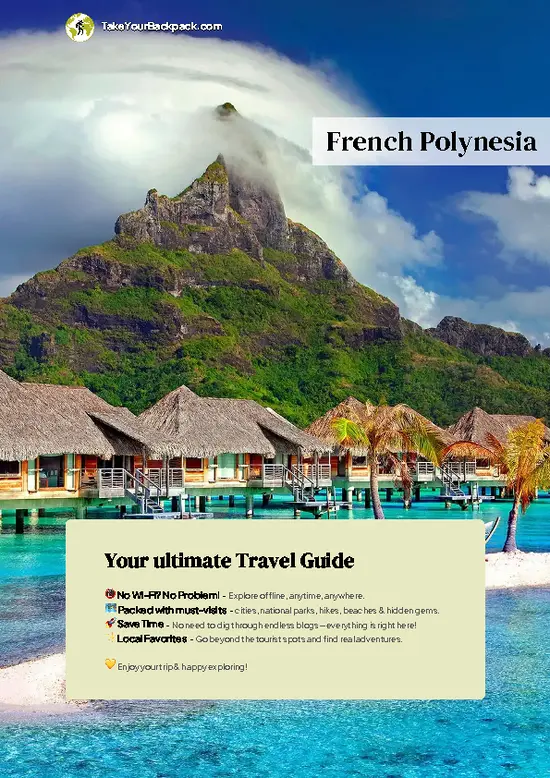
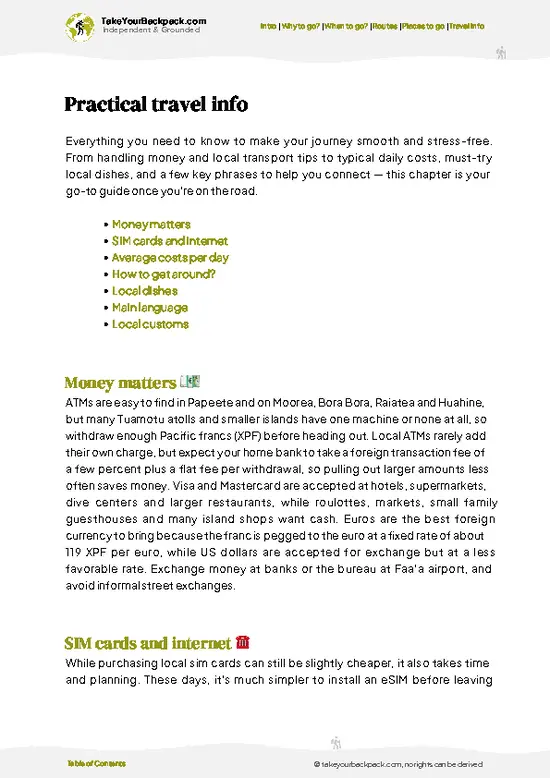
example page 0 from our offline Travel Guide for French Polynesia
example page 1 from our offline Travel Guide for French Polynesia
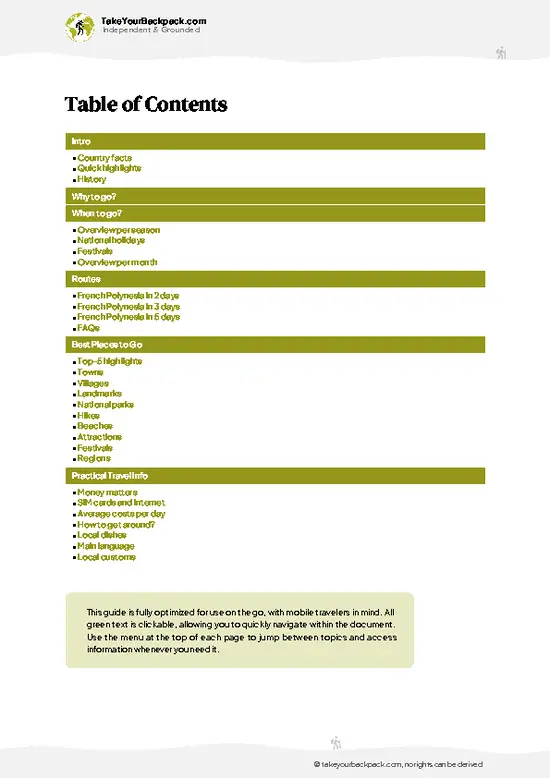
example page 2 from our offline Travel Guide for French Polynesia
example page 3 from our offline Travel Guide for French Polynesia
example page 4 from our offline Travel Guide for French Polynesia
example page 5 from our offline Travel Guide for French Polynesia
example page 6 from our offline Travel Guide for French Polynesia
example page 7 from our offline Travel Guide for French Polynesia
Loading the map 🌍
CLICK TO FILTER
towns
villages
landmarks
national parks
hikes
beaches
attractions
festivals
regions
SHOW COUNTRY’S BESTSHOW ALL

✨ Why go?
Ranked #9 region in French Polynesia
Reasons people choose to visit here

Backpackers come to Tupai for one reason: it is as private and untouched as a Polynesian atoll gets while still sitting within reach of Bora Bora. Most of the island is a heart-shaped ring of motu (islets) around a shallow lagoon, so you can walk from coconut grove to bare sand flat in minutes and see almost no one. Water access is the real draw. Bring a mask and you will be floating beside rays and reef fish within a few steps of shore, with no boat needed once you are there. It also works as a quiet pause from the resort-heavy scene nearby, a place to recharge, read and watch the lagoon change color through the day. Do not expect nightlife or a social scene. The appeal is silence, space and sky, with a handful of fellow travelers at most. Arrive with food, water and a plan, and the rest takes care of itself.

💡 HighlightsTop highlights of Tupai

  1. Lagoon snorkeling: The shallow, clear lagoon is the main event, with reef fish, rays and small blacktip sharks cruising the sandy flats and coral heads.
  2. Walking the motu: The ring of islets can be explored on foot at low tide, with long stretches of white sand and coconut palms and almost no footprints.
  3. Birdwatching: The atoll is a nesting site for seabirds, and terns and frigatebirds wheel overhead, especially around the quieter, undeveloped sections.
  4. Sunset on the western sand: With no buildings or lights to interrupt it, the sky turns orange and pink across open water, and the lagoon goes glassy.
  5. The heart from the air: Most visits arrive by helicopter from Bora Bora, and the flight shows the atoll’s heart-shaped reef in full.
Snorkel in the morning when the light is clearest, then keep the sunset walk for the end of the day.
Spotted a mistake or missing something? Contact us.

Things to do near Tupai

Ratings based on Tripadvisor reviews. When you book through this link, you support our work at no extra cost to you.

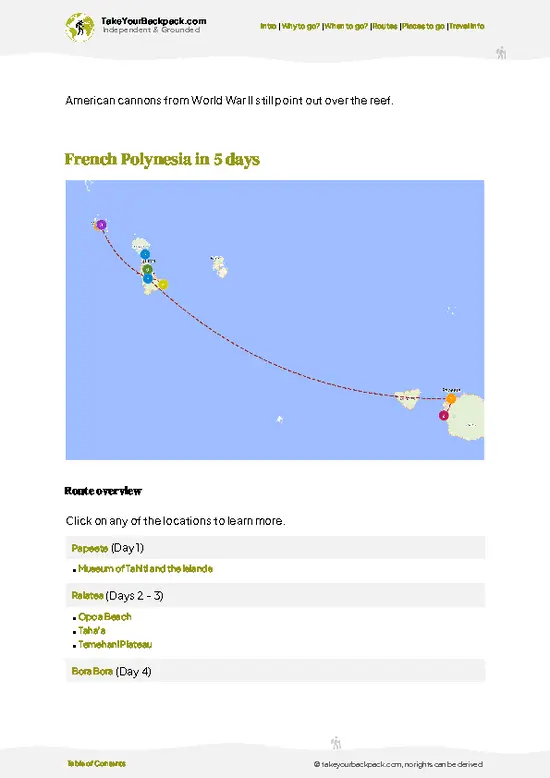
⌛️ 5 daysHow to make the most of Tupai

Day 1: Tupai: Start with the one stop that justifies the whole trip: the atoll itself, seen from above on a helicopter tour out of Bora Bora. Tupai is a protected, uninhabited ring of motu around a heart-shaped lagoon, and the shape only makes sense from the air. Nobody sleeps here and visits need permission, so the tour operator handles the access and the schedule. Book this first and plan everything else around its weather window.
Day 2: Bora Bora: Because helicopters fly from Bora Bora and the island has the only real lodging and boat services in the area, it works as your anchor for the other days. Use the buffer day to rest and absorb the contrast between Tupai's empty sand and the main island's lagoon resorts. Public transport is minimal, so the pace is set by boat shuttles and the single … read more 👉
Day 1: Tupai: Start with the one stop that justifies the whole trip: the atoll itself, seen from above on a helicopter tour out of Bora Bora. Tupai is a protected, uninhabited ring of motu around a heart-shaped lagoon, and the shape only makes sense from the air. Nobody sleeps here and visits need permission, so the tour operator handles the access and the schedule. Book this first and plan everything else around its weather window.
Day 2: Bora Bora: Because helicopters fly from Bora Bora and the island has the only real lodging and boat services in the area, it works as your anchor for the other days. Use the buffer day to rest and absorb the contrast between Tupai's empty sand and the main island's lagoon resorts. Public transport is minimal, so the pace is set by boat shuttles and the single coastal road, which you can circle by bike in a morning.
Day 3 to 4: Matira and the lagoon: Spend these days at Matira Point and on the water. A lagoon excursion by boat lets you snorkel the coral gardens, and the open sea beyond the reef gives a sense of the same blue you saw from the air. Keep one afternoon unplanned in case the weather shifts your helicopter slot.
Detour: Mount Pahia viewpoint: For a ground-level view, hire a guide for the steep climb on Bora Bora's interior ridges. It fits between tides and boat times without disturbing the rest of the plan.
Day 5: Departure by sea or air: Finish near the jetty so the ferry or the short flight to Raiatea or Tahiti goes smoothly. Leave a margin, since boats run on island time and the schedule bends to the weather.

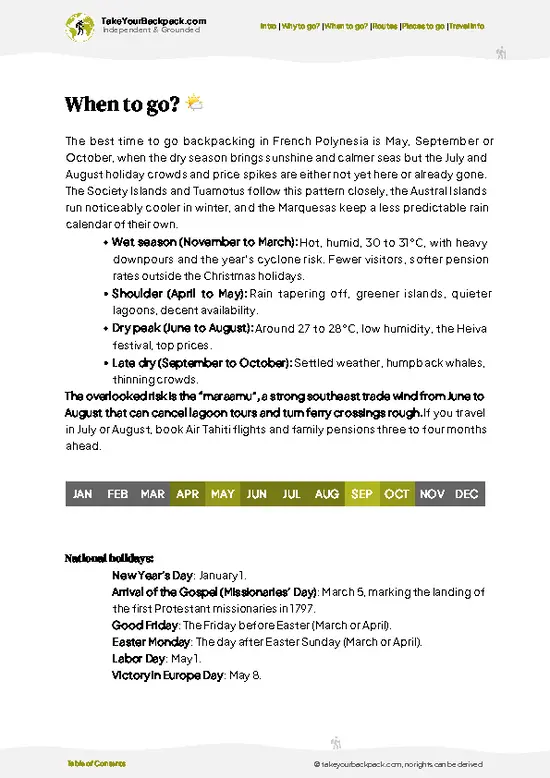
🌤️ When to go?Best time to visit Tupai

May to October is the best window for Tupai, with dry, breezy days and the clearest lagoon water.
  • Dry Season (May to October): Days run 27 to 29°C (81 to 84°F), nights dip to about 22°C (72°F), and sunrise to sunset spans roughly 11 hours. Visibility in the lagoon is at its best.
  • Wet Season (November to April): Expect 28 to 31°C (82 to 88°F), heavy humidity, and sudden downpours. Cyclones are rare but possible, and flights to Bora Bora can be disrupted.
  • Crowds and Prices: July and August bring the most visitors from Bora Bora, and boat tours cost more. Wet months bring discounts on lodging.
  • Seasonal Activity: Birdlife on the motu is active year-round, and snorkeling is good in any month.
Book your Bora Bora connection early for July, since seats on the short hop sell out first.

source: climatestotravel.comJANJanuary: fair for travelingFEBFebruary: fair for travelingMARMarch: fair for travelingAPRApril: fair for travelingMAYMay: highly recommended for travelingJUNJune: excellent for travelingJULJuly: highly recommended for travelingAUGAugust: highly recommended for travelingSEPSeptember: excellent for travelingOCTOctober: highly recommended for travelingNOVNovember: fair for travelingDECDecember: fair for traveling
french-polynesia-region-tupai
© Google | Photos Are Copyrighted By Their Owners

✈️ The backpacker research shortcutFrench Polynesia Travel Guide

An offline-friendly backpacking guide with optimized travel routes, ranked highlights, transport advice, and the best areas to stay.
example page 0 from our offline Travel Guide for French Polynesia
example page 1 from our offline Travel Guide for French Polynesia
example page 2 from our offline Travel Guide for French Polynesia
example page 3 from our offline Travel Guide for French Polynesia
example page 4 from our offline Travel Guide for French Polynesia
example page 5 from our offline Travel Guide for French Polynesia
example page 6 from our offline Travel Guide for French Polynesia
example page 7 from our offline Travel Guide for French Polynesia
The digital guide (149 pages) contains:
✅ 41 highlights, ranked by travel appeal
✅ Optimized 2, 3 & 5-day travel routes
✅ Cities, national parks, landmarks, beaches
✅ How to get around
✅ Offline-friendly for travel without Wi-Fi
👉 Click to see all 30+ guide features

📅 Plan smarter in minutes, not weeks
✅ Month by month travel advice
✅ Festivals & national holidays
✅ Budget expectations

🗺️ Go to the right places, skip the overrated ones
✅ Honest pros & cons of destinations
✅ Top hikes, parks & viewpoints
✅ Lesser-known places most travelers miss
✅ Clear “worth it vs skip it” guidance

🛏️ Travel smoothly without rookie mistakes
✅ Best areas to stay
✅ Transport systems explained simply
✅ Common scams & safety advice
✅ SIM cards, money & practical tips

🌍 Understand the country, not just visit it
✅ Culture & traditions
✅ 52 Essential phrases & customs
✅ Festivals worth planning around
✅ Traveler-friendly historical context
✅ Insights that make places more meaningful

📱 Built for real travel conditions
✅ Fully downloadable PDF
✅ Works completely offline
✅ Optimized for phone use
✅ Useful in remote areas & buses
✅ Everything in one place
Stop searching, start planning
Get instant access to your full guide. 30‑day money-back guarantee.
+ Add another guide for just

By proceeding you agree to our terms.
Sent to your inbox immediately after payment • 100% Secure Checkout
Best Backpacking Travel Advisor 2025 tourism awardBest Backpacking
Travel Advisor
2025
What others say about Take Your Backpack Guides:
⭐⭐⭐⭐⭐
Fantastic, amazing amount of information!
⭐⭐⭐⭐⭐
My goodness this is amazing, it's what I've been looking for hats off too you!
⭐⭐⭐⭐⭐
I think this is absolutely BRILLIANT
⭐⭐⭐⭐
Very complete and informative. It's still missing places, but I gotta to commend you
⭐⭐⭐⭐⭐
This is truly amazing, thank you, can't wait to explore it with my kids!
⭐⭐⭐⭐⭐
Awesome resource, thank you!
⭐⭐⭐⭐⭐
This is amazing! Can't wait to explore the ones I haven't seen
⭐⭐⭐⭐
I love this! Well done, great idea.
⭐⭐⭐⭐⭐
Thanks for taking the time to make this gem!
⭐⭐⭐⭐⭐
This might be the best website I've ever seen.
⭐⭐⭐⭐⭐
Congratulations, and thank you so much for your work; it's incredibly valuable.
⭐⭐⭐⭐
In all seriousness I think you did a great job pointing out the important spots
⭐⭐⭐⭐⭐
10/10 very good
⭐⭐⭐⭐⭐
As someone who's only just starting to visit regularly this is awesome, thank you.
⭐⭐⭐⭐
Thank you very much! I'm going to visit my dad, it's going to be very useful!
⭐⭐⭐⭐⭐
This is really cool! We'll be travelling for the first time and this definitely come in handy.
⭐⭐⭐⭐⭐
You are now our minister of culture, congratulations 👨‍💼
⭐⭐⭐⭐⭐
Just wanted to tell you that this is a pearl! Going to follow your recommendations.
⭐⭐⭐⭐⭐
This is so cool. I'll definitely be using the resource for my travels soon.
⭐⭐⭐⭐⭐
This is very impressive! Good work.
⭐⭐⭐⭐⭐
This is an amazing and informative site. Very well done!

🛏️ Where to stay?How to pick the right area

Stay on Bora Bora, because Tupai is a protected, uninhabited atoll with no accommodation. Tupai sits about 19 km north of Bora Bora, and day trips by boat or helicopter are how most backpackers see it.
Matira Point, at the south end of Bora Bora, is the best base. Public Matira Beach is a short walk from guesthouses and pensions, which run roughly US$80 to 150 (about 8,000 to 15,000 XPF) a night for a basic double or a dorm-style room where available. You can cook for yourself in many pensions, which keeps costs down in an expensive country.
Vaitape, the main village, is cheaper and more practical. … read more 👉
Stay on Bora Bora, because Tupai is a protected, uninhabited atoll with no accommodation. Tupai sits about 19 km north of Bora Bora, and day trips by boat or helicopter are how most backpackers see it.
Matira Point, at the south end of Bora Bora, is the best base. Public Matira Beach is a short walk from guesthouses and pensions, which run roughly US$80 to 150 (about 8,000 to 15,000 XPF) a night for a basic double or a dorm-style room where available. You can cook for yourself in many pensions, which keeps costs down in an expensive country.
Vaitape, the main village, is cheaper and more practical. It has the supermarkets, the ferry quay, and snack trucks serving poisson cru for about 1,000 to 1,500 XPF (US$9 to 14). Pensions here are quieter and less social, but you can rent a bicycle or scooter and reach Matira in 20 to 30 minutes. Solo travelers meet people most easily around Matira, where lagoon tours leave daily.

🚌 Getting aroundTransportation options and practical tips

Tupai has no bus or train station and no town center, so the nearest thing to an arrival point is the Bora Bora airport motu, Motu Mute, where a boat shuttle takes you across to Vaitape, the main village, in about 15 to 20 minutes for roughly €8 to 10 (the shuttle is timed to flights). Tupai itself is an uninhabited, protected atoll 19 km north of Bora Bora, with no roads, no accommodation and no public transport, so you reach it from Bora Bora only by organized trip. Everyone does it this way because access needs permission, and the operator handles that for you.
  • Helicopter tour: This is how most visitors see Tupai, usually as a 20 to 30 minute flight over the lagoon with a landing or low pass, priced around €250 to 400 per person. It costs that much because of fuel and permits, so book a
… read more 👉
Tupai has no bus or train station and no town center, so the nearest thing to an arrival point is the Bora Bora airport motu, Motu Mute, where a boat shuttle takes you across to Vaitape, the main village, in about 15 to 20 minutes for roughly €8 to 10 (the shuttle is timed to flights). Tupai itself is an uninhabited, protected atoll 19 km north of Bora Bora, with no roads, no accommodation and no public transport, so you reach it from Bora Bora only by organized trip. Everyone does it this way because access needs permission, and the operator handles that for you.
  • Helicopter tour: This is how most visitors see Tupai, usually as a 20 to 30 minute flight over the lagoon with a landing or low pass, priced around €250 to 400 per person. It costs that much because of fuel and permits, so book a morning slot when the air is calmer and the lagoon colors are clearest.
  • Private boat charter: Tupai sits 19 km out, so a boat is a long, open-water run. Operators arrange it only when the sea is kind, and half-day prices are usually €400 and up for the whole boat. Split it with other travelers in your hostel and the cost per person drops sharply.
  • Public shuttle boat: This is the cheap link between the airport motu and Vaitape, running around €8 to 10 one way. It lines up with flight arrivals and departures, so check the last departure before you wander off to lunch.
  • Bicycle or scooter on Bora Bora: The 32 km ring road around the main island is flat, and rentals run about €15 to 30 a day. It is the smart way to reach tour offices and the helicopter base without paying for taxis, which are pricey and sparse.
Book your Tupai trip through a Bora Bora operator the day you land, because they can tell you straight away whether permission and weather line up, and a flexible day in your schedule saves a cancelled flight from becoming a lost one.

🍲 FoodLocal Cuisine & Drinks

Tupai has no restaurants, shops or stalls, so eating happens back on Bora Bora, and that is where the poisson cru earns its fame: fresh tuna in coconut milk, bright with lime, sweet and sharp at once. Try firi firi, golden Tahitian doughnuts still hot and sugary from roadside vendors, and poulet fafa, chicken stewed with taro leaves until silky and earthy.
For budget meals, look for the roulottes, food trucks that set up in the evening near Vaitape and serve steak frites, chow mein and grilled fish on plastic tables, usually €10 to 18 a plate. Small snack counters sell sandwiches and baguettes by day. Wash it down with Hinano, the local lager, or fresh coconut water.
Prices are high because nearly everything arrives by ship, so a supermarket picnic is the smart move before a day out. Tipping … read more 👉
Tupai has no restaurants, shops or stalls, so eating happens back on Bora Bora, and that is where the poisson cru earns its fame: fresh tuna in coconut milk, bright with lime, sweet and sharp at once. Try firi firi, golden Tahitian doughnuts still hot and sugary from roadside vendors, and poulet fafa, chicken stewed with taro leaves until silky and earthy.
For budget meals, look for the roulottes, food trucks that set up in the evening near Vaitape and serve steak frites, chow mein and grilled fish on plastic tables, usually €10 to 18 a plate. Small snack counters sell sandwiches and baguettes by day. Wash it down with Hinano, the local lager, or fresh coconut water.
Prices are high because nearly everything arrives by ship, so a supermarket picnic is the smart move before a day out. Tipping is not expected, and a relaxed pace at the table is normal.

🛡️ SafetySafety Tips and Common Scams in Tupai

Tupai’s lagoon is shallow, calm, and well protected by its surrounding reef, so swimming is easy for most people. Currents are mild inside the lagoon, but they pick up near the passes where the water drains to the open ocean, so stay away from those channels. Reef edges can be sharp, and wearing reef shoes helps on coral rubble. Blacktip reef sharks and stingrays are common and generally uninterested in people. Give them space, do not feed them, and shuffle your feet in sandy shallows. The sun is strong all year, with little shade on the motu, so bring reef-safe sunscreen, a hat, and plenty of water. Midday heat is intense. Visits are usually on guided tours, so leave valuables with the boat crew or at your pension.

FAQTraveler FAQ

Tupai is reached from Bora Bora, about 19 km to the south, mostly by helicopter tour, and special permission is needed to land. A boat trip takes roughly an hour each way, and charters are typically arranged through Bora Bora tour operators for a full day. Helicopter transfers are much faster but cost several hundred US dollars. Fly into Bora Bora airport from Papeete, a flight of about 50 minutes.
Swimming and snorkeling are excellent, thanks to the calm, clear, shallow lagoon with coral heads, reef fish, rays, and blacktip sharks. Visibility is often 20 meters or more from May to October. Surfing is not a draw, since the lagoon has no breaks worth paddling for. Bring your own mask and fins, or ask the tour operator in Bora Bora to supply them.
Tupai has no entrance fee, but it is a protected atoll and visits need special permission, so you go with an organized tour. Expect to pay roughly 15,000 to 40,000 XPF (US$140 to 370) for a day trip with transport, depending on the operator and group size. There is no accommodation on the atoll. Most budget travelers visit as part of a lagoon excursion from Bora Bora.
⚠️ Things can change over time, so always validate details locally before you go.

Other French Polynesian regions near Tupai

Explore more nearby:

  • Bora Bora—Otemanu spire, Matira sandbar, ray and shark lagoon trips, ring-road bikes| 29 km away
  • Maupiti—Single reef pass, manta cleaning station, village cycling, pension stays| 54 km away
  • Taha’a—Vanilla sheds, coral channel, family pearl farms, rum distillery| 59 km away

💡 Not sure where to go next?
Create a personalized itinerary for French Polynesia including Tupai and the places that fit your trip.

Generate my itinerary

👉 Discover all regions

Or checkout all French Polynesia has to offer (think cities, towns, villages, national parks, hikes, beaches, festivals)
Country photo of French Polynesia

We 💚 feedbackIs it worth it?

The classic mistake is arriving without enough food, water and sun protection, assuming the atoll has shops. It has none. Pack everything for your full stay, bring a reef-safe sunscreen and a long-sleeved rash guard, and snorkel early before the afternoon wind ruffles the lagoon and clouds the visibility.

✍️ Help improve this page!
The information on this page is based on in-depth research, insights shared by experienced travelers, and feedback from the local travel community in French Polynesia. While every effort is made to keep the information accurate and current, conditions can change — so if you spot anything incorrect or outdated, please get in touch.


🙋‍♂️ Give feedback

👋 Meet the founderWho’s Behind Take Your Backpack?

Johan, backpacker and founder of TakeYourBackpackHi, I’m Johan (Netherlands 🇳🇱), the creator of TakeYourBackpack. Over the past 3 decades, I’ve backpacked through 90+ countries across six continents, gaining extensive experience with independent travel, long-term trips, and overland routes.

This site is built on a combination of firsthand travel experience and carefully curated insights from other backpackers. Many guides are based on places I’ve personally visited, while others bring together tips, observations, and practical advice shared by trusted travelers I’ve met along the way.

The goal is to provide realistic, experience-driven guidance — not generic itineraries — so you can explore destinations with better context, clearer expectations, and more confidence.