×

French Polynesia🇵🇫 | regionsTikehauPink motu sand, Tuheiava Pass, manta trips, atoll guesthouses | things to do and best time to go

Explore Tahiti ItiExplore Tupai

Backpacking in Tikehau
🌟 Highlightregion ranked #5
By Johan Kruseman 🇳🇱 | Updated October 15, 2026

The water around your ankles is bath-warm and so clear you can read the ripples on the sand below, while a blacktip shark the length of your forearm patrols the shallows like it pays rent. That’s a normal late afternoon at Tikehau, a ring-shaped atoll in the Tuamotu archipelago of French Polynesia, northeast of Tahiti. The beaches are pink-tinged, quiet and nearly empty, and the lagoon is excellent for snorkeling and diving. The trade-off is that nothing here is cheap, since food and lodging arrive by boat or plane, and there is no nightlife to speak of. Surf is absent, but the swimming is calm. Family-run guesthouses with half-board are the budget route, and the shaded sand by the village is where you’ll want to be at sunset. Before you go, book your guesthouse and its meals ahead, because the atoll has few shops and no spontaneous options.

Discover everything you want to know in the 📖 French Polynesia Travel Guide.


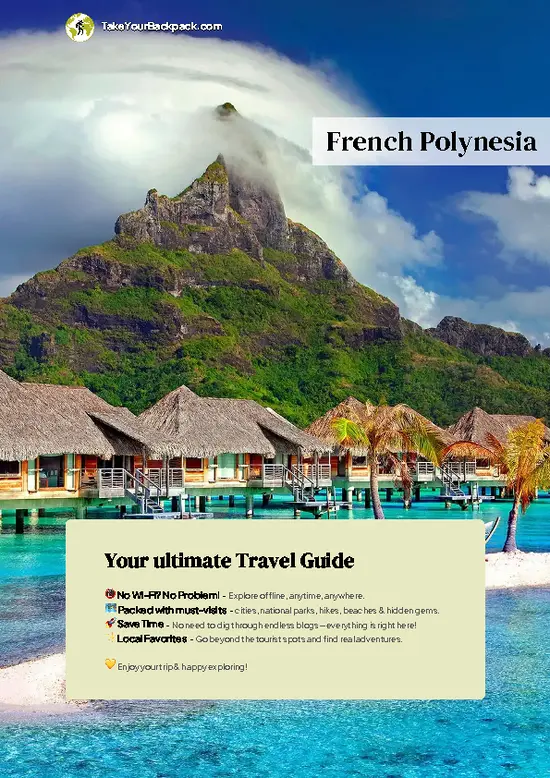
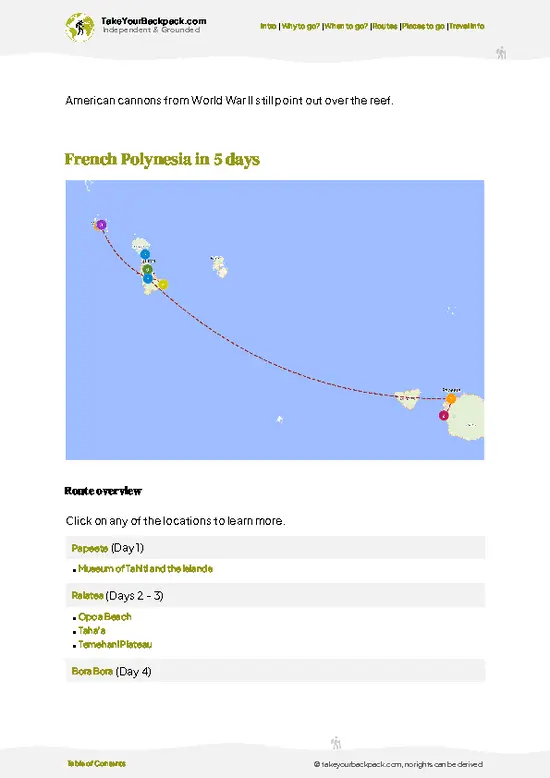
example page 0 from our offline Travel Guide for French Polynesia
example page 1 from our offline Travel Guide for French Polynesia
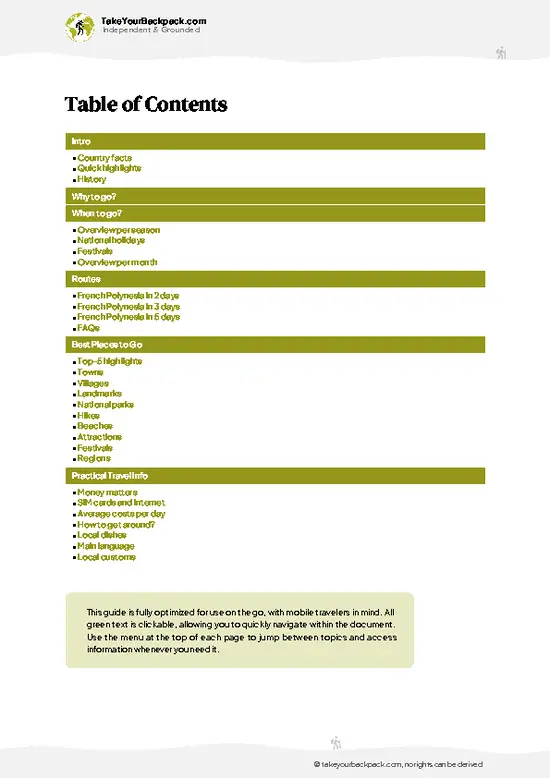
example page 2 from our offline Travel Guide for French Polynesia
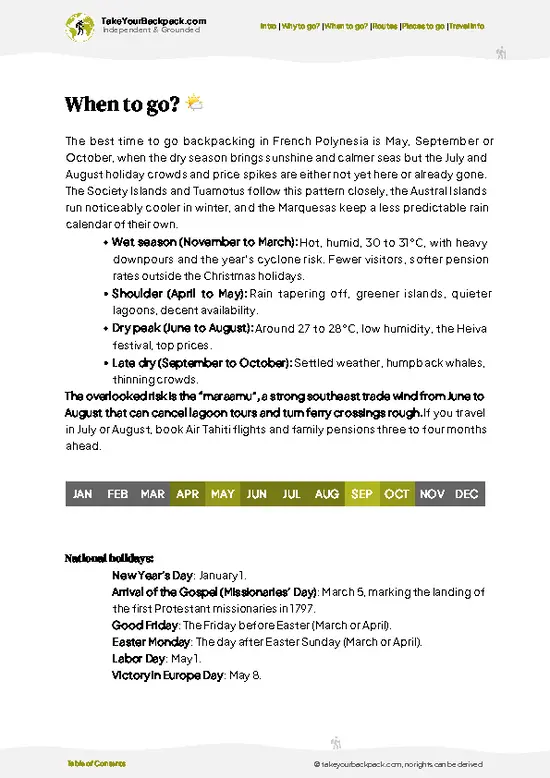
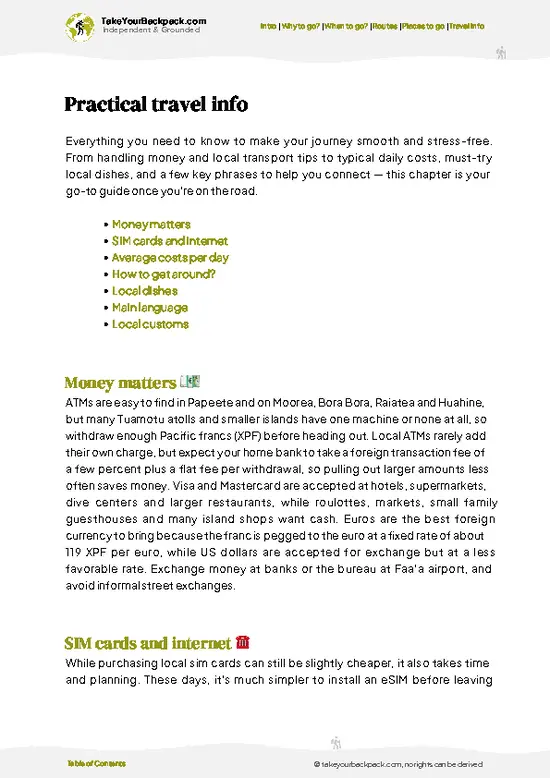
example page 3 from our offline Travel Guide for French Polynesia
example page 4 from our offline Travel Guide for French Polynesia
example page 5 from our offline Travel Guide for French Polynesia
example page 6 from our offline Travel Guide for French Polynesia
example page 7 from our offline Travel Guide for French Polynesia
Loading the map 🌍
CLICK TO FILTER
towns
villages
landmarks
national parks
hikes
beaches
attractions
festivals
regions
SHOW COUNTRY’S BESTSHOW ALL

✨ Why go?
Ranked #5 region in French Polynesia
What sets this place apart

Backpackers stop at Tikehau for the lagoon itself, and for the fact that it’s an atoll where you can still sleep in a family-run pension in Tuherahera village rather than a private overwater villa. The water is the draw: the pass at Tuheiava funnels clear ocean water in and out, which brings manta rays, dolphins and grey reef sharks within easy boat range of the village. You can snorkel straight off the shore, too, and the shallow coral gardens hold a lot of colorful fish without needing any gear beyond a mask.

It also works as a slow pause in a Polynesian route that is otherwise heavy on resorts. Evenings are quiet, meals are shared with your hosts, and conversation with other travelers happens naturally at the long guesthouse table. Pink sand on the motu across the lagoon makes a good half-day … read more 👉
Backpackers stop at Tikehau for the lagoon itself, and for the fact that it’s an atoll where you can still sleep in a family-run pension in Tuherahera village rather than a private overwater villa. The water is the draw: the pass at Tuheiava funnels clear ocean water in and out, which brings manta rays, dolphins and grey reef sharks within easy boat range of the village. You can snorkel straight off the shore, too, and the shallow coral gardens hold a lot of colorful fish without needing any gear beyond a mask.

It also works as a slow pause in a Polynesian route that is otherwise heavy on resorts. Evenings are quiet, meals are shared with your hosts, and conversation with other travelers happens naturally at the long guesthouse table. Pink sand on the motu across the lagoon makes a good half-day escape, and the pace is slow enough that a two-night stay turns into four without much argument.

💡 HighlightsTop highlights of Tikehau

  1. Snorkeling the Tuheiava Pass: the channel where lagoon and ocean exchange water is the atoll’s best natural show. Drift with the current over coral and watch for reef sharks, eagle rays and schools of snapper.
  2. Pink Sand Beach (Les Sables Roses): a stretch of pale pink sand on a small motu in the lagoon, colored by crushed red coral fragments. It’s a calm, shallow spot for swimming and a picnic lunch.
  3. Manta ray encounters: Tikehau is known for manta rays that feed in the lagoon, and local operators run guided snorkel trips to see them. Slow, quiet floating gets you the closest approach.
  4. Bird Island (Motu Ornithologique): a small protected motu that’s a nesting ground for seabirds, including terns and boobies. You observe from the water’s edge, and the sheer noise of the colony is part of the visit.
… read more 👉
  1. Snorkeling the Tuheiava Pass: the channel where lagoon and ocean exchange water is the atoll’s best natural show. Drift with the current over coral and watch for reef sharks, eagle rays and schools of snapper.
  2. Pink Sand Beach (Les Sables Roses): a stretch of pale pink sand on a small motu in the lagoon, colored by crushed red coral fragments. It’s a calm, shallow spot for swimming and a picnic lunch.
  3. Manta ray encounters: Tikehau is known for manta rays that feed in the lagoon, and local operators run guided snorkel trips to see them. Slow, quiet floating gets you the closest approach.
  4. Bird Island (Motu Ornithologique): a small protected motu that’s a nesting ground for seabirds, including terns and boobies. You observe from the water’s edge, and the sheer noise of the colony is part of the visit.
  5. Sunset at the village shoreline: in Tuherahera the sky turns orange and pink behind the palms, and locals gather for a game of pétanque or to fish from the jetty. It’s the atoll’s only evening scene, and it’s free.
Do the pass snorkel first, since the current and visibility are best in the morning and it shows you the atoll’s ecosystem before everything else.
Spotted a mistake or missing something? Contact us.

Things to do near Tikehau

Ratings based on Tripadvisor reviews. When you book through this link, you support our work at no extra cost to you.

⌛️ 5 daysHow to make the most of Tikehau

Day 1: Tuheiava Pass: Start at the pass, the channel on the atoll’s edge where the lagoon drains into the ocean. This is the stop not to skip. Snorkel or drift dive with the incoming current, and watch for dolphins and manta rays in the deeper water. Tikehau has no road network to speak of, so the pace is set by the boat schedule and by your own legs. Everything beyond the village of Tuherahera needs a lagoon boat, a bicycle or a pair of feet.
Day 2: Tuherahera: Spend the second day in the only real village. Rent a bicycle and ride the single road past the church, the small shops and the pearl farm stands. Prices for black pearls are easier to compare here than in resort boutiques. Keep the afternoon free, because the heat flattens everything after lunch and a swim off the quay is the right … read more 👉
Day 1: Tuheiava Pass: Start at the pass, the channel on the atoll’s edge where the lagoon drains into the ocean. This is the stop not to skip. Snorkel or drift dive with the incoming current, and watch for dolphins and manta rays in the deeper water. Tikehau has no road network to speak of, so the pace is set by the boat schedule and by your own legs. Everything beyond the village of Tuherahera needs a lagoon boat, a bicycle or a pair of feet.
Day 2: Tuherahera: Spend the second day in the only real village. Rent a bicycle and ride the single road past the church, the small shops and the pearl farm stands. Prices for black pearls are easier to compare here than in resort boutiques. Keep the afternoon free, because the heat flattens everything after lunch and a swim off the quay is the right answer.
Day 3: Motu Lagoon Excursion: Book a full-day pirogue trip across the lagoon. The boat hops between sandbar islets, and the pink sand beach on the southern side is the highlight, tinted by crushed red coral. A picnic of grilled fish and fresh coconut is served on the sand. Going by water here is not a luxury, it is simply how the atoll works.
Day 4: Bird Island: The detour is Ile aux Oiseaux, a small motu in the lagoon reached by boat. Noddies, terns and white-tailed tropicbirds nest here, and the island sits close enough to fit into a single morning without disrupting the plan. Land quietly and keep to the edges.
Day 5: Pass and Reef: Return to the pass for a second dive or snorkel, now that you know the tides. Conditions change with the current, so the second visit often feels like a different site. If I had to pick the one day that justifies the whole trip, it would be Day 1 at the pass, with the lagoon pulsing past you and sharks cruising the drop-off below.

🌤️ When to go?Choosing the right time of year

May through October is the best window for Tikehau, with dry, breezy days and the clearest lagoon water.
  • Dry Season (May to October): Days run 27 to 30°C (81 to 86°F), nights dip to about 22°C (72°F), and rain is rare. Daylight lasts roughly 11 to 12 hours, with sunset near 5:30 pm in July. Manta and shark encounters in the pass are reliable, and humpback whales pass offshore from about July to October.
  • Wet Season (November to April): Expect 28 to 32°C (82 to 90°F), heavy humidity and short, sharp downpours. Days stretch to about 13 hours of light. Lagoon water is warmest, and pensions often discount rooms.
  • Crowds and Prices: July and August are the busiest, with flights and rooms at their highest. The island is small, so even then you will not see big crowds.
Book flights and pension rooms several … read more 👉
May through October is the best window for Tikehau, with dry, breezy days and the clearest lagoon water.
  • Dry Season (May to October): Days run 27 to 30°C (81 to 86°F), nights dip to about 22°C (72°F), and rain is rare. Daylight lasts roughly 11 to 12 hours, with sunset near 5:30 pm in July. Manta and shark encounters in the pass are reliable, and humpback whales pass offshore from about July to October.
  • Wet Season (November to April): Expect 28 to 32°C (82 to 90°F), heavy humidity and short, sharp downpours. Days stretch to about 13 hours of light. Lagoon water is warmest, and pensions often discount rooms.
  • Crowds and Prices: July and August are the busiest, with flights and rooms at their highest. The island is small, so even then you will not see big crowds.
Book flights and pension rooms several months ahead for July and August, and watch for cheaper November or April stays.


source: climatestotravel.comJANJanuary: fair for travelingFEBFebruary: fair for travelingMARMarch: fair for travelingAPRApril: fair for travelingMAYMay: highly recommended for travelingJUNJune: excellent for travelingJULJuly: excellent for travelingAUGAugust: excellent for travelingSEPSeptember: highly recommended for travelingOCTOctober: excellent for travelingNOVNovember: fair for travelingDECDecember: fair for traveling
when-to-go

✈️ The backpacker research shortcutFrench Polynesia Travel Guide

An offline-friendly backpacking guide with optimized travel routes, ranked highlights, transport advice, and the best areas to stay.
example page 0 from our offline Travel Guide for French Polynesia
example page 1 from our offline Travel Guide for French Polynesia
example page 2 from our offline Travel Guide for French Polynesia
example page 3 from our offline Travel Guide for French Polynesia
example page 4 from our offline Travel Guide for French Polynesia
example page 5 from our offline Travel Guide for French Polynesia
example page 6 from our offline Travel Guide for French Polynesia
example page 7 from our offline Travel Guide for French Polynesia
The digital guide (149 pages) contains:
✅ 41 highlights, ranked by travel appeal
✅ Optimized 2, 3 & 5-day travel routes
✅ Cities, national parks, landmarks, beaches
✅ How to get around
✅ Offline-friendly for travel without Wi-Fi
👉 Click to see all 30+ guide features

📅 Plan smarter in minutes, not weeks
✅ Month by month travel advice
✅ Festivals & national holidays
✅ Budget expectations

🗺️ Go to the right places, skip the overrated ones
✅ Honest pros & cons of destinations
✅ Top hikes, parks & viewpoints
✅ Lesser-known places most travelers miss
✅ Clear “worth it vs skip it” guidance

🛏️ Travel smoothly without rookie mistakes
✅ Best areas to stay
✅ Transport systems explained simply
✅ Common scams & safety advice
✅ SIM cards, money & practical tips

🌍 Understand the country, not just visit it
✅ Culture & traditions
✅ 52 Essential phrases & customs
✅ Festivals worth planning around
✅ Traveler-friendly historical context
✅ Insights that make places more meaningful

📱 Built for real travel conditions
✅ Fully downloadable PDF
✅ Works completely offline
✅ Optimized for phone use
✅ Useful in remote areas & buses
✅ Everything in one place
Stop searching, start planning
Get instant access to your full guide. 30‑day money-back guarantee.
+ Add another guide for just

By proceeding you agree to our terms.
Sent to your inbox immediately after payment • 100% Secure Checkout
Best Backpacking Travel Advisor 2025 tourism awardBest Backpacking
Travel Advisor
2025
What others say about Take Your Backpack Guides:
⭐⭐⭐⭐⭐
Fantastic, amazing amount of information!
⭐⭐⭐⭐⭐
My goodness this is amazing, it's what I've been looking for hats off too you!
⭐⭐⭐⭐⭐
I think this is absolutely BRILLIANT
⭐⭐⭐⭐
Very complete and informative. It's still missing places, but I gotta to commend you
⭐⭐⭐⭐⭐
This is truly amazing, thank you, can't wait to explore it with my kids!
⭐⭐⭐⭐⭐
Awesome resource, thank you!
⭐⭐⭐⭐⭐
This is amazing! Can't wait to explore the ones I haven't seen
⭐⭐⭐⭐
I love this! Well done, great idea.
⭐⭐⭐⭐⭐
Thanks for taking the time to make this gem!
⭐⭐⭐⭐⭐
This might be the best website I've ever seen.
⭐⭐⭐⭐⭐
Congratulations, and thank you so much for your work; it's incredibly valuable.
⭐⭐⭐⭐
In all seriousness I think you did a great job pointing out the important spots
⭐⭐⭐⭐⭐
10/10 very good
⭐⭐⭐⭐⭐
As someone who's only just starting to visit regularly this is awesome, thank you.
⭐⭐⭐⭐
Thank you very much! I'm going to visit my dad, it's going to be very useful!
⭐⭐⭐⭐⭐
This is really cool! We'll be travelling for the first time and this definitely come in handy.
⭐⭐⭐⭐⭐
You are now our minister of culture, congratulations 👨‍💼
⭐⭐⭐⭐⭐
Just wanted to tell you that this is a pearl! Going to follow your recommendations.
⭐⭐⭐⭐⭐
This is so cool. I'll definitely be using the resource for my travels soon.
⭐⭐⭐⭐⭐
This is very impressive! Good work.
⭐⭐⭐⭐⭐
This is an amazing and informative site. Very well done!

🛏️ Where to stay?Choosing the right base

Stay in Tuherahera, the main village on the southwest edge of the atoll, or at a family pension along the lagoon shore nearby. Tuherahera has the island’s small shops, the airport road and the quay, so you can buy groceries and rent a bicycle without relying on anyone for transport. Most budget travelers choose a family-run pension here, where rooms or simple bungalows are often sold with half board. That means you eat dinner at a shared table with other guests, which is the closest thing to a social scene on the atoll. Expect roughly 10,000 to 20,000 XPF (US$90 to 180) per person with meals, … read more 👉
Stay in Tuherahera, the main village on the southwest edge of the atoll, or at a family pension along the lagoon shore nearby. Tuherahera has the island’s small shops, the airport road and the quay, so you can buy groceries and rent a bicycle without relying on anyone for transport. Most budget travelers choose a family-run pension here, where rooms or simple bungalows are often sold with half board. That means you eat dinner at a shared table with other guests, which is the closest thing to a social scene on the atoll. Expect roughly 10,000 to 20,000 XPF (US$90 to 180) per person with meals, since food has to be shipped in.
The pensions further along the lagoon shore, a short bike ride from the village, have quiet sandy frontage and easy snorkeling right off the dock. They suit solo travelers who want calm evenings, though you will depend on your host for meals and boat trips. The motu on the far side of the lagoon are reached only by boat, so treat them as a day trip. Staying in or near the village is safe, relaxed and simple.

🚌 Getting aroundHow to get from A to B

Booking a flight into Tikehau without checking the Air Tahiti schedule against your pension’s boat or airport pickup is the slip that burns the most days and euros, because flights from Papeete run only a few times a week to a day and a morning arrival can leave you waiting for a transfer that never comes. Tikehau is a ring atoll with one main village, Tuherahera, and nearly everything is reached by road along a single sandy strip or by boat across the lagoon. It all works well, as long as you arrange it with your host first.
  • Air Tahiti flight from Papeete: The flight takes about 50 minutes and usually costs €120 to 220 each way, with fares dipping if you book early or use a multi-island pass. For a backpacker it is the only sensible way in, since the ferry-style cargo ship takes far longer
… read more 👉
Booking a flight into Tikehau without checking the Air Tahiti schedule against your pension’s boat or airport pickup is the slip that burns the most days and euros, because flights from Papeete run only a few times a week to a day and a morning arrival can leave you waiting for a transfer that never comes. Tikehau is a ring atoll with one main village, Tuherahera, and nearly everything is reached by road along a single sandy strip or by boat across the lagoon. It all works well, as long as you arrange it with your host first.
  • Air Tahiti flight from Papeete: The flight takes about 50 minutes and usually costs €120 to 220 each way, with fares dipping if you book early or use a multi-island pass. For a backpacker it is the only sensible way in, since the ferry-style cargo ship takes far longer and is built for freight rather than comfort. Take a window seat on the left and you get the whole lagoon spread out below you.
  • Pension pickup: Most guesthouses meet you at the airstrip, often with a garland of flowers, for free or about €5 to 15 depending on distance. It is the best value on the island because walking with a pack in the heat is miserable and taxis barely exist. Confirm your flight number by message the day before.
  • Bicycle: Rentals run about €10 to 15 a day, or are sometimes free with a stay. The road is flat and runs just a few kilometers through Tuherahera, so you will see the village at your own pace for almost nothing. Go early, before the midday heat flattens you.
  • Lagoon boat or motu shuttle: Excursions to the Bird Island, the pink sand beaches and the reef passes cost roughly €40 to 90 a person, usually bundled with snorkeling and a picnic. It is pricey by atoll standards but it is the only way to reach the outer motus, so choose one full-day trip and skip the rest.
Split a boat with other guests at your pension and the price drops noticeably. Ask your host the night before, since captains usually decide the next day’s plan over dinner.

🍲 FoodLocal Flavors for Backpackers

Fish rules here, and the best of it is poisson cru made with just-caught lagoon fish, coconut milk and lime, eaten on a pension terrace within hours of the catch. Look also for grilled parrotfish and mahi-mahi over a wood fire, plus fafaru, fermented fish with a fierce smell that locals adore. Chevrettes, freshwater-style shrimp in coconut sauce, appear at family tables, and uru (breadfruit) comes roasted, chewy and smoky. For something sweet, try poe, a warm fruit pudding wrapped in banana leaf and topped with coconut cream.

Most backpackers eat where they sleep, since pensions serve set dinners of three or so dishes for around €20 to 35 including drinks. In Tuherahera, small roulottes and the village shops sell sandwiches, baguettes and cold snacks for €3 to 8. Stock up on supplies when … read more 👉
Fish rules here, and the best of it is poisson cru made with just-caught lagoon fish, coconut milk and lime, eaten on a pension terrace within hours of the catch. Look also for grilled parrotfish and mahi-mahi over a wood fire, plus fafaru, fermented fish with a fierce smell that locals adore. Chevrettes, freshwater-style shrimp in coconut sauce, appear at family tables, and uru (breadfruit) comes roasted, chewy and smoky. For something sweet, try poe, a warm fruit pudding wrapped in banana leaf and topped with coconut cream.

Most backpackers eat where they sleep, since pensions serve set dinners of three or so dishes for around €20 to 35 including drinks. In Tuherahera, small roulottes and the village shops sell sandwiches, baguettes and cold snacks for €3 to 8. Stock up on supplies when the supply boat arrives, because shelves empty quickly.

Meals start early, around 7 pm, and sharing one long table with other guests is normal. Drink Hinano, the local lager, or fresh coconut water cut open in front of you. Alcohol is pricey, so bring a bottle from Papeete. Always say thank you for the food, and finish what is on your plate.

🛡️ SafetyTraveler Safety Guide

The lagoon beach at Tikehau is calm and safe for swimming, with shallow, warm, almost tideless water and no rips or surf inside the reef. Currents become strong only in the passes, especially Tuheiava Pass, so leave drift snorkeling there to guided boat trips that time it with the tide. Blacktip reef sharks and rays are common and used to people. They are normally harmless if you stay calm and do not feed them. Watch for sharp coral and stonefish near the shore, and wear reef shoes if you wade among coral heads. The sun is the main hazard. The equator-like glare off white sand burns skin within 30 minutes, so use reef-safe sunscreen, a rash guard and a hat, and drink plenty of water. Petty theft is rare, but keep valuables out of sight when you leave a bike or bag by the shore.

FAQCommon questions from travelers

Fly from Papeete on Tahiti to Tikehau airport with Air Tahiti, a flight of about 50 to 60 minutes, typically US$150 to 300 return. The airport sits close to Tuherahera village, and your pension will normally collect you for a short ride. Most flights are direct, though some route via Rangiroa. A cargo ship also runs from Papeete, taking roughly a day and a night.
Swimming and snorkeling are excellent, while surfing is not a draw. Inside the lagoon the water is shallow, clear and warm at about 26 to 29°C (79 to 84°F), with coral gardens, rays and blacktip sharks close to shore. Boat trips of about half a day, often 5,000 to 9,000 XPF (US$45 to 80), visit the Bird Island and the pass, where drift snorkeling and diving show mantas and larger sharks. There is no real surf break, so bring a snorkel rather than a board.
Yes, the beach is free, with no entry fee and no gate. Public access is easy along the lagoon edge near Tuherahera, though some motu are privately owned or used by pensions and may charge for tours or picnics. Budget instead for transport and meals, such as a boat trip at about 5,000 to 9,000 XPF (US$45 to 80) and bike rental at roughly 1,000 to 2,000 XPF (US$9 to 18) a day.
⚠️ Things can change over time, so always validate details locally before you go.

Other French Polynesian regions near Tikehau

Explore more nearby:

  • Tetiaroa—Private atoll, seabird islets, turtle beaches, research station| 266 km away
  • Tahiti—Teahupo’o wave, Papeete market, roulotte dinners, Papenoo valley| 322 km away
  • Moorea—Jagged peaks, twin bays, pineapple roads, scooter loop| 329 km away

💡 Not sure where to go next?
Create a personalized itinerary for French Polynesia including Tikehau and the places that fit your trip.

Generate my itinerary

👉 Discover all regions

Or checkout all French Polynesia has to offer (think cities, towns, villages, national parks, hikes, beaches, festivals)
Country photo of French Polynesia

We 💚 feedbackParting advice and final tips

The classic mistake is staying only one night and spending it all on a single boat excursion. Give Tikehau at least three nights instead. I’d book one pass snorkel early, then leave a full day empty for swimming off the village jetty and talking with your host. Bring cash in Pacific francs, as card machines are scarce.

✍️ Help improve this page!
The information on this page is based on in-depth research, insights shared by experienced travelers, and feedback from the local travel community in French Polynesia. While every effort is made to keep the information accurate and current, conditions can change — so if you spot anything incorrect or outdated, please get in touch.


🙋‍♂️ Give feedback

👋 Meet the founderWho’s Behind Take Your Backpack?

Johan, backpacker and founder of TakeYourBackpackHi, I’m Johan (Netherlands 🇳🇱), the creator of TakeYourBackpack. Over the past 3 decades, I’ve backpacked through 90+ countries across six continents, gaining extensive experience with independent travel, long-term trips, and overland routes.

This site is built on a combination of firsthand travel experience and carefully curated insights from other backpackers. Many guides are based on places I’ve personally visited, while others bring together tips, observations, and practical advice shared by trusted travelers I’ve met along the way.

The goal is to provide realistic, experience-driven guidance — not generic itineraries — so you can explore destinations with better context, clearer expectations, and more confidence.