×

The Gambia🇬🇲 | attractionsAlbert Marketopen-air stalls, textiles, local produce, street vendors | things to do and best time to go

Explore Bakau Fish MarketExplore Tanji Fish Market

Backpacking in Albert Market
🌟 Highlightattraction ranked #3
By Johan Kruseman 🇳🇱 | Updated June 4, 2026

Here’s what nobody tells you until you’re sweating through your shirt: Albert Market is the best place in The Gambia to buy practical supplies—fruit, batteries, a cheap shirt—before heading upriver or into the bush. You’ll find it right in the heart of Banjul, a few blocks from the ferry terminal, where the city’s pulse is loudest. Albert Market isn’t the sanitized, photo-ready bazaar you see on Instagram. It’s chaotic, noisy, and sometimes overwhelming, with touts who don’t take ‘no’ for an answer and prices that spike if you look too fresh-off-the-plane. But here’s the real magic: this is where you feel The Gambia’s daily life at full volume. The colors, the banter, the scent of smoked fish and groundnuts—this is the country’s social engine, not a tourist trap. It’s cheap if you haggle, accessible by foot or taxi, and delivers a jolt of adrenaline that’s hard to find at the beach resorts. If you want a market that’s raw, real, and unforgettable for all the right reasons, Albert Market is the one.

Discover everything you want to know in the 📖 The Gambia Travel Guide.


Get your Gambia guide
57 ranked highlights, routes & tips, works offline (243 pages)
Loading the map 🌍
CLICK TO FILTER
cities
towns
villages
landmarks
national parks
hikes
beaches
attractions
festivals
SHOW COUNTRY’S BESTSHOW ALL

✨ Why go?
Ranked #3 attraction in The Gambia
Why visitors keep coming back

Albert Market in The Gambia is not your typical tourist pit stop where you snap a quick photo and move on. Yes, it’s crowded—expect a crush of locals, traders, and travelers all jostling for space. The noise is relentless, the bargaining intense, and the heat can be brutal. But here’s the kicker: this market is the beating heart of Banjul, a place where The Gambia’s real pulse is on full display.

Backpackers who make time for Albert Market aren’t just ticking off a checklist; they’re diving headfirst into a sensory overload that’s impossible to fake. The market’s iconic status isn’t about glossy souvenirs but about raw, unfiltered culture—fresh produce piled high, vibrant fabrics that tell stories, and the hum of Wolof, Mandinka, and English weaving through the air. It’s a living archive … read more 👉
Albert Market in The Gambia is not your typical tourist pit stop where you snap a quick photo and move on. Yes, it’s crowded—expect a crush of locals, traders, and travelers all jostling for space. The noise is relentless, the bargaining intense, and the heat can be brutal. But here’s the kicker: this market is the beating heart of Banjul, a place where The Gambia’s real pulse is on full display.

Backpackers who make time for Albert Market aren’t just ticking off a checklist; they’re diving headfirst into a sensory overload that’s impossible to fake. The market’s iconic status isn’t about glossy souvenirs but about raw, unfiltered culture—fresh produce piled high, vibrant fabrics that tell stories, and the hum of Wolof, Mandinka, and English weaving through the air. It’s a living archive of The Gambia’s history and daily grind, where you witness the hustle that sustains the city.

For anyone trekking through The Gambia, Albert Market is a milestone. It’s where you measure your grit against the chaos and come out richer—not just in goods, but in experience. The adrenaline rush of navigating this labyrinth is worth every drop of sweat. This isn’t a market for the faint-hearted, but for those who want to feel The Gambia’s soul in its rawest form.
Want to include Albert Market in your The Gambia route?
Create a personalized The Gambia itinerary that includes Albert Market and the places that fit your trip — based on your travel style, budget, and available time. Get your route in seconds.

Generate my trip

💡 HighlightsTop highlights of Albert Market

The Fish Section: Controlled Chaos and Pure Theater
Forget the sanitized seafood counters you know. Here, the fish section is a sensory overload—ice slabs stacked with barracuda, ladyfish, and the ever-present bonga, all under a haze of shouting, bargaining, and the metallic tang of saltwater and sweat. It’s not for the faint-hearted, but if you want to see how The Gambia eats, this is the beating heart. The spectacle isn’t staged for tourists; it’s real commerce, real livelihoods, and the energy is contagious. You’ll see deals struck with a handshake and a head nod, and if you’re lucky, you’ll get a crash course in local fish taxonomy from a vendor who’s been doing this since childhood.

The Fabric Alley: Color Riot and Tailor’s Paradise
Instagram loves a good textile shot, but the reality … read more 👉
The Fish Section: Controlled Chaos and Pure Theater
Forget the sanitized seafood counters you know. Here, the fish section is a sensory overload—ice slabs stacked with barracuda, ladyfish, and the ever-present bonga, all under a haze of shouting, bargaining, and the metallic tang of saltwater and sweat. It’s not for the faint-hearted, but if you want to see how The Gambia eats, this is the beating heart. The spectacle isn’t staged for tourists; it’s real commerce, real livelihoods, and the energy is contagious. You’ll see deals struck with a handshake and a head nod, and if you’re lucky, you’ll get a crash course in local fish taxonomy from a vendor who’s been doing this since childhood.

The Fabric Alley: Color Riot and Tailor’s Paradise
Instagram loves a good textile shot, but the reality here is even better. Bolts of wax print fabric—some local, some imported—form a living kaleidoscope. The real magic is watching the tailors at work, pedal-powered sewing machines clattering as they turn a customer’s vision into a custom outfit in hours, not days. If you want a souvenir with soul, skip the fridge magnets and commission a shirt or dress. The process is half the fun: pick your pattern, haggle over price, and watch your garment take shape while you sip attaya (sweet green tea) with the tailor’s friends.

The Spice Stalls: Scented History Lessons
You’ll smell them before you see them—pyramids of chili, ginger, dried hibiscus, and baobab powder. These aren’t just ingredients; they’re the backbone of Gambian home cooking. Vendors will let you sniff, taste, and quiz them about what goes into domoda or yassa. The best part? Most sellers are walking encyclopedias of culinary tradition, and they’ll happily explain how to use that mysterious brown pod or which spice mix will make your next stew sing.

The Market Courtyard: Social Engine Room
This isn’t just a place to shop; it’s where news travels faster than WhatsApp. You’ll see elders debating politics, kids darting between stalls, and women in elaborate headwraps catching up on the week’s gossip. If you want to understand The Gambia’s social fabric, spend an hour here. Buy a bag of roasted peanuts, sit on a bench, and let the market’s rhythm wash over you. The real entertainment is in the people-watching—no filter, no script.

The Herbalists’ Corner: Folk Medicine in Action
Tucked away from the main drag, you’ll find stalls selling everything from dried roots to mysterious powders and bottles of “tonic.” This is where tradition meets necessity. Herbalists will explain what cures what—malaria, heartbreak, bad luck—with the conviction of a practiced storyteller. Whether you believe in the remedies or not, the stories themselves are worth the detour. It’s a glimpse into the living, breathing folklore of The Gambia, and it’s as authentic as it gets.
Spotted a mistake or missing something? Contact us.

Things to do around Albert Market

Ratings based on Tripadvisor reviews. When you book through this link, you support our work at no extra cost to you.

🌤️ When to go?Best time to visit Albert Market


  • Topic: Weather – The Gambia’s dry season from November to May is your best bet for Albert Market. Expect clear skies and minimal rain, unlike the soggy wet season from June to October when downpours can shut down outdoor stalls and turn the dirt paths into mud pits.

  • Topic: Temperature – During the dry months, temperatures hover around 25-30°C (77-86°F), comfortable enough to wander without melting. The wet season cranks up humidity and heat, pushing temps closer to 32-35°C (90-95°F), which can sap your energy fast.

  • Topic: Daylight Hours – The Gambia sits near the equator, so daylight stays steady year-round at about 12 hours. No need to rush; you’ll have plenty of daylight to explore Albert Market whether it’s January or July.

  • Topic: Crowds – Peak tourist season aligns with the dry
read more 👉

  • Topic: Weather – The Gambia’s dry season from November to May is your best bet for Albert Market. Expect clear skies and minimal rain, unlike the soggy wet season from June to October when downpours can shut down outdoor stalls and turn the dirt paths into mud pits.

  • Topic: Temperature – During the dry months, temperatures hover around 25-30°C (77-86°F), comfortable enough to wander without melting. The wet season cranks up humidity and heat, pushing temps closer to 32-35°C (90-95°F), which can sap your energy fast.

  • Topic: Daylight Hours – The Gambia sits near the equator, so daylight stays steady year-round at about 12 hours. No need to rush; you’ll have plenty of daylight to explore Albert Market whether it’s January or July.

  • Topic: Crowds – Peak tourist season aligns with the dry months, especially December through February. Expect more visitors, which means busier stalls and slightly higher prices. The off-season is quieter but riskier weather-wise.

  • Topic: Seasonal Activities – Dry season brings vibrant local trade and fresh produce, making Albert Market buzz with authentic energy. Wet season slows things down; some vendors close or limit stock, so you miss out on the full spectrum of goods.

  • Topic: Price Fluctuations – Prices tend to spike during the dry season’s tourist peak, especially around holidays. Off-season can offer bargains but at the cost of less variety and unpredictable weather.


Pro-tip: Aim for late November or early March—dry enough for comfort, light crowds, and prices that haven’t hit their peak yet.


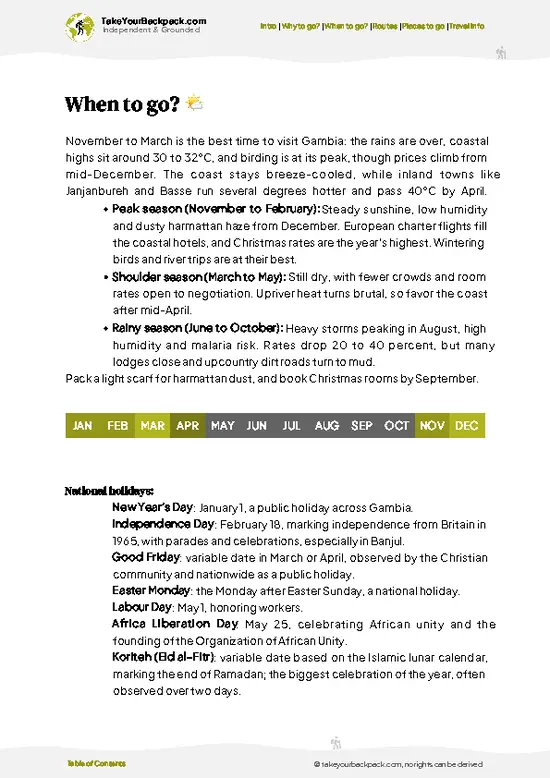
source: climatestotravel.comJANJanuary: excellent for travelingFEBFebruary: excellent for travelingMARMarch: highly recommended for travelingAPRApril: highly recommended for travelingMAYMay: good for travelingJUNJune: fair for travelingJULJuly: below average for travelingAUGAugust: below average for travelingSEPSeptember: fair for travelingOCTOctober: fair for travelingNOVNovember: highly recommended for travelingDECDecember: excellent for traveling
gambia-attraction-albert-market
© Google |

✈️ The backpacker research shortcutThe Gambia Travel Guide

An offline-friendly backpacking guide with optimized travel routes, ranked highlights, transport advice, and the best areas to stay.
example page 0 from our offline Travel Guide for Gambia
example page 1 from our offline Travel Guide for Gambia
example page 2 from our offline Travel Guide for Gambia
example page 3 from our offline Travel Guide for Gambia
example page 4 from our offline Travel Guide for Gambia
example page 5 from our offline Travel Guide for Gambia
example page 6 from our offline Travel Guide for Gambia
example page 7 from our offline Travel Guide for Gambia
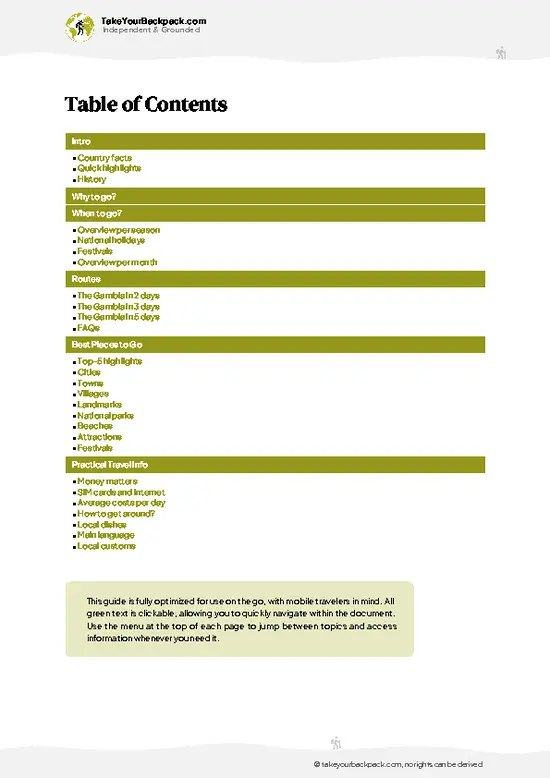
The digital guide (243 pages) contains:
57 highlights, ranked by travel appeal
Optimized 2, 3 & 5-day travel routes
Cities, national parks, landmarks, beaches
How to get around
Offline-friendly for travel without Wi-Fi
👉 Click to see all 30+ guide features

📅 Plan smarter in minutes, not weeks
Month by month travel advice
Festivals & national holidays
Budget expectations

🗺️ Go to the right places, skip the overrated ones
Honest pros & cons of destinations
Top hikes, parks & viewpoints
Lesser-known places most travelers miss
Clear “worth it vs skip it” guidance

🛏️ Travel smoothly without rookie mistakes
Best areas to stay
Transport systems explained simply
Common scams & safety advice
SIM cards, money & practical tips

🌍 Understand the country, not just visit it
Culture & traditions
52 Essential phrases & customs
Festivals worth planning around
Traveler-friendly historical context
Insights that make places more meaningful

📱 Built for real travel conditions
Fully downloadable PDF
Works completely offline
Optimized for phone use
Useful in remote areas & buses
Everything in one place
Save weeks of stressful planning
Get instant access to your full guide. 30‑day money-back guarantee.


By proceeding you agree to our terms.
Sent to your inbox immediately after payment • 100% Secure Checkout
Best Backpacking Travel Advisor 2025 tourism awardBest Backpacking
Travel Advisor
2025
What others say about Take Your Backpack Guides:
⭐⭐⭐⭐⭐
Fantastic, amazing amount of information!
⭐⭐⭐⭐⭐
My goodness this is amazing, it's what I've been looking for hats off too you!
⭐⭐⭐⭐⭐
I think this is absolutely BRILLIANT
⭐⭐⭐⭐
Very complete and informative. It's still missing places, but I gotta to commend you
⭐⭐⭐⭐⭐
This is truly amazing, thank you, can't wait to explore it with my kids!
⭐⭐⭐⭐⭐
Awesome resource, thank you!
⭐⭐⭐⭐⭐
This is amazing! Can't wait to explore the ones I haven't seen
⭐⭐⭐⭐
I love this! Well done, great idea.
⭐⭐⭐⭐⭐
Thanks for taking the time to make this gem!
⭐⭐⭐⭐⭐
This might be the best website I've ever seen.
⭐⭐⭐⭐⭐
Congratulations, and thank you so much for your work; it's incredibly valuable.
⭐⭐⭐⭐
In all seriousness I think you did a great job pointing out the important spots
⭐⭐⭐⭐⭐
10/10 very good
⭐⭐⭐⭐⭐
As someone who's only just starting to visit regularly this is awesome, thank you.
⭐⭐⭐⭐
Thank you very much! I'm going to visit my dad, it's going to be very useful!
⭐⭐⭐⭐⭐
This is really cool! We'll be travelling for the first time and this definitely come in handy.
⭐⭐⭐⭐⭐
You are now our minister of culture, congratulations 👨‍💼
⭐⭐⭐⭐⭐
Just wanted to tell you that this is a pearl! Going to follow your recommendations.
⭐⭐⭐⭐⭐
This is so cool. I'll definitely be using the resource for my travels soon.
⭐⭐⭐⭐⭐
This is very impressive! Good work.
⭐⭐⭐⭐⭐
This is an amazing and informative site. Very well done!

🛏️ Where to stay?Best areas and accommodation options

Albert Market in The Gambia is a sensory overload—colors, smells, and sounds all jostling for attention. But let’s cut through the Instagram gloss: it’s crowded, chaotic, and not always the safest place to crash nearby if you’re new to the scene. Pick your neighborhood wisely, or you’ll spend more time worrying about your stuff than soaking in the vibe.

The best areas to stay are those that balance proximity with a sense of security and social buzz. Look just outside the immediate market zone, where the streets calm down but you’re still within a short walk. These neighborhoods tend to have guesthouses … read more 👉
Albert Market in The Gambia is a sensory overload—colors, smells, and sounds all jostling for attention. But let’s cut through the Instagram gloss: it’s crowded, chaotic, and not always the safest place to crash nearby if you’re new to the scene. Pick your neighborhood wisely, or you’ll spend more time worrying about your stuff than soaking in the vibe.

The best areas to stay are those that balance proximity with a sense of security and social buzz. Look just outside the immediate market zone, where the streets calm down but you’re still within a short walk. These neighborhoods tend to have guesthouses and budget lodges that attract solo travelers and backpackers who want to swap stories over a cold drink after a day of haggling.

You want a place where locals and fellow travelers mingle, not just a quiet, isolated spot that feels like a ghost town after sundown. The right area offers easy access to street food stalls, local hangouts, and transport links without the constant pressure of market chaos. It’s about being close enough to dive into the market’s raw energy but far enough to decompress and feel safe.

In short, don’t camp right at Albert Market’s doorstep. Instead, aim for the surrounding quarters where the real magic happens after the crowds thin out—where you can connect, recharge, and experience The Gambia beyond the tourist lens.

👛 Costs (as of 5 February 2025)Money, prices, and spending tips

Albert Market in Banjul is a public open-air market with no admission fee. While entry is free, visitors often spend between €0 and €50 on purchases, depending on their interests. For example, quality fabrics range from 200 to 500 dalasi per yard, and meals typically cost between 50 and 150 dalasi. Additionally, hiring a local guide can cost between 200 and 400 dalasi.
⚠️ Prices can change and everyone travels differently, so take this as a rough guide. Hope it helps you plan your adventure!

Other Gambian attractions near Albert Market

Explore more nearby:

  • National Museum of The Gambia—historical exhibits, cultural artifacts, colonial relics| 0 km away
  • Arch 22—panoramic views, city landmark, modern monument| 1 km away
  • Lamin Lodge—mangrove creek, stilted structure, birdwatching| 9 km away

💡 Not sure where to go next?
Create a personalized itinerary for The Gambia including Albert Market and the places that fit your trip.

Generate my itinerary

👉 Discover all attractions

Or checkout all The Gambia has to offer (think cities, towns, villages, national parks, hikes, beaches, festivals)
Country photo of The Gambia

We 💚 feedbackKey takeaways before you go

Albert Market in The Gambia isn’t a polished tourist showcase—it’s loud, chaotic, and yes, crowded. But that’s exactly where its charm lives. The real magic hits when you stop rushing and let the rhythm pull you in: the calls of vendors, the scent of spices, the unexpected smiles from locals who know you’re not just another tourist. Watch your pockets, stay sharp, but don’t miss the chance to haggle over a handcrafted trinket or sample fresh groundnuts. It’s messy, it’s real, and it’s worth every second.

✍️ Help improve this page!
The information on this page is based on in-depth research, insights shared by experienced travelers, and feedback from the local travel community in The Gambia. While every effort is made to keep the information accurate and current, conditions can change — so if you spot anything incorrect or outdated, please get in touch.


🙋‍♂️ Give feedback

👋 Meet the founderWho’s Behind Take Your Backpack?

Johan, backpacker and founder of TakeYourBackpackHi, I’m Johan (Netherlands 🇳🇱), the creator of TakeYourBackpack. Over the past decade, I’ve backpacked through 80+ countries across six continents, gaining extensive experience with independent travel, long-term trips, and overland routes.

This site is built on a combination of firsthand travel experience and carefully curated insights from other backpackers. Many guides are based on places I’ve personally visited, while others bring together tips, observations, and practical advice shared by trusted travelers I’ve met along the way.

The goal is to provide realistic, experience-driven guidance — not generic itineraries — so you can explore destinations with better context, clearer expectations, and more confidence.

Get full Gambia guide •
Instant download • 57 highlights • Full Offline guide