
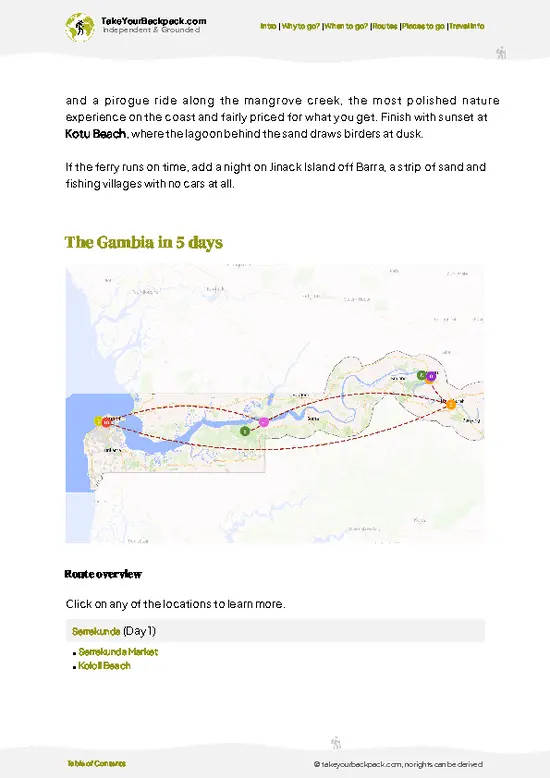
- Kunta Kinteh Island: This small island in the river, once called James Island, holds the ruins of Fort James and is a UNESCO World Heritage site. During the festival, boats carry visitors to a rough stone shoreline, where crumbling walls and an old baobab make the history feel physical. Ceremonies and wreath-laying here are quiet and moving.
- Juffureh village: The village made famous by Alex Haley’s Roots is the festival’s emotional anchor. You walk sandy lanes between mud-brick and tin-roofed compounds, meet elders and hear griots tell the story of the Kinteh family. It is a place for listening more than sightseeing.
- Albreda Slave Trade Museum: The small museum in Albreda sits in a former trading house near the river. Its exhibits explain the trade’s local routes and the people taken from this
- Kunta Kinteh Island: This small island in the river, once called James Island, holds the ruins of Fort James and is a UNESCO World Heritage site. During the festival, boats carry visitors to a rough stone shoreline, where crumbling walls and an old baobab make the history feel physical. Ceremonies and wreath-laying here are quiet and moving.
- Juffureh village: The village made famous by Alex Haley’s Roots is the festival’s emotional anchor. You walk sandy lanes between mud-brick and tin-roofed compounds, meet elders and hear griots tell the story of the Kinteh family. It is a place for listening more than sightseeing.
- Albreda Slave Trade Museum: The small museum in Albreda sits in a former trading house near the river. Its exhibits explain the trade’s local routes and the people taken from this coast. Visiting before the evening events gives the music and ceremonies real context.
- Kankurang and drum performances: Kankurang is a masked, fiber-clad figure from Mandinka tradition, and seeing one move fast through a crowd to a drumbeat is startling. Alongside it you get djembe circles, kora players and dancers, all performed in open village spaces where the sound physically hits your chest.
- Libation and homecoming ceremonies: Diaspora visitors are welcomed with prayers, speeches and offerings by village elders and festival organizers. Some arrive in tears, others in celebration, and observers are usually invited to stand respectfully nearby. These gatherings explain why the festival exists better than any program could.
Spotted a mistake or missing something? Contact us.

Full-Day Safari in Senegal from Banjul

Genuine "4 Tours In 1 Day" (south of Gambia)

Gambia to Senegal Tour with Ferry Crossing and Safari Park

Banjul City Tour - Culture and history

See It All – Safari Tour

MAKASUTU - cultural forrest, Brikama

Full-Day Gambian Home Cooking Experience in Banjul

Roots River Cruise Explore Kunta Kinteh Island and Museum

South Gambia Tour - Fishing village and Paradise Beach

 Best Backpacking
 Hi, I’m Johan (Netherlands 🇳🇱), the creator of TakeYourBackpack. Over the past 3 decades, I’ve backpacked through 90+ countries across six continents, gaining extensive experience with independent travel, long-term trips, and overland routes.