×

The Gambia🇬🇲 | villagesJuffureh
Roots heritage, riverside village, Kunta Kinteh Island access | things to do and best time to go

Explore WassuExplore Kerr Serign

Backpacking in Juffureh
🏆 Top pickvillage ranked #3
By Johan Kruseman 🇳🇱 | last update: 30 April, 2026

Your sandals crunch over red dust as the river wind brings a trace of woodsmoke and salt. Somewhere, a goat bleats, and the sun presses down—thick, insistent, but not unfriendly. This is Juffureh, a riverside village in The Gambia, about thirty kilometers upriver from Banjul. Juffureh is famous for its connection to the “Roots” story, but it’s not a museum piece; it’s a living, working place where history and daily life tangle together. For backpackers, Juffureh is less a base and more a purposeful detour—best as a day trip or a slow overnight if you want to feel the river’s pulse after the tour groups leave. There’s little nightlife, and you’ll find more conversations with locals than with other travelers. Getting here means a bumpy road or a river crossing, and costs are low but comfort is basic. Compared to Albreda or bustling Banjul, Juffureh feels quieter, more contemplative, and undeniably real—less polished, but that’s the point.

Discover everything you want to know in the 📖 The Gambia Travel Guide.
Loading the map 🌍
CLICK TO FILTER
city
town
village
unique site
national park
hike
beach
attraction
festival
SHOW COUNTRY‘S BESTSHOW ALL

✨ Why go?
Ranked #3 village in The Gambia
What sets this place apart

Juffureh draws backpackers for its strategic location along the route to some of The Gambia’s most compelling experiences. Nestled near the Gambia River, it serves as a launchpad for hikes through lush landscapes and visits to historical sites like the Kunta Kinteh Island. The walkable streets invite exploration, where you can savor local dishes at small eateries, filling the air with the scent of spicy stews and grilled fish.

Accommodations range from cozy guesthouses to budget-friendly hostels, fostering a friendly social atmosphere that appeals to solo travelers and small groups alike. You might find yourself lingering for a few days, swapping stories with fellow adventurers or simply soaking in the laid-back vibe. While Juffureh isn’t a nightlife hub, its charm lies in the community read more 👉
Juffureh draws backpackers for its strategic location along the route to some of The Gambia’s most compelling experiences. Nestled near the Gambia River, it serves as a launchpad for hikes through lush landscapes and visits to historical sites like the Kunta Kinteh Island. The walkable streets invite exploration, where you can savor local dishes at small eateries, filling the air with the scent of spicy stews and grilled fish.

Accommodations range from cozy guesthouses to budget-friendly hostels, fostering a friendly social atmosphere that appeals to solo travelers and small groups alike. You might find yourself lingering for a few days, swapping stories with fellow adventurers or simply soaking in the laid-back vibe. While Juffureh isn’t a nightlife hub, its charm lies in the community feel and the chance to connect with locals. This town suits those who appreciate a slower pace, making it a perfect stop for those looking to immerse themselves in the culture before heading to the coast or deeper into the country.
Get the complete Travel Guide for The Gambia
Everything organized for offline planning — routes, highlights, costs & tips

See what’s inside 👉

Get the Travel Guide -

💡 HighlightsThe experiences that define the visit

  • Riverside Landing and Fish Market — The daily heartbeat of Juffureh: fishermen land fresh catch from dugout canoes, buyers haggle on the sand, and the riverfront buzz gives a real window into local livelihoods and river life.
  • Alkalo’s Compound (the Chief’s Compound) — The political and social hub: traditional compound architecture, palm-thatched rooms and public meeting spots where you can learn about village governance and local customs (ask for permission before entering).
  • Site traditionally associated with Kunta Kinte’s family — A locally venerated spot tied to the Roots story; whether you come for literary history or oral tradition, villagers will share first-hand stories and family lore that bring the past alive.
  • Community Roots Exhibit / Village Visitor Stall — A small, community-run
  • read more 👉
  • Riverside Landing and Fish Market — The daily heartbeat of Juffureh: fishermen land fresh catch from dugout canoes, buyers haggle on the sand, and the riverfront buzz gives a real window into local livelihoods and river life.
  • Alkalo’s Compound (the Chief’s Compound) — The political and social hub: traditional compound architecture, palm-thatched rooms and public meeting spots where you can learn about village governance and local customs (ask for permission before entering).
  • Site traditionally associated with Kunta Kinte’s family — A locally venerated spot tied to the Roots story; whether you come for literary history or oral tradition, villagers will share first-hand stories and family lore that bring the past alive.
  • Community Roots Exhibit / Village Visitor Stall — A small, community-run display of photos, documents and memorabilia related to Alex Haley’s visit and local history; it’s modest but important for context and conversation with residents who keep the memory alive.
  • Old Mosque by the River — A peaceful, working place of worship with traditional Gambian mosque features; respectful observation during non-prayer times gives insight into daily spiritual life and local architecture.
  • The Big Baobab / Meeting Tree — A large shade tree where elders and kids gather; it’s a living landmark for storytelling, informal justice, and oral history sessions — perfect for hearing local legends and snapping portraits.
  • Village Cemetery and Local Memorials — Small graveyards and memorial markers tied to family histories and the community’s experience of the slave trade; a somber, reflective place that grounds the village’s deeper history.
  • Griot Storytelling and Music Sessions — Informal performances in homes or the compound where local griots sing genealogy, history and social songs; it’s the best way to hear history performed rather than read about it.
  • Canoe Yard and Boatbuilding Area — Watch craftsmen carve and repair the traditional pirogues used on the Gambia River; hands-on demonstrations and conversations about techniques, wood choice and river navigation are often possible.
  • Women’s Craft Workshops and Village School Visits — Small cooperatives where women make batik, beadwork or woven goods and a nearby primary school; visiting supports livelihoods, lets you buy directly from makers, and offers genuine cultural exchange (ask first before photographing children).
A few great day trips just outside Juffureh are Kunta Kinteh Island (the old “James Island”), historic Albreda village across the river, and the Tanji fish market and nearby beaches to the south.
Spotted a mistake or missing something? Contact us.

⌛️ 1 daySeeing the highlights in 24 hours

Juffureh, a small town in The Gambia, pulses with history and culture. Known as the birthplace of Kunta Kinte, it offers a deep dive into the legacy of the transatlantic slave trade. The air here carries a weight of stories, and the vibrant local life invites you to explore.

Start your morning with a stroll along the riverbank. The sun rises over the Gambia River, casting a golden hue on the water. Grab a breakfast of fresh fruit and bread from a local vendor. The sweet scent of ripe mangoes fills the air, energizing you for the day ahead. After breakfast, head to the Kunta Kinteh Island, a short boat ride away. This UNESCO site is rich in history, and wandering its paths, you can almost hear the whispers of the past.

In the afternoon, return to Juffureh and explore the village. Visit the … read more 👉
Juffureh, a small town in The Gambia, pulses with history and culture. Known as the birthplace of Kunta Kinte, it offers a deep dive into the legacy of the transatlantic slave trade. The air here carries a weight of stories, and the vibrant local life invites you to explore.

Start your morning with a stroll along the riverbank. The sun rises over the Gambia River, casting a golden hue on the water. Grab a breakfast of fresh fruit and bread from a local vendor. The sweet scent of ripe mangoes fills the air, energizing you for the day ahead. After breakfast, head to the Kunta Kinteh Island, a short boat ride away. This UNESCO site is rich in history, and wandering its paths, you can almost hear the whispers of the past.

In the afternoon, return to Juffureh and explore the village. Visit the Kunta Kinteh Museum, where you’ll find artifacts and stories that bring the history to life. Don’t miss the nearby village of Albreda, just a short walk away. It’s often overlooked by tourists, but its traditional architecture and friendly locals offer a genuine glimpse into Gambian life. Engage with the community; they’re eager to share their culture and stories.

As evening approaches, find a spot along the river to watch the sunset. The sky transforms into a canvas of oranges and purples, reflecting on the water. For dinner, seek out a local eatery serving benachin, a flavorful rice dish. The spices will dance on your palate, a perfect end to a day steeped in history and connection.

In Juffureh, every moment is an invitation to engage with the past and present, making your visit not just a trip, but a meaningful experience.
Build the Right Itinerary
Use the Gambia Travel Guide’s 2, 3 & 5-day routes as a starting point to plan a trip that actually works on the ground.

Get the Travel Guide -

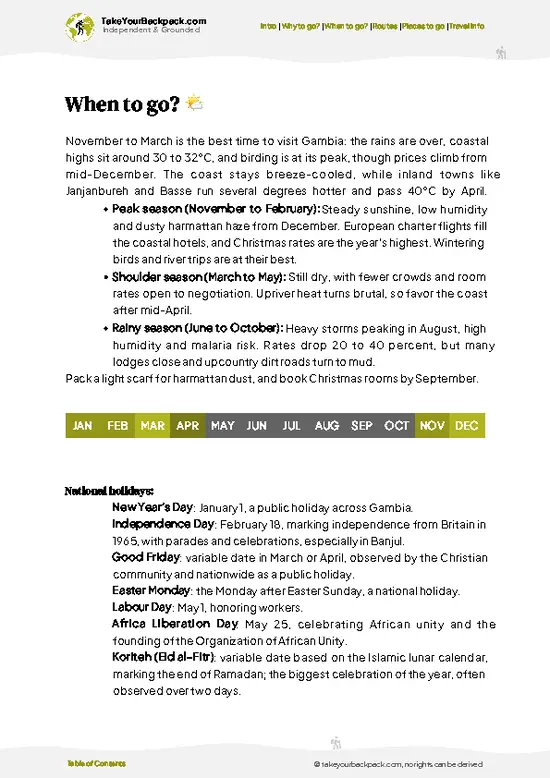
🌤️ When to go?When to go for the best experience


  • Weather: The dry season from November to May is your best bet. Expect clear skies and low humidity, which means no sticky sweat or surprise downpours messing with your plans. The wet season (June to October) brings heavy rains that can turn dirt roads into mud traps and limit your outdoor adventures.

  • Temperature: Daytime highs hover around 28-32°C (82-90°F) during the dry season, comfortable enough for trekking without overheating. Nights cool down to about 20-22°C (68-72°F), perfect for sleeping under a mosquito net without waking up drenched.

  • Daylight Hours: Daylight stays fairly consistent year-round, roughly 11 to 12 hours. But during the dry season, the mornings are crisp and clear, giving you a head start on exploring before the afternoon heat builds.

  • Crowds: Juffureh is off
  • read more 👉

  • Weather: The dry season from November to May is your best bet. Expect clear skies and low humidity, which means no sticky sweat or surprise downpours messing with your plans. The wet season (June to October) brings heavy rains that can turn dirt roads into mud traps and limit your outdoor adventures.

  • Temperature: Daytime highs hover around 28-32°C (82-90°F) during the dry season, comfortable enough for trekking without overheating. Nights cool down to about 20-22°C (68-72°F), perfect for sleeping under a mosquito net without waking up drenched.

  • Daylight Hours: Daylight stays fairly consistent year-round, roughly 11 to 12 hours. But during the dry season, the mornings are crisp and clear, giving you a head start on exploring before the afternoon heat builds.

  • Crowds: Juffureh is off the beaten path, so crowds are minimal almost any time. However, the dry season draws more international visitors, so expect a livelier atmosphere and better chances to meet fellow travelers.

  • Seasonal Activities: Dry months are prime for river excursions, village tours, and cultural events. The wet season can limit access to some areas and dampen festival schedules, so plan accordingly if you want to dive into local life.

  • Price Fluctuations: Accommodation and transport costs tend to rise slightly during the dry season due to demand. Booking ahead can lock in better rates, especially if you’re aiming for guesthouses or guided tours.


Pro-tip: Aim for the shoulder months of November or May to catch pleasant weather, fewer tourists, and better prices—a sweet spot where Juffureh’s charm shines without the hassle.


source: climatestotravel.comJANJanuary: excellent for travelingFEBFebruary: excellent for travelingMARMarch: excellent for travelingAPRApril: excellent for travelingMAYMay: highly recommended for travelingJUNJune: fair for travelingJULJuly: fair for travelingAUGAugust: fair for travelingSEPSeptember: fair for travelingOCTOctober: fair for travelingNOVNovember: highly recommended for travelingDECDecember: excellent for traveling
when-to-go

✈️ The ultimate backpacker shortcutThe Gambia Travel Guide

Skip weeks of stressful planning and hit the road with confidence. Our backpacking travel guides are designed specifically for independent travelers who want practical information, realistic itineraries, and honest advice they can actually use on the ground.
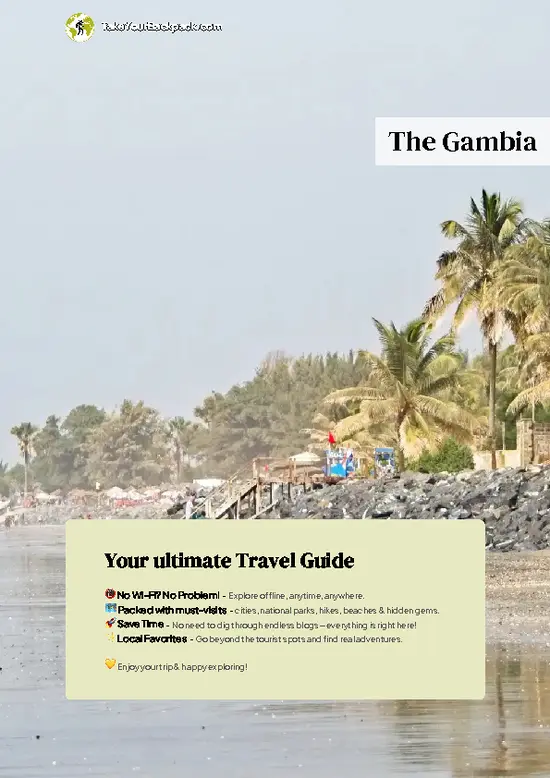
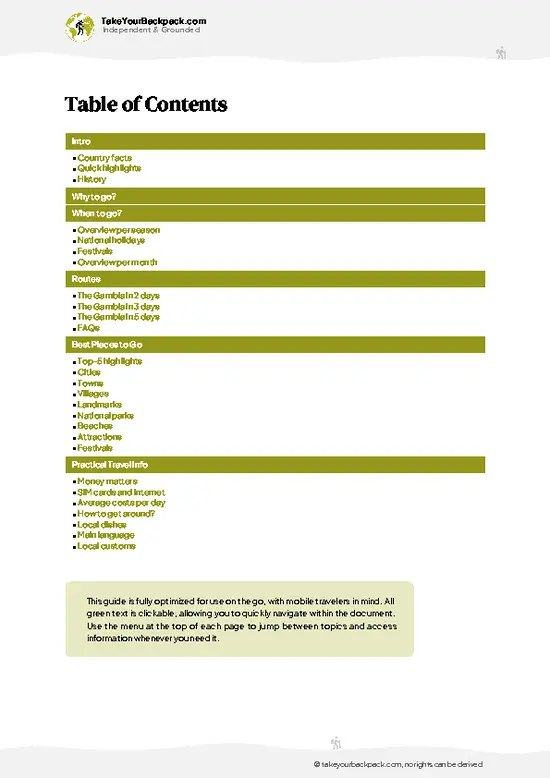
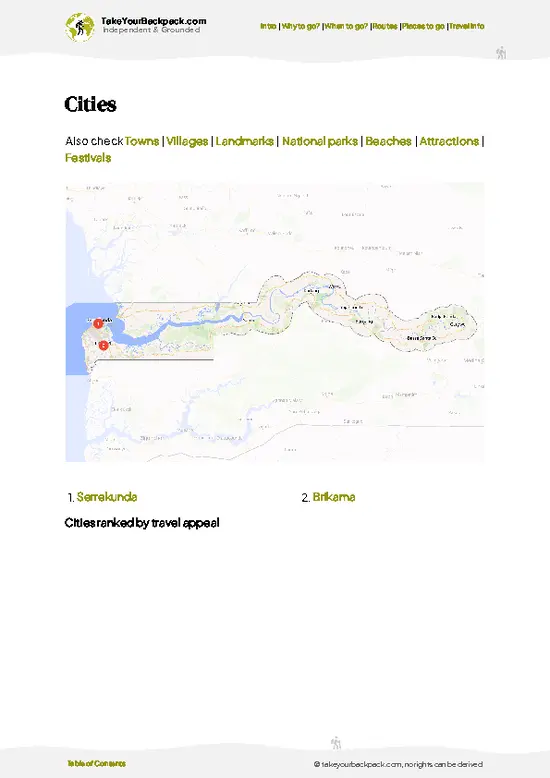
example page 0 from our offline Travel Guide for Gambiaexample page 1 from our offline Travel Guide for Gambiaexample page 2 from our offline Travel Guide for Gambiaexample page 3 from our offline Travel Guide for Gambiaexample page 4 from our offline Travel Guide for Gambia
The guide (196 pages) contains:
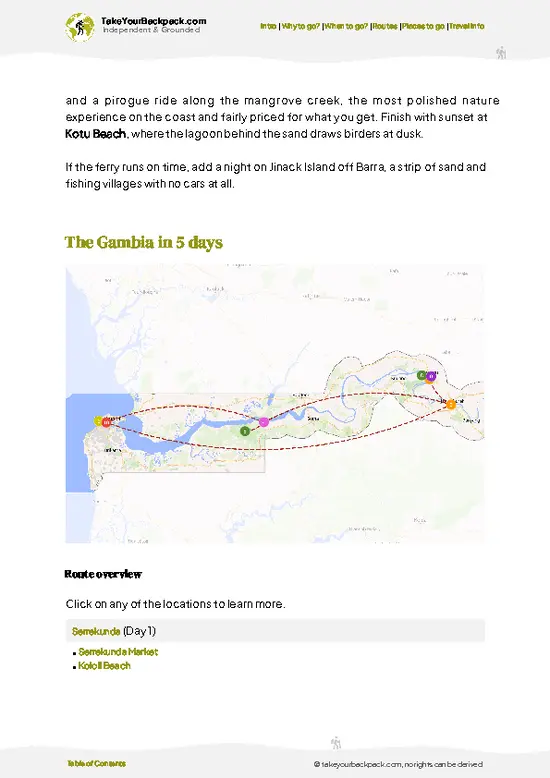
2, 3 & 5-day routes paced for real travel
56 ranked highlights with honest advice
Logistics solved: Best areas to stay & transport
Safety: Common local scams to avoid
No Wi-Fi? No problem: Phone-optimized offline PDF
👉 See all 30+ guide features

📅 Plan smarter in minutes, not weeks
Realistic travel times & pacing
Best months per region
Festivals & national holidays
Budget expectations

🗺️ Go to the right places, skip the overrated ones
56 ranked highlights across the country
Hidden gems beyond the tourist trail
Honest pros & cons of destinations
Top hikes, parks & viewpoints
Lesser-known places most travelers miss
Clear “worth it vs skip it” guidance

🛏️ Travel smoothly without rookie mistakes
Best areas to stay
Transport systems explained simply
Local transport tradeoffs
Common scams & safety advice
SIM cards, money & practical tips
What to expect before arrival

🌍 Understand the country, not just visit it
Culture & traditions
52 Essential phrases & customs
Festivals worth planning around
Traveler-friendly historical context
Insights that make places more meaningful

📱 Built for real travel conditions
Fully downloadable PDF
Works completely offline
Optimized for phone use
Useful in remote areas & buses
Everything in one place
Save weeks of stressful planning
Get instant access to the full guide directly. 30-day money-back guarantee.


Sent to your inbox immediately after payment • 100% Secure Checkout
Best Backpacking Travel Advisor 2025 tourism awardBest Backpacking
Travel Advisor
2025
What others say about Take Your Backpack Guides:
⭐⭐⭐⭐⭐
Fantastic, amazing amount of information!
⭐⭐⭐⭐⭐
My goodness this is amazing, it's what I've been looking for hats off too you!
⭐⭐⭐⭐⭐
I think this is absolutely BRILLIANT
⭐⭐⭐⭐
Very complete and informative. It's still missing places, but I gotta to commend you
⭐⭐⭐⭐⭐
This is truly amazing, thank you, can't wait to explore it with my kids!
⭐⭐⭐⭐⭐
Awesome resource, thank you!
⭐⭐⭐⭐⭐
This is amazing! Can't wait to explore the ones I haven't seen
⭐⭐⭐⭐
I love this! Well done, great idea.
⭐⭐⭐⭐⭐
Thanks for taking the time to make this gem!
⭐⭐⭐⭐⭐
This might be the best website I've ever seen.
⭐⭐⭐⭐⭐
Congratulations, and thank you so much for your work; it's incredibly valuable.
⭐⭐⭐⭐
In all seriousness I think you did a great job pointing out the important spots
⭐⭐⭐⭐⭐
10/10 very good
⭐⭐⭐⭐⭐
As someone who's only just starting to visit regularly this is awesome, thank you.
⭐⭐⭐⭐
Thank you very much! I'm going to visit my dad, it's going to be very useful!
⭐⭐⭐⭐⭐
This is really cool! We'll be travelling for the first time and this definitely come in handy.
⭐⭐⭐⭐⭐
You are now our minister of culture, congratulations 👨‍💼
⭐⭐⭐⭐⭐
Just wanted to tell you that this is a pearl! Going to follow your recommendations.
⭐⭐⭐⭐⭐
This is so cool. I'll definitely be using the resource for my travels soon.
⭐⭐⭐⭐⭐
This is very impressive! Good work.
⭐⭐⭐⭐⭐
This is an amazing and informative site. Very well done!

🛏️ Where to stay?How to pick the right area

Juffureh is a small village, so your choices for staying put are naturally limited, but that’s part of its charm. The best spot for backpackers is the area near the riverfront, where the village’s pulse is strongest. This stretch hums with local life—fishermen hauling nets, children darting between huts, and the scent of smoky fires mingling with the fresh river breeze. It’s safe because it’s where the community gathers, and that means you’re never truly alone, even if you’re traveling solo.

Hostels here are modest but welcoming, often run by locals who double as guides or storytellers. Staying … read more 👉
Juffureh is a small village, so your choices for staying put are naturally limited, but that’s part of its charm. The best spot for backpackers is the area near the riverfront, where the village’s pulse is strongest. This stretch hums with local life—fishermen hauling nets, children darting between huts, and the scent of smoky fires mingling with the fresh river breeze. It’s safe because it’s where the community gathers, and that means you’re never truly alone, even if you’re traveling solo.

Hostels here are modest but welcoming, often run by locals who double as guides or storytellers. Staying close to the riverfront means easy access to communal spaces where you can swap stories with other travelers or join impromptu music sessions under the open sky. Compared to the quieter, more residential edges of Juffureh, this area offers a social vibe without the noise or chaos of a big town.

If you wander too far inland, you lose that connection to the river’s rhythm and the village’s heartbeat. So, anchor yourself where the light hits the water just right at sunset, and let the village’s slow, steady energy carry you through your stay.

🚌 Getting aroundHow to get around Juffureh

Juffureh moves at its own rhythm, a slow pulse shaped by the river’s steady flow and the unhurried pace of village life. There’s no rush here, no strict timetable to obey—just the sun climbing and dipping, fishermen hauling nets, and children’s laughter drifting through the air. The scent of saltwater mingles with earth and smoke from cooking fires, grounding you in a place where time feels elastic. To navigate Juffureh like a local, you’ll need to embrace this gentle chaos, leaning into intuition over rigid schedules. It’s less about catching a bus at a precise moment and more about reading the mood of the day, spotting the right ride when it rolls by, and walking where the path calls you.


  • Walking: The heart of Juffureh’s transit. The village is compact, and most sights are within easy
  • read more 👉
Juffureh moves at its own rhythm, a slow pulse shaped by the river’s steady flow and the unhurried pace of village life. There’s no rush here, no strict timetable to obey—just the sun climbing and dipping, fishermen hauling nets, and children’s laughter drifting through the air. The scent of saltwater mingles with earth and smoke from cooking fires, grounding you in a place where time feels elastic. To navigate Juffureh like a local, you’ll need to embrace this gentle chaos, leaning into intuition over rigid schedules. It’s less about catching a bus at a precise moment and more about reading the mood of the day, spotting the right ride when it rolls by, and walking where the path calls you.


  • Walking: The heart of Juffureh’s transit. The village is compact, and most sights are within easy reach on foot. Walking lets you soak in the smells of fresh river fish, the texture of sun-warmed mud walls, and the chatter of market vendors. It’s free, flexible, and the best way to catch the village’s true atmosphere.


  • Shared Minibuses (Local Tro-Tros): These are the budget traveler’s lifeline for reaching nearby towns like Jangjangbureh or Banjul. They don’t run on a strict schedule—expect departures when the vehicle fills up, usually between 7 a.m. and 5 p.m. The fare is low, around 50-100 Dalasi, but comfort is basic and space tight. It’s a social experience, with locals chatting, bargaining, and sometimes squeezing in extra passengers.


  • Motorbike Taxis (Okadas): For short hops within Juffureh or quick trips to the riverbank, motorbike taxis are nimble and affordable, typically costing 20-50 Dalasi. They’re perfect when you want to save time or avoid muddy paths after rain. Hold on tight—the ride is bumpy, and the wind carries the scent of river and dust in equal measure.


  • Boat Ferries: Crossing the Gambia River is a must for exploring the region beyond Juffureh. Ferries run irregularly, often timed with tides and demand, so flexibility is key. The fare is modest, usually under 100 Dalasi. The ride offers a cool breeze and panoramic views of mangroves and river life, a sensory reward for the wait.

👛 Costs (as of 10 February 2025)What things cost and how to budget

Backpacking in Juffureh, The Gambia, is a raw, earthy experience where your budget stretches further than in many other West African spots, but it’s essential to know where your money goes to keep things smooth and simple.
  • Dorm Accommodation: Expect to pay around €5 to €10 per night for a basic dorm bed. These places are no-frills—think mosquito nets, shared bathrooms, and a fan or two. The charm is in the simplicity, but don’t expect luxury; it’s about being close to the river and the village vibe.
  • Meals: Local meals run about €2 to €4 each. Street food and small local eateries serve up hearty, spicy rice dishes, fresh fish, and stews. Eating where the locals do means fresh flavors and a chance to soak in the smells of smoky fires and fresh herbs, all without breaking the bank.
  • Local Transport:
  • read more 👉
Backpacking in Juffureh, The Gambia, is a raw, earthy experience where your budget stretches further than in many other West African spots, but it’s essential to know where your money goes to keep things smooth and simple.
  • Dorm Accommodation: Expect to pay around €5 to €10 per night for a basic dorm bed. These places are no-frills—think mosquito nets, shared bathrooms, and a fan or two. The charm is in the simplicity, but don’t expect luxury; it’s about being close to the river and the village vibe.
  • Meals: Local meals run about €2 to €4 each. Street food and small local eateries serve up hearty, spicy rice dishes, fresh fish, and stews. Eating where the locals do means fresh flavors and a chance to soak in the smells of smoky fires and fresh herbs, all without breaking the bank.
  • Local Transport: Getting around Juffureh is mostly by shared taxis or pirogues (small boats). Shared taxis cost roughly €0.50 to €1 per trip within the area. If you want to explore nearby villages or the river, boat rides can be around €3 to €5. The slow pace and open air make transport part of the adventure.
  • Basic Activities/Entry Fees: Visiting historical sites or cultural tours typically cost between €3 and €7. These fees often go directly to local guides or community projects, so you’re supporting the village while learning about its deep roots in Gambian history.
  • Miscellaneous Expenses: Budget around €1 to €3 daily for essentials like bottled water, snacks, or small souvenirs. Electricity can be spotty, so charging devices might cost a small fee if you’re not staying somewhere with reliable power.

All told, a realistic daily budget for backpacking in Juffureh ranges from about €12 to €25. This keeps you comfortably covered without cutting corners, letting you focus on the slow rhythm of village life, the river’s scent, and the stories that float through the air.


source: visitthegambia.gm
⚠️ Prices can change and everyone travels differently, so take this as a rough guide. Hope it helps you plan your adventure!

🚌 Day tripsBest day trips from Juffureh

Juffureh is a fantastic base for exploring the rich tapestry of The Gambia. With its laid-back vibe and proximity to key sites, you can dive into the heart of Gambian culture and history without breaking a sweat.

Roots of the River
Take a boat trip along the Gambia River to visit the historic village of Albreda. The gentle sway of the boat, the scent of the river mingling with the earthy aroma of mangroves, sets the stage. You’ll explore the remnants of the slave trade, including the haunting Kunta Kinteh Island. It’s about a 30-minute ride, costing around 200 dalasi. Early morning is best; the light on the water is magical, and the wildlife is more active. A common mistake? Forgetting to bring a good camera—this is a place where every shot tells a story.


Nature’s Classroom
Head to … read more 👉
Juffureh is a fantastic base for exploring the rich tapestry of The Gambia. With its laid-back vibe and proximity to key sites, you can dive into the heart of Gambian culture and history without breaking a sweat.

Roots of the River
Take a boat trip along the Gambia River to visit the historic village of Albreda. The gentle sway of the boat, the scent of the river mingling with the earthy aroma of mangroves, sets the stage. You’ll explore the remnants of the slave trade, including the haunting Kunta Kinteh Island. It’s about a 30-minute ride, costing around 200 dalasi. Early morning is best; the light on the water is magical, and the wildlife is more active. A common mistake? Forgetting to bring a good camera—this is a place where every shot tells a story.


Nature’s Classroom
Head to the nearby Tanji Bird Reserve for a day of birdwatching and nature walks. Just a 45-minute bus ride from Juffureh, you’ll find yourself enveloped in the sounds of chirping and rustling leaves. Entry is about 50 dalasi, and the best time to visit is during the dry season when migratory birds flock here. Bring snacks and water; the trails can be longer than expected. Many first-timers overlook the importance of a good pair of binoculars—trust me, you’ll want to see those birds up close.
👉 Explore Tanji Bird Reserve

Market Day in Banjul
A trip to Banjul, the capital, is a must. It’s about an hour’s journey by bus, costing around 30 dalasi. The vibrant colors and scents of the Albert Market will hit you as soon as you step off the bus. Fresh produce, spices, and textiles create a sensory overload. Weekdays are best for a less crowded experience. A common rookie mistake is not haggling; it’s part of the fun and can save you a few dalasi.
👉 Explore Banjul

Serrekunda’s Pulse
For a taste of local life, visit Serrekunda, just 30 minutes away. The bustling markets and street food stalls offer a real slice of Gambian culture. Expect to spend around 100 dalasi for food and drinks. Late afternoon is ideal; the atmosphere buzzes with energy. Many newcomers miss out on trying the local dishes—don’t skip the benachin (jollof rice) from a street vendor.
👉 Explore Serrekunda
Want to know what more The Gambia offers?
The Gambia Travel Guide describes 56 highlights, from cities to national parks, from beaches to hikes

Get the Travel Guide -

🛡️ SafetyScams, Hazards, and Annoyances

Juffureh, The Gambia, is generally safe, but a few practical tips can enhance your experience. The town’s charm lies in its simplicity, yet it’s wise to stay aware, especially near the riverfront where locals gather. Keep your belongings close; petty theft can happen in crowded areas.

If you’re traveling solo, avoid wandering too far after dark. The atmosphere shifts, and while locals are friendly, it’s best to stick to well-lit paths.

Watch for common scams, like overly eager guides offering unsolicited tours. Politely decline and seek out reputable services instead.

Annoyances can include persistent vendors; a friendly but firm “no, thank you” usually does the trick. Embrace the local pace, and remember that patience is part of the journey. With a little awareness, you’ll unlock the true essence of Juffureh.

Other Gambian villages near Juffureh

Explore more nearby:

  • Kerr Serign—expat enclave, guesthouses, sandy lanes| 40 km away
  • Tendaba—riverbank lodges, birdwatching base, mangrove creeks| 61 km away

👉 Discover all villages

Or checkout all The Gambia has to offer (think cities, towns, villages, national parks, hikes, beaches, festivals)
Country photo of The Gambia

We 💚 feedbackParting advice and final tips

Juffureh has a raw, authentic vibe that pulls you in. The scent of the river mingles with the earthy aroma of local dishes, creating a sensory feast. Don’t miss the storytelling sessions; they’re a beautiful surprise that connects you to the past. Just be ready for the heat—it can be intense, so hydrate and pace yourself. Embrace the slow rhythm here; it’s part of the charm. You’ll leave with a deeper understanding of history and a heart full of stories.

✍️ Help improve this page!
The information on this page is based on in-depth research, insights shared by experienced travelers, and feedback from the local travel community in The Gambia. While every effort is made to keep the information accurate and current, conditions can change — so if you spot anything incorrect or outdated, please get in touch.


🙋‍♂️ Give feedback

👋 Meet the founderWho’s Behind Take Your Backpack?

Johan, backpacker and founder of TakeYourBackpackHi, I’m Johan (Netherlands 🇳🇱), the creator of TakeYourBackpack. Over the past decade, I’ve backpacked through 80+ countries across six continents, gaining extensive experience with independent travel, long-term trips, and overland routes.

This site is built on a combination of firsthand travel experience and carefully curated insights from other backpackers. Many guides are based on places I’ve personally visited, while others bring together tips, observations, and practical advice shared by trusted travelers I’ve met along the way.

The goal is to provide realistic, experience-driven guidance — not generic itineraries — so you can explore destinations with better context, clearer expectations, and more confidence.

Get Full Country Guide |
Instant download • 56 highlights • Full Offline guide