×

The Gambia🇬🇲 | citiesSerrekundabustling street markets, urban sprawl, neighborhood football pitches | things to do and best time to go

Explore BrikamaExplore Banjul International Food and Beverage Fair

Backpacking in Serrekunda
🏆 Top pickcity ranked #1
By Johan Kruseman 🇳🇱 | Updated June 10, 2026

Serrekunda used to be a sleepy sprawl of sandy lanes and market stalls, a place where the only traffic jam was a herd of goats. Now, it’s the pulsing, chaotic heart of The Gambia—where minibuses honk, music spills from every corner, and the air smells like grilled fish and ambition. Just a few kilometers inland from the Atlantic coast, Serrekunda is the country’s largest city, but don’t expect skyscrapers or polished plazas. Backpackers land here for the real-life energy: the labyrinthine market (a sensory overload in the best way), the faded colonial-era buildings, and the chance to watch wrestling matches that feel more like block parties. It’s cheap—dirt cheap—but comfort is basic, and the city’s rough edges are very real. You’ll meet locals easily, but other travelers are fewer than in the beach towns. Safety is mostly about petty theft and pickpockets, not violence. Compared to Banjul, Serrekunda is less formal, more alive, and infinitely more interesting—if you’re willing to trade predictability for pulse.

Discover everything you want to know in the 📖 The Gambia Travel Guide.


Get your Gambia guide
57 ranked highlights, routes & tips, works offline (243 pages)
Loading the map 🌍
CLICK TO FILTER
cities
towns
villages
landmarks
national parks
hikes
beaches
attractions
festivals
SHOW COUNTRY’S BESTSHOW ALL

✨ Why go?
Ranked #1 city in The Gambia
The unique appeal for travelers

Serrekunda is a backpacker’s hub in The Gambia, offering a blend of affordability and accessibility that makes it a smart choice for your route. First off, the hostels here are not just cheap; they’re social spaces where you can swap stories and tips with fellow travelers. The food scene is diverse, from street vendors serving up local dishes to cozy cafes where you can recharge.

You’ll find that the city is walkable, making it easy to explore without burning through your budget on transport. Plus, it’s a great base for day trips to nearby attractions, allowing you to maximize your experience without the hassle of constant packing and unpacking.

The nightlife is lively but not overwhelming, offering just enough to unwind after a day of exploration. If you’re looking to move on, Serrekunda’s … read more 👉
Serrekunda is a backpacker’s hub in The Gambia, offering a blend of affordability and accessibility that makes it a smart choice for your route. First off, the hostels here are not just cheap; they’re social spaces where you can swap stories and tips with fellow travelers. The food scene is diverse, from street vendors serving up local dishes to cozy cafes where you can recharge.

You’ll find that the city is walkable, making it easy to explore without burning through your budget on transport. Plus, it’s a great base for day trips to nearby attractions, allowing you to maximize your experience without the hassle of constant packing and unpacking.

The nightlife is lively but not overwhelming, offering just enough to unwind after a day of exploration. If you’re looking to move on, Serrekunda’s connections to other parts of The Gambia are straightforward, making onward travel a breeze.

In short, if you’re after a place that balances high-value experiences with the comforts of home, Serrekunda is worth considering—whether for a longer stay or a quick pit stop.
Want to include Serrekunda in your The Gambia route?
Create a personalized The Gambia itinerary that includes Serrekunda and the places that fit your trip — based on your travel style, budget, and available time. Get your route in seconds.

Generate my trip

💡 HighlightsDon't-miss highlights and experiences

  1. Serrekunda Market — The city’s sprawling open-air market is the real heartbeat of Serrekunda: endless alleys of fabric, fresh produce, spices, secondhand clothes, phone parts and household goods. It’s the best place to haggle, watch daily life, and pick up locally made souvenirs at budget prices.
  2. Craft and woodcarver stalls around the market — Clustered on the market’s edges are independent woodcarvers and craft vendors selling carved masks, statuettes, batik and woven goods. Visiting these stalls gives a close look at Gambian craftsmanship and lets you buy directly from the makers.
  3. Serrekunda bus park and main street scene — The transport hub is chaotic in the best way: shared taxis and minibuses, street food stalls, barbers and tailors, and herbalists. Walking through the bus park and
read more 👉
  1. Serrekunda Market — The city’s sprawling open-air market is the real heartbeat of Serrekunda: endless alleys of fabric, fresh produce, spices, secondhand clothes, phone parts and household goods. It’s the best place to haggle, watch daily life, and pick up locally made souvenirs at budget prices.
  2. Craft and woodcarver stalls around the market — Clustered on the market’s edges are independent woodcarvers and craft vendors selling carved masks, statuettes, batik and woven goods. Visiting these stalls gives a close look at Gambian craftsmanship and lets you buy directly from the makers.
  3. Serrekunda bus park and main street scene — The transport hub is chaotic in the best way: shared taxis and minibuses, street food stalls, barbers and tailors, and herbalists. Walking through the bus park and the adjoining streets is the fastest, cheapest way to soak up authentic urban Gambian life and practice bargaining and people-watching.
A few real, visitable highlights just outside Serrekunda that make easy day trips are Bakau’s Kachikally Crocodile Pool, Bijilo Forest Park (Monkey Park), and the Kotu/Kololi beach strip.
Spotted a mistake or missing something? Contact us.

Things to do near Serrekunda

Ratings based on Tripadvisor reviews. When you book through this link, you support our work at no extra cost to you.

🏘️ NeighborhoodsKey areas and districts to know

Serrekunda is the bustling heart of The Gambia, where the rhythm of daily life pulses through the streets. Each neighborhood offers a unique flavor, catering to different backpacker needs. Here’s how to navigate your options:

Serrekunda Market: This area is a sensory overload, filled with vibrant stalls and local vendors. It’s perfect for budget travelers seeking authentic experiences. The market is walkable, but be prepared for crowds. Nightlife is lively, with street food and music, making it ideal for short stays.

Kotu: Known for its laid-back beach vibe, Kotu is a haven for those wanting to relax. Accommodations range from budget hostels to mid-range hotels. The beach is a short walk away, and the nightlife is more subdued, focusing on beach bars. Great for longer stays if you want to … read more 👉
Serrekunda is the bustling heart of The Gambia, where the rhythm of daily life pulses through the streets. Each neighborhood offers a unique flavor, catering to different backpacker needs. Here’s how to navigate your options:

Serrekunda Market: This area is a sensory overload, filled with vibrant stalls and local vendors. It’s perfect for budget travelers seeking authentic experiences. The market is walkable, but be prepared for crowds. Nightlife is lively, with street food and music, making it ideal for short stays.

Kotu: Known for its laid-back beach vibe, Kotu is a haven for those wanting to relax. Accommodations range from budget hostels to mid-range hotels. The beach is a short walk away, and the nightlife is more subdued, focusing on beach bars. Great for longer stays if you want to unwind.

Kololi: This area caters to a more touristy crowd, with a mix of bars, restaurants, and shops. It’s walkable, but you might want to use local transport for longer distances. The nightlife is vibrant, making it suitable for social backpackers. Short stays work well here, especially if you enjoy a lively atmosphere.

Brikama: A bit further from the coast, Brikama offers a more local experience. It’s less touristy, with a focus on culture and community. Transport access is decent, but walking can be less convenient. Ideal for longer stays if you want to immerse yourself in Gambian life.

Each area has its trade-offs. Choose wisely based on what you value most: time, money, or comfort.

⌛️ 1 daySeeing the highlights in 24 hours

Serrekunda, the bustling heart of The Gambia, pulses with life and culture. It’s a place where the vibrant markets hum with chatter, and the scent of grilled fish wafts through the air. This city offers a unique blend of local flavor and everyday Gambian life, making it a perfect spot for a day of exploration.

Start your morning at the Serrekunda Market. This isn’t just a shopping destination; it’s a sensory experience. Dive into the maze of stalls filled with colorful fabrics, fresh produce, and handmade crafts. Engage with local vendors; they often have stories to share that add depth to your visit. Grab a breakfast of “buns,” sweet fried dough balls, from a nearby vendor. They’re a local favorite and will fuel your adventures ahead.

After soaking in the market’s energy, head to the nearby … read more 👉
Serrekunda, the bustling heart of The Gambia, pulses with life and culture. It’s a place where the vibrant markets hum with chatter, and the scent of grilled fish wafts through the air. This city offers a unique blend of local flavor and everyday Gambian life, making it a perfect spot for a day of exploration.

Start your morning at the Serrekunda Market. This isn’t just a shopping destination; it’s a sensory experience. Dive into the maze of stalls filled with colorful fabrics, fresh produce, and handmade crafts. Engage with local vendors; they often have stories to share that add depth to your visit. Grab a breakfast of “buns,” sweet fried dough balls, from a nearby vendor. They’re a local favorite and will fuel your adventures ahead.

After soaking in the market’s energy, head to the nearby Kachikally Crocodile Pool in Bakau, a short taxi ride away. This serene spot is home to sacred crocodiles and offers a glimpse into local traditions. You can even touch the crocodiles if you’re feeling brave. It’s a rare experience that most tourists miss, giving you a unique story to tell.

In the afternoon, return to Serrekunda and explore the vibrant neighborhood of Fajara. Here, you can stroll along the beach or relax at a local café. Try the “domoda,” a peanut stew, at a small eatery. It’s hearty and delicious, a true taste of Gambian cuisine.

As evening approaches, make your way to the coastal town of Tanji, just a short drive from Serrekunda. The sunset over the Atlantic is breathtaking. Enjoy a seafood dinner at one of the beachside restaurants, where the catch of the day is often grilled to perfection.

This day in Serrekunda is a blend of culture, cuisine, and local life. Each moment is a choice, balancing time, money, and comfort, but the high-value experiences you gain are well worth it.
Turn your Serrekunda visit into an The Gambia adventure
Build a complete The Gambia route with Serrekunda, hidden gems, must-see destinations, and realistic travel times included.

Generate my trip

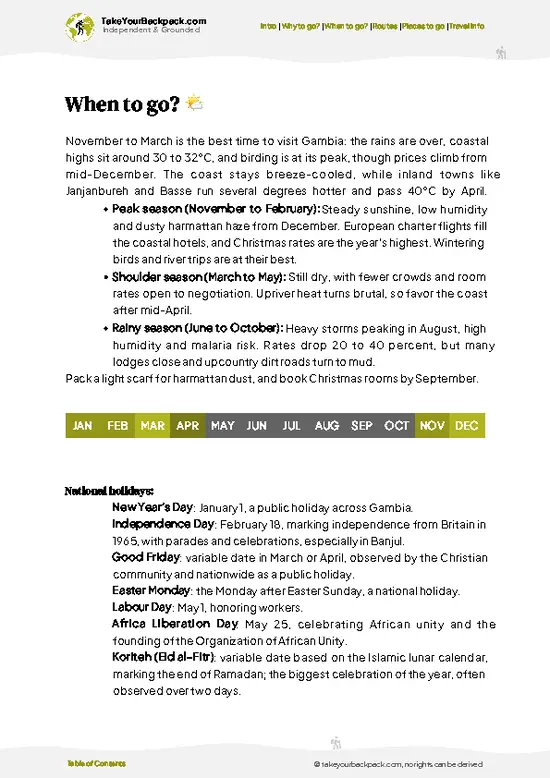
🌤️ When to go?When to go for the best experience


  • Topic: Weather — Serrekunda’s dry season, from November to May, offers clear skies and minimal rain, making it the prime window for backpackers who want to avoid soggy gear and muddy trails. The wet season, June to October, brings heavy rains that can disrupt plans and limit outdoor activities.

  • Topic: Temperature — Expect daytime highs around 30-35°C (86-95°F) during the dry season, which is warm but manageable with proper hydration and sun protection. The wet season cools slightly but feels more humid, pushing discomfort levels higher despite lower temperatures.

  • Topic: Daylight Hours — Near the equator, Serrekunda enjoys roughly 11-12 hours of daylight year-round. This consistency means you don’t have to juggle drastically changing daylight when planning daily hikes or city explorations.
read more 👉

  • Topic: Weather — Serrekunda’s dry season, from November to May, offers clear skies and minimal rain, making it the prime window for backpackers who want to avoid soggy gear and muddy trails. The wet season, June to October, brings heavy rains that can disrupt plans and limit outdoor activities.

  • Topic: Temperature — Expect daytime highs around 30-35°C (86-95°F) during the dry season, which is warm but manageable with proper hydration and sun protection. The wet season cools slightly but feels more humid, pushing discomfort levels higher despite lower temperatures.

  • Topic: Daylight Hours — Near the equator, Serrekunda enjoys roughly 11-12 hours of daylight year-round. This consistency means you don’t have to juggle drastically changing daylight when planning daily hikes or city explorations.

  • Topic: Crowds — Peak tourist influx aligns with the dry season, especially December through February, which means higher prices and busier hostels. Traveling shoulder months like November or March balances fewer crowds with good weather.

  • Topic: Seasonal Activities — Dry season unlocks cultural festivals and outdoor markets, giving you authentic local experiences. The wet season’s lush landscapes are tempting but often inaccessible due to rain-swollen paths.

  • Topic: Price Fluctuations — Accommodation and transport costs spike during peak dry months. Budget travelers can save by booking in shoulder seasons or even the early wet season, but must weigh savings against potential weather disruptions.


Pro-tip: Aim for late November or early March to hit the sweet spot—good weather, manageable crowds, and better prices—turning your Serrekunda trip into a strategic win rather than a gamble.


source: climatestotravel.comJANJanuary: highly recommended for travelingFEBFebruary: highly recommended for travelingMARMarch: highly recommended for travelingAPRApril: good for travelingMAYMay: good for travelingJUNJune: fair for travelingJULJuly: fair for travelingAUGAugust: fair for travelingSEPSeptember: fair for travelingOCTOctober: fair for travelingNOVNovember: highly recommended for travelingDECDecember: highly recommended for traveling
when-to-go

✈️ The backpacker research shortcutThe Gambia Travel Guide

An offline-friendly backpacking guide with optimized travel routes, ranked highlights, transport advice, and the best areas to stay.
example page 0 from our offline Travel Guide for Gambia
example page 1 from our offline Travel Guide for Gambia
example page 2 from our offline Travel Guide for Gambia
example page 3 from our offline Travel Guide for Gambia
example page 4 from our offline Travel Guide for Gambia
example page 5 from our offline Travel Guide for Gambia
example page 6 from our offline Travel Guide for Gambia
example page 7 from our offline Travel Guide for Gambia
The digital guide (243 pages) contains:
57 highlights, ranked by travel appeal
Optimized 2, 3 & 5-day travel routes
Cities, national parks, landmarks, beaches
How to get around
Offline-friendly for travel without Wi-Fi
👉 Click to see all 30+ guide features

📅 Plan smarter in minutes, not weeks
Month by month travel advice
Festivals & national holidays
Budget expectations

🗺️ Go to the right places, skip the overrated ones
Honest pros & cons of destinations
Top hikes, parks & viewpoints
Lesser-known places most travelers miss
Clear “worth it vs skip it” guidance

🛏️ Travel smoothly without rookie mistakes
Best areas to stay
Transport systems explained simply
Common scams & safety advice
SIM cards, money & practical tips

🌍 Understand the country, not just visit it
Culture & traditions
52 Essential phrases & customs
Festivals worth planning around
Traveler-friendly historical context
Insights that make places more meaningful

📱 Built for real travel conditions
Fully downloadable PDF
Works completely offline
Optimized for phone use
Useful in remote areas & buses
Everything in one place
Save weeks of stressful planning
Get instant access to your full guide. 30‑day money-back guarantee.


By proceeding you agree to our terms.
Sent to your inbox immediately after payment • 100% Secure Checkout
Best Backpacking Travel Advisor 2025 tourism awardBest Backpacking
Travel Advisor
2025
What others say about Take Your Backpack Guides:
⭐⭐⭐⭐⭐
Fantastic, amazing amount of information!
⭐⭐⭐⭐⭐
My goodness this is amazing, it's what I've been looking for hats off too you!
⭐⭐⭐⭐⭐
I think this is absolutely BRILLIANT
⭐⭐⭐⭐
Very complete and informative. It's still missing places, but I gotta to commend you
⭐⭐⭐⭐⭐
This is truly amazing, thank you, can't wait to explore it with my kids!
⭐⭐⭐⭐⭐
Awesome resource, thank you!
⭐⭐⭐⭐⭐
This is amazing! Can't wait to explore the ones I haven't seen
⭐⭐⭐⭐
I love this! Well done, great idea.
⭐⭐⭐⭐⭐
Thanks for taking the time to make this gem!
⭐⭐⭐⭐⭐
This might be the best website I've ever seen.
⭐⭐⭐⭐⭐
Congratulations, and thank you so much for your work; it's incredibly valuable.
⭐⭐⭐⭐
In all seriousness I think you did a great job pointing out the important spots
⭐⭐⭐⭐⭐
10/10 very good
⭐⭐⭐⭐⭐
As someone who's only just starting to visit regularly this is awesome, thank you.
⭐⭐⭐⭐
Thank you very much! I'm going to visit my dad, it's going to be very useful!
⭐⭐⭐⭐⭐
This is really cool! We'll be travelling for the first time and this definitely come in handy.
⭐⭐⭐⭐⭐
You are now our minister of culture, congratulations 👨‍💼
⭐⭐⭐⭐⭐
Just wanted to tell you that this is a pearl! Going to follow your recommendations.
⭐⭐⭐⭐⭐
This is so cool. I'll definitely be using the resource for my travels soon.
⭐⭐⭐⭐⭐
This is very impressive! Good work.
⭐⭐⭐⭐⭐
This is an amazing and informative site. Very well done!

🛏️ Where to stay?Where staying makes the most sense

Serrekunda is sprawling and chaotic, but for backpackers, the choice of neighborhood boils down to balancing safety, social buzz, and budget. The heart of the action is the Bakau area on the city’s western edge. It’s where you’ll find a cluster of hostels and guesthouses catering to budget travelers and solo adventurers. Bakau offers a vibe that’s both lively and manageable—streets lined with small eateries, markets, and a steady flow of fellow backpackers. It’s social without being overwhelming, which is a rare sweet spot in a city that can feel sprawling and unpredictable.

Compared to the dense, … read more 👉
Serrekunda is sprawling and chaotic, but for backpackers, the choice of neighborhood boils down to balancing safety, social buzz, and budget. The heart of the action is the Bakau area on the city’s western edge. It’s where you’ll find a cluster of hostels and guesthouses catering to budget travelers and solo adventurers. Bakau offers a vibe that’s both lively and manageable—streets lined with small eateries, markets, and a steady flow of fellow backpackers. It’s social without being overwhelming, which is a rare sweet spot in a city that can feel sprawling and unpredictable.

Compared to the dense, more residential neighborhoods deeper in Serrekunda, Bakau feels safer and more welcoming. The local police presence is more noticeable here, and the community is used to visitors, which means less hassle and more genuine interactions. You’ll sacrifice some of the raw, off-the-beaten-path experience that the city’s outskirts offer, but you gain a reliable base where you can recharge and connect.

If you push eastward into the city center, the vibe shifts. It’s busier, noisier, and less tailored to travelers. Hostels are scarce, and the social scene is more fragmented. You’ll save a few dalasis on accommodation, but the trade-off is a more stressful stay with fewer chances to meet like-minded backpackers. In Serrekunda, Bakau is the smart choice for those who want to maximize comfort and social opportunities without blowing the budget.

🚌 Getting aroundGetting around like a local

Serrekunda moves at its own rhythm—less a clockwork precision and more a pulse you feel underfoot. It’s a city where schedules are suggestions, and the real flow depends on the ebb and surge of people, markets, and the occasional honk from a shared taxi. You won’t find rigid timetables here; instead, you navigate a living system that rewards patience and a sharp eye. Understanding how time, money, and comfort trade off in Serrekunda’s transit options is your key to mastering the city’s beat without getting stuck in the chaos.


  • Walking: The most straightforward and cost-free way to get around Serrekunda. Streets are compact, and many neighborhoods are best explored on foot to soak in the local vibe. Expect uneven sidewalks and occasional street vendors, but walking lets you control your
read more 👉
Serrekunda moves at its own rhythm—less a clockwork precision and more a pulse you feel underfoot. It’s a city where schedules are suggestions, and the real flow depends on the ebb and surge of people, markets, and the occasional honk from a shared taxi. You won’t find rigid timetables here; instead, you navigate a living system that rewards patience and a sharp eye. Understanding how time, money, and comfort trade off in Serrekunda’s transit options is your key to mastering the city’s beat without getting stuck in the chaos.


  • Walking: The most straightforward and cost-free way to get around Serrekunda. Streets are compact, and many neighborhoods are best explored on foot to soak in the local vibe. Expect uneven sidewalks and occasional street vendors, but walking lets you control your pace and avoid any waiting time.


  • Minibuses (Local Keke Taxis): These shared minibuses are the backbone of budget travel here. They run roughly from 6 AM to 9 PM, with fares typically under 50 Dalasi (about $1). They’re slow and often packed, but they cover most routes in the city. Comfort is minimal, but the price and frequency make up for it if you’re not in a rush.


  • Shared Taxis: A step up in comfort and speed compared to minibuses, shared taxis run on flexible schedules, leaving when full. Expect to pay around 100-150 Dalasi ($2-$3) for common routes. They’re faster because they take fewer stops, but you’ll sacrifice some predictability in departure times. Ideal if you want a balance between speed and budget.


  • Motorbike Taxis (Okadas): The quickest way through traffic jams and narrow streets, motorbike taxis operate 24/7 and cost about 50-100 Dalasi per trip. They’re not the safest option, but if you’re pressed for time and traveling light, they’re unbeatable. Comfort is minimal, and you’ll need to negotiate fares upfront.


  • Private Car Hire: For those who prioritize comfort and time over money, private car hires are available but expensive, often starting at 1000 Dalasi ($20) per day. This option offers door-to-door service and air conditioning, a rare luxury in Serrekunda’s heat. Best reserved for longer excursions outside the city or when your schedule is tight.


Serrekunda’s transit system is a puzzle where every piece—time, money, comfort—shapes your experience. Walk if you want immersion and zero cost. Take minibuses if you’re patient and budget-conscious. Shared taxis offer a middle ground, while motorbike taxis are your speed demons. Private cars? That’s the luxury lane, best for when every minute counts and you’re willing to pay for peace of mind. Knowing these trade-offs lets you play the city like a pro, turning transit from a headache into a strategic advantage.

👛 Costs (as of 8 February 2025)How expensive it really is

Backpacking in Serrekunda, The Gambia, offers a clear trade-off map between time, money, and comfort. Understanding these costs lets you decide where to invest your resources for the best experience.
  • Dorm Accommodation (High Season): Expect to pay around €10-€15 per night. High season drives prices up due to demand, but you still get basic, clean dorms with fan or shared bathroom facilities.
  • Dorm Accommodation (Off-Season): Prices drop to about €6-€10 per night. Fewer tourists mean better bargaining power and sometimes upgrades in comfort for the same price.
  • Meals: Street food and local eateries cost roughly €2-€5 per meal. You can eat well on a budget with dishes like benachin or domoda, but opting for more tourist-oriented restaurants pushes prices to €7-€12.
  • Local Transport: Minibuses
read more 👉
Backpacking in Serrekunda, The Gambia, offers a clear trade-off map between time, money, and comfort. Understanding these costs lets you decide where to invest your resources for the best experience.
  • Dorm Accommodation (High Season): Expect to pay around €10-€15 per night. High season drives prices up due to demand, but you still get basic, clean dorms with fan or shared bathroom facilities.
  • Dorm Accommodation (Off-Season): Prices drop to about €6-€10 per night. Fewer tourists mean better bargaining power and sometimes upgrades in comfort for the same price.
  • Meals: Street food and local eateries cost roughly €2-€5 per meal. You can eat well on a budget with dishes like benachin or domoda, but opting for more tourist-oriented restaurants pushes prices to €7-€12.
  • Local Transport: Minibuses and shared taxis within Serrekunda typically cost €0.20-€0.50 per trip. They’re slow and crowded but cheap and authentic.
  • City Transport Pass: There is no formal city transport pass system in Serrekunda; transport is pay-per-ride, so budgeting daily for multiple trips is essential.
  • Basic Activities/Entry Fees: Local markets, cultural sites, and small museums charge entry fees around €1-€3. Guided tours or special experiences can cost €10-€20, depending on the activity.
  • Miscellaneous Expenses: This includes bottled water, snacks, SIM cards, and occasional tips, averaging about €2-€5 daily.

In sum, a backpacker in Serrekunda can expect to spend between €20 and €40 per day, depending on season and comfort level. This range balances the essentials with a few modest splurges, giving you control over where to save or spend for a trip that feels both smart and satisfying.


source: gambia.co.uk
⚠️ Prices can change and everyone travels differently, so take this as a rough guide. Hope it helps you plan your adventure!

🚌 Day tripsWhere to go beyond the main area

Serrekunda is a fantastic base for day trips that dive deep into the heart of The Gambia. Each journey offers a unique slice of culture, nature, and adventure, making it easy to pack your days with high-value experiences.

Kachikally Crocodile Pool
Just a 30-minute ride from Serrekunda, Kachikally is a sanctuary where you can get up close with some surprisingly friendly crocodiles. This isn’t just about snapping a selfie; the site is steeped in local folklore and healing traditions. For around 50 dalasi, you can explore the lush grounds and learn about the significance of these reptiles in Gambian culture. The best time to visit is early morning when the crowds are thin, and the air is cool. A common mistake? Forgetting to bring a guidebook or a local guide to enrich your experience with … read more 👉
Serrekunda is a fantastic base for day trips that dive deep into the heart of The Gambia. Each journey offers a unique slice of culture, nature, and adventure, making it easy to pack your days with high-value experiences.

Kachikally Crocodile Pool
Just a 30-minute ride from Serrekunda, Kachikally is a sanctuary where you can get up close with some surprisingly friendly crocodiles. This isn’t just about snapping a selfie; the site is steeped in local folklore and healing traditions. For around 50 dalasi, you can explore the lush grounds and learn about the significance of these reptiles in Gambian culture. The best time to visit is early morning when the crowds are thin, and the air is cool. A common mistake? Forgetting to bring a guidebook or a local guide to enrich your experience with stories that bring the place to life.


Tanji Fishing Village
A 45-minute bus ride will land you in Tanji, where the vibrant fishing community offers a genuine glimpse into daily Gambian life. Watch fishermen haul in their catch, and if you’re lucky, you might even join in the action. The local market is a feast for the senses, with fresh fish and colorful spices. Expect to spend around 100 dalasi on transport and a few more for a meal. The best time to visit is during the early morning when the fishing boats return. Many first-timers miss the chance to engage with the locals; don’t be shy—ask questions and soak in the atmosphere.


Abuko Nature Reserve
A mere 20-minute drive from Serrekunda, Abuko is a birdwatcher’s paradise. For about 100 dalasi, you can wander through trails teeming with wildlife, from monkeys to exotic birds. The reserve is small but packed with biodiversity, making it easy to explore in a few hours. Visit in the late afternoon for cooler temperatures and the best chance to spot wildlife. A common pitfall is underestimating the reserve’s size; plan for at least two hours to fully enjoy the experience.
👉 Explore Abuko Nature Reserve

Banjul
Just a 30-minute journey will take you to the capital, Banjul. Here, you can explore the bustling markets and the National Museum, which offers insights into Gambian history. The total cost for a day trip, including transport and lunch, can be around 200 dalasi. The best time to visit is during the week when the markets are lively. Many travelers overlook the local cuisine; don’t miss trying a bowl of domoda (peanut stew) from a street vendor.
👉 Explore Banjul

Juffureh and Kunta Kinteh Island
About an hour from Serrekunda, this trip takes you to the roots of the transatlantic slave trade. Visit the village of Juffureh and the museum dedicated to Kunta Kinteh, a historical figure immortalized in Alex Haley’s ”Roots.” Expect to spend around 300 dalasi for transport and entry fees. The best time to visit is during the dry season when the weather is pleasant. A common mistake is rushing through the museum; take your time to absorb the powerful stories.
Want to know what more The Gambia offers?
The Gambia Travel Guide describes 57 highlights, from cities to national parks, from beaches to hikes

Get the Travel Guide -

🍲 FoodLocal Flavors for Backpackers

In Serrekunda, the heart of The Gambia, food is a vibrant tapestry of flavors and communal experiences. You can’t miss trying domoda, a rich peanut stew that embodies the essence of Gambian cuisine. Pair it with benachin, a one-pot rice dish infused with spices and often served with fish or chicken. The aroma alone is enough to draw you in.

Street food is where the magic happens. Vendors line the bustling markets, serving up akara (bean cakes) and buns, which are perfect for a quick snack. Grab a plate of yassa, marinated chicken or fish grilled to perfection, and watch the locals savor every bite. The atmosphere is electric, filled with laughter and the sizzling sounds of cooking.

When it comes to drinks, don’t overlook the local attaya, a sweet, minty tea that’s more than just a beverage; … read more 👉
In Serrekunda, the heart of The Gambia, food is a vibrant tapestry of flavors and communal experiences. You can’t miss trying domoda, a rich peanut stew that embodies the essence of Gambian cuisine. Pair it with benachin, a one-pot rice dish infused with spices and often served with fish or chicken. The aroma alone is enough to draw you in.

Street food is where the magic happens. Vendors line the bustling markets, serving up akara (bean cakes) and buns, which are perfect for a quick snack. Grab a plate of yassa, marinated chicken or fish grilled to perfection, and watch the locals savor every bite. The atmosphere is electric, filled with laughter and the sizzling sounds of cooking.

When it comes to drinks, don’t overlook the local attaya, a sweet, minty tea that’s more than just a beverage; it’s a ritual. Sharing a cup is a sign of friendship and hospitality. You’ll find it served in small cafés or at roadside stalls, where the community gathers to chat and unwind.

Etiquette is simple: eat with your right hand and embrace the communal spirit. Meals are often shared, so don’t hesitate to join in. In Serrekunda, every bite tells a story, and every sip connects you to the heart of Gambian culture.

🛡️ SafetyScams, Hazards, and Annoyances

Serrekunda is generally safe for travelers, but a little awareness goes a long way. Stick to well-lit areas at night, especially if you’re solo. The main streets are usually bustling, but quieter side roads can feel a bit sketchy after dark.

Common scams are minimal, but be cautious with taxi drivers who might inflate fares. Always agree on a price before you hop in. Street vendors can be persistent, so a polite but firm “no, thank you” works wonders.

Keep your belongings close, especially in crowded markets. Pickpocketing isn’t rampant, but it can happen. Use a crossbody bag and keep your phone tucked away when not in use.

Overall, the vibe in Serrekunda is friendly, and locals are often willing to help. Just stay alert, trust your instincts, and you’ll navigate the city like a pro. … read more 👉
Serrekunda is generally safe for travelers, but a little awareness goes a long way. Stick to well-lit areas at night, especially if you’re solo. The main streets are usually bustling, but quieter side roads can feel a bit sketchy after dark.

Common scams are minimal, but be cautious with taxi drivers who might inflate fares. Always agree on a price before you hop in. Street vendors can be persistent, so a polite but firm “no, thank you” works wonders.

Keep your belongings close, especially in crowded markets. Pickpocketing isn’t rampant, but it can happen. Use a crossbody bag and keep your phone tucked away when not in use.

Overall, the vibe in Serrekunda is friendly, and locals are often willing to help. Just stay alert, trust your instincts, and you’ll navigate the city like a pro. Enjoy the experience; it’s all part of the adventure!

Ideas for continuing your journey

Serrekunda isn’t the only highlight in The Gambia. Explore all what The Gambia has to offer.
Country photo of The Gambia

We 💚 feedbackSumming up the experience

Serrekunda has a pulse that’s hard to ignore. The markets buzz with life, and the street food is a delightful gamble—try the benachin, but watch out for the spice level! The best surprise? The warmth of the locals; they’ll share stories like you’re old friends. Just a heads-up: avoid the beach during peak hours unless you enjoy crowds. Embrace the chaos, and you’ll find moments that stick with you long after you leave.

✍️ Help improve this page!
The information on this page is based on in-depth research, insights shared by experienced travelers, and feedback from the local travel community in The Gambia. While every effort is made to keep the information accurate and current, conditions can change — so if you spot anything incorrect or outdated, please get in touch.


🙋‍♂️ Give feedback

👋 Meet the founderWho’s Behind Take Your Backpack?

Johan, backpacker and founder of TakeYourBackpackHi, I’m Johan (Netherlands 🇳🇱), the creator of TakeYourBackpack. Over the past decade, I’ve backpacked through 80+ countries across six continents, gaining extensive experience with independent travel, long-term trips, and overland routes.

This site is built on a combination of firsthand travel experience and carefully curated insights from other backpackers. Many guides are based on places I’ve personally visited, while others bring together tips, observations, and practical advice shared by trusted travelers I’ve met along the way.

The goal is to provide realistic, experience-driven guidance — not generic itineraries — so you can explore destinations with better context, clearer expectations, and more confidence.

Get full Gambia guide •
Instant download • 57 highlights • Full Offline guide