×

The Gambia🇬🇲 | national parksRiver Gambia National ParkChimpanzee islands, hippo channels, boat-only access, Janjanbureh | things to do and best time to go

Explore Niumi National ParkExplore Tanji Bird Reserve

Backpacking in River Gambia
🏆 Top picknational park ranked #1
By Johan Kruseman 🇳🇱 | Updated October 22, 2026

You cannot set foot on the islands that make up River Gambia National Park. The chimpanzees, hippos and monkeys are watched from a boat, with mud-brown water slapping the hull and the smell of wet river forest drifting across. The park lies in the center of the Gambia, in the Central River Region, on a stretch of the river near Janjanbureh. Expect quiet: no crowds, a few canoes, hornbills yelling from the canopy and fish eagles calling overhead. The chimps are rehabilitated animals living on the islands, so sightings depend on feeding rounds and luck, and the boat trip can come up empty on hippos. Mistakes that cost money are booking a driver and boat separately at the last minute, and arriving after the morning feeding window. Arrange your boat through a camp in Janjanbureh the evening before, and carry small bills because there are no cash machines on the river. Bring a hat and bug spray, since midday glare on the water is brutal.

Discover everything you want to know in the 📖 The Gambia Travel Guide.


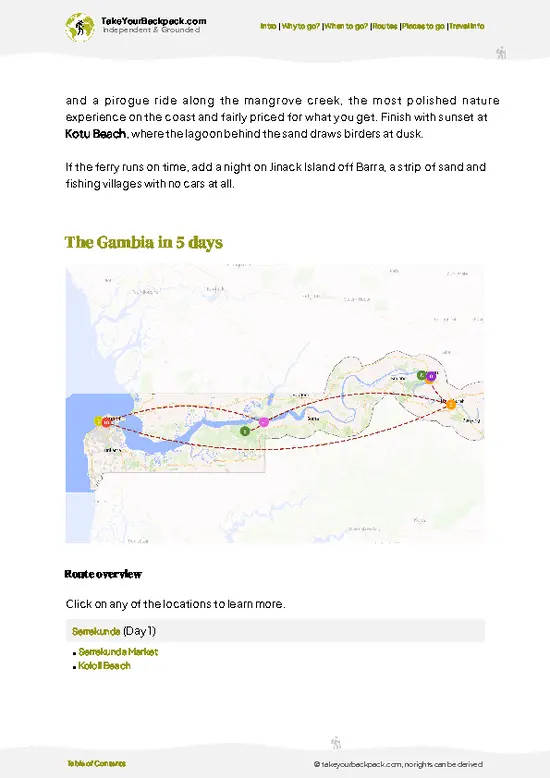
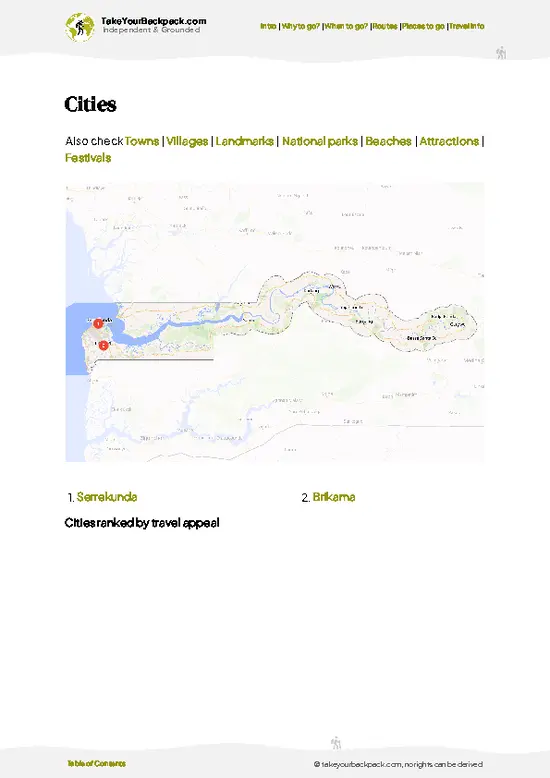
example page 0 from our offline Travel Guide for Gambia
example page 1 from our offline Travel Guide for Gambia
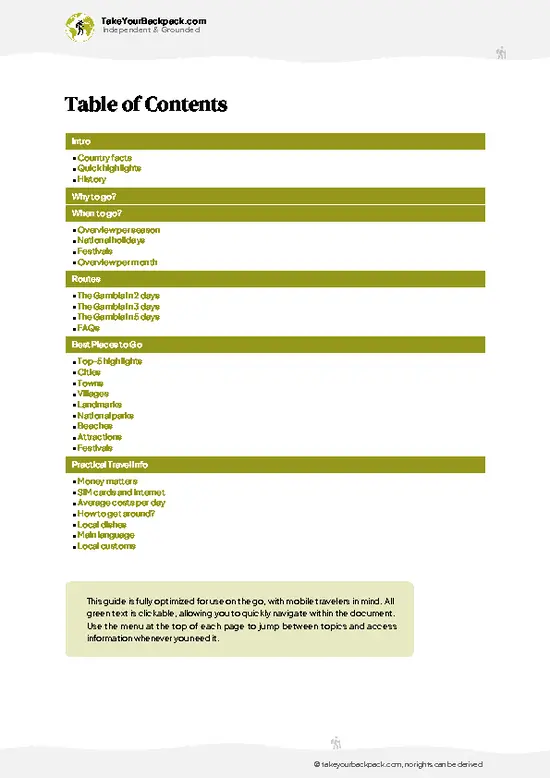
example page 2 from our offline Travel Guide for Gambia
example page 3 from our offline Travel Guide for Gambia
example page 4 from our offline Travel Guide for Gambia
example page 5 from our offline Travel Guide for Gambia
example page 6 from our offline Travel Guide for Gambia
example page 7 from our offline Travel Guide for Gambia
Loading the map 🌍
CLICK TO FILTER
cities
towns
villages
landmarks
national parks
beaches
attractions
festivals
SHOW COUNTRY’S BESTSHOW ALL

✨ Why go?
Ranked #1 national park in The Gambia
What makes it a must-see national park

River Gambia National Park suits backpackers who like their wildlife at river level and their days unscheduled. The draw is the Chimpanzee Rehabilitation Trust islands, where orphaned and ex-captive chimps live semi-wild, a setup you will not find elsewhere in West Africa, and you can watch them from a boat without being funneled into a tour group. Because the park is a river rather than a trail system, you hire a local boatman and set your own pace, lingering where hippos surface or a Goliath heron stalks the shallows.

The second reason is the setting. The park sits beside Janjanbureh Island, a sleepy former colonial river town with old wharf buildings, goat-dotted lanes and simple riverside camps that suit a small budget. You can wander the town on foot, cross by ferry and meet people who … read more 👉
River Gambia National Park suits backpackers who like their wildlife at river level and their days unscheduled. The draw is the Chimpanzee Rehabilitation Trust islands, where orphaned and ex-captive chimps live semi-wild, a setup you will not find elsewhere in West Africa, and you can watch them from a boat without being funneled into a tour group. Because the park is a river rather than a trail system, you hire a local boatman and set your own pace, lingering where hippos surface or a Goliath heron stalks the shallows.

The second reason is the setting. The park sits beside Janjanbureh Island, a sleepy former colonial river town with old wharf buildings, goat-dotted lanes and simple riverside camps that suit a small budget. You can wander the town on foot, cross by ferry and meet people who actually live here, rather than moving between lodges. The slow, upcountry Gambia is on show: mango trees, call to prayer drifting over the water, bush taxis that leave when full. Self-guided travelers do well here because the boatmen are used to individual visitors. If you want hiking trails and big-cat drama, look elsewhere. If you want a calm river and unusual primates, this works.

💡 HighlightsKey sights and experiences for travelers

  1. Chimpanzee Rehabilitation Trust Islands: The park’s best-known sight. Rehabilitated chimpanzees live on several of the Baboon Islands, run by a long-standing trust. You view them from the boat, and feeding times draw the animals to the bank, where you can see their social behavior at close range.
  2. Hippo Channels: Pods of hippos rest in the river channels between the islands. Snorts and the occasional yawn announce them before you see the ears and eyes just above the surface. Your boatman keeps a safe distance.
  3. Birdlife on the River: African fish eagles, giant and pied kingfishers, Goliath herons and hornbills all turn up. Early morning is the busiest time, when light on the water is soft and the reed edges are alive with movement.
  4. Monkeys in the Riverside Forest: Red colobus, green vervets and
… read more 👉
  1. Chimpanzee Rehabilitation Trust Islands: The park’s best-known sight. Rehabilitated chimpanzees live on several of the Baboon Islands, run by a long-standing trust. You view them from the boat, and feeding times draw the animals to the bank, where you can see their social behavior at close range.
  2. Hippo Channels: Pods of hippos rest in the river channels between the islands. Snorts and the occasional yawn announce them before you see the ears and eyes just above the surface. Your boatman keeps a safe distance.
  3. Birdlife on the River: African fish eagles, giant and pied kingfishers, Goliath herons and hornbills all turn up. Early morning is the busiest time, when light on the water is soft and the reed edges are alive with movement.
  4. Monkeys in the Riverside Forest: Red colobus, green vervets and patas monkeys move through the gallery forest along the banks. Red colobus leaping between branches are the highlight for primate fans.
  5. Janjanbureh Island Town: The old river town beside the park, with colonial-era buildings, a ferry crossing and an easy walking pace. It is the practical place to arrange boats and meet guides.
  6. Evening Cruise on the River Gambia: The water turns amber and the bank noise shifts from birds to frogs and insects. Bats leave the trees, and you may catch hippos grazing along the shore as the day ends.
River Gambia National Park pairs best by combining the chimpanzee islands in the morning with a slow birdwatching drift back to Janjanbureh, since the same boat covers both.
Spotted a mistake or missing something? Contact us.

Things to do around River Gambia National Park

Ratings based on Tripadvisor reviews. When you book through this link, you support our work at no extra cost to you.

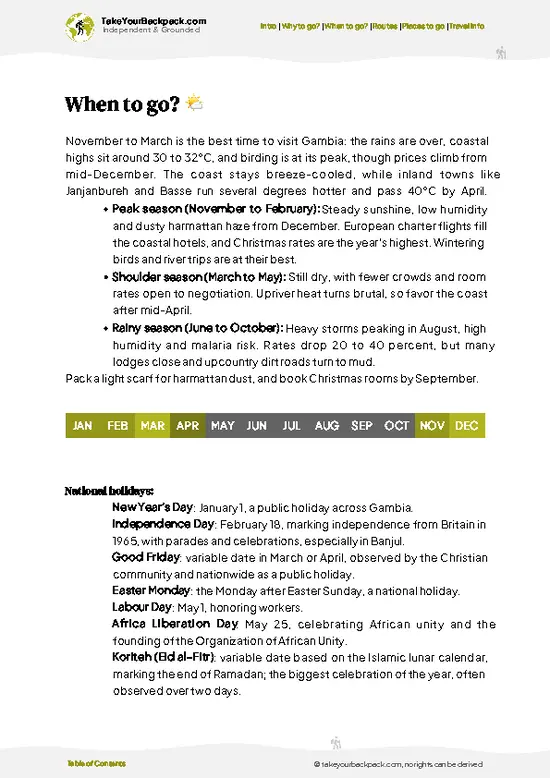
🌤️ When to go?Weather, crowds, and seasonal trade-offs

  • Cool Dry Season (November to February): Mornings on the river start at 18-22°C (64-72°F) and afternoons reach 30-34°C (86-93°F). Skies stay clear, humidity is low and the river is calm for boat trips to Baboon Islands. Expect the most visitors and the highest prices for lodges and boat charters.
  • Hot Dry Season (March to May): Daytime highs climb to 35-40°C (95-104°F), with hazy harmattan dust early on. Birdlife concentrates along the water, and prices ease. Boat trips are best before 10 am.
  • Rainy Season (June to October): Highs sit at 30-33°C (86-91°F) with heavy humidity, and August brings the most rain. Mangrove creeks turn lush green, migrant bird numbers drop, some camps close, and rooms often cost 20 to 40 percent less. Dirt tracks can turn to mud.
  • Daylight: Days run roughly 11 to 13 hours
… read more 👉
  • Cool Dry Season (November to February): Mornings on the river start at 18-22°C (64-72°F) and afternoons reach 30-34°C (86-93°F). Skies stay clear, humidity is low and the river is calm for boat trips to Baboon Islands. Expect the most visitors and the highest prices for lodges and boat charters.
  • Hot Dry Season (March to May): Daytime highs climb to 35-40°C (95-104°F), with hazy harmattan dust early on. Birdlife concentrates along the water, and prices ease. Boat trips are best before 10 am.
  • Rainy Season (June to October): Highs sit at 30-33°C (86-91°F) with heavy humidity, and August brings the most rain. Mangrove creeks turn lush green, migrant bird numbers drop, some camps close, and rooms often cost 20 to 40 percent less. Dirt tracks can turn to mud.
  • Daylight: Days run roughly 11 to 13 hours all year, so plan river outings for morning and late afternoon.
Book a boat for a weekday morning in December or January to dodge the crowds and the heat.


source: climatestotravel.comJANJanuary: excellent for travelingFEBFebruary: highly recommended for travelingMARMarch: highly recommended for travelingAPRApril: highly recommended for travelingMAYMay: good for travelingJUNJune: fair for travelingJULJuly: fair for travelingAUGAugust: fair for travelingSEPSeptember: fair for travelingOCTOctober: fair for travelingNOVNovember: excellent for travelingDECDecember: excellent for traveling
when-to-go

✈️ The backpacker research shortcutThe Gambia Travel Guide

An offline-friendly backpacking guide with optimized travel routes, ranked highlights, transport advice, and the best areas to stay.
example page 0 from our offline Travel Guide for Gambia
example page 1 from our offline Travel Guide for Gambia
example page 2 from our offline Travel Guide for Gambia
example page 3 from our offline Travel Guide for Gambia
example page 4 from our offline Travel Guide for Gambia
example page 5 from our offline Travel Guide for Gambia
example page 6 from our offline Travel Guide for Gambia
example page 7 from our offline Travel Guide for Gambia
The digital guide (213 pages) contains:
✅ 50 highlights, ranked by travel appeal
✅ Optimized 2, 3 & 5-day travel routes
✅ Cities, national parks, landmarks, beaches
✅ How to get around
✅ Offline-friendly for travel without Wi-Fi
👉 Click to see all 30+ guide features

📅 Plan smarter in minutes, not weeks
✅ Month by month travel advice
✅ Festivals & national holidays
✅ Budget expectations

🗺️ Go to the right places, skip the overrated ones
✅ Honest pros & cons of destinations
✅ Top hikes, parks & viewpoints
✅ Lesser-known places most travelers miss
✅ Clear “worth it vs skip it” guidance

🛏️ Travel smoothly without rookie mistakes
✅ Best areas to stay
✅ Transport systems explained simply
✅ Common scams & safety advice
✅ SIM cards, money & practical tips

🌍 Understand the country, not just visit it
✅ Culture & traditions
✅ 52 Essential phrases & customs
✅ Festivals worth planning around
✅ Traveler-friendly historical context
✅ Insights that make places more meaningful

📱 Built for real travel conditions
✅ Fully downloadable PDF
✅ Works completely offline
✅ Optimized for phone use
✅ Useful in remote areas & buses
✅ Everything in one place
Stop searching, start planning
Get instant access to your full guide. 30‑day money-back guarantee.
+ Add another guide for just

By proceeding you agree to our terms.
Sent to your inbox immediately after payment • 100% Secure Checkout
Best Backpacking Travel Advisor 2025 tourism awardBest Backpacking
Travel Advisor
2025
What others say about Take Your Backpack Guides:
⭐⭐⭐⭐⭐
Fantastic, amazing amount of information!
⭐⭐⭐⭐⭐
My goodness this is amazing, it's what I've been looking for hats off too you!
⭐⭐⭐⭐⭐
I think this is absolutely BRILLIANT
⭐⭐⭐⭐
Very complete and informative. It's still missing places, but I gotta to commend you
⭐⭐⭐⭐⭐
This is truly amazing, thank you, can't wait to explore it with my kids!
⭐⭐⭐⭐⭐
Awesome resource, thank you!
⭐⭐⭐⭐⭐
This is amazing! Can't wait to explore the ones I haven't seen
⭐⭐⭐⭐
I love this! Well done, great idea.
⭐⭐⭐⭐⭐
Thanks for taking the time to make this gem!
⭐⭐⭐⭐⭐
This might be the best website I've ever seen.
⭐⭐⭐⭐⭐
Congratulations, and thank you so much for your work; it's incredibly valuable.
⭐⭐⭐⭐
In all seriousness I think you did a great job pointing out the important spots
⭐⭐⭐⭐⭐
10/10 very good
⭐⭐⭐⭐⭐
As someone who's only just starting to visit regularly this is awesome, thank you.
⭐⭐⭐⭐
Thank you very much! I'm going to visit my dad, it's going to be very useful!
⭐⭐⭐⭐⭐
This is really cool! We'll be travelling for the first time and this definitely come in handy.
⭐⭐⭐⭐⭐
You are now our minister of culture, congratulations 👨‍💼
⭐⭐⭐⭐⭐
Just wanted to tell you that this is a pearl! Going to follow your recommendations.
⭐⭐⭐⭐⭐
This is so cool. I'll definitely be using the resource for my travels soon.
⭐⭐⭐⭐⭐
This is very impressive! Good work.
⭐⭐⭐⭐⭐
This is an amazing and informative site. Very well done!

🛏️ Where to stay?Best areas and accommodation options

No lodging exists inside River Gambia National Park, which is a cluster of islands in the river near Georgetown (Janjanbureh), so you sleep on the mainland or on Janjanbureh Island. The island is the natural choice. Small riverside camps and guesthouses there suit backpackers, with simple rooms, fan or air conditioning in some, and meals served on the bank. Expect about US$15 to 40 a night for a basic room. Several camps also run boat trips to the Baboon Islands, which saves arranging a guide separately.
For a quieter option, stay at one of the eco-lodges in nearby villages along the north or south … read more 👉
No lodging exists inside River Gambia National Park, which is a cluster of islands in the river near Georgetown (Janjanbureh), so you sleep on the mainland or on Janjanbureh Island. The island is the natural choice. Small riverside camps and guesthouses there suit backpackers, with simple rooms, fan or air conditioning in some, and meals served on the bank. Expect about US$15 to 40 a night for a basic room. Several camps also run boat trips to the Baboon Islands, which saves arranging a guide separately.
For a quieter option, stay at one of the eco-lodges in nearby villages along the north or south bank, where you wake to hippo grunts and hornbill calls. Camps around Kuntaur and Wassu, upriver, offer similar bush-style rooms and are handy if you plan to see the Wassu stone circles.
Base yourself in Janjanbureh for at least two nights. Bring cash in dalasi, as card machines are rare and ATMs in Janjanbureh are unreliable. Banjul and the Kololi area are far to the west, so most travelers break the long road journey with a night in Soma or Bansang. Book ahead from November to February, when the better camps fill up. In the rains, check that your chosen camp is open.

👛 Costs (as of 22 October 2026)Travel costs and budget guide for River Gambia

River Gambia National Park costs a backpacker about US$40 to 60 a day, with a total daily budget of US$55 including a boat trip. Most spending goes on the boat and a bed in Janjanbureh.
CategoryBudget RangeLocal Reality
Park Entry and Boat TripUS$10-25Boat hire and guide fees are negotiated per trip, so sharing the cost with others lowers it.
Accommodation (High Season)US$15-30Simple camp or guesthouse rooms with fan, often with breakfast included. Prices drop in the rains.
Local TransportUS$3-8Shared taxis and minibuses run between towns, while local ferry crossings are cheap.
Food and SuppliesUS$6-12Rice dishes, grilled fish and stews at local eateries are cheaper than camp meals.
Water and ExtrasUS$1-3Bottled water and snacks cost more in rural areas.
Total Daily BudgetUS$55Slightly less if you
… read more 👉
River Gambia National Park costs a backpacker about US$40 to 60 a day, with a total daily budget of US$55 including a boat trip. Most spending goes on the boat and a bed in Janjanbureh.
CategoryBudget RangeLocal Reality
Park Entry and Boat TripUS$10-25Boat hire and guide fees are negotiated per trip, so sharing the cost with others lowers it.
Accommodation (High Season)US$15-30Simple camp or guesthouse rooms with fan, often with breakfast included. Prices drop in the rains.
Local TransportUS$3-8Shared taxis and minibuses run between towns, while local ferry crossings are cheap.
Food and SuppliesUS$6-12Rice dishes, grilled fish and stews at local eateries are cheaper than camp meals.
Water and ExtrasUS$1-3Bottled water and snacks cost more in rural areas.
Total Daily BudgetUS$55Slightly less if you skip the boat trip.
Travelers pay in local currency, and cash is far more useful than cards in this area.
⚠️ Prices can change and everyone travels differently, so take this as a rough guide. Hope it helps you plan your adventure!

🥾 TrailsDiscover River Gambia's top trails and natural wonders

River Gambia National Park is a water park, so the main way of exploring is a guided boat trip rather than a walking route. No named hiking trails exist inside the park, and visitors do not land on the islands. The walks people actually do start in Janjanbureh, where you can stroll the riverfront, the old wharf area and the island lanes, with the river always in sight.

  • Boat trip to the chimpanzee islands: Usually a half-day outing from Janjanbureh, drifting past the main islands, with stops timed around feeding. Difficulty is easy, with some sun exposure and sitting on a narrow bench.
  • Hippo and
… read more 👉
River Gambia National Park is a water park, so the main way of exploring is a guided boat trip rather than a walking route. No named hiking trails exist inside the park, and visitors do not land on the islands. The walks people actually do start in Janjanbureh, where you can stroll the riverfront, the old wharf area and the island lanes, with the river always in sight.

  • Boat trip to the chimpanzee islands: Usually a half-day outing from Janjanbureh, drifting past the main islands, with stops timed around feeding. Difficulty is easy, with some sun exposure and sitting on a narrow bench.
  • Hippo and bird cruise: A slow outing of two to three hours along the channels, best at first light or late afternoon. Terrain is flat water, with muddy banks and reed beds and the chance of hippos and crocodiles.
  • Janjanbureh Island walk: A flat, easy stroll of about one to two hours through the town, past colonial buildings and the ferry landing. Surfaces are sandy and dusty, with goats and children for company.
  • Riverbank forest edge walk: Short wanders near camps outside the park, through mango and palm shade, where monkeys and hornbills show up. Easy going, but the midday heat is draining.
Getting there takes planning. Shared minibuses and bush taxis run along the South Bank road toward Janjanbureh and leave when full, so allow slack in your schedule. Once in town, boats are arranged through riverside camps or local guides, and the entrance fee is typically settled as part of the boat arrangement. Crowds are rarely an issue, and you may share the river with only a couple of other canoes. Bring water, sun protection, binoculars and cash, and keep hands inside the boat near hippos.
⚠️ Hiking info can sometimes be outdated or inaccurate. Before you hit the trail, check the latest conditions with locals. If you do spot anything that's off, I'd love to hear from you, so I can update it for fellow travelers.

🛡️ SafetyScams, Hazards, and Annoyances

River Gambia National Park is straightforward and low-risk, and most problems come from heat and the water rather than people or animals. Boat trips to the Baboon Islands are the main activity, so wear a hat, carry at least 2 liters of water per person, and use sunscreen, because the river reflects strong sun. Visitors cannot land on the islands where the chimpanzees live, so you watch from the boat at a distance. Do not feed the animals or reach toward them. Hippos and crocodiles live in the river, so swim only where local hosts say it is safe, and never paddle at dusk. Mosquitoes carry malaria, so take prophylaxis and use repellent, especially in the rainy season. Use licensed guides from your camp, agree the price in advance, and keep valuables out of sight. Dirt roads become slippery in … read more 👉
River Gambia National Park is straightforward and low-risk, and most problems come from heat and the water rather than people or animals. Boat trips to the Baboon Islands are the main activity, so wear a hat, carry at least 2 liters of water per person, and use sunscreen, because the river reflects strong sun. Visitors cannot land on the islands where the chimpanzees live, so you watch from the boat at a distance. Do not feed the animals or reach toward them. Hippos and crocodiles live in the river, so swim only where local hosts say it is safe, and never paddle at dusk. Mosquitoes carry malaria, so take prophylaxis and use repellent, especially in the rainy season. Use licensed guides from your camp, agree the price in advance, and keep valuables out of sight. Dirt roads become slippery in heavy rain, so allow extra travel time between June and October.

FAQFrequently asked questions about River Gambia

Two to three days is enough for River Gambia National Park. One full day covers a morning boat trip to the Baboon Islands and a walk around Janjanbureh, while a second day lets you add the Wassu stone circles or a village visit. Most travelers sleep two nights in Janjanbureh.
Yes, River Gambia National Park can be reached without a car, but expect slow travel. Shared taxis and minibuses run from Serekunda and Brikama toward Janjanbureh, and the trip takes around 5 to 7 hours depending on stops and road conditions. Once there, you hire a boat through your camp, and the town itself is easy to walk.
Yes, River Gambia National Park charges a small fee, and you usually pay it as part of a boat trip or guide arrangement rather than at a gate. Expect around US$10 to 25 in total for the boat and guide, depending on group size. No separate trekking permit is generally required, but carry your passport and cash in case anyone asks.
⚠️ Things can change over time, so always validate details locally before you go.

Other Gambian national parks near River Gambia

Explore more nearby:


💡 Not sure where to go next?
Create a personalized itinerary for The Gambia including River Gambia and the places that fit your trip.

Generate my itinerary

👉 Discover all national parks

Or checkout all The Gambia has to offer (think cities, towns, villages, national parks, hikes, beaches, festivals)
Country photo of The Gambia

We 💚 feedbackIs it worth it?

River Gambia National Park works best as the slow middle of an upriver route, linked with the ancient Wassu Stone Circles by road and the quiet camps around Janjanbureh. Fly downriver afterward to the coast or push on toward Basse. I would book the boat for first light, bring binoculars, and give the river two nights so a missed chimp feeding does not ruin the trip.

✍️ Help improve this page!
The information on this page is based on in-depth research, insights shared by experienced travelers, and feedback from the local travel community in The Gambia. While every effort is made to keep the information accurate and current, conditions can change — so if you spot anything incorrect or outdated, please get in touch.


🙋‍♂️ Give feedback

👋 Meet the founderWho’s Behind Take Your Backpack?

Johan, backpacker and founder of TakeYourBackpackHi, I’m Johan (Netherlands 🇳🇱), the creator of TakeYourBackpack. Over the past 3 decades, I’ve backpacked through 90+ countries across six continents, gaining extensive experience with independent travel, long-term trips, and overland routes.

This site is built on a combination of firsthand travel experience and carefully curated insights from other backpackers. Many guides are based on places I’ve personally visited, while others bring together tips, observations, and practical advice shared by trusted travelers I’ve met along the way.

The goal is to provide realistic, experience-driven guidance — not generic itineraries — so you can explore destinations with better context, clearer expectations, and more confidence.