×

The Gambia🇬🇲 | national parksNiumi National ParkJinack beach, river-mouth sandbars, ferry from Banjul, fishing village | things to do and best time to go

Explore Kiang West National ParkExplore River Gambia National Park

Backpacking in Niumi
👀 For curious travelersnational park ranked #5
By Johan Kruseman 🇳🇱 | Updated October 22, 2026

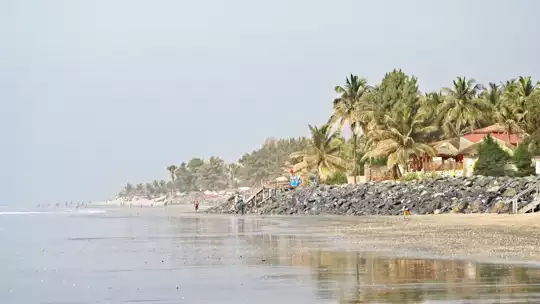
Niumi National Park is easy to fold into a trip because you can reach it on a single ferry crossing from Banjul, with no permits or long transfers. It sits on the north bank of the Gambia River mouth, in the north of the Gambia, running up to the Senegal border. Expect flat, sandy ground, not mountains. Paths wind through mangroves, dry woodland and coastal dunes, and the air smells of salt mud and woodsmoke. Birdlife is excellent, with pelicans, ospreys and waders, while larger wildlife is shy and mostly out of sight. Roads are rough, signs are few, and midday heat in open sand can flatten you. Crowds are almost nonexistent, which gives it a quiet, unhurried feel. A first day could mean crossing by ferry, hiring a local guide in Jinack or Barra, walking the beach at low tide, and ending with fresh grilled fish as the sky fades.

Discover everything you want to know in the 📖 The Gambia Travel Guide.


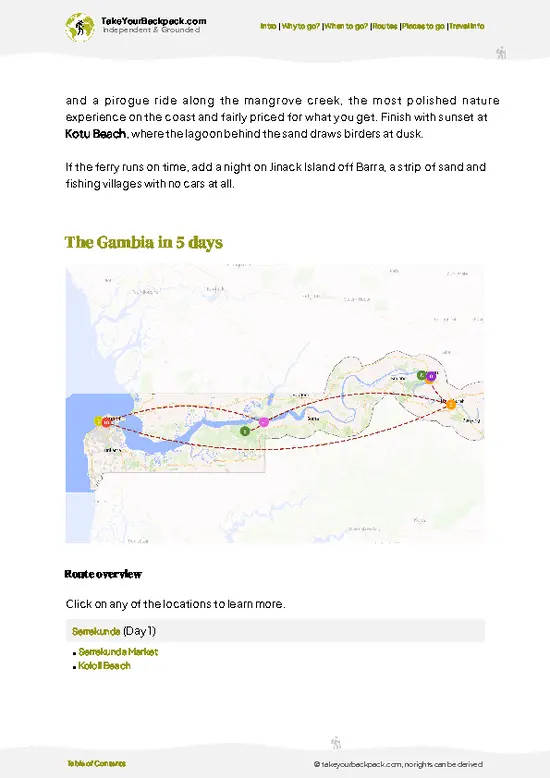
example page 0 from our offline Travel Guide for Gambia
example page 1 from our offline Travel Guide for Gambia
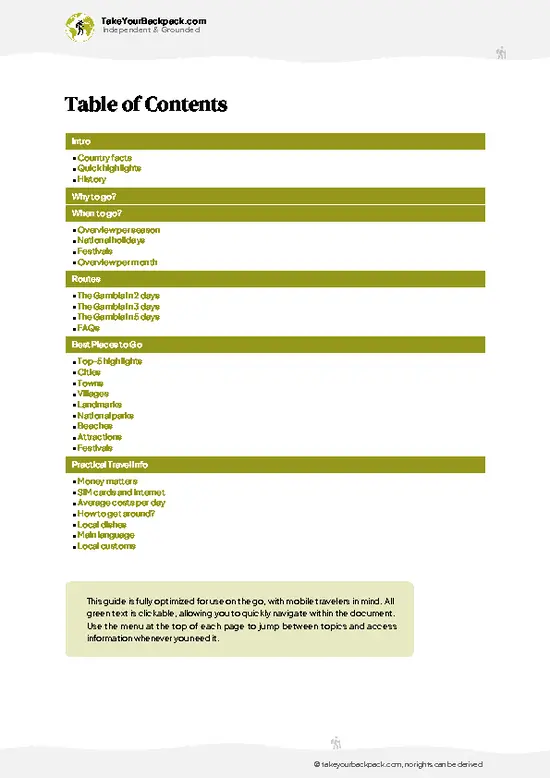
example page 2 from our offline Travel Guide for Gambia
example page 3 from our offline Travel Guide for Gambia
example page 4 from our offline Travel Guide for Gambia
example page 5 from our offline Travel Guide for Gambia
example page 6 from our offline Travel Guide for Gambia
example page 7 from our offline Travel Guide for Gambia
Loading the map 🌍
CLICK TO FILTER
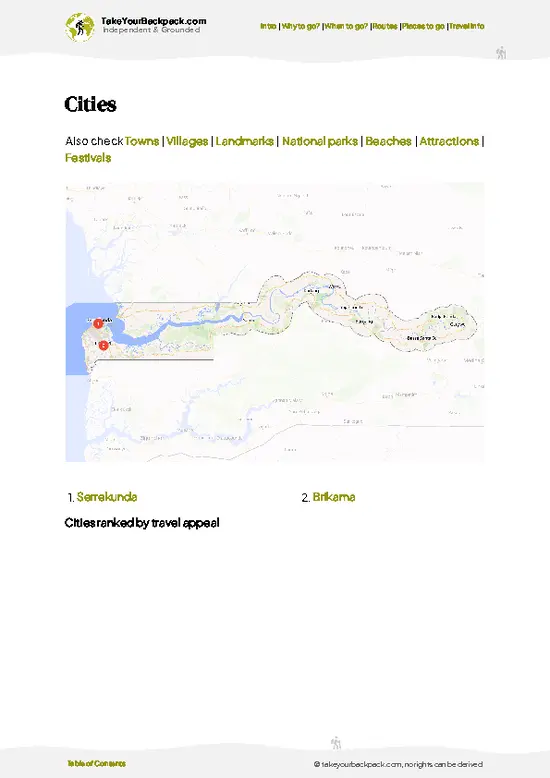
cities
towns
villages
landmarks
national parks
beaches
attractions
festivals
SHOW COUNTRY’S BESTSHOW ALL

✨ Why go?
Ranked #5 national park in The Gambia
What sets this place apart

Niumi National Park suits independent travelers because it is small, flat and easy to read on the ground, and local guides are easy to arrange on arrival. Its trails need no gear beyond water, a hat and sturdy sandals. The big draw is the mix of habitats packed into a compact area: the Bolong Fenyo creeks and mangroves, the open Jinack Island beach, and dry savanna pockets where birders tick off dozens of species in a morning. Self-guided wandering works well on the beach, though a guide adds a lot in the mangroves, where channels branch and look alike. Campsites and simple lodges around Jinack keep costs low, and meals come from village kitchens. Tours exist, but they mostly repeat what you can do yourself with a little patience, a local contact and a flexible schedule. You also meet fishing … read more 👉
Niumi National Park suits independent travelers because it is small, flat and easy to read on the ground, and local guides are easy to arrange on arrival. Its trails need no gear beyond water, a hat and sturdy sandals. The big draw is the mix of habitats packed into a compact area: the Bolong Fenyo creeks and mangroves, the open Jinack Island beach, and dry savanna pockets where birders tick off dozens of species in a morning. Self-guided wandering works well on the beach, though a guide adds a lot in the mangroves, where channels branch and look alike. Campsites and simple lodges around Jinack keep costs low, and meals come from village kitchens. Tours exist, but they mostly repeat what you can do yourself with a little patience, a local contact and a flexible schedule. You also meet fishing families who still live along these shores, which adds human texture to the walking.

💡 HighlightsThe experiences that define the visit

  1. Jinack Island Beach: A long, wide strip of pale sand facing the Atlantic, with few people and plenty of shells. Walk it at low tide for firm footing and the best birdwatching.
  2. Bolong Fenyo Mangroves: Tidal creeks threaded through red mangroves. Paddling or boating here brings you close to kingfishers, herons and the occasional monitor lizard on a root.
  3. Jinack Village: A quiet fishing settlement where smoked fish racks and wooden boats show daily life. Locals can arrange guides and simple meals.
  4. Sandy Spit at the River Mouth: Where the Gambia River meets the ocean, sandbars attract flocks of terns, gulls and waders. Dolphins sometimes surface offshore.
  5. Bird Watching Trails: Scrub and woodland paths hold hornbills, bee-eaters, rollers and raptors. Early morning is when they are most active and the
… read more 👉
  1. Jinack Island Beach: A long, wide strip of pale sand facing the Atlantic, with few people and plenty of shells. Walk it at low tide for firm footing and the best birdwatching.
  2. Bolong Fenyo Mangroves: Tidal creeks threaded through red mangroves. Paddling or boating here brings you close to kingfishers, herons and the occasional monitor lizard on a root.
  3. Jinack Village: A quiet fishing settlement where smoked fish racks and wooden boats show daily life. Locals can arrange guides and simple meals.
  4. Sandy Spit at the River Mouth: Where the Gambia River meets the ocean, sandbars attract flocks of terns, gulls and waders. Dolphins sometimes surface offshore.
  5. Bird Watching Trails: Scrub and woodland paths hold hornbills, bee-eaters, rollers and raptors. Early morning is when they are most active and the air is coolest.
  6. Savanna Woodland Walk: Dry forest and grassland pockets inland, with a chance of monkeys, duikers and tracks of small mammals. Shade is patchy, so carry water.
  7. Barra Ferry Crossing: The ferry from Banjul is part of the experience, with crowded decks, vendors and views of pelicans over brown river water.
Start with the Barra ferry crossing and head straight to Jinack Island Beach, since you want to walk the sand in the cooler hours before the heat builds.
Spotted a mistake or missing something? Contact us.

Things to do near Niumi National Park

Ratings based on Tripadvisor reviews. When you book through this link, you support our work at no extra cost to you.

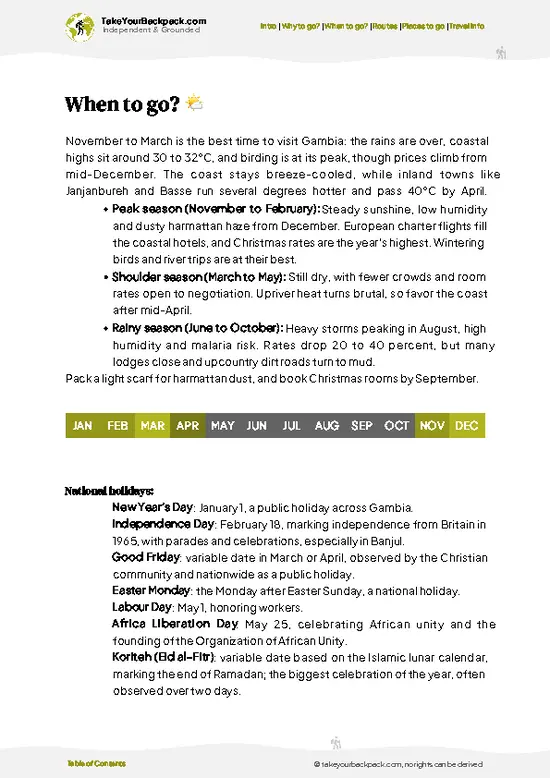
🌤️ When to go?Choosing the right time of year

  • Cool Dry Season (November to February): Mornings and evenings run 18 to 22°C (64 to 72°F), afternoons 29 to 33°C (84 to 91°F). Skies are clear, the Sine Saloum-style mangrove creeks are calm for boat trips, and daylight lasts about 11 to 12 hours. Birders and most visitors arrive now, so Barra and Albreda guesthouses charge their highest rates.
  • Hot Dry Season (March to May): Afternoons reach 33 to 38°C (91 to 100°F), with hazy light and dusty harmattan remnants early on. Crowds thin out and rooms get cheaper, but walks need to start at dawn.
  • Rainy Season (June to October): Highs sit at 30 to 33°C (86 to 91°F) with heavy humidity, and August brings the most rain. Sandy tracks turn to mud, some lodges close, and mosquitoes multiply. Migratory birds are gone, though the bush turns intensely green
… read more 👉
  • Cool Dry Season (November to February): Mornings and evenings run 18 to 22°C (64 to 72°F), afternoons 29 to 33°C (84 to 91°F). Skies are clear, the Sine Saloum-style mangrove creeks are calm for boat trips, and daylight lasts about 11 to 12 hours. Birders and most visitors arrive now, so Barra and Albreda guesthouses charge their highest rates.
  • Hot Dry Season (March to May): Afternoons reach 33 to 38°C (91 to 100°F), with hazy light and dusty harmattan remnants early on. Crowds thin out and rooms get cheaper, but walks need to start at dawn.
  • Rainy Season (June to October): Highs sit at 30 to 33°C (86 to 91°F) with heavy humidity, and August brings the most rain. Sandy tracks turn to mud, some lodges close, and mosquitoes multiply. Migratory birds are gone, though the bush turns intensely green and prices drop by about a quarter.
Book a December or January bed ahead, or come in late February for the same weather with fewer people.


source: climatestotravel.comJANJanuary: excellent for travelingFEBFebruary: excellent for travelingMARMarch: excellent for travelingAPRApril: highly recommended for travelingMAYMay: highly recommended for travelingJUNJune: fair for travelingJULJuly: below average for travelingAUGAugust: below average for travelingSEPSeptember: fair for travelingOCTOctober: fair for travelingNOVNovember: highly recommended for travelingDECDecember: excellent for traveling
when-to-go

✈️ The backpacker research shortcutThe Gambia Travel Guide

An offline-friendly backpacking guide with optimized travel routes, ranked highlights, transport advice, and the best areas to stay.
example page 0 from our offline Travel Guide for Gambia
example page 1 from our offline Travel Guide for Gambia
example page 2 from our offline Travel Guide for Gambia
example page 3 from our offline Travel Guide for Gambia
example page 4 from our offline Travel Guide for Gambia
example page 5 from our offline Travel Guide for Gambia
example page 6 from our offline Travel Guide for Gambia
example page 7 from our offline Travel Guide for Gambia
The digital guide (213 pages) contains:
✅ 50 highlights, ranked by travel appeal
✅ Optimized 2, 3 & 5-day travel routes
✅ Cities, national parks, landmarks, beaches
✅ How to get around
✅ Offline-friendly for travel without Wi-Fi
👉 Click to see all 30+ guide features

📅 Plan smarter in minutes, not weeks
✅ Month by month travel advice
✅ Festivals & national holidays
✅ Budget expectations

🗺️ Go to the right places, skip the overrated ones
✅ Honest pros & cons of destinations
✅ Top hikes, parks & viewpoints
✅ Lesser-known places most travelers miss
✅ Clear “worth it vs skip it” guidance

🛏️ Travel smoothly without rookie mistakes
✅ Best areas to stay
✅ Transport systems explained simply
✅ Common scams & safety advice
✅ SIM cards, money & practical tips

🌍 Understand the country, not just visit it
✅ Culture & traditions
✅ 52 Essential phrases & customs
✅ Festivals worth planning around
✅ Traveler-friendly historical context
✅ Insights that make places more meaningful

📱 Built for real travel conditions
✅ Fully downloadable PDF
✅ Works completely offline
✅ Optimized for phone use
✅ Useful in remote areas & buses
✅ Everything in one place
Stop searching, start planning
Get instant access to your full guide. 30‑day money-back guarantee.
+ Add another guide for just

By proceeding you agree to our terms.
Sent to your inbox immediately after payment • 100% Secure Checkout
Best Backpacking Travel Advisor 2025 tourism awardBest Backpacking
Travel Advisor
2025
What others say about Take Your Backpack Guides:
⭐⭐⭐⭐⭐
Fantastic, amazing amount of information!
⭐⭐⭐⭐⭐
My goodness this is amazing, it's what I've been looking for hats off too you!
⭐⭐⭐⭐⭐
I think this is absolutely BRILLIANT
⭐⭐⭐⭐
Very complete and informative. It's still missing places, but I gotta to commend you
⭐⭐⭐⭐⭐
This is truly amazing, thank you, can't wait to explore it with my kids!
⭐⭐⭐⭐⭐
Awesome resource, thank you!
⭐⭐⭐⭐⭐
This is amazing! Can't wait to explore the ones I haven't seen
⭐⭐⭐⭐
I love this! Well done, great idea.
⭐⭐⭐⭐⭐
Thanks for taking the time to make this gem!
⭐⭐⭐⭐⭐
This might be the best website I've ever seen.
⭐⭐⭐⭐⭐
Congratulations, and thank you so much for your work; it's incredibly valuable.
⭐⭐⭐⭐
In all seriousness I think you did a great job pointing out the important spots
⭐⭐⭐⭐⭐
10/10 very good
⭐⭐⭐⭐⭐
As someone who's only just starting to visit regularly this is awesome, thank you.
⭐⭐⭐⭐
Thank you very much! I'm going to visit my dad, it's going to be very useful!
⭐⭐⭐⭐⭐
This is really cool! We'll be travelling for the first time and this definitely come in handy.
⭐⭐⭐⭐⭐
You are now our minister of culture, congratulations 👨‍💼
⭐⭐⭐⭐⭐
Just wanted to tell you that this is a pearl! Going to follow your recommendations.
⭐⭐⭐⭐⭐
This is so cool. I'll definitely be using the resource for my travels soon.
⭐⭐⭐⭐⭐
This is very impressive! Good work.
⭐⭐⭐⭐⭐
This is an amazing and informative site. Very well done!

🛏️ Where to stay?Best areas to stay in The Gambia

The best bases for Niumi National Park are Barra and Juffureh, with Banjul, Kotu and Serrekunda on the opposite shore as fallback options. There are no lodges inside the park, so you sleep outside its boundary and visit by day.
Barra, the ferry town at the mouth of the Gambia River, has a few basic guesthouses at roughly US$12 to 25 a night. It suits an early start but is loud and hectic around the ferry terminal. Juffureh and neighboring Albreda, about 20 minutes by shared taxi, have family-run compounds and small guesthouses at about US$15 to 35, and you can arrange guides and pirogue trips right … read more 👉
The best bases for Niumi National Park are Barra and Juffureh, with Banjul, Kotu and Serrekunda on the opposite shore as fallback options. There are no lodges inside the park, so you sleep outside its boundary and visit by day.
Barra, the ferry town at the mouth of the Gambia River, has a few basic guesthouses at roughly US$12 to 25 a night. It suits an early start but is loud and hectic around the ferry terminal. Juffureh and neighboring Albreda, about 20 minutes by shared taxi, have family-run compounds and small guesthouses at about US$15 to 35, and you can arrange guides and pirogue trips right there.
On the coast, villages near Jinack Island, reached by boat from Barra or by 4x4 along the sand, have a handful of beach camps and eco-lodges, typically US$20 to 50 with meals sometimes included. These put you closest to the park’s dunes, mangroves and nesting birds.
Most backpackers also stay in Kotu or Senegambia strip near Serrekunda, where hostels and guesthouses start around US$12 to 20, then cross on the Banjul ferry (about 30 to 45 minutes) for a long day trip. Overnighting on the north bank saves hours of queueing.

👛 Costs (as of 22 October 2026)How expensive it really is

Niumi National Park costs about US$2 to 5 a day for a backpacker, with a total daily budget of US$62 including a mid-range guesthouse bed. Most spending goes on a guide, boat and bed rather than the entry fee.
CategoryBudget RangeLocal Reality
Entrance feeUS$2 to 5Paid at the park gate or through your guide, with a small extra charge for vehicles. Rates vary by visitor type.
Accommodation (high season)US$15 to 30Simple guesthouses in Barra and Juffureh. Beach camps near Jinack are higher, and low season brings discounts of about 20 to 25 percent.
Local transportUS$4 to 10Banjul to Barra ferry for a few cents to US$1, then shared taxis to Juffureh. Private taxis to the park cost more.
Guide and boatUS$10 to 25Half-day guide on foot costs less, and pirogue trips through the mangroves are priced per
… read more 👉
Niumi National Park costs about US$2 to 5 a day for a backpacker, with a total daily budget of US$62 including a mid-range guesthouse bed. Most spending goes on a guide, boat and bed rather than the entry fee.
CategoryBudget RangeLocal Reality
Entrance feeUS$2 to 5Paid at the park gate or through your guide, with a small extra charge for vehicles. Rates vary by visitor type.
Accommodation (high season)US$15 to 30Simple guesthouses in Barra and Juffureh. Beach camps near Jinack are higher, and low season brings discounts of about 20 to 25 percent.
Local transportUS$4 to 10Banjul to Barra ferry for a few cents to US$1, then shared taxis to Juffureh. Private taxis to the park cost more.
Guide and boatUS$10 to 25Half-day guide on foot costs less, and pirogue trips through the mangroves are priced per boat, so splitting helps.
Food and waterUS$6 to 12Rice and fish plates at local eateries run US$2 to 4. Lodge dinners cost more, and bottled water is cheap in towns.
Total Daily BudgetUS$62Comfortable for one traveler, and tighter if you cook or share a boat.
⚠️ Prices can change and everyone travels differently, so take this as a rough guide. Hope it helps you plan your adventure!

🥾 TrailsHiking Niumi national park: highlights and difficulty

Niumi National Park has no big signposted trail network, so most walks are informal routes led by local guides from Jinack or Barra. Terrain is flat and sandy, which makes distances feel longer than they are, and the heat is the main challenge, not elevation.
  • Jinack Beach Walk: Roughly 5 to 8 km along the shore, 2 to 3 hours one way at an easy pace. Easy difficulty, firm sand at low tide and soft sand above the waterline. Shells, wading birds and fishing boats are the highlights.
  • Bolong Fenyo Mangrove Route: A short 2 to 4 km walk or boat loop, about 1.5 to 3 hours. Easy, but muddy at the edges
… read more 👉
Niumi National Park has no big signposted trail network, so most walks are informal routes led by local guides from Jinack or Barra. Terrain is flat and sandy, which makes distances feel longer than they are, and the heat is the main challenge, not elevation.
  • Jinack Beach Walk: Roughly 5 to 8 km along the shore, 2 to 3 hours one way at an easy pace. Easy difficulty, firm sand at low tide and soft sand above the waterline. Shells, wading birds and fishing boats are the highlights.
  • Bolong Fenyo Mangrove Route: A short 2 to 4 km walk or boat loop, about 1.5 to 3 hours. Easy, but muddy at the edges and best with a guide. Look for kingfishers, crabs and mudskippers.
  • Woodland Birding Loop: Around 4 to 6 km on sandy tracks through scrub and dry forest, 2 to 3 hours. Easy to moderate in the heat. Expect hornbills, bee-eaters and the chance of monkeys.
  • River Mouth Spit Walk: A 3 to 5 km out-and-back along the sandbars, about 2 hours. Easy, but exposed, with terns, gulls and sometimes dolphins offshore.
Wildlife is mostly birds, with monkeys, monitor lizards and small antelope appearing now and then. Larger mammals are rare and shy.
Getting here is simple. Take the ferry from Banjul to Barra, then continue by shared taxi or private transport on sandy tracks toward Jinack. Four-wheel drive or a local driver helps in the rainy season. The park is quiet, with very few visitors even in peak months, so you may walk for hours without seeing anyone else. A small entrance or guide fee applies, usually paid locally, and guides are well worth hiring for navigation and bird identification. Bring plenty of water, sun protection and insect repellent.
⚠️ Hiking info can sometimes be outdated or inaccurate. Before you hit the trail, check the latest conditions with locals. If you do spot anything that's off, I'd love to hear from you, so I can update it for fellow travelers.

🛡️ SafetySafety Tips and Common Scams in Niumi

Niumi National Park is low-risk for hikers, and the main hazards are heat, sun and logistics rather than dramatic danger. Paths are flat, sandy and often unmarked, so hire a local guide (usually US$10 to 20 for a half day) who knows the tides and creeks. Walk early, carry at least 3 liters of water per person, and wear a hat and sunscreen, since shade is thin on the dunes. Mosquitoes carry malaria year-round, so take repellent and talk to a travel clinic about prophylaxis. Tidal channels fill quickly, so check crossing times before you wade or paddle. Hippos live in some creeks, and boatmen keep a safe distance, so follow their lead and never approach one on foot. Monkeys and baboons can snatch food, so keep snacks zipped away. Carry cash in small notes, because there are no ATMs near the park, and tell your lodge where you are going.

FAQTraveler FAQ

Two days is enough for Niumi National Park, though three lets you add a boat trip to Jinack Island. A day covers mangrove creeks, dunes and the bird-rich coast near Barra, while a second takes in Juffureh and Albreda on the same bank. Staying overnight on the north shore saves ferry queues from Banjul.
Yes, Niumi National Park can be reached without a car using the Banjul to Barra ferry (30 to 45 minutes) and then shared taxis or bush taxis from Barra toward Juffureh and Albreda, usually under US$2. Inside the park, you need a guide, a pirogue or a 4x4 hire for sandy tracks, with boat trips from Barra costing roughly US$15 to 40 per group.
Yes, Niumi National Park charges a small entry fee, usually about US$2 to 5 per person, plus a little more if you bring a vehicle. No advance permit is needed, so you pay at the park gate or through your guide or lodge. Bring small notes, as card payments are not available.
⚠️ Things can change over time, so always validate details locally before you go.

Other Gambian national parks near Niumi

Explore more nearby:


💡 Not sure where to go next?
Create a personalized itinerary for The Gambia including Niumi and the places that fit your trip.

Generate my itinerary

👉 Discover all national parks

Or checkout all The Gambia has to offer (think cities, towns, villages, national parks, hikes, beaches, festivals)
Country photo of The Gambia

We 💚 feedbackParting advice and final tips

Niumi National Park rewards two nights better than a rushed day trip. That gives you one full morning for birds at first light and an afternoon beach walk when the heat eases. Bring cash, a refillable bottle and binoculars, and skip any plan that needs a tight schedule, because ferries and sandy tracks run on their own time.

✍️ Help improve this page!
The information on this page is based on in-depth research, insights shared by experienced travelers, and feedback from the local travel community in The Gambia. While every effort is made to keep the information accurate and current, conditions can change — so if you spot anything incorrect or outdated, please get in touch.


🙋‍♂️ Give feedback

👋 Meet the founderWho’s Behind Take Your Backpack?

Johan, backpacker and founder of TakeYourBackpackHi, I’m Johan (Netherlands 🇳🇱), the creator of TakeYourBackpack. Over the past 3 decades, I’ve backpacked through 90+ countries across six continents, gaining extensive experience with independent travel, long-term trips, and overland routes.

This site is built on a combination of firsthand travel experience and carefully curated insights from other backpackers. Many guides are based on places I’ve personally visited, while others bring together tips, observations, and practical advice shared by trusted travelers I’ve met along the way.

The goal is to provide realistic, experience-driven guidance — not generic itineraries — so you can explore destinations with better context, clearer expectations, and more confidence.