×
Berlin

Germany🇩🇪 | citiesBerlinWall remnants, nightlife districts, world museums | things to do and best time to go

Explore AachenExplore Bremen

Backpacking in Berlin
🏆 Top pickcity ranked #1
By Johan Kruseman 🇳🇱 | Updated September 4, 2026

Berlin is not for anyone chasing postcard-pretty old-town charm, rigid punctuality, or a neat, polished “Europe in a weekend” checklist. It’s scruffy, spread out, and emotionally heavy in places. But that’s exactly why backpackers win here: Berlin trades surface beauty for depth, history, and a social scene that hoovers up solo travelers. In Germany’s northeast, between Hamburg and Dresden, it’s a rail hub that’s easy to reach and easy to navigate with U-Bahn and S-Bahn. You bounce from the Reichstag dome and the Memorial to the Murdered Jews of Europe to abandoned-airport parks like Tempelhofer Feld and nights in Kreuzberg or Friedrichshain that somehow end at 9 a.m. Costs are mid-range for Western Europe: cheaper than Munich, usually pricier than Leipzig. It feels safe, if you keep normal big-city street sense. The vibe? Creative, political, slightly chaotic—less “city break,” more “temporary life experiment.”

Discover everything you want to know in the 📖 Germany Travel Guide.


Get your Germany guide
140 ranked highlights, routes & tips, works offline (514 pages)
Loading the map 🌍
CLICK TO FILTER
cities
towns
landmarks
national parks
hikes
beaches
attractions
festivals
regions
SHOW COUNTRY’S BESTSHOW ALL

✨ Why go?
Ranked #1 city in Germany
What makes this city worth visiting

Berlin is a backpacker’s hub that strikes a balance between time, money, and comfort. First off, the affordable hostels here are a game-changer. You can find clean, sociable spots that make it easy to meet fellow travelers. This city is also a food lover’s paradise; street food and local eateries offer delicious options without breaking the bank.

When it comes to walkability, Berlin shines. You can stroll through its diverse neighborhoods, soaking in the history and culture without needing a metro pass every five minutes. This makes it easy to maximize your experience without sacrificing too much time.

The nightlife is legendary, offering everything from laid-back bars to electrifying clubs, ensuring your evenings are just as rich as your days. Plus, Berlin serves as an excellent basecampread more 👉
Berlin is a backpacker’s hub that strikes a balance between time, money, and comfort. First off, the affordable hostels here are a game-changer. You can find clean, sociable spots that make it easy to meet fellow travelers. This city is also a food lover’s paradise; street food and local eateries offer delicious options without breaking the bank.

When it comes to walkability, Berlin shines. You can stroll through its diverse neighborhoods, soaking in the history and culture without needing a metro pass every five minutes. This makes it easy to maximize your experience without sacrificing too much time.

The nightlife is legendary, offering everything from laid-back bars to electrifying clubs, ensuring your evenings are just as rich as your days. Plus, Berlin serves as an excellent basecamp for day trips to nearby attractions, allowing you to explore more of Germany without the hassle of constant packing and unpacking.

If you’re looking for a city that combines vibrant culture with practical logistics, Berlin is more than just a stop; it’s a strategic choice in your backpacking journey.
Want to include Berlin in your Germany route?
Create a personalized Germany itinerary that includes Berlin and the places that fit your trip — based on your travel style, budget, and available time. Get your route in seconds.

Generate my trip

💡 HighlightsMust-see experiences and standout moments

  1. Brandenburg Gate (Brandenburger Tor) — The symbolic heart of Berlin: an 18th-century triumphal arch that’s seen Prussian parades, Cold War checkpoints and modern celebrations. Great for photos, people-watching, and feeling the city’s layered history in one spot.
  2. Reichstag (German Parliament) and its glass dome — You can walk up the public dome for a 360° view and peer down into the Bundestag chamber; the mix of modern transparency and historic stones tells a lot about Germany’s post-war identity. Book ahead online for free entry and go at sunset if you want softer light.
  3. East Side Gallery — The longest remaining stretch of the Berlin Wall, turned into an open-air gallery of murals. It’s political art, raw history and a riverside stroll rolled into one — a visual record of reunification
read more 👉
  1. Brandenburg Gate (Brandenburger Tor) — The symbolic heart of Berlin: an 18th-century triumphal arch that’s seen Prussian parades, Cold War checkpoints and modern celebrations. Great for photos, people-watching, and feeling the city’s layered history in one spot.
  2. Reichstag (German Parliament) and its glass dome — You can walk up the public dome for a 360° view and peer down into the Bundestag chamber; the mix of modern transparency and historic stones tells a lot about Germany’s post-war identity. Book ahead online for free entry and go at sunset if you want softer light.
  3. East Side Gallery — The longest remaining stretch of the Berlin Wall, turned into an open-air gallery of murals. It’s political art, raw history and a riverside stroll rolled into one — a visual record of reunification and global messages.
  4. Memorial to the Murdered Jews of Europe (Holocaust Memorial) — An imposing field of concrete stelae that’s both a public artwork and a place for reflection; the underground information center gives personal stories and context that make the visit meaningful rather than just photogenic.
  5. Museum Island (Museumsinsel) — A compact cluster of world-class museums (Pergamon, Neues, Altes) on the Spree. Even if you don’t have time for everything, wandering the island and choosing one museum gives a powerful slice of Berlin’s cultural wealth.
  6. Tempelhofer Feld — The old airport turned enormous public park where people cycle, kite, barbecue and fly model planes on the runway. It’s quintessentially Berlin: DIY leisure, huge open space and a bit anarchic — pack a picnic and a bike.
  7. Teufelsberg (the Cold War listening station) — A man-made hill built from wartime rubble crowned by a graffiti-splashed former NSA/US listening station. The hike up and the rooftop views are worth it; guided access is common and adds history about espionage, architecture and post-war Berlin.
  8. Stasi Prison / Hohenschönhausen Memorial — A former East German detention center run as a guided-tour memorial; hearing survivor testimonies and walking the cells gives a sharp, human perspective on surveillance and repression that you can’t get from plaques alone.
  9. Maybachufer Turkish Market (Neukölln) — Twice-weekly riverside market that’s a sensory jam: fresh produce, baked goods, cheap clothes and authentic street food. It’s a great, everyday way to experience Berlin’s immigrant culture and neighborhood life.
  10. Hackesche Höfe and the courtyards — A tucked-in cluster of interconnected courtyards with Art Nouveau façades, indie shops, galleries and cafés. It’s small and walkable but gives a lively feel for Berlin’s creative pulse and the old Jewish quarter’s layered history.
A few easy day trips nearby: Potsdam (Sanssouci palace and parks), the Sachsenhausen memorial at Oranienburg, or the Spreewald biosphere reserve for kayaking and regional food.
Spotted a mistake or missing something? Contact us.

Things to do in Berlin

Ratings based on Tripadvisor reviews. When you book through this link, you support our work at no extra cost to you.

🏘️ NeighborhoodsUnderstanding the local layout

Berlin is a city of contrasts, where history meets modernity, and every neighborhood offers a unique flavor. Here’s a breakdown to help you navigate your options.

Kreuzberg: This is the heart of Berlin’s alternative scene. Expect street art, quirky cafes, and a vibrant nightlife. It’s affordable, with plenty of hostels and budget eateries. Walkable and bike-friendly, you can easily explore its cultural hotspots. Perfect for both short and longer stays, especially if you want to soak in the local vibe.

Friedrichshain: Known for its youthful energy, Friedrichshain is a hub for nightlife, with clubs like Berghain drawing crowds. It’s slightly cheaper than Kreuzberg but still offers a lively atmosphere. The East Side Gallery, a stretch of the Berlin Wall, is a must-see. Great for those who want … read more 👉
Berlin is a city of contrasts, where history meets modernity, and every neighborhood offers a unique flavor. Here’s a breakdown to help you navigate your options.

Kreuzberg: This is the heart of Berlin’s alternative scene. Expect street art, quirky cafes, and a vibrant nightlife. It’s affordable, with plenty of hostels and budget eateries. Walkable and bike-friendly, you can easily explore its cultural hotspots. Perfect for both short and longer stays, especially if you want to soak in the local vibe.

Friedrichshain: Known for its youthful energy, Friedrichshain is a hub for nightlife, with clubs like Berghain drawing crowds. It’s slightly cheaper than Kreuzberg but still offers a lively atmosphere. The East Side Gallery, a stretch of the Berlin Wall, is a must-see. Great for those who want to party but also enjoy parks and cafes during the day.

Charlottenburg: If you’re looking for a more upscale experience, this area is your go-to. It’s quieter, with elegant streets and high-end shops. While it’s pricier, you’ll find beautiful parks and museums. Ideal for longer stays if you prefer a more relaxed pace, but transport links make it easy to reach the city’s core.

Neukölln: This neighborhood is on the rise, blending cultures and offering a mix of hip bars and traditional eateries. It’s affordable and increasingly popular among young travelers. Walkable and well-connected, it’s suitable for both short visits and extended stays, especially if you want to experience Berlin’s evolving scene.

Mitte: The central district is where history and modernity collide. Expect higher prices, but you’re close to major attractions like the Brandenburg Gate and Museum Island. It’s walkable, with excellent transport links. Best for short stays if you want to be in the thick of things, but it can feel touristy.

Choose wisely, and you’ll find the right balance of time, money, and comfort for your Berlin adventure.

⌛️ 1 daySeeing the highlights in 24 hours

Berlin is a city that pulses with history, creativity, and an undeniable edge. It’s a place where the past and present collide, offering a rich tapestry of experiences. From the remnants of the Berlin Wall to the vibrant street art of Kreuzberg, every corner tells a story. You can easily spend a day here, diving into its unique neighborhoods without feeling rushed.

Start your morning in Mitte, the heart of Berlin. Grab a coffee and a buttery croissant at a local café like House of Small Wonder. The atmosphere is cozy, and the Japanese-inspired decor sets a lovely tone for the day. After fueling up, stroll over to the Berlin Cathedral. The stunning architecture is worth the visit, and if you’re up for it, climb to the dome for a panoramic view of the city.

As the afternoon rolls in, head … read more 👉
Berlin is a city that pulses with history, creativity, and an undeniable edge. It’s a place where the past and present collide, offering a rich tapestry of experiences. From the remnants of the Berlin Wall to the vibrant street art of Kreuzberg, every corner tells a story. You can easily spend a day here, diving into its unique neighborhoods without feeling rushed.

Start your morning in Mitte, the heart of Berlin. Grab a coffee and a buttery croissant at a local café like House of Small Wonder. The atmosphere is cozy, and the Japanese-inspired decor sets a lovely tone for the day. After fueling up, stroll over to the Berlin Cathedral. The stunning architecture is worth the visit, and if you’re up for it, climb to the dome for a panoramic view of the city.

As the afternoon rolls in, head to Friedrichshain. This neighborhood is a bit off the typical tourist path but brimming with character. Explore the East Side Gallery, a long stretch of the Berlin Wall covered in vibrant murals. It’s a powerful reminder of the city’s history and a great spot for photos. For lunch, try a local doner kebab at Mustafa’s Gemüse Kebap. It’s a Berlin classic, and trust me, the line is worth it.

In the evening, make your way to Kreuzberg. This area is known for its eclectic vibe and nightlife. Grab dinner at Markthalle Neun, where you can sample everything from artisanal cheeses to street food. Afterward, catch a live music show at a nearby venue like SO36. The energy here is infectious, and you’ll feel the pulse of Berlin’s creative scene.

By the end of the day, you’ll have tasted the essence of Berlin—its history, its food, and its vibrant culture—all while navigating the city like a local.
Turn your Berlin visit into an Germany adventure
Build a complete Germany route with Berlin, hidden gems, must-see destinations, and realistic travel times included.

Generate my trip

🌤️ When to go?Best time to visit Berlin


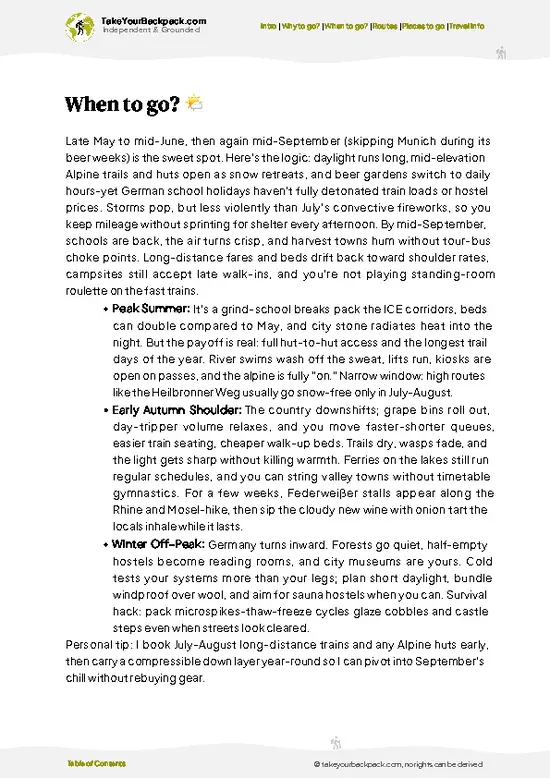
  • Weather: Berlin’s climate swings from chilly winters to warm summers. May through September offer mild to warm weather, with highs around 20-25°C (68-77°F), perfect for exploring without freezing or overheating.

  • Temperature: Winter months (December to February) can dip below freezing, averaging 0-3°C (32-37°F), which means bundling up and shorter outdoor days. Summer highs can hit 30°C (86°F), but rarely stay that hot for long.

  • Daylight Hours: Long summer days stretch up to 16 hours of light in June, giving you more time to roam. Winter days shrink to about 8 hours, limiting sightseeing and outdoor activities.

  • Crowds: Peak tourist season is June to August, when the city buzzes with visitors and prices spike. Shoulder seasons (April-May and September-October) balance fewer crowds with
read more 👉

  • Weather: Berlin’s climate swings from chilly winters to warm summers. May through September offer mild to warm weather, with highs around 20-25°C (68-77°F), perfect for exploring without freezing or overheating.

  • Temperature: Winter months (December to February) can dip below freezing, averaging 0-3°C (32-37°F), which means bundling up and shorter outdoor days. Summer highs can hit 30°C (86°F), but rarely stay that hot for long.

  • Daylight Hours: Long summer days stretch up to 16 hours of light in June, giving you more time to roam. Winter days shrink to about 8 hours, limiting sightseeing and outdoor activities.

  • Crowds: Peak tourist season is June to August, when the city buzzes with visitors and prices spike. Shoulder seasons (April-May and September-October) balance fewer crowds with decent weather.

  • Seasonal Activities: Summer hosts open-air events, street festivals, and beer gardens in full swing. Winter brings Christmas markets and cozy indoor cultural experiences, but expect cold and shorter days.

  • Price Fluctuations: Accommodation and flights peak in summer and around Christmas. Spring and fall offer better deals, especially mid-week, making those months a smart choice for budget-conscious travelers.


Pro-tip: Aim for late spring or early fall to maximize daylight, dodge crowds, and snag better prices—Berlin’s vibe then feels like a well-kept secret you’re in on.


source: climatestotravel.comJANJanuary: fair for travelingFEBFebruary: fair for travelingMARMarch: good for travelingAPRApril: highly recommended for travelingMAYMay: excellent for travelingJUNJune: excellent for travelingJULJuly: highly recommended for travelingAUGAugust: highly recommended for travelingSEPSeptember: excellent for travelingOCTOctober: highly recommended for travelingNOVNovember: good for travelingDECDecember: fair for traveling
Germany - Berlin

✈️ The backpacker research shortcutGermany Travel Guide

An offline-friendly backpacking guide with optimized travel routes, ranked highlights, transport advice, and the best areas to stay.
example page 0 from our offline Travel Guide for Germany
example page 1 from our offline Travel Guide for Germany
example page 2 from our offline Travel Guide for Germany
example page 3 from our offline Travel Guide for Germany
example page 4 from our offline Travel Guide for Germany
example page 5 from our offline Travel Guide for Germany
example page 6 from our offline Travel Guide for Germany
example page 7 from our offline Travel Guide for Germany
The digital guide (514 pages) contains:
140 highlights, ranked by travel appeal
Optimized 7, 14 & 21-day travel routes
Cities, national parks, landmarks, beaches
How to get around
Offline-friendly for travel without Wi-Fi
👉 Click to see all 30+ guide features

📅 Plan smarter in minutes, not weeks
Month by month travel advice
Festivals & national holidays
Budget expectations

🗺️ Go to the right places, skip the overrated ones
Honest pros & cons of destinations
Top hikes, parks & viewpoints
Lesser-known places most travelers miss
Clear “worth it vs skip it” guidance

🛏️ Travel smoothly without rookie mistakes
Best areas to stay
Transport systems explained simply
Common scams & safety advice
SIM cards, money & practical tips

🌍 Understand the country, not just visit it
Culture & traditions
52 Essential phrases & customs
Festivals worth planning around
Traveler-friendly historical context
Insights that make places more meaningful

📱 Built for real travel conditions
Fully downloadable PDF
Works completely offline
Optimized for phone use
Useful in remote areas & buses
Everything in one place
Save weeks of stressful planning
Get instant access to your full guide. 30‑day money-back guarantee.
+ Add another guide for just US$7.80

By proceeding you agree to our terms.
Sent to your inbox immediately after payment • 100% Secure Checkout
Best Backpacking Travel Advisor 2025 tourism awardBest Backpacking
Travel Advisor
2025
What others say about Take Your Backpack Guides:
⭐⭐⭐⭐⭐
Fantastic, amazing amount of information!
⭐⭐⭐⭐⭐
My goodness this is amazing, it's what I've been looking for hats off too you!
⭐⭐⭐⭐⭐
I think this is absolutely BRILLIANT
⭐⭐⭐⭐
Very complete and informative. It's still missing places, but I gotta to commend you
⭐⭐⭐⭐⭐
This is truly amazing, thank you, can't wait to explore it with my kids!
⭐⭐⭐⭐⭐
Awesome resource, thank you!
⭐⭐⭐⭐⭐
This is amazing! Can't wait to explore the ones I haven't seen
⭐⭐⭐⭐
I love this! Well done, great idea.
⭐⭐⭐⭐⭐
Thanks for taking the time to make this gem!
⭐⭐⭐⭐⭐
This might be the best website I've ever seen.
⭐⭐⭐⭐⭐
Congratulations, and thank you so much for your work; it's incredibly valuable.
⭐⭐⭐⭐
In all seriousness I think you did a great job pointing out the important spots
⭐⭐⭐⭐⭐
10/10 very good
⭐⭐⭐⭐⭐
As someone who's only just starting to visit regularly this is awesome, thank you.
⭐⭐⭐⭐
Thank you very much! I'm going to visit my dad, it's going to be very useful!
⭐⭐⭐⭐⭐
This is really cool! We'll be travelling for the first time and this definitely come in handy.
⭐⭐⭐⭐⭐
You are now our minister of culture, congratulations 👨‍💼
⭐⭐⭐⭐⭐
Just wanted to tell you that this is a pearl! Going to follow your recommendations.
⭐⭐⭐⭐⭐
This is so cool. I'll definitely be using the resource for my travels soon.
⭐⭐⭐⭐⭐
This is very impressive! Good work.
⭐⭐⭐⭐⭐
This is an amazing and informative site. Very well done!

🛏️ Where to stay?Choosing the right base

Berlin’s backpacker sweet spots cluster around a few neighborhoods where safety, social buzz, and budget options intersect like a well-played chessboard. First up: Friedrichshain. This area nails the balance between gritty and welcoming. It’s packed with hostels that cater to solo travelers and groups alike, offering communal spaces that make meeting people effortless. The vibe here is young and energetic, with plenty of bars, street art, and late-night eateries. It’s not just about partying; the neighborhood feels safe enough to wander after dark, which is a big win for solo adventurers.

Next, … read more 👉
Berlin’s backpacker sweet spots cluster around a few neighborhoods where safety, social buzz, and budget options intersect like a well-played chessboard. First up: Friedrichshain. This area nails the balance between gritty and welcoming. It’s packed with hostels that cater to solo travelers and groups alike, offering communal spaces that make meeting people effortless. The vibe here is young and energetic, with plenty of bars, street art, and late-night eateries. It’s not just about partying; the neighborhood feels safe enough to wander after dark, which is a big win for solo adventurers.

Next, Kreuzberg. It’s a bit edgier but still very accessible. Kreuzberg’s multicultural flair means you’ll find everything from cheap falafel stands to underground music scenes. Hostels here tend to be lively hubs, perfect if you want to dive into Berlin’s alternative culture. The trade-off? It’s a little noisier and less polished than other areas, but that’s part of the charm if you’re after authenticity over comfort.

For a quieter, more central option, Mitte offers proximity to major sights and a solid range of hostels. It’s pricier and less social than Friedrichshain or Kreuzberg, but if your priority is cutting transit time and staying in a safe, clean environment, Mitte fits the bill.

In Berlin, your choice boils down to what you’re willing to trade: social energy and nightlife for calm and convenience, or vice versa. Each neighborhood offers a distinct flavor of the city, so pick your base like a strategist plotting your next move.

🚌 Getting aroundMoving around without the hassle

Berlin moves with a curious rhythm—part clockwork precision, part spontaneous pulse. The city’s transit system is a well-oiled machine, but it’s not just about sticking to the timetable; it’s about reading the flow, knowing when to sprint and when to savor the wait. Here, time, money, and comfort are constantly in negotiation, and understanding the trade-offs means you’re not just getting from A to B—you’re mastering the city’s tempo.


  • U-Bahn (Subway): Runs roughly from 4:30 AM to 1:00 AM, with trains every 5 minutes during peak hours and about 10 minutes late at night. It’s fast and reliable, slicing through the city underground, but expect crowded cars during rush hour. A single ticket costs around €3, making it a solid balance of speed and affordability.


  • S-Bahn (Urban Rail): Covers
read more 👉
Berlin moves with a curious rhythm—part clockwork precision, part spontaneous pulse. The city’s transit system is a well-oiled machine, but it’s not just about sticking to the timetable; it’s about reading the flow, knowing when to sprint and when to savor the wait. Here, time, money, and comfort are constantly in negotiation, and understanding the trade-offs means you’re not just getting from A to B—you’re mastering the city’s tempo.


  • U-Bahn (Subway): Runs roughly from 4:30 AM to 1:00 AM, with trains every 5 minutes during peak hours and about 10 minutes late at night. It’s fast and reliable, slicing through the city underground, but expect crowded cars during rush hour. A single ticket costs around €3, making it a solid balance of speed and affordability.


  • S-Bahn (Urban Rail): Covers longer distances and connects suburbs to the city center, operating from 4:30 AM to 1:00 AM, with trains every 10 minutes. It’s slightly pricier than the U-Bahn but offers more comfort and a smoother ride, especially if you’re hauling a backpack. Use it for quick hops across the city’s wider spread without breaking the bank.


  • Trams: The backbone of East Berlin’s surface transit, trams run from 4:30 AM until about midnight. They’re slower than the U-Bahn but cheaper and offer a scenic, street-level view of the city’s neighborhoods. Tickets are the same price as other public transit, and trams are perfect if you want to stretch your legs between stops or avoid underground crowds.


  • Buses: Cover routes that trains don’t reach, especially late at night when other transit shuts down. Night buses run all night, but daytime buses can be slower due to traffic. Tickets cost the same as other public transit, but comfort varies widely depending on the route and time of day. Use buses strategically when your schedule demands flexibility over speed.


  • Walking: Berlin’s sprawling but surprisingly walkable, especially in central districts like Mitte, Kreuzberg, and Prenzlauer Berg. Walking costs nothing and offers the richest experience—every street corner tells a story. It’s slower, obviously, but sometimes the best way to absorb the city’s character without sacrificing your budget or comfort.


Understanding these options is like playing a strategic game: you decide when to trade a few euros for speed, or when to sacrifice time for a free, immersive stroll. Berlin’s transit isn’t just a system; it’s a set of choices that shape your trip’s rhythm. Master it, and you’re not just a tourist—you’re a player in the city’s unfolding story.

👛 Costs (as of 4 September 2026)Money, prices, and spending tips

Berlin’s backpacking costs reflect its blend of history, culture, and efficient urban life, giving you clear trade-offs between time, money, and comfort.
  • Dorm Accommodation (High Season): Expect to pay around €25-€40 per night in popular hostels during peak months (summer and major events). These spots fill fast, so booking early saves both money and stress.
  • Dorm Accommodation (Off-Season): In quieter months, prices drop to about €15-€25. You trade the buzz of a full house for a quieter, more relaxed vibe—and a better chance at snagging a prime bed.
  • Meals: Budget about €10-€15 daily if you stick to street food, bakeries, or casual spots. Berlin’s doner kebabs and currywurst are wallet-friendly and filling. Splurge meals at mid-range restaurants push this higher, but for backpackers, street
read more 👉
Berlin’s backpacking costs reflect its blend of history, culture, and efficient urban life, giving you clear trade-offs between time, money, and comfort.
  • Dorm Accommodation (High Season): Expect to pay around €25-€40 per night in popular hostels during peak months (summer and major events). These spots fill fast, so booking early saves both money and stress.
  • Dorm Accommodation (Off-Season): In quieter months, prices drop to about €15-€25. You trade the buzz of a full house for a quieter, more relaxed vibe—and a better chance at snagging a prime bed.
  • Meals: Budget about €10-€15 daily if you stick to street food, bakeries, or casual spots. Berlin’s doner kebabs and currywurst are wallet-friendly and filling. Splurge meals at mid-range restaurants push this higher, but for backpackers, street eats hit the sweet spot.
  • Local Transport: Single tickets cost roughly €3, but hopping on and off adds up fast. If you plan multiple trips, a day pass is smarter.
  • City Transport Pass: A 24-hour Berlin WelcomeCard runs about €9, covering unlimited rides on buses, trams, and trains within central zones. It also offers discounts on many attractions, turning transport into a value-packed tool rather than a cost.
  • Basic Activities/Entry Fees: Museums and galleries typically charge €8-€12. Many have free entry days or reduced prices for students and under-26s, so timing and ID can save you a bundle.
  • Miscellaneous Expenses: Factor in about €5-€10 for essentials like water, snacks, or a quick coffee. Berlin’s café culture is strong, but you can keep this low by grabbing supplies from supermarkets.

Add it all up, and you’re looking at roughly €50-€75 per day for a no-frills, independent backpacking experience in Berlin. The real trick is balancing when to splurge on comfort or convenience—like a private room or a guided tour—and when to embrace the city’s efficient public transport and affordable street food. This approach turns your budget into a strategic advantage, not a limitation.


source: numbeo.com
⚠️ Prices can change and everyone travels differently, so take this as a rough guide. Hope it helps you plan your adventure!

🚌 Day tripsEasy escapes and nearby places

Berlin is a fantastic launchpad for day trips that pack a punch without draining your wallet or time. Here are some standout options that will enrich your experience.

Potsdam
Just a quick 40-minute train ride from Berlin, Potsdam is a treasure trove of history and beauty. The Sanssouci Palace, with its sprawling gardens, feels like stepping into a fairy tale. You can wander through the park, soak in the architecture, and even grab a bite at a local café without breaking the bank. Expect to spend around €10 for the train and a few euros more for snacks. Spring and early fall are ideal for enjoying the gardens in full bloom. A common mistake? Skipping the lesser-known palaces like the Neues Palais, which are equally stunning but less crowded.
👉 Explore Potsdam

Sachsenhausen Concentration read more 👉
Berlin is a fantastic launchpad for day trips that pack a punch without draining your wallet or time. Here are some standout options that will enrich your experience.

Potsdam
Just a quick 40-minute train ride from Berlin, Potsdam is a treasure trove of history and beauty. The Sanssouci Palace, with its sprawling gardens, feels like stepping into a fairy tale. You can wander through the park, soak in the architecture, and even grab a bite at a local café without breaking the bank. Expect to spend around €10 for the train and a few euros more for snacks. Spring and early fall are ideal for enjoying the gardens in full bloom. A common mistake? Skipping the lesser-known palaces like the Neues Palais, which are equally stunning but less crowded.
👉 Explore Potsdam

Sachsenhausen Concentration Camp Memorial
A 45-minute train ride takes you to this poignant site. Sachsenhausen offers a sobering glimpse into history, with guided tours that provide deep insights into the camp’s past. Entry is free, but a guided tour might cost around €10-15. Visiting in the cooler months can enhance the reflective atmosphere, but be prepared for emotional weight. First-timers often underestimate the time needed to absorb the experience; allow at least half a day.


Spreewald
About an hour from Berlin, Spreewald is a lush network of waterways perfect for a day of kayaking or cycling. Rent a kayak for around €15 and paddle through the serene landscape, stopping at charming villages for traditional pickles. Summer is prime time for this trip, but spring and early fall offer fewer crowds. A common pitfall is not checking the weather; a rainy day can dampen your plans.
👉 Explore Spreewald

Leipzig
Just under two hours by train, Leipzig is a vibrant city with a rich cultural scene. Explore the historic old town, visit the impressive St. Thomas Church, and indulge in local cuisine at a budget-friendly restaurant. Total costs can hover around €30 for a round trip and meals. Spring and fall are particularly lively, with festivals and events. Many first-timers miss the chance to explore the trendy Plagwitz district, filled with street art and unique shops.
👉 Explore Leipzig

Wannsee
A mere 30-minute train ride brings you to Wannsee, where you can relax by the lake or take a dip in the summer. The beach is free, and you can pack a picnic to keep costs down. Late spring to early fall is the best time for sunbathing and swimming. A common mistake is arriving too late in the day; the best vibe is in the afternoon when the locals are out enjoying the sun.
Want to know what more Germany offers?
The Germany Travel Guide describes 140 highlights, from cities to national parks, from beaches to hikes

Get the Travel Guide -

🍲 FoodEating & Drinking in Berlin

In Berlin, food and drink are as diverse as the city itself. Start with the iconic Currywurst—a sausage slathered in a tangy curry ketchup. You’ll find it sizzling at street stalls, where locals grab a quick bite. Pair it with a side of fries, and you’re in for a treat that’s both filling and flavorful.

Don’t miss out on Döner Kebab, a Turkish influence that has become a Berlin staple. The combination of marinated meat, fresh veggies, and creamy sauce wrapped in warm bread is a late-night lifesaver. Head to bustling markets like Markthalle Neun for a taste of local vendors showcasing everything from artisanal cheeses to homemade pastries.

When it comes to drinks, Berlin’s beer culture is a must-experience. Grab a Berliner Weisse, a refreshing sour wheat beer, often served with a splash of … read more 👉
In Berlin, food and drink are as diverse as the city itself. Start with the iconic Currywurst—a sausage slathered in a tangy curry ketchup. You’ll find it sizzling at street stalls, where locals grab a quick bite. Pair it with a side of fries, and you’re in for a treat that’s both filling and flavorful.

Don’t miss out on Döner Kebab, a Turkish influence that has become a Berlin staple. The combination of marinated meat, fresh veggies, and creamy sauce wrapped in warm bread is a late-night lifesaver. Head to bustling markets like Markthalle Neun for a taste of local vendors showcasing everything from artisanal cheeses to homemade pastries.

When it comes to drinks, Berlin’s beer culture is a must-experience. Grab a Berliner Weisse, a refreshing sour wheat beer, often served with a splash of raspberry or woodruff syrup. You’ll find it in casual beer gardens, where the atmosphere is relaxed and communal.

As for customs, don’t be surprised if you’re expected to clink glasses and say “Prost!” before taking a sip. It’s all about connection here. Embrace the local vibe, and you’ll discover that every bite and sip tells a story of Berlin’s rich tapestry.

🛡️ SafetyStaying Safe: What Travelers Should Know

Berlin is generally safe for backpackers, but like any major city, it has its quirks. Areas like Kreuzberg and Neukölln are vibrant but can feel a bit edgy at night. Stick to well-lit streets and keep your phone handy for navigation. Solo travelers should feel comfortable, but trust your instincts—if a situation feels off, it probably is.

Scams are rare, but watch out for the classic “lost tourist” routine. Someone may approach you asking for directions, only to distract you while an accomplice swipes your bag. Keep your belongings close, especially in crowded spots like Alexanderplatz or public transport.

Annoyances can include aggressive street performers or persistent panhandlers. A polite “no, danke” usually suffices. Overall, carry yourself confidently, stay aware of your surroundings, … read more 👉
Berlin is generally safe for backpackers, but like any major city, it has its quirks. Areas like Kreuzberg and Neukölln are vibrant but can feel a bit edgy at night. Stick to well-lit streets and keep your phone handy for navigation. Solo travelers should feel comfortable, but trust your instincts—if a situation feels off, it probably is.

Scams are rare, but watch out for the classic “lost tourist” routine. Someone may approach you asking for directions, only to distract you while an accomplice swipes your bag. Keep your belongings close, especially in crowded spots like Alexanderplatz or public transport.

Annoyances can include aggressive street performers or persistent panhandlers. A polite “no, danke” usually suffices. Overall, carry yourself confidently, stay aware of your surroundings, and you’ll navigate Berlin like a pro. Embrace the city’s energy, and you’ll find it rewarding.

FAQCommon questions from travelers

3 to 4 days are sufficient to explore Berlin's main attractions, including the Brandenburg Gate, Berlin Wall, and Museum Island. This allows time for museums, historical sites, and some local neighborhoods. Longer stays are recommended if you want to explore more extensively or take day trips.
Yes, Berlin is generally safe for solo backpackers, especially in well-populated areas and during the day. Standard precautions apply, such as avoiding poorly lit areas at night and keeping an eye on belongings in crowded places. The city has a strong police presence and good public transport.
Berlin is known for its rich history, especially related to World War II and the Cold War, exemplified by the Berlin Wall and Checkpoint Charlie. It is also famous for its vibrant arts scene, nightlife, and diverse cultural events. The city is a hub for modern architecture and street art.
⚠️ Things can change over time, so always validate details locally before you go.

Other German cities near Berlin

Explore more nearby:

  • Potsdam—Palace parks, film studios, Prussian legacy| 27 km away
  • Leipzig—Industrial heritage, music history, creative quarters| 149 km away
  • Dresden—Baroque skyline, Elbe terraces, rebuilt palaces| 164 km away

💡 Not sure where to go next?
Create a personalized itinerary for Germany including Berlin and the places that fit your trip.

Generate my itinerary

👉 Discover all cities

Or checkout all Germany has to offer (think cities, towns, villages, national parks, hikes, beaches, festivals)
Country photo of Germany

We 💚 feedbackIs it worth it?

Berlin is a playground of history and creativity. The street art, the vibrant nightlife, and the palpable energy make it a must-visit. You’ll find layers of stories in every corner, from the Berlin Wall to quirky cafes.

But here’s the catch: it can be overwhelming. The city’s vastness means you’ll spend time navigating instead of soaking it all in. Embrace the chaos, and you’ll uncover the real magic.

✈️ When did I visit Germany?
Being a neighbouring country of my home base, I visited Germany many times.

✍️ Help improve this page!
The information on this page is based on my own backpacking experience in Germany, supplemented with up-to-date research and feedback from other travelers. Travel details can change, so if you notice anything outdated or incomplete, feel free to let me know.


🙋‍♂️ Give feedback

👋 Meet the founderWho’s Behind Take Your Backpack?

Johan, backpacker and founder of TakeYourBackpackHi, I’m Johan (Netherlands 🇳🇱), the creator of TakeYourBackpack. Over the past decade, I’ve backpacked through 80+ countries across six continents, gaining extensive experience with independent travel, long-term trips, and overland routes.

This site is built on a combination of firsthand travel experience and carefully curated insights from other backpackers. Many guides are based on places I’ve personally visited, while others bring together tips, observations, and practical advice shared by trusted travelers I’ve met along the way.

The goal is to provide realistic, experience-driven guidance — not generic itineraries — so you can explore destinations with better context, clearer expectations, and more confidence.

Get full Germany guide •
Instant download • 140 highlights • Full Offline guide