×

Germany🇩🇪 | national parksChiemseeisland monasteries, reed beds, shallow waters | things to do and best time to go

Explore Zittauer GebirgeExplore Tegernsee

Backpacking in Chiemsee
👀 For curious travelersnational park ranked #32
By Johan Kruseman 🇳🇱 | Updated September 4, 2026

Most travelers only realize after the fact that Chiemsee’s ferries and island access are far cheaper and less chaotic if you start early from the lakeside villages, not the main tourist docks. Chiemsee sits in Bavaria, southeast Germany, wedged between Munich and Salzburg—a lake more than a national park, but ringed by protected landscapes and forested hills that scratch the edge of the Alps.

Chiemsee isn’t a backpacker’s playground in the classic sense. The hiking is gentle, mostly lakeside rambles or forest trails, with the Alps teasing you from a distance. The scenery is honest: reed beds, swan-dotted water, and the onion domes of Herrenchiemsee Palace floating on the horizon. Wildlife is mostly birds, not big mammals. Access is easy by train or bus, but the area’s popularity means crowds, especially on weekends. There’s no entrance fee for the lake itself, but ferries and palace visits add up. Wild camping is illegal and strictly enforced; budget beds exist but book out fast. Compared to Berchtesgaden or the Bavarian Forest, Chiemsee is softer, less wild, and more about slow mornings than summit-bagging. If you want solitude, look elsewhere; if you want a taste of Bavarian lakeside life, this is the real thing.

Discover everything you want to know in the 📖 Germany Travel Guide.


Get your Germany guide
140 ranked highlights, routes & tips, works offline (514 pages)
Loading the map 🌍
CLICK TO FILTER
cities
towns
landmarks
national parks
hikes
beaches
attractions
festivals
regions
SHOW COUNTRY’S BESTSHOW ALL

✨ Why go?
Ranked #32 national park in Germany
Why visitors keep coming back

Backpackers pick Chiemsee National Park in Germany because it offers a rare blend of independent exploration without the usual tourist clutter. The park’s layout encourages you to set your own pace—no need to book pricey guided tours or stick to rigid schedules. You’ll find a solid network of trails ranging from easy lakeside strolls to more demanding hikes, so whether you want a relaxed day or a serious workout, the options are there.

Budget travelers appreciate the camping sites and hostels nearby, which keep costs manageable without sacrificing access to the park’s natural highlights. These accommodations tend to fill up in peak season, so planning ahead saves you from last-minute price hikes or long detours.

Chiemsee suits self-guided travelers perfectly. The signage is clear, and … read more 👉
Backpackers pick Chiemsee National Park in Germany because it offers a rare blend of independent exploration without the usual tourist clutter. The park’s layout encourages you to set your own pace—no need to book pricey guided tours or stick to rigid schedules. You’ll find a solid network of trails ranging from easy lakeside strolls to more demanding hikes, so whether you want a relaxed day or a serious workout, the options are there.

Budget travelers appreciate the camping sites and hostels nearby, which keep costs manageable without sacrificing access to the park’s natural highlights. These accommodations tend to fill up in peak season, so planning ahead saves you from last-minute price hikes or long detours.

Chiemsee suits self-guided travelers perfectly. The signage is clear, and the park’s geography is straightforward enough to navigate with a map or app. This means you avoid the hidden costs and time sinks of mandatory tours, letting you invest your energy in the experience itself.

In short, Chiemsee is a practical choice for backpackers who want to control their itinerary, keep expenses low, and enjoy a variety of trails without the hassle of organized groups.
Want to include Chiemsee in your Germany route?
Create a personalized Germany itinerary that includes Chiemsee and the places that fit your trip — based on your travel style, budget, and available time. Get your route in seconds.

Generate my trip

💡 HighlightsTop highlights of Chiemsee

Herreninsel and Herrenchiemsee Palace
The largest island on Chiemsee is a collision of Bavarian nature and royal excess. Herrenchiemsee Palace, built by King Ludwig II, is a Versailles-inspired monument that’s as much about the surrounding parkland as the gold-leafed halls. The palace itself is a spectacle, but the real value is in wandering the forested trails that crisscross the island—quiet, shaded, and often empty except for the odd deer or a flash of woodpecker. The ferry ride over is part of the experience, with the Alps looming in the distance. Don’t let the ticket price for the palace tour catch you off guard; it’s steep, but the grounds are free to roam and arguably the better deal if you’re here for the landscape.


Fraueninsel
This smaller island is a working village with a Benedictine … read more 👉
Herreninsel and Herrenchiemsee Palace
The largest island on Chiemsee is a collision of Bavarian nature and royal excess. Herrenchiemsee Palace, built by King Ludwig II, is a Versailles-inspired monument that’s as much about the surrounding parkland as the gold-leafed halls. The palace itself is a spectacle, but the real value is in wandering the forested trails that crisscross the island—quiet, shaded, and often empty except for the odd deer or a flash of woodpecker. The ferry ride over is part of the experience, with the Alps looming in the distance. Don’t let the ticket price for the palace tour catch you off guard; it’s steep, but the grounds are free to roam and arguably the better deal if you’re here for the landscape.


Fraueninsel
This smaller island is a working village with a Benedictine convent, gardens, and a shoreline path that feels like a step back in time. The island’s perimeter walk is less than two kilometers, but every meter is packed with lake views, ancient chestnut trees, and the scent of woodsmoke from the island’s handful of homes. It’s quieter than Herreninsel, especially in the early morning or late afternoon, and the smoked fish from the local smokehouses is the real deal—skip the touristy restaurants and buy direct from the fishermen. Watch for the last ferry; missing it means a pricey private boat or a night on the island.


Chiemsee Lake Shore Trails
The lake’s circumference is ringed by a network of well-marked cycling and hiking trails. The south shore, in particular, offers long stretches where you can walk or bike with the Alps as your backdrop and the lake on your left. These aren’t wilderness hikes—expect gravel paths, the occasional beer garden, and plenty of locals out for a stroll. The real draw is the sense of space and the shifting light on the water. Bring cash for the lakeside kiosks; card readers are rare.


Vogelbeobachtung (Birdwatching) at the Chiemsee Wetlands
The protected wetlands at the mouth of the Tiroler Achen river are a magnet for migratory birds. Spring and autumn bring flocks of geese, herons, and the occasional osprey. Observation towers are scattered along the marshes, and early mornings are best for both solitude and sightings. Binoculars are a must. This is my personal favorite—there’s a quiet satisfaction in watching the sunrise burn off the mist while the birds get on with their day.


Hochfelln Mountain (via Bergen)
Not technically inside the park but close enough to count, Hochfelln offers a panoramic view of Chiemsee and the Bavarian Alps. The cable car is the easy option, but the hiking trail up is a solid workout with a big payoff at the summit. On clear days, you can see all the way to Salzburg. The wind at the top is no joke—bring a layer, even in July. The mountain hut serves hearty Bavarian fare, but it’s cash only and fills up fast on weekends.
Spotted a mistake or missing something? Contact us.

Things to do near Chiemsee

Ratings based on Tripadvisor reviews. When you book through this link, you support our work at no extra cost to you.

🌤️ When to go?Seasonal considerations and timing


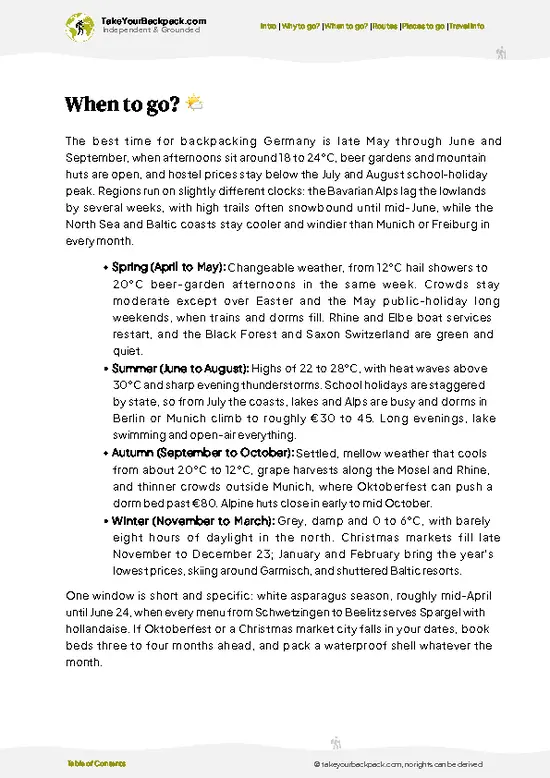
  • Topic: Weather and Temperature – The best months for backpacking Chiemsee are May through September. Temperatures range from 15°C to 25°C (59°F to 77°F), which is comfortable for hiking and outdoor activities. Avoid winter months like December to February, when it can dip below freezing and trails may be icy or muddy.

  • Topic: Daylight Hours – Long daylight in June and July means up to 16 hours of light, giving you more time to explore without rushing. By October, daylight shrinks to about 9 hours, which limits your hiking window and can make logistics trickier.

  • Topic: Crowds – July and August attract the most tourists, especially families and day-trippers. If you want quieter trails, aim for late May or early September when the weather is still good but the crowds thin out.

  • Topic:
read more 👉

  • Topic: Weather and Temperature – The best months for backpacking Chiemsee are May through September. Temperatures range from 15°C to 25°C (59°F to 77°F), which is comfortable for hiking and outdoor activities. Avoid winter months like December to February, when it can dip below freezing and trails may be icy or muddy.

  • Topic: Daylight Hours – Long daylight in June and July means up to 16 hours of light, giving you more time to explore without rushing. By October, daylight shrinks to about 9 hours, which limits your hiking window and can make logistics trickier.

  • Topic: Crowds – July and August attract the most tourists, especially families and day-trippers. If you want quieter trails, aim for late May or early September when the weather is still good but the crowds thin out.

  • Topic: Seasonal Activities – Summer months offer swimming, boating, and open-air festivals around the lake. Spring and early autumn bring birdwatching and wildflower spotting, but some water activities may be unavailable.

  • Topic: Price Fluctuations – Accommodation and ferry prices peak in July and August. Booking outside these months can save you 20-30%, freeing up budget for local food or guided tours.


Pro-tip: Plan for late May or early September to balance good weather, manageable crowds, and better prices—this is when Chiemsee feels like it’s all yours.


source: climatestotravel.comJANJanuary: below average for travelingFEBFebruary: below average for travelingMARMarch: fair for travelingAPRApril: good for travelingMAYMay: excellent for travelingJUNJune: excellent for travelingJULJuly: highly recommended for travelingAUGAugust: highly recommended for travelingSEPSeptember: excellent for travelingOCTOctober: good for travelingNOVNovember: fair for travelingDECDecember: below average for traveling
when-to-go

✈️ The backpacker research shortcutGermany Travel Guide

An offline-friendly backpacking guide with optimized travel routes, ranked highlights, transport advice, and the best areas to stay.
example page 0 from our offline Travel Guide for Germany
example page 1 from our offline Travel Guide for Germany
example page 2 from our offline Travel Guide for Germany
example page 3 from our offline Travel Guide for Germany
example page 4 from our offline Travel Guide for Germany
example page 5 from our offline Travel Guide for Germany
example page 6 from our offline Travel Guide for Germany
example page 7 from our offline Travel Guide for Germany
The digital guide (514 pages) contains:
140 highlights, ranked by travel appeal
Optimized 7, 14 & 21-day travel routes
Cities, national parks, landmarks, beaches
How to get around
Offline-friendly for travel without Wi-Fi
👉 Click to see all 30+ guide features

📅 Plan smarter in minutes, not weeks
Month by month travel advice
Festivals & national holidays
Budget expectations

🗺️ Go to the right places, skip the overrated ones
Honest pros & cons of destinations
Top hikes, parks & viewpoints
Lesser-known places most travelers miss
Clear “worth it vs skip it” guidance

🛏️ Travel smoothly without rookie mistakes
Best areas to stay
Transport systems explained simply
Common scams & safety advice
SIM cards, money & practical tips

🌍 Understand the country, not just visit it
Culture & traditions
52 Essential phrases & customs
Festivals worth planning around
Traveler-friendly historical context
Insights that make places more meaningful

📱 Built for real travel conditions
Fully downloadable PDF
Works completely offline
Optimized for phone use
Useful in remote areas & buses
Everything in one place
Save weeks of stressful planning
Get instant access to your full guide. 30‑day money-back guarantee.
+ Add another guide for just US$7.80

By proceeding you agree to our terms.
Sent to your inbox immediately after payment • 100% Secure Checkout
Best Backpacking Travel Advisor 2025 tourism awardBest Backpacking
Travel Advisor
2025
What others say about Take Your Backpack Guides:
⭐⭐⭐⭐⭐
Fantastic, amazing amount of information!
⭐⭐⭐⭐⭐
My goodness this is amazing, it's what I've been looking for hats off too you!
⭐⭐⭐⭐⭐
I think this is absolutely BRILLIANT
⭐⭐⭐⭐
Very complete and informative. It's still missing places, but I gotta to commend you
⭐⭐⭐⭐⭐
This is truly amazing, thank you, can't wait to explore it with my kids!
⭐⭐⭐⭐⭐
Awesome resource, thank you!
⭐⭐⭐⭐⭐
This is amazing! Can't wait to explore the ones I haven't seen
⭐⭐⭐⭐
I love this! Well done, great idea.
⭐⭐⭐⭐⭐
Thanks for taking the time to make this gem!
⭐⭐⭐⭐⭐
This might be the best website I've ever seen.
⭐⭐⭐⭐⭐
Congratulations, and thank you so much for your work; it's incredibly valuable.
⭐⭐⭐⭐
In all seriousness I think you did a great job pointing out the important spots
⭐⭐⭐⭐⭐
10/10 very good
⭐⭐⭐⭐⭐
As someone who's only just starting to visit regularly this is awesome, thank you.
⭐⭐⭐⭐
Thank you very much! I'm going to visit my dad, it's going to be very useful!
⭐⭐⭐⭐⭐
This is really cool! We'll be travelling for the first time and this definitely come in handy.
⭐⭐⭐⭐⭐
You are now our minister of culture, congratulations 👨‍💼
⭐⭐⭐⭐⭐
Just wanted to tell you that this is a pearl! Going to follow your recommendations.
⭐⭐⭐⭐⭐
This is so cool. I'll definitely be using the resource for my travels soon.
⭐⭐⭐⭐⭐
This is very impressive! Good work.
⭐⭐⭐⭐⭐
This is an amazing and informative site. Very well done!

🛏️ Where to stay?Where staying makes the most sense

Chiemsee National Park itself doesn’t have accommodations inside its boundaries. It’s a protected area focused on preserving nature, so overnight stays within the park are off the table. That’s actually a good thing—it keeps the environment intact and the experience authentic. Your best bet is to base yourself in one of the nearby towns or villages, which offer a range of options from budget hostels to guesthouses.

Prien am Chiemsee is the most popular gateway town. It’s right on the lake’s edge, with direct ferry access to Herreninsel and Fraueninsel, the two main islands in the lake. You’ll … read more 👉
Chiemsee National Park itself doesn’t have accommodations inside its boundaries. It’s a protected area focused on preserving nature, so overnight stays within the park are off the table. That’s actually a good thing—it keeps the environment intact and the experience authentic. Your best bet is to base yourself in one of the nearby towns or villages, which offer a range of options from budget hostels to guesthouses.

Prien am Chiemsee is the most popular gateway town. It’s right on the lake’s edge, with direct ferry access to Herreninsel and Fraueninsel, the two main islands in the lake. You’ll find several hostels and affordable pensions here. It’s a practical choice if you want to combine lake activities with hiking or cycling around the park’s fringes.

Bernau am Chiemsee is smaller and quieter but still well connected. It’s a solid pick if you want to avoid the crowds and enjoy a more laid-back vibe. Expect a handful of guesthouses and small inns rather than hostels.

If you’re after a livelier scene with more amenities, Rosenheim is about 20 kilometers away. It’s a larger town with hostels, budget hotels, and good transport links. Staying here means a short commute but more options for dining and nightlife.

Bottom line: plan to stay outside the park, in towns like Prien or Bernau, and use public transport or bike rentals to get around. Trying to find lodging inside the park isn’t just tough—it’s not allowed. Save your energy and budget for the experiences on the water and trails, not for overpriced or nonexistent park accommodations.

👛 Costs (as of 4 September 2026)How expensive it really is

For a comfortable stay at Chiemsee, expect to pay between €80 and €140 per night for a vacation apartment accommodating two people. ([yaaholidays.com](https://yaaholidays.com/magazin/seen-badeseen/urlaub-am-see-in-deutschland?utm_source=openai)) Dining out for two typically costs between €40 and €70. Beach entry fees range from €4 to €6. Additional activities like stand-up paddleboarding are available from €15 per hour, and sailing tours range from €30 to €60 per person. Self-catering expenses average €50 to €70 per week for two people. Please note that prices can vary based on the season and specific location.

source: chiemsee-alpenland.de
⚠️ Prices can change and everyone travels differently, so take this as a rough guide. Hope it helps you plan your adventure!

🥾 TrailsBest hikes in Chiemsee national park

Chiemsee National Park in Germany offers a hiking experience that’s more about gentle exploration than rugged adventure. The terrain is mostly flat to mildly undulating, making it accessible for a wide range of hikers, including families and casual walkers. The park’s main draw is its lakeside scenery—especially the views of the Chiemsee lake itself, often called the ”Bavarian Sea.” You’ll find stretches of forest, reed beds, and open meadows that provide a quiet backdrop for spotting local wildlife like herons, kingfishers, and occasionally deer. The trails here don’t demand technical skills … read more 👉
Chiemsee National Park in Germany offers a hiking experience that’s more about gentle exploration than rugged adventure. The terrain is mostly flat to mildly undulating, making it accessible for a wide range of hikers, including families and casual walkers. The park’s main draw is its lakeside scenery—especially the views of the Chiemsee lake itself, often called the ”Bavarian Sea.” You’ll find stretches of forest, reed beds, and open meadows that provide a quiet backdrop for spotting local wildlife like herons, kingfishers, and occasionally deer. The trails here don’t demand technical skills or steep climbs, but the real reward is in the peaceful immersion in nature rather than physical challenge.

If you want a structured route, the Chiemsee Rundweg is the standout trail.
  • Length: Approximately 17 kilometers
  • Estimated Duration: Around 4 to 5 hours at a moderate pace
  • Difficulty Level: Easy to moderate; mostly flat with some gentle inclines
  • Key Features: Lakeshore views, small villages, forest paths, and wetlands
  • Terrain: Mixed gravel and dirt paths, well-maintained and clearly marked
This trail loops around the lake, giving you a comprehensive feel for the area’s natural and cultural landscape without demanding a high level of fitness. It’s perfect for those who want a full-day outing without the risk of overexertion.

Getting to Chiemsee National Park is straightforward by public transport. The nearest train station is Prien am Chiemsee, which connects well with Munich and other regional hubs. From there, local buses or a short taxi ride will get you to the park entrances. This accessibility means the park can get busy, especially on weekends and during summer holidays. If you prefer solitude, aim for early mornings or weekdays. There is no entrance fee, which is a relief for budget-conscious travelers, but don’t mistake that for a lack of upkeep—the park is well-maintained and visitor-friendly.

A word to the wise: while the trails are easy, weather can shift quickly near the lake, so pack layers and waterproof gear. Also, the flat terrain can lull you into underestimating the distance, so bring enough water and snacks to keep your energy steady. The park’s charm lies in its calm, not in adrenaline, so pace yourself accordingly. Avoiding peak times will also help you appreciate the quiet moments when wildlife is most active and the lake’s surface mirrors the sky without interruption.
⚠️ Hiking info can sometimes be outdated or inaccurate. Before you hit the trail, check the latest conditions with locals. If you do spot anything that's off, I'd love to hear from you, so I can update it for fellow travelers.

🛡️ SafetyTraveler Safety Guide

Chiemsee National Park offers a mostly gentle hiking experience, but don’t let that lull you into complacency. Weather here can shift quickly, especially in spring and autumn, so layering is key. Rain and wind can sneak up, turning a pleasant stroll into a damp slog if you’re underprepared. The terrain is forgiving—mostly flat with well-marked paths—so you won’t be wrestling with steep climbs or tricky footing. Still, some trails skirt the lake’s edge where mud and slippery rocks demand steady shoes with good grip.

Wildlife encounters are low-stakes but worth respecting. You might spot waterfowl or deer, but they keep their distance if you do the same. Avoid feeding animals; it disrupts their natural habits and can cause problems down the line. Navigation is straightforward, but first-timers … read more 👉
Chiemsee National Park offers a mostly gentle hiking experience, but don’t let that lull you into complacency. Weather here can shift quickly, especially in spring and autumn, so layering is key. Rain and wind can sneak up, turning a pleasant stroll into a damp slog if you’re underprepared. The terrain is forgiving—mostly flat with well-marked paths—so you won’t be wrestling with steep climbs or tricky footing. Still, some trails skirt the lake’s edge where mud and slippery rocks demand steady shoes with good grip.

Wildlife encounters are low-stakes but worth respecting. You might spot waterfowl or deer, but they keep their distance if you do the same. Avoid feeding animals; it disrupts their natural habits and can cause problems down the line. Navigation is straightforward, but first-timers sometimes underestimate the time needed to explore the islands fully. Plan your day to avoid rushing, especially if you’re relying on ferries to hop between spots. A solid map or app helps, but the park’s signage is reliable. Stick to marked trails to protect both yourself and the environment.

FAQTraveler FAQ

2 to 3 days are sufficient to explore Chiemsee thoroughly, including the main islands Herrenchiemsee and Frauenchiemsee. This allows time for boat trips, hiking, and visiting key attractions like Herrenchiemsee Palace. Additional days can be spent on outdoor activities or nearby towns.
Yes, you can visit Chiemsee without a car. Regular trains and buses connect to Prien am Chiemsee, where ferries depart to the islands. The public transport system is reliable and well-coordinated with ferry schedules.
No entrance fee or permit is required to visit Chiemsee itself. However, there are ticket costs for ferry rides to the islands, typically around 8 to 10 euros round trip. Entry to Herrenchiemsee Palace requires a separate admission fee.
⚠️ Things can change over time, so always validate details locally before you go.

Other German national parks near Chiemsee

Explore more nearby:

  • Berchtesgaden—alpine lakes, rugged peaks, ice caves| 52 km away
  • Tegernsee—Alpine lake, mountain trails, lakeside villages| 52 km away
  • Bavarian Forest—primeval forest, glassworks heritage, lynx habitat| 137 km away

💡 Not sure where to go next?
Create a personalized itinerary for Germany including Chiemsee and the places that fit your trip.

Generate my itinerary

👉 Discover all national parks

Or checkout all Germany has to offer (think cities, towns, villages, national parks, hikes, beaches, festivals)
Country photo of Germany

We 💚 feedbackFinal thoughts on exploring Chiemsee

Chiemsee is a rare spot where you can soak in Bavarian lake life without the crowds that swamp other German destinations. The islands offer a quiet charm that feels like stepping back in time, especially if you’re into history or just want to escape the usual tourist noise. But don’t expect wild solitude—weekends can get busy, and the ferry schedules are strict. Plan your timing carefully, or you’ll waste precious hours waiting instead of exploring.

✈️ When did I visit Germany?
Being a neighbouring country of my home base, I visited Germany many times.

✍️ Help improve this page!
The information on this page is based on my own backpacking experience in Germany, supplemented with up-to-date research and feedback from other travelers. Travel details can change, so if you notice anything outdated or incomplete, feel free to let me know.


🙋‍♂️ Give feedback

👋 Meet the founderWho’s Behind Take Your Backpack?

Johan, backpacker and founder of TakeYourBackpackHi, I’m Johan (Netherlands 🇳🇱), the creator of TakeYourBackpack. Over the past decade, I’ve backpacked through 80+ countries across six continents, gaining extensive experience with independent travel, long-term trips, and overland routes.

This site is built on a combination of firsthand travel experience and carefully curated insights from other backpackers. Many guides are based on places I’ve personally visited, while others bring together tips, observations, and practical advice shared by trusted travelers I’ve met along the way.

The goal is to provide realistic, experience-driven guidance — not generic itineraries — so you can explore destinations with better context, clearer expectations, and more confidence.

Get full Germany guide •
Instant download • 140 highlights • Full Offline guide