×

Germany🇩🇪 | citiesLübeckBrick Gothic, marzipan shops, old city gates | things to do and best time to go

Explore HeidelbergExplore Munich

Backpacking in Lübeck
UNESCO World Heritage site
👍 Recommendedcity ranked #13
By Johan Kruseman 🇳🇱 | Updated September 4, 2026

Lübeck is not for you if you want Berlin-level nightlife, Instagram chaos, or a constant stream of hostel bar crawls. But if you like cities with layers of history and a calm, almost strategic base-camp feel, it quietly pays off. Sitting in northern Germany near the Baltic coast, Lübeck is a compact Hanseatic city of brick-gothic churches, warehouse gables, and the Holstentor gate that actually feels like a portal to another era. It’s safe, walkable, and cheaper than Hamburg, but also sleepier and less social unless you stay in hostels or hit student bars. Think slow evenings, museum days, day trips to the coast, and a low-drama, high-comfort reset between heavier stops.

Discover everything you want to know in the 📖 Germany Travel Guide.


Get your Germany guide
140 ranked highlights, routes & tips, works offline (514 pages)
Loading the map 🌍
CLICK TO FILTER
cities
towns
landmarks
national parks
hikes
beaches
attractions
festivals
regions
SHOW COUNTRY’S BESTSHOW ALL

✨ Why go?
Ranked #13 city in Germany
Why Lübeck should be on your travel list

Lübeck is a strategic stop for backpackers weaving through northern Germany. Its walkability makes it easy to explore the charming streets without wasting time on transport. You’ll find a solid range of hostels that cater to budget travelers, offering a social vibe that’s perfect for meeting fellow adventurers. The food scene is diverse, from local bakeries to cozy pubs, giving you plenty of options without breaking the bank. Plus, Lübeck serves as a basecamp for day trips to nearby cities and nature spots, making it a smart choice for those looking to maximize their experience while keeping comfort in check.
Want to include Lübeck in your Germany route?
Create a personalized Germany itinerary that includes Lübeck and the places that fit your trip — based on your travel style, budget, and available time. Get your route in seconds.

Generate my trip

💡 HighlightsThe experiences that define the visit

  • Holstentor (Holsten Gate) — The postcard of Lübeck: twin-towered brick-Gothic gate with a small museum inside that tells the city’s medieval trade story and makes for great photos from the riverfront.
  • Altstadtinsel (Old Town Island) — UNESCO World Heritage — Walk the compact island to soak in the dense medieval street plan, hidden courtyards, waterways and the way the whole place still feels like a working Hanseatic town rather than a staged museum.
  • Marienkirche (St. Mary’s Church) — A massive brick-Gothic cathedral with an impressive astronomical clock, surviving art and a humbling history (bomb damage and bells); the interior and nave atmosphere are unforgettable.
  • St. Petri (St. Peter’s Church) & Tower — Climb the tower for one of the best panoramic views over Lübeck’s red roofs and
read more 👉
  • Holstentor (Holsten Gate) — The postcard of Lübeck: twin-towered brick-Gothic gate with a small museum inside that tells the city’s medieval trade story and makes for great photos from the riverfront.
  • Altstadtinsel (Old Town Island) — UNESCO World Heritage — Walk the compact island to soak in the dense medieval street plan, hidden courtyards, waterways and the way the whole place still feels like a working Hanseatic town rather than a staged museum.
  • Marienkirche (St. Mary’s Church) — A massive brick-Gothic cathedral with an impressive astronomical clock, surviving art and a humbling history (bomb damage and bells); the interior and nave atmosphere are unforgettable.
  • St. Petri (St. Peter’s Church) & Tower — Climb the tower for one of the best panoramic views over Lübeck’s red roofs and the Trave; the church building itself hosts exhibitions and a quiet, lofty vibe.
  • Lübeck Rathaus (Town Hall) — One of Germany’s oldest, most ornate town halls with a striking façade and richly decorated council rooms — worth peeking inside on a guided tour or admiring from the market square.
  • Europäisches Hansemuseum (European Hanseatic Museum) — A modern, hands-on museum that brings the Hanseatic League to life; excellent for understanding why Lübeck mattered across medieval Northern Europe.
  • Buddenbrookhaus — The Thomas Mann/Buddenbrook family museum housed in a charming merchant’s house; essential for literature fans and anyone curious about Lübeck’s bourgeois cultural history.
  • Café Niederegger & Marzipan Salon — More than a shop: a chance to taste the Lübeck marzipan tradition, visit a small museum display and sit in an old-world café right on the main shopping street.
  • St. Annen-Museum (St. Anne’s Museum) — A quiet, atmospheric former monastery complex filled with medieval sacred art, carved altars and cloisters — one of the best places to see northern Gothic sculpture up close.
  • Heiligen-Geist-Hospital (Hospital of the Holy Spirit) — A functioning medieval hospital complex with historic wards, an old pharmacy and display rooms; it’s a rare, very tangible window into medieval social care and everyday life.
For easy day trips outside the city try Travemünde (the historic port and beach), Timmendorfer Strand (seaside promenade and bathing), or the lakes and castles of Holstein Switzerland around Plön and Eutin.
Spotted a mistake or missing something? Contact us.

Things to do around Lübeck

Ratings based on Tripadvisor reviews. When you book through this link, you support our work at no extra cost to you.

🏘️ NeighborhoodsWhere things are and how it's laid out

Lübeck is a charming blend of history and modernity, perfect for backpackers seeking both culture and comfort.

Altstadt: This UNESCO World Heritage site is the heart of Lübeck. Cobblestone streets, medieval architecture, and cozy cafés create a vibrant atmosphere. It’s walkable, with plenty of sights nearby. Expect higher prices, but the experience is worth it. Ideal for short stays.

St. Lorenz: A bit more laid-back, this neighborhood offers affordable accommodations and local eateries. It’s less touristy, making it great for longer stays. Public transport is accessible, and you can enjoy a quieter vibe while still being close to the action.

Travemünde: If you crave the sea, head here. It’s a beach town with a relaxed feel. Prices can vary, but you’ll find budget options. Perfect for a … read more 👉
Lübeck is a charming blend of history and modernity, perfect for backpackers seeking both culture and comfort.

Altstadt: This UNESCO World Heritage site is the heart of Lübeck. Cobblestone streets, medieval architecture, and cozy cafés create a vibrant atmosphere. It’s walkable, with plenty of sights nearby. Expect higher prices, but the experience is worth it. Ideal for short stays.

St. Lorenz: A bit more laid-back, this neighborhood offers affordable accommodations and local eateries. It’s less touristy, making it great for longer stays. Public transport is accessible, and you can enjoy a quieter vibe while still being close to the action.

Travemünde: If you crave the sea, head here. It’s a beach town with a relaxed feel. Prices can vary, but you’ll find budget options. Perfect for a short getaway or a longer retreat by the water, with easy transport links back to Lübeck.

⌛️ 1 dayA smart one-day plan

Lübeck, a charming Hanseatic city, is a treasure trove of medieval architecture and rich history. Start your morning at the iconic Holstentor, the city’s emblematic gate. Snap a few photos, then stroll through the cobblestone streets of the Altstadt, where the scent of fresh bread from local bakeries fills the air. Grab a pastry at Café Niederegger, famous for its marzipan, and fuel up for the day.

In the afternoon, head to St. Mary’s Church, a stunning example of Brick Gothic architecture. Climb the tower for panoramic views of the city. Afterward, wander to the lesser-known Hospital of the Holy Spirit, a serene spot that feels worlds away from the tourist hustle. It’s a perfect place to reflect on Lübeck’s history.

As evening approaches, find a cozy spot along the Trave River. Enjoy dinner … read more 👉
Lübeck, a charming Hanseatic city, is a treasure trove of medieval architecture and rich history. Start your morning at the iconic Holstentor, the city’s emblematic gate. Snap a few photos, then stroll through the cobblestone streets of the Altstadt, where the scent of fresh bread from local bakeries fills the air. Grab a pastry at Café Niederegger, famous for its marzipan, and fuel up for the day.

In the afternoon, head to St. Mary’s Church, a stunning example of Brick Gothic architecture. Climb the tower for panoramic views of the city. Afterward, wander to the lesser-known Hospital of the Holy Spirit, a serene spot that feels worlds away from the tourist hustle. It’s a perfect place to reflect on Lübeck’s history.

As evening approaches, find a cozy spot along the Trave River. Enjoy dinner at a local restaurant, savoring fresh fish dishes. The day wraps up beautifully as the sun sets, casting a warm glow over this enchanting city. You’ll leave with a sense of Lübeck’s soul, having experienced both its iconic sights and hidden corners.
Turn your Lübeck visit into an Germany adventure
Build a complete Germany route with Lübeck, hidden gems, must-see destinations, and realistic travel times included.

Generate my trip

🌤️ When to go?Seasonal considerations and timing


  • Weather: Lübeck’s weather swings from chilly winters around -1°C (30°F) to mild summers averaging 20-22°C (68-72°F). Spring and early autumn offer crisp, comfortable days without the summer humidity or winter freeze.

  • Temperature: Peak backpacking comfort hits between May and September, when daytime temps hover between 15-22°C (59-72°F), perfect for wandering cobblestone streets without overheating or bundling up.

  • Daylight Hours: Long summer days stretch up to 17 hours, maximizing exploration time. Winter cuts daylight to about 7 hours, limiting outdoor activities and making early nights inevitable.

  • Crowds: Summer draws tourists, especially July and August, swelling prices and crowding key spots. Shoulder seasons—late spring and early fall—balance fewer people with pleasant weather.
read more 👉

  • Weather: Lübeck’s weather swings from chilly winters around -1°C (30°F) to mild summers averaging 20-22°C (68-72°F). Spring and early autumn offer crisp, comfortable days without the summer humidity or winter freeze.

  • Temperature: Peak backpacking comfort hits between May and September, when daytime temps hover between 15-22°C (59-72°F), perfect for wandering cobblestone streets without overheating or bundling up.

  • Daylight Hours: Long summer days stretch up to 17 hours, maximizing exploration time. Winter cuts daylight to about 7 hours, limiting outdoor activities and making early nights inevitable.

  • Crowds: Summer draws tourists, especially July and August, swelling prices and crowding key spots. Shoulder seasons—late spring and early fall—balance fewer people with pleasant weather.

  • Seasonal Activities: Summer hosts open-air concerts and harbor festivals, while winter brings cozy Christmas markets. Choose your vibe: lively events or quieter, atmospheric strolls.

  • Price Fluctuations: Accommodation and transport costs peak in summer. Booking in shoulder seasons can save you 20-30%, letting you upgrade comfort or extend your stay.


Pro-tip: Aim for late May or early September—sweet spots where weather, daylight, and prices align, giving you the best bang for your backpacking buck without sacrificing comfort or experience.


source: climatestotravel.comJANJanuary: fair for travelingFEBFebruary: fair for travelingMARMarch: good for travelingAPRApril: highly recommended for travelingMAYMay: excellent for travelingJUNJune: excellent for travelingJULJuly: highly recommended for travelingAUGAugust: highly recommended for travelingSEPSeptember: excellent for travelingOCTOctober: highly recommended for travelingNOVNovember: good for travelingDECDecember: fair for traveling

✈️ The backpacker research shortcutGermany Travel Guide

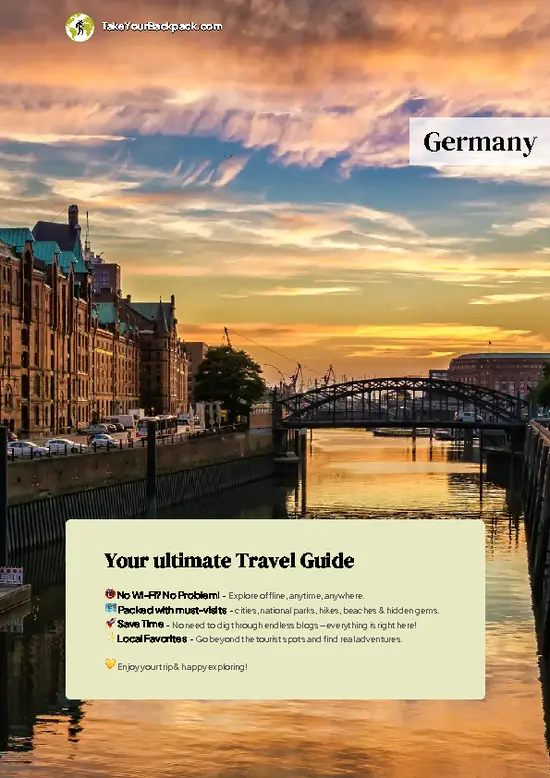
An offline-friendly backpacking guide with optimized travel routes, ranked highlights, transport advice, and the best areas to stay.
example page 0 from our offline Travel Guide for Germany
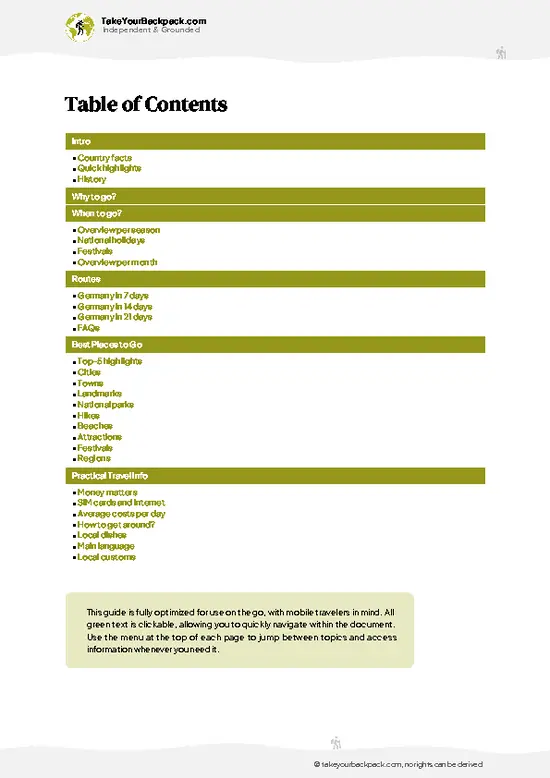
example page 1 from our offline Travel Guide for Germany
example page 2 from our offline Travel Guide for Germany
example page 3 from our offline Travel Guide for Germany
example page 4 from our offline Travel Guide for Germany
example page 5 from our offline Travel Guide for Germany
example page 6 from our offline Travel Guide for Germany
example page 7 from our offline Travel Guide for Germany
The digital guide (514 pages) contains:
140 highlights, ranked by travel appeal
Optimized 7, 14 & 21-day travel routes
Cities, national parks, landmarks, beaches
How to get around
Offline-friendly for travel without Wi-Fi
👉 Click to see all 30+ guide features

📅 Plan smarter in minutes, not weeks
Month by month travel advice
Festivals & national holidays
Budget expectations

🗺️ Go to the right places, skip the overrated ones
Honest pros & cons of destinations
Top hikes, parks & viewpoints
Lesser-known places most travelers miss
Clear “worth it vs skip it” guidance

🛏️ Travel smoothly without rookie mistakes
Best areas to stay
Transport systems explained simply
Common scams & safety advice
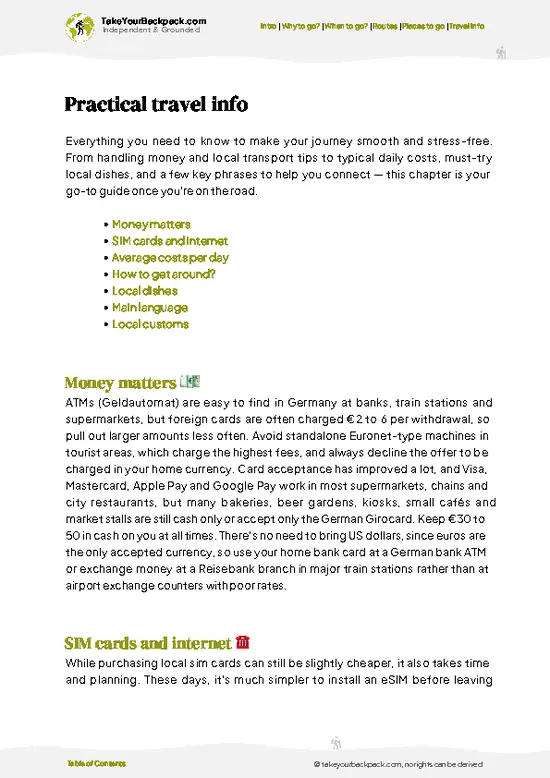
SIM cards, money & practical tips

🌍 Understand the country, not just visit it
Culture & traditions
52 Essential phrases & customs
Festivals worth planning around
Traveler-friendly historical context
Insights that make places more meaningful

📱 Built for real travel conditions
Fully downloadable PDF
Works completely offline
Optimized for phone use
Useful in remote areas & buses
Everything in one place
Save weeks of stressful planning
Get instant access to your full guide. 30‑day money-back guarantee.
+ Add another guide for just £5.98

By proceeding you agree to our terms.
Sent to your inbox immediately after payment • 100% Secure Checkout
Best Backpacking Travel Advisor 2025 tourism awardBest Backpacking
Travel Advisor
2025
What others say about Take Your Backpack Guides:
⭐⭐⭐⭐⭐
Fantastic, amazing amount of information!
⭐⭐⭐⭐⭐
My goodness this is amazing, it's what I've been looking for hats off too you!
⭐⭐⭐⭐⭐
I think this is absolutely BRILLIANT
⭐⭐⭐⭐
Very complete and informative. It's still missing places, but I gotta to commend you
⭐⭐⭐⭐⭐
This is truly amazing, thank you, can't wait to explore it with my kids!
⭐⭐⭐⭐⭐
Awesome resource, thank you!
⭐⭐⭐⭐⭐
This is amazing! Can't wait to explore the ones I haven't seen
⭐⭐⭐⭐
I love this! Well done, great idea.
⭐⭐⭐⭐⭐
Thanks for taking the time to make this gem!
⭐⭐⭐⭐⭐
This might be the best website I've ever seen.
⭐⭐⭐⭐⭐
Congratulations, and thank you so much for your work; it's incredibly valuable.
⭐⭐⭐⭐
In all seriousness I think you did a great job pointing out the important spots
⭐⭐⭐⭐⭐
10/10 very good
⭐⭐⭐⭐⭐
As someone who's only just starting to visit regularly this is awesome, thank you.
⭐⭐⭐⭐
Thank you very much! I'm going to visit my dad, it's going to be very useful!
⭐⭐⭐⭐⭐
This is really cool! We'll be travelling for the first time and this definitely come in handy.
⭐⭐⭐⭐⭐
You are now our minister of culture, congratulations 👨‍💼
⭐⭐⭐⭐⭐
Just wanted to tell you that this is a pearl! Going to follow your recommendations.
⭐⭐⭐⭐⭐
This is so cool. I'll definitely be using the resource for my travels soon.
⭐⭐⭐⭐⭐
This is very impressive! Good work.
⭐⭐⭐⭐⭐
This is an amazing and informative site. Very well done!

🛏️ Where to stay?Best areas to stay in Germany

In Lübeck, the sweet spot for backpackers is the Altstadt, the old town island. It’s compact, safe, and buzzing with a mix of locals and travelers. Staying here means you’re steps away from the city’s medieval charm, cobblestone streets, and lively cafés where solo travelers naturally strike up conversations. Hostels cluster around this area, offering budget-friendly beds without sacrificing access to the city’s pulse.

Compared to the quieter, more residential districts like St. Lorenz or St. Jürgen, Altstadt delivers a social atmosphere that’s hard to beat. You trade a bit of peace for connection, … read more 👉
In Lübeck, the sweet spot for backpackers is the Altstadt, the old town island. It’s compact, safe, and buzzing with a mix of locals and travelers. Staying here means you’re steps away from the city’s medieval charm, cobblestone streets, and lively cafés where solo travelers naturally strike up conversations. Hostels cluster around this area, offering budget-friendly beds without sacrificing access to the city’s pulse.

Compared to the quieter, more residential districts like St. Lorenz or St. Jürgen, Altstadt delivers a social atmosphere that’s hard to beat. You trade a bit of peace for connection, but that’s the point: it’s where you plug into Lübeck’s energy. Public transport is a breeze from here, so you can easily explore beyond without the hassle of long commutes. If you want to maximize your time and social opportunities while keeping costs low, Altstadt is the logical choice. It’s the backpacker’s base camp for both comfort and community.

🚌 Getting aroundTransportation options and practical tips

Lübeck moves with a quiet precision that feels almost deliberate, like a clockmaker’s workshop humming beneath centuries-old brick. It’s not a city that rushes you, but it won’t wait either. The rhythm here is a blend of punctuality and patience—trains and buses stick to schedules, but the cobblestone streets invite you to slow down and read the city’s story on foot. Understanding this flow means knowing when to lean into efficiency and when to savor the slower pace. Your choices between time, money, and comfort will shape how you experience Lübeck’s layered charm.


  • Walking: The heart of Lübeck is compact and best explored on foot. No cost, zero emissions, and you control the pace. Walking lets you absorb the medieval architecture and unexpected courtyards, but it’s time-intensive if you
read more 👉
Lübeck moves with a quiet precision that feels almost deliberate, like a clockmaker’s workshop humming beneath centuries-old brick. It’s not a city that rushes you, but it won’t wait either. The rhythm here is a blend of punctuality and patience—trains and buses stick to schedules, but the cobblestone streets invite you to slow down and read the city’s story on foot. Understanding this flow means knowing when to lean into efficiency and when to savor the slower pace. Your choices between time, money, and comfort will shape how you experience Lübeck’s layered charm.


  • Walking: The heart of Lübeck is compact and best explored on foot. No cost, zero emissions, and you control the pace. Walking lets you absorb the medieval architecture and unexpected courtyards, but it’s time-intensive if you want to cover more ground.

  • Bus (Schleswig-Holstein-Verkehrsverbund): Runs roughly from 5:00 AM to midnight, with tickets around €2.50 for a single ride. Buses are reliable and connect the city center with suburbs and nearby towns. Moderate speed and comfort, perfect for budget travelers who want to save energy but avoid taxis.

  • Regional Train (Deutsche Bahn): Frequent departures to Hamburg and other regional hubs, starting early morning until late evening. Tickets vary but can be as low as €7 if booked in advance. Faster than buses, offering more comfort and space, but less flexible for short inner-city hops.

  • Bicycle Rental: Available from several providers, typically €10-15 per day. A sweet spot between walking and public transit, giving you speed and freedom without the cost or hassle of taxis. Lübeck’s flat terrain makes cycling a breeze, but watch for cobblestones.

  • Taxi: Starting fare around €4, with about €2 per kilometer thereafter. Fast and comfortable, but expensive compared to other options. Best reserved for late nights or when you’re hauling heavy gear and time is tight.

👛 Costs (as of 4 September 2026)Travel costs and budget guide for Lübeck

Backpacking in Lübeck, Germany, means balancing your budget with the city’s charm and practical costs. Here’s the lowdown on what you’ll typically spend each day.
  • Dorm Accommodation (High Season): Expect to pay around €25 to €35 per night in hostels during peak tourist months. Lübeck’s historic center draws crowds, so prices tick up, especially in well-reviewed spots with good amenities.
  • Dorm Accommodation (Off-Season): Drop to about €15 to €25 per night when the tourist rush cools off. You’ll find quieter hostels with fewer crowds and better chances to negotiate or snag last-minute deals.
  • Meals: Budget roughly €10 to €15 daily if you stick to simple meals—think bakery sandwiches, street food, or casual cafés. Cooking your own meals can cut this further, but dining out in Lübeck’s old town
read more 👉
Backpacking in Lübeck, Germany, means balancing your budget with the city’s charm and practical costs. Here’s the lowdown on what you’ll typically spend each day.
  • Dorm Accommodation (High Season): Expect to pay around €25 to €35 per night in hostels during peak tourist months. Lübeck’s historic center draws crowds, so prices tick up, especially in well-reviewed spots with good amenities.
  • Dorm Accommodation (Off-Season): Drop to about €15 to €25 per night when the tourist rush cools off. You’ll find quieter hostels with fewer crowds and better chances to negotiate or snag last-minute deals.
  • Meals: Budget roughly €10 to €15 daily if you stick to simple meals—think bakery sandwiches, street food, or casual cafés. Cooking your own meals can cut this further, but dining out in Lübeck’s old town tends to hover around €8 to €12 for a decent lunch.
  • Local Transport: Single bus tickets cost about €3, but most backpackers save by walking or renting a bike, which is both economical and the best way to soak in the city’s medieval vibe.
  • City Transport Pass: If you plan multiple trips, a day pass runs around €6. It’s worth it if you’re hopping between neighborhoods or catching early trains to nearby towns.
  • Basic Activities/Entry Fees: Museums and historic sites usually charge €5 to €10. Some, like the Holstentor Museum, are on the higher end but offer rich insight into Lübeck’s Hanseatic past.
  • Miscellaneous Expenses: Factor in about €5 to €10 for things like bottled water, snacks, or a coffee break. Small splurges add up but keep your daily budget flexible.

All told, you’re looking at a daily spend between roughly €40 and €70, depending on season and how much you lean into comfort versus scrappy independence. Lübeck rewards those who explore on foot and savor simple pleasures, so your wallet and your feet will both thank you.


source: luebeck-tourismus.de
⚠️ Prices can change and everyone travels differently, so take this as a rough guide. Hope it helps you plan your adventure!

🚌 Day tripsWhere to go beyond the main area

Lübeck is a fantastic launchpad for day trips that blend history, culture, and stunning landscapes. Here are some top picks that won’t drain your wallet or your time.

Travemünde
Just a 30-minute train ride from Lübeck, this charming seaside town offers sandy beaches and a vibrant promenade. Grab a fish sandwich from a local vendor and stroll along the shore. The best time to visit is summer when the beach buzzes with life. A common mistake? Overpacking for a day at the beach; keep it light!


Hamburg
Only an hour away by train, Hamburg is a bustling port city with a rich maritime history. Explore the Speicherstadt, the world’s largest warehouse district, and don’t miss the Elbphilharmonie for its stunning architecture. Budget around €15 for a round trip. The fall is particularly lovely, … read more 👉
Lübeck is a fantastic launchpad for day trips that blend history, culture, and stunning landscapes. Here are some top picks that won’t drain your wallet or your time.

Travemünde
Just a 30-minute train ride from Lübeck, this charming seaside town offers sandy beaches and a vibrant promenade. Grab a fish sandwich from a local vendor and stroll along the shore. The best time to visit is summer when the beach buzzes with life. A common mistake? Overpacking for a day at the beach; keep it light!


Hamburg
Only an hour away by train, Hamburg is a bustling port city with a rich maritime history. Explore the Speicherstadt, the world’s largest warehouse district, and don’t miss the Elbphilharmonie for its stunning architecture. Budget around €15 for a round trip. The fall is particularly lovely, with fewer tourists and crisp air. First-timers often overlook the local food scene; try the currywurst!
👉 Explore Hamburg

Lauenburg
This picturesque town, about 45 minutes from Lübeck, sits on the banks of the Elbe River. Its medieval architecture and scenic views make it a peaceful retreat. A round trip will cost you around €10. Spring is ideal, with blooming flowers enhancing the charm. Many miss the riverside walk; it’s a must-do for the best views.


Eutin
Just under an hour away, Eutin is known for its beautiful lakes and historic castle. The gardens are perfect for a leisurely stroll, especially in late spring when everything is in bloom. Expect to spend about €12 for transport. A common misstep is rushing through; take your time to soak in the serene atmosphere.
Want to know what more Germany offers?
The Germany Travel Guide describes 140 highlights, from cities to national parks, from beaches to hikes

Get the Travel Guide -

🍲 FoodLocal Cuisine & Drinks

In Lübeck, food is a celebration of its maritime heritage. Don’t miss the marzipan, a sweet almond treat that’s a local specialty. You’ll find it in charming shops, often crafted into whimsical shapes.

For a savory bite, seek out fish sandwiches at bustling markets or grab a hearty bowl of Labskaus, a sailor’s dish of corned beef, potatoes, and beetroot.

When it comes to drinks, try a local beer or a glass of Kümmel, a caraway seed schnapps that warms the soul.

Dining is casual here; locals often enjoy their meals at communal tables, embracing a sense of togetherness. Just remember, it’s perfectly fine to share a table and strike up a conversation!

🛡️ SafetyTraveler Safety Guide

Lübeck is generally safe, but like any city, it has its quirks. Stay alert in crowded spots like the Holstentor and the market square, where pickpockets might lurk. If you’re solo and out at night, stick to well-lit areas and main streets; the old town is charming but can feel quiet after dark.

Scams are rare, but be cautious of overly friendly strangers asking for money or offering unsolicited help. Carry your belongings close and maintain a confident posture. Enjoy the city, but keep your wits about you.

FAQFrequently asked questions about Lübeck

2 to 3 days are sufficient to explore Lübeck's main attractions, including the old town, Holstentor gate, and St. Mary's Church. This allows time to visit museums and enjoy local marzipan shops without rushing.
Yes, Lübeck is safe for solo backpackers. The city has low crime rates and a friendly atmosphere, especially in tourist areas and during the day. Standard precautions apply, particularly at night in less busy areas.
Lübeck is known for its medieval architecture, especially the Holstentor gate and its status as a UNESCO World Heritage Site. It is also famous for its marzipan, a sweet almond paste specialty produced locally.
⚠️ Things can change over time, so always validate details locally before you go.

Other German cities near Lübeck

Explore more nearby:

  • Hamburg—Harbor city, warehouse district, Reeperbahn| 58 km away
  • Bremen—Market square, Hanseatic warehouses, river embankment| 152 km away
  • Potsdam—Palace parks, film studios, Prussian legacy| 228 km away

💡 Not sure where to go next?
Create a personalized itinerary for Germany including Lübeck and the places that fit your trip.

Generate my itinerary

👉 Discover all cities

Or checkout all Germany has to offer (think cities, towns, villages, national parks, hikes, beaches, festivals)
Country photo of Germany

We 💚 feedbackIs it worth it?

Lübeck’s medieval charm is like stepping into a storybook, with its brick Gothic architecture and winding canals. But be ready for the tourist crowds, especially in summer. Embrace the hustle; it adds to the city’s energy, but plan your visits wisely to savor the magic.

✈️ When did I visit Germany?
Being a neighbouring country of my home base, I visited Germany many times.

✍️ Help improve this page!
The information on this page is based on my own backpacking experience in Germany, supplemented with up-to-date research and feedback from other travelers. Travel details can change, so if you notice anything outdated or incomplete, feel free to let me know.


🙋‍♂️ Give feedback

👋 Meet the founderWho’s Behind Take Your Backpack?

Johan, backpacker and founder of TakeYourBackpackHi, I’m Johan (Netherlands 🇳🇱), the creator of TakeYourBackpack. Over the past decade, I’ve backpacked through 80+ countries across six continents, gaining extensive experience with independent travel, long-term trips, and overland routes.

This site is built on a combination of firsthand travel experience and carefully curated insights from other backpackers. Many guides are based on places I’ve personally visited, while others bring together tips, observations, and practical advice shared by trusted travelers I’ve met along the way.

The goal is to provide realistic, experience-driven guidance — not generic itineraries — so you can explore destinations with better context, clearer expectations, and more confidence.

Get full Germany guide •
Instant download • 140 highlights • Full Offline guide