×

Germany🇩🇪 | regionsMoselle ValleySteep vineyards, river bends, half-timbered villages | things to do and best time to go

Explore BorkumExplore Rhine Valley

Backpacking in Moselle Valley
🌟 Highlightregion ranked #3
By Johan Kruseman 🇳🇱 | Updated September 4, 2026

Ten, fifteen years ago the Moselle felt like a sleepy side quest: a few wine nerds, cyclists in neon Lycra, and grandmas on river cruises. Now it’s on every “fairytale Germany” list, but it still hasn’t tipped into full theme-park mode. The Moselle Valley snakes between Trier and Koblenz in western Germany, near Luxembourg and the Rhine, and it’s basically a long, twisting corridor of vineyards, castles, and half-timbered towns glued to steep hillsides. For backpackers, it’s gorgeous and surprisingly varied—castle hikes above Cochem, quiet wine villages like Beilstein, studenty corners of Trier—but it’s not the cheapest once you start sipping Riesling all day, and buses between tiny towns can be slow or sparse at night. Compared with the Rhine, the Moselle is softer, more intimate, less industrial. You trade big-city nightlife for river walks, wine festivals, and that “am I in a storybook?” feeling.

Discover everything you want to know in the 📖 Germany Travel Guide.


Get your Germany guide
140 ranked highlights, routes & tips, works offline (514 pages)
Loading the map 🌍
CLICK TO FILTER
cities
towns
landmarks
national parks
hikes
beaches
attractions
festivals
regions
SHOW COUNTRY’S BESTSHOW ALL

✨ Why go?
Ranked #3 region in Germany
Why visitors keep coming back

The Moselle Valley is a backpacker’s playground, offering a rich variety of landscapes without the hassle of constant relocation. Picture this: you can wander through vineyards, hike along riverbanks, and explore charming villages all in one trip. It’s a place where you can truly embrace slow travel.

Transport is a breeze here. Trains and buses connect you to key spots, so you can hop from Cochem’s castle to Trier’s Roman ruins with ease. This flexibility means you can spend more time soaking in the sights and less time stressing over logistics.

What’s more, the Moselle Valley perfectly blends nature and culture. You can sip local wines while gazing at the scenic river views, then dive into the history of the region with a visit to a medieval town. Each experience feels layered, giving … read more 👉
The Moselle Valley is a backpacker’s playground, offering a rich variety of landscapes without the hassle of constant relocation. Picture this: you can wander through vineyards, hike along riverbanks, and explore charming villages all in one trip. It’s a place where you can truly embrace slow travel.

Transport is a breeze here. Trains and buses connect you to key spots, so you can hop from Cochem’s castle to Trier’s Roman ruins with ease. This flexibility means you can spend more time soaking in the sights and less time stressing over logistics.

What’s more, the Moselle Valley perfectly blends nature and culture. You can sip local wines while gazing at the scenic river views, then dive into the history of the region with a visit to a medieval town. Each experience feels layered, giving you a taste of both the outdoors and the local lifestyle.

So, if you’re looking for a spot that balances comfort and adventure without breaking the bank, the Moselle Valley is your ticket. It’s all about making choices that elevate your journey.
Want to include Moselle Valley in your Germany route?
Create a personalized Germany itinerary that includes Moselle Valley and the places that fit your trip — based on your travel style, budget, and available time. Get your route in seconds.

Generate my trip

💡 HighlightsWhat this place is best known for

  • Calmont Vineyard & Klettersteig (Bremm) — Europe’s steepest vineyard: a narrow, exposed trail runs through terraces so steep you can see the river squeezed below. Hike the Klettersteig for jaw-dropping views and a true sense of how Riesling is wrestled out of impossible slopes.
  • Bernkastel-Kues old town — a perfectly preserved medieval market square with timber-framed houses, cellars under the streets and dozens of tiny wineries pouring their vintages. It’s a great base to taste Moselle Riesling where it’s actually made, not from airport bottles.
  • Burg Eltz (hidden gem) — a fairy-tale castle tucked in a wooded side valley, largely unchanged and surprisingly uncrowded if you time it right. Walk the forest approach, tour the interior, then sit by the Elz stream and watch the light on the crenellations.
read more 👉
  • Calmont Vineyard & Klettersteig (Bremm) — Europe’s steepest vineyard: a narrow, exposed trail runs through terraces so steep you can see the river squeezed below. Hike the Klettersteig for jaw-dropping views and a true sense of how Riesling is wrestled out of impossible slopes.
  • Bernkastel-Kues old town — a perfectly preserved medieval market square with timber-framed houses, cellars under the streets and dozens of tiny wineries pouring their vintages. It’s a great base to taste Moselle Riesling where it’s actually made, not from airport bottles.
  • Burg Eltz (hidden gem) — a fairy-tale castle tucked in a wooded side valley, largely unchanged and surprisingly uncrowded if you time it right. Walk the forest approach, tour the interior, then sit by the Elz stream and watch the light on the crenellations.
  • Cochem & Reichsburg Cochem — a picture-perfect riverside town crowned by a restored hill castle. The guided castle tour is theatrical and historic; stroll the town’s narrow alleys, then walk down to the Moselle for the classic postcard panorama.
  • Trier’s Roman remains — Porta Nigra, Imperial Baths and the Roman Bridge form a compact, walkable cluster that feels uniquely ancient for Germany. You can literally stand where Romans policed the river trade; small museums fill the gaps between the stones.
  • Cochemer Krampen & Moselle bends — the river loops here in dramatic S-curves framed by terraced vines and sleepy villages. Stop at viewpoints like the Pinnerkreuz or take the short boat hop to appreciate how the Moselle carves through the landscape.
  • Beilstein (hidden gem) — tiny, cobbled and almost too pretty: a lane-of-doors village with the ruins of Metternich Castle above and only a handful of cafés. It’s the kind of place locals slip away to on Sundays; arrive midweek to avoid the daytrippers.
  • Neumagen-Dhron (hidden gem) — Germany’s oldest documented wine village with Roman roots: a compact riverside town, a small archaeological museum and family-run cellars where you can try truly local bottles and hear the growers’ stories over a glass.
  • Mosel-Radweg (Moselle cycle path) — a low-effort long-distance ride that threads villages, vineyards and river views. Pick a 20-40 km stretch (Trier→Zeltingen or Cochem→Klotten) and plan winery stops; it’s one of the best ways to experience the valley at human pace.
  • Schloss Lieser — an elegant neo-Renaissance castle on the riverbank with striking architecture and wine connections. Even if you don’t stay, the setting, the surrounding Riesling plots and occasional cellar tours make it a distinctly Moselle experience.
Spotted a mistake or missing something? Contact us.
⌛️ 5 daysWhat you can realistically do in a week

Day 1: Cochem
Cochem is your gateway into the Moselle Valley. Arrive early to soak in the medieval charm of the Reichsburg Castle. The train from Koblenz is quick, taking about 40 minutes. This sets the tone for your trip: efficient transport means you can maximize exploration. Spend the afternoon wandering the narrow streets, sampling local Riesling at a cozy wine tavern. The vibe here is relaxed, perfect for easing into the region.

Day 2: Bernkastel-Kues
Hop on a train to Bernkastel-Kues, about an hour away. This town is a postcard come to life, with half-timbered houses lining the Moselle. The transport system is reliable, so you can focus on enjoying the scenery. Spend your day tasting wines and exploring the Moselle Wine Museum. The evening brings a magical ambiance as the sun sets … read more 👉
Day 1: Cochem
Cochem is your gateway into the Moselle Valley. Arrive early to soak in the medieval charm of the Reichsburg Castle. The train from Koblenz is quick, taking about 40 minutes. This sets the tone for your trip: efficient transport means you can maximize exploration. Spend the afternoon wandering the narrow streets, sampling local Riesling at a cozy wine tavern. The vibe here is relaxed, perfect for easing into the region.

Day 2: Bernkastel-Kues
Hop on a train to Bernkastel-Kues, about an hour away. This town is a postcard come to life, with half-timbered houses lining the Moselle. The transport system is reliable, so you can focus on enjoying the scenery. Spend your day tasting wines and exploring the Moselle Wine Museum. The evening brings a magical ambiance as the sun sets over the river, making it an ideal spot for dinner.

Day 3: Traben-Trarbach
A short train ride (30 minutes) takes you to Traben-Trarbach. This town is less touristy but rich in history. Explore the Art Nouveau architecture and visit the underground wine cellars. Here’s the insider tip: take a late afternoon stroll along the riverbank. The golden hour casts a beautiful glow, perfect for photos.

Day 4: Off-Path Reward: Beilstein
Take a bus or a ferry to Beilstein, a tiny village that feels like a step back in time. It’s a detour worth making. The fairy-tale atmosphere and the ruins of the old castle offer a peaceful retreat from the busier towns. Spend a few hours here, then return to Traben-Trarbach for the night.

Day 5: Moselsteig Trail
Wrap up your trip with a hike on the Moselsteig Trail. Choose a segment that suits your energy level; the views of the vineyards and river are breathtaking. The transport system allows for easy access to various trailheads. This day encapsulates the essence of the Moselle Valley: stunning landscapes, local culture, and a sense of adventure.

If you can only pick one day, make it Day 2 in Bernkastel-Kues. The combination of wine, history, and stunning views makes it the heart of the Moselle experience.
Turn your Moselle Valley visit into an Germany adventure
Build a complete Germany route with Moselle Valley, hidden gems, must-see destinations, and realistic travel times included.

Generate my trip

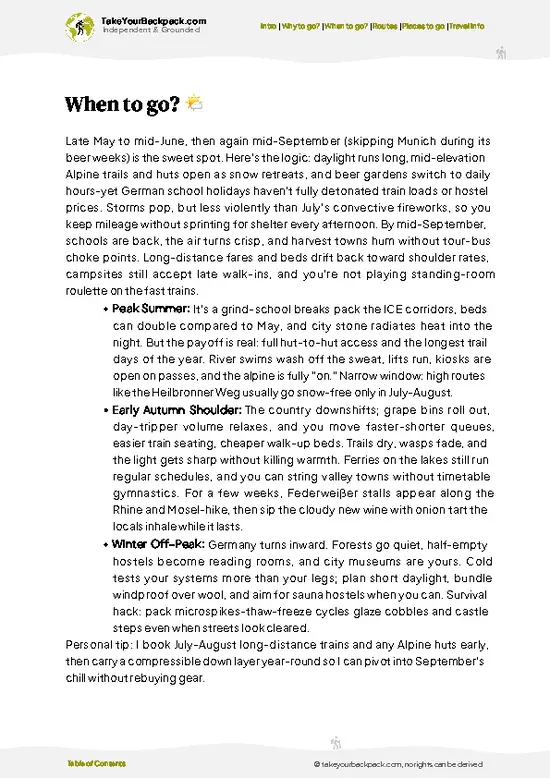
🌤️ When to go?Choosing the right time of year


  • Weather: Spring (April to June) and early autumn (September to October) offer the best weather. Expect mild temperatures around 15-22°C (59-72°F), perfect for hiking without sweating buckets or freezing your toes off.

  • Temperature: Summer can hit 25-30°C (77-86°F), which sounds nice but can make vineyard trails sticky and crowded. Winter drops below freezing, often hovering around 0°C (32°F), turning the valley into a quiet, frosty retreat but less ideal for backpacking.

  • Daylight Hours: Long summer days stretch up to 16 hours, giving you plenty of daylight for exploring. Spring and autumn offer a balanced 10-14 hours, enough to cover ground without rushing.

  • Crowds: Peak summer (July-August) draws tourists and wine lovers, jamming trails and inflating prices. Shoulder seasons are your
read more 👉

  • Weather: Spring (April to June) and early autumn (September to October) offer the best weather. Expect mild temperatures around 15-22°C (59-72°F), perfect for hiking without sweating buckets or freezing your toes off.

  • Temperature: Summer can hit 25-30°C (77-86°F), which sounds nice but can make vineyard trails sticky and crowded. Winter drops below freezing, often hovering around 0°C (32°F), turning the valley into a quiet, frosty retreat but less ideal for backpacking.

  • Daylight Hours: Long summer days stretch up to 16 hours, giving you plenty of daylight for exploring. Spring and autumn offer a balanced 10-14 hours, enough to cover ground without rushing.

  • Crowds: Peak summer (July-August) draws tourists and wine lovers, jamming trails and inflating prices. Shoulder seasons are your secret weapon—fewer people, more space to breathe, and a more authentic vibe.

  • Seasonal Activities: Autumn is grape harvest season, a lively time with festivals and wine tastings that bring the valley to life. Spring blooms are gorgeous but quieter, ideal if you want nature without the party.

  • Price Fluctuations: Summer and harvest festivals spike accommodation and transport costs. Booking in shoulder seasons can save you a solid chunk of cash while still delivering great weather and experiences.


Pro-tip: Aim for late September—cooler days, harvest buzz, and empty trails by evening. You’ll feel like you’ve hacked the valley’s best-kept secret.


source: climatestotravel.comJANJanuary: below average for travelingFEBFebruary: below average for travelingMARMarch: fair for travelingAPRApril: excellent for travelingMAYMay: excellent for travelingJUNJune: excellent for travelingJULJuly: good for travelingAUGAugust: good for travelingSEPSeptember: excellent for travelingOCTOctober: excellent for travelingNOVNovember: fair for travelingDECDecember: below average for traveling
germany-region-moselle-valley
© Google | Arkadiusz Gowik

✈️ The backpacker research shortcutGermany Travel Guide

An offline-friendly backpacking guide with optimized travel routes, ranked highlights, transport advice, and the best areas to stay.
example page 0 from our offline Travel Guide for Germany
example page 1 from our offline Travel Guide for Germany
example page 2 from our offline Travel Guide for Germany
example page 3 from our offline Travel Guide for Germany
example page 4 from our offline Travel Guide for Germany
example page 5 from our offline Travel Guide for Germany
example page 6 from our offline Travel Guide for Germany
example page 7 from our offline Travel Guide for Germany
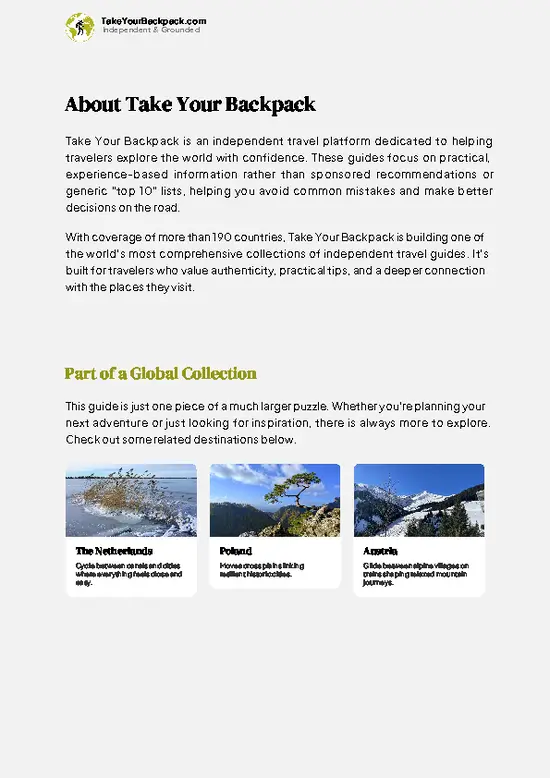
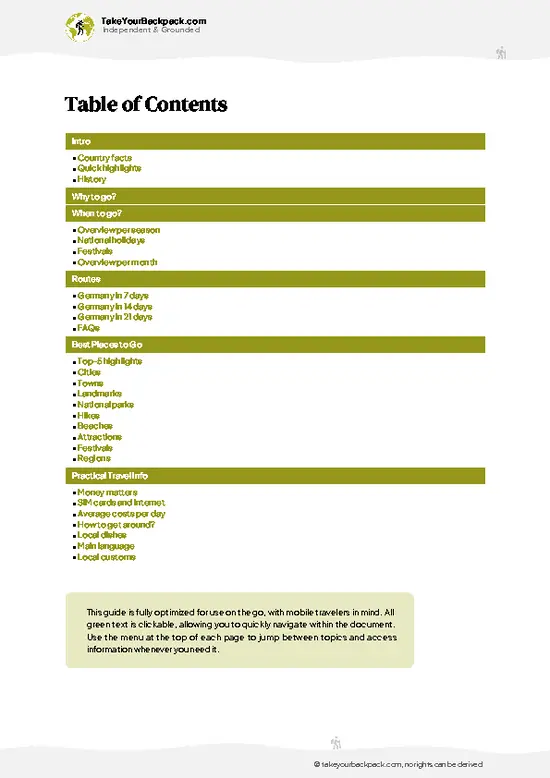
The digital guide (514 pages) contains:
140 highlights, ranked by travel appeal
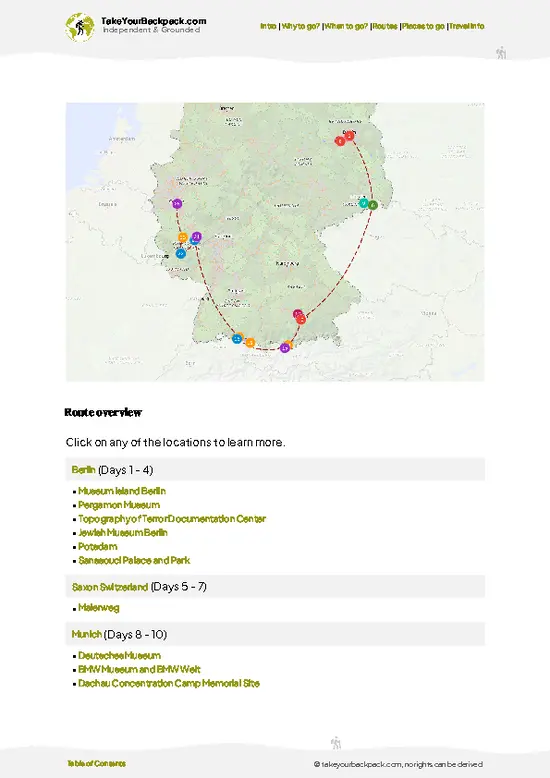
Optimized 7, 14 & 21-day travel routes
Cities, national parks, landmarks, beaches
How to get around
Offline-friendly for travel without Wi-Fi
👉 Click to see all 30+ guide features

📅 Plan smarter in minutes, not weeks
Month by month travel advice
Festivals & national holidays
Budget expectations

🗺️ Go to the right places, skip the overrated ones
Honest pros & cons of destinations
Top hikes, parks & viewpoints
Lesser-known places most travelers miss
Clear “worth it vs skip it” guidance

🛏️ Travel smoothly without rookie mistakes
Best areas to stay
Transport systems explained simply
Common scams & safety advice
SIM cards, money & practical tips

🌍 Understand the country, not just visit it
Culture & traditions
52 Essential phrases & customs
Festivals worth planning around
Traveler-friendly historical context
Insights that make places more meaningful

📱 Built for real travel conditions
Fully downloadable PDF
Works completely offline
Optimized for phone use
Useful in remote areas & buses
Everything in one place
Save weeks of stressful planning
Get instant access to your full guide. 30‑day money-back guarantee.
+ Add another guide for just US$7.80

By proceeding you agree to our terms.
Sent to your inbox immediately after payment • 100% Secure Checkout
Best Backpacking Travel Advisor 2025 tourism awardBest Backpacking
Travel Advisor
2025
What others say about Take Your Backpack Guides:
⭐⭐⭐⭐⭐
Fantastic, amazing amount of information!
⭐⭐⭐⭐⭐
My goodness this is amazing, it's what I've been looking for hats off too you!
⭐⭐⭐⭐⭐
I think this is absolutely BRILLIANT
⭐⭐⭐⭐
Very complete and informative. It's still missing places, but I gotta to commend you
⭐⭐⭐⭐⭐
This is truly amazing, thank you, can't wait to explore it with my kids!
⭐⭐⭐⭐⭐
Awesome resource, thank you!
⭐⭐⭐⭐⭐
This is amazing! Can't wait to explore the ones I haven't seen
⭐⭐⭐⭐
I love this! Well done, great idea.
⭐⭐⭐⭐⭐
Thanks for taking the time to make this gem!
⭐⭐⭐⭐⭐
This might be the best website I've ever seen.
⭐⭐⭐⭐⭐
Congratulations, and thank you so much for your work; it's incredibly valuable.
⭐⭐⭐⭐
In all seriousness I think you did a great job pointing out the important spots
⭐⭐⭐⭐⭐
10/10 very good
⭐⭐⭐⭐⭐
As someone who's only just starting to visit regularly this is awesome, thank you.
⭐⭐⭐⭐
Thank you very much! I'm going to visit my dad, it's going to be very useful!
⭐⭐⭐⭐⭐
This is really cool! We'll be travelling for the first time and this definitely come in handy.
⭐⭐⭐⭐⭐
You are now our minister of culture, congratulations 👨‍💼
⭐⭐⭐⭐⭐
Just wanted to tell you that this is a pearl! Going to follow your recommendations.
⭐⭐⭐⭐⭐
This is so cool. I'll definitely be using the resource for my travels soon.
⭐⭐⭐⭐⭐
This is very impressive! Good work.
⭐⭐⭐⭐⭐
This is an amazing and informative site. Very well done!

🛏️ Where to stay?How to pick the right area

The Moselle Valley is a treasure trove for backpackers, and knowing where to stay can elevate your experience.

Start in Cochem. This charming town is a social hub, with a lively riverside promenade. You’ll find plenty of fellow travelers sharing stories over a glass of Riesling. The castle looming above adds a fairy-tale vibe, and the narrow streets are perfect for wandering. Timing your visit during the summer means you’ll catch local festivals, where the atmosphere is electric.

Next, consider Bernkastel-Kues. It’s a bit quieter but equally enchanting. The medieval architecture and wine culture … read more 👉
The Moselle Valley is a treasure trove for backpackers, and knowing where to stay can elevate your experience.

Start in Cochem. This charming town is a social hub, with a lively riverside promenade. You’ll find plenty of fellow travelers sharing stories over a glass of Riesling. The castle looming above adds a fairy-tale vibe, and the narrow streets are perfect for wandering. Timing your visit during the summer means you’ll catch local festivals, where the atmosphere is electric.

Next, consider Bernkastel-Kues. It’s a bit quieter but equally enchanting. The medieval architecture and wine culture create a cozy backdrop for solo travelers. The local wine bars are perfect for mingling, and the scenic vineyards invite you to explore. Don’t miss the chance to hike the nearby trails; they offer stunning views without the crowds.

Lastly, Traben-Trarbach is a hidden delight. It’s less touristy, making it ideal for those seeking a more authentic experience. The Art Nouveau buildings give it character, and the riverside paths are perfect for reflective strolls. Plus, the wine cellars here are less commercialized, so you can taste without the tourist markup.

Each of these spots offers a unique slice of the Moselle Valley, balancing social opportunities with a sense of safety and charm. Choose wisely, and you’ll create memories that linger long after your trip ends.

🚌 Getting aroundMoving around without the hassle

The Moselle Valley flows like the river it cradles—sometimes meandering, sometimes rushing, but always alive with a sense of discovery. Here, schedules can feel like suggestions rather than mandates. You might find yourself sipping a glass of Riesling while waiting for a train that’s running late, or hopping on a ferry that seems to depart when the captain feels like it. This isn’t a place for rigid itineraries; it’s about embracing the rhythm of the valley. The locals know the best spots, and they’ll tell you that the journey is as important as the destination. So, let’s dive into the transport options that will help you navigate this enchanting region without breaking the bank.


  • Regional Trains: These trains connect major towns like Cochem, Bernkastel-Kues, and Trier. They run roughly every
read more 👉
The Moselle Valley flows like the river it cradles—sometimes meandering, sometimes rushing, but always alive with a sense of discovery. Here, schedules can feel like suggestions rather than mandates. You might find yourself sipping a glass of Riesling while waiting for a train that’s running late, or hopping on a ferry that seems to depart when the captain feels like it. This isn’t a place for rigid itineraries; it’s about embracing the rhythm of the valley. The locals know the best spots, and they’ll tell you that the journey is as important as the destination. So, let’s dive into the transport options that will help you navigate this enchanting region without breaking the bank.


  • Regional Trains: These trains connect major towns like Cochem, Bernkastel-Kues, and Trier. They run roughly every hour, with the first train around 5:30 AM and the last around 10 PM. Prices hover around €5-15 depending on your route, and while they’re not the fastest, they’re comfortable and offer stunning views of the vineyards.


  • Ferries: The Moselle River ferries are a scenic delight. They operate from around 9 AM to 7 PM, with prices ranging from €3-10. The ride is leisurely, allowing you to soak in the landscape. Just be aware that schedules can shift based on the season and weather, so check ahead.


  • Buses: Local buses are a budget-friendly option, with fares typically around €2-5. They connect smaller villages and run frequently, but be prepared for a bit of waiting. First buses usually start around 6 AM, and the last ones can run until midnight in some areas. Comfort varies, but you’ll often find friendly locals willing to chat.


  • Bicycles: Renting a bike is a fantastic way to explore the valley at your own pace. Rentals cost about €10-15 per day. The paths along the river are mostly flat and well-marked, making it easy to hop from one charming village to another. Just remember to pack a map or download an offline version, as cell service can be spotty.


  • Car Rentals: If you prefer flexibility, renting a car can cost around €40-70 per day. This option gives you the freedom to explore off-the-beaten-path wineries and scenic overlooks. Just keep in mind parking can be tricky in smaller towns.


For a smooth experience, consider timing your travels around local events or festivals. The Moselle Valley comes alive during harvest season, and public transport can get crowded. If you can, travel early in the day or later in the evening to avoid the rush and snag those coveted views without the crowds.

🍲 FoodLocal Cuisine & Drinks

In the Moselle Valley, food and drink are more than just sustenance; they’re a celebration of local culture. You can’t visit without trying the Saarbrücker Schwenker, a marinated pork steak grilled over an open flame. The smoky aroma wafts through the air, drawing you in like a siren’s call. Pair it with a glass of Riesling, the region’s pride, known for its crisp acidity and floral notes. It’s a match made in culinary heaven.

For a true local experience, hit up the weekly markets. Stalls overflow with fresh produce, artisanal cheeses, and homemade sausages. Grab a Brötchen (a crusty roll) stuffed with local meats and cheeses, and don’t skip the Apfelwein—a refreshing apple wine that’s a staple here.

Cafés dot the riverside, perfect for people-watching while sipping on a Kaffee. The vibe … read more 👉
In the Moselle Valley, food and drink are more than just sustenance; they’re a celebration of local culture. You can’t visit without trying the Saarbrücker Schwenker, a marinated pork steak grilled over an open flame. The smoky aroma wafts through the air, drawing you in like a siren’s call. Pair it with a glass of Riesling, the region’s pride, known for its crisp acidity and floral notes. It’s a match made in culinary heaven.

For a true local experience, hit up the weekly markets. Stalls overflow with fresh produce, artisanal cheeses, and homemade sausages. Grab a Brötchen (a crusty roll) stuffed with local meats and cheeses, and don’t skip the Apfelwein—a refreshing apple wine that’s a staple here.

Cafés dot the riverside, perfect for people-watching while sipping on a Kaffee. The vibe is relaxed; locals linger over their drinks, so don’t rush.

When dining, remember to embrace the Gemütlichkeit—a sense of coziness and friendliness. It’s common to share tables, so don’t be shy about striking up a conversation. Just be sure to say “Guten Appetit!” before diving in. This isn’t just a meal; it’s a moment to savor.

FAQCommon questions from travelers

3 to 5 days are sufficient to explore the Moselle Valley thoroughly. This allows time to visit key towns like Cochem, Bernkastel-Kues, and Trier, as well as enjoy hiking and wine tasting. Longer stays are recommended if you want to explore more remote villages or take river cruises.
You can get around the Moselle Valley without a car using regional trains and buses. The Moselweinbahn train line connects major towns along the valley, and local buses cover smaller villages. Renting a bike is also popular for exploring the scenic cycling routes along the river.
The Moselle Valley is known for its steep vineyards and high-quality Riesling wines. It is also famous for its picturesque medieval towns, Roman ruins in Trier, and the scenic Moselle River that winds through the region. The valley is a top destination for wine tourism and outdoor activities.
⚠️ Things can change over time, so always validate details locally before you go.

Other German regions near Moselle Valley

Explore more nearby:

  • Rhine Valley—Castle ruins, terraced hills, legendary river| 52 km away
  • Bodensee—Alpine lake, vineyard slopes, medieval towns| 280 km away
  • Borkum—Wide beaches, health resorts, maritime heritage| 426 km away

💡 Not sure where to go next?
Create a personalized itinerary for Germany including Moselle Valley and the places that fit your trip.

Generate my itinerary

👉 Discover all regions

Or checkout all Germany has to offer (think cities, towns, villages, national parks, hikes, beaches, festivals)
Country photo of Germany

We 💚 feedbackParting advice and final tips

The Moselle Valley is a wine lover’s paradise, with vineyards that cling to the hillsides like they’re holding onto secrets. You’ll sip some of the best Rieslings while soaking in views that feel like a postcard. But here’s the kicker: it can get touristy during peak season. If you want that local vibe, aim for late spring or early fall. Trust me, the experience is worth the slight hustle.

✈️ When did I visit Germany?
Being a neighbouring country of my home base, I visited Germany many times.

✍️ Help improve this page!
The information on this page is based on my own backpacking experience in Germany, supplemented with up-to-date research and feedback from other travelers. Travel details can change, so if you notice anything outdated or incomplete, feel free to let me know.


🙋‍♂️ Give feedback

👋 Meet the founderWho’s Behind Take Your Backpack?

Johan, backpacker and founder of TakeYourBackpackHi, I’m Johan (Netherlands 🇳🇱), the creator of TakeYourBackpack. Over the past decade, I’ve backpacked through 80+ countries across six continents, gaining extensive experience with independent travel, long-term trips, and overland routes.

This site is built on a combination of firsthand travel experience and carefully curated insights from other backpackers. Many guides are based on places I’ve personally visited, while others bring together tips, observations, and practical advice shared by trusted travelers I’ve met along the way.

The goal is to provide realistic, experience-driven guidance — not generic itineraries — so you can explore destinations with better context, clearer expectations, and more confidence.

Get full Germany guide •
Instant download • 140 highlights • Full Offline guide