×

Germany🇩🇪 | regionsRhine ValleyCastle ruins, terraced hills, legendary river | things to do and best time to go

Explore Moselle ValleyExplore Rügen Island

Backpacking in Rhine Valley
🏆 Top pickregion ranked #1
By Johan Kruseman 🇳🇱 | Updated September 4, 2026

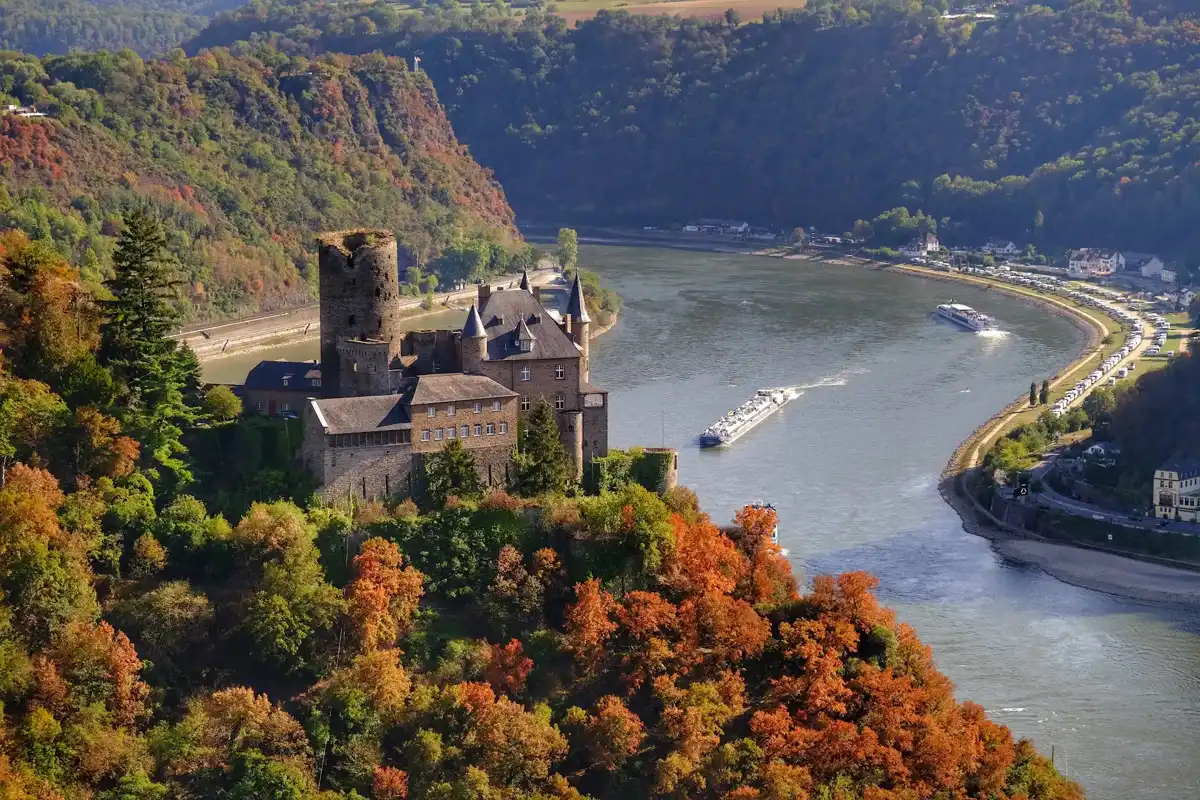
Most people online sell the Rhine Valley as a lazy river cruise for retirees, but here’s the twist: it’s one of the easiest places in Germany to string together a cheap, fast-moving backpacking route without ever renting a car. The classic stretch runs between Koblenz and Bingen in western Germany, where the Rhine cuts through steep slate hills packed with castles, vineyards, and tiny rail-linked towns. As a backpacker, you get big scenery for low effort: frequent trains, ferries you can treat like hop-on buses, and plenty of budget-ish guesthouses if you book ahead. It can feel theme-parky in spots like Bacharach or St. Goar on sunny weekends, and prices spike hard in peak season, but walk one village further or climb a vineyard trail and it suddenly feels local again. Compared with nearby Mosel, the Rhine is busier, less dreamy, but more practical and better for fast, flexible itineraries.

Discover everything you want to know in the 📖 Germany Travel Guide.


Get your Germany guide
140 ranked highlights, routes & tips, works offline (514 pages)
Loading the map 🌍
CLICK TO FILTER
cities
towns
landmarks
national parks
hikes
beaches
attractions
festivals
regions
SHOW COUNTRY’S BESTSHOW ALL

✨ Why go?
Ranked #1 region in Germany
Reasons people choose to visit here

The Rhine Valley is a backpacker’s dream, offering a mix of landscapes that keeps your journey fresh without the hassle of constant relocation. You can wander through vineyards, explore charming villages, and hike along breathtaking cliffs all in one stretch. This region is a playground for those who love to blend nature and culture seamlessly.

Transport options are a breeze. Trains and boats crisscross the valley, giving you the freedom to hop from one picturesque spot to another without breaking a sweat. Want to sip wine in Rüdesheim? Or maybe check out the medieval castles dotting the hills? You can do it all at your own pace.

The beauty of the Rhine Valley is in its slow travel vibe. You’re not just ticking off boxes; you’re soaking in the atmosphere. Spend a lazy afternoon by the river, … read more 👉
The Rhine Valley is a backpacker’s dream, offering a mix of landscapes that keeps your journey fresh without the hassle of constant relocation. You can wander through vineyards, explore charming villages, and hike along breathtaking cliffs all in one stretch. This region is a playground for those who love to blend nature and culture seamlessly.

Transport options are a breeze. Trains and boats crisscross the valley, giving you the freedom to hop from one picturesque spot to another without breaking a sweat. Want to sip wine in Rüdesheim? Or maybe check out the medieval castles dotting the hills? You can do it all at your own pace.

The beauty of the Rhine Valley is in its slow travel vibe. You’re not just ticking off boxes; you’re soaking in the atmosphere. Spend a lazy afternoon by the river, then dive into local cuisine at a cozy tavern. Each moment feels rich and rewarding.

So, if you’re looking for a place where you can savor every experience without feeling rushed, the Rhine Valley is your ticket.
Want to include Rhine Valley in your Germany route?
Create a personalized Germany itinerary that includes Rhine Valley and the places that fit your trip — based on your travel style, budget, and available time. Get your route in seconds.

Generate my trip

💡 HighlightsWhat this place is best known for

  1. Marksburg Castle (Braubach) — The only medieval Rhine hill castle that was never destroyed, so the rooms, fortifications and battlements feel genuinely medieval rather than recreated. Guided tours let you walk real guard passages and see original defensive features; the views down the curving river are a classic Rhine-moment without the staged souvenir-shop fuss.
  2. Rheinfels Castle Ruins (St. Goar) — Huge, atmospheric fortress ruins with tunnels, cannons and deep cellars to explore; it’s a perfect spot to imagine Rhine geopolitics at its fiercest. Climb the bastions for sweeping views of the gorge and enough stones and history to keep you poking around for hours.
  3. Loreley Rock (near St. Goarshausen) — A dramatic slate cliff where the river makes a tight, echoing bend; the geology and acoustics
read more 👉
  1. Marksburg Castle (Braubach) — The only medieval Rhine hill castle that was never destroyed, so the rooms, fortifications and battlements feel genuinely medieval rather than recreated. Guided tours let you walk real guard passages and see original defensive features; the views down the curving river are a classic Rhine-moment without the staged souvenir-shop fuss.
  2. Rheinfels Castle Ruins (St. Goar) — Huge, atmospheric fortress ruins with tunnels, cannons and deep cellars to explore; it’s a perfect spot to imagine Rhine geopolitics at its fiercest. Climb the bastions for sweeping views of the gorge and enough stones and history to keep you poking around for hours.
  3. Loreley Rock (near St. Goarshausen) — A dramatic slate cliff where the river makes a tight, echoing bend; the geology and acoustics are unmistakable. It’s both a natural viewpoint and a place soaked in local legend, and the panorama of the winding Rhine is something you can’t easily replicate elsewhere.
  4. Pfalzgrafenstein (Kaub) — hidden gem — That little toll-castle sitting on an island in the middle of the Rhine is delightfully odd and very visitable by short ferry in summer. It’s small, photogenic, and gives a real sense of medieval river control — and most daytrippers sail past without hopping off to explore it.
  5. Bacharach & Burg Stahleck — A beautifully preserved medieval town with narrow cobbled streets, timbered houses and a castle that now hosts a hilltop youth hostel and viewpoint. Stay the night in town or climb up to the castle terrace; the whole place has an authentic low-key Rhine-village vibe that feels harder to find as other spots get more commercial.
  6. Terraced Riesling Vineyards and Family Wine Tastings (Oberwesel / Lorch / Assmannshausen) — The steep, hand-worked terraces here make wines (especially Riesling and local Pinot) that taste of this exact slate-and-river terroir. Seek out a small family winemaker for a cellar visit and tasting — intimate, local and utterly tied to the Rhine slopes.
  7. Rheinsteig Trail (select stretches, e.g., St. Goar to Bacharach) — Narrow ridgeline hiking with abrupt drops, vineyard benches and endless river views; you can do everything from a short viewpoint hop to a multi-day traverse. It’s the best way to feel the landscape’s scale, the terraced agriculture, and the way human history clings to cliffs.
  8. Schloss Stolzenfels (Koblenz) — A romantic 19th-century Rhine castle rebuilt on older foundations set in a park above the river. It’s quieter than the bigger tourist castles, and the interiors plus landscaped grounds show how the Rhine’s “romantic” revival shaped German culture and identity.
  9. Boppard Chairlift & Vierseenblick viewpoint — hidden gem — A short chairlift ride from town drops you onto a ridge with the famous “four-lakes” illusion where the meanders look like ponds. Locals come here for sunrise, picnics and short hikes; it’s an easy, scenic escape from the riverside bustle that many cruise-goers never discover.
  10. Oberwesel’s Town Wall and Schönburg Castle — hidden gem — One of the Rhine’s best-preserved medieval town walls with multiple towers you can walk between, plus a compact hill castle with terraces and a good local restaurant. It’s a more peaceful alternative to the better-known towns and gives a tangible feel for how fortified river towns once operated.
Spotted a mistake or missing something? Contact us.

Things to do around Rhine Valley

Ratings based on Tripadvisor reviews. When you book through this link, you support our work at no extra cost to you.

⌛️ 5 days5-day itinerary for Rhine Valley

Day 1: Koblenz
Koblenz is your launchpad. Nestled at the confluence of the Rhine and Moselle rivers, it’s a transport hub. You can hop on trains or boats to explore the valley. Start with a stroll along the Rhine promenade, then visit the impressive Ehrenbreitstein Fortress. The cable car ride offers stunning views and sets the tone for your adventure. This day is about acclimatizing to the region’s rhythm and getting your bearings.

Day 2: Rüdesheim
From Koblenz, take a scenic train ride to Rüdesheim. This town is famous for its wine and lively Drosselgasse. Spend the morning sampling Riesling at local vineyards. In the afternoon, take the chairlift up to the Niederwald Monument for panoramic views. The transport here is efficient, but the real charm lies in wandering the cobblestone … read more 👉
Day 1: Koblenz
Koblenz is your launchpad. Nestled at the confluence of the Rhine and Moselle rivers, it’s a transport hub. You can hop on trains or boats to explore the valley. Start with a stroll along the Rhine promenade, then visit the impressive Ehrenbreitstein Fortress. The cable car ride offers stunning views and sets the tone for your adventure. This day is about acclimatizing to the region’s rhythm and getting your bearings.

Day 2: Rüdesheim
From Koblenz, take a scenic train ride to Rüdesheim. This town is famous for its wine and lively Drosselgasse. Spend the morning sampling Riesling at local vineyards. In the afternoon, take the chairlift up to the Niederwald Monument for panoramic views. The transport here is efficient, but the real charm lies in wandering the cobblestone streets. You’re not just a visitor; you’re part of the local vibe.

Day 3: Bacharach
Next, head to Bacharach, a postcard-perfect village. The train ride is short, but the change in scenery is dramatic. Explore the medieval architecture and grab lunch at a riverside café. The slow pace here is a welcome contrast. Don’t miss the chance to hike the nearby vineyards for a taste of the region’s beauty. This day is about soaking in the tranquility.

Day 4: Off-Path Reward: St. Goar
Take a detour to St. Goar, just a train stop away. Visit the imposing Rheinfels Castle, where you can wander through ruins and enjoy breathtaking views. This stop is often overlooked but offers a rich history and fewer crowds. It’s a chance to feel like a local, away from the tourist hustle.

Day 5: Mainz
Wrap up your journey in Mainz. The train ride is quick, and the city’s vibrant culture is a fitting finale. Explore the Gutenberg Museum and enjoy a leisurely lunch in the Old Town. This day is about reflection and savoring the experiences you’ve collected.

If you can only choose one day, make it Day 2 in Rüdesheim. The combination of wine, views, and local charm encapsulates the essence of the Rhine Valley. It’s a day that justifies every mile traveled.
Turn your Rhine Valley visit into an Germany adventure
Build a complete Germany route with Rhine Valley, hidden gems, must-see destinations, and realistic travel times included.

Generate my trip

🌤️ When to go?Weather, crowds, and seasonal trade-offs


  • Weather: Spring (April to June) offers mild, pleasant days around 15-22°C (59-72°F), perfect for hiking without sweating buckets. Autumn (September to October) cools down to 10-18°C (50-64°F), with crisp air that sharpens the landscape’s colors.

  • Temperature: Summer can spike to 25-30°C (77-86°F), which sounds nice until you’re hauling a pack under the sun. Winters dip below freezing, often hovering around 0°C (32°F), making trails slippery and less inviting.

  • Daylight Hours: Long summer days stretch up to 16 hours of light, giving you extra time to explore. In contrast, winter days shrink to about 8 hours, cutting your trekking window in half.

  • Crowds: Peak summer (July-August) means tourists swarm the vineyards and castles, hiking trails get busy, and prices jump. Shoulder seasons—late
read more 👉

  • Weather: Spring (April to June) offers mild, pleasant days around 15-22°C (59-72°F), perfect for hiking without sweating buckets. Autumn (September to October) cools down to 10-18°C (50-64°F), with crisp air that sharpens the landscape’s colors.

  • Temperature: Summer can spike to 25-30°C (77-86°F), which sounds nice until you’re hauling a pack under the sun. Winters dip below freezing, often hovering around 0°C (32°F), making trails slippery and less inviting.

  • Daylight Hours: Long summer days stretch up to 16 hours of light, giving you extra time to explore. In contrast, winter days shrink to about 8 hours, cutting your trekking window in half.

  • Crowds: Peak summer (July-August) means tourists swarm the vineyards and castles, hiking trails get busy, and prices jump. Shoulder seasons—late spring and early autumn—offer a quieter vibe with fewer selfie sticks in your shots.

  • Seasonal Activities: Autumn is prime for wine harvest festivals, a local favorite that’s both lively and authentic. Spring brings blooming orchards and fewer crowds, ideal if you want nature’s calm without the party.

  • Price Fluctuations: Expect accommodation and transport costs to peak in summer. Booking in shoulder seasons can save you 20-30%, and you’ll snag better deals on guided tours and tastings.


Pro-tip: Hit the Rhine Valley in late September—cooler temps, harvest buzz, and empty trails. It’s the sweet spot where comfort, cost, and experience align like a perfectly poured Riesling.


source: climatestotravel.comJANJanuary: below average for travelingFEBFebruary: below average for travelingMARMarch: fair for travelingAPRApril: highly recommended for travelingMAYMay: excellent for travelingJUNJune: excellent for travelingJULJuly: good for travelingAUGAugust: good for travelingSEPSeptember: excellent for travelingOCTOctober: highly recommended for travelingNOVNovember: fair for travelingDECDecember: below average for traveling

✈️ The backpacker research shortcutGermany Travel Guide

An offline-friendly backpacking guide with optimized travel routes, ranked highlights, transport advice, and the best areas to stay.
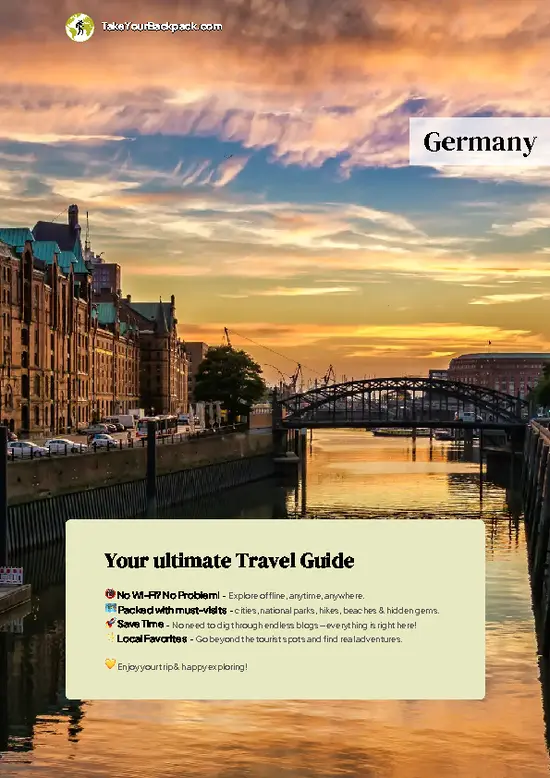
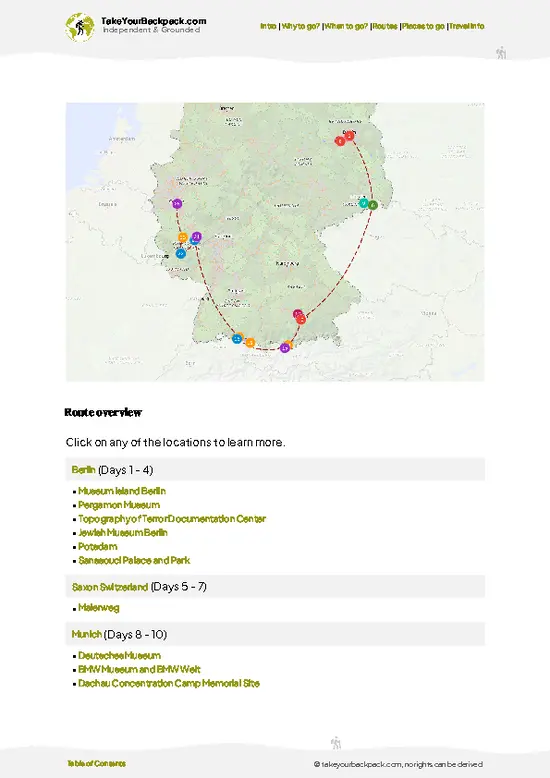
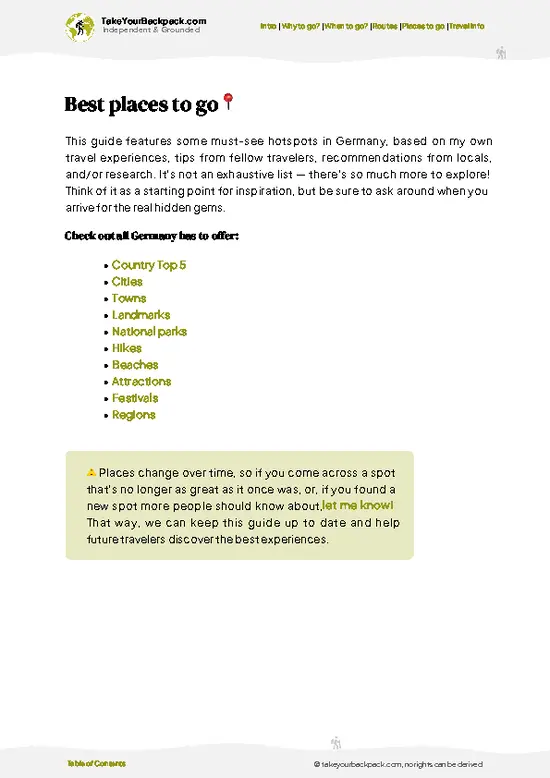
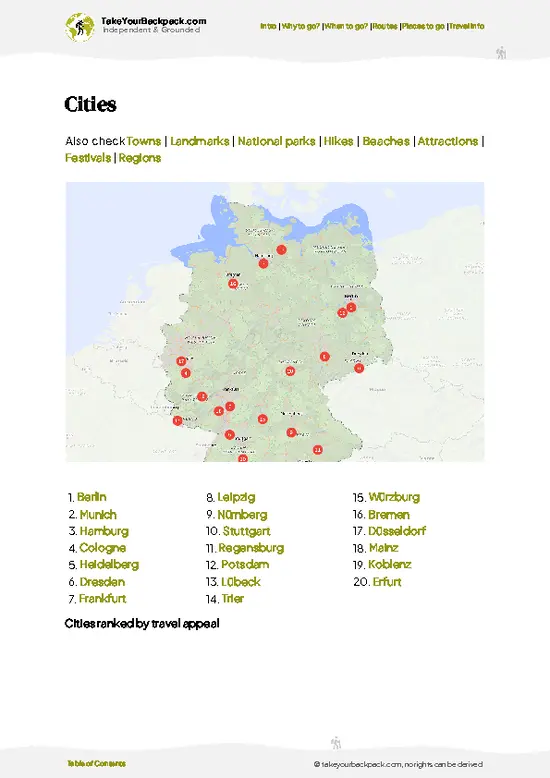
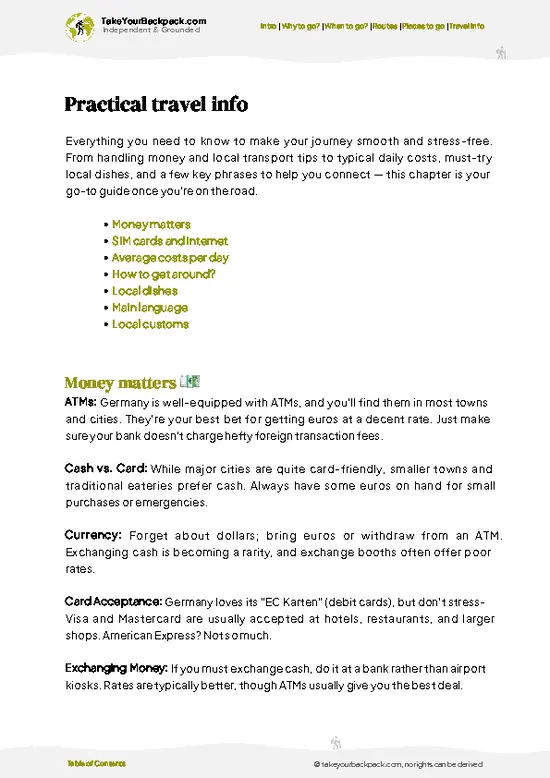
example page 0 from our offline Travel Guide for Germany
example page 1 from our offline Travel Guide for Germany
example page 2 from our offline Travel Guide for Germany
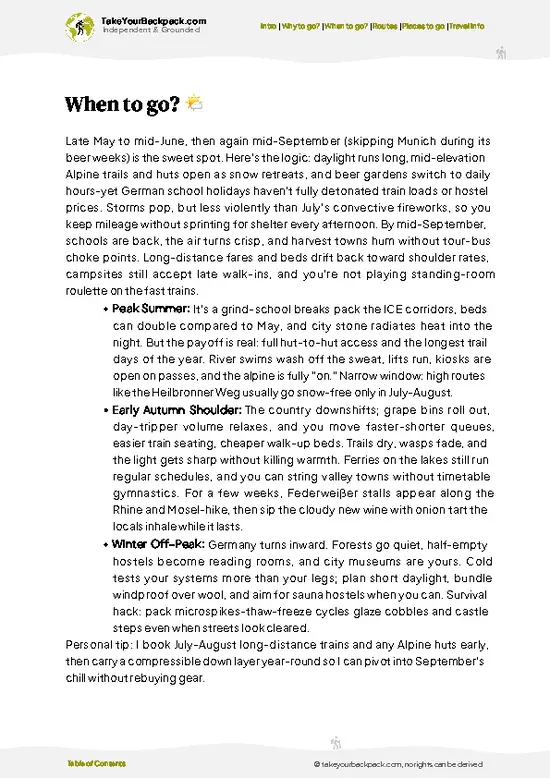
example page 3 from our offline Travel Guide for Germany
example page 4 from our offline Travel Guide for Germany
example page 5 from our offline Travel Guide for Germany
example page 6 from our offline Travel Guide for Germany
example page 7 from our offline Travel Guide for Germany
The digital guide (514 pages) contains:
140 highlights, ranked by travel appeal
Optimized 7, 14 & 21-day travel routes
Cities, national parks, landmarks, beaches
How to get around
Offline-friendly for travel without Wi-Fi
👉 Click to see all 30+ guide features

📅 Plan smarter in minutes, not weeks
Month by month travel advice
Festivals & national holidays
Budget expectations

🗺️ Go to the right places, skip the overrated ones
Honest pros & cons of destinations
Top hikes, parks & viewpoints
Lesser-known places most travelers miss
Clear “worth it vs skip it” guidance

🛏️ Travel smoothly without rookie mistakes
Best areas to stay
Transport systems explained simply
Common scams & safety advice
SIM cards, money & practical tips

🌍 Understand the country, not just visit it
Culture & traditions
52 Essential phrases & customs
Festivals worth planning around
Traveler-friendly historical context
Insights that make places more meaningful

📱 Built for real travel conditions
Fully downloadable PDF
Works completely offline
Optimized for phone use
Useful in remote areas & buses
Everything in one place
Save weeks of stressful planning
Get instant access to your full guide. 30‑day money-back guarantee.
+ Add another guide for just US$7.80

By proceeding you agree to our terms.
Sent to your inbox immediately after payment • 100% Secure Checkout
Best Backpacking Travel Advisor 2025 tourism awardBest Backpacking
Travel Advisor
2025
What others say about Take Your Backpack Guides:
⭐⭐⭐⭐⭐
Fantastic, amazing amount of information!
⭐⭐⭐⭐⭐
My goodness this is amazing, it's what I've been looking for hats off too you!
⭐⭐⭐⭐⭐
I think this is absolutely BRILLIANT
⭐⭐⭐⭐
Very complete and informative. It's still missing places, but I gotta to commend you
⭐⭐⭐⭐⭐
This is truly amazing, thank you, can't wait to explore it with my kids!
⭐⭐⭐⭐⭐
Awesome resource, thank you!
⭐⭐⭐⭐⭐
This is amazing! Can't wait to explore the ones I haven't seen
⭐⭐⭐⭐
I love this! Well done, great idea.
⭐⭐⭐⭐⭐
Thanks for taking the time to make this gem!
⭐⭐⭐⭐⭐
This might be the best website I've ever seen.
⭐⭐⭐⭐⭐
Congratulations, and thank you so much for your work; it's incredibly valuable.
⭐⭐⭐⭐
In all seriousness I think you did a great job pointing out the important spots
⭐⭐⭐⭐⭐
10/10 very good
⭐⭐⭐⭐⭐
As someone who's only just starting to visit regularly this is awesome, thank you.
⭐⭐⭐⭐
Thank you very much! I'm going to visit my dad, it's going to be very useful!
⭐⭐⭐⭐⭐
This is really cool! We'll be travelling for the first time and this definitely come in handy.
⭐⭐⭐⭐⭐
You are now our minister of culture, congratulations 👨‍💼
⭐⭐⭐⭐⭐
Just wanted to tell you that this is a pearl! Going to follow your recommendations.
⭐⭐⭐⭐⭐
This is so cool. I'll definitely be using the resource for my travels soon.
⭐⭐⭐⭐⭐
This is very impressive! Good work.
⭐⭐⭐⭐⭐
This is an amazing and informative site. Very well done!

🛏️ Where to stay?Best areas to stay in Germany

In the Rhine Valley, you’ve got some killer spots that scream backpacker-friendly.

First up, Bacharach. This charming little town is like a postcard come to life. Cobblestone streets, half-timbered houses, and a killer view of the Rhine. It’s small enough to feel cozy but lively enough to meet fellow travelers. Grab a local wine and chat with other backpackers at the riverside.

Next, consider Rüdesheim am Rhein. This place is buzzing with energy. It’s a hub for wine lovers and has a vibrant nightlife. The Drosselgasse is packed with bars and restaurants where you can mingle. Plus, it’s a great … read more 👉
In the Rhine Valley, you’ve got some killer spots that scream backpacker-friendly.

First up, Bacharach. This charming little town is like a postcard come to life. Cobblestone streets, half-timbered houses, and a killer view of the Rhine. It’s small enough to feel cozy but lively enough to meet fellow travelers. Grab a local wine and chat with other backpackers at the riverside.

Next, consider Rüdesheim am Rhein. This place is buzzing with energy. It’s a hub for wine lovers and has a vibrant nightlife. The Drosselgasse is packed with bars and restaurants where you can mingle. Plus, it’s a great base for day trips along the river.

Then there’s St. Goar. It’s quieter but has a friendly vibe. Perfect for those who want to unwind after a day of hiking. The views of the Lorelei rock are stunning, and you can easily strike up conversations with locals and fellow travelers alike.

Lastly, don’t overlook Koblenz. It’s a bit bigger, but the Deutsches Eck is a must-see. The mix of history and modern life makes it a fantastic spot to connect with others.

Each of these places offers a unique slice of the Rhine Valley, balancing safety, social opportunities, and budget-friendly options. Choose wisely, and you’ll have stories to tell for years.

🚌 Getting aroundHow to get around Rhine Valley

The Rhine Valley is a living postcard, where the river flows like a storyteller weaving tales of castles, vineyards, and quaint villages. Here, time feels fluid; schedules can be as rigid as a German train conductor’s glare or as loose as a local’s laugh over a glass of Riesling. You’ll find yourself caught between the precision of public transport and the spontaneous charm of hopping on a ferry or a bike. The key is to embrace the rhythm of the valley—sometimes you’ll want to stick to the clock, and other times, you’ll want to let the current guide you.


  • Regional Trains (RE): These trains connect major towns like Koblenz, Bingen, and Rüdesheim. They run every 30 minutes during peak hours, with tickets starting around €5. Expect a comfortable ride, but be mindful of the occasional delay—just
read more 👉
The Rhine Valley is a living postcard, where the river flows like a storyteller weaving tales of castles, vineyards, and quaint villages. Here, time feels fluid; schedules can be as rigid as a German train conductor’s glare or as loose as a local’s laugh over a glass of Riesling. You’ll find yourself caught between the precision of public transport and the spontaneous charm of hopping on a ferry or a bike. The key is to embrace the rhythm of the valley—sometimes you’ll want to stick to the clock, and other times, you’ll want to let the current guide you.


  • Regional Trains (RE): These trains connect major towns like Koblenz, Bingen, and Rüdesheim. They run every 30 minutes during peak hours, with tickets starting around €5. Expect a comfortable ride, but be mindful of the occasional delay—just like the river, it has its own pace.


  • Ferries: The iconic Rhine ferries are a must. They operate from early morning until sunset, with prices around €2-€10 depending on the route. The ride is scenic and often quicker than driving, plus you get to enjoy the views from the water. Just check the schedule, as some ferries are seasonal.


  • Bicycles: Rent a bike in towns like Bingen or Rüdesheim for about €10-€15 a day. The Rhine Cycle Route is well-marked and offers a leisurely way to explore vineyards and castles at your own pace. Just be prepared for some hills—your legs will thank you later.


  • Bus Services: Local buses connect smaller villages and run every hour or so. Fares are typically under €5. While they may not be the fastest option, they can take you to off-the-beaten-path spots that trains and ferries miss.


  • Car Rentals: If you crave flexibility, renting a car can cost around €30-€50 a day. It’s great for reaching remote wineries or hiking trails, but parking can be tricky in busy towns. Plus, you’ll miss out on the river views that come with public transport.


For a smooth journey, consider timing your train rides to coincide with ferry schedules. This way, you can hop off the train, grab a quick bite, and catch the next ferry without missing a beat. It’s all about flow—ride the current, and you’ll discover the Rhine Valley like a local.

🍲 FoodWhat to Eat & Drink

In the Rhine Valley, food is a celebration of local flavors and traditions. You can’t visit without trying Sauerbraten, a pot roast marinated in a tangy mix of vinegar and spices, often served with red cabbage and potato dumplings. Pair it with a glass of Riesling, the region’s pride, known for its crisp acidity and floral notes.

For a true local experience, hit up the weekly markets in towns like Bacharach or Rüdesheim. Stalls overflow with fresh produce, artisanal cheeses, and homemade sausages. Grab a Bratwurst from a street vendor, and don’t skip the pretzels—they’re soft, warm, and perfect for snacking as you wander.

Cafés are where the Rhine’s social life brews. Find a cozy spot along the river, sip on Kaffee und Kuchen (coffee and cake), and soak in the laid-back vibe. Locals often … read more 👉
In the Rhine Valley, food is a celebration of local flavors and traditions. You can’t visit without trying Sauerbraten, a pot roast marinated in a tangy mix of vinegar and spices, often served with red cabbage and potato dumplings. Pair it with a glass of Riesling, the region’s pride, known for its crisp acidity and floral notes.

For a true local experience, hit up the weekly markets in towns like Bacharach or Rüdesheim. Stalls overflow with fresh produce, artisanal cheeses, and homemade sausages. Grab a Bratwurst from a street vendor, and don’t skip the pretzels—they’re soft, warm, and perfect for snacking as you wander.

Cafés are where the Rhine’s social life brews. Find a cozy spot along the river, sip on Kaffee und Kuchen (coffee and cake), and soak in the laid-back vibe. Locals often linger, so don’t rush your coffee; it’s all about savoring the moment.

When dining, it’s customary to say “Guten Appetit” before digging in. Tipping is appreciated but not obligatory—rounding up the bill is usually enough. Embrace the communal spirit, share a table, and you might just find yourself swapping stories with fellow travelers or locals.

FAQFrequently asked questions about Rhine Valley

3 to 4 days are sufficient to explore the main highlights of the Rhine Valley, including castles, vineyards, and river cruises. This allows time for visiting towns like Koblenz, Boppard, and St. Goar. Extending to a week lets you explore more remote areas and enjoy hiking trails along the river.
You can get around the Rhine Valley without a car using regional trains, buses, and ferries. The Rhine Valley has a well-connected public transport network, with the Rhein-Mosel-Express train linking key towns. River cruises also provide a scenic and practical way to travel between towns along the river.
The Rhine Valley is known for its stunning landscapes, historic castles, and vineyards producing Riesling wine. It is famous for the UNESCO World Heritage Upper Middle Rhine Valley section, featuring steep hillsides and medieval architecture. The valley is also renowned for its romantic river cruises and hiking trails.
⚠️ Things can change over time, so always validate details locally before you go.

Other German regions near Rhine Valley

Explore more nearby:

  • Moselle Valley—Steep vineyards, river bends, half-timbered villages| 52 km away
  • Bodensee—Alpine lake, vineyard slopes, medieval towns| 294 km away
  • Borkum—Wide beaches, health resorts, maritime heritage| 394 km away

💡 Not sure where to go next?
Create a personalized itinerary for Germany including Rhine Valley and the places that fit your trip.

Generate my itinerary

👉 Discover all regions

Or checkout all Germany has to offer (think cities, towns, villages, national parks, hikes, beaches, festivals)
Country photo of Germany

We 💚 feedbackSumming up the experience

The Rhine Valley is a feast for the senses. Picture this: medieval castles perched on hillsides, each with a story to tell, and vineyards that stretch as far as the eye can see. But here’s the kicker—accommodations can be pricey, especially in peak season. If you’re willing to splurge a bit, you’ll snag a cozy spot with a view. Just know that the charm comes with a cost. Choose wisely, and you’ll leave with memories that linger.

✈️ When did I visit Germany?
Being a neighbouring country of my home base, I visited Germany many times.

✍️ Help improve this page!
The information on this page is based on my own backpacking experience in Germany, supplemented with up-to-date research and feedback from other travelers. Travel details can change, so if you notice anything outdated or incomplete, feel free to let me know.


🙋‍♂️ Give feedback

👋 Meet the founderWho’s Behind Take Your Backpack?

Johan, backpacker and founder of TakeYourBackpackHi, I’m Johan (Netherlands 🇳🇱), the creator of TakeYourBackpack. Over the past decade, I’ve backpacked through 80+ countries across six continents, gaining extensive experience with independent travel, long-term trips, and overland routes.

This site is built on a combination of firsthand travel experience and carefully curated insights from other backpackers. Many guides are based on places I’ve personally visited, while others bring together tips, observations, and practical advice shared by trusted travelers I’ve met along the way.

The goal is to provide realistic, experience-driven guidance — not generic itineraries — so you can explore destinations with better context, clearer expectations, and more confidence.

Get full Germany guide •
Instant download • 140 highlights • Full Offline guide