






The Ishtar Gate
Let’s get real: the Ishtar Gate is the reason half the people are here, and yes, it’s as jaw-dropping in person as it looks in every over-saturated photo online. But here’s the truth—no filter can prepare you for the scale. This isn’t a “pretty blue wall.” It’s a 2,600-year-old Babylonian city gate, reassembled brick by brick, with lions and dragons that once guarded the entrance to a lost world. You’ll dodge selfie sticks, but stand close and you’ll feel the weight of ancient ambition. The colors are real, the craftsmanship is obsessive, and the story—imperial power, myth, and ego—hits harder than any Instagram caption.
The Market Gate of Miletus
If you think museum displays are all glass cases and tiny labels, the Market Gate of Miletus will slap that idea out of your head. … read more 👉
The Ishtar Gate
Let’s get real: the Ishtar Gate is the reason half the people are here, and yes, it’s as jaw-dropping in person as it looks in every over-saturated photo online. But here’s the truth—no filter can prepare you for the scale. This isn’t a “pretty blue wall.” It’s a 2,600-year-old Babylonian city gate, reassembled brick by brick, with lions and dragons that once guarded the entrance to a lost world. You’ll dodge selfie sticks, but stand close and you’ll feel the weight of ancient ambition. The colors are real, the craftsmanship is obsessive, and the story—imperial power, myth, and ego—hits harder than any Instagram caption.
The Market Gate of Miletus
If you think museum displays are all glass cases and tiny labels, the Market Gate of Miletus will slap that idea out of your head. This Roman marketplace entrance is the size of a small apartment building, and it’s not a replica—it’s the actual gate, shipped from Turkey and rebuilt inside the museum. The scale is absurd, the marble is battered but proud, and you can walk right up to it. It’s the closest you’ll get to time travel without a DeLorean. The crowds thin out here, too, because most people are still stuck at the Ishtar Gate.
The Pergamon Altar
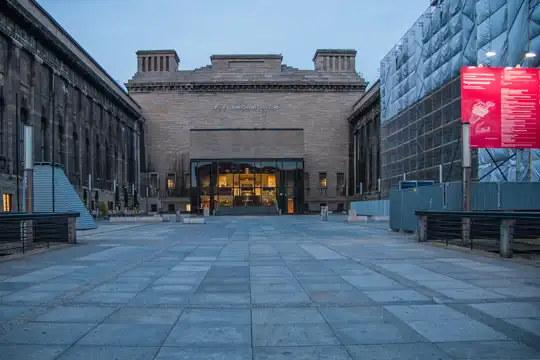
Here’s the heartbreak: the Pergamon Altar, the museum’s namesake, is currently closed for long-term restoration. If you’re reading this before it reopens, don’t let anyone sell you on “virtual experiences” or “partial views”—it’s not the same. When it’s back, though, it’s a world-class spectacle: a monumental Greek altar with a frieze that’s basically a stone comic book of gods and giants locked in battle. If you get the chance, go. If not, don’t let anyone guilt-trip you for missing it.
The Museum of Islamic Art
This is where the Pergamon Museum flips the script. Skip the crowds and wander into the Islamic Art section, where you’ll find the Mshatta Facade—a palace wall from Jordan, carved with patterns so intricate you’ll wonder if the artists ever slept. There’s also a Damascus Room, a slice of 18th-century Syrian luxury, with painted woodwork that feels more like a secret than a display. It’s quieter, cooler, and a reminder that “ancient” doesn’t just mean Greek or Roman.
The Processional Way
Most people miss this, distracted by the Ishtar Gate’s blue blaze. But the Processional Way—those patterned bricks leading up to the gate—are the real connective tissue. This was the ceremonial road for Babylonian festivals, and you can walk alongside the same lions and flowers that lined the path for ancient kings. It’s immersive, and it’s my personal favorite. There’s a weird thrill in tracing the footsteps of people who lived and died before your language even existed.
Assyrian Reliefs
Tucked away, these stone panels are easy to overlook, but they’re a masterclass in storytelling. Winged genies, kings, and mythical beasts parade across the walls, each detail carved with a precision that feels almost obsessive. There’s no velvet rope—just you, the stone, and 3,000 years of history staring back. It’s a quiet, eerie kind of magic, and a reminder that the real treasures aren’t always the ones with the biggest crowds.
Spotted a mistake or missing something? Contact us.

5hours: Guide, Chauffeur & Photographer in Berlin private Tour

Private Berlin Custom Half-Day Tour with Private Driver and Guide

BERLIN PHOTO TOUR with a professional Photographer from Berlin

Private All-in-One Berlin Shore Excursion from Warnemünde Port

Private Multi-Day Auto Factory Tour from Munich with Hotels

Berlin City Center: The Most Famous Sites (private 3 hours Walking tour)

Private Personalized Photoshoot in Berlin

The History of Berlin City Center Tour Semi-Private 12ppl Max

Welcome to Berlin: Group Walking Tour

 Best Backpacking

 Hi, I’m Johan (Netherlands 🇳🇱), the creator of TakeYourBackpack. Over the past 3 decades, I’ve backpacked through 90+ countries across six continents, gaining extensive experience with independent travel, long-term trips, and overland routes.