×

Germany🇩🇪 | regionsRügen IslandChalk cliffs, seaside resorts, beech forests | things to do and best time to go

Explore Rhine ValleyExplore Wadden Sea

Backpacking in Rügen Island
🌟 Highlightregion ranked #4
By Johan Kruseman 🇳🇱 | Updated September 4, 2026

Most people online sell Rügen as a sleepy spa island for retirees. The twist: if you time it right and dodge the resort strips, it’s one of the easiest places in Germany to feel properly “out there” while still riding cheap regional trains and buses. Rügen sits in the Baltic Sea off Germany’s northeast coast, in Mecklenburg-Vorpommern, just beyond Stralsund.

For backpackers, it’s a trade: wild-feeling nature and low-stress logistics in exchange for some kitschy seaside tourism and crowds in peak summer. The chalk cliffs in Jasmund National Park, the beech forests, and long, windy beaches feel way more remote than anything around Lübeck or Rostock, but towns like Binz and Sellin are polished and pricey. Buses link most spots, just slowly. I usually base in Sassnitz or Bergen: cheaper, more local, fewer matching windbreakers, and you still get that Baltic-island edge without paying resort-town tax.

Discover everything you want to know in the 📖 Germany Travel Guide.


Get your Germany guide
140 ranked highlights, routes & tips, works offline (514 pages)
Loading the map 🌍
CLICK TO FILTER
cities
towns
landmarks
national parks
hikes
beaches
attractions
festivals
regions
SHOW COUNTRY’S BESTSHOW ALL

✨ Why go?
Ranked #4 region in Germany
What sets this place apart

Rügen Island is a backpacker’s paradise for a reason. First off, the variety of landscapes is mind-blowing. You’ve got sandy beaches, rugged cliffs, and lush forests all within a stone’s throw. This means you can experience multiple environments without the hassle of constant relocation.

Transport here is a breeze. The flexible public transport options let you hop from one stunning spot to another with ease. Want to explore the charming seaside towns or hike through the Jasmund National Park? You can do it all without breaking a sweat.

What’s even better is the chance to mix nature and culture seamlessly. Spend your morning hiking the iconic chalk cliffs, then head to a local café for some fresh fish and a slice of cake. This is slow travel at its best, allowing you to soak in the local … read more 👉
Rügen Island is a backpacker’s paradise for a reason. First off, the variety of landscapes is mind-blowing. You’ve got sandy beaches, rugged cliffs, and lush forests all within a stone’s throw. This means you can experience multiple environments without the hassle of constant relocation.

Transport here is a breeze. The flexible public transport options let you hop from one stunning spot to another with ease. Want to explore the charming seaside towns or hike through the Jasmund National Park? You can do it all without breaking a sweat.

What’s even better is the chance to mix nature and culture seamlessly. Spend your morning hiking the iconic chalk cliffs, then head to a local café for some fresh fish and a slice of cake. This is slow travel at its best, allowing you to soak in the local vibe without feeling rushed.

In short, Rügen offers a treasure trove of experiences that make every moment count, all while keeping your backpack light and your spirit high.
Want to include Rügen Island in your Germany route?
Create a personalized Germany itinerary that includes Rügen Island and the places that fit your trip — based on your travel style, budget, and available time. Get your route in seconds.

Generate my trip

💡 HighlightsEssential experiences to have while visiting Rügen Island

  1. Königsstuhl (Jasmund National Park) — The iconic white chalk cliff that juts out above the Baltic; the view from the plateau is dramatic and strictly Rügen: chalk, beech forest below, and that raw cliff edge you won’t find in many other places. Come for the geology and the scale, stay for the coastal light when the sun slants across the sea.
  2. Jasmund’s ancient beech forest and coastal trails — Old-growth beech woodland right up against Baltic cliffs, part of the UNESCO beech-beechwood story but with its own shoreline character. Hike the quieter forest loops for mossy trunks, wind-sculpted trees and secluded viewpoints away from the main cliff crowds.
  3. Cape Arkona (lighthouses & Slavic burgh ruins) — Two lighthouses, sea-worn cliffs, World War bunkers and the archaeological footprint of the
read more 👉
  1. Königsstuhl (Jasmund National Park) — The iconic white chalk cliff that juts out above the Baltic; the view from the plateau is dramatic and strictly Rügen: chalk, beech forest below, and that raw cliff edge you won’t find in many other places. Come for the geology and the scale, stay for the coastal light when the sun slants across the sea.
  2. Jasmund’s ancient beech forest and coastal trails — Old-growth beech woodland right up against Baltic cliffs, part of the UNESCO beech-beechwood story but with its own shoreline character. Hike the quieter forest loops for mossy trunks, wind-sculpted trees and secluded viewpoints away from the main cliff crowds.
  3. Cape Arkona (lighthouses & Slavic burgh ruins) — Two lighthouses, sea-worn cliffs, World War bunkers and the archaeological footprint of the Slavic Jaromarsburg all squeezed onto a dramatic headland. It’s a compact mash-up of maritime navigation, ancient history and raw coastline — great for sunset and for imagining old seafaring worlds.
  4. Jagdzschloss Granitz (Granitz hunting lodge) — A 19th-century turreted lodge set on a beech-clad hill; climb the cast-iron observation tower for a panorama across Binz, the bay and the inland pines. Feels like a fairytale belvedere without being staged — classic Rügen views from a surprisingly accessible summit.
  5. Binz promenade and Seebrücke — The island’s grand seaside resort stretch: historic resort-architecture villas, a sandy beach and a long wooden pier that defines the town. It’s part genteel 19th-century spa culture and part lively modern beach day — quintessential Rügen coast living.
  6. Prora (the “Colossus” of the beach) — That enormous linear block built in the 1930s along wide sandy shore: confronting, fascinating and unique to Rügen’s 20th-century history. Walk the beach in front, poke at the architecture, and see how a place can carry heavy history while the sea keeps doing its own thing.
  7. Rasender Roland steam railway — A narrow-gauge steam train chugging between Putbus, Binz and Göhren; slow travel with hiss, whistle and vintage carriages. It’s atmospheric, practical for getting between resorts and one of those genuine local experiences you won’t replicate anywhere else.
  8. Mönchgut & Zickersche Höft (Groß Zicker / Klein Zicker) — Hidden gem. A low, wind-battered peninsula of patchwork fields, reed-lined bays and tiny red-roofed villages; the shoreline here has cliffs, salts meadows and wooden jetties more intimate than the northern cliffs. Walk, bike or taste freshly smoked fish — this is Rügen’s quieter, working-coastside feel.
  9. Vitt fishing village — Hidden gem. A micro-village of white cottages and a handful of fishermen’s huts tucked under the cliffs near Cape Arkona; there’s no road through the core and the place hums with old-style maritime rhythm. It’s postcard-small in the best way: fragile, photogenic and oddly timeless.
  10. Putbus (the “white town” and parks) — Hidden gem. A planned classical town with white façades, a compact circus, and shady parks that many visitors skip for Binz. The calm town square, the old orangery feel and the easy links (including the Rasender Roland) make Putbus the island’s genteel, low-key soul.
Spotted a mistake or missing something? Contact us.

Things to do near Rügen Island

Ratings based on Tripadvisor reviews. When you book through this link, you support our work at no extra cost to you.

⌛️ 5 daysSeeing the highlights in 5 days

Day 1: Binz
You’ll kick off your adventure in Binz, the island’s most popular resort town. The train ride from Stralsund is quick and scenic, setting the tone for your trip. Binz has a vibrant promenade, perfect for a leisurely stroll. Grab a coffee at one of the beachside cafés and soak in the atmosphere. The beach here is expansive, and the iconic pier is a must-see. This is your base for the next few days, so take your time to settle in.

Day 2: Prora
A short bus ride takes you to Prora, where history and nature collide. This former Nazi resort is now a fascinating site to explore. The architecture is stark, but the surrounding cliffs and beaches are stunning. Spend the day hiking along the coast, and don’t miss the nearby KdF Museum for a dose of history. The transport is reliable, … read more 👉
Day 1: Binz
You’ll kick off your adventure in Binz, the island’s most popular resort town. The train ride from Stralsund is quick and scenic, setting the tone for your trip. Binz has a vibrant promenade, perfect for a leisurely stroll. Grab a coffee at one of the beachside cafés and soak in the atmosphere. The beach here is expansive, and the iconic pier is a must-see. This is your base for the next few days, so take your time to settle in.

Day 2: Prora
A short bus ride takes you to Prora, where history and nature collide. This former Nazi resort is now a fascinating site to explore. The architecture is stark, but the surrounding cliffs and beaches are stunning. Spend the day hiking along the coast, and don’t miss the nearby KdF Museum for a dose of history. The transport is reliable, so you can easily return to Binz for dinner.

Day 3: Sassnitz
Today, you’ll venture to Sassnitz, the gateway to the Jasmund National Park. The train ride is a breeze, and the park’s chalk cliffs are breathtaking. Hike the trails and enjoy the views of the Baltic Sea. This is where you’ll feel the island’s wild side. If you have time, visit the charming fishing harbor for fresh seafood.

Day 4: Off-Path Reward - Kap Arkona
Take a detour to Kap Arkona, the northernmost point of Rügen. The bus ride is longer, but the lighthouses and rugged coastline are worth it. You’ll escape the crowds and experience a quieter side of the island. The views from the cliffs are spectacular, and you can explore the quaint village of Putgarten nearby.

Day 5: Sellin
Wrap up your trip in Sellin, known for its beautiful pier and charming architecture. The bus ride is straightforward, and you’ll want to spend your last day relaxing. Enjoy a swim or a walk along the beach. The local shops offer unique souvenirs to take home.

The must-do day is Day 3 in Sassnitz. The combination of stunning nature and rich history makes it the highlight of your trip, encapsulating the essence of Rügen Island.
Turn your Rügen Island visit into an Germany adventure
Build a complete Germany route with Rügen Island, hidden gems, must-see destinations, and realistic travel times included.

Generate my trip

🌤️ When to go?When to go for the best experience


  • Topic: Weather and Temperature – Late spring through early autumn (May to September) offers the best weather for backpacking. Expect highs around 18-22°C (64-72°F) in summer, perfect for hiking without overheating. Winters are cold and damp, hovering near freezing, which can kill outdoor plans.

  • Topic: Daylight Hours – Summer days stretch long, with up to 17 hours of daylight in June, giving you plenty of time to explore. In contrast, winter days shrink to about 7 hours, limiting your trekking window and making early sunsets a drag.

  • Topic: Crowds – July and August bring the tourist rush, especially on weekends. If you want to dodge the crowds but still enjoy warm weather, aim for late May or early September. You’ll get quieter trails and a more local vibe.

  • Topic: Seasonal Activities – Summer
read more 👉

  • Topic: Weather and Temperature – Late spring through early autumn (May to September) offers the best weather for backpacking. Expect highs around 18-22°C (64-72°F) in summer, perfect for hiking without overheating. Winters are cold and damp, hovering near freezing, which can kill outdoor plans.

  • Topic: Daylight Hours – Summer days stretch long, with up to 17 hours of daylight in June, giving you plenty of time to explore. In contrast, winter days shrink to about 7 hours, limiting your trekking window and making early sunsets a drag.

  • Topic: Crowds – July and August bring the tourist rush, especially on weekends. If you want to dodge the crowds but still enjoy warm weather, aim for late May or early September. You’ll get quieter trails and a more local vibe.

  • Topic: Seasonal Activities – Summer unlocks beach time, cycling, and boat tours around the island’s chalk cliffs. Spring and autumn offer mushroom foraging and birdwatching, which are less crowded and deeply rewarding if you’re into nature’s subtler charms.

  • Topic: Price Fluctuations – Accommodation and transport prices peak in July and August. Booking early helps, but if you’re flexible, late spring or early fall offers better deals without sacrificing too much on weather or daylight.


Pro-tip: Hit Rügen in early September—warm days, thinning crowds, and prices that start to dip. It’s the sweet spot where you feel like you’ve got the island almost to yourself.


source: climatestotravel.comJANJanuary: below average for travelingFEBFebruary: below average for travelingMARMarch: fair for travelingAPRApril: good for travelingMAYMay: highly recommended for travelingJUNJune: excellent for travelingJULJuly: good for travelingAUGAugust: good for travelingSEPSeptember: highly recommended for travelingOCTOctober: good for travelingNOVNovember: fair for travelingDECDecember: below average for traveling
when-to-go

✈️ The backpacker research shortcutGermany Travel Guide

An offline-friendly backpacking guide with optimized travel routes, ranked highlights, transport advice, and the best areas to stay.
example page 0 from our offline Travel Guide for Germany
example page 1 from our offline Travel Guide for Germany
example page 2 from our offline Travel Guide for Germany
example page 3 from our offline Travel Guide for Germany
example page 4 from our offline Travel Guide for Germany
example page 5 from our offline Travel Guide for Germany
example page 6 from our offline Travel Guide for Germany
example page 7 from our offline Travel Guide for Germany
The digital guide (514 pages) contains:
140 highlights, ranked by travel appeal
Optimized 7, 14 & 21-day travel routes
Cities, national parks, landmarks, beaches
How to get around
Offline-friendly for travel without Wi-Fi
👉 Click to see all 30+ guide features

📅 Plan smarter in minutes, not weeks
Month by month travel advice
Festivals & national holidays
Budget expectations

🗺️ Go to the right places, skip the overrated ones
Honest pros & cons of destinations
Top hikes, parks & viewpoints
Lesser-known places most travelers miss
Clear “worth it vs skip it” guidance

🛏️ Travel smoothly without rookie mistakes
Best areas to stay
Transport systems explained simply
Common scams & safety advice
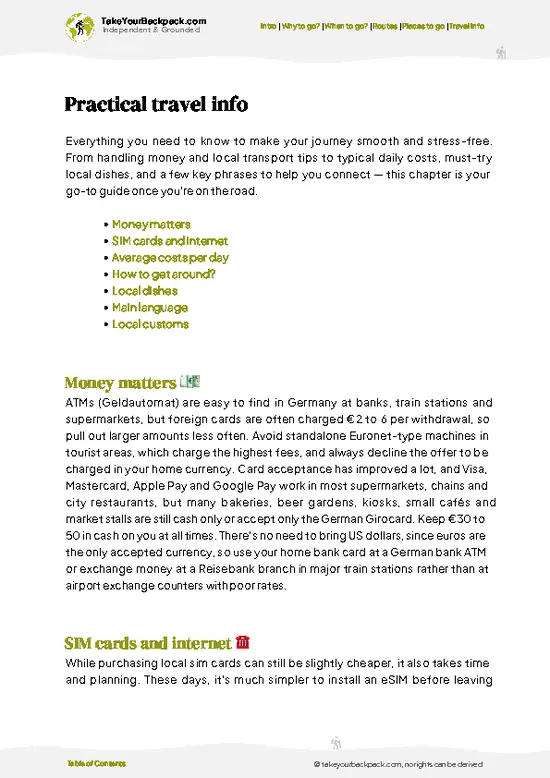
SIM cards, money & practical tips

🌍 Understand the country, not just visit it
Culture & traditions
52 Essential phrases & customs
Festivals worth planning around
Traveler-friendly historical context
Insights that make places more meaningful

📱 Built for real travel conditions
Fully downloadable PDF
Works completely offline
Optimized for phone use
Useful in remote areas & buses
Everything in one place
Save weeks of stressful planning
Get instant access to your full guide. 30‑day money-back guarantee.
+ Add another guide for just US$7.80

By proceeding you agree to our terms.
Sent to your inbox immediately after payment • 100% Secure Checkout
Best Backpacking Travel Advisor 2025 tourism awardBest Backpacking
Travel Advisor
2025
What others say about Take Your Backpack Guides:
⭐⭐⭐⭐⭐
Fantastic, amazing amount of information!
⭐⭐⭐⭐⭐
My goodness this is amazing, it's what I've been looking for hats off too you!
⭐⭐⭐⭐⭐
I think this is absolutely BRILLIANT
⭐⭐⭐⭐
Very complete and informative. It's still missing places, but I gotta to commend you
⭐⭐⭐⭐⭐
This is truly amazing, thank you, can't wait to explore it with my kids!
⭐⭐⭐⭐⭐
Awesome resource, thank you!
⭐⭐⭐⭐⭐
This is amazing! Can't wait to explore the ones I haven't seen
⭐⭐⭐⭐
I love this! Well done, great idea.
⭐⭐⭐⭐⭐
Thanks for taking the time to make this gem!
⭐⭐⭐⭐⭐
This might be the best website I've ever seen.
⭐⭐⭐⭐⭐
Congratulations, and thank you so much for your work; it's incredibly valuable.
⭐⭐⭐⭐
In all seriousness I think you did a great job pointing out the important spots
⭐⭐⭐⭐⭐
10/10 very good
⭐⭐⭐⭐⭐
As someone who's only just starting to visit regularly this is awesome, thank you.
⭐⭐⭐⭐
Thank you very much! I'm going to visit my dad, it's going to be very useful!
⭐⭐⭐⭐⭐
This is really cool! We'll be travelling for the first time and this definitely come in handy.
⭐⭐⭐⭐⭐
You are now our minister of culture, congratulations 👨‍💼
⭐⭐⭐⭐⭐
Just wanted to tell you that this is a pearl! Going to follow your recommendations.
⭐⭐⭐⭐⭐
This is so cool. I'll definitely be using the resource for my travels soon.
⭐⭐⭐⭐⭐
This is very impressive! Good work.
⭐⭐⭐⭐⭐
This is an amazing and informative site. Very well done!

🛏️ Where to stay?Where staying makes the most sense

Rügen Island is a treasure trove for backpackers, and knowing where to stay can elevate your experience.

Start in Binz. This lively seaside resort is a magnet for travelers. The beach promenade buzzes with energy, and you’ll find plenty of cafes and bars where you can mingle. The vibe is relaxed, making it easy to meet fellow backpackers. Plus, the stunning architecture adds a unique charm.

Next up is Sellin. It’s quieter but equally enchanting. The iconic pier and the surrounding nature trails offer a perfect blend of relaxation and adventure. You can soak in the local culture without the … read more 👉
Rügen Island is a treasure trove for backpackers, and knowing where to stay can elevate your experience.

Start in Binz. This lively seaside resort is a magnet for travelers. The beach promenade buzzes with energy, and you’ll find plenty of cafes and bars where you can mingle. The vibe is relaxed, making it easy to meet fellow backpackers. Plus, the stunning architecture adds a unique charm.

Next up is Sellin. It’s quieter but equally enchanting. The iconic pier and the surrounding nature trails offer a perfect blend of relaxation and adventure. You can soak in the local culture without the touristy chaos. It’s a great spot for solo travelers looking to recharge.

Don’t overlook Putbus, a small town with a rich history. It’s less crowded, which means you can explore its parks and classic buildings at your own pace. The local markets are a fantastic way to taste authentic German snacks without breaking the bank.

Finally, consider Göhren. This village is perfect for those who want a mix of beach and forest. The hiking trails are right at your doorstep, and the community is welcoming.

Each of these spots offers a unique slice of Rügen, balancing social opportunities with a sense of safety and comfort. Choose wisely, and you’ll create memories that last long after the trip ends.

🚌 Getting aroundGetting around like a local

Rügen Island is a dance of nature and whimsy, where the rhythm of life flows between the serene coastline and the charming villages. Forget rigid schedules; here, spontaneity reigns. You might find yourself lingering at a beachside café, savoring fresh fish, or wandering through the lush forests, only to realize the next bus is just around the corner. The island invites you to embrace the unexpected, but knowing your transport options can keep you in the groove without missing a beat.


  • Bus: The backbone of Rügen’s public transport, buses connect major towns like Binz, Sassnitz, and Göhren. They run frequently, with the first bus around 5:30 AM and the last one around 11 PM. A ticket costs about €2-4, depending on the distance, and while it’s not the fastest option, it’s reliable and comfortable
read more 👉
Rügen Island is a dance of nature and whimsy, where the rhythm of life flows between the serene coastline and the charming villages. Forget rigid schedules; here, spontaneity reigns. You might find yourself lingering at a beachside café, savoring fresh fish, or wandering through the lush forests, only to realize the next bus is just around the corner. The island invites you to embrace the unexpected, but knowing your transport options can keep you in the groove without missing a beat.


  • Bus: The backbone of Rügen’s public transport, buses connect major towns like Binz, Sassnitz, and Göhren. They run frequently, with the first bus around 5:30 AM and the last one around 11 PM. A ticket costs about €2-4, depending on the distance, and while it’s not the fastest option, it’s reliable and comfortable enough for short trips.


  • Train: The train service is a scenic way to traverse the island, especially the route from Stralsund to Binz. Trains run roughly every hour, starting at 5 AM and ending around 10 PM. Prices hover around €5-10, and the journey offers stunning views of the coastline. It’s a bit more expensive than the bus but worth it for the experience.


  • Bicycle: Renting a bike is a game-changer. You can find rental shops in most towns, with prices around €10-15 per day. The island boasts well-marked cycling paths that lead you through breathtaking landscapes. Plus, you can stop wherever you want, making it the ultimate way to explore at your own pace.


  • Car Sharing: If you’re traveling with a group, consider car-sharing services. Prices vary, but splitting costs can make it affordable. This option gives you the freedom to explore hidden spots off the beaten path, but be mindful of parking regulations in busy areas.


  • Ferries: For a unique twist, hop on a ferry to nearby islands like Hiddensee. Ferries operate from spring to autumn, with prices around €15-20. The ride is scenic, and it’s a great way to add a little adventure to your itinerary.


For a smooth experience, download the local transport app. It’ll keep you updated on schedules and routes, making it easier to navigate Rügen like a local. Embrace the spontaneity, but let technology be your trusty sidekick.

🍲 FoodEating & Drinking in Rügen Island

On Rügen Island, food is a celebration of the sea and the land. Dive into Boddenforelle, a local trout that’s often smoked, delivering a rich, smoky flavor that pairs perfectly with a crisp white wine from the island’s vineyards. Don’t miss out on Matjes, young herring marinated in a tangy sauce, served with fresh bread. The aroma of freshly caught fish wafts through the air at local markets, where you can grab a quick bite or stock up for a picnic.

For a casual dining experience, seek out the beachside shacks and small cafés. They serve up hearty fish sandwiches and local cheeses that are perfect for a midday snack. The vibe is relaxed, with locals chatting over their meals, so don’t hesitate to join in.

Dining customs here are laid-back. You’ll often see people enjoying their meals outdoors, … read more 👉
On Rügen Island, food is a celebration of the sea and the land. Dive into Boddenforelle, a local trout that’s often smoked, delivering a rich, smoky flavor that pairs perfectly with a crisp white wine from the island’s vineyards. Don’t miss out on Matjes, young herring marinated in a tangy sauce, served with fresh bread. The aroma of freshly caught fish wafts through the air at local markets, where you can grab a quick bite or stock up for a picnic.

For a casual dining experience, seek out the beachside shacks and small cafés. They serve up hearty fish sandwiches and local cheeses that are perfect for a midday snack. The vibe is relaxed, with locals chatting over their meals, so don’t hesitate to join in.

Dining customs here are laid-back. You’ll often see people enjoying their meals outdoors, soaking in the fresh sea breeze. It’s common to share tables, so don’t be shy—strike up a conversation. Just remember, tipping isn’t obligatory but appreciated, especially if you’ve enjoyed the local hospitality. Embrace the flavors and the community; it’s all part of the Rügen experience.

FAQCommon questions from travelers

3 to 4 days are sufficient to explore Rügen Island thoroughly. This allows time to visit key sites like the Jasmund National Park, the chalk cliffs, and the seaside resorts. Additional days can be spent hiking or relaxing on the beaches.
You can get around Rügen Island without a car using the regional bus network and the Rügen narrow-gauge steam railway. Buses connect major towns and tourist spots, with tickets costing around 3 to 5 euros per ride. The steam railway offers a scenic way to travel between towns like Putbus and Göhren.
Rügen Island is known for its dramatic chalk cliffs, especially the Königsstuhl in Jasmund National Park. It is also famous for its sandy beaches, seaside resorts like Binz, and historic seaside architecture. The island is a popular destination for hiking, cycling, and nature tourism.
⚠️ Things can change over time, so always validate details locally before you go.

Other German regions near Rügen Island

Explore more nearby:

  • Heligoland—Red cliffs, offshore wildlife, duty-free shopping| 366 km away
  • Wadden Sea—Mudflats, tidal walks, migratory birds| 403 km away
  • Baltrum—Car-free island, tidal flats, thatched cottages| 409 km away

💡 Not sure where to go next?
Create a personalized itinerary for Germany including Rügen Island and the places that fit your trip.

Generate my itinerary

👉 Discover all regions

Or checkout all Germany has to offer (think cities, towns, villages, national parks, hikes, beaches, festivals)
Country photo of Germany

We 💚 feedbackKey takeaways before you go

Rügen Island is a treasure trove of breathtaking chalk cliffs and serene beaches that feel like a secret escape. You’ll find yourself wandering through charming villages, tasting fresh seafood that’s hard to beat. But here’s the catch: it can get crowded in summer, especially at popular spots like Jasmund National Park. If you can swing a visit in the shoulder seasons, you’ll savor the beauty without the throngs. Trust me, it’s worth it.

✈️ When did I visit Germany?
Being a neighbouring country of my home base, I visited Germany many times.

✍️ Help improve this page!
The information on this page is based on my own backpacking experience in Germany, supplemented with up-to-date research and feedback from other travelers. Travel details can change, so if you notice anything outdated or incomplete, feel free to let me know.


🙋‍♂️ Give feedback

👋 Meet the founderWho’s Behind Take Your Backpack?

Johan, backpacker and founder of TakeYourBackpackHi, I’m Johan (Netherlands 🇳🇱), the creator of TakeYourBackpack. Over the past decade, I’ve backpacked through 80+ countries across six continents, gaining extensive experience with independent travel, long-term trips, and overland routes.

This site is built on a combination of firsthand travel experience and carefully curated insights from other backpackers. Many guides are based on places I’ve personally visited, while others bring together tips, observations, and practical advice shared by trusted travelers I’ve met along the way.

The goal is to provide realistic, experience-driven guidance — not generic itineraries — so you can explore destinations with better context, clearer expectations, and more confidence.

Get full Germany guide •
Instant download • 140 highlights • Full Offline guide