
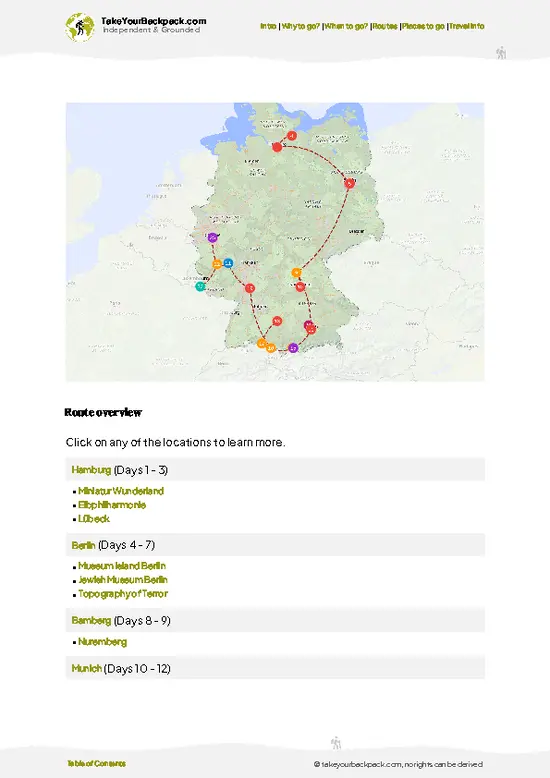
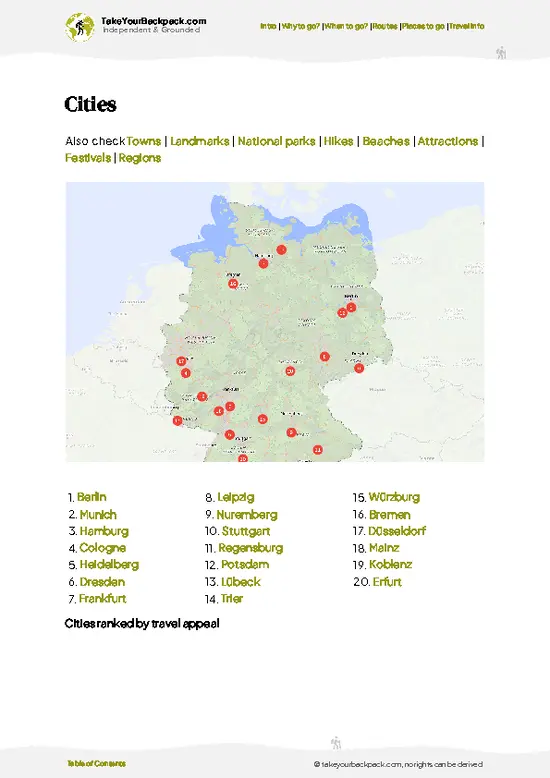
×

Germany🇩🇪 | townsWeimarBauhaus legacy, Goethe’s house, classical gardens | things to do and best time to go

Explore TübingenExplore Wernigerode

Backpacking in Weimar
🌟 Highlighttown ranked #10
By Johan Kruseman 🇳🇱 | Updated September 4, 2026

Years ago, Weimar felt almost secret: quiet cobbled streets, a few Goethe pilgrims, candlelit Kneipen where smoke and conversation hung in the same low ceiling. Today it’s cleaner, better signposted, more curated for culture tourism, but you still feel the weight of ideas in the air. The town sits in Thuringia, central Germany, between Erfurt and Jena, and for backpackers it’s more of a thoughtful pause than a big “scene.” You come for compact, walkable streets, parks where students sprawl with cheap beer, and heavy-hitting culture packed into a small radius, not for nightlife. Trains make it an easy hop between bigger hubs; once here, you’ll walk almost everything. It’s safe, mid-range in cost, and quieter than Erfurt or Leipzig, which makes it perfect as a one- or two-night stop to reset, think, and then move on.

Discover everything you want to know in the 📖 Germany Travel Guide.


Get your Germany guide
140 ranked highlights, routes & tips, works offline (514 pages)
Loading the map 🌍
CLICK TO FILTER
cities
towns
landmarks
national parks
hikes
beaches
attractions
festivals
regions
SHOW COUNTRY’S BESTSHOW ALL

✨ Why go?
Ranked #10 town in Germany
Why visitors keep coming back

Backpackers flock to Weimar for its unique blend of cultural depth and natural access. Nestled in central Germany, it serves as a convenient base for exploring nearby hiking trails in the Thuringian Forest or soaking up the sun at the Beaches of the Saale River. The town’s walkable streets invite leisurely strolls, where you can soak in the rich history without feeling rushed.

Accommodations range from cozy hostels to charming guesthouses, fostering a friendly atmosphere that encourages interaction among travelers. You’ll find yourself sharing stories over a hearty local meal or a cup of coffee in one of the quaint cafés.

Most backpackers tend to stay a couple of days, soaking in the artistic vibe and intellectual legacy left by figures like Goethe and Schiller. This town suits slow travelers, … read more 👉
Backpackers flock to Weimar for its unique blend of cultural depth and natural access. Nestled in central Germany, it serves as a convenient base for exploring nearby hiking trails in the Thuringian Forest or soaking up the sun at the Beaches of the Saale River. The town’s walkable streets invite leisurely strolls, where you can soak in the rich history without feeling rushed.

Accommodations range from cozy hostels to charming guesthouses, fostering a friendly atmosphere that encourages interaction among travelers. You’ll find yourself sharing stories over a hearty local meal or a cup of coffee in one of the quaint cafés.

Most backpackers tend to stay a couple of days, soaking in the artistic vibe and intellectual legacy left by figures like Goethe and Schiller. This town suits slow travelers, solo adventurers, and small groups looking for a mix of culture and nature without the chaos of larger cities. If you appreciate a place that feels both inviting and authentic, Weimar might just be your next stop.
Want to include Weimar in your Germany route?
Create a personalized Germany itinerary that includes Weimar and the places that fit your trip — based on your travel style, budget, and available time. Get your route in seconds.

Generate my trip

💡 HighlightsKey sights and experiences for travelers

  • Duchess Anna Amalia Library (Herzogin Anna Amalia Bibliothek) — The rococo ”green hall” is a showstopper and the library holds priceless German literature and manuscripts; worth visiting for the books, the restored rooms, and the atmosphere of old scholarship.
  • Goethe’s House & Goethe National Museum (Goethehaus / Goethe-Nationalmuseum) — Walk through the rooms where Goethe lived and worked, see original furniture and manuscripts, and get a real sense of how the man who shaped German letters actually lived.
  • Schiller’s House (Schillers Wohnhaus / Schiller-Museum) — Schiller’s compact apartment-museum sits near the market; it’s humble, evocative, and full of letters, portraits and objects that bring Classicism to life.
  • Park an der Ilm & Goethe’s Garden House (Park an der Ilm / Goethes Gartenhaus)
read more 👉
  • Duchess Anna Amalia Library (Herzogin Anna Amalia Bibliothek) — The rococo ”green hall” is a showstopper and the library holds priceless German literature and manuscripts; worth visiting for the books, the restored rooms, and the atmosphere of old scholarship.
  • Goethe’s House & Goethe National Museum (Goethehaus / Goethe-Nationalmuseum) — Walk through the rooms where Goethe lived and worked, see original furniture and manuscripts, and get a real sense of how the man who shaped German letters actually lived.
  • Schiller’s House (Schillers Wohnhaus / Schiller-Museum) — Schiller’s compact apartment-museum sits near the market; it’s humble, evocative, and full of letters, portraits and objects that bring Classicism to life.
  • Park an der Ilm & Goethe’s Garden House (Park an der Ilm / Goethes Gartenhaus) — A beautiful English-style landscape park with shady promenades, the little garden house where Goethe wrote, and pleasant walking routes that show another, quieter side of Weimar.
  • Fürstengruft and Historical Cemetery (Fürstengruft und Historischer Friedhof) — The ducal vault and the adjacent graveyard are where Goethe and Schiller rest; the place is surprisingly moving and a must for anyone into cultural history.
  • Bauhaus Museum Weimar — Compact but well-curated, it explains the Weimar roots of the Bauhaus with original designs, furniture and clear context — essential if you care about modern design and architecture.
  • Haus am Horn — The 1923 experimental Bauhaus model home is restored and visitable; stepping inside gives a real feel for early modernist living and the radical ideas of the time.
  • Belvedere Palace and Park (Schloss Belvedere) — A baroque hilltop palace with sweeping grounds and period interiors (and porcelain), great for a stroll and for views back over the city.
  • Deutsches Nationaltheater Weimar — The theater is historically important (premieres, cultural life) and catching a performance or a guided tour lets you experience Weimar’s living theatrical tradition.
  • Herder House & Church (Herder-Haus / Herderkirche) — The museum and nearby church celebrate Johann Gottfried Herder and the Enlightenment-era ideas that defined Weimar’s intellectual scene; informative and quietly inspiring.
A few excellent day trips nearby: the Buchenwald Memorial (former concentration camp) just outside Weimar, Wartburg Castle at Eisenach for medieval history and Luther ties, and Erfurt’s cathedral area and Krämerbrücke for a compact, characterful city to explore.
Spotted a mistake or missing something? Contact us.

Things to do near Weimar

Ratings based on Tripadvisor reviews. When you book through this link, you support our work at no extra cost to you.

🏘️ NeighborhoodsUnderstanding the local layout

Weimar is a compact town bursting with history, art, and a unique vibe that beckons backpackers to explore its layers. Here’s how to navigate its neighborhoods like a pro:

Altstadt (Old Town)
This is the heart of Weimar, where cobblestone streets meet vibrant cafés and historic sites. The atmosphere is lively yet relaxed, perfect for wandering. Costs are moderate; you can find budget hostels and charming guesthouses. Walkability is a breeze, with most attractions just a few minutes apart. Ideal for short stays, you can soak in the culture without feeling rushed.

Neue Mitte
A blend of modernity and tradition, this area offers a more contemporary vibe. It’s quieter than Altstadt but still has a good selection of eateries and shops. Prices here can vary, but you’ll find some affordable … read more 👉
Weimar is a compact town bursting with history, art, and a unique vibe that beckons backpackers to explore its layers. Here’s how to navigate its neighborhoods like a pro:

Altstadt (Old Town)
This is the heart of Weimar, where cobblestone streets meet vibrant cafés and historic sites. The atmosphere is lively yet relaxed, perfect for wandering. Costs are moderate; you can find budget hostels and charming guesthouses. Walkability is a breeze, with most attractions just a few minutes apart. Ideal for short stays, you can soak in the culture without feeling rushed.

Neue Mitte
A blend of modernity and tradition, this area offers a more contemporary vibe. It’s quieter than Altstadt but still has a good selection of eateries and shops. Prices here can vary, but you’ll find some affordable options. Great for longer stays, as it’s close to parks and less touristy spots. Public transport is accessible, making it easy to venture further.

Weststadt
This neighborhood is more residential, giving you a taste of local life. It’s less touristy, which means lower prices and a more authentic experience. Walkability is decent, but you might need to hop on a bus for some attractions. Nightlife is subdued, making it ideal for those seeking peace after a day of exploration. Perfect for longer stays if you want to immerse yourself in the local culture.

⌛️ 1 dayA smart one-day plan

Weimar, Germany, is a town steeped in history and culture, known for its connections to literary giants like Goethe and Schiller. The air here carries a sense of intellectual legacy, and the architecture reflects a blend of classicism and modernism. Spend a day here, and you’ll find that every corner tells a story.

Start your morning at the charming Café Blum, where the scent of fresh pastries mingles with the rich aroma of coffee. Grab a slice of their famous cheesecake and soak in the atmosphere. The café is a stone’s throw from the Bauhaus Museum, which is a must-visit. The museum’s minimalist design contrasts beautifully with the ornate buildings nearby, showcasing the revolutionary art movement that originated here.

Afterward, stroll through the historic city center, where the light … read more 👉
Weimar, Germany, is a town steeped in history and culture, known for its connections to literary giants like Goethe and Schiller. The air here carries a sense of intellectual legacy, and the architecture reflects a blend of classicism and modernism. Spend a day here, and you’ll find that every corner tells a story.

Start your morning at the charming Café Blum, where the scent of fresh pastries mingles with the rich aroma of coffee. Grab a slice of their famous cheesecake and soak in the atmosphere. The café is a stone’s throw from the Bauhaus Museum, which is a must-visit. The museum’s minimalist design contrasts beautifully with the ornate buildings nearby, showcasing the revolutionary art movement that originated here.

Afterward, stroll through the historic city center, where the light filters through the trees lining the streets. Make your way to the Goethe National Museum, where you can wander through the rooms that inspired some of his greatest works. The quiet gardens behind the museum are often overlooked but provide a serene spot to reflect on your surroundings.

In the afternoon, head to the less-traveled district of Altstadt, where you can explore the charming streets and local shops. Stop by the Kunsthaus, a contemporary art space that often features local artists. It’s a refreshing contrast to the more traditional sights and gives you a taste of modern Weimar.

As evening approaches, find your way to the historic Market Square. The vibrant atmosphere here is infectious, especially as locals gather for dinner. Try a traditional Thüringer bratwurst from a nearby stand, and enjoy it while watching the sunset paint the sky.

End your day at the Nietzsche Archive, a place that often flies under the radar. The intimate setting allows you to dive deeper into the philosophical legacy of the town. Weimar may be small, but its heart beats strong, offering a day filled with rich experiences that linger long after you leave.
Turn your Weimar visit into an Germany adventure
Build a complete Germany route with Weimar, hidden gems, must-see destinations, and realistic travel times included.

Generate my trip

🌤️ When to go?Choosing the right time of year


  • Weather: Spring and early autumn offer mild, comfortable weather, with temperatures hovering between 10-20°C (50-68°F). Summer can get warm, sometimes pushing 25°C (77°F), but rarely oppressive. Winters are cold, often dipping below freezing, which can make wandering the cobblestone streets less inviting.

  • Daylight Hours: Long summer days stretch well into the evening, giving you more time to explore museums and parks under soft, golden light. In contrast, winter days are short, with darkness settling by 4 pm, limiting outdoor activities.

  • Crowds: Peak tourist season is summer, especially July and August, when the town fills with visitors attending festivals and cultural events. Spring and autumn see fewer crowds, letting you enjoy Weimar’s historic charm without the buzz of tourist groups.
read more 👉

  • Weather: Spring and early autumn offer mild, comfortable weather, with temperatures hovering between 10-20°C (50-68°F). Summer can get warm, sometimes pushing 25°C (77°F), but rarely oppressive. Winters are cold, often dipping below freezing, which can make wandering the cobblestone streets less inviting.

  • Daylight Hours: Long summer days stretch well into the evening, giving you more time to explore museums and parks under soft, golden light. In contrast, winter days are short, with darkness settling by 4 pm, limiting outdoor activities.

  • Crowds: Peak tourist season is summer, especially July and August, when the town fills with visitors attending festivals and cultural events. Spring and autumn see fewer crowds, letting you enjoy Weimar’s historic charm without the buzz of tourist groups.

  • Seasonal Activities: Summer hosts open-air concerts and street festivals, while autumn brings harvest celebrations and cozy café vibes. Winter offers Christmas markets, but the cold can be biting, so dress accordingly.

  • Price Fluctuations: Accommodation and transport costs spike in summer and during major events. Booking in shoulder seasons like late spring or early fall can save you money and secure better lodging options.


Pro-tip: Aim for late April to early June or September to early October—when the air smells fresh, the light is soft, and the town feels like it’s yours to discover without the summer crush.


source: climatestotravel.comJANJanuary: fair for travelingFEBFebruary: fair for travelingMARMarch: good for travelingAPRApril: highly recommended for travelingMAYMay: excellent for travelingJUNJune: excellent for travelingJULJuly: good for travelingAUGAugust: good for travelingSEPSeptember: excellent for travelingOCTOctober: highly recommended for travelingNOVNovember: good for travelingDECDecember: fair for traveling
germany-city-weimar
© Google |

✈️ The backpacker research shortcutGermany Travel Guide

An offline-friendly backpacking guide with optimized travel routes, ranked highlights, transport advice, and the best areas to stay.
example page 0 from our offline Travel Guide for Germany
example page 1 from our offline Travel Guide for Germany
example page 2 from our offline Travel Guide for Germany
example page 3 from our offline Travel Guide for Germany
example page 4 from our offline Travel Guide for Germany
example page 5 from our offline Travel Guide for Germany
example page 6 from our offline Travel Guide for Germany
example page 7 from our offline Travel Guide for Germany
The digital guide (514 pages) contains:
140 highlights, ranked by travel appeal
Optimized 7, 14 & 21-day travel routes
Cities, national parks, landmarks, beaches
How to get around
Offline-friendly for travel without Wi-Fi
👉 Click to see all 30+ guide features

📅 Plan smarter in minutes, not weeks
Month by month travel advice
Festivals & national holidays
Budget expectations

🗺️ Go to the right places, skip the overrated ones
Honest pros & cons of destinations
Top hikes, parks & viewpoints
Lesser-known places most travelers miss
Clear “worth it vs skip it” guidance

🛏️ Travel smoothly without rookie mistakes
Best areas to stay
Transport systems explained simply
Common scams & safety advice
SIM cards, money & practical tips

🌍 Understand the country, not just visit it
Culture & traditions
52 Essential phrases & customs
Festivals worth planning around
Traveler-friendly historical context
Insights that make places more meaningful

📱 Built for real travel conditions
Fully downloadable PDF
Works completely offline
Optimized for phone use
Useful in remote areas & buses
Everything in one place
Save weeks of stressful planning
Get instant access to your full guide. 30‑day money-back guarantee.
+ Add another guide for just US$7.80

By proceeding you agree to our terms.
Sent to your inbox immediately after payment • 100% Secure Checkout
Best Backpacking Travel Advisor 2025 tourism awardBest Backpacking
Travel Advisor
2025
What others say about Take Your Backpack Guides:
⭐⭐⭐⭐⭐
Fantastic, amazing amount of information!
⭐⭐⭐⭐⭐
My goodness this is amazing, it's what I've been looking for hats off too you!
⭐⭐⭐⭐⭐
I think this is absolutely BRILLIANT
⭐⭐⭐⭐
Very complete and informative. It's still missing places, but I gotta to commend you
⭐⭐⭐⭐⭐
This is truly amazing, thank you, can't wait to explore it with my kids!
⭐⭐⭐⭐⭐
Awesome resource, thank you!
⭐⭐⭐⭐⭐
This is amazing! Can't wait to explore the ones I haven't seen
⭐⭐⭐⭐
I love this! Well done, great idea.
⭐⭐⭐⭐⭐
Thanks for taking the time to make this gem!
⭐⭐⭐⭐⭐
This might be the best website I've ever seen.
⭐⭐⭐⭐⭐
Congratulations, and thank you so much for your work; it's incredibly valuable.
⭐⭐⭐⭐
In all seriousness I think you did a great job pointing out the important spots
⭐⭐⭐⭐⭐
10/10 very good
⭐⭐⭐⭐⭐
As someone who's only just starting to visit regularly this is awesome, thank you.
⭐⭐⭐⭐
Thank you very much! I'm going to visit my dad, it's going to be very useful!
⭐⭐⭐⭐⭐
This is really cool! We'll be travelling for the first time and this definitely come in handy.
⭐⭐⭐⭐⭐
You are now our minister of culture, congratulations 👨‍💼
⭐⭐⭐⭐⭐
Just wanted to tell you that this is a pearl! Going to follow your recommendations.
⭐⭐⭐⭐⭐
This is so cool. I'll definitely be using the resource for my travels soon.
⭐⭐⭐⭐⭐
This is very impressive! Good work.
⭐⭐⭐⭐⭐
This is an amazing and informative site. Very well done!

🛏️ Where to stay?Where staying makes the most sense

In Weimar, backpackers aiming for a blend of safety, social buzz, and budget-friendly options should zero in on the city center, especially around the Markt and Theaterplatz. This area hums with life—cobbled streets catch the golden afternoon light, and the scent of fresh bread from nearby bakeries drifts through the air. It’s where you’ll find the most hostels clustered, making it easy to meet fellow travelers without trekking across town. The vibe here is relaxed but lively, with cafés spilling onto sidewalks and locals chatting over coffee, creating a natural social scene that’s perfect for … read more 👉
In Weimar, backpackers aiming for a blend of safety, social buzz, and budget-friendly options should zero in on the city center, especially around the Markt and Theaterplatz. This area hums with life—cobbled streets catch the golden afternoon light, and the scent of fresh bread from nearby bakeries drifts through the air. It’s where you’ll find the most hostels clustered, making it easy to meet fellow travelers without trekking across town. The vibe here is relaxed but lively, with cafés spilling onto sidewalks and locals chatting over coffee, creating a natural social scene that’s perfect for solo adventurers.

Compared to the quieter residential neighborhoods on the outskirts, staying central means you’re never more than a few minutes’ walk from Weimar’s cultural heart—museums, historic sites, and parks. This proximity saves time and energy, letting you soak in the atmosphere without the hassle of public transport or long walks after a day of exploring. Plus, the city center’s well-lit streets and steady foot traffic add an extra layer of comfort at night, which is a subtle but crucial detail when you’re traveling alone. In Weimar, location isn’t just about convenience—it’s the key to unlocking the city’s rhythm.

🚌 Getting aroundTransportation options and practical tips

Weimar moves at a pace that feels like a slow, deliberate breath—no rush, but no dawdling either. The cobblestones underfoot, the scent of fresh bread from a corner bakery, and the occasional ring of a bicycle bell create a rhythm that’s part old-world charm, part practical ease. This isn’t a city where you’ll find frantic crowds or a rigid timetable dictating your every step. Instead, it’s a place where intuition guides you, but knowing the transit options lets you glide through the experience with a local’s confidence, not a tourist’s guesswork.


  • Walking: The heart of Weimar is compact enough to explore on foot. Expect to cover most major sights within 20-30 minutes of each other. Walking lets you soak in the texture of the city—the uneven cobbles, the scent of linden trees, the quiet
read more 👉
Weimar moves at a pace that feels like a slow, deliberate breath—no rush, but no dawdling either. The cobblestones underfoot, the scent of fresh bread from a corner bakery, and the occasional ring of a bicycle bell create a rhythm that’s part old-world charm, part practical ease. This isn’t a city where you’ll find frantic crowds or a rigid timetable dictating your every step. Instead, it’s a place where intuition guides you, but knowing the transit options lets you glide through the experience with a local’s confidence, not a tourist’s guesswork.


  • Walking: The heart of Weimar is compact enough to explore on foot. Expect to cover most major sights within 20-30 minutes of each other. Walking lets you soak in the texture of the city—the uneven cobbles, the scent of linden trees, the quiet corners where Goethe once mused. It’s free, flexible, and the best way to catch the subtle details that buses and trams miss.


  • City Bus: Buses run regularly from early morning (around 5:30 AM) until about 11 PM. A single ticket costs roughly €2.50 and covers a 60-minute ride, which is perfect for hopping between neighborhoods or reaching spots just beyond walking distance. Buses are punctual but expect a modest crowd during rush hours. They’re a solid budget choice if you want to save your legs for the museums and parks.


  • Tram: Weimar’s tram system is limited but efficient, mainly serving routes that connect the train station with the city center and university areas. Trams start around 6 AM and run until 10 PM, with tickets priced similarly to buses. They’re smoother and faster than buses, especially during peak times, and offer a glimpse of daily local life through large windows.


  • Bicycle Rentals: For about €10-15 per day, renting a bike is a smart move if you want to cover more ground without losing the sensory connection to the city. Weimar’s flat terrain and dedicated bike lanes make cycling a breeze. Early morning or late afternoon rides along the Ilm River are especially rewarding, with soft light filtering through the trees and the quiet hum of wheels on pavement.


  • Regional Train: If you’re planning a day trip beyond Weimar, the regional train is your best bet. Trains depart frequently from the main station, with tickets starting around €5 for nearby towns like Jena or Erfurt. The ride is quick—usually under 30 minutes—and offers a window seat to the rolling Thuringian countryside, a perfect prelude or postscript to your urban exploration.

👛 Costs (as of 4 September 2026)Money, prices, and spending tips

Backpacking through Weimar, Germany, means balancing history-soaked streets with practical spending. Here’s what you’re looking at day-to-day.
  • Dorm Accommodation: Hostels in Weimar hover around €20 to €30 per night for a bed in a shared dorm. It’s basic but clean, often with a communal kitchen that helps you save on meals. Booking ahead is smart, especially in peak tourist seasons.
  • Meals: Expect to spend about €10 to €15 daily if you mix supermarket snacks, street food, and the occasional casual café meal. A hearty bratwurst or a slice of traditional German cake will set you back around €3 to €5 each. Cooking your own meals cuts costs significantly.
  • Local Transport: Weimar is compact, so walking covers most ground. If you need a bus, a single ticket costs about €2.50, with day passes around
read more 👉
Backpacking through Weimar, Germany, means balancing history-soaked streets with practical spending. Here’s what you’re looking at day-to-day.
  • Dorm Accommodation: Hostels in Weimar hover around €20 to €30 per night for a bed in a shared dorm. It’s basic but clean, often with a communal kitchen that helps you save on meals. Booking ahead is smart, especially in peak tourist seasons.
  • Meals: Expect to spend about €10 to €15 daily if you mix supermarket snacks, street food, and the occasional casual café meal. A hearty bratwurst or a slice of traditional German cake will set you back around €3 to €5 each. Cooking your own meals cuts costs significantly.
  • Local Transport: Weimar is compact, so walking covers most ground. If you need a bus, a single ticket costs about €2.50, with day passes around €6.50. Renting a bike is another option, roughly €10 to €15 per day, letting you explore the town’s parks and cultural sites at your own pace.
  • Basic Activities/Entry Fees: Museums and historical sites typically charge €5 to €10 for entry. Some, like the Bauhaus Museum, might be a bit pricier, but the cultural payoff is worth it. Many sites offer discounted or free entry on certain days—check ahead to time your visits.
  • Miscellaneous Expenses: Budget around €5 to €10 for extras like bottled water, coffee, or a small souvenir. Wi-Fi is usually free in hostels and cafés, so no extra charge there.

All told, you’re looking at roughly €50 to €75 per day to cover the essentials without cutting corners. Weimar’s charm is in its walkable scale and rich cultural layers, so spending smart means you get to soak it all in without the stress of overspending.


source: weimar.de
⚠️ Prices can change and everyone travels differently, so take this as a rough guide. Hope it helps you plan your adventure!

🚌 Day tripsShort trips worth adding

Weimar is a fantastic base for day trips, offering a blend of history, culture, and natural beauty just a train ride away.

Erfurt
Just a quick 30-minute train ride from Weimar, Erfurt is a must-see for its medieval charm. The stunning Krämerbrücke, a bridge lined with half-timbered houses, feels like stepping back in time. Stroll through the cobblestone streets, and don’t miss the Augustinerkloster, where Martin Luther lived. Grab a bratwurst from a street vendor and soak in the atmosphere. A budget traveler can easily get by on €20 for the day, including transport and snacks. Spring is ideal, with blooming flowers adding color to the historic backdrop. First-timers often overlook the local markets, which are a treasure trove of regional delicacies.
👉 Explore Erfurt

Jena
Only 20 minutes … read more 👉
Weimar is a fantastic base for day trips, offering a blend of history, culture, and natural beauty just a train ride away.

Erfurt
Just a quick 30-minute train ride from Weimar, Erfurt is a must-see for its medieval charm. The stunning Krämerbrücke, a bridge lined with half-timbered houses, feels like stepping back in time. Stroll through the cobblestone streets, and don’t miss the Augustinerkloster, where Martin Luther lived. Grab a bratwurst from a street vendor and soak in the atmosphere. A budget traveler can easily get by on €20 for the day, including transport and snacks. Spring is ideal, with blooming flowers adding color to the historic backdrop. First-timers often overlook the local markets, which are a treasure trove of regional delicacies.
👉 Explore Erfurt

Jena
Only 20 minutes away, Jena is a vibrant university town that offers a different vibe. The Zeiss Planetarium is a highlight, perfect for stargazers. Afterward, hike up to the JenTower for panoramic views of the city and surrounding hills. You can enjoy a full day here for around €25, including a meal at a local café. Autumn is particularly lovely, with the foliage painting the hills in warm hues. A common mistake is sticking to the city center; the outskirts have some beautiful trails that are worth exploring.


Buchenwald Memorial
A 15-minute bus ride takes you to the Buchenwald Memorial, a sobering yet essential visit. The site offers deep insights into history, with exhibits that provoke thought and reflection. Entry is free, but consider a small donation to support the memorial. The best time to visit is early morning to avoid crowds and soak in the solemn atmosphere. Many first-timers underestimate the emotional weight of the site; take your time to process what you see.


Naumburg
About 40 minutes from Weimar, Naumburg is known for its stunning cathedral, a UNESCO World Heritage site. The intricate sculptures and stained glass are breathtaking. After touring the cathedral, wander through the charming old town and enjoy a local wine at a vineyard. Expect to spend around €30 for the day, including transport and a meal. Late spring is perfect for this trip, as the vineyards come alive. A common pitfall is rushing through the cathedral; allow yourself to linger and appreciate the artistry.
Want to know what more Germany offers?
The Germany Travel Guide describes 140 highlights, from cities to national parks, from beaches to hikes

Get the Travel Guide -

🛡️ SafetyScams, Hazards, and Annoyances

Weimar is generally safe, but a few practical tips can enhance your experience. Stick to well-lit areas at night, especially around the park near the Bauhaus Museum. It’s a lovely spot, but shadows can play tricks on your mind.

Solo travelers should be aware of their surroundings, particularly in crowded places like the market square. Keep your belongings close; pickpockets are rare but not unheard of.

As for scams, the most common annoyance is overly persistent street performers. They’re usually harmless, but if you’re not interested, a polite “nein, danke” will suffice.

Carry yourself confidently. A relaxed demeanor goes a long way in blending in. Embrace the charm of Weimar, and let the history seep into your bones, but stay aware. That balance is key to unlocking the town’s true essence.

FAQFrequently asked questions about Weimar

Yes, Weimar is worth visiting for its rich cultural heritage, including sites related to Goethe, Schiller, and the Bauhaus movement. It offers more than a simple stopover with museums, historic buildings, and a compact city center to explore.
Two full days are sufficient to see the main attractions in Weimar, such as the Goethe National Museum, Bauhaus Museum, and the historic old town. This allows time for walking tours and visiting a few cafes or local restaurants.
Yes, Weimar can be visited as a day trip from nearby cities like Leipzig or Erfurt, both about 30-40 minutes away by train. A day trip is feasible but limits the time to explore beyond the main highlights.
⚠️ Things can change over time, so always validate details locally before you go.

Other German towns near Weimar

Explore more nearby:

  • Quedlinburg—Romanesque abbey, winding alleys, timbered houses| 91 km away
  • Wernigerode—colorful facades, Harz foothills, hilltop castle| 102 km away
  • Bayreuth—opera house, festival culture, landscaped parks| 116 km away

💡 Not sure where to go next?
Create a personalized itinerary for Germany including Weimar and the places that fit your trip.

Generate my itinerary

👉 Discover all towns

Or checkout all Germany has to offer (think cities, towns, villages, national parks, hikes, beaches, festivals)
Country photo of Germany

We 💚 feedbackSumming up the experience

Weimar is a treasure trove of culture, where the scent of fresh bread from local bakeries mingles with the whispers of history in its cobblestone streets. You’ll feel the weight of creativity that shaped modern thought. But be ready: it’s not a bustling metropolis. If you crave nightlife or constant action, you might find it a bit too quiet. Embrace the stillness; it’s where the real magic happens.

✈️ When did I visit Germany?
Being a neighbouring country of my home base, I visited Germany many times.

✍️ Help improve this page!
The information on this page is based on my own backpacking experience in Germany, supplemented with up-to-date research and feedback from other travelers. Travel details can change, so if you notice anything outdated or incomplete, feel free to let me know.


🙋‍♂️ Give feedback

👋 Meet the founderWho’s Behind Take Your Backpack?

Johan, backpacker and founder of TakeYourBackpackHi, I’m Johan (Netherlands 🇳🇱), the creator of TakeYourBackpack. Over the past decade, I’ve backpacked through 80+ countries across six continents, gaining extensive experience with independent travel, long-term trips, and overland routes.

This site is built on a combination of firsthand travel experience and carefully curated insights from other backpackers. Many guides are based on places I’ve personally visited, while others bring together tips, observations, and practical advice shared by trusted travelers I’ve met along the way.

The goal is to provide realistic, experience-driven guidance — not generic itineraries — so you can explore destinations with better context, clearer expectations, and more confidence.

Get full Germany guide •
Instant download • 140 highlights • Full Offline guide