×

Ghana🇬🇭 | regionsVolta regionmountain villages, Ewe traditions, Lake Volta shoreline, forest reserves | things to do and best time to go

Explore Densu Delta Ramsar SiteExplore Akwamufie

Backpacking in Volta region
🏆 Top pickregion ranked #1
By Johan Kruseman 🇳🇱 | Updated May 30, 2026

You land in Accra, and here’s the first real fork in the road: do you burn a day and a chunk of cash on a private car to Ho, or do you brave the tro-tro—Ghana’s famously unpredictable minibus—for a fraction of the price and triple the stories? That’s the Volta region in a nutshell: every choice is a trade-off between time, money, and how much sweat you’re willing to invest for the good stuff. Volta sits in Ghana’s east, pressed up against Togo, and it’s the country’s wild card—lush, hilly, and stubbornly unpolished.

For backpackers, Volta is a jackpot if you crave waterfalls, mountain hikes, and villages where you’re more likely to be invited to a funeral than hustled for a tour. Wli and Hohoe are the main magnets—Wli for its waterfall (the tallest in West Africa, and yes, it’s worth the hike), Hohoe for its market chaos and as a springboard to Mount Afadjato. It’s cheaper than the Cape Coast or Kumasi, but transport is slower and less predictable. You’ll trade convenience for authenticity, but you’ll get a region that still feels like Ghana, not a theme park. If you want beaches, stick to the west; if you want green, misty mornings and the feeling you’ve slipped behind the curtain, Volta is your move.

Discover everything you want to know in the 📖 Ghana Travel Guide.


Get your Ghana guide
111 ranked highlights, routes & tips, works offline (424 pages)
Loading the map 🌍
CLICK TO FILTER
cities
towns
villages
landmarks
national parks
hikes
beaches
attractions
festivals
regions
SHOW COUNTRY’S BESTSHOW ALL

✨ Why go?
Ranked #1 region in Ghana
The unique appeal for travelers

In the Volta Region of Ghana, backpackers find a sweet spot where nature and culture collide. You can hike the Akwapim-Togo mountain range one day and chill by the Volta Lake the next. This variety means you don’t have to constantly pack up and move; you can settle in and soak it all up.

Transport here is surprisingly flexible. You can hop on a shared taxi or a tro-tro to explore nearby villages like Wli for its stunning waterfalls or Tafi Atome to meet the friendly monkeys. This ease of movement lets you dive deeper into local life without the stress of rigid itineraries.

Plus, the region is perfect for slow travel. You can spend a few days in a village, learning about traditional weaving or participating in local festivals. This immersive experience is what makes the Volta Region a high-valueread more 👉
In the Volta Region of Ghana, backpackers find a sweet spot where nature and culture collide. You can hike the Akwapim-Togo mountain range one day and chill by the Volta Lake the next. This variety means you don’t have to constantly pack up and move; you can settle in and soak it all up.

Transport here is surprisingly flexible. You can hop on a shared taxi or a tro-tro to explore nearby villages like Wli for its stunning waterfalls or Tafi Atome to meet the friendly monkeys. This ease of movement lets you dive deeper into local life without the stress of rigid itineraries.

Plus, the region is perfect for slow travel. You can spend a few days in a village, learning about traditional weaving or participating in local festivals. This immersive experience is what makes the Volta Region a high-value choice. You’re not just ticking boxes; you’re creating memories that stick. So, pack your bag, grab your sense of adventure, and get ready to explore a place that feels like a well-kept secret among seasoned travelers.
Get the complete Travel Guide for Ghana
Everything organized for offline planning — routes, highlights, costs & tips

See what’s inside 👉

Get the Travel Guide -

💡 HighlightsEssential experiences to have while visiting Volta region

  • Wli (Agumatsa) Waterfalls — Ghana’s tallest waterfall set in a lush, humid forest; the hike through the Agumatsa Reserve ends at a twin-tiered plunge pool where locals and hikers cool off. It’s dramatic, green, and impossible to fake in a photo.
  • Mount Afadja (Afadjato) — the country’s highest peak with rocky outcrops and sweeping views over the Togo plains; the climb is short but steep, and the summit panorama plus foggy mornings make it a proper highland escape you won’t get elsewhere in Ghana.
  • Tagbo Falls (Liati Wote) — a mossy, multi-stage waterfall tucked above the village of Liati Wote; the trek follows streams, crosses small bridges and finishes in cool pools — quieter and more intimate than Wli if you time it right.
  • Tafi Atome Monkey Sanctuary — a community-run sacred grove protecting
read more 👉
  • Wli (Agumatsa) Waterfalls — Ghana’s tallest waterfall set in a lush, humid forest; the hike through the Agumatsa Reserve ends at a twin-tiered plunge pool where locals and hikers cool off. It’s dramatic, green, and impossible to fake in a photo.
  • Mount Afadja (Afadjato) — the country’s highest peak with rocky outcrops and sweeping views over the Togo plains; the climb is short but steep, and the summit panorama plus foggy mornings make it a proper highland escape you won’t get elsewhere in Ghana.
  • Tagbo Falls (Liati Wote) — a mossy, multi-stage waterfall tucked above the village of Liati Wote; the trek follows streams, crosses small bridges and finishes in cool pools — quieter and more intimate than Wli if you time it right.
  • Tafi Atome Monkey Sanctuary — a community-run sacred grove protecting habituated Mona monkeys; you can walk with the monkeys, learn about local taboos and see how conservation and culture are woven together by villagers.
  • Keta Lagoon (Ramsar site) — a huge brackish lagoon packed with birds, winding channels and traditional fishing camps; boat trips at dawn or dusk are unforgettable, especially for birdwatching and watching local salt-harvesting and canoe life.
  • Fort Prinzenstein, Keta — an intact Danish fort on the lagoon edge with heavy stone walls and cannon emplacements; it’s a compact, tangible reminder of the coast’s colonial and slave-trade history you can walk around and feel.
  • Kpetoe (Agotome) Kente Weaving Village — a working weaving town where Agotime kente is made; you can watch and try the loom work, buy patterns unique to the area, and see techniques different from Ashanti kente.
  • Amedzofe (hidden gem) — a quiet mountain village with stone houses, cool air and short trails that open onto ridge-top views; locals know it as a low-key retreat for weekend hiking and homestays, and tourists rarely overrun it.
  • Liati Wote village (hidden gem) — the small community that serves Tagbo Falls: simple guesthouses, friendly guides, and real village life. It’s a good place to stay overnight, eat ash-palm soup, and wake up to birds without tourist crowds.
  • Anloga / Woe fishing towns (hidden gem) — the coastal heartbeat of the Anlo-Ewe: busy seafood markets, canoe landings, smoked-fish racks and evening lagoon sunsets. Visit for hands-on fishing culture, local grilled fish stalls and the seafront promenades most visitors skip.
Spotted a mistake or missing something? Contact us.

⌛️ 5 daysHow to make the most of Volta region

Day 1: Ho

Start your adventure in Ho, the capital of the Volta Region. It’s a strategic launchpad, with decent transport links to other towns. You’ll want to acclimate here, soaking in the local vibe. Spend the day exploring the lively market and sampling street food. The transport system is a mix of shared taxis and tro-tros, so familiarize yourself with these options. They’re your lifeline for the next few days.

Day 2: Wli Waterfalls

Head to Wli Waterfalls, about an hour from Ho. This is where the magic begins. The trek to the falls is invigorating, and the sound of cascading water is pure bliss. The transport here is straightforward, but timing is key; leave early to beat the crowds. The reward? A refreshing swim at the base of the falls.

Day 3: Tafi Atome

On Day 3, make your way … read more 👉
Day 1: Ho

Start your adventure in Ho, the capital of the Volta Region. It’s a strategic launchpad, with decent transport links to other towns. You’ll want to acclimate here, soaking in the local vibe. Spend the day exploring the lively market and sampling street food. The transport system is a mix of shared taxis and tro-tros, so familiarize yourself with these options. They’re your lifeline for the next few days.

Day 2: Wli Waterfalls

Head to Wli Waterfalls, about an hour from Ho. This is where the magic begins. The trek to the falls is invigorating, and the sound of cascading water is pure bliss. The transport here is straightforward, but timing is key; leave early to beat the crowds. The reward? A refreshing swim at the base of the falls.

Day 3: Tafi Atome

On Day 3, make your way to Tafi Atome, home to the friendly Mona monkeys. It’s a quick ride from Wli, and the detour is worth it. You’ll get a chance to interact with these playful creatures in their natural habitat. The local guides are passionate and will share stories that connect you to the culture.

Day 4: Akosombo

Next, head to Akosombo, a bit further afield but essential for understanding Ghana’s hydroelectric power. The journey takes about two hours, so plan accordingly. The views along the way are stunning, especially as you approach the dam. Spend the afternoon on a boat tour of Lake Volta, soaking in the scenery and learning about the region’s history.

Day 5: Return to Ho

Wrap up your trip back in Ho. Use this day to revisit any favorite spots or discover new ones. The transport back is easy, and it gives you a chance to reflect on your journey.

The must-do day? Day 2 at Wli Waterfalls. It’s the heart of the Volta Region, combining adventure, beauty, and a taste of local life. Don’t miss it!
Build the Right Itinerary
Use the Ghana Travel Guide’s 5, 10 & 15-day routes as a starting point to plan a trip that actually works on the ground.

Get the Travel Guide -

🌤️ When to go?When to go for the best experience


  • Topic: Weather – The Volta region’s rainy season runs from April to October, with heavy downpours that can turn trails into mudslides and slow down travel. For dry, reliable hiking and exploring, aim for November to March when the skies clear up.

  • Topic: Temperature – Expect daytime highs between 28°C and 32°C (82°F to 90°F) year-round, but the dry season brings slightly cooler evenings, making camping and night markets more pleasant.

  • Topic: Daylight Hours – Around 11 to 12 hours of daylight throughout the year, but the dry season’s clearer skies mean you get more usable daylight without the interruption of sudden storms.

  • Topic: Crowds – Tourist traffic spikes during December and January holidays, especially around Lake Volta and Wli Waterfalls. Visiting just before or after this window
read more 👉

  • Topic: Weather – The Volta region’s rainy season runs from April to October, with heavy downpours that can turn trails into mudslides and slow down travel. For dry, reliable hiking and exploring, aim for November to March when the skies clear up.

  • Topic: Temperature – Expect daytime highs between 28°C and 32°C (82°F to 90°F) year-round, but the dry season brings slightly cooler evenings, making camping and night markets more pleasant.

  • Topic: Daylight Hours – Around 11 to 12 hours of daylight throughout the year, but the dry season’s clearer skies mean you get more usable daylight without the interruption of sudden storms.

  • Topic: Crowds – Tourist traffic spikes during December and January holidays, especially around Lake Volta and Wli Waterfalls. Visiting just before or after this window means fewer people and better deals.

  • Topic: Seasonal Activities – The dry season hosts local festivals like Hogbetsotso in November, a cultural deep dive worth timing your trip for if you want authentic celebrations without the tourist crush.

  • Topic: Price Fluctuations – Accommodation and transport costs rise during the dry season’s peak months (December to February). Booking early or traveling in shoulder months (November, March) can save you a solid chunk of cash.


Pro-tip: Hit the Volta region in late November—dry trails, festival vibes, and fewer tourists. It’s the sweet spot where timing meets value like a local insider.


source: climatestotravel.comJANJanuary: highly recommended for travelingFEBFebruary: highly recommended for travelingMARMarch: highly recommended for travelingAPRApril: fair for travelingMAYMay: fair for travelingJUNJune: fair for travelingJULJuly: fair for travelingAUGAugust: fair for travelingSEPSeptember: fair for travelingOCTOctober: fair for travelingNOVNovember: excellent for travelingDECDecember: good for traveling
when-to-go

✈️ The backpacker research shortcutGhana Travel Guide

An offline-friendly backpacking guide with optimized travel routes, ranked highlights, transport advice, and the best areas to stay.
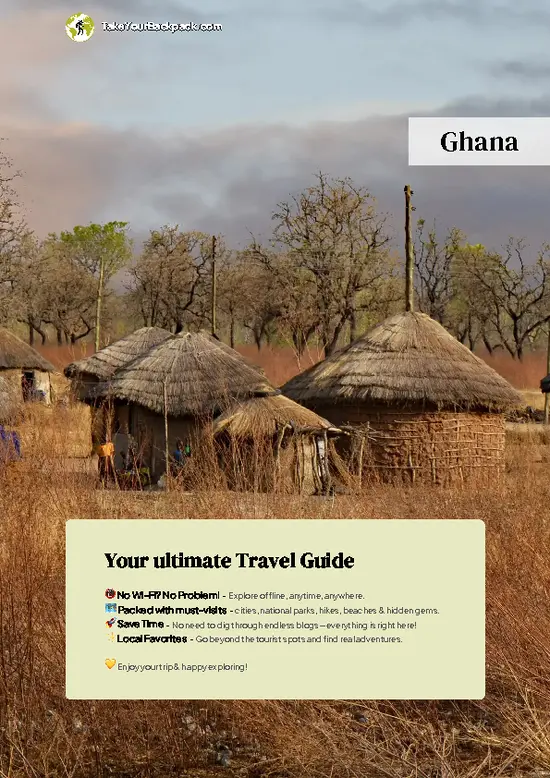
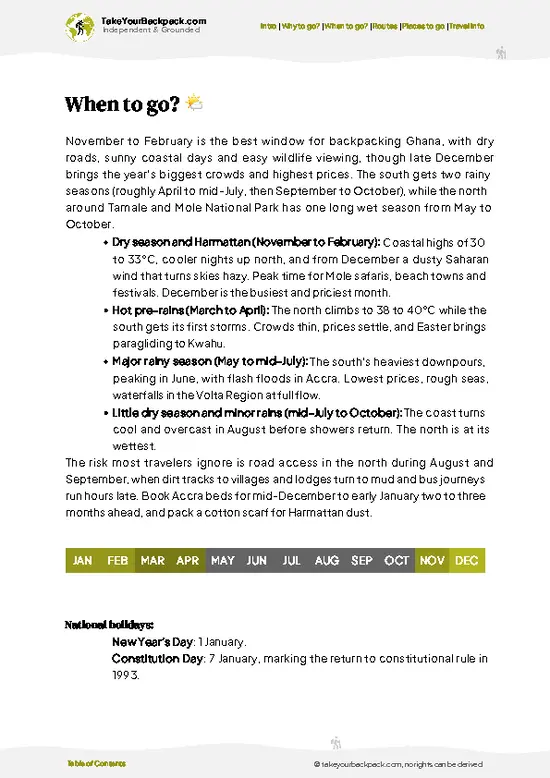
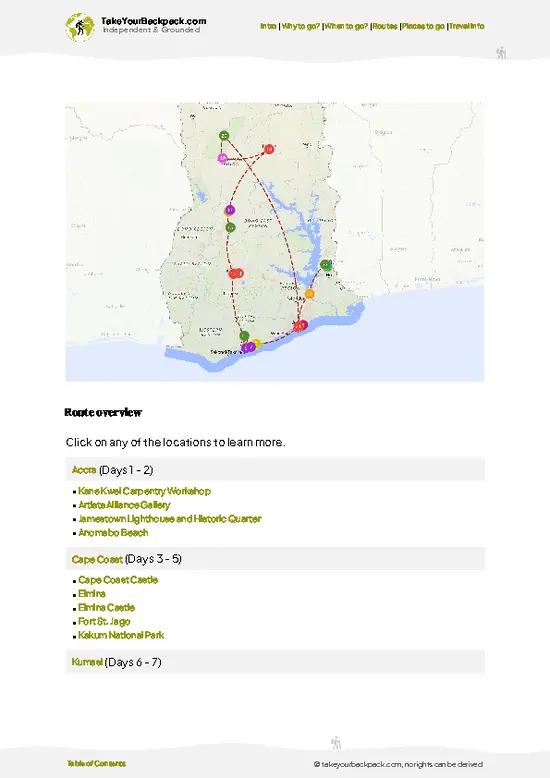
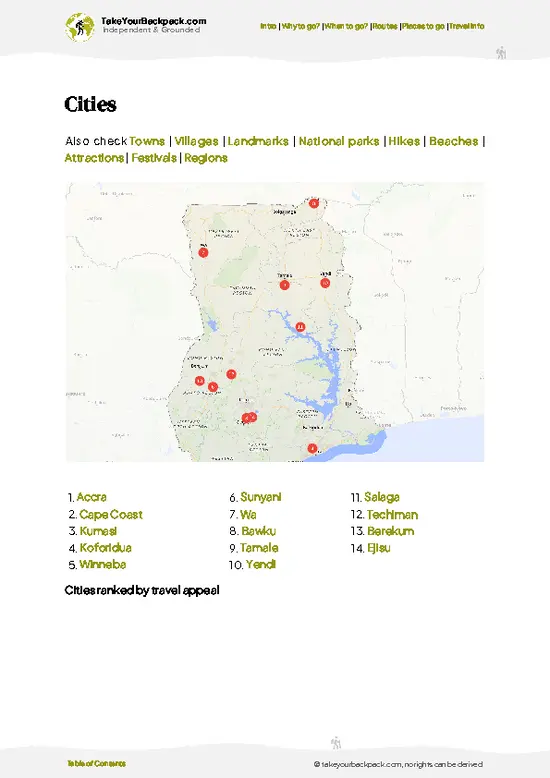
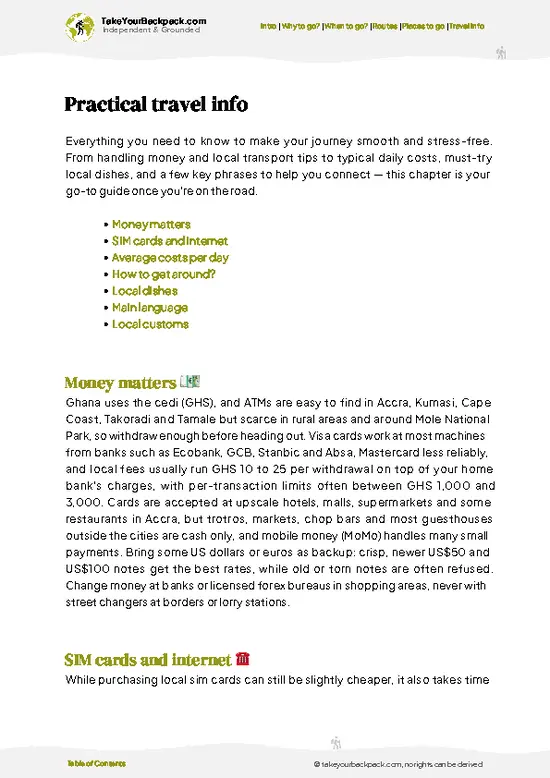
example page 0 from our offline Travel Guide for Ghanaexample page 1 from our offline Travel Guide for Ghanaexample page 2 from our offline Travel Guide for Ghanaexample page 3 from our offline Travel Guide for Ghanaexample page 4 from our offline Travel Guide for Ghanaexample page 5 from our offline Travel Guide for Ghanaexample page 6 from our offline Travel Guide for Ghanaexample page 7 from our offline Travel Guide for Ghana
The digital guide (424 pages) contains:
111 highlights, ranked by travel appeal
Optimized 5, 10 & 15-day travel routes
Cities, national parks, beaches, historical sites, ...
How to get around
Offline-friendly for travel without Wi-Fi
👉 Click to see all 30+ guide features

📅 Plan smarter in minutes, not weeks
Month by month travel advice
Festivals & national holidays
Budget expectations

🗺️ Go to the right places, skip the overrated ones
Honest pros & cons of destinations
Top hikes, parks & viewpoints
Lesser-known places most travelers miss
Clear “worth it vs skip it” guidance

🛏️ Travel smoothly without rookie mistakes
Best areas to stay
Transport systems explained simply
Common scams & safety advice
SIM cards, money & practical tips

🌍 Understand the country, not just visit it
Culture & traditions
52 Essential phrases & customs
Festivals worth planning around
Traveler-friendly historical context
Insights that make places more meaningful

📱 Built for real travel conditions
Fully downloadable PDF
Works completely offline
Optimized for phone use
Useful in remote areas & buses
Everything in one place
Save weeks of stressful planning
Get instant access to the full guide directly. 30-day money-back guarantee.


Sent to your inbox immediately after payment • 100% Secure Checkout
Best Backpacking Travel Advisor 2025 tourism awardBest Backpacking
Travel Advisor
2025
What others say about Take Your Backpack Guides:
⭐⭐⭐⭐⭐
Fantastic, amazing amount of information!
⭐⭐⭐⭐⭐
My goodness this is amazing, it's what I've been looking for hats off too you!
⭐⭐⭐⭐⭐
I think this is absolutely BRILLIANT
⭐⭐⭐⭐
Very complete and informative. It's still missing places, but I gotta to commend you
⭐⭐⭐⭐⭐
This is truly amazing, thank you, can't wait to explore it with my kids!
⭐⭐⭐⭐⭐
Awesome resource, thank you!
⭐⭐⭐⭐⭐
This is amazing! Can't wait to explore the ones I haven't seen
⭐⭐⭐⭐
I love this! Well done, great idea.
⭐⭐⭐⭐⭐
Thanks for taking the time to make this gem!
⭐⭐⭐⭐⭐
This might be the best website I've ever seen.
⭐⭐⭐⭐⭐
Congratulations, and thank you so much for your work; it's incredibly valuable.
⭐⭐⭐⭐
In all seriousness I think you did a great job pointing out the important spots
⭐⭐⭐⭐⭐
10/10 very good
⭐⭐⭐⭐⭐
As someone who's only just starting to visit regularly this is awesome, thank you.
⭐⭐⭐⭐
Thank you very much! I'm going to visit my dad, it's going to be very useful!
⭐⭐⭐⭐⭐
This is really cool! We'll be travelling for the first time and this definitely come in handy.
⭐⭐⭐⭐⭐
You are now our minister of culture, congratulations 👨‍💼
⭐⭐⭐⭐⭐
Just wanted to tell you that this is a pearl! Going to follow your recommendations.
⭐⭐⭐⭐⭐
This is so cool. I'll definitely be using the resource for my travels soon.
⭐⭐⭐⭐⭐
This is very impressive! Good work.
⭐⭐⭐⭐⭐
This is an amazing and informative site. Very well done!

🛏️ Where to stay?Best areas to stay in Ghana

The Volta Region of Ghana is a treasure trove for backpackers, offering a mix of vibrant culture and stunning landscapes.

Start in Ho, the regional capital. It’s a hub for travelers, with a lively market and plenty of local eateries. You’ll find a friendly vibe here, perfect for meeting fellow backpackers. The nearby Wli Waterfalls are a must-see, and you can easily join a group hike to make the experience more social.

Next, consider Amedzofe, a small village perched in the mountains. It’s known for its breathtaking views and serene atmosphere. Staying here means you can hike to the highest … read more 👉
The Volta Region of Ghana is a treasure trove for backpackers, offering a mix of vibrant culture and stunning landscapes.

Start in Ho, the regional capital. It’s a hub for travelers, with a lively market and plenty of local eateries. You’ll find a friendly vibe here, perfect for meeting fellow backpackers. The nearby Wli Waterfalls are a must-see, and you can easily join a group hike to make the experience more social.

Next, consider Amedzofe, a small village perched in the mountains. It’s known for its breathtaking views and serene atmosphere. Staying here means you can hike to the highest point in Ghana, Afadjato, and soak in the local culture. The pace is slower, making it ideal for reflection and connection with nature.

Don’t overlook Kpando, where you can dive into the local craft scene. The town is safe and welcoming, with opportunities to engage with artisans. Plus, the Kpando Heritage Museum offers insights into the region’s history.

Lastly, Tafi Atome is famous for its monkey sanctuary. It’s a unique spot to interact with nature and enjoy the community spirit. The locals are warm and eager to share their stories, making it a great place to feel at home.

Each of these spots offers a different flavor of the Volta Region, ensuring you’ll leave with rich experiences and new friendships.

🚌 Getting aroundMoving around without the hassle

The Volta Region of Ghana pulses with a rhythm that’s anything but predictable. Here, transport isn’t just about getting from A to B; it’s an adventure in itself. You’ll find a blend of organized chaos and spontaneous intuition. Buses might leave when they’re full, or you might hop on a trotro that’s just waiting for the right vibe. Schedules? They’re more like suggestions. This is a place where the journey is as colorful as the landscapes, and every ride can lead to unexpected encounters and stories.


  • Trotro: These shared minibuses are the lifeblood of local transport. They run frequently, often from dawn until dusk, and cost around 2-5 GHS for short trips. Expect a lively atmosphere, but be ready to squeeze in with locals. They’re fast, but comfort is a trade-off.


  • Bus: Larger buses like
read more 👉
The Volta Region of Ghana pulses with a rhythm that’s anything but predictable. Here, transport isn’t just about getting from A to B; it’s an adventure in itself. You’ll find a blend of organized chaos and spontaneous intuition. Buses might leave when they’re full, or you might hop on a trotro that’s just waiting for the right vibe. Schedules? They’re more like suggestions. This is a place where the journey is as colorful as the landscapes, and every ride can lead to unexpected encounters and stories.


  • Trotro: These shared minibuses are the lifeblood of local transport. They run frequently, often from dawn until dusk, and cost around 2-5 GHS for short trips. Expect a lively atmosphere, but be ready to squeeze in with locals. They’re fast, but comfort is a trade-off.


  • Bus: Larger buses like STC or Metro Mass Transit offer a more structured option. They typically run from early morning until late afternoon, with fares ranging from 10-30 GHS depending on distance. They’re slower than trotros but provide a more comfortable ride with air conditioning and scheduled stops.


  • Bicycle Taxi (Aboboyaa): For a unique experience, hop on a bicycle taxi. These are available throughout towns and can cost around 5-10 GHS for short distances. They’re a fun way to navigate the bustling streets, but be prepared for a bit of a workout as you pedal along!


  • Motorbike Taxi (Okada): If you’re in a hurry, motorbike taxis are your best bet. They’re available in most towns and can cost about 10-15 GHS for a quick ride. They zip through traffic and can get you to your destination faster, but hold on tight!


  • Car Rentals: For those who prefer their own schedule, renting a car is an option. Prices vary, but expect to pay around 150-300 GHS per day. This gives you the freedom to explore at your own pace, but factor in fuel costs and local driving conditions.


To navigate the Volta Region efficiently, embrace the local vibe. Don’t just stick to the main routes; ask locals for the best trotros or hidden paths. They often know shortcuts that can save you time and lead to unexpected adventures. Trust your instincts, and let the journey unfold.

🍲 FoodWhat to Eat & Drink

In the Volta Region, food is a celebration. Dive into fufu, a starchy delight made from pounded cassava and plantains, often served with a rich, spicy soup. Don’t miss banku, a fermented corn and cassava dish, perfect for soaking up the flavors of grilled tilapia. The aroma of pepper sauce wafts through the air, a fiery companion to nearly every meal.

Street food is where the magic happens. Vendors line the bustling markets, serving up kebabs sizzling on charcoal grills, their smoky scent mingling with the sweetness of fried plantains. Grab a bowl of light soup with goat meat from a local stall, and you’ll feel the warmth of community as you share a table with locals.

For drinks, seek out palm wine—a refreshing, slightly sweet beverage tapped straight from the palm tree. It’s best enjoyed … read more 👉
In the Volta Region, food is a celebration. Dive into fufu, a starchy delight made from pounded cassava and plantains, often served with a rich, spicy soup. Don’t miss banku, a fermented corn and cassava dish, perfect for soaking up the flavors of grilled tilapia. The aroma of pepper sauce wafts through the air, a fiery companion to nearly every meal.

Street food is where the magic happens. Vendors line the bustling markets, serving up kebabs sizzling on charcoal grills, their smoky scent mingling with the sweetness of fried plantains. Grab a bowl of light soup with goat meat from a local stall, and you’ll feel the warmth of community as you share a table with locals.

For drinks, seek out palm wine—a refreshing, slightly sweet beverage tapped straight from the palm tree. It’s best enjoyed in the company of friends, often accompanied by laughter and stories.

Dining here is casual and communal. Expect to eat with your hands, a sign of appreciation for the food. Don’t rush; savor each bite and engage with those around you. This isn’t just a meal; it’s an experience that connects you to the heart of Ghana.

Expanding your trip beyond this stop

Volta region isn’t the only highlight in Ghana. Explore all what Ghana has to offer.
Country photo of Ghana

We 💚 feedbackIs it worth it?

The Volta Region is a treasure trove of culture and nature, with the serene shores of Lake Volta calling you to unwind. You’ll find locals who are genuinely welcoming, making it easy to connect. But here’s the kicker: the roads can be rough, and public transport is a test of patience. If you’re ready for a bit of adventure, the rewards are worth it. Just pack your sense of humor and a little extra time.

✈️ When did I visit Ghana?
Ghana I visited in December 2024, starting in Accra following the coast, then up north to Mole National park to finish in the Volta Region.

✍️ Help improve this page!
The information on this page is based on my own backpacking experience in Ghana, supplemented with up-to-date research and feedback from other travelers. Travel details can change, so if you notice anything outdated or incomplete, feel free to let me know.


🙋‍♂️ Give feedback

👋 Meet the founderWho’s Behind Take Your Backpack?

Johan, backpacker and founder of TakeYourBackpackHi, I’m Johan (Netherlands 🇳🇱), the creator of TakeYourBackpack. Over the past decade, I’ve backpacked through 80+ countries across six continents, gaining extensive experience with independent travel, long-term trips, and overland routes.

This site is built on a combination of firsthand travel experience and carefully curated insights from other backpackers. Many guides are based on places I’ve personally visited, while others bring together tips, observations, and practical advice shared by trusted travelers I’ve met along the way.

The goal is to provide realistic, experience-driven guidance — not generic itineraries — so you can explore destinations with better context, clearer expectations, and more confidence.

Get full Ghana guide •
Instant download • 111 highlights • Full Offline guide