×

Ghana🇬🇭 | best regionsExplore the Best regions in Ghana

In Ghana, the regions you choose shape your entire travel experience, especially for backpackers seeking authentic encounters. From the coastal vibrancy of Accra to the lush forests of the Ashanti region, each area offers distinct climates and landscapes that influence your journey. The Northern regions, with their dry savannahs, contrast sharply with the tropical south, affecting everything from budget to safety. Seasonal nuances, like the rainy season, can impact accessibility and local events, making timing crucial. Understanding these regional differences not only enhances your cultural immersion but also ensures you navigate Ghana’s diverse offerings with confidence and ease.

By Johan Kruseman 🇳🇱 | Updated July 28, 2026
Explore the best cities in Ghana

Why go?Understanding Their Importance

Ghana’s regions are a tapestry of climatic diversity, each offering a unique lens into the country’s rich cultural character and varied landscapes. From the coastal plains to the lush forests and arid savannahs, the geography shapes not just the scenery but the very essence of life here. The climate varies significantly; the south is humid and tropical, while the north experiences a dry, dusty harmattan season. This variation influences everything from agriculture to festivals, making each region distinct in its offerings.

Culturally, Ghana stands out with its historical significance as a former hub of the transatlantic slave trade, which adds layers of depth to its heritage. The infrastructure is generally improving, with major roads connecting key areas, but travelers should be prepared … read more 👉
Ghana’s regions are a tapestry of climatic diversity, each offering a unique lens into the country’s rich cultural character and varied landscapes. From the coastal plains to the lush forests and arid savannahs, the geography shapes not just the scenery but the very essence of life here. The climate varies significantly; the south is humid and tropical, while the north experiences a dry, dusty harmattan season. This variation influences everything from agriculture to festivals, making each region distinct in its offerings.

Culturally, Ghana stands out with its historical significance as a former hub of the transatlantic slave trade, which adds layers of depth to its heritage. The infrastructure is generally improving, with major roads connecting key areas, but travelers should be prepared for longer travel times in more remote regions. This can be a trade-off: while the journey may take longer, it often leads to deeper, more immersive experiences that reveal the heart of Ghanaian life.

Accessibility varies; urban centers are easier to navigate, but venturing into rural areas requires patience and planning. This balance between travel distance and the richness of experiences is crucial. Understanding these dynamics will enhance the journey, allowing travelers to appreciate the grit and beauty that Ghana has to offer.
Why These Made the Cut
The list of best regions in Ghana is created based on landscapes, local culture, attractions, vibes, and overall appeal. If you feel a region is missing in this list, please let us know.

When to go?Optimal Periods for Travel

Climate Variation
Ghana’s climate is largely tropical, with two main seasons: the dry season and the rainy season. The dry season, typically from November to March, brings warm temperatures and lower humidity. This is when the country is most accessible, making it ideal for exploring various regions without the hindrance of heavy rains.

Optimal Months
The best months to visit generally fall within the dry season. This period allows for comfortable travel conditions, especially for outdoor activities. The Harmattan winds, which sweep in from the Sahara, can make December and January particularly pleasant, with cooler evenings and clear skies.

Shoulder Seasons
The shoulder months, just before and after the rainy season, present a mixed bag. While the landscape is lush and vibrant, the … read more 👉
Climate Variation
Ghana’s climate is largely tropical, with two main seasons: the dry season and the rainy season. The dry season, typically from November to March, brings warm temperatures and lower humidity. This is when the country is most accessible, making it ideal for exploring various regions without the hindrance of heavy rains.

Optimal Months
The best months to visit generally fall within the dry season. This period allows for comfortable travel conditions, especially for outdoor activities. The Harmattan winds, which sweep in from the Sahara, can make December and January particularly pleasant, with cooler evenings and clear skies.

Shoulder Seasons
The shoulder months, just before and after the rainy season, present a mixed bag. While the landscape is lush and vibrant, the weather can be unpredictable. Travelers may encounter fewer crowds and lower prices, but also the risk of sudden downpours. This can affect travel plans and accessibility to certain areas.

Peak Periods
Festivals often coincide with peak travel times, drawing larger crowds. These events can enrich the experience but may also lead to higher accommodation costs and limited availability. Balancing the desire for cultural immersion with comfort and convenience is key when planning a visit.

Seasonal Constraints
Travelers should be mindful of the rainy season, which can disrupt travel plans and limit access to some regions. Understanding these seasonal dynamics is essential for crafting a rewarding itinerary that maximizes both comfort and experience.

region hoppingSuggested Travel Strategies

Ghana’s Regions offer a rich tapestry of experiences, and combining them requires a strategic approach. Start in the south, where Accra serves as a vibrant gateway. From there, head west to the coastal towns of Cape Coast and Elmina, where the haunting history of the slave trade meets the salty breeze of the Atlantic. Allocate at least two days here; the forts and beaches deserve time to sink in.

Next, move north to Kumasi, the heart of the Ashanti Region. The bustling markets and cultural sites provide a stark contrast to the coastal calm. A day or two is ideal for immersing in local traditions and sampling street food.

Then, venture further north to the savannah landscapes of the Northern Region. This area is less traveled but offers unique wildlife experiences and the chance to engage … read more 👉
Ghana’s Regions offer a rich tapestry of experiences, and combining them requires a strategic approach. Start in the south, where Accra serves as a vibrant gateway. From there, head west to the coastal towns of Cape Coast and Elmina, where the haunting history of the slave trade meets the salty breeze of the Atlantic. Allocate at least two days here; the forts and beaches deserve time to sink in.

Next, move north to Kumasi, the heart of the Ashanti Region. The bustling markets and cultural sites provide a stark contrast to the coastal calm. A day or two is ideal for immersing in local traditions and sampling street food.

Then, venture further north to the savannah landscapes of the Northern Region. This area is less traveled but offers unique wildlife experiences and the chance to engage with local communities. Plan for three days to explore the parks and villages, balancing adventure with downtime.

Common pitfalls include over-scheduling and underestimating travel times. Roads can be bumpy, and public transport may not always be reliable. Prioritize quality over quantity; it’s better to savor a few regions deeply than to rush through many. Flexibility is key; allow for spontaneous detours that could lead to unexpected rewards.

The ListThe Best regions of Ghana

1 Volta region

mountain villages, Ewe traditions, Lake Volta shoreline, forest reserves

Hike through lush hills, meet Ewe artisans, and discover quiet lakeside communities where daily life follows the rhythms of the land and water.

Loading the map 🌍

Expert viewExpert Commentary on regions

Geographic Diversity
Ghana’s regions are a tapestry of landscapes, each with its own character. From the coastal plains to the rolling hills and dense forests, the geography shapes the culture and experiences you’ll encounter. The south, with its lush greenery and bustling markets, contrasts sharply with the arid north, where the land is more rugged and the pace of life slows down. Expect to feel the humidity cling to your skin in the south, while the north offers a dry heat that can sap your energy.

You’ll want to consider visiting at least three to four regions to grasp the full spectrum of what Ghana offers. Each region has its own rhythm, and the transitions between them can be jarring yet rewarding. The coastal areas are vibrant and alive, while the northern regions invite introspection … read more 👉
Geographic Diversity
Ghana’s regions are a tapestry of landscapes, each with its own character. From the coastal plains to the rolling hills and dense forests, the geography shapes the culture and experiences you’ll encounter. The south, with its lush greenery and bustling markets, contrasts sharply with the arid north, where the land is more rugged and the pace of life slows down. Expect to feel the humidity cling to your skin in the south, while the north offers a dry heat that can sap your energy.

You’ll want to consider visiting at least three to four regions to grasp the full spectrum of what Ghana offers. Each region has its own rhythm, and the transitions between them can be jarring yet rewarding. The coastal areas are vibrant and alive, while the northern regions invite introspection and connection with the land.

Transport Between Regions
Getting around Ghana can be an adventure in itself. The roads vary from well-paved highways to bumpy, unpaved tracks that test your patience. Public transport options like tro-tros and buses are affordable but can be crowded and unpredictable. If you’re short on time, consider hiring a private driver for a smoother experience, though this will stretch your budget.

Traveling between regions can take longer than expected. A journey that looks short on a map can easily turn into a half-day affair due to road conditions and traffic. Plan for delays and embrace the journey; the landscapes you’ll pass through are often as rewarding as the destinations themselves.

Cultural Variation
Cultural experiences shift dramatically as you move from one region to another. In the south, you’ll find a mix of traditional and modern influences, with lively festivals and colorful markets. The north, however, is steeped in tradition, where customs are preserved and the pace of life is dictated by the seasons.

Engaging with locals can be a highlight, but be mindful of cultural norms. Dress modestly in rural areas, and always ask before taking photos. The warmth of the people is palpable, but respect is key to building rapport.

Pacing Trade-offs
When planning your trip, consider the trade-offs between depth and breadth. If you rush through too many regions, you risk missing the nuances that make each unique. Spending more time in fewer regions allows for deeper connections and a richer experience.

For a balanced itinerary, aim for a week to ten days if you want to explore three regions. This gives you enough time to soak in the local culture, enjoy the food, and perhaps even join a traditional dance or two. However, if you’re pressed for time, prioritize regions that resonate with your interests—be it history, nature, or culture.

Safety & Cultural Considerations
Safety is generally good in Ghana, but like anywhere, stay aware of your surroundings. Avoid walking alone at night in unfamiliar areas and keep your belongings secure. The cultural landscape is diverse, so be prepared for varying levels of hospitality and openness.

In the end, the effort you put into navigating Ghana’s regions will pay off in spades. Whether it’s the first taste of a local dish or the moment you find yourself in a lively gathering, the rewards are tangible. Embrace the grit of the streets and the burn of the trails; the beauty of Ghana is earned, not given.

✈️ The backpacker research shortcutGhana Travel Guide

An offline-friendly backpacking guide with optimized travel routes, ranked highlights, transport advice, and the best areas to stay.
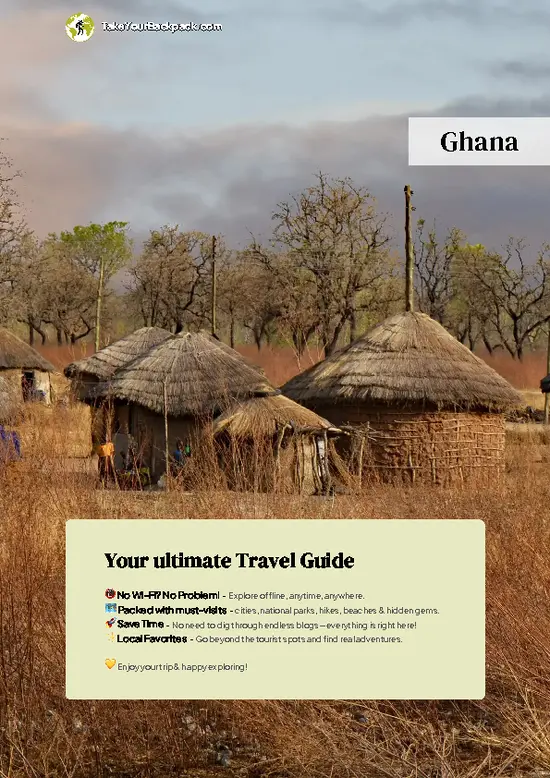
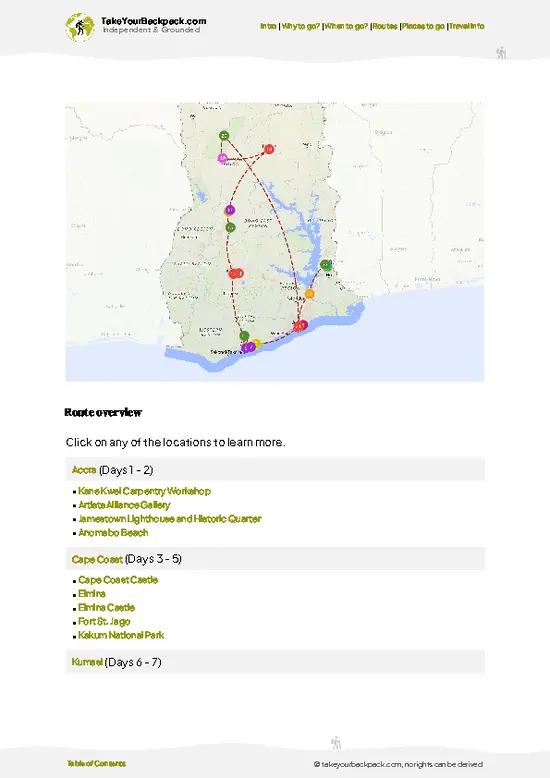
example page 0 from our offline Travel Guide for Ghana
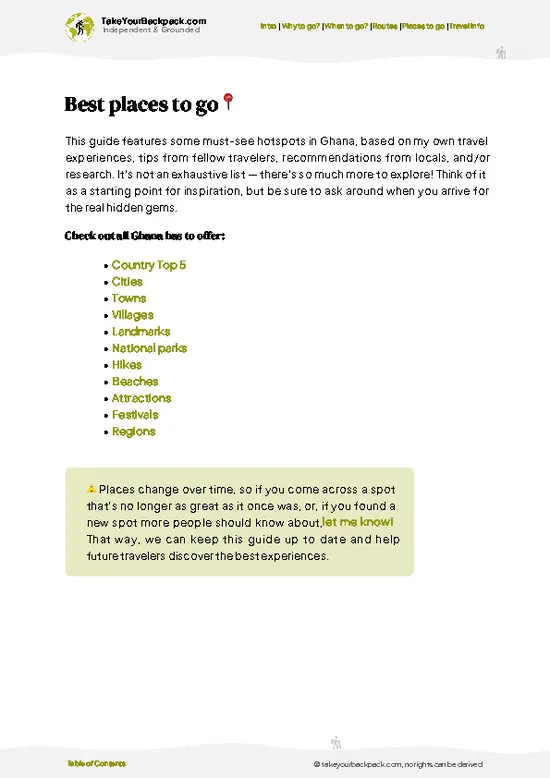
example page 1 from our offline Travel Guide for Ghana
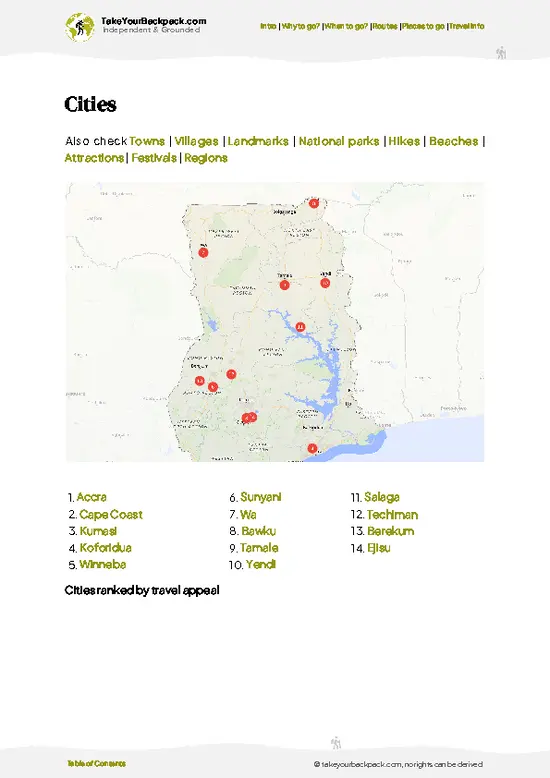
example page 2 from our offline Travel Guide for Ghana
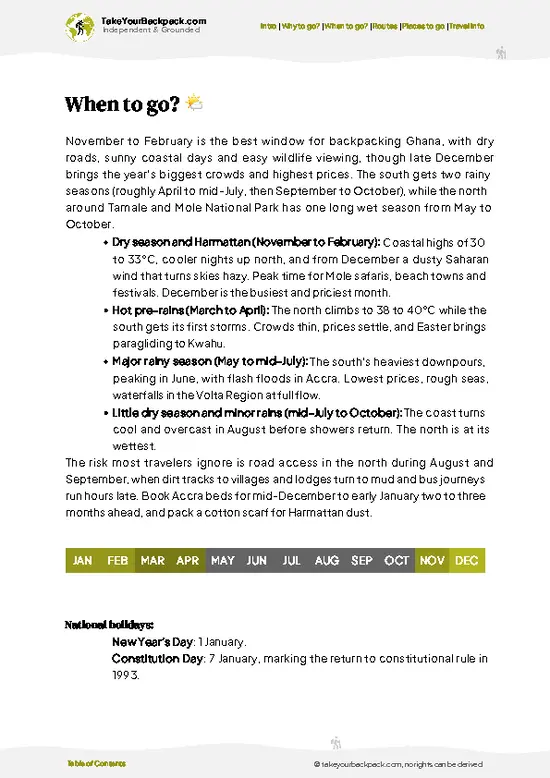
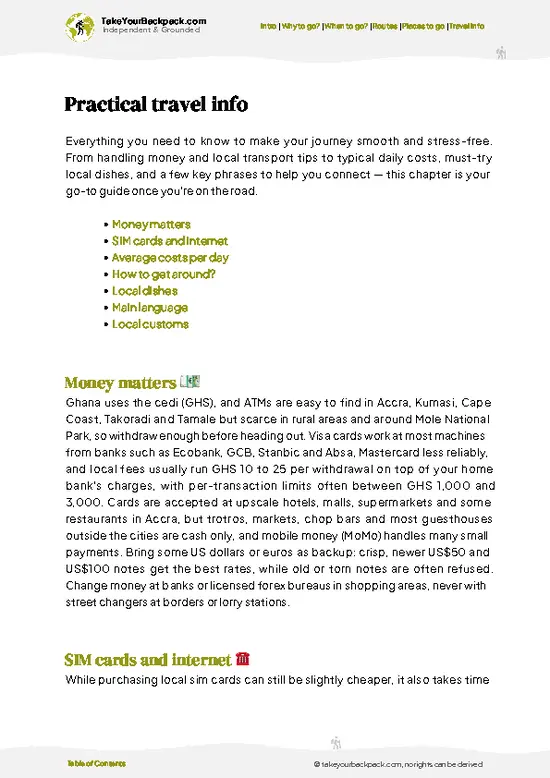
example page 3 from our offline Travel Guide for Ghana
example page 4 from our offline Travel Guide for Ghana
example page 5 from our offline Travel Guide for Ghana
example page 6 from our offline Travel Guide for Ghana
example page 7 from our offline Travel Guide for Ghana
The digital guide (399 pages) contains:
108 highlights, ranked by travel appeal
Optimized 5, 10 & 15-day travel routes
Cities, national parks, landmarks, beaches
How to get around
Offline-friendly for travel without Wi-Fi
👉 Click to see all 30+ guide features

📅 Plan smarter in minutes, not weeks
Month by month travel advice
Festivals & national holidays
Budget expectations

🗺️ Go to the right places, skip the overrated ones
Honest pros & cons of destinations
Top hikes, parks & viewpoints
Lesser-known places most travelers miss
Clear “worth it vs skip it” guidance

🛏️ Travel smoothly without rookie mistakes
Best areas to stay
Transport systems explained simply
Common scams & safety advice
SIM cards, money & practical tips

🌍 Understand the country, not just visit it
Culture & traditions
52 Essential phrases & customs
Festivals worth planning around
Traveler-friendly historical context
Insights that make places more meaningful

📱 Built for real travel conditions
Fully downloadable PDF
Works completely offline
Optimized for phone use
Useful in remote areas & buses
Everything in one place
Save weeks of stressful planning
Get instant access to your full guide. 30‑day money-back guarantee.


By proceeding you agree to our terms.
Sent to your inbox immediately after payment • 100% Secure Checkout
Best Backpacking Travel Advisor 2025 tourism awardBest Backpacking
Travel Advisor
2025
What others say about Take Your Backpack Guides:
⭐⭐⭐⭐⭐
Fantastic, amazing amount of information!
⭐⭐⭐⭐⭐
My goodness this is amazing, it's what I've been looking for hats off too you!
⭐⭐⭐⭐⭐
I think this is absolutely BRILLIANT
⭐⭐⭐⭐
Very complete and informative. It's still missing places, but I gotta to commend you
⭐⭐⭐⭐⭐
This is truly amazing, thank you, can't wait to explore it with my kids!
⭐⭐⭐⭐⭐
Awesome resource, thank you!
⭐⭐⭐⭐⭐
This is amazing! Can't wait to explore the ones I haven't seen
⭐⭐⭐⭐
I love this! Well done, great idea.
⭐⭐⭐⭐⭐
Thanks for taking the time to make this gem!
⭐⭐⭐⭐⭐
This might be the best website I've ever seen.
⭐⭐⭐⭐⭐
Congratulations, and thank you so much for your work; it's incredibly valuable.
⭐⭐⭐⭐
In all seriousness I think you did a great job pointing out the important spots
⭐⭐⭐⭐⭐
10/10 very good
⭐⭐⭐⭐⭐
As someone who's only just starting to visit regularly this is awesome, thank you.
⭐⭐⭐⭐
Thank you very much! I'm going to visit my dad, it's going to be very useful!
⭐⭐⭐⭐⭐
This is really cool! We'll be travelling for the first time and this definitely come in handy.
⭐⭐⭐⭐⭐
You are now our minister of culture, congratulations 👨‍💼
⭐⭐⭐⭐⭐
Just wanted to tell you that this is a pearl! Going to follow your recommendations.
⭐⭐⭐⭐⭐
This is so cool. I'll definitely be using the resource for my travels soon.
⭐⭐⭐⭐⭐
This is very impressive! Good work.
⭐⭐⭐⭐⭐
This is an amazing and informative site. Very well done!

🛏️ Where to stay?Top Places to Consider Staying

Yes — hostels and budget accommodation are widely available across Ghana, concentrated in Accra, Kumasi and Cape Coast with smaller clusters in Sekondi‑Takoradi and popular beach towns.
In Accra the best budget choices cluster in Osu for nightlife and social hostels (expect noise and slightly higher rates), Labone and nearby areas for quieter stays with easier taxi access to attractions (fewer dorms), and Jamestown or market districts for the cheapest, most authentic options that require extra caution after dark.
Cape Coast offers cheap guesthouses near the castle and beach for daytime sightseeing and calm nights; Kumasi’s Adum/Bantama areas put you by markets and transit but are busy and … read more 👉
Yes — hostels and budget accommodation are widely available across Ghana, concentrated in Accra, Kumasi and Cape Coast with smaller clusters in Sekondi‑Takoradi and popular beach towns.
In Accra the best budget choices cluster in Osu for nightlife and social hostels (expect noise and slightly higher rates), Labone and nearby areas for quieter stays with easier taxi access to attractions (fewer dorms), and Jamestown or market districts for the cheapest, most authentic options that require extra caution after dark.
Cape Coast offers cheap guesthouses near the castle and beach for daytime sightseeing and calm nights; Kumasi’s Adum/Bantama areas put you by markets and transit but are busy and sometimes chaotic; western coastal towns give cheaper seaside stays with limited hostel-style social life and fewer transport links.

If you enjoy meeting fellow travelers, consider choosing hostels with high ratings for atmosphere. On the other hand, if you prefer having your own space, a hotel might be a better option.

GhanaMore Places Across Ghana

👋 Meet the founderWho’s Behind Take Your Backpack?

Johan, backpacker and founder of TakeYourBackpackHi, I’m Johan (Netherlands 🇳🇱), the creator of TakeYourBackpack. Over the past decade, I’ve backpacked through 80+ countries across six continents, gaining extensive experience with independent travel, long-term trips, and overland routes.

This site is built on a combination of firsthand travel experience and carefully curated insights from other backpackers. Many guides are based on places I’ve personally visited, while others bring together tips, observations, and practical advice shared by trusted travelers I’ve met along the way.

The goal is to provide realistic, experience-driven guidance — not generic itineraries — so you can explore destinations with better context, clearer expectations, and more confidence.

Get full Ghana guide •
Instant download • 108 highlights • Full Offline guide