
×

Guam🇬🇺 | landmarksInarajan Natural PoolLava-rock basins, tide-fed pools, reef-break spray, calm-day snorkeling | things to do and best time to go

Explore Umatac BayExplore Pagat Cave

Backpacking in Inarajan Natural Pool
👌 Worth visitingunique site ranked #2
By Johan Kruseman 🇳🇱 | Updated October 15, 2026

The pools fill and drain with the tide, so the same spot can be a calm swimming bath at one hour and a churning, wave-slapped rock pocket at another. Inarajan Natural Pool sits on the southeast coast of Guam, in the village of Inarajan, a short drive south of Hagåtña. The wow-factor is modest but real: lava-rock basins filled with clear, bright water, with the reef-break surf crashing just beyond the wall. It’s worth the time if you like snorkeling in calm water or want a free, uncrowded swim. Skip it if you expect a polished beach resort, because facilities are simple and the pools can close when swells run high. Check the sea before you drive, and aim to arrive near low tide on a calm day, when the basins are at their gentlest. Weekdays are quiet. Photographers will love the contrast of black rock and turquoise water. Finish at the stairway down through the shaded picnic area, where the rock steps lead into the water.

Discover everything you want to know in the 📖 Guam Travel Guide.


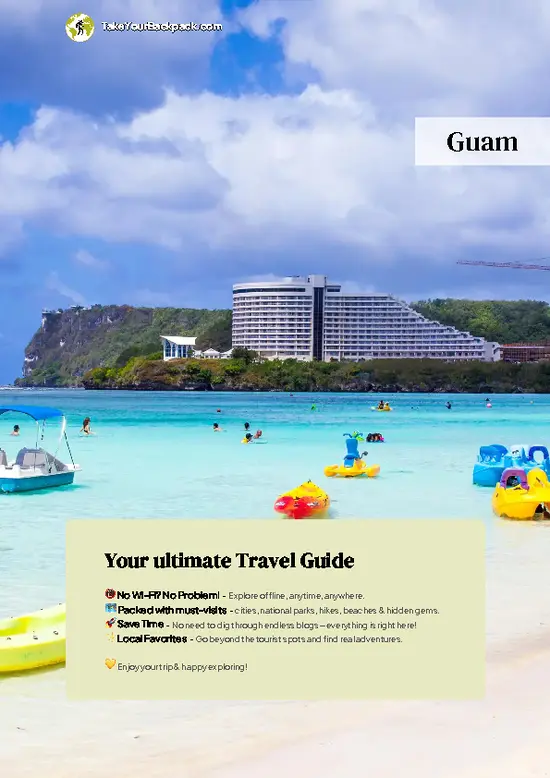
example page 0 from our offline Travel Guide for Guam
example page 1 from our offline Travel Guide for Guam
example page 2 from our offline Travel Guide for Guam
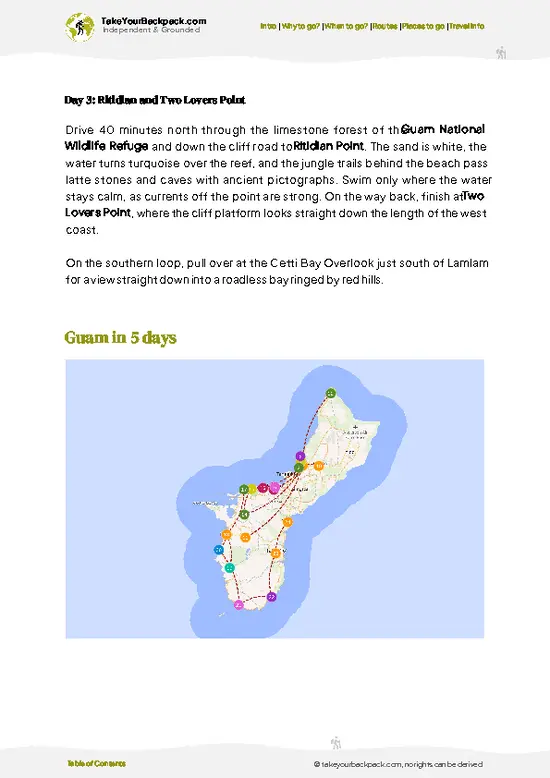
example page 3 from our offline Travel Guide for Guam
example page 4 from our offline Travel Guide for Guam
example page 5 from our offline Travel Guide for Guam
example page 6 from our offline Travel Guide for Guam
example page 7 from our offline Travel Guide for Guam
Loading the map 🌍
CLICK TO FILTER
towns
villages
landmarks
national parks
hikes
beaches
attractions
festivals
SHOW COUNTRY’S BESTSHOW ALL

✨ Why go?
Ranked #2 unique site in Guam
Why Inarajan Natural Pool should be on your travel list

Inarajan sits on Guam’s quiet southern coast, and the pool is the reason to leave the Tumon strip behind. You get a natural lava-rock tide pool where the Pacific refills the basin through gaps in the reef wall, which means fish, sea urchins and small coral sit in water you can actually wade into. Most Guam swim spots need a boat or a long hike. This one needs a car, a mask and a calm-sea forecast, and it costs nothing to enter.

The second draw is the setting. The pool lies beside Inarajan’s historic village, where Spanish-era buildings, the church of St. Joseph and the old Gef Pa’go cultural village give you context beyond the swim. Combine those in a half-day loop and the pool becomes the cooling-off stop rather than the whole plan.

It also slots into the classic southern Guam drive along … read more 👉
Inarajan sits on Guam’s quiet southern coast, and the pool is the reason to leave the Tumon strip behind. You get a natural lava-rock tide pool where the Pacific refills the basin through gaps in the reef wall, which means fish, sea urchins and small coral sit in water you can actually wade into. Most Guam swim spots need a boat or a long hike. This one needs a car, a mask and a calm-sea forecast, and it costs nothing to enter.

The second draw is the setting. The pool lies beside Inarajan’s historic village, where Spanish-era buildings, the church of St. Joseph and the old Gef Pa’go cultural village give you context beyond the swim. Combine those in a half-day loop and the pool becomes the cooling-off stop rather than the whole plan.

It also slots into the classic southern Guam drive along Routes 4 and 2, which link Talofofo Falls, Cetti Bay overlook and Fort Soledad in Umatac. Backpackers on a budget get a real coastal day without tours, and you can picnic at the tables under the trees instead of paying for lunch at a resort.

💡 HighlightsEssential experiences to have while visiting Inarajan Natural Pool

  1. The Natural Pool basins: the headline attraction. Volcanic rock walls form a series of pools of varying depth, refilled by waves washing over the reef edge. The shallower basins are good for casual swimming and the deeper ones hold more fish.
  2. Snorkeling the inner pool: on calm days the clear water shows small reef fish, urchins and patches of coral close to the rocks. Bring your own mask and wear reef shoes, since the lava is sharp.
  3. The rock steps and entry points: stairs and ledges lead into the water from the picnic area. They are slippery when wet, so take your time and test your footing before committing.
  4. The reef-break view: just beyond the wall, waves hit the reef and spray up in white bursts. It’s the best photo angle at the site, and a reminder of why swimming is only safe when the sea
… read more 👉
  1. The Natural Pool basins: the headline attraction. Volcanic rock walls form a series of pools of varying depth, refilled by waves washing over the reef edge. The shallower basins are good for casual swimming and the deeper ones hold more fish.
  2. Snorkeling the inner pool: on calm days the clear water shows small reef fish, urchins and patches of coral close to the rocks. Bring your own mask and wear reef shoes, since the lava is sharp.
  3. The rock steps and entry points: stairs and ledges lead into the water from the picnic area. They are slippery when wet, so take your time and test your footing before committing.
  4. The reef-break view: just beyond the wall, waves hit the reef and spray up in white bursts. It’s the best photo angle at the site, and a reminder of why swimming is only safe when the sea is calm.
  5. The picnic pavilions: shaded tables and simple facilities sit above the pool, handy for a packed lunch. Locals use them for weekend barbecues, so you may share the area with families.
  6. St. Joseph Church: in Inarajan village, this church is a short drive away and anchors the old Spanish-era streetscape, with its plain white facade and long history in the community.
  7. Gef Pa’go Chamorro Cultural Village: nearby, this site shows traditional Chamorro crafts and customs, including weaving and cooking, and gives the pool trip a cultural layer.
  8. Inarajan’s historic district walk: a stroll past old homes and storefronts along the main road shows the quieter, older side of Guam that most tourists never reach.
For a first visit, start with the Natural Pool basins themselves on a calm morning, because everything else here is built around them.
Spotted a mistake or missing something? Contact us.

Things to do near Inarajan Natural Pool

Ratings based on Tripadvisor reviews. When you book through this link, you support our work at no extra cost to you.

🌤️ When to go?Best time to visit Inarajan Natural Pool

The best window for Inarajan Natural Pool is the dry months of January to May, when calm seas let the rock-walled pools stay clear and swimmable.
  • Dry Season (Jan to May): Highs of 28 to 31°C (82 to 88°F), lows near 24°C (75°F), and the lowest rainfall of the year. Sunrise is around 6:15 a.m. and sunset near 6:15 p.m. March and April are driest, but Holy Week and school breaks bring local families on weekends.
  • Rainy Season (Jun to Nov): Same temperatures, but heavy downpours and typhoon risk, peaking August to October. Swells can wash over the reef wall and the rangers may close the pools. Fewer visitors, and hotels and flights cost less.
  • Start of the Dry Season (Dec): Trade winds return and seas often settle, with 28 to 30°C (82 to 86°F) and fewer people than the holiday weeks.
  • Time of Day: Low
… read more 👉
The best window for Inarajan Natural Pool is the dry months of January to May, when calm seas let the rock-walled pools stay clear and swimmable.
  • Dry Season (Jan to May): Highs of 28 to 31°C (82 to 88°F), lows near 24°C (75°F), and the lowest rainfall of the year. Sunrise is around 6:15 a.m. and sunset near 6:15 p.m. March and April are driest, but Holy Week and school breaks bring local families on weekends.
  • Rainy Season (Jun to Nov): Same temperatures, but heavy downpours and typhoon risk, peaking August to October. Swells can wash over the reef wall and the rangers may close the pools. Fewer visitors, and hotels and flights cost less.
  • Start of the Dry Season (Dec): Trade winds return and seas often settle, with 28 to 30°C (82 to 86°F) and fewer people than the holiday weeks.
  • Time of Day: Low tide gives the calmest water in the pools, and weekdays are quiet. Weekends fill with picnicking families.
Check the tide chart and the surf forecast the night before, because wave height decides whether the pools are open.


source: climatestotravel.comJANJanuary: excellent for travelingFEBFebruary: excellent for travelingMARMarch: excellent for travelingAPRApril: excellent for travelingMAYMay: highly recommended for travelingJUNJune: good for travelingJULJuly: good for travelingAUGAugust: good for travelingSEPSeptember: fair for travelingOCTOctober: fair for travelingNOVNovember: good for travelingDECDecember: highly recommended for traveling

✈️ The backpacker research shortcutGuam Travel Guide

An offline-friendly backpacking guide with optimized travel routes, ranked highlights, transport advice, and the best areas to stay.
example page 0 from our offline Travel Guide for Guam
example page 1 from our offline Travel Guide for Guam
example page 2 from our offline Travel Guide for Guam
example page 3 from our offline Travel Guide for Guam
example page 4 from our offline Travel Guide for Guam
example page 5 from our offline Travel Guide for Guam
example page 6 from our offline Travel Guide for Guam
example page 7 from our offline Travel Guide for Guam
The digital guide (135 pages) contains:
✅ 36 highlights, ranked by travel appeal
✅ Optimized 2, 3 & 5-day travel routes
✅ Cities, national parks, landmarks, beaches
✅ How to get around
✅ Offline-friendly for travel without Wi-Fi
👉 Click to see all 30+ guide features

📅 Plan smarter in minutes, not weeks
✅ Month by month travel advice
✅ Festivals & national holidays
✅ Budget expectations

🗺️ Go to the right places, skip the overrated ones
✅ Honest pros & cons of destinations
✅ Top hikes, parks & viewpoints
✅ Lesser-known places most travelers miss
✅ Clear “worth it vs skip it” guidance

🛏️ Travel smoothly without rookie mistakes
✅ Best areas to stay
✅ Transport systems explained simply
✅ Common scams & safety advice
✅ SIM cards, money & practical tips

🌍 Understand the country, not just visit it
✅ Culture & traditions
✅ Local customs
✅ Festivals worth planning around
✅ Traveler-friendly historical context
✅ Insights that make places more meaningful

📱 Built for real travel conditions
✅ Fully downloadable PDF
✅ Works completely offline
✅ Optimized for phone use
✅ Useful in remote areas & buses
✅ Everything in one place
Stop searching, start planning
Get instant access to your full guide. 30‑day money-back guarantee.
+ Add another guide for just

By proceeding you agree to our terms.
Sent to your inbox immediately after payment • 100% Secure Checkout
Best Backpacking Travel Advisor 2025 tourism awardBest Backpacking
Travel Advisor
2025
What others say about Take Your Backpack Guides:
⭐⭐⭐⭐⭐
Fantastic, amazing amount of information!
⭐⭐⭐⭐⭐
My goodness this is amazing, it's what I've been looking for hats off too you!
⭐⭐⭐⭐⭐
I think this is absolutely BRILLIANT
⭐⭐⭐⭐
Very complete and informative. It's still missing places, but I gotta to commend you
⭐⭐⭐⭐⭐
This is truly amazing, thank you, can't wait to explore it with my kids!
⭐⭐⭐⭐⭐
Awesome resource, thank you!
⭐⭐⭐⭐⭐
This is amazing! Can't wait to explore the ones I haven't seen
⭐⭐⭐⭐
I love this! Well done, great idea.
⭐⭐⭐⭐⭐
Thanks for taking the time to make this gem!
⭐⭐⭐⭐⭐
This might be the best website I've ever seen.
⭐⭐⭐⭐⭐
Congratulations, and thank you so much for your work; it's incredibly valuable.
⭐⭐⭐⭐
In all seriousness I think you did a great job pointing out the important spots
⭐⭐⭐⭐⭐
10/10 very good
⭐⭐⭐⭐⭐
As someone who's only just starting to visit regularly this is awesome, thank you.
⭐⭐⭐⭐
Thank you very much! I'm going to visit my dad, it's going to be very useful!
⭐⭐⭐⭐⭐
This is really cool! We'll be travelling for the first time and this definitely come in handy.
⭐⭐⭐⭐⭐
You are now our minister of culture, congratulations 👨‍💼
⭐⭐⭐⭐⭐
Just wanted to tell you that this is a pearl! Going to follow your recommendations.
⭐⭐⭐⭐⭐
This is so cool. I'll definitely be using the resource for my travels soon.
⭐⭐⭐⭐⭐
This is very impressive! Good work.
⭐⭐⭐⭐⭐
This is an amazing and informative site. Very well done!

🛏️ Where to stay?Best areas to stay in Guam

Tumon is the best base for most backpackers, with Hagåtña and the Hagåtña-Agana Heights area as a cheaper second choice. Inarajan sits about 45 minutes south of Tumon by car, and the south has almost no lodging for budget travelers.
Tumon has the island’s hostels, guesthouses and cheaper hotels, plus the only real nightlife, a night market on its main strip, and the easiest places to meet other travelers and split rental car costs. That last point matters, because a car is the practical way to reach Inarajan. Beaches are walkable, grocery stores and food courts keep meals affordable, and the area … read more 👉
Tumon is the best base for most backpackers, with Hagåtña and the Hagåtña-Agana Heights area as a cheaper second choice. Inarajan sits about 45 minutes south of Tumon by car, and the south has almost no lodging for budget travelers.
Tumon has the island’s hostels, guesthouses and cheaper hotels, plus the only real nightlife, a night market on its main strip, and the easiest places to meet other travelers and split rental car costs. That last point matters, because a car is the practical way to reach Inarajan. Beaches are walkable, grocery stores and food courts keep meals affordable, and the area is well lit and busy into the evening, which suits solo travelers.
Hagåtña and nearby Agana Heights are quieter and more local. You get Chamorro Village’s Wednesday night market, a handful of lower-priced rooms, and a shorter drive south, though fewer social options.
If you want to stay in the south, Inarajan village and Merizo offer small guesthouses and vacation rentals, quiet and dark at night, but with limited food and no public transport. Book these ahead and bring groceries.
Staying in Tumon and driving south for a day works best for nearly everyone.

👛 Costs (as of 15 October 2026)Money, prices, and spending tips

A realistic daily budget for visiting Inarajan Natural Pool is about US$73 to 145 per person, driven mostly by the rental car needed to reach it.
CategoryBudget RangeLocal Reality
Pool EntryFreeNo fee to walk the boardwalk and swim in the pools.
Accommodation (high season)USD 30 to 60Dorm beds or basic rooms in Tumon; private rooms cost more.
TransportUSD 25 to 45Shared rental car at about USD 40 to 70 a day plus fuel. Public buses rarely serve the south.
FoodUSD 15 to 30Plate lunches, food-court meals and grocery picnics. Few places to eat in Inarajan itself.
Gear and ExtrasUSD 3 to 10Water shoes, snacks and drinking water. Snorkel gear is optional, and a reef-safe sunscreen is advised.
Total Daily BudgetUSD 73 to 145Splitting a car with other travelers brings you toward the lower end.
Prices are … read more 👉
A realistic daily budget for visiting Inarajan Natural Pool is about US$73 to 145 per person, driven mostly by the rental car needed to reach it.
CategoryBudget RangeLocal Reality
Pool EntryFreeNo fee to walk the boardwalk and swim in the pools.
Accommodation (high season)USD 30 to 60Dorm beds or basic rooms in Tumon; private rooms cost more.
TransportUSD 25 to 45Shared rental car at about USD 40 to 70 a day plus fuel. Public buses rarely serve the south.
FoodUSD 15 to 30Plate lunches, food-court meals and grocery picnics. Few places to eat in Inarajan itself.
Gear and ExtrasUSD 3 to 10Water shoes, snacks and drinking water. Snorkel gear is optional, and a reef-safe sunscreen is advised.
Total Daily BudgetUSD 73 to 145Splitting a car with other travelers brings you toward the lower end.
Prices are in US dollars, the currency used on Guam. Gas is cheaper than on the mainland in some places but higher in others, so fill up in the central area before heading south.
⚠️ Prices can change and everyone travels differently, so take this as a rough guide. Hope it helps you plan your adventure!

FAQFrequently asked questions about Inarajan Natural Pool

Inarajan Natural Pool is a set of tide-fed swimming pools carved into a volcanic rock reef wall on Guam’s southeast coast. Waves wash over the barrier and refill the pools with clear seawater, and the shallow ones suit children while the deeper ones are good for swimming. Entry is free, and a short boardwalk leads from the parking area in Inarajan village.
Plan on 1 to 2 hours at the pools for swimming, photos and a walk along the boardwalk. Add another 1 to 2 hours if you also explore Inarajan village, with its historic Spanish-era buildings and St. Joseph Church. Combined with other southern stops such as Cetti Bay Overlook or Talofofo Falls, it fills a full day.
Drive south from Tumon or Hagåtña along Route 4, which takes about 45 to 60 minutes. A rental car (roughly US$40 to 70 a day) is the practical option, as buses rarely reach the south. The pools are signposted on the shoreline of Inarajan village, with free parking nearby.
⚠️ Things can change over time, so always validate details locally before you go.

Other Guamanian landmarks near Inarajan Natural Pool

Explore more nearby:

  • Umatac Bay—Magellan Monument, Fort Soledad ruins, southwest coast cove, Cetti Bay overlook| 10 km away
  • Sella Bay—Roadside overlook, turquoise shallows, reef edge, no town| 12 km away
  • Pagat Cave—Freshwater cave pool, root-tangled trail, latte stones, limestone forest| 28 km away

💡 Not sure where to go next?
Create a personalized itinerary for Guam including Inarajan Natural Pool and the places that fit your trip.

Generate my itinerary

👉 Discover all landmarks

Or checkout all Guam has to offer (think cities, towns, villages, national parks, hikes, beaches, festivals)
Country photo of Guam

We 💚 feedbackIs it worth it?

Inarajan suits travelers who like simple, unpolished swimming holes and quiet villages more than resort comforts. If you snorkel, bring your own gear and reef shoes. If you’re nervous in open water, I’d skip it on any day with big swells and enjoy the village and the view from the rocks instead.

✍️ Help improve this page!
The information on this page is based on in-depth research, insights shared by experienced travelers, and feedback from the local travel community in Guam. While every effort is made to keep the information accurate and current, conditions can change — so if you spot anything incorrect or outdated, please get in touch.


🙋‍♂️ Give feedback

👋 Meet the founderWho’s Behind Take Your Backpack?

Johan, backpacker and founder of TakeYourBackpackHi, I’m Johan (Netherlands 🇳🇱), the creator of TakeYourBackpack. Over the past 3 decades, I’ve backpacked through 90+ countries across six continents, gaining extensive experience with independent travel, long-term trips, and overland routes.

This site is built on a combination of firsthand travel experience and carefully curated insights from other backpackers. Many guides are based on places I’ve personally visited, while others bring together tips, observations, and practical advice shared by trusted travelers I’ve met along the way.

The goal is to provide realistic, experience-driven guidance — not generic itineraries — so you can explore destinations with better context, clearer expectations, and more confidence.