


×

Guam🇬🇺 | landmarksPagat CaveFreshwater cave pool, root-tangled trail, latte stones, limestone forest | things to do and best time to go

Explore Inarajan Natural PoolExplore Two Lovers Point

Backpacking in Pagat Cave
👀 For curious travelersunique site ranked #3
By Johan Kruseman 🇳🇱 | Updated October 15, 2026

The limestone is sharp under your palms as you ease down the last ledge, and the air shifts. It turns cool and damp, smelling of wet stone, with a slow drip echoing somewhere ahead. Then the pool appears, clear and still, lit by a shaft of daylight from above. Pagat Cave sits in the northeast of Guam, in jungle above the Mangilao and Yigo coast, and the walk in is half the experience. You get a freshwater dip in a quiet cave, plus ancient Chamorro stonework along the trail, for no entry fee. The downsides are a rough, root-tangled path that turns slick after rain, a small cave where four people already feel like a crowd, and dim light that frustrates phone cameras. Go on a weekday morning and you may have the water to yourself. Wear closed shoes with real grip and carry more water than seems sensible.

Discover everything you want to know in the 📖 Guam Travel Guide.


example page 0 from our offline Travel Guide for Guam
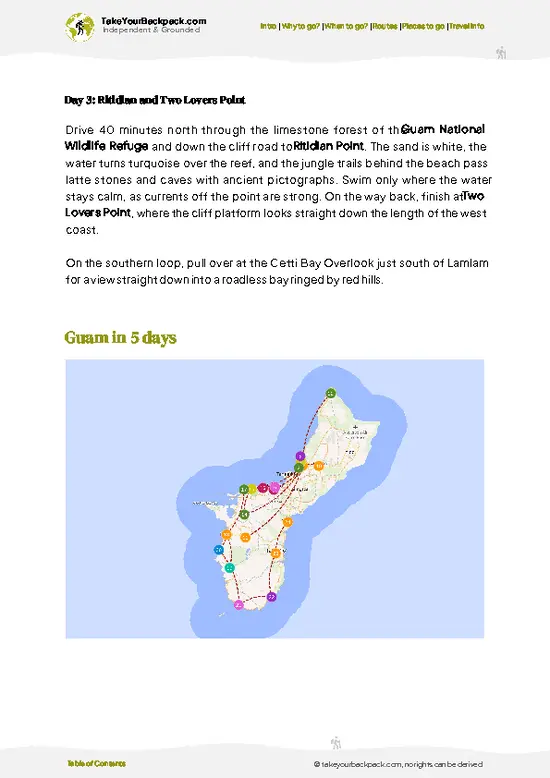
example page 1 from our offline Travel Guide for Guam
example page 2 from our offline Travel Guide for Guam
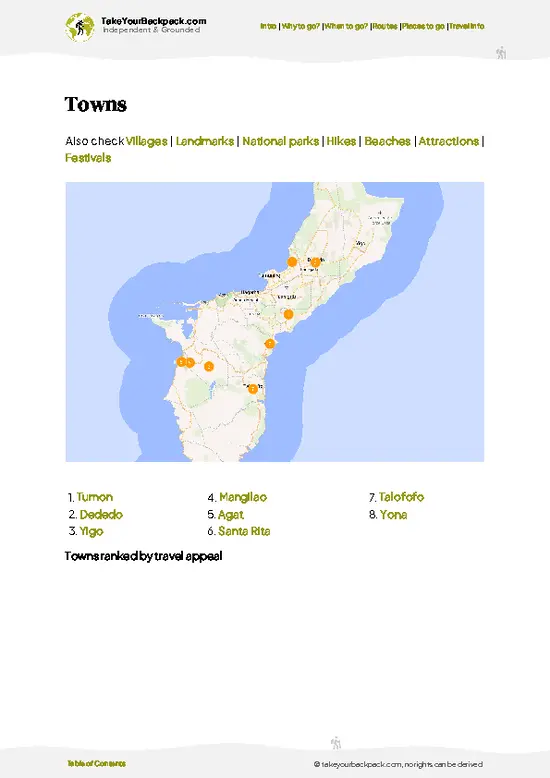
example page 3 from our offline Travel Guide for Guam
example page 4 from our offline Travel Guide for Guam
example page 5 from our offline Travel Guide for Guam
example page 6 from our offline Travel Guide for Guam
example page 7 from our offline Travel Guide for Guam
Loading the map 🌍
CLICK TO FILTER
towns
villages
landmarks
national parks
hikes
beaches
attractions
festivals
SHOW COUNTRY’S BESTSHOW ALL

✨ Why go?
Ranked #3 unique site in Guam
Why Pagat Cave should be on your travel list

Pagat earns the effort because it gives you something the beach strip along Tumon cannot: a freshwater pool inside a limestone cave, reached on foot through forest that feels a world away from the resort hotels. The trail is short enough for a half-day outing, yet rough enough that you earn the swim. Nobody arrives by tour bus, and that keeps the place quiet.
The second reason is history you can touch. The path passes the remains of a village where latte stones, the pillars that once held up Chamorro houses, still stand in the undergrowth. Seeing them in the forest, rather than behind museum glass, makes the island’s pre-colonial past feel real.
It also fits easily into a day on the north side of Guam. Pair it with the cliffs at Pagat Point at the end of the trail, then head back toward the … read more 👉
Pagat earns the effort because it gives you something the beach strip along Tumon cannot: a freshwater pool inside a limestone cave, reached on foot through forest that feels a world away from the resort hotels. The trail is short enough for a half-day outing, yet rough enough that you earn the swim. Nobody arrives by tour bus, and that keeps the place quiet.
The second reason is history you can touch. The path passes the remains of a village where latte stones, the pillars that once held up Chamorro houses, still stand in the undergrowth. Seeing them in the forest, rather than behind museum glass, makes the island’s pre-colonial past feel real.
It also fits easily into a day on the north side of Guam. Pair it with the cliffs at Pagat Point at the end of the trail, then head back toward the coast for a late lunch. If you are tired of sunbathing and want sweat, limestone and a cold swim, this is the stop.

💡 HighlightsMust-see experiences and standout moments

  1. The Cave Pool: The main draw is a clear freshwater pool under a low limestone ceiling, cool even when the jungle outside is steamy. Daylight angles in through an opening and lights the water, so the swim feels private and slightly otherworldly. Bring a headlamp to see the cave walls properly.
  2. The Pagat Trail Descent: The route drops through limestone forest over roots, loose rock and sharp ledges. It is only about a mile each way, but the uneven footing makes it feel longer, and the climb back out is what tires your legs. Banyan-like roots gripping the rock and the sudden hush of the canopy are the best parts.
  3. Latte Stones of Pagat Village: Stone pillars with rounded capstones lie scattered near the trail, the remains of house foundations from an old Chamorro settlement. They are low-key, unfenced
… read more 👉
  1. The Cave Pool: The main draw is a clear freshwater pool under a low limestone ceiling, cool even when the jungle outside is steamy. Daylight angles in through an opening and lights the water, so the swim feels private and slightly otherworldly. Bring a headlamp to see the cave walls properly.
  2. The Pagat Trail Descent: The route drops through limestone forest over roots, loose rock and sharp ledges. It is only about a mile each way, but the uneven footing makes it feel longer, and the climb back out is what tires your legs. Banyan-like roots gripping the rock and the sudden hush of the canopy are the best parts.
  3. Latte Stones of Pagat Village: Stone pillars with rounded capstones lie scattered near the trail, the remains of house foundations from an old Chamorro settlement. They are low-key, unfenced and easy to walk past, which is why they are worth slowing down for.
  4. The Limestone Forest: The trail runs through a dense forest growing straight out of coral rock, with ferns, pandanus and twisting vines. Birdsong replaces traffic noise within minutes. In the wet months, the rock turns dark and glossy and the whole place smells of moss.
  5. The Cave Entrance and Its Light: Before you reach the water, the passage narrows and the temperature drops. A shaft of sunlight falls into the cave around midmorning, and that is the moment for photos, before swimmers stir up the surface.
  6. Pagat Point: Past the village area, the trail reaches the coast, where limestone cliffs fall to a rough sea and waves boom against the base. There is no beach to swim from, but the horizon view, with nothing in front of you but open Pacific, is a fine place to eat a packed snack.
Most visitors turn around after the cave pool and never walk on to the clifftop at Pagat Point, which is where the trail finally opens to the sea.
Spotted a mistake or missing something? Contact us.

Things to do near Pagat Cave

Ratings based on Tripadvisor reviews. When you book through this link, you support our work at no extra cost to you.

🌤️ When to go?When to go for the best experience

  • Dry Season (December to June): Trail dirt stays firm and the rope sections near the cave mouth are less slick. Highs run 29 to 31°C (84 to 88°F), with trade-wind breezes off the Pacific on the cliffs. Sunrise is around 6:15 a.m. and sunset around 6:15 p.m., so start the 3 km (2 mi) round trip by 8 a.m.
  • Wet Season (July to November): Afternoon downpours turn the limestone and clay muddy, and the cave floor holds puddles. Temperatures hold at 26 to 32°C (79 to 90°F) with heavy humidity. Typhoon risk peaks August to November, and the trail can close after storms.
  • Weekends and Holidays: Local hiking groups and military families arrive on Saturdays, so weekdays give you the trail and the freshwater pool mostly to yourself.
  • Prices: The trail is free year-round. Only lodging and flights rise, mainly
… read more 👉
  • Dry Season (December to June): Trail dirt stays firm and the rope sections near the cave mouth are less slick. Highs run 29 to 31°C (84 to 88°F), with trade-wind breezes off the Pacific on the cliffs. Sunrise is around 6:15 a.m. and sunset around 6:15 p.m., so start the 3 km (2 mi) round trip by 8 a.m.
  • Wet Season (July to November): Afternoon downpours turn the limestone and clay muddy, and the cave floor holds puddles. Temperatures hold at 26 to 32°C (79 to 90°F) with heavy humidity. Typhoon risk peaks August to November, and the trail can close after storms.
  • Weekends and Holidays: Local hiking groups and military families arrive on Saturdays, so weekdays give you the trail and the freshwater pool mostly to yourself.
  • Prices: The trail is free year-round. Only lodging and flights rise, mainly around Christmas and Japanese Golden Week in late April and early May.
Go on a weekday morning in March or April, after a few dry days, and check that the trail is open with Guam’s park office before driving up.


source: climatestotravel.comJANJanuary: excellent for travelingFEBFebruary: excellent for travelingMARMarch: highly recommended for travelingAPRApril: highly recommended for travelingMAYMay: highly recommended for travelingJUNJune: below average for travelingJULJuly: below average for travelingAUGAugust: below average for travelingSEPSeptember: below average for travelingOCTOctober: below average for travelingNOVNovember: below average for travelingDECDecember: below average for traveling
when-to-go

✈️ The backpacker research shortcutGuam Travel Guide

An offline-friendly backpacking guide with optimized travel routes, ranked highlights, transport advice, and the best areas to stay.
example page 0 from our offline Travel Guide for Guam
example page 1 from our offline Travel Guide for Guam
example page 2 from our offline Travel Guide for Guam
example page 3 from our offline Travel Guide for Guam
example page 4 from our offline Travel Guide for Guam
example page 5 from our offline Travel Guide for Guam
example page 6 from our offline Travel Guide for Guam
example page 7 from our offline Travel Guide for Guam
The digital guide (135 pages) contains:
✅ 36 highlights, ranked by travel appeal
✅ Optimized 2, 3 & 5-day travel routes
✅ Cities, national parks, landmarks, beaches
✅ How to get around
✅ Offline-friendly for travel without Wi-Fi
👉 Click to see all 30+ guide features

📅 Plan smarter in minutes, not weeks
✅ Month by month travel advice
✅ Festivals & national holidays
✅ Budget expectations

🗺️ Go to the right places, skip the overrated ones
✅ Honest pros & cons of destinations
✅ Top hikes, parks & viewpoints
✅ Lesser-known places most travelers miss
✅ Clear “worth it vs skip it” guidance

🛏️ Travel smoothly without rookie mistakes
✅ Best areas to stay
✅ Transport systems explained simply
✅ Common scams & safety advice
✅ SIM cards, money & practical tips

🌍 Understand the country, not just visit it
✅ Culture & traditions
✅ Local customs
✅ Festivals worth planning around
✅ Traveler-friendly historical context
✅ Insights that make places more meaningful

📱 Built for real travel conditions
✅ Fully downloadable PDF
✅ Works completely offline
✅ Optimized for phone use
✅ Useful in remote areas & buses
✅ Everything in one place
Stop searching, start planning
Get instant access to your full guide. 30‑day money-back guarantee.
+ Add another guide for just

By proceeding you agree to our terms.
Sent to your inbox immediately after payment • 100% Secure Checkout
Best Backpacking Travel Advisor 2025 tourism awardBest Backpacking
Travel Advisor
2025
What others say about Take Your Backpack Guides:
⭐⭐⭐⭐⭐
Fantastic, amazing amount of information!
⭐⭐⭐⭐⭐
My goodness this is amazing, it's what I've been looking for hats off too you!
⭐⭐⭐⭐⭐
I think this is absolutely BRILLIANT
⭐⭐⭐⭐
Very complete and informative. It's still missing places, but I gotta to commend you
⭐⭐⭐⭐⭐
This is truly amazing, thank you, can't wait to explore it with my kids!
⭐⭐⭐⭐⭐
Awesome resource, thank you!
⭐⭐⭐⭐⭐
This is amazing! Can't wait to explore the ones I haven't seen
⭐⭐⭐⭐
I love this! Well done, great idea.
⭐⭐⭐⭐⭐
Thanks for taking the time to make this gem!
⭐⭐⭐⭐⭐
This might be the best website I've ever seen.
⭐⭐⭐⭐⭐
Congratulations, and thank you so much for your work; it's incredibly valuable.
⭐⭐⭐⭐
In all seriousness I think you did a great job pointing out the important spots
⭐⭐⭐⭐⭐
10/10 very good
⭐⭐⭐⭐⭐
As someone who's only just starting to visit regularly this is awesome, thank you.
⭐⭐⭐⭐
Thank you very much! I'm going to visit my dad, it's going to be very useful!
⭐⭐⭐⭐⭐
This is really cool! We'll be travelling for the first time and this definitely come in handy.
⭐⭐⭐⭐⭐
You are now our minister of culture, congratulations 👨‍💼
⭐⭐⭐⭐⭐
Just wanted to tell you that this is a pearl! Going to follow your recommendations.
⭐⭐⭐⭐⭐
This is so cool. I'll definitely be using the resource for my travels soon.
⭐⭐⭐⭐⭐
This is very impressive! Good work.
⭐⭐⭐⭐⭐
This is an amazing and informative site. Very well done!

🛏️ Where to stay?Where staying makes the most sense

Tumon is the best base for most backpackers, about 25 to 30 minutes by car from the Pagat trailhead in Yigo. It has the island’s densest cluster of budget-friendly guesthouses and hostel-style beds, plus a walkable beach strip, night markets, convenience stores and the most reliable bus stops. You can meet other travelers at the cheaper bars and at snorkeling spots, which makes it easy to find people to split a rental car with. That matters, because the trail is not served by public transit.

Hagåtña is a quieter option, roughly 30 to 40 minutes from the trailhead. It is the capital, with Chamorro … read more 👉
Tumon is the best base for most backpackers, about 25 to 30 minutes by car from the Pagat trailhead in Yigo. It has the island’s densest cluster of budget-friendly guesthouses and hostel-style beds, plus a walkable beach strip, night markets, convenience stores and the most reliable bus stops. You can meet other travelers at the cheaper bars and at snorkeling spots, which makes it easy to find people to split a rental car with. That matters, because the trail is not served by public transit.

Hagåtña is a quieter option, roughly 30 to 40 minutes from the trailhead. It is the capital, with Chamorro history, a few cafes and the Chamorro Village Wednesday night market. Fewer travelers stay there, so it suits solo visitors who prefer a local feel over resort noise.

Dededo and Yigo sit closest to the trailhead, about 10 to 20 minutes away. They have supermarkets, cheap eateries and the occasional room rental, but little nightlife and no social hostel scene. Choose them only if you have your own wheels and want an early start.

Tumon is safe and well lit at night. Wherever you sleep, rent a car for the day, since trailhead parking is a pullout and nothing is sold on site.

👛 Costs (as of 15 October 2026)What things cost and how to budget

A realistic budget for a Pagat Cave visit is US$95 to 170 per day, and the trail itself costs nothing.
CategoryBudget RangeLocal Reality
EntryUS$0The trail and cave are free, with no ticket booth or fee for the freshwater pool.
Accommodation (high season)US$40 to 70Hostel-style beds and basic guesthouse rooms cluster in Tumon. Low season runs about US$30 to 55.
TransportUS$35 to 60A rental car runs roughly US$35 to 60 a day plus fuel. The trailhead has no bus service, and taxis or rideshares are costly and hard to find for the return leg.
FoodUS$15 to 30Plate lunches, Chamorro barbecue and Korean or Japanese spots in Tumon and Dededo cost US$10 to 18 a meal. Groceries from ABC Store or Pay-Less are cheaper.
Gear and extrasUS$5 to 10Closed-toe shoes with grip, 2 liters of water, bug spray and a headlamp
… read more 👉
A realistic budget for a Pagat Cave visit is US$95 to 170 per day, and the trail itself costs nothing.
CategoryBudget RangeLocal Reality
EntryUS$0The trail and cave are free, with no ticket booth or fee for the freshwater pool.
Accommodation (high season)US$40 to 70Hostel-style beds and basic guesthouse rooms cluster in Tumon. Low season runs about US$30 to 55.
TransportUS$35 to 60A rental car runs roughly US$35 to 60 a day plus fuel. The trailhead has no bus service, and taxis or rideshares are costly and hard to find for the return leg.
FoodUS$15 to 30Plate lunches, Chamorro barbecue and Korean or Japanese spots in Tumon and Dededo cost US$10 to 18 a meal. Groceries from ABC Store or Pay-Less are cheaper.
Gear and extrasUS$5 to 10Closed-toe shoes with grip, 2 liters of water, bug spray and a headlamp for the cave. Nothing is sold at the trailhead.
Total Daily BudgetUS$95 to 170Splitting the car cuts the daily total sharply.
⚠️ Prices can change and everyone travels differently, so take this as a rough guide. Hope it helps you plan your adventure!

FAQTraveler FAQ

Pagat Cave is a limestone cave with a freshwater pool on Guam’s northeast coast, near Yigo, reached by a trail through jungle and coastal forest. The trail also passes ancient Chamorro latte stone remnants and ends at sea cliffs with views of the open Pacific. The cave itself is at the end of a short side path with rope sections, and the area is free to enter.
Plan 2 to 3 hours for the full out-and-back, which is about 3 km (2 mi) round trip with a descent of roughly 120 meters (400 ft) to the cliff line. Allow another 30 to 45 minutes if you want to scramble into the cave and rest at the water. A morning start avoids the worst heat, and you can easily pair the hike with a beach or lunch stop in Tumon on the same day.
Drive from Tumon or Hagåtña to the Pagat trailhead in Yigo, which takes about 25 to 40 minutes depending on traffic. A rental car is the practical choice, since no public bus reaches the trailhead, and rideshares can be hard to find for the return trip. Parking is a gravel pullout by the trail gate, and the walk starts there on a dirt track.
⚠️ Things can change over time, so always validate details locally before you go.

Other Guamanian landmarks near Pagat Cave

Explore more nearby:

  • Two Lovers Point—120-meter cliff, Chamorro legend, love locks, Tumon Bay panorama| 9 km away
  • Inarajan Natural Pool—Lava-rock basins, tide-fed pools, reef-break spray, calm-day snorkeling| 28 km away
  • Sella Bay—Roadside overlook, turquoise shallows, reef edge, no town| 31 km away

💡 Not sure where to go next?
Create a personalized itinerary for Guam including Pagat Cave and the places that fit your trip.

Generate my itinerary

👉 Discover all landmarks

Or checkout all Guam has to offer (think cities, towns, villages, national parks, hikes, beaches, festivals)
Country photo of Guam

We 💚 feedbackFinal thoughts on visiting Pagat Cave

The classic mistake is showing up midday in flip-flops with one small water bottle, then scrambling back up the slippery limestone in full heat. Do it right: start early, wear shoes with grip, carry a headlamp and plenty of water, and keep your hands off the latte stones. I would also save energy for Pagat Point, because the cave is not the only reason to go.

✍️ Help improve this page!
The information on this page is based on in-depth research, insights shared by experienced travelers, and feedback from the local travel community in Guam. While every effort is made to keep the information accurate and current, conditions can change — so if you spot anything incorrect or outdated, please get in touch.


🙋‍♂️ Give feedback

👋 Meet the founderWho’s Behind Take Your Backpack?

Johan, backpacker and founder of TakeYourBackpackHi, I’m Johan (Netherlands 🇳🇱), the creator of TakeYourBackpack. Over the past 3 decades, I’ve backpacked through 90+ countries across six continents, gaining extensive experience with independent travel, long-term trips, and overland routes.

This site is built on a combination of firsthand travel experience and carefully curated insights from other backpackers. Many guides are based on places I’ve personally visited, while others bring together tips, observations, and practical advice shared by trusted travelers I’ve met along the way.

The goal is to provide realistic, experience-driven guidance — not generic itineraries — so you can explore destinations with better context, clearer expectations, and more confidence.