



×

Guam🇬🇺 | attractionsLatte Stone Park
ancient pillars, limestone formations, shaded grounds, symbolic monuments | things to do and best time to go

Explore Guam MuseumExplore Chamorro Village Night Market

Backpacking in Latte Stone Park
🌟 Highlightattraction ranked #2
By Johan Kruseman 🇳🇱 | Updated May 3, 2026

A gecko darts across your path, tail flicking over sun-warmed limestone, while the air smells faintly of wet earth and frangipani. You’re standing in the hush beneath eight massive stone pillars—latte stones—older than most countries, and for a moment, the city noise of Hagåtña fades behind the banyan roots and the low, steady hum of cicadas. Latte Stone Park sits right in the heart of Guam’s capital, wedged between government buildings and the slow swirl of island traffic.

Here’s the straight talk: Latte Stone Park won’t blow your mind with size or spectacle. It’s free, always open, and you’ll rarely fight a crowd—unless a school group rolls through. The wow-factor is subtle: these stones are the backbone of Chamorro identity, not a photo op for likes. There’s no adrenaline rush, but there’s a quiet gravity here you won’t find at Tumon’s beaches or the touristy war memorials. For backpackers, it’s a quick, meaningful detour—more soul than selfie.

Discover everything you want to know in the 📖 Guam Travel Guide.
Loading the map 🌍
CLICK TO FILTER
town
village
unique site
national park
hike
beach
attraction
festival
region
SHOW COUNTRY‘S BESTSHOW ALL

✨ Why go?
Ranked #2 attraction in Guam
What makes it a must-see attraction

Latte Stone Park in Guam isn’t some flashy Instagram backdrop where you snap a quick selfie and move on. It’s a place that demands a moment of respect because these massive stone pillars—called latte stones—are the physical echoes of the ancient Chamorro people’s strength and ingenuity. Sure, it’s not a sprawling theme park or a wild jungle trek, but the park’s real pull is its raw connection to history. These stones once supported homes, symbolizing community and resilience, and standing there, you’re face-to-face with a culture that survived centuries of upheaval.

Backpackers make time here because it’s a milestone on the island’s cultural route, a checkpoint that grounds your journey in something deeper than beaches and bars. It’s not about adrenaline or flashy thrills; it’s about perspective. … read more 👉
Latte Stone Park in Guam isn’t some flashy Instagram backdrop where you snap a quick selfie and move on. It’s a place that demands a moment of respect because these massive stone pillars—called latte stones—are the physical echoes of the ancient Chamorro people’s strength and ingenuity. Sure, it’s not a sprawling theme park or a wild jungle trek, but the park’s real pull is its raw connection to history. These stones once supported homes, symbolizing community and resilience, and standing there, you’re face-to-face with a culture that survived centuries of upheaval.

Backpackers make time here because it’s a milestone on the island’s cultural route, a checkpoint that grounds your journey in something deeper than beaches and bars. It’s not about adrenaline or flashy thrills; it’s about perspective. The park is small, often busy, but that’s part of the deal—this isn’t off-the-beaten-path wilderness. It’s a concentrated dose of Guam’s soul, a reminder that every step you take on this island is layered with stories older than most travelers realize. If you want to understand Guam beyond the surface, Latte Stone Park is non-negotiable.
Get the complete Travel Guide for Guam
Everything organized for offline planning — routes, highlights, costs & tips

See what’s inside 👉

Get the Travel Guide -

💡 HighlightsDon't-miss highlights and experiences

The Latte Stones Themselves
Let’s cut through the Instagram haze: yes, you’ll see people posing between the stone pillars, but the real story is in the stones themselves. These aren’t random rocks—they’re ancient pillars, each one a two-piece megalith built by the Chamorro people centuries before Europeans showed up. The top piece (the capstone, or tasa) and the base (the haligi) once held up houses, and nobody’s totally sure how they moved them. Stand close. Touch the limestone. You’re literally connecting with the engineering backbone of pre-colonial Micronesia. No filter needed—just a little historical humility.


The Park’s Unfiltered Calm
Here’s the honest truth: Latte Stone Park isn’t some bustling, overrun tourist circus. You’ll find locals on lunch break, maybe a couple of kids running … read more 👉
The Latte Stones Themselves
Let’s cut through the Instagram haze: yes, you’ll see people posing between the stone pillars, but the real story is in the stones themselves. These aren’t random rocks—they’re ancient pillars, each one a two-piece megalith built by the Chamorro people centuries before Europeans showed up. The top piece (the capstone, or tasa) and the base (the haligi) once held up houses, and nobody’s totally sure how they moved them. Stand close. Touch the limestone. You’re literally connecting with the engineering backbone of pre-colonial Micronesia. No filter needed—just a little historical humility.


The Park’s Unfiltered Calm
Here’s the honest truth: Latte Stone Park isn’t some bustling, overrun tourist circus. You’ll find locals on lunch break, maybe a couple of kids running around, and a handful of travelers who actually read past the first page of their guidebook. It’s a rare pocket of calm in Hagåtña, and that’s the magic. You can hear birds, not buskers. You can sit under a flame tree and actually think. If you want a break from the cruise ship crowds and the duty-free drag, this is your reset button.


Chamorro Heritage and Memorials
Skip the generic plaques and look for the memorials scattered around the park. There’s a monument to Chief Quipuha, a leader who negotiated with the Spanish in the 1600s, and a tribute to the island’s indigenous resilience. These aren’t just names on stone—they’re reminders that Guam’s history is full of resistance, adaptation, and pride. The park quietly honors the Chamorro story, and if you’re paying attention, you’ll walk away with more than a selfie.


Unexpected Urban Jungle
You’re in the middle of Guam’s capital, but the park is a tangle of banyan roots, breadfruit trees, and wild hibiscus. It’s not manicured to death. There’s a sense of nature pushing back against the city, and if you’re into botany or just want a shady spot to decompress, this is your patch of green. Watch for fruit bats overhead at dusk—they’re the real locals.


Gateway to Hagåtña’s Real Life
Latte Stone Park isn’t an isolated attraction. It’s a launchpad. Step out and you’re minutes from the Guam Museum, the Plaza de España, and the island’s best mom-and-pop food stalls. The park is where you get your bearings, soak up some context, and then dive deeper into the capital’s daily rhythm. If you want to see how old Guam and new Guam overlap, start here.
Spotted a mistake or missing something? Contact us.

🌤️ When to go?Best time to visit Latte Stone Park


  • Topic: Weather and Temperature – Guam’s tropical climate means it’s hot and humid year-round, with temperatures hovering between 27°C and 31°C (80°F to 88°F). The dry season from January to May offers more comfortable humidity levels, while June to December brings heavy rains and the risk of typhoons, which can seriously disrupt your plans.

  • Topic: Daylight Hours – Daylight is pretty consistent, roughly 12 hours year-round. Sunrise is around 6 AM and sunset near 6 PM, so you get a solid window for exploring without worrying about early darkness.

  • Topic: Crowds – Expect the biggest crowds during the dry season, especially around March and April when tourists flock to Guam for spring break and local festivals. The park itself is a popular stop, so visiting early morning or late afternoon
read more 👉

  • Topic: Weather and Temperature – Guam’s tropical climate means it’s hot and humid year-round, with temperatures hovering between 27°C and 31°C (80°F to 88°F). The dry season from January to May offers more comfortable humidity levels, while June to December brings heavy rains and the risk of typhoons, which can seriously disrupt your plans.

  • Topic: Daylight Hours – Daylight is pretty consistent, roughly 12 hours year-round. Sunrise is around 6 AM and sunset near 6 PM, so you get a solid window for exploring without worrying about early darkness.

  • Topic: Crowds – Expect the biggest crowds during the dry season, especially around March and April when tourists flock to Guam for spring break and local festivals. The park itself is a popular stop, so visiting early morning or late afternoon helps dodge the busiest times.

  • Topic: Seasonal Activities – The Chamorro Culture Festival in March is a highlight, offering authentic local experiences beyond the park’s stones. If you want to combine your visit with cultural immersion, plan around this event.

  • Topic: Price Fluctuations – Accommodation and flights spike during the dry season and festival months. Booking outside January to May can save you money but expect wetter weather and fewer cultural events.


Pro-tip: Hit Latte Stone Park early in the dry season, before spring break crowds arrive, for the best mix of weather, culture, and fewer tourists.


source: climatestotravel.comJANJanuary: highly recommended for travelingFEBFebruary: highly recommended for travelingMARMarch: good for travelingAPRApril: good for travelingMAYMay: highly recommended for travelingJUNJune: fair for travelingJULJuly: fair for travelingAUGAugust: fair for travelingSEPSeptember: below average for travelingOCTOctober: fair for travelingNOVNovember: fair for travelingDECDecember: fair for traveling
guam-attraction-latte-stone-park
© Google |

✈️ The backpacker research shortcutGuam Travel Guide

An offline-friendly backpacking guide with optimized travel routes, ranked highlights, transport advice, and the best areas to stay.
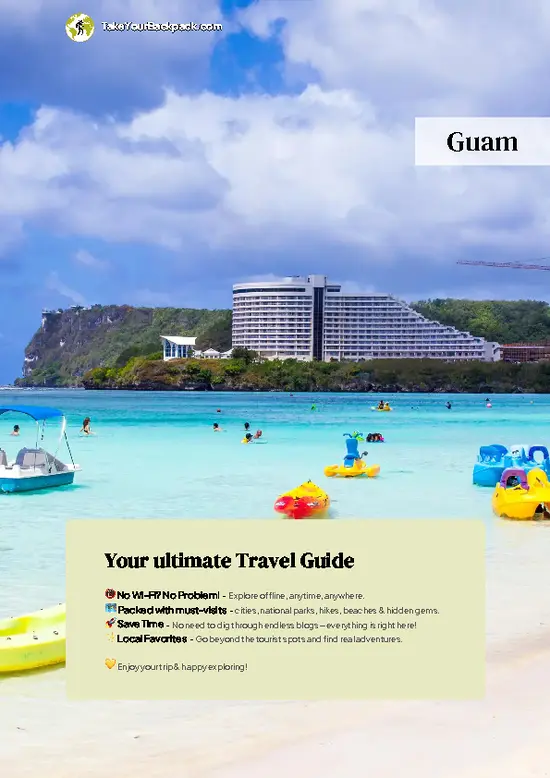
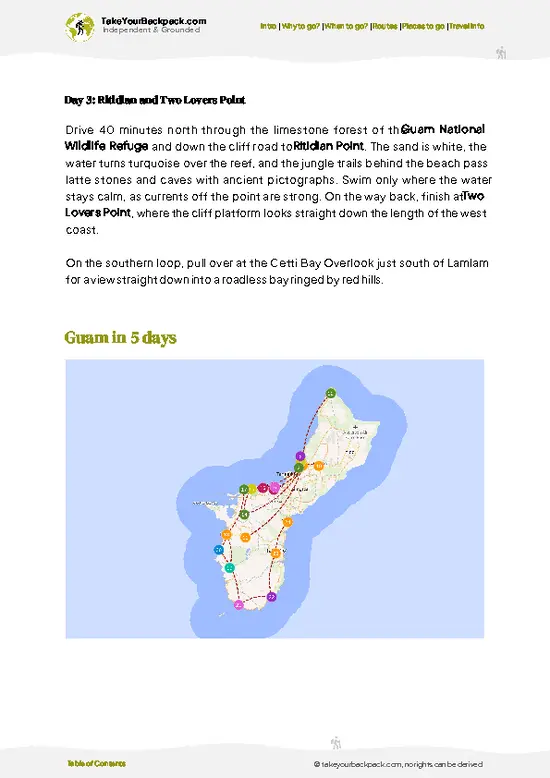
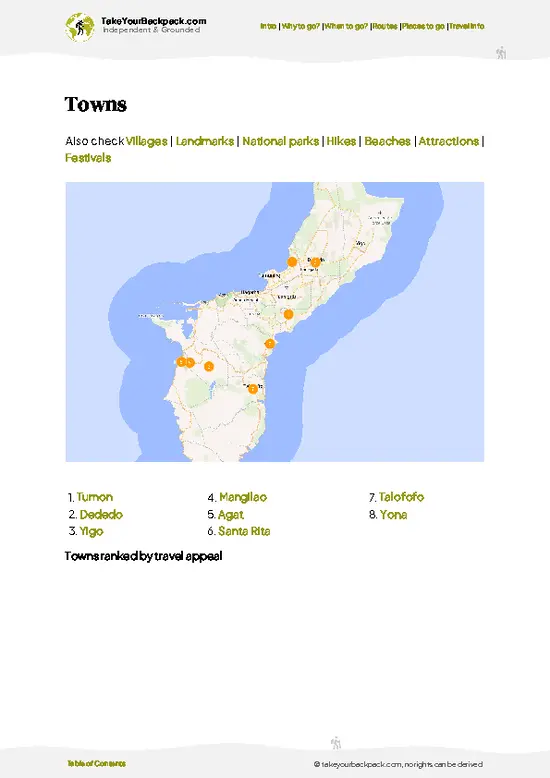
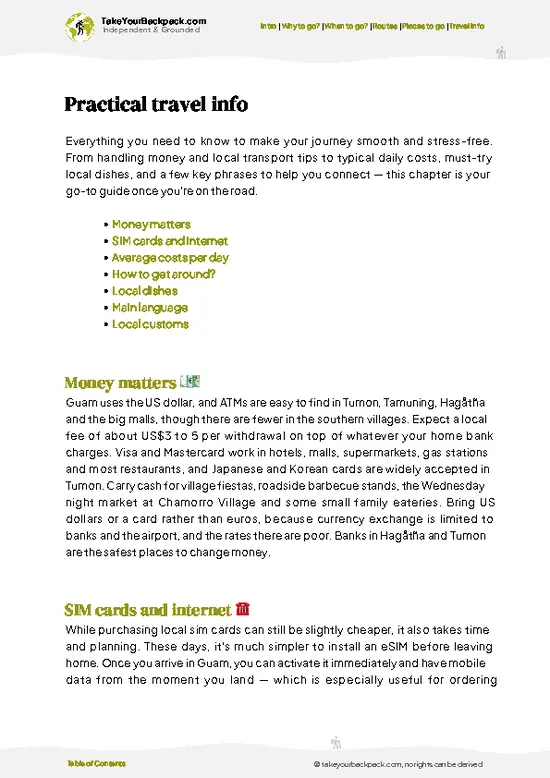
example page 0 from our offline Travel Guide for Guamexample page 1 from our offline Travel Guide for Guamexample page 2 from our offline Travel Guide for Guamexample page 3 from our offline Travel Guide for Guamexample page 4 from our offline Travel Guide for Guamexample page 5 from our offline Travel Guide for Guam
The digital guide (157 pages) contains:
43 highlights, ranked by travel appeal
Optimized 2, 3 & 5-day travel routes
Best neighborhoods to stay
How to get around
Offline-friendly for travel without Wi-Fi
👉 See all 30+ guide features

📅 Plan smarter in minutes, not weeks
Month by month travel advice
Festivals & national holidays
Budget expectations

🗺️ Go to the right places, skip the overrated ones
Honest pros & cons of destinations
Top hikes, parks & viewpoints
Lesser-known places most travelers miss
Clear “worth it vs skip it” guidance

🛏️ Travel smoothly without rookie mistakes
Best areas to stay
Transport systems explained simply
Common scams & safety advice
SIM cards, money & practical tips

🌍 Understand the country, not just visit it
Culture & traditions
52 Essential phrases & customs
Festivals worth planning around
Traveler-friendly historical context
Insights that make places more meaningful

📱 Built for real travel conditions
Fully downloadable PDF
Works completely offline
Optimized for phone use
Useful in remote areas & buses
Everything in one place
Save weeks of stressful planning
Get instant access to the full guide directly. 30-day money-back guarantee.


Sent to your inbox immediately after payment • 100% Secure Checkout
Best Backpacking Travel Advisor 2025 tourism awardBest Backpacking
Travel Advisor
2025
What others say about Take Your Backpack Guides:
⭐⭐⭐⭐⭐
Fantastic, amazing amount of information!
⭐⭐⭐⭐⭐
My goodness this is amazing, it's what I've been looking for hats off too you!
⭐⭐⭐⭐⭐
I think this is absolutely BRILLIANT
⭐⭐⭐⭐
Very complete and informative. It's still missing places, but I gotta to commend you
⭐⭐⭐⭐⭐
This is truly amazing, thank you, can't wait to explore it with my kids!
⭐⭐⭐⭐⭐
Awesome resource, thank you!
⭐⭐⭐⭐⭐
This is amazing! Can't wait to explore the ones I haven't seen
⭐⭐⭐⭐
I love this! Well done, great idea.
⭐⭐⭐⭐⭐
Thanks for taking the time to make this gem!
⭐⭐⭐⭐⭐
This might be the best website I've ever seen.
⭐⭐⭐⭐⭐
Congratulations, and thank you so much for your work; it's incredibly valuable.
⭐⭐⭐⭐
In all seriousness I think you did a great job pointing out the important spots
⭐⭐⭐⭐⭐
10/10 very good
⭐⭐⭐⭐⭐
As someone who's only just starting to visit regularly this is awesome, thank you.
⭐⭐⭐⭐
Thank you very much! I'm going to visit my dad, it's going to be very useful!
⭐⭐⭐⭐⭐
This is really cool! We'll be travelling for the first time and this definitely come in handy.
⭐⭐⭐⭐⭐
You are now our minister of culture, congratulations 👨‍💼
⭐⭐⭐⭐⭐
Just wanted to tell you that this is a pearl! Going to follow your recommendations.
⭐⭐⭐⭐⭐
This is so cool. I'll definitely be using the resource for my travels soon.
⭐⭐⭐⭐⭐
This is very impressive! Good work.
⭐⭐⭐⭐⭐
This is an amazing and informative site. Very well done!

🛏️ Where to stay?How to pick the right area

Latte Stone Park is a must-see for anyone serious about Guam’s history, but let’s cut through the tourist brochure fluff: it’s not a party hub or a sprawling resort zone. The real magic here is in the quiet reverence of the place, the ancient stones standing like sentinels to a culture that’s often overlooked. If you’re backpacking, you want to be close enough to soak in that vibe without getting stuck in a tourist bubble.

The best spots to crash are in the Tumon area, just a short ride from Latte Stone Park. Tumon isn’t just about flashy hotels; it’s where you’ll find the most social, budget-friendly … read more 👉
Latte Stone Park is a must-see for anyone serious about Guam’s history, but let’s cut through the tourist brochure fluff: it’s not a party hub or a sprawling resort zone. The real magic here is in the quiet reverence of the place, the ancient stones standing like sentinels to a culture that’s often overlooked. If you’re backpacking, you want to be close enough to soak in that vibe without getting stuck in a tourist bubble.

The best spots to crash are in the Tumon area, just a short ride from Latte Stone Park. Tumon isn’t just about flashy hotels; it’s where you’ll find the most social, budget-friendly hostels and guesthouses. It’s safe, well-lit, and packed with fellow travelers, so you won’t be eating dinner alone unless you want to. The vibe here is casual but lively, with easy access to local eateries and night markets where you can sample Chamorro food without breaking the bank.

If you want something quieter but still social, look toward the Hagåtña area. It’s less polished, more local, and gives you a real sense of Guam beyond the tourist traps. You’ll find affordable guesthouses and a few backpacker-friendly spots where the community feels tight-knit. Plus, you’re right next to Latte Stone Park, so early morning visits before the crowds hit are a breeze.

Bottom line: skip the cookie-cutter resorts. Stay where the locals and savvy travelers hang out. That’s where you’ll find the real pulse of Guam and the best stories to take home.

👛 Costs (as of 10 March 2026)Money, prices, and spending tips

As of the most recent estimates, visiting Latte Stone Park in Hagåtña, Guam, is free of charge. However, if you plan to visit the nearby Latte of Freedom monument at the Governor's Complex, there is an entrance fee:

- Adults: USD3
- Children and Senior Citizens: USD1

These fees grant access to the observatory, offering panoramic views of Guam's western shores. ([visitguam.com](https://www.visitguam.com/blog/post/3034/?utm_source=openai))

source: visitguam.com
⚠️ Prices can change and everyone travels differently, so take this as a rough guide. Hope it helps you plan your adventure!

Other Guamanian attractions near Latte Stone Park

Explore more nearby:

  • Guam Museum—island heritage, cultural exhibits, indigenous artifacts, modern galleries| 0 km away
  • Chamorro Village Night Market—food stalls, crafts, local gatherings, island music| 1 km away
  • Pacific War Museum—military relics, World War II history, battlefield artifacts, interpretive displays| 2 km away

👉 Discover all attractions

Or checkout all Guam has to offer (think cities, towns, villages, national parks, hikes, beaches, festivals)
Country photo of Guam

We 💚 feedbackIs it worth it?

Latte Stone Park isn’t some polished postcard spot—expect a handful of tourists and a bit of local hustle. But that’s exactly why it’s worth your time. The real magic hits when you pause and imagine the ancient Chamorro builders stacking those massive latte stones, a quiet testament to resilience and culture that no Instagram filter can capture. Don’t rush it. Find a shady bench, soak in the island breeze, and let the stones speak for themselves. It’s a small place with a big story, and that’s the kind of travel that sticks with you.

✍️ Help improve this page!
The information on this page is based on in-depth research, insights shared by experienced travelers, and feedback from the local travel community in Guam. While every effort is made to keep the information accurate and current, conditions can change — so if you spot anything incorrect or outdated, please get in touch.


🙋‍♂️ Give feedback

👋 Meet the founderWho’s Behind Take Your Backpack?

Johan, backpacker and founder of TakeYourBackpackHi, I’m Johan (Netherlands 🇳🇱), the creator of TakeYourBackpack. Over the past decade, I’ve backpacked through 80+ countries across six continents, gaining extensive experience with independent travel, long-term trips, and overland routes.

This site is built on a combination of firsthand travel experience and carefully curated insights from other backpackers. Many guides are based on places I’ve personally visited, while others bring together tips, observations, and practical advice shared by trusted travelers I’ve met along the way.

The goal is to provide realistic, experience-driven guidance — not generic itineraries — so you can explore destinations with better context, clearer expectations, and more confidence.

Get Full Country Guide |
Instant download • 43 highlights • Full Offline guide