×

Guam🇬🇺 | attractionsGuam MuseumCHamoru timeline, sakman replica, latte stone displays, wartime civilian stories | things to do and best time to go

Explore Pacific War MuseumExplore Latte Stone Park

Backpacking in Guam Museum
👌 Worth visitingattraction ranked #4
By Johan Kruseman 🇳🇱 | Updated October 15, 2026

Most people come to the Guam Museum for one reason: it is the only place on the island that lays out the whole story of the CHamoru people in a single building, from the first seafaring settlers to the Spanish, American and Japanese eras. What travelers overlook is how much the museum helps everything else on the island make sense, from latte stones in the jungle to the names on road signs. It sits in Hagåtña, Guam’s capital, on the edge of the Plaza de España district. The galleries are compact, so about 90 minutes does it. Skip rushing and read the wall text on the pre-contact exhibits, because that is the strongest material. The gift shop is fine but not a priority. Go on a weekday morning and you will often have the rooms nearly to yourself. Look for the sakman replica, the sailing canoe, in the ancient-heritage gallery of the second-floor exhibit.

Discover everything you want to know in the 📖 Guam Travel Guide.


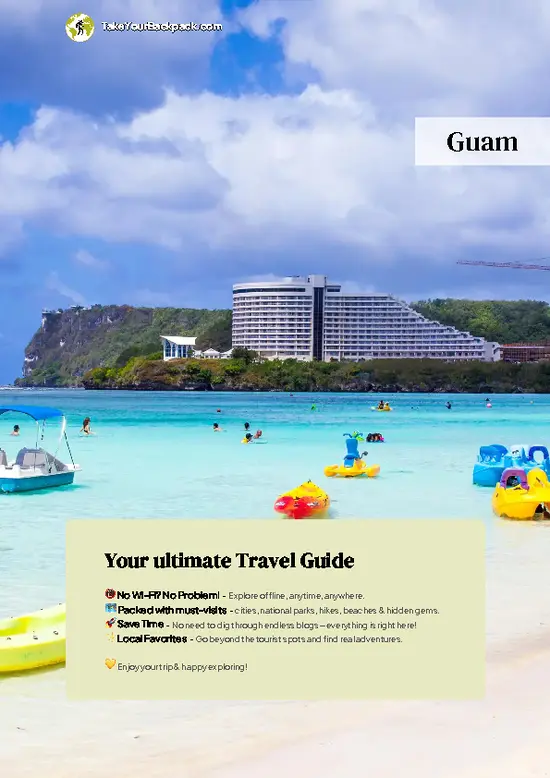
example page 0 from our offline Travel Guide for Guam
example page 1 from our offline Travel Guide for Guam
example page 2 from our offline Travel Guide for Guam
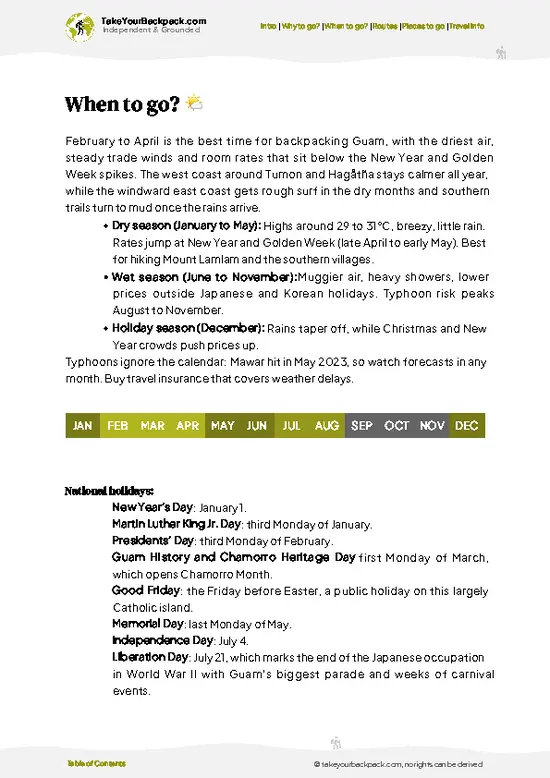
example page 3 from our offline Travel Guide for Guam
example page 4 from our offline Travel Guide for Guam
example page 5 from our offline Travel Guide for Guam
example page 6 from our offline Travel Guide for Guam
example page 7 from our offline Travel Guide for Guam
Loading the map 🌍
CLICK TO FILTER
towns
villages
landmarks
national parks
hikes
beaches
attractions
festivals
SHOW COUNTRY’S BESTSHOW ALL

✨ Why go?
Ranked #4 attraction in Guam
Reasons people choose to visit here

The Guam Museum is the fastest way to understand why the island feels the way it does before you head out to the beaches. Guam’s story runs deep, and the exhibits tell it through the Chamorro people, who settled the Marianas thousands of years ago, then through Spanish rule, Japanese occupation in World War II, and the American era. Walking those galleries gives context to the latte stones, the fortress ruins, and the fiestas you will meet later. Without it, the island can look like a string of resorts and duty-free shops.

It also earns its place on a route because it is easy. The building sits in Hagåtña, close to Plaza de España and the Dulce Nombre de Maria Cathedral-Basilica, so you can fold it into a morning of walking the capital. The exhibits are compact, and a couple of hours is enough. … read more 👉
The Guam Museum is the fastest way to understand why the island feels the way it does before you head out to the beaches. Guam’s story runs deep, and the exhibits tell it through the Chamorro people, who settled the Marianas thousands of years ago, then through Spanish rule, Japanese occupation in World War II, and the American era. Walking those galleries gives context to the latte stones, the fortress ruins, and the fiestas you will meet later. Without it, the island can look like a string of resorts and duty-free shops.

It also earns its place on a route because it is easy. The building sits in Hagåtña, close to Plaza de España and the Dulce Nombre de Maria Cathedral-Basilica, so you can fold it into a morning of walking the capital. The exhibits are compact, and a couple of hours is enough. Look for the canoe-inspired architecture, shaped to echo the ancient seafaring proas that crossed the Pacific. Entry is modest, and for backpackers watching their money, that is a good deal for what you learn. Rainy afternoons are a fine time to come, since you stay dry while you get your bearings.

💡 HighlightsDon't-miss highlights and experiences

  1. Sakman replica: A large model of the traditional CHamoru outrigger sailing canoe, among the fastest vessels of its time. It shows the engineering behind the island’s seafaring reputation.
  2. Latte stone exhibits: The pillar and cap stones that once held up ancient houses, displayed so you can see how the two parts fit together.
  3. Pre-contact CHamoru gallery: Tools, pottery and shell items that show daily life before European contact, including fishing gear and food preparation.
  4. Spanish colonial era displays: Religious objects, maps and documents covering the centuries of Spanish rule and the changes to island life and language.
  5. World War II gallery: Objects and personal accounts from the Japanese occupation and the 1944 return of American forces, with a focus on civilian experience.
  6. Chamorro language
… read more 👉
  1. Sakman replica: A large model of the traditional CHamoru outrigger sailing canoe, among the fastest vessels of its time. It shows the engineering behind the island’s seafaring reputation.
  2. Latte stone exhibits: The pillar and cap stones that once held up ancient houses, displayed so you can see how the two parts fit together.
  3. Pre-contact CHamoru gallery: Tools, pottery and shell items that show daily life before European contact, including fishing gear and food preparation.
  4. Spanish colonial era displays: Religious objects, maps and documents covering the centuries of Spanish rule and the changes to island life and language.
  5. World War II gallery: Objects and personal accounts from the Japanese occupation and the 1944 return of American forces, with a focus on civilian experience.
  6. Chamorro language and culture exhibits: Panels and displays on traditions, storytelling and language, helpful for recognizing words you will hear and read around the island.
  7. Museum shop: A small selection of books on island history and locally made crafts, a better place for a meaningful souvenir than many tourist stalls.
For a first visit, start with the pre-contact gallery and the sakman, since they set up everything that follows.
Spotted a mistake or missing something? Contact us.

Things to do near Guam Museum

Ratings based on Tripadvisor reviews. When you book through this link, you support our work at no extra cost to you.

🌤️ When to go?Best time to visit Guam Museum

  • Dry Season (December to June): Trade winds keep afternoons around 29 to 31°C (84 to 88°F) with lower humidity, and rain showers are brief. This is the comfortable window for walking Hagåtña’s Plaza de España and the Paseo de Susana nearby.
  • Wet Season (July to November): Expect 26 to 32°C (79 to 90°F), heavy downpours and sticky air. Indoor exhibits suit this weather well, and hotel rates dip. Typhoon threats peak from August to October, so build in a spare day.
  • Daylight: Sunrise falls near 6:00 a.m. and sunset near 6:00 p.m. in every month, so plan around the museum’s weekday daytime hours.
  • Crowds and Events: Japanese and Korean holiday weeks (Golden Week in late April and early May, plus Obon in August) fill Tumon, though the museum stays quiet. Chamorro Month in March brings cultural programs
… read more 👉
  • Dry Season (December to June): Trade winds keep afternoons around 29 to 31°C (84 to 88°F) with lower humidity, and rain showers are brief. This is the comfortable window for walking Hagåtña’s Plaza de España and the Paseo de Susana nearby.
  • Wet Season (July to November): Expect 26 to 32°C (79 to 90°F), heavy downpours and sticky air. Indoor exhibits suit this weather well, and hotel rates dip. Typhoon threats peak from August to October, so build in a spare day.
  • Daylight: Sunrise falls near 6:00 a.m. and sunset near 6:00 p.m. in every month, so plan around the museum’s weekday daytime hours.
  • Crowds and Events: Japanese and Korean holiday weeks (Golden Week in late April and early May, plus Obon in August) fill Tumon, though the museum stays quiet. Chamorro Month in March brings cultural programs around Hagåtña.
Aim for a weekday visit, since weekends may have reduced hours.


source: climatestotravel.comJANJanuary: excellent for travelingFEBFebruary: excellent for travelingMARMarch: highly recommended for travelingAPRApril: excellent for travelingMAYMay: highly recommended for travelingJUNJune: good for travelingJULJuly: good for travelingAUGAugust: fair for travelingSEPSeptember: fair for travelingOCTOctober: excellent for travelingNOVNovember: highly recommended for travelingDECDecember: good for traveling
guam-attraction-guam-museum
© Google |

✈️ The backpacker research shortcutGuam Travel Guide

An offline-friendly backpacking guide with optimized travel routes, ranked highlights, transport advice, and the best areas to stay.
example page 0 from our offline Travel Guide for Guam
example page 1 from our offline Travel Guide for Guam
example page 2 from our offline Travel Guide for Guam
example page 3 from our offline Travel Guide for Guam
example page 4 from our offline Travel Guide for Guam
example page 5 from our offline Travel Guide for Guam
example page 6 from our offline Travel Guide for Guam
example page 7 from our offline Travel Guide for Guam
The digital guide (135 pages) contains:
✅ 36 highlights, ranked by travel appeal
✅ Optimized 2, 3 & 5-day travel routes
✅ Cities, national parks, landmarks, beaches
✅ How to get around
✅ Offline-friendly for travel without Wi-Fi
👉 Click to see all 30+ guide features

📅 Plan smarter in minutes, not weeks
✅ Month by month travel advice
✅ Festivals & national holidays
✅ Budget expectations

🗺️ Go to the right places, skip the overrated ones
✅ Honest pros & cons of destinations
✅ Top hikes, parks & viewpoints
✅ Lesser-known places most travelers miss
✅ Clear “worth it vs skip it” guidance

🛏️ Travel smoothly without rookie mistakes
✅ Best areas to stay
✅ Transport systems explained simply
✅ Common scams & safety advice
✅ SIM cards, money & practical tips

🌍 Understand the country, not just visit it
✅ Culture & traditions
✅ Local customs
✅ Festivals worth planning around
✅ Traveler-friendly historical context
✅ Insights that make places more meaningful

📱 Built for real travel conditions
✅ Fully downloadable PDF
✅ Works completely offline
✅ Optimized for phone use
✅ Useful in remote areas & buses
✅ Everything in one place
Stop searching, start planning
Get instant access to your full guide. 30‑day money-back guarantee.
+ Add another guide for just

By proceeding you agree to our terms.
Sent to your inbox immediately after payment • 100% Secure Checkout
Best Backpacking Travel Advisor 2025 tourism awardBest Backpacking
Travel Advisor
2025
What others say about Take Your Backpack Guides:
⭐⭐⭐⭐⭐
Fantastic, amazing amount of information!
⭐⭐⭐⭐⭐
My goodness this is amazing, it's what I've been looking for hats off too you!
⭐⭐⭐⭐⭐
I think this is absolutely BRILLIANT
⭐⭐⭐⭐
Very complete and informative. It's still missing places, but I gotta to commend you
⭐⭐⭐⭐⭐
This is truly amazing, thank you, can't wait to explore it with my kids!
⭐⭐⭐⭐⭐
Awesome resource, thank you!
⭐⭐⭐⭐⭐
This is amazing! Can't wait to explore the ones I haven't seen
⭐⭐⭐⭐
I love this! Well done, great idea.
⭐⭐⭐⭐⭐
Thanks for taking the time to make this gem!
⭐⭐⭐⭐⭐
This might be the best website I've ever seen.
⭐⭐⭐⭐⭐
Congratulations, and thank you so much for your work; it's incredibly valuable.
⭐⭐⭐⭐
In all seriousness I think you did a great job pointing out the important spots
⭐⭐⭐⭐⭐
10/10 very good
⭐⭐⭐⭐⭐
As someone who's only just starting to visit regularly this is awesome, thank you.
⭐⭐⭐⭐
Thank you very much! I'm going to visit my dad, it's going to be very useful!
⭐⭐⭐⭐⭐
This is really cool! We'll be travelling for the first time and this definitely come in handy.
⭐⭐⭐⭐⭐
You are now our minister of culture, congratulations 👨‍💼
⭐⭐⭐⭐⭐
Just wanted to tell you that this is a pearl! Going to follow your recommendations.
⭐⭐⭐⭐⭐
This is so cool. I'll definitely be using the resource for my travels soon.
⭐⭐⭐⭐⭐
This is very impressive! Good work.
⭐⭐⭐⭐⭐
This is an amazing and informative site. Very well done!

🛏️ Where to stay?How to pick the right area

Tumon is the best base for most backpackers, about 20 to 25 minutes by road from the museum in Hagåtña. It has the island’s densest cluster of budget beds, a late-night food scene, and the Tumon Bay beach, so you can meet other travelers easily. It is also well lit, with steady foot traffic after dark, which makes it comfortable for solo travelers. GRTA buses link Tumon with Hagåtña, though buses thin out in the evening and on Sundays.

Hagåtña itself is the choice if you want to walk to the museum, Plaza de España and the Dulce Nombre de Maria Cathedral-Basilica. It is a government and office … read more 👉
Tumon is the best base for most backpackers, about 20 to 25 minutes by road from the museum in Hagåtña. It has the island’s densest cluster of budget beds, a late-night food scene, and the Tumon Bay beach, so you can meet other travelers easily. It is also well lit, with steady foot traffic after dark, which makes it comfortable for solo travelers. GRTA buses link Tumon with Hagåtña, though buses thin out in the evening and on Sundays.

Hagåtña itself is the choice if you want to walk to the museum, Plaza de España and the Dulce Nombre de Maria Cathedral-Basilica. It is a government and office district, so evenings are very quiet, and lodging is limited. Stay here only if you prefer calm over company.

Around Tamuning, between Hagåtña and Tumon, you get cheaper rooms and local diners, with less of a social scene. It works if you have a rental car or are happy to use buses and rideshare. For a mix of price, safety and company, I would pick Tumon.

👛 Costs (as of 15 October 2026)Money, prices, and spending tips

A realistic budget for a day built around the Guam Museum is US$95 to 160, with the museum itself a small part of that. Guam uses the US dollar, and prices run higher than in most of Asia because most goods are imported.
CategoryBudget RangeLocal Reality
Museum EntryUS$0 to 10Admission is modest for visitors, and children and seniors often pay less. Allow one to two hours inside.
Accommodation (high season)US$45 to 80Dorm beds and basic private rooms are mainly in Tumon. Rates rise during Asian holiday weeks.
FoodUS$25 to 45Plates at local diners and Chamorro barbecue stands run US$10 to 15. The Chamorro Village night market in Hagåtña on Wednesdays is a good value.
Local TransportUS$2 to 25GRTA bus fares are about US$2 per ride, with day passes available. Rideshare or taxis from Tumon cost roughly
… read more 👉
A realistic budget for a day built around the Guam Museum is US$95 to 160, with the museum itself a small part of that. Guam uses the US dollar, and prices run higher than in most of Asia because most goods are imported.
CategoryBudget RangeLocal Reality
Museum EntryUS$0 to 10Admission is modest for visitors, and children and seniors often pay less. Allow one to two hours inside.
Accommodation (high season)US$45 to 80Dorm beds and basic private rooms are mainly in Tumon. Rates rise during Asian holiday weeks.
FoodUS$25 to 45Plates at local diners and Chamorro barbecue stands run US$10 to 15. The Chamorro Village night market in Hagåtña on Wednesdays is a good value.
Local TransportUS$2 to 25GRTA bus fares are about US$2 per ride, with day passes available. Rideshare or taxis from Tumon cost roughly US$20 to 30 one way.
ExtrasUS$5 to 15Water, snacks and sunscreen are pricey in tourist areas. Plaza de España and nearby historic sites are free.
Total Daily BudgetUS$95 to 160Renting a car (US$40 to 60 a day) saves time but raises the total.
⚠️ Prices can change and everyone travels differently, so take this as a rough guide. Hope it helps you plan your adventure!

FAQTraveler FAQ

Plan on one to two hours for the Guam Museum itself, which is enough to see the main galleries on Chamorro history. Add another hour or two to walk nearby Plaza de España, the cathedral-basilica and Paseo de Susana in Hagåtña. A half day covers everything comfortably.
For most visitors with an interest in Chamorro culture, yes, because admission is low, generally under US$10. The galleries cover ancient Chamorro life, Spanish and Japanese rule, and the American period. Combined with the free historic sites around Hagåtña, you get a full half day for very little money.
The museum is in Hagåtña, about 20 to 25 minutes by road from Tumon. GRTA buses run there from Tumon for about US$2 per ride, though service is limited in the evenings and on Sundays. A rideshare or taxi costs roughly US$20 to 30, and a rental car is the easiest option, with parking nearby.
⚠️ Things can change over time, so always validate details locally before you go.

Other Guamanian attractions near Guam Museum

Explore more nearby:

  • Chamorro Village Night Market—Wednesday evenings, open-fire barbecue, red rice, kelaguen, live stage| 0 km away
  • Latte Stone Park—Paired limestone pillars, tasa capstones, free open-air lawn, twenty-minute stop| 0 km away
  • Pacific War Museum—Japanese-built cave, rusting field guns, relic cases, Asan hillside| 2 km away

💡 Not sure where to go next?
Create a personalized itinerary for Guam including Guam Museum and the places that fit your trip.

Generate my itinerary

👉 Discover all attractions

Or checkout all Guam has to offer (think cities, towns, villages, national parks, hikes, beaches, festivals)
Country photo of Guam

We 💚 feedbackFinal thoughts on visiting Guam Museum

Most visitors rush past the small language panels, but those are what make the rest of your trip click. Learn a few CHamoru words here and village names, street signs and menu items suddenly stop being a blur. I would go early, then walk to Plaza de España afterward.

✍️ Help improve this page!
The information on this page is based on in-depth research, insights shared by experienced travelers, and feedback from the local travel community in Guam. While every effort is made to keep the information accurate and current, conditions can change — so if you spot anything incorrect or outdated, please get in touch.


🙋‍♂️ Give feedback

👋 Meet the founderWho’s Behind Take Your Backpack?

Johan, backpacker and founder of TakeYourBackpackHi, I’m Johan (Netherlands 🇳🇱), the creator of TakeYourBackpack. Over the past 3 decades, I’ve backpacked through 90+ countries across six continents, gaining extensive experience with independent travel, long-term trips, and overland routes.

This site is built on a combination of firsthand travel experience and carefully curated insights from other backpackers. Many guides are based on places I’ve personally visited, while others bring together tips, observations, and practical advice shared by trusted travelers I’ve met along the way.

The goal is to provide realistic, experience-driven guidance — not generic itineraries — so you can explore destinations with better context, clearer expectations, and more confidence.