×

Guatemala🇬🇹 | townsSan Cristóbal VerapazPoqomchi’ Sunday market, colonial church, lakeside reeds, Museo Katinamit | things to do and best time to go

Explore EsquipulasExplore San Miguel Chicaj

Backpacking in San Cristóbal Verapaz
🏆 Top picktown ranked #5
By Johan Kruseman 🇳🇱 | Updated October 22, 2026

The first thing that stopped me was the sound: a rubber-soled soccer game echoing off the cobbles, then church bells, then the smell of woodsmoke and boiled corn drifting from kitchens along the street. I expected a sleepy highland stop and found a town that felt lived in. San Cristóbal Verapaz sits in the north of Guatemala, in the Alta Verapaz highlands above a large lake, and it works best as a quiet base for Q'eqchi' Maya villages and nearby caves rather than a place with a checklist of sights. The market and the Dominican-era church deserve your attention, along with the small museum. Nightlife is not worth planning around, and you will find few hostels and few other backpackers, so evenings are slow and mostly spent in cafés or with locals. Buses reach it without fuss. Spend a first day wandering the market at a slow pace, climbing to the church, then eating a late lunch.

Discover everything you want to know in the 📖 Guatemala Travel Guide.


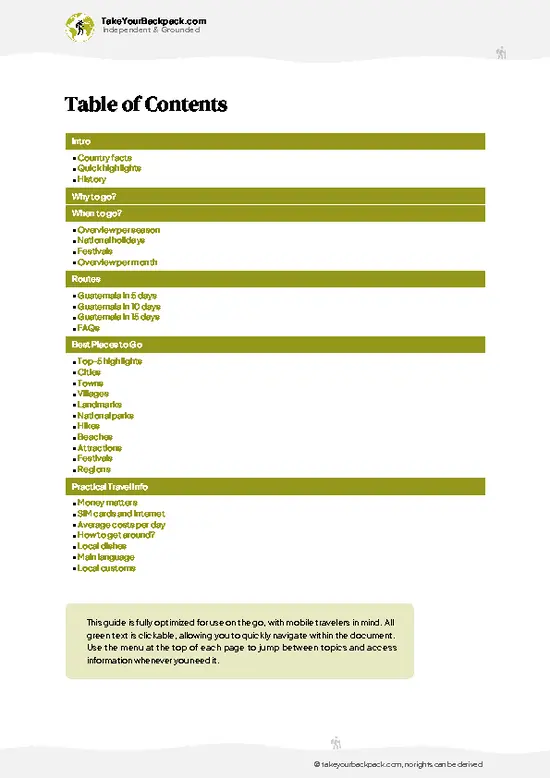
example page 0 from our offline Travel Guide for Guatemala
example page 1 from our offline Travel Guide for Guatemala
example page 2 from our offline Travel Guide for Guatemala
example page 3 from our offline Travel Guide for Guatemala
example page 4 from our offline Travel Guide for Guatemala
example page 5 from our offline Travel Guide for Guatemala
example page 6 from our offline Travel Guide for Guatemala
example page 7 from our offline Travel Guide for Guatemala
Loading the map 🌍
CLICK TO FILTER
cities
towns
villages
landmarks
national parks
hikes
beaches
attractions
festivals
regions
SHOW COUNTRY’S BESTSHOW ALL

✨ Why go?
Ranked #5 town in Guatemala
What makes it a must-see town

San Cristóbal Verapaz suits slow travelers who want a working Maya town instead of a tour-bus stop. Most people stay one or two nights, and that is enough. The draw is the Poqomchi’ weaving culture, visible in the market stalls and the women’s everyday dress, plus the Lake Chichój shoreline a short walk from the center, where you can see local life without a crowd. Guesthouses are small and family-run, and the streets are easy to walk in an afternoon. Solo travelers and Spanish speakers get the most out of it, because conversation is the main activity. Hikers and cave seekers use it as a quieter alternative base for the Verapaz highlands, with the Chamá area offering a chance to see traditions that stay unpolished. If you need hostel social scenes, Cobán will suit you better.

💡 HighlightsDon't-miss highlights and experiences

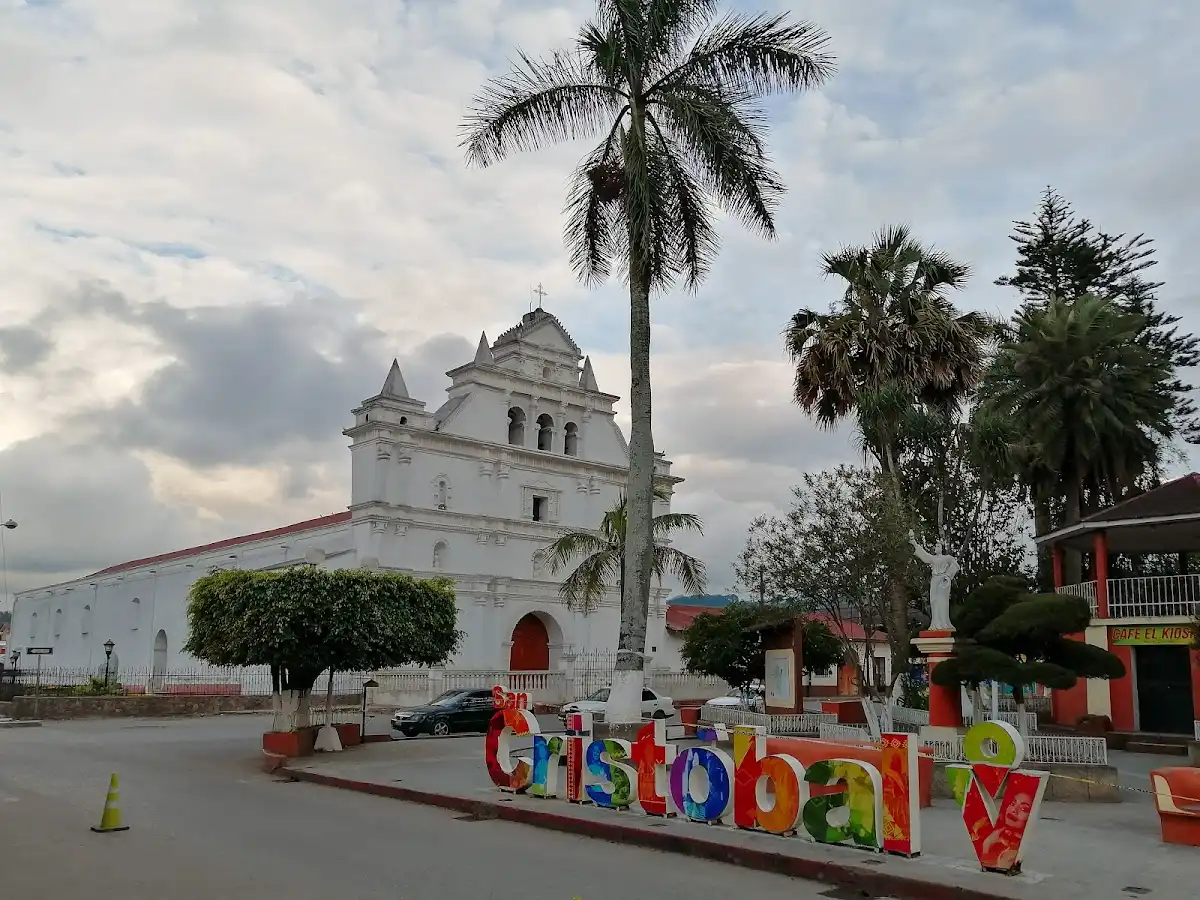
  1. Iglesia de San Cristóbal (Church of San Cristóbal): A colonial church from the 16th century facing the main plaza, with a carved facade and a richly decorated interior. Go in the morning when it is cool and quiet. Entry is free, and 30 to 45 minutes is plenty.
  2. Parque Central and Sunday Market: The plaza fills with Poqomchi’ vendors selling produce, thread and textiles. Sunday morning is the busiest and most colorful. Free to wander, and 1 to 2 hours lets you eat and browse.
  3. Lake Chichój shoreline: A shallow lake on the edge of town with reeds, birds and fishing boats. Late afternoon gives soft light and fewer people. Free to walk, and an hour or so is enough.
  4. Museo Katinamit: A small local museum focusing on the history and culture of the Poqomchi’ people, including costumes and weaving. Expect
… read more 👉
  1. Iglesia de San Cristóbal (Church of San Cristóbal): A colonial church from the 16th century facing the main plaza, with a carved facade and a richly decorated interior. Go in the morning when it is cool and quiet. Entry is free, and 30 to 45 minutes is plenty.
  2. Parque Central and Sunday Market: The plaza fills with Poqomchi’ vendors selling produce, thread and textiles. Sunday morning is the busiest and most colorful. Free to wander, and 1 to 2 hours lets you eat and browse.
  3. Lake Chichój shoreline: A shallow lake on the edge of town with reeds, birds and fishing boats. Late afternoon gives soft light and fewer people. Free to walk, and an hour or so is enough.
  4. Museo Katinamit: A small local museum focusing on the history and culture of the Poqomchi’ people, including costumes and weaving. Expect an entry fee of around US$1 to 3 and about 45 minutes. Check that it is open before you go.
  5. Weaving cooperatives and workshops: Local women sell huipiles and cloth directly, and some will show you the backstrap loom. Mornings are best. Prices run from US$5 for small pieces to US$80 or more for a full huipil. Allow 1 hour.
The church and the market combine well in one Sunday morning, followed by a lakeside walk after lunch. For day trips, Cobán, the Candelaria Caves and Chamá are all within reach of San Cristóbal Verapaz by road.
Spotted a mistake or missing something? Contact us.

Things to do near San Cristóbal Verapaz

Ratings based on Tripadvisor reviews. When you book through this link, you support our work at no extra cost to you.

🏘️ NeighborhoodsHow different areas shape the experience

San Cristóbal Verapaz is small enough to cover on foot in an afternoon, though the streets climb and drop enough to remind your calves who is in charge.
  • Central Plaza and Church: Spend your first hour here. The colonial church is the center of a Holy Week tradition of sawdust carpets laid on the streets. Inside, expect candle smoke and wooden pews polished by centuries of hands. Market stalls and comedores ring the square, so this is where you eat: caldo, tamales, fresh tortillas off a comal.
  • Market streets: Worth your time on market days, when Poqomchi’ Maya women in embroidered blouses sell produce, herbs and cloth. It is loud, muddy after rain and smells of cilantro and diesel. Go early, before the crowds thicken.
  • Lake Chichój shoreline: A short walk or tuk-tuk ride from the center. The lake
… read more 👉
San Cristóbal Verapaz is small enough to cover on foot in an afternoon, though the streets climb and drop enough to remind your calves who is in charge.
  • Central Plaza and Church: Spend your first hour here. The colonial church is the center of a Holy Week tradition of sawdust carpets laid on the streets. Inside, expect candle smoke and wooden pews polished by centuries of hands. Market stalls and comedores ring the square, so this is where you eat: caldo, tamales, fresh tortillas off a comal.
  • Market streets: Worth your time on market days, when Poqomchi’ Maya women in embroidered blouses sell produce, herbs and cloth. It is loud, muddy after rain and smells of cilantro and diesel. Go early, before the crowds thicken.
  • Lake Chichój shoreline: A short walk or tuk-tuk ride from the center. The lake is shallow and ringed by reeds, with birds and cattle. Pleasant for an hour at dusk, not a full day. Mosquitoes arrive with the dim light.
  • Residential hillsides: Quiet, steep and mostly unremarkable. Skip them unless you want views over the red rooftops. Nightlife is basically absent here, so plan on early dinners and early nights.

⌛️ 1 dayA smart one-day plan

A market-and-lakeside day that begins slowly and finishes with the light on the water.
8:00 AM, Parque Central: Start with coffee and a pastry on the plaza while vendors set up. Watch the weavers and produce sellers arrive. Walk across to the church when the doors open.
9:00 AM, Iglesia de San Cristóbal: Spend 30 to 45 minutes inside looking at the altar and carved details. Then walk back out to the market stalls.
10:30 AM, Market and weaving stalls: Browse thread, huipiles and local produce. Buy fruit, and if you like a textile, bargain gently. Walk down to the museum afterward.
12:30 PM, Lunch at a comedor: Try a local stew such as kak’ik if offered, with fresh tortillas. Finish up and head to the lake on foot.
2:30 PM, Museo Katinamit: Spend 45 minutes with the exhibits on Poqomchi’ history … read more 👉
A market-and-lakeside day that begins slowly and finishes with the light on the water.
8:00 AM, Parque Central: Start with coffee and a pastry on the plaza while vendors set up. Watch the weavers and produce sellers arrive. Walk across to the church when the doors open.
9:00 AM, Iglesia de San Cristóbal: Spend 30 to 45 minutes inside looking at the altar and carved details. Then walk back out to the market stalls.
10:30 AM, Market and weaving stalls: Browse thread, huipiles and local produce. Buy fruit, and if you like a textile, bargain gently. Walk down to the museum afterward.
12:30 PM, Lunch at a comedor: Try a local stew such as kak’ik if offered, with fresh tortillas. Finish up and head to the lake on foot.
2:30 PM, Museo Katinamit: Spend 45 minutes with the exhibits on Poqomchi’ history and dress, which gives context to what you saw in the market.
4:00 PM, Lake Chichój: Walk the shoreline past reeds and fishing boats as the afternoon light softens. This stretch is quiet and rarely on the standard route.
6:00 PM, Back on the plaza: Finish with a simple dinner and an early night, since the town winds down quickly.

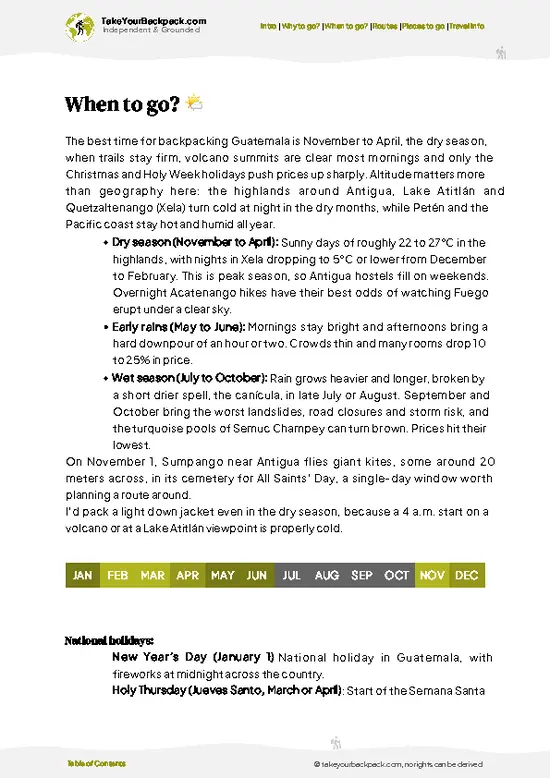
🌤️ When to go?Seasonal considerations and timing

  • Dry season (November to April): Mornings run cool, around 10 to 14°C (50 to 57°F), and afternoons reach 20 to 24°C (68 to 75°F). Rain is light and roads are easiest. This is the sensible window for hiking toward Semuc Champey and the caves nearby.
  • Holy Week (March or April): The sawdust carpet processions are the main event. Lodging fills, so book ahead, and prices climb noticeably.
  • Wet season (May to October): Expect near-daily downpours, often afternoon, with fog and mud on the hills. Temperatures stay mild at 14 to 22°C (57 to 72°F). Crowds vanish and beds are cheaper, but landslides can slow road travel.
  • Daylight: Days stay close to 12 hours all year since the town sits in the tropics, so plan hikes for the morning.
Pack a warm layer for the highland evenings, since the town sits at about … read more 👉
  • Dry season (November to April): Mornings run cool, around 10 to 14°C (50 to 57°F), and afternoons reach 20 to 24°C (68 to 75°F). Rain is light and roads are easiest. This is the sensible window for hiking toward Semuc Champey and the caves nearby.
  • Holy Week (March or April): The sawdust carpet processions are the main event. Lodging fills, so book ahead, and prices climb noticeably.
  • Wet season (May to October): Expect near-daily downpours, often afternoon, with fog and mud on the hills. Temperatures stay mild at 14 to 22°C (57 to 72°F). Crowds vanish and beds are cheaper, but landslides can slow road travel.
  • Daylight: Days stay close to 12 hours all year since the town sits in the tropics, so plan hikes for the morning.
Pack a warm layer for the highland evenings, since the town sits at about 1,400 meters and nights feel colder than you expect.


source: climatestotravel.comJANJanuary: highly recommended for travelingFEBFebruary: highly recommended for travelingMARMarch: highly recommended for travelingAPRApril: good for travelingMAYMay: fair for travelingJUNJune: fair for travelingJULJuly: fair for travelingAUGAugust: fair for travelingSEPSeptember: fair for travelingOCTOctober: fair for travelingNOVNovember: highly recommended for travelingDECDecember: excellent for traveling
guatemala-city-san-cristobal-verapaz
© Google |

✈️ The backpacker research shortcutGuatemala Travel Guide

An offline-friendly backpacking guide with optimized travel routes, ranked highlights, transport advice, and the best areas to stay.
example page 0 from our offline Travel Guide for Guatemala
example page 1 from our offline Travel Guide for Guatemala
example page 2 from our offline Travel Guide for Guatemala
example page 3 from our offline Travel Guide for Guatemala
example page 4 from our offline Travel Guide for Guatemala
example page 5 from our offline Travel Guide for Guatemala
example page 6 from our offline Travel Guide for Guatemala
example page 7 from our offline Travel Guide for Guatemala
The digital guide (272 pages) contains:
✅ 85 highlights, ranked by travel appeal
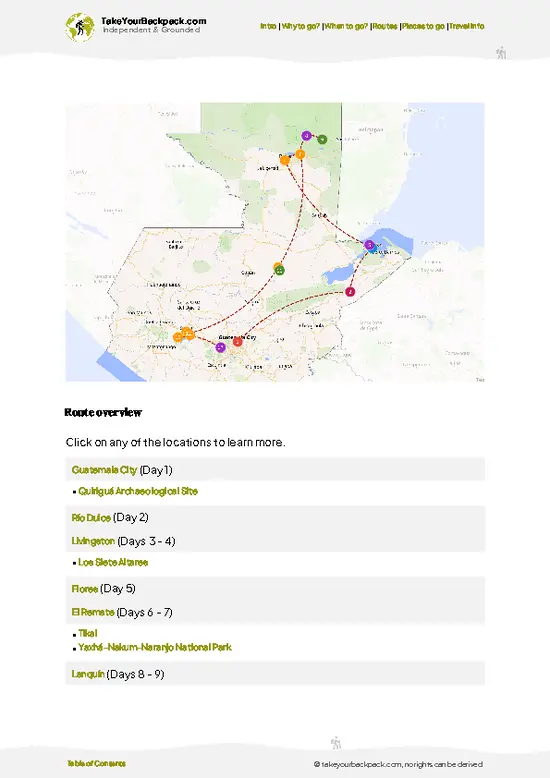
✅ Optimized 5, 10 & 15-day travel routes
✅ Cities, national parks, landmarks, beaches
✅ How to get around
✅ Offline-friendly for travel without Wi-Fi
👉 Click to see all 30+ guide features

📅 Plan smarter in minutes, not weeks
✅ Month by month travel advice
✅ Festivals & national holidays
✅ Budget expectations

🗺️ Go to the right places, skip the overrated ones
✅ Honest pros & cons of destinations
✅ Top hikes, parks & viewpoints
✅ Lesser-known places most travelers miss
✅ Clear “worth it vs skip it” guidance

🛏️ Travel smoothly without rookie mistakes
✅ Best areas to stay
✅ Transport systems explained simply
✅ Common scams & safety advice
✅ SIM cards, money & practical tips

🌍 Understand the country, not just visit it
✅ Culture & traditions
✅ 52 Essential phrases & customs
✅ Festivals worth planning around
✅ Traveler-friendly historical context
✅ Insights that make places more meaningful

📱 Built for real travel conditions
✅ Fully downloadable PDF
✅ Works completely offline
✅ Optimized for phone use
✅ Useful in remote areas & buses
✅ Everything in one place
Stop searching, start planning
Get instant access to your full guide. 30‑day money-back guarantee.
+ Add another guide for just

By proceeding you agree to our terms.
Sent to your inbox immediately after payment • 100% Secure Checkout
Best Backpacking Travel Advisor 2025 tourism awardBest Backpacking
Travel Advisor
2025
What others say about Take Your Backpack Guides:
⭐⭐⭐⭐⭐
Fantastic, amazing amount of information!
⭐⭐⭐⭐⭐
My goodness this is amazing, it's what I've been looking for hats off too you!
⭐⭐⭐⭐⭐
I think this is absolutely BRILLIANT
⭐⭐⭐⭐
Very complete and informative. It's still missing places, but I gotta to commend you
⭐⭐⭐⭐⭐
This is truly amazing, thank you, can't wait to explore it with my kids!
⭐⭐⭐⭐⭐
Awesome resource, thank you!
⭐⭐⭐⭐⭐
This is amazing! Can't wait to explore the ones I haven't seen
⭐⭐⭐⭐
I love this! Well done, great idea.
⭐⭐⭐⭐⭐
Thanks for taking the time to make this gem!
⭐⭐⭐⭐⭐
This might be the best website I've ever seen.
⭐⭐⭐⭐⭐
Congratulations, and thank you so much for your work; it's incredibly valuable.
⭐⭐⭐⭐
In all seriousness I think you did a great job pointing out the important spots
⭐⭐⭐⭐⭐
10/10 very good
⭐⭐⭐⭐⭐
As someone who's only just starting to visit regularly this is awesome, thank you.
⭐⭐⭐⭐
Thank you very much! I'm going to visit my dad, it's going to be very useful!
⭐⭐⭐⭐⭐
This is really cool! We'll be travelling for the first time and this definitely come in handy.
⭐⭐⭐⭐⭐
You are now our minister of culture, congratulations 👨‍💼
⭐⭐⭐⭐⭐
Just wanted to tell you that this is a pearl! Going to follow your recommendations.
⭐⭐⭐⭐⭐
This is so cool. I'll definitely be using the resource for my travels soon.
⭐⭐⭐⭐⭐
This is very impressive! Good work.
⭐⭐⭐⭐⭐
This is an amazing and informative site. Very well done!

🛏️ Where to stay?Where staying makes the most sense

The center, within a few blocks of the plaza, is the best area to sleep in San Cristóbal Verapaz, with the handful of budget guesthouses and simple rooms clustered there. Dorm beds are rare, so most budget travelers take a basic private room at roughly US$10 to 20 a night. Everything you need is steps away: the market, the comedores and the tuk-tuk stands. At night the streets are quiet and lit around the square, and it feels safe to walk back after dinner.

Noise is the main downside. Church bells, market setup and roosters start early, so bring earplugs if you sleep lightly. Rooms at the cheapest … read more 👉
The center, within a few blocks of the plaza, is the best area to sleep in San Cristóbal Verapaz, with the handful of budget guesthouses and simple rooms clustered there. Dorm beds are rare, so most budget travelers take a basic private room at roughly US$10 to 20 a night. Everything you need is steps away: the market, the comedores and the tuk-tuk stands. At night the streets are quiet and lit around the square, and it feels safe to walk back after dinner.

Noise is the main downside. Church bells, market setup and roosters start early, so bring earplugs if you sleep lightly. Rooms at the cheapest end often have thin walls and cold showers, which matters when highland nights drop below 12°C (54°F).

Cobán, about 30 to 45 minutes away, is the real alternative. It has far more hostels, dorm beds from US$6 to 10, and bus links in every direction, so it works better if you want a social scene or an early shuttle to Semuc Champey. Pick San Cristóbal if you prefer calm and local life over backpacker company.

🚌 Getting aroundMoving around without the hassle

Your own feet are the easiest way to get around San Cristóbal Verapaz, because the center, church, market and most comedores sit within a ten-minute walk of each other. The streets are cobbled and steep in places, loud with horns and street vendors, and smell of woodsmoke and fried plantain by evening. Beyond the center, you will want a ride.
  • Walking: Free, and the best choice for the plaza, market and church. Wear shoes with grip, since rain turns the stones slick.
  • Tuk-tuks: Three-wheeled and noisy, they cover the town and the trip to Lake Chichój for about US$1 to 2. Settle the fare before you climb in. They run until roughly 8 or 9 pm.
  • Minibuses and chicken buses: Local buses connect the town to Cobán (about 30 to 45 minutes, US$1 to 1.50) and to Tactic and Santa Cruz Verapaz. They stop running
… read more 👉
Your own feet are the easiest way to get around San Cristóbal Verapaz, because the center, church, market and most comedores sit within a ten-minute walk of each other. The streets are cobbled and steep in places, loud with horns and street vendors, and smell of woodsmoke and fried plantain by evening. Beyond the center, you will want a ride.
  • Walking: Free, and the best choice for the plaza, market and church. Wear shoes with grip, since rain turns the stones slick.
  • Tuk-tuks: Three-wheeled and noisy, they cover the town and the trip to Lake Chichój for about US$1 to 2. Settle the fare before you climb in. They run until roughly 8 or 9 pm.
  • Minibuses and chicken buses: Local buses connect the town to Cobán (about 30 to 45 minutes, US$1 to 1.50) and to Tactic and Santa Cruz Verapaz. They stop running by late afternoon, so do not plan a late return. Expect cramped seats, loud music and a conductor leaning out the door.
  • Shuttles and long-distance buses: Most travelers head to Guatemala City (about 4.5 to 5 hours, US$8 to 15), usually by changing in Cobán or catching a bus on the main highway. Shuttles to Lanquín and Semuc Champey leave from Cobán and cost around US$10 to 15.
  • Pickups: Open-bed trucks serve nearby villages. They are bumpy, dusty and cheap at US$1 to 3, and a useful way to reach rural spots that buses skip.
Skip hiring a private car for in-town sights. It costs far more and saves little time over walking and tuk-tuks.

👛 Costs (as of 22 October 2026)Travel costs and budget guide for San Cristóbal Verapaz

San Cristóbal Verapaz costs a backpacker roughly US$32 to 40 a day, and the table totals US$38 for a high-season day. Prices are lower than in Antigua or Lake Atitlán, since few tourists stay overnight.
CategoryBudget RangeLocal Reality
Dorm accommodationUS$10 to 18Dorms are rare, so expect a basic private room, with cheaper beds in nearby Cobán at US$6 to 10.
MealsUS$8 to 12Comedores serve set lunches for US$3 to 4, with tamales and street snacks costing less.
Local transportUS$2 to 4Tuk-tuks run US$1 to 2, and minibuses to Cobán about US$1 to 1.50.
Basic activities/entry feesUS$3 to 8Caves and guided outings cost a few dollars, while the church and lake are free.
Miscellaneous expensesUS$3 to 5Water, snacks, coffee and the occasional ATM fee.
Total Daily BudgetUS$38High-season day, using the upper
… read more 👉
San Cristóbal Verapaz costs a backpacker roughly US$32 to 40 a day, and the table totals US$38 for a high-season day. Prices are lower than in Antigua or Lake Atitlán, since few tourists stay overnight.
CategoryBudget RangeLocal Reality
Dorm accommodationUS$10 to 18Dorms are rare, so expect a basic private room, with cheaper beds in nearby Cobán at US$6 to 10.
MealsUS$8 to 12Comedores serve set lunches for US$3 to 4, with tamales and street snacks costing less.
Local transportUS$2 to 4Tuk-tuks run US$1 to 2, and minibuses to Cobán about US$1 to 1.50.
Basic activities/entry feesUS$3 to 8Caves and guided outings cost a few dollars, while the church and lake are free.
Miscellaneous expensesUS$3 to 5Water, snacks, coffee and the occasional ATM fee.
Total Daily BudgetUS$38High-season day, using the upper figure for rooms and the lower for the rest.
Eat your main meal at the lunchtime comedores, which cost much less than dinner and fill you up for the afternoon. Pay in quetzales, since few places accept cards.
⚠️ Prices can change and everyone travels differently, so take this as a rough guide. Hope it helps you plan your adventure!

🚌 Day tripsWhere to go beyond the main area

San Cristóbal Verapaz sits close to several rewarding places, though the limited late buses mean you should start early.
Cobán: Cobán is the regional hub, 30 to 45 minutes by minibus for US$1 to 1.50. It has a large market, cafés and coffee tastings, plus tour offices. Go for a half day, but leave by mid-afternoon to keep your return options open.
👉 Explore Cobán
Lake Chichój: Just outside town, this shallow lake draws birds and a quiet, reedy calm. A tuk-tuk costs US$1 to 2 each way, and the walk back is easy. Visit in the dry season for firmer paths and morning light.

Tactic and the Verapaz highlands: Tactic is a small town on the road toward the capital, with cloud forest nearby and the Quetzal Biotope reserve further along the highway. Buses cost US$1 to 3 per leg. The best window is November … read more 👉
San Cristóbal Verapaz sits close to several rewarding places, though the limited late buses mean you should start early.
Cobán: Cobán is the regional hub, 30 to 45 minutes by minibus for US$1 to 1.50. It has a large market, cafés and coffee tastings, plus tour offices. Go for a half day, but leave by mid-afternoon to keep your return options open.
👉 Explore Cobán
Lake Chichój: Just outside town, this shallow lake draws birds and a quiet, reedy calm. A tuk-tuk costs US$1 to 2 each way, and the walk back is easy. Visit in the dry season for firmer paths and morning light.

Tactic and the Verapaz highlands: Tactic is a small town on the road toward the capital, with cloud forest nearby and the Quetzal Biotope reserve further along the highway. Buses cost US$1 to 3 per leg. The best window is November to April, and a common mistake is underestimating how cold and wet the cloud forest feels.

Grutas del Rey Marcos: These limestone caves lie a short drive away and make a good half day with a guide, usually US$3 to 8 including entry. Bring a flashlight and shoes you do not mind getting muddy. Try dry months, since rain can flood the passages.

🍲 FoodEating & Drinking in San Cristóbal Verapaz

San Cristóbal Verapaz serves up a rich palette of flavors that dive deep into Guatemalan tradition. Don’t miss the chance to savor fiambre, a complex cold salad layered with meats, cheeses, and pickled vegetables, especially around festive seasons. The air here often carries the scent of tamales steaming in banana leaves—each bite a warm, masa embrace with hints of local herbs and spices.

Backpackers find their rhythm in bustling markets and street stalls where food is fresh, fast, and fiercely authentic. Casual eateries hum with locals chatting over hearty bowls of pepian, a thick, smoky meat stew that’s comfort in a spoon. Drinking culture leans toward fresh fruit juices and the occasional Guatemalan beer, enjoyed slowly while soaking in the lively street scenes.

Here, meals are social … read more 👉
San Cristóbal Verapaz serves up a rich palette of flavors that dive deep into Guatemalan tradition. Don’t miss the chance to savor fiambre, a complex cold salad layered with meats, cheeses, and pickled vegetables, especially around festive seasons. The air here often carries the scent of tamales steaming in banana leaves—each bite a warm, masa embrace with hints of local herbs and spices.

Backpackers find their rhythm in bustling markets and street stalls where food is fresh, fast, and fiercely authentic. Casual eateries hum with locals chatting over hearty bowls of pepian, a thick, smoky meat stew that’s comfort in a spoon. Drinking culture leans toward fresh fruit juices and the occasional Guatemalan beer, enjoyed slowly while soaking in the lively street scenes.

Here, meals are social moments. Sharing plates is common, and a simple “buen provecho” before digging in shows respect. Expect a relaxed pace—food isn’t just fuel; it’s a connection to place and people.

🛡️ SafetyStaying Safe: What Travelers Should Know

San Cristóbal Verapaz is calm and low-key, and most problems here are small ones. Petty theft can happen in the crowded market, so carry your phone and wallet in a front pocket and leave the valuables at your room. After dark the center stays fairly quiet, but outer streets and the lakeshore are poorly lit, so take a tuk-tuk rather than walking them. Solo travelers, women included, generally report few issues, though reserved dress and early evenings help you fit in. Tuk-tuk drivers sometimes quote tourist prices, so agree on the fare first. Rain makes roads slick and landslides can close sections of highway, so check conditions before you travel. Avoid photographing people at the market without asking, since many Maya vendors dislike it.

FAQFrequently asked questions about San Cristóbal Verapaz

San Cristóbal Verapaz is worth a short visit if you like quiet highland towns and Maya culture, but it is not a major stop. The church, the market and Lake Chichój fill a relaxed afternoon, and Holy Week brings the sawdust carpets. Most travelers combine it with Cobán, about 30 to 45 minutes away.
One night is enough for most travelers, and two nights works if you add the lake and the caves. A full day covers the church, market and Lake Chichój at an easy pace. Plan an extra day if you come for Holy Week or want to use it as a base for Cobán and Tactic.
Yes, San Cristóbal Verapaz is easy to reach in a day from Cobán, 30 to 45 minutes by minibus for about US$1 to 1.50. From Guatemala City it is a long day, since the trip takes roughly 4.5 to 5 hours each way. Local buses stop by late afternoon, so leave early and check the last return.
⚠️ Things can change over time, so always validate details locally before you go.

Other Guatemalan towns near San Cristóbal Verapaz

Explore more nearby:

  • San Miguel Chicaj—Achí Maya market, patron saint fiesta, shaded plaza, Baja Verapaz| 32 km away
  • Lanquín—Bat caves, river tubing, Q’eqchi’ market, Semuc Champey base| 58 km away
  • Nebaj—Ixil Triangle, red huipils, weaving co-ops, Acul hikes| 72 km away

💡 Not sure where to go next?
Create a personalized itinerary for Guatemala including San Cristóbal Verapaz and the places that fit your trip.

Generate my itinerary

👉 Discover all towns

Or checkout all Guatemala has to offer (think cities, towns, villages, national parks, hikes, beaches, festivals)
Country photo of Guatemala

We 💚 feedbackSumming up the experience

San Cristóbal Verapaz rewards people who look at the thread. Each huipil pattern marks a community and a weaver’s skill, and most visitors walk past without asking. I would buy directly from a cooperative, ask about the pattern, and skip the souvenir racks. Bring small bills and a little Spanish.

✈️ When did I visit Guatemala?
Guatemala I visited during my half year trip through South and Central America back in 2003

✍️ Help improve this page!
The information on this page is based on my own backpacking experience in Guatemala, supplemented with up-to-date research and feedback from other travelers. Travel details can change, so if you notice anything outdated or incomplete, feel free to let me know.


🙋‍♂️ Give feedback

👋 Meet the founderWho’s Behind Take Your Backpack?

Johan, backpacker and founder of TakeYourBackpackHi, I’m Johan (Netherlands 🇳🇱), the creator of TakeYourBackpack. Over the past 3 decades, I’ve backpacked through 90+ countries across six continents, gaining extensive experience with independent travel, long-term trips, and overland routes.

This site is built on a combination of firsthand travel experience and carefully curated insights from other backpackers. Many guides are based on places I’ve personally visited, while others bring together tips, observations, and practical advice shared by trusted travelers I’ve met along the way.

The goal is to provide realistic, experience-driven guidance — not generic itineraries — so you can explore destinations with better context, clearer expectations, and more confidence.