×

Guatemala🇬🇹 | citiesGuatemala CityMaya jade, Zona 4 cafés, relief map, Zona 1 markets | things to do and best time to go

Explore CobánExplore Quetzaltenango

Backpacking in Guatemala City
👍 Recommendedcity ranked #3
By Johan Kruseman 🇳🇱 | Updated October 22, 2026

Most people land in Guatemala City because the airport sits here, and then they leave for Antigua within the hour. That is a mistake, because the capital holds the country’s best museums and its sharpest food, and almost nobody else is there to see them. It sits in the southern highlands of Guatemala, in a valley ringed by volcanoes. Zona 1 smells of diesel and grilled corn, chicken buses roar past with horns blaring, and the light bounces off concrete in zones that have no business being photogenic. Zona 10 and Zona 4 are the parts worth your time. Skip the outer zones entirely. A cook at a Zona 1 counter once slid me a plate of pepián and said, “Eat here, then tell Antigua you were brave.” I would take her advice. Unlike Antigua, nothing here is polished for you, and that is the point.

Discover everything you want to know in the 📖 Guatemala Travel Guide.


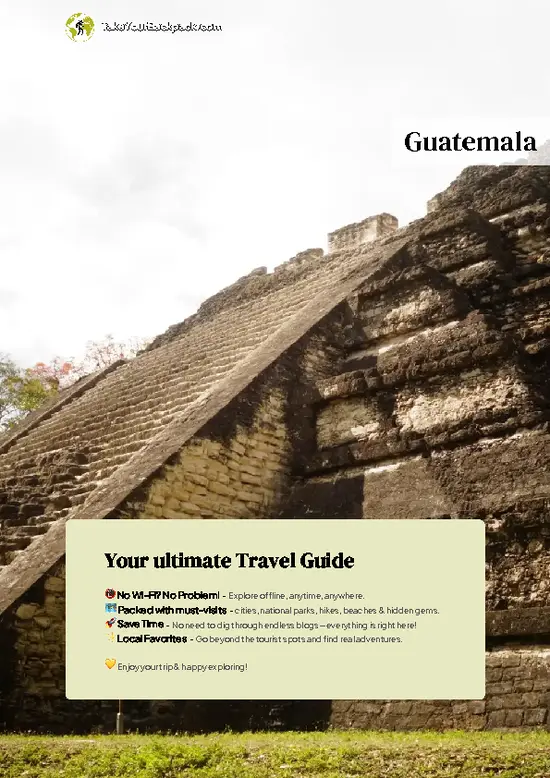
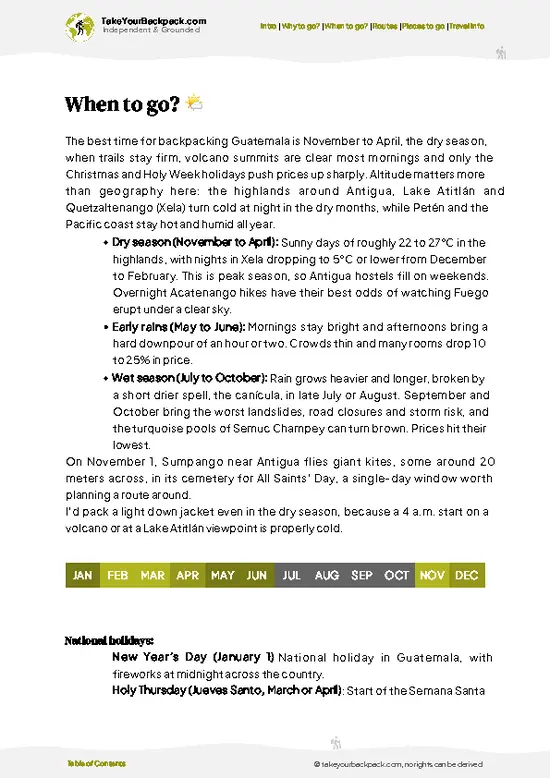
example page 0 from our offline Travel Guide for Guatemala
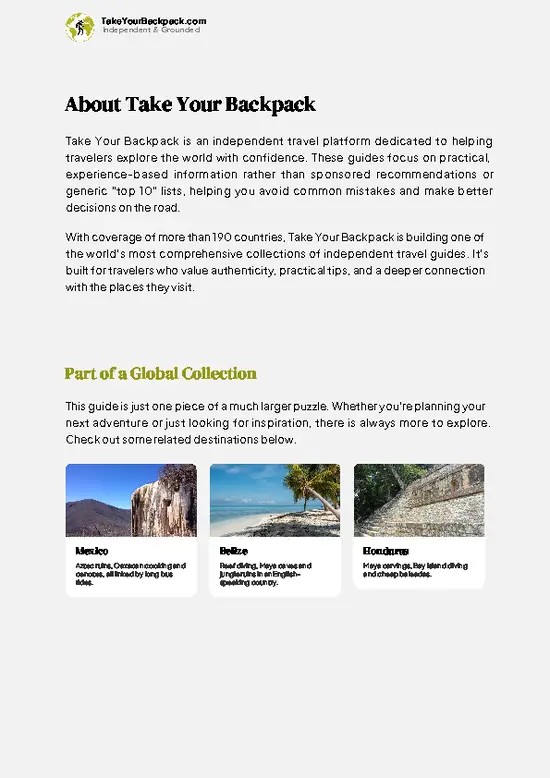
example page 1 from our offline Travel Guide for Guatemala
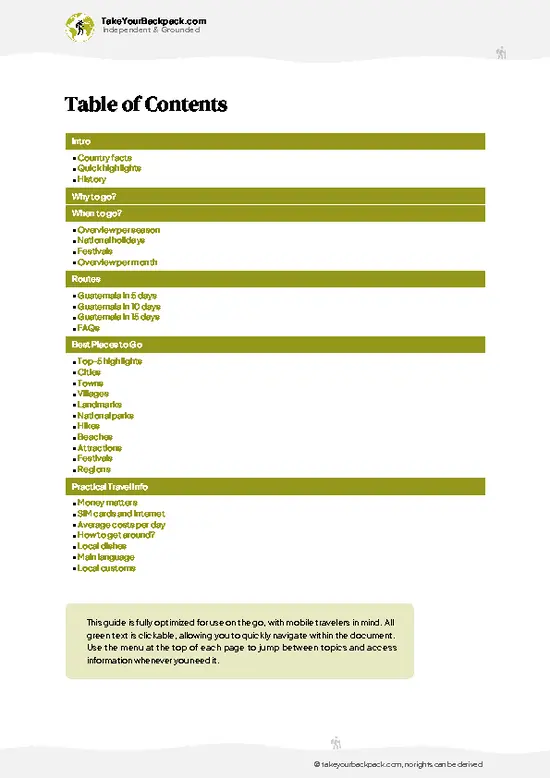
example page 2 from our offline Travel Guide for Guatemala
example page 3 from our offline Travel Guide for Guatemala
example page 4 from our offline Travel Guide for Guatemala
example page 5 from our offline Travel Guide for Guatemala
example page 6 from our offline Travel Guide for Guatemala
example page 7 from our offline Travel Guide for Guatemala
Loading the map 🌍
CLICK TO FILTER
cities
towns
villages
landmarks
national parks
hikes
beaches
attractions
festivals
regions
SHOW COUNTRY’S BESTSHOW ALL

✨ Why go?
Ranked #3 city in Guatemala
What makes this city worth visiting

Guatemala City earns a place on a route because it is the country’s transport hub and its cultural heavyweight, and you will pass through it anyway. Spending one or two nights here instead of rushing out means you get the museums, the Mayan collections and a food scene that locals actually eat in, rather than a tourist version. The hostels cluster around Zona 1 and Zona 4, which keeps you near restaurants, cafes and the Cuatro Grados Norte strip, where the evenings are lively with craft beer, live music and street art. Walking works inside a single zone, though you will want a ride between zones after dark. Onward travel is the other big reason. Buses and shuttles fan out to Antigua, Lake Atitlán, Cobán, Flores and the Caribbean coast, so the city works as a practical reset point where you … read more 👉
Guatemala City earns a place on a route because it is the country’s transport hub and its cultural heavyweight, and you will pass through it anyway. Spending one or two nights here instead of rushing out means you get the museums, the Mayan collections and a food scene that locals actually eat in, rather than a tourist version. The hostels cluster around Zona 1 and Zona 4, which keeps you near restaurants, cafes and the Cuatro Grados Norte strip, where the evenings are lively with craft beer, live music and street art. Walking works inside a single zone, though you will want a ride between zones after dark. Onward travel is the other big reason. Buses and shuttles fan out to Antigua, Lake Atitlán, Cobán, Flores and the Caribbean coast, so the city works as a practical reset point where you can sort laundry, a SIM card and tickets. It is not a place for a week of lounging, but one or two well-planned days pay off.

💡 HighlightsThe experiences that define the visit

  1. Museo Nacional de Arqueología y Etnología: The best place in the country to see Mayan jade, carved stelae and ceramics up close, set in a leafy park in Zona 13. Go on a weekday morning. Entry runs about US$7 to 9, and 1.5 to 2 hours is enough.
  2. Museo Popol Vuh: A university museum in Zona 10 with a serious Maya collection, colonial art and rare codex replicas. Quiet and well labeled. Plan 1 to 1.5 hours; admission is roughly US$7 to 8.
  3. Plaza Mayor and Palacio Nacional de la Cultura: The historic heart of Zona 1, with the green-stone palace on one side and the cathedral on the other. Guided palace tours cost about US$7 to 9 and take an hour. Visit in the morning when the square fills with vendors.
  4. Catedral Metropolitana: Neoclassical, with a calm interior and martyr plaques on the columns outside.
… read more 👉
  1. Museo Nacional de Arqueología y Etnología: The best place in the country to see Mayan jade, carved stelae and ceramics up close, set in a leafy park in Zona 13. Go on a weekday morning. Entry runs about US$7 to 9, and 1.5 to 2 hours is enough.
  2. Museo Popol Vuh: A university museum in Zona 10 with a serious Maya collection, colonial art and rare codex replicas. Quiet and well labeled. Plan 1 to 1.5 hours; admission is roughly US$7 to 8.
  3. Plaza Mayor and Palacio Nacional de la Cultura: The historic heart of Zona 1, with the green-stone palace on one side and the cathedral on the other. Guided palace tours cost about US$7 to 9 and take an hour. Visit in the morning when the square fills with vendors.
  4. Catedral Metropolitana: Neoclassical, with a calm interior and martyr plaques on the columns outside. Free, 20 to 30 minutes, best before midday.
  5. Cuatro Grados Norte: A walkable Zona 4 district of cafes, murals, bars and small galleries. Late afternoon into the evening is best. Entry is free, and a drink or two runs US$3 to 8.
  6. Mercado Central: A basement-level market under Plaza Mayor, packed with textiles, ceramics and cheap comedores. Go mid-morning and bargain politely. Allow 1 hour and US$2 to 5 for lunch.
  7. Mapa en Relieve: A huge scale relief model of Guatemala’s terrain in Zona 2’s Minerva Park, built in the 1900s. Best from the elevated viewing platforms in daylight. Entry is around US$2 to 3 and it takes 30 to 45 minutes.
  8. Museo Ixchel del Traje Indígena: Hundreds of traditional huipiles and weavings from across the highlands, which makes sense of what you see on the buses. Admission is roughly US$5 to 7, with 1 hour needed.
From Guatemala City, Antigua, Volcán de Pacaya and the ruins at Iximché are all good outings beyond the city limits. The Catedral Metropolitana costs nothing to enter, making it the cheapest stop on the list.
Spotted a mistake or missing something? Contact us.

Things to do in Guatemala City

Ratings based on Tripadvisor reviews. When you book through this link, you support our work at no extra cost to you.

🏘️ NeighborhoodsWhere things are and how it's laid out

Guatemala City is split into numbered zones, and only a few matter for a backpacker. Learn those and the rest can be skipped.
  • Zona 1: The historic center, and worth a half day. Diesel fumes, shoe-shop loudspeakers and the smell of roasting corn fill the streets around Plaza Mayor, the Cathedral and the National Palace. The Sexta Avenida pedestrian strip is walkable by day, and the Mercado Central has cheap lunches. Leave by dusk.
  • Zona 4 (Cuatro Grados Norte): Cafés, street murals, craft beer and weekend food stalls make this the most relaxed area for an evening. It is flat, compact and easy on foot, and it is the one zone I would spend a full night in.
  • Zona 10 (Zona Viva): Glass towers, upscale restaurants, bars and clubs. The Museo Ixchel (textiles) and Museo Popol Vuh (Maya ceramics) are worth
… read more 👉
Guatemala City is split into numbered zones, and only a few matter for a backpacker. Learn those and the rest can be skipped.
  • Zona 1: The historic center, and worth a half day. Diesel fumes, shoe-shop loudspeakers and the smell of roasting corn fill the streets around Plaza Mayor, the Cathedral and the National Palace. The Sexta Avenida pedestrian strip is walkable by day, and the Mercado Central has cheap lunches. Leave by dusk.
  • Zona 4 (Cuatro Grados Norte): Cafés, street murals, craft beer and weekend food stalls make this the most relaxed area for an evening. It is flat, compact and easy on foot, and it is the one zone I would spend a full night in.
  • Zona 10 (Zona Viva): Glass towers, upscale restaurants, bars and clubs. The Museo Ixchel (textiles) and Museo Popol Vuh (Maya ceramics) are worth the entry, and the rest is pricey and polished. Walk by day and take a taxi at night.
  • Zona 13: Home to the airport and the Museo Nacional de Arqueología y Etnología, with a strong Maya collection. Come for the museum, then move on.
  • Zona 2 and Kaminal Juyú (Zona 7): Kaminal Juyú has Maya mounds in the middle of a city neighborhood, and it is quiet, earthy and rarely crowded. Go by taxi, not on foot.
  • Zona 11 and beyond: Malls and traffic. Skip them.

⌛️ 1 dayWhat you can realistically do in a day

8:00 AM: Plaza Mayor
Start in Zona 1 with a coffee and a pastry from a local bakery, then walk across the square as the vendors set up. The cathedral opens early and the interior is calm before the crowds.
9:30 AM: Palacio Nacional de la Cultura
Join a guided tour of the palace, with its stained glass, patios and presidential rooms. It takes about an hour and sits right on the square.
11:00 AM: Mercado Central
Drop into the market below the plaza for textiles and a lunch counter. Try a plate of caldo or pepián at a comedor and walk it off after.
1:00 PM: Mapa en Relieve
Take a short taxi or ride-hailing trip to Minerva Park in Zona 2. Few travelers come to see this huge terrain model, and it explains the geography of the country better than any map you will buy. Climb the platforms and trace the … read more 👉
8:00 AM: Plaza Mayor
Start in Zona 1 with a coffee and a pastry from a local bakery, then walk across the square as the vendors set up. The cathedral opens early and the interior is calm before the crowds.
9:30 AM: Palacio Nacional de la Cultura
Join a guided tour of the palace, with its stained glass, patios and presidential rooms. It takes about an hour and sits right on the square.
11:00 AM: Mercado Central
Drop into the market below the plaza for textiles and a lunch counter. Try a plate of caldo or pepián at a comedor and walk it off after.
1:00 PM: Mapa en Relieve
Take a short taxi or ride-hailing trip to Minerva Park in Zona 2. Few travelers come to see this huge terrain model, and it explains the geography of the country better than any map you will buy. Climb the platforms and trace the volcano chain.
3:00 PM: Museo Popol Vuh
Ride to Zona 10 for the Maya jade, ceramics and colonial art. It is calm, air-conditioned and unhurried, a good break after the noise downtown.
5:30 PM: Cuatro Grados Norte
Head to Zona 4 as the light drops. Wander the murals and small galleries, then settle into a patio for a craft beer or fresh juice. Dinner here is easy, and the walk back to a hostel stays short. Use a ride-hailing car once it is dark.

🌤️ When to go?Best time to visit Guatemala City

  • Dry Season (November to April): Sunny days of 24 to 27°C (75 to 81°F) and cool nights around 13 to 15°C (55 to 59°F). Rain is rare, and this is the easiest time for walking Zona 1 and heading out to volcanoes. Flights and beds cost more around Christmas and Semana Santa (Holy Week).
  • Rainy Season (May to October): Mornings are usually bright, then storms roll in most afternoons, often with thunder and flooded streets. Highs sit at 24 to 26°C (75 to 79°F). September and October are the wettest, and prices dip.
  • Daylight: Close to the equator, so days run about 11 to 13 hours year-round, and dusk comes fast.
  • Festivals: Semana Santa brings processions and carpets of sawdust, and early December brings the burning of the devil bonfires on December 7.
Plan city sightseeing for the morning in any month, and keep afternoons for museums.

source: climatestotravel.comJANJanuary: excellent for travelingFEBFebruary: excellent for travelingMARMarch: excellent for travelingAPRApril: highly recommended for travelingMAYMay: fair for travelingJUNJune: fair for travelingJULJuly: fair for travelingAUGAugust: fair for travelingSEPSeptember: below average for travelingOCTOctober: fair for travelingNOVNovember: highly recommended for travelingDECDecember: excellent for traveling

✈️ The backpacker research shortcutGuatemala Travel Guide

An offline-friendly backpacking guide with optimized travel routes, ranked highlights, transport advice, and the best areas to stay.
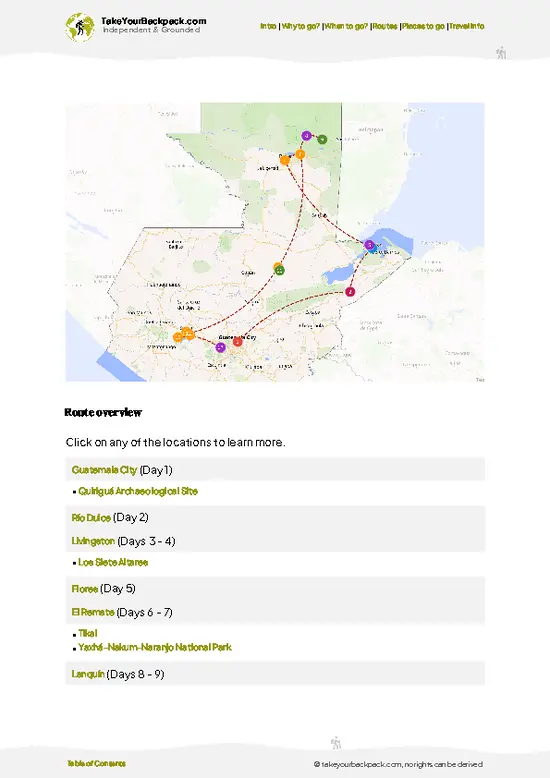
example page 0 from our offline Travel Guide for Guatemala
example page 1 from our offline Travel Guide for Guatemala
example page 2 from our offline Travel Guide for Guatemala
example page 3 from our offline Travel Guide for Guatemala
example page 4 from our offline Travel Guide for Guatemala
example page 5 from our offline Travel Guide for Guatemala
example page 6 from our offline Travel Guide for Guatemala
example page 7 from our offline Travel Guide for Guatemala
The digital guide (272 pages) contains:
✅ 85 highlights, ranked by travel appeal
✅ Optimized 5, 10 & 15-day travel routes
✅ Cities, national parks, landmarks, beaches
✅ How to get around
✅ Offline-friendly for travel without Wi-Fi
👉 Click to see all 30+ guide features

📅 Plan smarter in minutes, not weeks
✅ Month by month travel advice
✅ Festivals & national holidays
✅ Budget expectations

🗺️ Go to the right places, skip the overrated ones
✅ Honest pros & cons of destinations
✅ Top hikes, parks & viewpoints
✅ Lesser-known places most travelers miss
✅ Clear “worth it vs skip it” guidance

🛏️ Travel smoothly without rookie mistakes
✅ Best areas to stay
✅ Transport systems explained simply
✅ Common scams & safety advice
✅ SIM cards, money & practical tips

🌍 Understand the country, not just visit it
✅ Culture & traditions
✅ 52 Essential phrases & customs
✅ Festivals worth planning around
✅ Traveler-friendly historical context
✅ Insights that make places more meaningful

📱 Built for real travel conditions
✅ Fully downloadable PDF
✅ Works completely offline
✅ Optimized for phone use
✅ Useful in remote areas & buses
✅ Everything in one place
Stop searching, start planning
Get instant access to your full guide. 30‑day money-back guarantee.
+ Add another guide for just

By proceeding you agree to our terms.
Sent to your inbox immediately after payment • 100% Secure Checkout
Best Backpacking Travel Advisor 2025 tourism awardBest Backpacking
Travel Advisor
2025
What others say about Take Your Backpack Guides:
⭐⭐⭐⭐⭐
Fantastic, amazing amount of information!
⭐⭐⭐⭐⭐
My goodness this is amazing, it's what I've been looking for hats off too you!
⭐⭐⭐⭐⭐
I think this is absolutely BRILLIANT
⭐⭐⭐⭐
Very complete and informative. It's still missing places, but I gotta to commend you
⭐⭐⭐⭐⭐
This is truly amazing, thank you, can't wait to explore it with my kids!
⭐⭐⭐⭐⭐
Awesome resource, thank you!
⭐⭐⭐⭐⭐
This is amazing! Can't wait to explore the ones I haven't seen
⭐⭐⭐⭐
I love this! Well done, great idea.
⭐⭐⭐⭐⭐
Thanks for taking the time to make this gem!
⭐⭐⭐⭐⭐
This might be the best website I've ever seen.
⭐⭐⭐⭐⭐
Congratulations, and thank you so much for your work; it's incredibly valuable.
⭐⭐⭐⭐
In all seriousness I think you did a great job pointing out the important spots
⭐⭐⭐⭐⭐
10/10 very good
⭐⭐⭐⭐⭐
As someone who's only just starting to visit regularly this is awesome, thank you.
⭐⭐⭐⭐
Thank you very much! I'm going to visit my dad, it's going to be very useful!
⭐⭐⭐⭐⭐
This is really cool! We'll be travelling for the first time and this definitely come in handy.
⭐⭐⭐⭐⭐
You are now our minister of culture, congratulations 👨‍💼
⭐⭐⭐⭐⭐
Just wanted to tell you that this is a pearl! Going to follow your recommendations.
⭐⭐⭐⭐⭐
This is so cool. I'll definitely be using the resource for my travels soon.
⭐⭐⭐⭐⭐
This is very impressive! Good work.
⭐⭐⭐⭐⭐
This is an amazing and informative site. Very well done!

🛏️ Where to stay?Choosing the right base

Zona 1 and Zona 4 are the two areas to look at, and Zona 4 is the safer, more pleasant pick. Zona 4 has the best choice of hostels and budget guesthouses, dorm beds in the US$10 to 18 range, and it sits near the Transmetro and the Zona 4 bus stations, with cafés and restaurants within a short walk after dark. Streets are quieter than in other districts, though weekend events can be loud. Zona 1 has the cheapest beds in the city, and some rooms go for US$8 to 15, but the streets empty out in the evening and nights can feel sketchy. It is handy for early buses and the historic sights, so choose … read more 👉
Zona 1 and Zona 4 are the two areas to look at, and Zona 4 is the safer, more pleasant pick. Zona 4 has the best choice of hostels and budget guesthouses, dorm beds in the US$10 to 18 range, and it sits near the Transmetro and the Zona 4 bus stations, with cafés and restaurants within a short walk after dark. Streets are quieter than in other districts, though weekend events can be loud. Zona 1 has the cheapest beds in the city, and some rooms go for US$8 to 15, but the streets empty out in the evening and nights can feel sketchy. It is handy for early buses and the historic sights, so choose a place on a lit, busy street and take a taxi to and from the door after dark. Zona 10 has few budget options and high prices. Many travelers also sleep just a short ride from the airport on arrival or departure nights, and it is smart to book ahead for these. Many stay only one night here before heading to Antigua or Lake Atitlán.

🚌 Getting aroundHow to get from A to B

From the main long-distance bus terminals in Zona 1 and Zona 4, the center is a 5 to 15 minute walk or a US$2 to 4 taxi ride, and the walk is fine by day with a light bag. Guatemala City is spread out, traffic can be brutal at rush hour (6 to 9 am and 4 to 7 pm), and public transport is cheap but chaotic. Plan around the zones you want.
  • Transmetro: Dedicated-lane red buses with a flat fare of about US$0.15 to 0.20 and stations with turnstiles. It runs roughly 5 am to 9 pm and skips most traffic. The best choice for moving along the main avenues, and it is the safest bus option.
  • Walking: Excellent in Zona 1 by day, Zona 4 and parts of Zona 10. Sidewalks are uneven, and you will share them with vendors. Between zones, it is not practical.
  • Ride apps and taxis: Uber and inDrive are the sensible choice
… read more 👉
From the main long-distance bus terminals in Zona 1 and Zona 4, the center is a 5 to 15 minute walk or a US$2 to 4 taxi ride, and the walk is fine by day with a light bag. Guatemala City is spread out, traffic can be brutal at rush hour (6 to 9 am and 4 to 7 pm), and public transport is cheap but chaotic. Plan around the zones you want.
  • Transmetro: Dedicated-lane red buses with a flat fare of about US$0.15 to 0.20 and stations with turnstiles. It runs roughly 5 am to 9 pm and skips most traffic. The best choice for moving along the main avenues, and it is the safest bus option.
  • Walking: Excellent in Zona 1 by day, Zona 4 and parts of Zona 10. Sidewalks are uneven, and you will share them with vendors. Between zones, it is not practical.
  • Ride apps and taxis: Uber and inDrive are the sensible choice for evenings and any trip between zones, usually US$3 to 8 for a cross-city ride. Street taxis are metered rarely, so agree on a price first or use an app.
  • Red city buses: Cheap at US$0.15 to 0.25 and loud, crowded and overcrowded with pickpockets. I would skip them, since Transmetro covers most useful routes.
  • Shuttles and chicken buses: For Antigua, tourist shuttles cost US$10 to 15 and take 1 to 1.5 hours, while chicken buses from Zona 4 or Zona 9 cost US$1 to 2 and take about 1.5 hours. Shuttles are more comfortable and hotel pickup is common.

👛 Costs (as of 22 October 2026)How expensive it really is

Guatemala City costs a backpacker about US$40 to 66 a day, or US$48 including a bed in high season, and it is pricier than the rest of the country.
CategoryBudget RangeLocal Reality
Dorm (high season)US$12 to 18Zona 4 hostels fill up around holidays and December.
Dorm (off-season)US$9 to 14Rainy months from May to October bring discounts.
MealsUS$10 to 16Set lunches cost US$3 to 5, and street food is US$1 to 3.
Local transportUS$3 to 8Transmetro fares are tiny, and ride apps run US$3 to 8 per trip.
City transport passUS$0 to 3No tourist pass is needed, and a Transmetro card can be reloaded.
Activities and entry feesUS$4 to 10Museums cost around US$4 to 8, and Pacaya adds about US$7.
MiscellaneousUS$3 to 6Water, SIM data and snacks.
Total Daily BudgetUS$40 to 66About US$48 is a realistic middle figure.
… read more 👉
Guatemala City costs a backpacker about US$40 to 66 a day, or US$48 including a bed in high season, and it is pricier than the rest of the country.
CategoryBudget RangeLocal Reality
Dorm (high season)US$12 to 18Zona 4 hostels fill up around holidays and December.
Dorm (off-season)US$9 to 14Rainy months from May to October bring discounts.
MealsUS$10 to 16Set lunches cost US$3 to 5, and street food is US$1 to 3.
Local transportUS$3 to 8Transmetro fares are tiny, and ride apps run US$3 to 8 per trip.
City transport passUS$0 to 3No tourist pass is needed, and a Transmetro card can be reloaded.
Activities and entry feesUS$4 to 10Museums cost around US$4 to 8, and Pacaya adds about US$7.
MiscellaneousUS$3 to 6Water, SIM data and snacks.
Total Daily BudgetUS$40 to 66About US$48 is a realistic middle figure.
Eat your main meal at lunch from a comedor, where set menus cost far less than evening restaurants. Pay in quetzales and carry small bills.
⚠️ Prices can change and everyone travels differently, so take this as a rough guide. Hope it helps you plan your adventure!

🚌 Day tripsShort trips worth adding

Guatemala City works well for day trips because shuttles and buses leave daily for colonial towns and volcanoes, and you can be back for dinner.Antigua Guatemala: The classic escape: cobbled streets, colorful colonial façades and volcano views. Shuttles take 1 to 1.5 hours and cost US$10 to 15 round trip, and chicken buses are about US$2 each way. Dry season gives the clearest views. First-timers often leave too late and miss the light on Cerro de la Cruz, so go early.
Pacaya Volcano: An active volcano with a 2 to 3 hour round-trip hike on black lava fields, where you can sometimes roast marshmallows on warm ground. Tours cost US$15 to 25 plus the park fee of about US$7. Travel is about 1.5 hours each way. Go in the morning, since afternoon clouds often hide the views. Wear closed shoes, because … read more 👉
Guatemala City works well for day trips because shuttles and buses leave daily for colonial towns and volcanoes, and you can be back for dinner.Antigua Guatemala: The classic escape: cobbled streets, colorful colonial façades and volcano views. Shuttles take 1 to 1.5 hours and cost US$10 to 15 round trip, and chicken buses are about US$2 each way. Dry season gives the clearest views. First-timers often leave too late and miss the light on Cerro de la Cruz, so go early.
Pacaya Volcano: An active volcano with a 2 to 3 hour round-trip hike on black lava fields, where you can sometimes roast marshmallows on warm ground. Tours cost US$15 to 25 plus the park fee of about US$7. Travel is about 1.5 hours each way. Go in the morning, since afternoon clouds often hide the views. Wear closed shoes, because the lava is sharp.
Iximché: Maya ruins on a hilltop near Tecpán, about 2 hours away by chicken bus, with cost around US$4 to 6 for transport plus entry of about US$7 for foreigners. It is quiet and shaded by pine, and Maya ceremonies are sometimes held there. Go on a weekday, since weekends see families.
Lake Amatitlán: A short ride south, about 45 minutes. It is a casual outing for a half day, best in the dry season.

🍲 FoodLocal Cuisine & Drinks

Guatemala City is where the country’s regional cooking meets, so you get a lot here. Try pepián, a rich Maya-rooted stew of meat in a roasted seed and chili sauce, and kak’ik, a spicy turkey soup from the Alta Verapaz. Street shucos are the capital’s own hot dog, stuffed with guacamole, cabbage and sausage on a toasted bun, and a good, cheap hit of US$1 to 2. Tamales are made in many variants, and the Saturday ones are the classic. Order atol de elote or horchata to drink, and local Gallo beer for the evening.

For eating, the Mercado Central and the comedores around Zona 1 serve set lunches (almuerzos) of soup, rice, meat and tortillas for about US$3 to 5. Zona 4 has weekend food stalls and craft beer, while Zona 10 is for restaurants at higher prices. Lunch is the main meal, and many cheap … read more 👉
Guatemala City is where the country’s regional cooking meets, so you get a lot here. Try pepián, a rich Maya-rooted stew of meat in a roasted seed and chili sauce, and kak’ik, a spicy turkey soup from the Alta Verapaz. Street shucos are the capital’s own hot dog, stuffed with guacamole, cabbage and sausage on a toasted bun, and a good, cheap hit of US$1 to 2. Tamales are made in many variants, and the Saturday ones are the classic. Order atol de elote or horchata to drink, and local Gallo beer for the evening.

For eating, the Mercado Central and the comedores around Zona 1 serve set lunches (almuerzos) of soup, rice, meat and tortillas for about US$3 to 5. Zona 4 has weekend food stalls and craft beer, while Zona 10 is for restaurants at higher prices. Lunch is the main meal, and many cheap places close early in the evening, so eat heartily at midday.

🛡️ SafetyStaying Safe: What Travelers Should Know

Guatemala City has a reputation that is harsher than most visits turn out, but it needs real attention. Stick to Zona 1 (by day), Zona 4, Zona 9, Zona 10 and Zona 13 and you will have few problems. Zona 18, Zona 3, Zona 6 and Zona 12 have no reason to visit, so skip them. Leave valuables at the hostel, keep your phone out of sight on the street, and carry only what you need for the day. Phone snatching is the most common issue, along with pickpocketing on red city buses, so use Transmetro or an app-hailed car. At night, take a ride app door to door, even for short distances, and do not walk between zones. Solo travelers do fine with this routine, and many people stay one night before moving on. Street taxis can overcharge, so agree on a fare first. If someone demands your things, hand them over and do not argue.

FAQTraveler FAQ

One to two days is enough for Guatemala City itself. Spend a day on Zona 1 (the Cathedral and National Palace) plus the Museo Popol Vuh and Museo Ixchel in Zona 10, and use any extra time for Kaminal Juyú. Most travelers continue to Antigua, 1 to 1.5 hours away, within a night.
Guatemala City is workable for solo backpackers if you use common sense. Stay in Zona 4 or Zona 10, use Uber or inDrive after dark (US$3 to 8 a ride), and avoid Zones 3, 6, 12 and 18. Phone snatching and bus pickpocketing are the main risks, so use Transmetro by day.
Guatemala City is known as the country’s capital and its largest city, with the historic center of Zona 1, Maya museums such as Popol Vuh and Ixchel, and the nearby Pacaya volcano. It is also a transit hub for Antigua (1 to 1.5 hours) and the airport. Its food scene includes shucos at US$1 to 2 and pepián stew.
⚠️ Things can change over time, so always validate details locally before you go.

Other Guatemalan cities near Guatemala City

Explore more nearby:

  • Antigua—Yellow arch, volcano views, convent ruins, cobbled streets| 26 km away
  • Cobán—Cardamom farms, orchids, Verapaz market, drizzle| 94 km away
  • Quetzaltenango—Xela, Spanish schools, steam baths, cemetery colors| 112 km away

💡 Not sure where to go next?
Create a personalized itinerary for Guatemala including Guatemala City and the places that fit your trip.

Generate my itinerary

👉 Discover all cities

Or checkout all Guatemala has to offer (think cities, towns, villages, national parks, hikes, beaches, festivals)
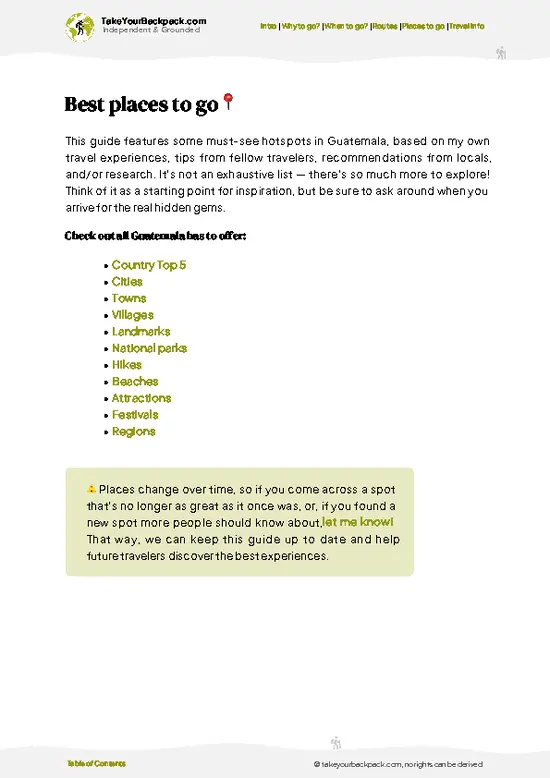
Country photo of Guatemala

We 💚 feedbackWhat to keep in mind

Guatemala City gets written off because travelers treat it as a hurdle, then race out on the first shuttle. I would book one full night, spend the day in Zona 10 and Zona 4 museums, and eat dinner before dark. Use ride-hailing between zones instead of walking, and you will leave liking it far more than you expected.

✈️ When did I visit Guatemala?
Guatemala I visited during my half year trip through South and Central America back in 2003

✍️ Help improve this page!
The information on this page is based on my own backpacking experience in Guatemala, supplemented with up-to-date research and feedback from other travelers. Travel details can change, so if you notice anything outdated or incomplete, feel free to let me know.


🙋‍♂️ Give feedback

👋 Meet the founderWho’s Behind Take Your Backpack?

Johan, backpacker and founder of TakeYourBackpackHi, I’m Johan (Netherlands 🇳🇱), the creator of TakeYourBackpack. Over the past 3 decades, I’ve backpacked through 90+ countries across six continents, gaining extensive experience with independent travel, long-term trips, and overland routes.

This site is built on a combination of firsthand travel experience and carefully curated insights from other backpackers. Many guides are based on places I’ve personally visited, while others bring together tips, observations, and practical advice shared by trusted travelers I’ve met along the way.

The goal is to provide realistic, experience-driven guidance — not generic itineraries — so you can explore destinations with better context, clearer expectations, and more confidence.