×

Guinea-Bissau🇬🇼 | landmarksCabo de Santa MariaAtlantic sandspit, shipwreck remains, tidal flats, migratory birds | things to do and best time to go

Explore NhacraExplore Papel

Backpacking in Cabo de Santa Maria
By Johan Kruseman 🇳🇱 | Updated October 15, 2026

Forget the sun-bleached Instagram shots of endless white sand and empty shipwrecks—Cabo de Santa Maria isn’t your private castaway fantasy. It’s a real, wind-battered point on the northern tip of Ilha de Boa Vista, just off the coast of Guinea-Bissau, where the rusted skeleton of the Spanish cargo ship “Cabo Santa Maria” has been slowly surrendering to the Atlantic since 1968. Getting here isn’t a casual stroll; you’ll need grit, patience, and a willingness to negotiate unreliable boats and the kind of sand that finds its way into every crevice of your pack. The upside? You’ll likely have the place to yourself, save for a few local fishermen and the occasional goat. There’s no ticket booth, no curated selfie spots—just the raw, eerie poetry of twisted metal, Atlantic surf, and the sense that you’ve reached the end of the world. It’s not cheap or easy, but if you want a place that feels truly undiscovered, this is the real deal.

Discover everything you want to know in the 📖 Guinea-Bissau Travel Guide.


example page 0 from our offline Travel Guide for Guinea-Bissau
example page 1 from our offline Travel Guide for Guinea-Bissau
example page 2 from our offline Travel Guide for Guinea-Bissau
example page 3 from our offline Travel Guide for Guinea-Bissau
example page 4 from our offline Travel Guide for Guinea-Bissau
example page 5 from our offline Travel Guide for Guinea-Bissau
example page 6 from our offline Travel Guide for Guinea-Bissau
example page 7 from our offline Travel Guide for Guinea-Bissau
Loading the map 🌍
CLICK TO FILTER
cities
towns
landmarks
national parks
beaches
attractions
festivals
regions
SHOW COUNTRY’S BESTSHOW ALL

✨ Why go?
Ranked #99 unique site in Guinea-Bissau
Why visitors keep coming back

Cabo de Santa Maria is not just another postcard-perfect beach; it’s a raw slice of reality that backpackers can’t afford to miss. Sure, you’ll encounter crowds—especially during peak season—but that’s part of the experience. The vibe here is electric, with locals and travelers mingling, sharing stories, and soaking in the sun.

The cost? Minimal. You can pitch a tent or find a budget-friendly guesthouse nearby. This isn’t a place that drains your wallet; it’s about value and connection. The real magic lies in the untamed beauty of the coastline, where the waves crash against the shore and the sunsets paint the sky in hues you didn’t know existed.

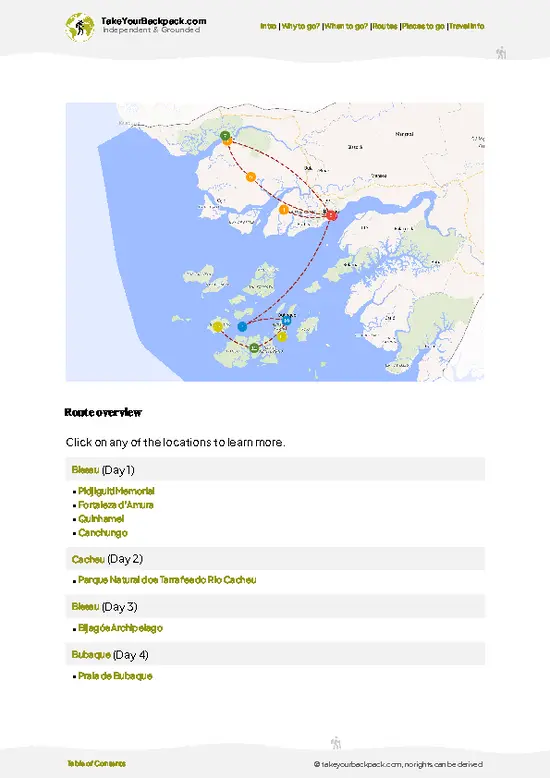
Cabo de Santa Maria fits seamlessly into a broader route through Guinea-Bissau. Pair it with a visit to the Bijagós Archipelago or the capital … read more 👉
Cabo de Santa Maria is not just another postcard-perfect beach; it’s a raw slice of reality that backpackers can’t afford to miss. Sure, you’ll encounter crowds—especially during peak season—but that’s part of the experience. The vibe here is electric, with locals and travelers mingling, sharing stories, and soaking in the sun.

The cost? Minimal. You can pitch a tent or find a budget-friendly guesthouse nearby. This isn’t a place that drains your wallet; it’s about value and connection. The real magic lies in the untamed beauty of the coastline, where the waves crash against the shore and the sunsets paint the sky in hues you didn’t know existed.

Cabo de Santa Maria fits seamlessly into a broader route through Guinea-Bissau. Pair it with a visit to the Bijagós Archipelago or the capital city, Bissau, for a well-rounded adventure. Each stop enriches your journey, making the effort worthwhile. This isn’t just a destination; it’s a gateway to understanding the heart of Guinea-Bissau. Embrace the chaos, and you’ll find the authenticity that makes every step worth it.

💡 HighlightsThe experiences that define the visit

  • Clifftop panoramas — the cape’s headland gives raw, wide-open views where the Atlantic slams into low scrub and mangrove flats; great for seeing the scale of the coastline and for dramatic sunrise or sunset shots.
  • Expansive tidal flats and sandbanks — at low tide long sandbars emerge, revealing striking patterns and a living carpet of crabs, shellfish and feeding shorebirds; walking the exposed flats is unforgettable if you keep an eye on the tide.
  • Mangrove channels and estuaries — a maze of mangrove roots and calm waterways shelters juvenile fish and invertebrates, so a short pirogue trip feels like entering another world: quiet, green and full of life.
  • Seabird and coastal wildlife watching — the mix of open sea, mudflats and mangroves attracts a lot of coastal birds and occasional marine
… read more 👉
  • Clifftop panoramas — the cape’s headland gives raw, wide-open views where the Atlantic slams into low scrub and mangrove flats; great for seeing the scale of the coastline and for dramatic sunrise or sunset shots.
  • Expansive tidal flats and sandbanks — at low tide long sandbars emerge, revealing striking patterns and a living carpet of crabs, shellfish and feeding shorebirds; walking the exposed flats is unforgettable if you keep an eye on the tide.
  • Mangrove channels and estuaries — a maze of mangrove roots and calm waterways shelters juvenile fish and invertebrates, so a short pirogue trip feels like entering another world: quiet, green and full of life.
  • Seabird and coastal wildlife watching — the mix of open sea, mudflats and mangroves attracts a lot of coastal birds and occasional marine visitors; bring binoculars — you’ll likely see energetic flocks and interesting shorebird behaviour.
  • Traditional fishing villages — small settlements nearby showcase pirogue culture, net-mending and fish-smoking; it’s a good place to observe daily life, buy fresh catch, and practice respectful photo etiquette.
  • Boat trips to nearby islets and the Bijagós frontier — the cape is a practical launch point for short boat outings to nearby islets or further into the Bijagós Archipelago; those trips multiply wildlife and cultural encounters.
  • Sunset and night-sky viewing — low light pollution means sunsets are vivid and the Milky Way often pops on clear nights; perfect for slow, no-rush evenings after a day on the water.
Spotted a mistake or missing something? Contact us.

🌤️ When to go?When to go for the best experience

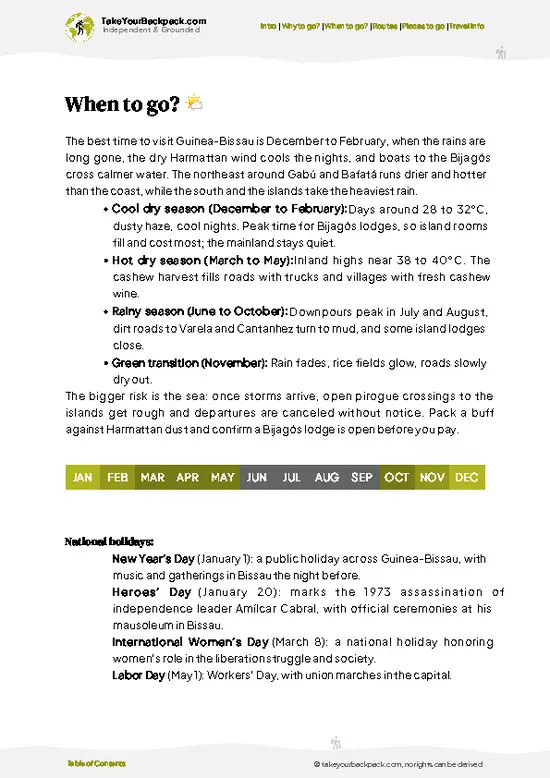
  • Weather: Cabo de Santa Maria bakes under a tropical climate. The dry season from November to May is your best bet—expect clear skies and minimal rain. The wet season, June to October, brings heavy downpours and humidity that can turn your trek into a slog.
  • Temperature: Temperatures hover between 24°C to 32°C (75°F to 90°F) year-round. The dry season feels more bearable with lower humidity, while the wet season’s heat can feel oppressive, especially if you’re hauling a pack.
  • Daylight Hours: Near the equator, daylight is steady—about 12 hours daily. Sunrise around 6:00 AM and sunset near 6:00 PM give you a reliable window for exploring without the drama of shifting daylight.
  • Crowds: Forget Instagram’s empty beaches. Cabo de Santa Maria sees a trickle of visitors even in peak dry months.
… read more 👉
  • Weather: Cabo de Santa Maria bakes under a tropical climate. The dry season from November to May is your best bet—expect clear skies and minimal rain. The wet season, June to October, brings heavy downpours and humidity that can turn your trek into a slog.
  • Temperature: Temperatures hover between 24°C to 32°C (75°F to 90°F) year-round. The dry season feels more bearable with lower humidity, while the wet season’s heat can feel oppressive, especially if you’re hauling a pack.
  • Daylight Hours: Near the equator, daylight is steady—about 12 hours daily. Sunrise around 6:00 AM and sunset near 6:00 PM give you a reliable window for exploring without the drama of shifting daylight.
  • Crowds: Forget Instagram’s empty beaches. Cabo de Santa Maria sees a trickle of visitors even in peak dry months. You’ll mostly share the space with local fishermen and a handful of adventurous backpackers, so it’s quiet but not deserted.
  • Seasonal Activities: Dry season is prime for hiking, beachcombing, and spotting migratory birds. The wet season floods the landscape, making trails muddy and some areas inaccessible, but it’s when the island’s flora bursts into lush life.
  • Price Fluctuations: Prices for local guides and accommodations stay fairly stable year-round due to low tourist volume. However, expect slightly higher rates during the dry season when demand peaks.
Pro-tip: Aim for the shoulder months of November or May—fewer crowds, manageable weather, and better prices without sacrificing the experience.


source: climatestotravel.comJANJanuary: excellent for travelingFEBFebruary: excellent for travelingMARMarch: excellent for travelingAPRApril: excellent for travelingMAYMay: highly recommended for travelingJUNJune: fair for travelingJULJuly: fair for travelingAUGAugust: fair for travelingSEPSeptember: fair for travelingOCTOctober: fair for travelingNOVNovember: highly recommended for travelingDECDecember: excellent for traveling
guinea-bissau-unique-site-cabo-de-santa-maria v1
© Google |

✈️ The backpacker research shortcutGuinea-Bissau Travel Guide

An offline-friendly backpacking guide with optimized travel routes, ranked highlights, transport advice, and the best areas to stay.
example page 0 from our offline Travel Guide for Guinea-Bissau
example page 1 from our offline Travel Guide for Guinea-Bissau
example page 2 from our offline Travel Guide for Guinea-Bissau
example page 3 from our offline Travel Guide for Guinea-Bissau
example page 4 from our offline Travel Guide for Guinea-Bissau
example page 5 from our offline Travel Guide for Guinea-Bissau
example page 6 from our offline Travel Guide for Guinea-Bissau
example page 7 from our offline Travel Guide for Guinea-Bissau
The digital guide (214 pages) contains:
✅ 48 highlights, ranked by travel appeal
✅ Optimized 2, 3 & 5-day travel routes
✅ Cities, national parks, landmarks, beaches
✅ How to get around
✅ Offline-friendly for travel without Wi-Fi
👉 Click to see all 30+ guide features

📅 Plan smarter in minutes, not weeks
✅ Month by month travel advice
✅ Festivals & national holidays
✅ Budget expectations

🗺️ Go to the right places, skip the overrated ones
✅ Honest pros & cons of destinations
✅ Top hikes, parks & viewpoints
✅ Lesser-known places most travelers miss
✅ Clear “worth it vs skip it” guidance

🛏️ Travel smoothly without rookie mistakes
✅ Best areas to stay
✅ Transport systems explained simply
✅ Common scams & safety advice
✅ SIM cards, money & practical tips

🌍 Understand the country, not just visit it
✅ Culture & traditions
✅ 52 Essential phrases & customs
✅ Festivals worth planning around
✅ Traveler-friendly historical context
✅ Insights that make places more meaningful

📱 Built for real travel conditions
✅ Fully downloadable PDF
✅ Works completely offline
✅ Optimized for phone use
✅ Useful in remote areas & buses
✅ Everything in one place
Stop searching, start planning
Get instant access to your full guide. 30‑day money-back guarantee.
+ Add another guide for just

By proceeding you agree to our terms.
Sent to your inbox immediately after payment • 100% Secure Checkout
Best Backpacking Travel Advisor 2025 tourism awardBest Backpacking
Travel Advisor
2025
What others say about Take Your Backpack Guides:
⭐⭐⭐⭐⭐
Fantastic, amazing amount of information!
⭐⭐⭐⭐⭐
My goodness this is amazing, it's what I've been looking for hats off too you!
⭐⭐⭐⭐⭐
I think this is absolutely BRILLIANT
⭐⭐⭐⭐
Very complete and informative. It's still missing places, but I gotta to commend you
⭐⭐⭐⭐⭐
This is truly amazing, thank you, can't wait to explore it with my kids!
⭐⭐⭐⭐⭐
Awesome resource, thank you!
⭐⭐⭐⭐⭐
This is amazing! Can't wait to explore the ones I haven't seen
⭐⭐⭐⭐
I love this! Well done, great idea.
⭐⭐⭐⭐⭐
Thanks for taking the time to make this gem!
⭐⭐⭐⭐⭐
This might be the best website I've ever seen.
⭐⭐⭐⭐⭐
Congratulations, and thank you so much for your work; it's incredibly valuable.
⭐⭐⭐⭐
In all seriousness I think you did a great job pointing out the important spots
⭐⭐⭐⭐⭐
10/10 very good
⭐⭐⭐⭐⭐
As someone who's only just starting to visit regularly this is awesome, thank you.
⭐⭐⭐⭐
Thank you very much! I'm going to visit my dad, it's going to be very useful!
⭐⭐⭐⭐⭐
This is really cool! We'll be travelling for the first time and this definitely come in handy.
⭐⭐⭐⭐⭐
You are now our minister of culture, congratulations 👨‍💼
⭐⭐⭐⭐⭐
Just wanted to tell you that this is a pearl! Going to follow your recommendations.
⭐⭐⭐⭐⭐
This is so cool. I'll definitely be using the resource for my travels soon.
⭐⭐⭐⭐⭐
This is very impressive! Good work.
⭐⭐⭐⭐⭐
This is an amazing and informative site. Very well done!

🛏️ Where to stay?How to pick the right area

Cabo de Santa Maria is a slice of paradise, but let’s cut through the fluff. The reality? It can get crowded, especially during peak season. If you’re looking for a spot to lay your head that’s both safe and social, you’ll want to focus on a few key areas.

First up, the coastal villages nearby. These places buzz with local life. You’ll find friendly faces and a laid-back vibe. It’s a great way to immerse yourself in the culture without breaking the bank. Look for communal spaces where you can swap stories with fellow travelers over a shared meal.

Then there’s the town of Bissau. It’s a bit … read more 👉
Cabo de Santa Maria is a slice of paradise, but let’s cut through the fluff. The reality? It can get crowded, especially during peak season. If you’re looking for a spot to lay your head that’s both safe and social, you’ll want to focus on a few key areas.

First up, the coastal villages nearby. These places buzz with local life. You’ll find friendly faces and a laid-back vibe. It’s a great way to immerse yourself in the culture without breaking the bank. Look for communal spaces where you can swap stories with fellow travelers over a shared meal.

Then there’s the town of Bissau. It’s a bit of a trek to the Cabo, but it’s worth it for the vibrant market scene and the chance to meet locals. The accommodations here are budget-friendly, and you’ll have access to essential amenities. Plus, the nightlife can be surprisingly lively, giving you a taste of the local rhythm.

Finally, consider the beachside spots. They can be pricier, but the sunsets are jaw-dropping. If you’re willing to splurge a little, you’ll find places that offer a mix of relaxation and social interaction. Just remember, the real magic lies in the connections you make and the stories you gather along the way.

👛 Costs (as of 15 October 2026)How expensive it really is

Visiting Cabo de Santa Maria in Guinea-Bissau can be a unique experience, but it’s essential to know what you’re getting into financially.
  • Transportation: Expect to spend around €20-€50 ($22-$55) for a round-trip from Bissau to the Cabo. The journey involves a combination of local transport and possibly a boat ride, which can vary in price depending on the season and demand.
  • Accommodation: Options are limited. Budget around €15-€30 ($16-$33) per night for basic guesthouses. If you’re looking for something a bit more comfortable, prices can rise to €50 ($55) for mid-range lodgings. Be prepared for varying standards.
  • Food: Meals can be quite affordable. Street food or local eateries will cost you about €3-€10 ($3-$11) per meal. If you opt for a sit-down restaurant, expect to pay around €10-€20
… read more 👉
Visiting Cabo de Santa Maria in Guinea-Bissau can be a unique experience, but it’s essential to know what you’re getting into financially.
  • Transportation: Expect to spend around €20-€50 ($22-$55) for a round-trip from Bissau to the Cabo. The journey involves a combination of local transport and possibly a boat ride, which can vary in price depending on the season and demand.
  • Accommodation: Options are limited. Budget around €15-€30 ($16-$33) per night for basic guesthouses. If you’re looking for something a bit more comfortable, prices can rise to €50 ($55) for mid-range lodgings. Be prepared for varying standards.
  • Food: Meals can be quite affordable. Street food or local eateries will cost you about €3-€10 ($3-$11) per meal. If you opt for a sit-down restaurant, expect to pay around €10-€20 ($11-$22) for a decent meal.
  • Activities: Many natural attractions are free, but if you want guided tours or specific activities, budget around €10-€30 ($11-$33). This could include boat trips or guided walks to explore the area’s wildlife.
  • Miscellaneous: Always set aside some cash for unexpected expenses. A buffer of around €20-€50 ($22-$55) is wise for souvenirs or additional transport costs.

Cabo de Santa Maria isn’t just about the price tags; it’s about the experience. The real magic lies in its untouched beauty and the chance to connect with nature in a way that’s hard to find elsewhere.
⚠️ Prices can change and everyone travels differently, so take this as a rough guide. Hope it helps you plan your adventure!

FAQCommon questions from travelers

Cabo de Santa Maria is a historic shipwreck site located on the coast of Guinea-Bissau, known for the remains of a Portuguese carrack that ran aground in the 16th century. It is a notable landmark for maritime history enthusiasts and backpackers interested in unique coastal sites.
You need about half a day to visit Cabo de Santa Maria, enough time to explore the wreck site and nearby beach areas. This allows for photography, walking along the coast, and enjoying the natural surroundings without rushing.
To get to Cabo de Santa Maria, you typically travel from Bissau, the capital of Guinea-Bissau, by road heading southwest for approximately 50 kilometers. Local transport options include hiring a 4x4 vehicle or arranging a guided tour, as public transport is limited and the roads can be rough.
⚠️ Things can change over time, so always validate details locally before you go.

Ideas for continuing your journey

Cabo de Santa Maria isn’t the only highlight in Guinea-Bissau. Explore all what Guinea-Bissau has to offer.
Country photo of Guinea-Bissau

We 💚 feedbackKey takeaways before you go

Cabo de Santa Maria isn’t your typical postcard paradise. Expect crowds, especially during peak season, but don’t let that deter you. The real magic lies in its raw beauty and the local vibe. Grab a fresh coconut from a beach vendor and soak in the laid-back atmosphere. The best surprise? The sunsets here are mind-blowing, painting the sky in colors you didn’t know existed. Just a heads-up: the roads can be rough, so don’t rush. Embrace the journey; it’s part of the experience.

✍️ Help improve this page!
The information on this page is based on in-depth research, insights shared by experienced travelers, and feedback from the local travel community in Guinea-Bissau. While every effort is made to keep the information accurate and current, conditions can change — so if you spot anything incorrect or outdated, please get in touch.


🙋‍♂️ Give feedback

👋 Meet the founderWho’s Behind Take Your Backpack?

Johan, backpacker and founder of TakeYourBackpackHi, I’m Johan (Netherlands 🇳🇱), the creator of TakeYourBackpack. Over the past 3 decades, I’ve backpacked through 90+ countries across six continents, gaining extensive experience with independent travel, long-term trips, and overland routes.

This site is built on a combination of firsthand travel experience and carefully curated insights from other backpackers. Many guides are based on places I’ve personally visited, while others bring together tips, observations, and practical advice shared by trusted travelers I’ve met along the way.

The goal is to provide realistic, experience-driven guidance — not generic itineraries — so you can explore destinations with better context, clearer expectations, and more confidence.