×

Guinea-Bissau🇬🇼 | landmarksPapelTraditional villages, palm-thatch houses, local crafts, cashew groves | things to do and best time to go

Explore Cabo de Santa MariaExplore Mercado de Bandim

Backpacking in Papel
By Johan Kruseman 🇳🇱 | Updated September 3, 2026

Here’s the curveball: most travelers assume Papel is just another sleepy village, but it’s actually a living archive of Guinea-Bissau’s resistance and resilience—if you know where to look. Tucked just inland from the mangrove-laced coast in the Biombo region, Papel isn’t polished for tourists. You won’t find crowds or Instagrammable gloss, but you will find raw, unfiltered culture, fiercely proud locals, and a rhythm that’s all its own. It’s cheap, yes, but getting here takes patience and a sense of humor. The real magic? The stories you’ll hear over palm wine, not the photos you’ll take.

Discover everything you want to know in the 📖 Guinea-Bissau Travel Guide.
Loading the map 🌍
CLICK TO FILTER
cities
towns
landmarks
national parks
hikes
beaches
attractions
festivals
regions
SHOW COUNTRY’S BESTSHOW ALL

✨ Why go?
Ranked #99 unique site in Guinea-Bissau
The unique appeal for travelers

Papel in Guinea-Bissau isn’t just another stop on the backpacker’s trail; it’s a raw experience that cuts through the polished Instagram facade. Yes, the crowds can be overwhelming, especially during peak season, but that’s part of the charm. You’re not just seeing a landmark; you’re diving into a living culture.

The cost? Minimal. You can explore the vibrant local markets and taste authentic dishes without breaking the bank. It’s a place where your money goes further, allowing you to immerse yourself in the real magic of daily life.

What sets Papel apart is its uniqueness. The blend of tradition and modernity is palpable. You’ll find locals crafting intricate textiles while children play soccer in the streets. This isn’t a site that stands alone; it fits perfectly into a broader route … read more 👉
Papel in Guinea-Bissau isn’t just another stop on the backpacker’s trail; it’s a raw experience that cuts through the polished Instagram facade. Yes, the crowds can be overwhelming, especially during peak season, but that’s part of the charm. You’re not just seeing a landmark; you’re diving into a living culture.

The cost? Minimal. You can explore the vibrant local markets and taste authentic dishes without breaking the bank. It’s a place where your money goes further, allowing you to immerse yourself in the real magic of daily life.

What sets Papel apart is its uniqueness. The blend of tradition and modernity is palpable. You’ll find locals crafting intricate textiles while children play soccer in the streets. This isn’t a site that stands alone; it fits perfectly into a broader route through Guinea-Bissau, making it easy to combine with visits to nearby islands or national parks.

In a world of polished travel experiences, Papel offers a refreshing authenticity. It’s not just about the destination; it’s about the stories you’ll collect along the way. Embrace the chaos, and you’ll find the heart of Guinea-Bissau waiting for you.
Want to include Papel in your Guinea-Bissau route?
Create a personalized Guinea-Bissau itinerary that includes Papel and the places that fit your trip — based on your travel style, budget, and available time. Get your route in seconds.

Generate my trip

💡 HighlightsWhat this place is best known for

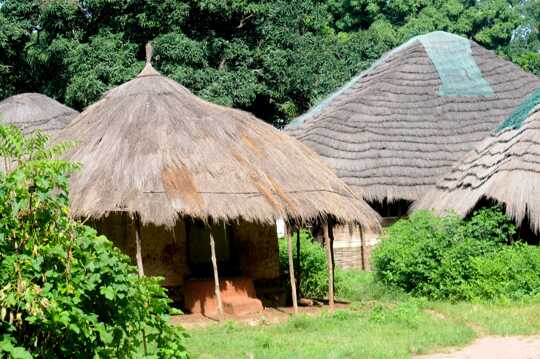
  • Traditional village compounds — Mud-and-thatch houses arranged around open courtyards give you a direct window into everyday life: cooking over wood fires, kids playing, and community chores. It’s low-key, photogenic, and the kind of place where you actually feel how a community functions rather than just looking at it from behind a fence.
  • Oral histories and elders’ storytelling — Conversations with village elders pack history, genealogy, and local legends into bite-sized, vivid stories. These are living archives; hearing them in person connects you to the community’s memory in a way books never will.
  • Music, drumming and dance — Expect tight percussion, call-and-response singing, and dances tied to seasons and life events. It’s communal, rhythmic, and often spontaneous — a perfect excuse
read more 👉
  • Traditional village compounds — Mud-and-thatch houses arranged around open courtyards give you a direct window into everyday life: cooking over wood fires, kids playing, and community chores. It’s low-key, photogenic, and the kind of place where you actually feel how a community functions rather than just looking at it from behind a fence.
  • Oral histories and elders’ storytelling — Conversations with village elders pack history, genealogy, and local legends into bite-sized, vivid stories. These are living archives; hearing them in person connects you to the community’s memory in a way books never will.
  • Music, drumming and dance — Expect tight percussion, call-and-response singing, and dances tied to seasons and life events. It’s communal, rhythmic, and often spontaneous — a perfect excuse to sit close, clap along, and learn a few steps.
  • Fishing culture and mangrove excursions — Small pirogues push out into rich mangroves and shallow coastal waters. You’ll see local fishing techniques up close, layer your day with wildlife watching (herons, kingfishers) and get why the mangroves matter to both people and nature.
  • Markets and handcrafts — Small local markets sell woven baskets, simple beadwork and everyday tools. It’s budget-friendly souvenir hunting — and a good place to practice bargaining, try local snacks, and see what materials the community uses day-to-day.
  • Homestays and food — Staying with a family means rice-and-fish meals, palm-wine tastings, and cooking tips you can actually recreate later. It’s cheaper than a guesthouse and far richer in human connection.
  • Sacred spots and community rituals — Small shrines, sacred groves or ritual sites (always approached respectfully) reveal spiritual layers of local life. Observing with permission teaches you local values and etiquette in a way photos can’t.
Spotted a mistake or missing something? Contact us.

🌤️ When to go?Choosing the right time of year


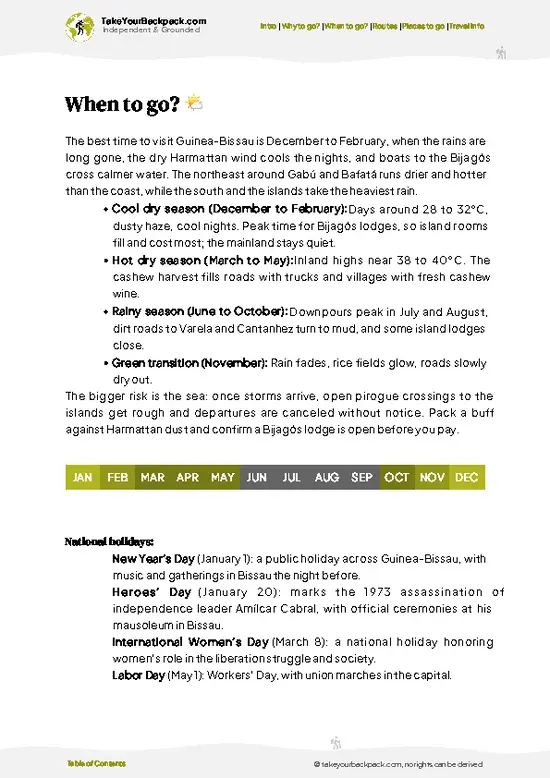
  • Weather: The dry season from November to May is your best bet—expect less mud and fewer mosquitos. Temperatures hover between 24-32°C (75-90°F), making trekking manageable without frying under the sun.

  • Daylight Hours: Daylight stays steady year-round, roughly 11-12 hours daily, so no need to rush your hikes or tours.

  • Crowds: Don’t expect hordes; Papel remains off the beaten path. However, the dry season sees a slight uptick in visitors, mostly adventurous backpackers like you.

  • Seasonal Activities: Dry months open up river excursions and village visits, while the rainy season (June-October) floods trails and limits access.

  • Price Fluctuations: Costs rise modestly in the dry season due to demand but remain far below typical tourist traps. Rainy season offers cheaper stays but at the
read more 👉

  • Weather: The dry season from November to May is your best bet—expect less mud and fewer mosquitos. Temperatures hover between 24-32°C (75-90°F), making trekking manageable without frying under the sun.

  • Daylight Hours: Daylight stays steady year-round, roughly 11-12 hours daily, so no need to rush your hikes or tours.

  • Crowds: Don’t expect hordes; Papel remains off the beaten path. However, the dry season sees a slight uptick in visitors, mostly adventurous backpackers like you.

  • Seasonal Activities: Dry months open up river excursions and village visits, while the rainy season (June-October) floods trails and limits access.

  • Price Fluctuations: Costs rise modestly in the dry season due to demand but remain far below typical tourist traps. Rainy season offers cheaper stays but at the cost of comfort and access.


Pro-tip: Aim for late dry season (March-May) to dodge peak visitors, enjoy stable weather, and catch local festivals that bring Papel’s culture alive.


source: climatestotravel.comJANJanuary: highly recommended for travelingFEBFebruary: highly recommended for travelingMARMarch: excellent for travelingAPRApril: excellent for travelingMAYMay: excellent for travelingJUNJune: fair for travelingJULJuly: below average for travelingAUGAugust: below average for travelingSEPSeptember: fair for travelingOCTOctober: fair for travelingNOVNovember: highly recommended for travelingDECDecember: highly recommended for traveling
when-to-go

✈️ The backpacker research shortcutGuinea-Bissau Travel Guide

An offline-friendly backpacking guide with optimized travel routes, ranked highlights, transport advice, and the best areas to stay.
example page 0 from our offline Travel Guide for Guinea-Bissau
example page 1 from our offline Travel Guide for Guinea-Bissau
example page 2 from our offline Travel Guide for Guinea-Bissau
example page 3 from our offline Travel Guide for Guinea-Bissau
example page 4 from our offline Travel Guide for Guinea-Bissau
example page 5 from our offline Travel Guide for Guinea-Bissau
example page 6 from our offline Travel Guide for Guinea-Bissau
example page 7 from our offline Travel Guide for Guinea-Bissau
The digital guide (230 pages) contains:
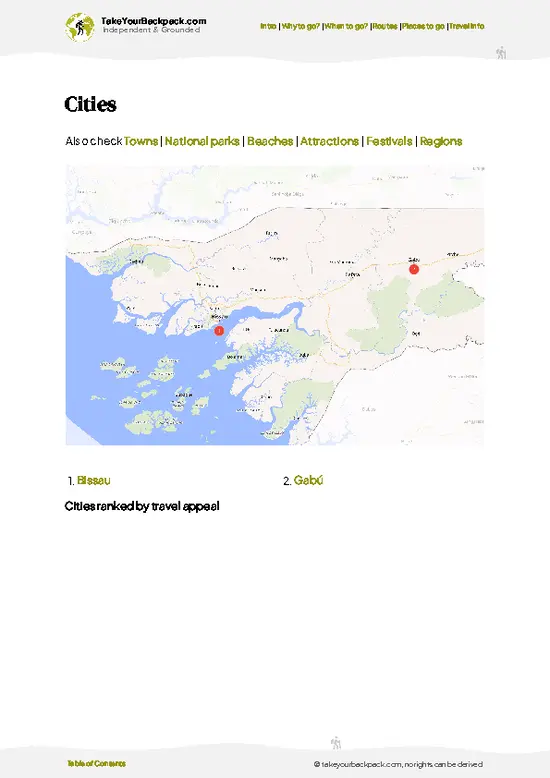
53 highlights, ranked by travel appeal
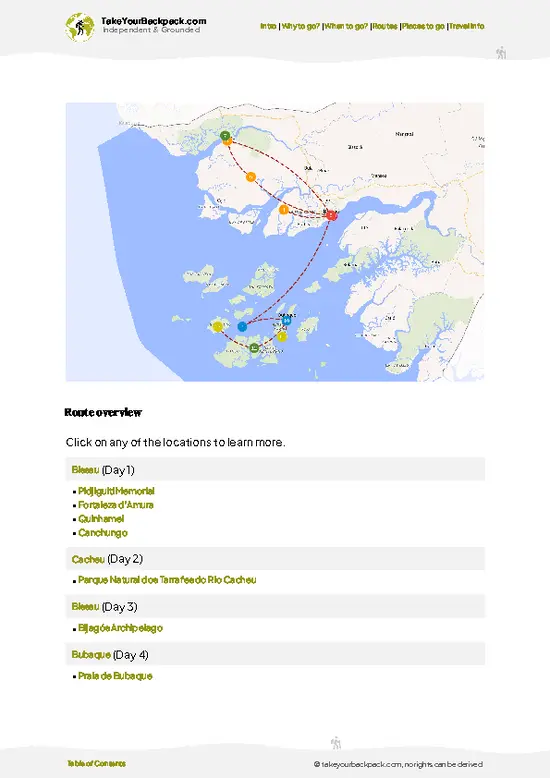
Optimized 2, 3 & 5-day travel routes
Cities, national parks, landmarks, beaches
How to get around
Offline-friendly for travel without Wi-Fi
👉 Click to see all 30+ guide features

📅 Plan smarter in minutes, not weeks
Month by month travel advice
Festivals & national holidays
Budget expectations

🗺️ Go to the right places, skip the overrated ones
Honest pros & cons of destinations
Top hikes, parks & viewpoints
Lesser-known places most travelers miss
Clear “worth it vs skip it” guidance

🛏️ Travel smoothly without rookie mistakes
Best areas to stay
Transport systems explained simply
Common scams & safety advice
SIM cards, money & practical tips

🌍 Understand the country, not just visit it
Culture & traditions
52 Essential phrases & customs
Festivals worth planning around
Traveler-friendly historical context
Insights that make places more meaningful

📱 Built for real travel conditions
Fully downloadable PDF
Works completely offline
Optimized for phone use
Useful in remote areas & buses
Everything in one place
Save weeks of stressful planning
Get instant access to your full guide. 30‑day money-back guarantee.
+ Add another guide for just US$7.80

By proceeding you agree to our terms.
Sent to your inbox immediately after payment • 100% Secure Checkout
Best Backpacking Travel Advisor 2025 tourism awardBest Backpacking
Travel Advisor
2025
What others say about Take Your Backpack Guides:
⭐⭐⭐⭐⭐
Fantastic, amazing amount of information!
⭐⭐⭐⭐⭐
My goodness this is amazing, it's what I've been looking for hats off too you!
⭐⭐⭐⭐⭐
I think this is absolutely BRILLIANT
⭐⭐⭐⭐
Very complete and informative. It's still missing places, but I gotta to commend you
⭐⭐⭐⭐⭐
This is truly amazing, thank you, can't wait to explore it with my kids!
⭐⭐⭐⭐⭐
Awesome resource, thank you!
⭐⭐⭐⭐⭐
This is amazing! Can't wait to explore the ones I haven't seen
⭐⭐⭐⭐
I love this! Well done, great idea.
⭐⭐⭐⭐⭐
Thanks for taking the time to make this gem!
⭐⭐⭐⭐⭐
This might be the best website I've ever seen.
⭐⭐⭐⭐⭐
Congratulations, and thank you so much for your work; it's incredibly valuable.
⭐⭐⭐⭐
In all seriousness I think you did a great job pointing out the important spots
⭐⭐⭐⭐⭐
10/10 very good
⭐⭐⭐⭐⭐
As someone who's only just starting to visit regularly this is awesome, thank you.
⭐⭐⭐⭐
Thank you very much! I'm going to visit my dad, it's going to be very useful!
⭐⭐⭐⭐⭐
This is really cool! We'll be travelling for the first time and this definitely come in handy.
⭐⭐⭐⭐⭐
You are now our minister of culture, congratulations 👨‍💼
⭐⭐⭐⭐⭐
Just wanted to tell you that this is a pearl! Going to follow your recommendations.
⭐⭐⭐⭐⭐
This is so cool. I'll definitely be using the resource for my travels soon.
⭐⭐⭐⭐⭐
This is very impressive! Good work.
⭐⭐⭐⭐⭐
This is an amazing and informative site. Very well done!

🛏️ Where to stay?Best areas and accommodation options

When you’re heading to Papel, Guinea-Bissau, you need to know where to lay your head without breaking the bank. Forget the glossy brochures; let’s get real about where to stay.

First up, the area around the local market is buzzing with life. It’s a hotspot for budget travelers and solo backpackers. You’ll find a mix of guesthouses and shared accommodations. The vibe is friendly, and you can easily strike up conversations with fellow travelers or locals. Just be ready for the sounds of daily life—it’s part of the charm.

Then there’s the waterfront area. This spot offers a more laid-back atmosphere. … read more 👉
When you’re heading to Papel, Guinea-Bissau, you need to know where to lay your head without breaking the bank. Forget the glossy brochures; let’s get real about where to stay.

First up, the area around the local market is buzzing with life. It’s a hotspot for budget travelers and solo backpackers. You’ll find a mix of guesthouses and shared accommodations. The vibe is friendly, and you can easily strike up conversations with fellow travelers or locals. Just be ready for the sounds of daily life—it’s part of the charm.

Then there’s the waterfront area. This spot offers a more laid-back atmosphere. You can find budget-friendly lodgings with stunning views of the water. It’s a great place to unwind after a day of exploring. Plus, you might catch some local fishermen bringing in their catch, which adds to the authentic experience.

Safety is generally decent, but keep your wits about you, especially at night. Stick to well-lit areas and travel in groups when possible.

In both locations, you’ll find a sense of community that’s hard to beat. It’s not just about a place to sleep; it’s about connecting with the heart of Guinea-Bissau.

👛 Costs (as of 3 September 2026)Typical daily expenses

Visiting Papel in Guinea-Bissau isn’t just about the destination; it’s about navigating the realities of costs and crowds.
  • Accommodation: Expect to pay between €15 to €50 per night for basic lodgings. Options range from simple guesthouses to a few mid-range hotels. The lower end offers a no-frills experience, while the higher end might give you a bit more comfort and privacy.
  • Food: Meals can be quite affordable, typically costing between €5 to €15. Street food is a great way to save money and experience local flavors. Restaurants may charge more, especially in touristy areas, but you can still find hearty local dishes at reasonable prices.
  • Transportation: Local transport is a mixed bag. Expect to spend around €1 to €5 for short rides in shared taxis or minibuses. If you’re considering a private
read more 👉
Visiting Papel in Guinea-Bissau isn’t just about the destination; it’s about navigating the realities of costs and crowds.
  • Accommodation: Expect to pay between €15 to €50 per night for basic lodgings. Options range from simple guesthouses to a few mid-range hotels. The lower end offers a no-frills experience, while the higher end might give you a bit more comfort and privacy.
  • Food: Meals can be quite affordable, typically costing between €5 to €15. Street food is a great way to save money and experience local flavors. Restaurants may charge more, especially in touristy areas, but you can still find hearty local dishes at reasonable prices.
  • Transportation: Local transport is a mixed bag. Expect to spend around €1 to €5 for short rides in shared taxis or minibuses. If you’re considering a private taxi, budget around €20 to €40 for longer distances. Be prepared for some negotiation.
  • Activities: Many natural attractions are free or have minimal entrance fees, usually around €2 to €10. Guided tours can vary widely, costing anywhere from €20 to €100 depending on the length and inclusivity. Always check what’s included to avoid surprises.
  • Miscellaneous: Budget an extra €5 to €15 for souvenirs or unexpected expenses. Local crafts can be tempting, and it’s good to have a little extra cash for those moments.

The costs can add up, but the experience is worth it. Just remember, the real magic lies in the authenticity of the place, not in the polished Instagram posts.
⚠️ Prices can change and everyone travels differently, so take this as a rough guide. Hope it helps you plan your adventure!

FAQFrequently asked questions about Papel

Papel is an ethnic group in Guinea-Bissau known for their distinct cultural traditions and historical significance in the region. They primarily inhabit the coastal and central parts of the country, contributing to local customs and festivals.
Visiting Papel communities and cultural sites typically requires 1 to 2 days to experience key traditions, local markets, and possibly a guided cultural tour. This timeframe allows for meaningful interaction and observation without rushing.
To get to Papel areas, travelers usually start from Bissau, the capital of Guinea-Bissau, and travel by road or boat depending on the specific location. Road travel can take several hours, with local transport options including shared taxis or hired 4x4 vehicles.
⚠️ Things can change over time, so always validate details locally before you go.

More places to explore across Guinea-Bissau

Papel isn’t the only highlight in Guinea-Bissau. Explore all what Guinea-Bissau has to offer.
Country photo of Guinea-Bissau

We 💚 feedbackWhat to keep in mind

Papel isn’t for everyone. The crowds can be overwhelming, and the costs can sneak up on you. But if you dig deeper, you’ll find the real magic in the local markets, where the colors and scents hit you like a wave. The best surprise? The warmth of the people. They’ll share stories that make you feel like family. Just be ready for the heat; it’s relentless. Embrace it, and you’ll leave with memories that linger long after you’ve gone.

✍️ Help improve this page!
The information on this page is based on in-depth research, insights shared by experienced travelers, and feedback from the local travel community in Guinea-Bissau. While every effort is made to keep the information accurate and current, conditions can change — so if you spot anything incorrect or outdated, please get in touch.


🙋‍♂️ Give feedback

👋 Meet the founderWho’s Behind Take Your Backpack?

Johan, backpacker and founder of TakeYourBackpackHi, I’m Johan (Netherlands 🇳🇱), the creator of TakeYourBackpack. Over the past decade, I’ve backpacked through 80+ countries across six continents, gaining extensive experience with independent travel, long-term trips, and overland routes.

This site is built on a combination of firsthand travel experience and carefully curated insights from other backpackers. Many guides are based on places I’ve personally visited, while others bring together tips, observations, and practical advice shared by trusted travelers I’ve met along the way.

The goal is to provide realistic, experience-driven guidance — not generic itineraries — so you can explore destinations with better context, clearer expectations, and more confidence.

Get full country guide •
Instant download • 53 highlights • Full Offline guide