
×

Guinea-Bissau🇬🇼 | townsNhacrajunction town, local eateries, market square | things to do and best time to go

Explore BigeneExplore Cabo de Santa Maria

Backpacking in Nhacra
👌 Worth visitingtown ranked #13
By Johan Kruseman 🇳🇱 | Updated September 3, 2026

The first real fork in the road when you hit Nhacra is whether to linger or just pass through. That choice matters because Nhacra isn’t a destination that dazzles on arrival—it’s a crossroads town, about 50 kilometers east of Bissau, where the red dust settles on everything and the air smells faintly of woodsmoke and mango. For backpackers, Nhacra is less a highlight and more a practical pause: a place to catch your breath between the capital and the salt flats or the more remote villages to the east. The market is lively but compact, and the food scene is local—think grilled fish and rice, not Instagrammable cafés. Transport is straightforward: bush taxis and minibuses rumble through all day, but you’ll need patience for schedules. It’s not especially social for travelers; you’ll find more locals than backpackers, and evenings are quiet, with the occasional football match drawing a crowd. Costs are low, safety is typical for rural Guinea-Bissau—keep your wits about you, but it’s not tense. Compared to Bissau, Nhacra is slower and more relaxed, but less scenic than the coastal towns. It’s a waypoint, not a wonder, but sometimes that’s exactly what you need.

Discover everything you want to know in the 📖 Guinea-Bissau Travel Guide.
Loading the map 🌍
CLICK TO FILTER
cities
towns
landmarks
national parks
hikes
beaches
attractions
festivals
regions
SHOW COUNTRY’S BESTSHOW ALL

✨ Why go?
Ranked #13 town in Guinea-Bissau
What sets this place apart

Backpackers flock to Nhacra for its convenience as a gateway to nearby hikes and beaches. The walkable streets invite exploration, while small-scale guesthouses offer a cozy, communal vibe perfect for solo travelers or small groups. You can savor local dishes at family-run eateries, where the aroma of spices fills the air. Many stay a few days, soaking in the friendly atmosphere and connecting with fellow adventurers. It’s not a party hub, but rather a place to recharge and immerse yourself in the local culture. If you appreciate a slower pace and genuine interactions, Nhacra is your spot.
Want to include Nhacra in your Guinea-Bissau route?
Create a personalized Guinea-Bissau itinerary that includes Nhacra and the places that fit your trip — based on your travel style, budget, and available time. Get your route in seconds.

Generate my trip

💡 HighlightsDon't-miss highlights and experiences

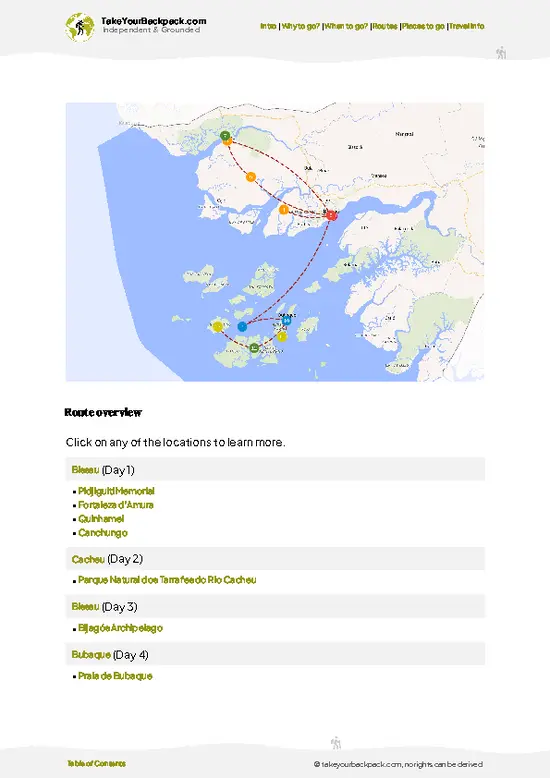
    Nearby visitable highlights you can explore as day trips from Nhacra include Bolama (the old Portuguese colonial capital with ruined colonial buildings), the Cacheu Fort and surrounding mangroves, and the Bijagós Islands — especially Bubaque and Orango National Park.
    Spotted a mistake or missing something? Contact us.

    🏘️ NeighborhoodsNeighborhood guide to Nhacra

    Nestled along the coast, ’Nhacra’ offers a blend of vibrant culture and laid-back charm, perfect for backpackers seeking authenticity.

    Centro: This is the heartbeat of Nhacra. Bustling markets and local eateries fill the air with the scent of grilled fish and spices. It’s walkable, making it easy to explore. Expect affordable accommodations and a lively atmosphere, especially in the evenings. Great for short stays.

    Praia de Nhacra: If you crave beach vibes, this area delivers. The soft sand and gentle waves create a serene backdrop. While quieter than Centro, it’s still accessible. Ideal for longer stays, with a few budget-friendly guesthouses and a relaxed pace.

    Alto de Nhacra: A bit elevated, this neighborhood offers stunning views and a more local experience. It’s less touristy, which … read more 👉
    Nestled along the coast, ’Nhacra’ offers a blend of vibrant culture and laid-back charm, perfect for backpackers seeking authenticity.

    Centro: This is the heartbeat of Nhacra. Bustling markets and local eateries fill the air with the scent of grilled fish and spices. It’s walkable, making it easy to explore. Expect affordable accommodations and a lively atmosphere, especially in the evenings. Great for short stays.

    Praia de Nhacra: If you crave beach vibes, this area delivers. The soft sand and gentle waves create a serene backdrop. While quieter than Centro, it’s still accessible. Ideal for longer stays, with a few budget-friendly guesthouses and a relaxed pace.

    Alto de Nhacra: A bit elevated, this neighborhood offers stunning views and a more local experience. It’s less touristy, which means fewer amenities but a deeper dive into daily life. Perfect for those looking to immerse themselves for a while.

    ⌛️ 1 daySeeing the highlights in 24 hours

    Nestled along the coast, ’Nhacra’ is a vibrant slice of Guinea-Bissau that pulses with local life. The scent of saltwater mingles with the aroma of grilled fish from nearby stalls, inviting you to dive into its rhythm. Start your day at the bustling market in the heart of the town. Here, the colors of fresh produce pop against the backdrop of lively chatter. Grab a local breakfast of *pão com chouriço*—a savory sausage roll that packs a punch.

    As the sun climbs higher, wander through the narrow streets of the *Bissau-Guinean* neighborhood. This area, often overlooked by tourists, showcases charming colonial architecture and the warmth of local residents. Stop by the *Museu da Resistência* to learn about the country’s rich history; the stories here are as layered as the town itself.

    In the … read more 👉
    Nestled along the coast, ’Nhacra’ is a vibrant slice of Guinea-Bissau that pulses with local life. The scent of saltwater mingles with the aroma of grilled fish from nearby stalls, inviting you to dive into its rhythm. Start your day at the bustling market in the heart of the town. Here, the colors of fresh produce pop against the backdrop of lively chatter. Grab a local breakfast of *pão com chouriço*—a savory sausage roll that packs a punch.

    As the sun climbs higher, wander through the narrow streets of the *Bissau-Guinean* neighborhood. This area, often overlooked by tourists, showcases charming colonial architecture and the warmth of local residents. Stop by the *Museu da Resistência* to learn about the country’s rich history; the stories here are as layered as the town itself.

    In the afternoon, head to the waterfront. The gentle lapping of waves creates a serene backdrop as you sip on fresh coconut water. As evening approaches, find a local eatery where you can savor *caldeirada*, a hearty fish stew. The day winds down with the sun setting over the horizon, painting the sky in hues of orange and pink—a perfect end to a day well spent in ’Nhacra’.
    Turn your Nhacra visit into an Guinea-Bissau adventure
    Build a complete Guinea-Bissau route with Nhacra, hidden gems, must-see destinations, and realistic travel times included.

    Generate my trip

    🌤️ When to go?Seasonal considerations and timing


    • Weather: Nhacra’s dry season from November to May offers clear skies and minimal rain, making trails less slippery and the air easier to breathe. The wet season, June to October, brings heavy downpours that can turn paths into mud baths and swell rivers unpredictably.

    • Temperature: Expect highs around 30–33°C (86–91°F) in the dry months, with nights cooling to 20–23°C (68–73°F). The wet season is warmer and more humid, often feeling sticky and oppressive, which can drain your energy on long hikes.

    • Daylight Hours: Daylight stays steady year-round, roughly 11 to 12 hours, but the dry season’s clearer skies mean more reliable sunrise and sunset times, perfect for early starts and late golden-hour explorations.

    • Crowds: Nhacra is off the beaten path, so crowds are rare year-round. However,
    read more 👉

    • Weather: Nhacra’s dry season from November to May offers clear skies and minimal rain, making trails less slippery and the air easier to breathe. The wet season, June to October, brings heavy downpours that can turn paths into mud baths and swell rivers unpredictably.

    • Temperature: Expect highs around 30–33°C (86–91°F) in the dry months, with nights cooling to 20–23°C (68–73°F). The wet season is warmer and more humid, often feeling sticky and oppressive, which can drain your energy on long hikes.

    • Daylight Hours: Daylight stays steady year-round, roughly 11 to 12 hours, but the dry season’s clearer skies mean more reliable sunrise and sunset times, perfect for early starts and late golden-hour explorations.

    • Crowds: Nhacra is off the beaten path, so crowds are rare year-round. However, the dry season sees a slight uptick in eco-tourists and local festivals, adding a lively but manageable buzz.

    • Seasonal Activities: Dry months are prime for trekking, birdwatching, and fishing. The wet season, while challenging, transforms the landscape into a lush, vibrant canvas, rewarding those who don’t mind the mud with spectacular greenery and active wildlife.

    • Price Fluctuations: Accommodation and transport costs dip during the wet season due to fewer visitors, but expect to pay a premium for reliable guides and transport as conditions become tougher.


    Pro-tip: Aim for late dry season—April to May—when the landscape is still dry but starting to green, crowds are low, and prices haven’t peaked yet.


    source: climatestotravel.comJANJanuary: excellent for travelingFEBFebruary: excellent for travelingMARMarch: excellent for travelingAPRApril: excellent for travelingMAYMay: highly recommended for travelingJUNJune: fair for travelingJULJuly: fair for travelingAUGAugust: fair for travelingSEPSeptember: fair for travelingOCTOctober: fair for travelingNOVNovember: highly recommended for travelingDECDecember: excellent for traveling
    when-to-go

    ✈️ The backpacker research shortcutGuinea-Bissau Travel Guide

    An offline-friendly backpacking guide with optimized travel routes, ranked highlights, transport advice, and the best areas to stay.
    example page 0 from our offline Travel Guide for Guinea-Bissau
    example page 1 from our offline Travel Guide for Guinea-Bissau
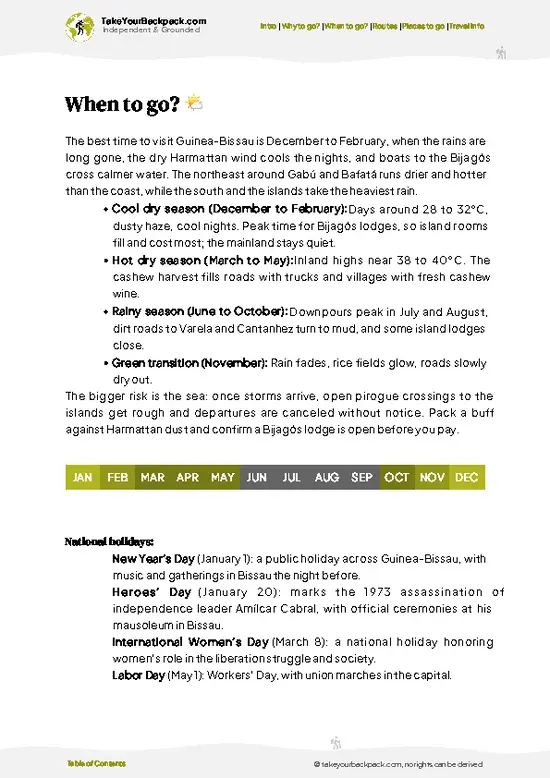
    example page 2 from our offline Travel Guide for Guinea-Bissau
    example page 3 from our offline Travel Guide for Guinea-Bissau
    example page 4 from our offline Travel Guide for Guinea-Bissau
    example page 5 from our offline Travel Guide for Guinea-Bissau
    example page 6 from our offline Travel Guide for Guinea-Bissau
    example page 7 from our offline Travel Guide for Guinea-Bissau
    The digital guide (230 pages) contains:
    53 highlights, ranked by travel appeal
    Optimized 2, 3 & 5-day travel routes
    Cities, national parks, landmarks, beaches
    How to get around
    Offline-friendly for travel without Wi-Fi
    👉 Click to see all 30+ guide features

    📅 Plan smarter in minutes, not weeks
    Month by month travel advice
    Festivals & national holidays
    Budget expectations

    🗺️ Go to the right places, skip the overrated ones
    Honest pros & cons of destinations
    Top hikes, parks & viewpoints
    Lesser-known places most travelers miss
    Clear “worth it vs skip it” guidance

    🛏️ Travel smoothly without rookie mistakes
    Best areas to stay
    Transport systems explained simply
    Common scams & safety advice
    SIM cards, money & practical tips

    🌍 Understand the country, not just visit it
    Culture & traditions
    52 Essential phrases & customs
    Festivals worth planning around
    Traveler-friendly historical context
    Insights that make places more meaningful

    📱 Built for real travel conditions
    Fully downloadable PDF
    Works completely offline
    Optimized for phone use
    Useful in remote areas & buses
    Everything in one place
    Save weeks of stressful planning
    Get instant access to your full guide. 30‑day money-back guarantee.
    + Add another guide for just US$7.80

    By proceeding you agree to our terms.
    Sent to your inbox immediately after payment • 100% Secure Checkout
    Best Backpacking Travel Advisor 2025 tourism awardBest Backpacking
    Travel Advisor
    2025
    What others say about Take Your Backpack Guides:
    ⭐⭐⭐⭐⭐
    Fantastic, amazing amount of information!
    ⭐⭐⭐⭐⭐
    My goodness this is amazing, it's what I've been looking for hats off too you!
    ⭐⭐⭐⭐⭐
    I think this is absolutely BRILLIANT
    ⭐⭐⭐⭐
    Very complete and informative. It's still missing places, but I gotta to commend you
    ⭐⭐⭐⭐⭐
    This is truly amazing, thank you, can't wait to explore it with my kids!
    ⭐⭐⭐⭐⭐
    Awesome resource, thank you!
    ⭐⭐⭐⭐⭐
    This is amazing! Can't wait to explore the ones I haven't seen
    ⭐⭐⭐⭐
    I love this! Well done, great idea.
    ⭐⭐⭐⭐⭐
    Thanks for taking the time to make this gem!
    ⭐⭐⭐⭐⭐
    This might be the best website I've ever seen.
    ⭐⭐⭐⭐⭐
    Congratulations, and thank you so much for your work; it's incredibly valuable.
    ⭐⭐⭐⭐
    In all seriousness I think you did a great job pointing out the important spots
    ⭐⭐⭐⭐⭐
    10/10 very good
    ⭐⭐⭐⭐⭐
    As someone who's only just starting to visit regularly this is awesome, thank you.
    ⭐⭐⭐⭐
    Thank you very much! I'm going to visit my dad, it's going to be very useful!
    ⭐⭐⭐⭐⭐
    This is really cool! We'll be travelling for the first time and this definitely come in handy.
    ⭐⭐⭐⭐⭐
    You are now our minister of culture, congratulations 👨‍💼
    ⭐⭐⭐⭐⭐
    Just wanted to tell you that this is a pearl! Going to follow your recommendations.
    ⭐⭐⭐⭐⭐
    This is so cool. I'll definitely be using the resource for my travels soon.
    ⭐⭐⭐⭐⭐
    This is very impressive! Good work.
    ⭐⭐⭐⭐⭐
    This is an amazing and informative site. Very well done!

    🛏️ Where to stay?How to pick the right area

    Nhacra’s heart for backpackers beats strongest in the Bairro Central district. This area hums with life—street vendors frying fresh fish, the scent of smoky palm oil mingling with ocean breeze. It’s where budget travelers naturally gravitate because it’s safe enough to wander after dark and social enough to meet others swapping stories over cheap, local brews. Hostels here aren’t flashy but offer clean, simple dorms that feel more like a shared adventure than just a place to crash.

    Compared to the quieter, more residential neighborhoods on the outskirts, Bairro Central delivers a pulse. You’re … read more 👉
    Nhacra’s heart for backpackers beats strongest in the Bairro Central district. This area hums with life—street vendors frying fresh fish, the scent of smoky palm oil mingling with ocean breeze. It’s where budget travelers naturally gravitate because it’s safe enough to wander after dark and social enough to meet others swapping stories over cheap, local brews. Hostels here aren’t flashy but offer clean, simple dorms that feel more like a shared adventure than just a place to crash.

    Compared to the quieter, more residential neighborhoods on the outskirts, Bairro Central delivers a pulse. You’re steps from markets and informal eateries where the locals gather, making it easier to slip into the rhythm of daily life. The streets are lively but manageable, with enough light and foot traffic to keep you comfortable. For solo backpackers, this balance of safety and social buzz is the secret to unlocking Nhacra’s authentic vibe without the usual tourist traps.

    🚌 Getting aroundMoving around without the hassle

    Nhacra moves with a rhythm that’s part clockwork, part improvisation. The streets pulse with a steady hum of scooters and chatter, but don’t expect strict timetables or polished transit hubs. Instead, the town’s transit system feels like a dance—sometimes you lead, sometimes you follow, and often you just have to read the cues from the locals. The air carries the scent of fresh bread from corner bakeries mingling with exhaust and the salty breeze from the nearby coast. This is a place where patience pays off, and knowing when to jump in or hold back turns a simple trip into a smooth, almost effortless glide through the town’s layers.


    • Walking: Nhacra’s compact center is best explored on foot. Sidewalks are uneven but shaded by trees, and wandering lets you catch the scent of street food
    read more 👉
    Nhacra moves with a rhythm that’s part clockwork, part improvisation. The streets pulse with a steady hum of scooters and chatter, but don’t expect strict timetables or polished transit hubs. Instead, the town’s transit system feels like a dance—sometimes you lead, sometimes you follow, and often you just have to read the cues from the locals. The air carries the scent of fresh bread from corner bakeries mingling with exhaust and the salty breeze from the nearby coast. This is a place where patience pays off, and knowing when to jump in or hold back turns a simple trip into a smooth, almost effortless glide through the town’s layers.


    • Walking: Nhacra’s compact center is best explored on foot. Sidewalks are uneven but shaded by trees, and wandering lets you catch the scent of street food stalls and overhear local banter. Walking is free, flexible, and the best way to soak in the town’s texture.


    • Shared Minibuses: These are the backbone of budget transit, running from 6:00 AM to 8:00 PM. Fares hover around $0.50, and while they’re cramped and noisy, they cover most neighborhoods quickly. Flag one down anywhere along the route—no fixed stops, just a wave and a squeeze in.


    • Motorbike Taxis (Xe Om): Available 24/7, these are your go-to for speed and door-to-door service. Expect to pay about $1–$3 depending on distance. Negotiation is part of the game, so keep your wits sharp and your sense of humor sharper.


    • Bicycle Rentals: For the adventurous, renting a bike for around $5 a day unlocks the outskirts and hidden corners. The terrain is mostly flat but watch for potholes and sudden traffic bursts. Early morning rides offer cooler air and softer light, perfect for those who want to feel the town’s pulse under their wheels.


    • Local Ferries: If your route crosses the river, ferries run every 30 minutes from 7:00 AM to 6:00 PM. Tickets cost about $0.75. The slow glide across water offers a break from the city’s buzz and a chance to catch the shifting light on the waves.

    👛 Costs (as of 3 September 2026)How expensive it really is

    Backpacking in Nhacra, Guinea-Bissau, demands a practical approach to budgeting, grounded in the local pace and resources. Here’s what you can expect to spend on a typical day:
    • Dorm Accommodation: Expect basic guesthouses or hostels to charge around €5 to €10 per night. These places are simple, often with shared bathrooms and minimal amenities, but they offer a clean, safe spot to rest after a day of exploring.
    • Meals: Local eateries serve up hearty, straightforward meals for about €2 to €4 each. Think rice, beans, fresh fish, or chicken, often cooked with local spices. Street food snacks can be even cheaper, perfect for quick bites between adventures.
    • Local Transport: Getting around Nhacra usually means shared taxis or minibuses, which cost roughly €0.50 to €1 per trip. The roads are rough,
    read more 👉
    Backpacking in Nhacra, Guinea-Bissau, demands a practical approach to budgeting, grounded in the local pace and resources. Here’s what you can expect to spend on a typical day:
    • Dorm Accommodation: Expect basic guesthouses or hostels to charge around €5 to €10 per night. These places are simple, often with shared bathrooms and minimal amenities, but they offer a clean, safe spot to rest after a day of exploring.
    • Meals: Local eateries serve up hearty, straightforward meals for about €2 to €4 each. Think rice, beans, fresh fish, or chicken, often cooked with local spices. Street food snacks can be even cheaper, perfect for quick bites between adventures.
    • Local Transport: Getting around Nhacra usually means shared taxis or minibuses, which cost roughly €0.50 to €1 per trip. The roads are rough, so rides can be bumpy and slow, but they’re the most affordable way to cover short distances.
    • Basic Activities/Entry Fees: Many cultural sites and natural spots have low or no entry fees, typically under €2. Guided tours or boat trips, if available, might push this up to €5 to €10, but independent exploration is often free or very cheap.
    • Miscellaneous Expenses: Budget around €1 to €3 for essentials like bottled water, occasional snacks, or small tips. Internet access can be patchy and might require buying local SIM cards or paying for Wi-Fi in cafes.

    Altogether, a realistic daily budget for backpacking in Nhacra falls between €10 and €25. This range covers the essentials without cutting corners, letting you experience the town’s rhythm without constant worry about costs.
    ⚠️ Prices can change and everyone travels differently, so take this as a rough guide. Hope it helps you plan your adventure!

    🚌 Day tripsWhere to go beyond the main area

    Using ’Nhacra’ as your base opens up a world of vibrant day trips that blend culture, nature, and adventure. Each journey is a chance to dive deeper into the heart of Guinea-Bissau.

    Trip to Orango Island
    A boat ride to Orango Island is like stepping into a living postcard. The journey takes about an hour, and you’ll be greeted by the scent of saltwater and the sound of waves lapping against the shore. Spend your day exploring mangroves, spotting rare birds, and soaking in the local culture. The island is home to the Bijagós people, who have a rich tradition of fishing and storytelling. Budget around $15 for the boat and a meal. Best visited during the dry season from November to April, when the weather is more predictable. A common mistake? Underestimating the sun—bring plenty of water … read more 👉
    Using ’Nhacra’ as your base opens up a world of vibrant day trips that blend culture, nature, and adventure. Each journey is a chance to dive deeper into the heart of Guinea-Bissau.

    Trip to Orango Island
    A boat ride to Orango Island is like stepping into a living postcard. The journey takes about an hour, and you’ll be greeted by the scent of saltwater and the sound of waves lapping against the shore. Spend your day exploring mangroves, spotting rare birds, and soaking in the local culture. The island is home to the Bijagós people, who have a rich tradition of fishing and storytelling. Budget around $15 for the boat and a meal. Best visited during the dry season from November to April, when the weather is more predictable. A common mistake? Underestimating the sun—bring plenty of water and sunscreen.


    Trip to Bissau
    Just a short bus ride away, Bissau offers a blend of colonial architecture and bustling markets. The trip takes about 1.5 hours, and you’ll find yourself amidst the vibrant chaos of street vendors and local artisans. Expect to spend around $10 for transport and snacks. The best time to visit is early morning when the market is alive but not overwhelming. Many first-timers miss the chance to try local dishes—don’t skip the grilled fish!
    👉 Explore Bissau

    Trip to Cufada Lagoon
    Cufada Lagoon is a hidden paradise for nature lovers. The journey takes roughly two hours, and the landscape transforms from urban to lush greenery. Here, you can kayak through mangroves and spot wildlife like crocodiles and exotic birds. Plan for about $20 for transport and kayak rental. The dry season is ideal for this trip, as the lagoon is more accessible. A rookie mistake is not checking the tides—timing is everything for a smooth paddle.
    Want to know what more Guinea-Bissau offers?
    The Guinea-Bissau Travel Guide describes 53 highlights, from cities to national parks, from beaches to hikes

    Get the Travel Guide -

    🛡️ SafetyScams, Hazards, and Annoyances

    In ’Nhacra’, the atmosphere is laid-back, but a few practical tips can enhance your experience. Stay aware in crowded markets; pickpockets occasionally lurk. If you’re solo, avoid wandering too far after dark—stick to well-lit areas and main streets.

    Scams are rare, but be cautious with overly friendly locals offering unsolicited help; they might expect a tip. Keep your belongings close, especially in busy spots. By blending in and staying alert, you’ll navigate the town smoothly, soaking in its charm without unnecessary stress.

    FAQFrequently asked questions about Nhacra

    Nhacra is primarily a stopover rather than a destination for extended visits. It is a small town with limited tourist infrastructure and attractions. Most travelers pass through while exploring the region or heading to more prominent sites in Guinea-Bissau.
    One day is generally sufficient to experience Nhacra. The town's size and limited points of interest mean that spending more than 24 hours is usually unnecessary unless using it as a rest point during travel.
    Yes, Nhacra can be visited as a day trip from nearby cities like Bissau, which is about 70 kilometers away. The journey by road typically takes around 2 hours each way, making a day trip feasible for those interested in a brief visit.
    ⚠️ Things can change over time, so always validate details locally before you go.

    Other Bissau-Guinean towns near Nhacra

    Explore more nearby:

    • Mansôa—riverbank setting, regional bus hub, lively street stalls| 27 km away
    • Bissorã—local markets, cashew orchards, rural crossroads| 31 km away
    • Quinhamel—Bijagós gateway, palm groves, riverside port| 35 km away

    💡 Not sure where to go next?
    Create a personalized itinerary for Guinea-Bissau including Nhacra and the places that fit your trip.

    Generate my itinerary

    👉 Discover all towns

    Or checkout all Guinea-Bissau has to offer (think cities, towns, villages, national parks, hikes, beaches, festivals)
    Country photo of Guinea-Bissau

    We 💚 feedbackIs it worth it?

    Nhacra’s charm lies in its raw simplicity. The air is thick with the scent of salt and earth, and the sunsets? They’re a painter’s palette. Expect surprises—like stumbling upon a local dance that pulls you in. Just watch your step; the paths can be tricky, but the journey is worth it.

    ✍️ Help improve this page!
    The information on this page is based on in-depth research, insights shared by experienced travelers, and feedback from the local travel community in Guinea-Bissau. While every effort is made to keep the information accurate and current, conditions can change — so if you spot anything incorrect or outdated, please get in touch.


    🙋‍♂️ Give feedback

    👋 Meet the founderWho’s Behind Take Your Backpack?

    Johan, backpacker and founder of TakeYourBackpackHi, I’m Johan (Netherlands 🇳🇱), the creator of TakeYourBackpack. Over the past decade, I’ve backpacked through 80+ countries across six continents, gaining extensive experience with independent travel, long-term trips, and overland routes.

    This site is built on a combination of firsthand travel experience and carefully curated insights from other backpackers. Many guides are based on places I’ve personally visited, while others bring together tips, observations, and practical advice shared by trusted travelers I’ve met along the way.

    The goal is to provide realistic, experience-driven guidance — not generic itineraries — so you can explore destinations with better context, clearer expectations, and more confidence.

    Get full country guide •
    Instant download • 53 highlights • Full Offline guide