×

Guinea-Bissau🇬🇼 | festivalsCarnivalstreet parades, elaborate costumes, drumming troupes | things to do and best time to go

Explore Bubaque Music FestivalExplore Cacheu River Festival

Backpacking in Carnival
🏆 Top pickfestival ranked #1
By Johan Kruseman 🇳🇱 | Updated September 3, 2026

Forget the fantasy of Rio-style excess—Carnival in Guinea-Bissau doesn’t drown you in neon floats or endless samba. Instead, it’s a raw, kinetic street festival that pulses through the heart of Bissau City, the capital, every February or March. You’ll find yourself swept up in a swirl of West African drumming, Portuguese-influenced parades, and costumed dancers who move with the kind of energy that makes you want to join in, not just watch. The crowd is a wild mix: local families, university students, and a handful of wide-eyed travelers who’ve traded the beaten path for something with more grit and soul. The vibe? Joyful chaos—think face paint, pounding feet, and the kind of music that rattles your bones. Carnival here is short—just a few days—but it’s dense with color, sweat, and laughter. If you crave authenticity over spectacle, and you’re ready to move with the crowd, this is your festival.

Discover everything you want to know in the 📖 Guinea-Bissau Travel Guide.
Loading the map 🌍
CLICK TO FILTER
cities
towns
landmarks
national parks
hikes
beaches
attractions
festivals
regions
SHOW COUNTRY’S BESTSHOW ALL

✨ Why go?
Ranked #1 festival in Guinea-Bissau
The unique appeal for travelers

Backpackers flock to Carnival in Guinea-Bissau for a reason that transcends mere celebration. It’s a social energy explosion, a chance to dive into a temporary community where everyone’s a participant, not just an observer. The vibrant rhythms of drums and the colorful costumes pull you in, making you feel alive. This isn’t just a festival; it’s a cultural immersion that offers a genuine taste of local life, far from the polished tourist traps.

Planning your route around Carnival isn’t just smart; it’s essential. The experience is affordable compared to similar events worldwide, allowing you to stretch your budget while maximizing joy. Think of it as a launchpad for your travels—after the festivities, you’re already in the heart of the country, ready to explore its hidden corners.

By weaving … read more 👉
Backpackers flock to Carnival in Guinea-Bissau for a reason that transcends mere celebration. It’s a social energy explosion, a chance to dive into a temporary community where everyone’s a participant, not just an observer. The vibrant rhythms of drums and the colorful costumes pull you in, making you feel alive. This isn’t just a festival; it’s a cultural immersion that offers a genuine taste of local life, far from the polished tourist traps.

Planning your route around Carnival isn’t just smart; it’s essential. The experience is affordable compared to similar events worldwide, allowing you to stretch your budget while maximizing joy. Think of it as a launchpad for your travels—after the festivities, you’re already in the heart of the country, ready to explore its hidden corners.

By weaving Carnival into your itinerary, you’re not just marking a date on the calendar; you’re setting the stage for unforgettable encounters and stories that will fuel your journey long after the last drumbeat fades.
Want to include Carnival in your Guinea-Bissau route?
Create a personalized Guinea-Bissau itinerary that includes Carnival and the places that fit your trip — based on your travel style, budget, and available time. Get your route in seconds.

Generate my trip

💡 HighlightsPlaces and moments you shouldn't skip

  • Gumbé and percussion-driven music — The heartbeat of Carnival: tight, call-and-response songs built around layered drums and hand percussion that pull everyone into the street. It’s raw, infectious, and different from big-band carnival sounds elsewhere—more island/West African Creole groove than samba school.
  • Masquerades and flamboyant costumes — Locally made masks, painted faces and improvised outfits mix ancestral symbols with playful invention. The result feels personal and local—less commercial pageantry, more handcrafted character work that tells stories from ethnic traditions and everyday life.
  • Street parades and neighborhood troupes — Small “blocos” and dance groups from different bairros (neighborhoods) take over avenues, and the party moves with them. It’s communal: you don’t
read more 👉
  • Gumbé and percussion-driven music — The heartbeat of Carnival: tight, call-and-response songs built around layered drums and hand percussion that pull everyone into the street. It’s raw, infectious, and different from big-band carnival sounds elsewhere—more island/West African Creole groove than samba school.
  • Masquerades and flamboyant costumes — Locally made masks, painted faces and improvised outfits mix ancestral symbols with playful invention. The result feels personal and local—less commercial pageantry, more handcrafted character work that tells stories from ethnic traditions and everyday life.
  • Street parades and neighborhood troupes — Small “blocos” and dance groups from different bairros (neighborhoods) take over avenues, and the party moves with them. It’s communal: you don’t just watch, you get pulled into choreographies, impromptu dance circles and neighborhood rivalry in the best way.
  • Satire and social theatre — Costumes, skits and floats often lampoon politicians, social issues and local gossip. There’s a sharp, witty edge to many performances—Carnival is a pressure valve where humor and critique get together and shout.
  • Street food, late-night vibes and local hospitality — Expect grills of fresh seafood, small snack stalls, hibiscus drinks and palm wine sold beside the parade routes. Combine that with locals who’ll hand you a plate or pull you into a celebration, and you get a real, messy, memorable night out.
Spotted a mistake or missing something? Contact us.

🌤️ When to go?When is the celebration of Carnival?


  • Topic: Weather – Carnival in Guinea-Bissau hits its stride during the dry season, roughly November to May. Expect less rain, which means fewer muddy trails and more street-level energy. The wet season (June to October) can drown out festivities with heavy downpours and humidity that saps your stamina.

  • Topic: Temperature – Daytime highs hover around 28-32°C (82-90°F) during Carnival, manageable but sweaty. Nights cool down to 22-24°C (72-75°F), offering some relief. Avoid the peak heat months before the rains, when temps can spike above 35°C (95°F), turning your festival vibe into a slow roast.

  • Topic: Daylight Hours – Around Carnival time, daylight stretches to about 11-12 hours, enough to pack in parades, music, and street food hunts without rushing. Early sunsets mean the party often
read more 👉

  • Topic: Weather – Carnival in Guinea-Bissau hits its stride during the dry season, roughly November to May. Expect less rain, which means fewer muddy trails and more street-level energy. The wet season (June to October) can drown out festivities with heavy downpours and humidity that saps your stamina.

  • Topic: Temperature – Daytime highs hover around 28-32°C (82-90°F) during Carnival, manageable but sweaty. Nights cool down to 22-24°C (72-75°F), offering some relief. Avoid the peak heat months before the rains, when temps can spike above 35°C (95°F), turning your festival vibe into a slow roast.

  • Topic: Daylight Hours – Around Carnival time, daylight stretches to about 11-12 hours, enough to pack in parades, music, and street food hunts without rushing. Early sunsets mean the party often spills into the night, so pace yourself for late-night energy bursts.

  • Topic: Crowds – Carnival draws locals and a smattering of adventurous travelers. Arriving early in the dry season helps you dodge the thickest crowds and snag better accommodation rates. Peak days see streets packed, so plan your moves to avoid bottlenecks and maximize your front-row experience.

  • Topic: Seasonal Activities – The dry season aligns with other cultural events and fishing festivals, enriching your trip beyond Carnival itself. This synergy means more live music, dance, and fresh seafood, but also higher demand for local services.

  • Topic: Price Fluctuations – Prices spike during Carnival’s peak days, especially for lodging and transport. Booking early locks in better deals. Outside the festival window, costs drop sharply, but you miss the full-throttle energy that defines the event.


Pro-tip: Time your arrival just before Carnival kicks off to settle in, soak up the local vibe, and avoid last-minute price surges—your wallet and energy levels will thank you.


source: climatestotravel.comJANJanuary: not recommended for travelingFEBFebruary: excellent for travelingMARMarch: not recommended for travelingAPRApril: not recommended for travelingMAYMay: not recommended for travelingJUNJune: not recommended for travelingJULJuly: not recommended for travelingAUGAugust: not recommended for travelingSEPSeptember: not recommended for travelingOCTOctober: not recommended for travelingNOVNovember: not recommended for travelingDECDecember: not recommended for traveling

✈️ The backpacker research shortcutGuinea-Bissau Travel Guide

An offline-friendly backpacking guide with optimized travel routes, ranked highlights, transport advice, and the best areas to stay.
example page 0 from our offline Travel Guide for Guinea-Bissau
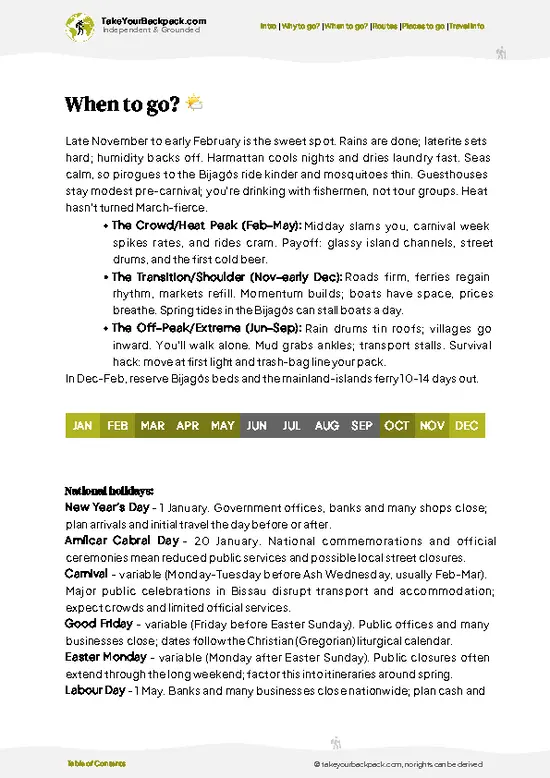
example page 1 from our offline Travel Guide for Guinea-Bissau
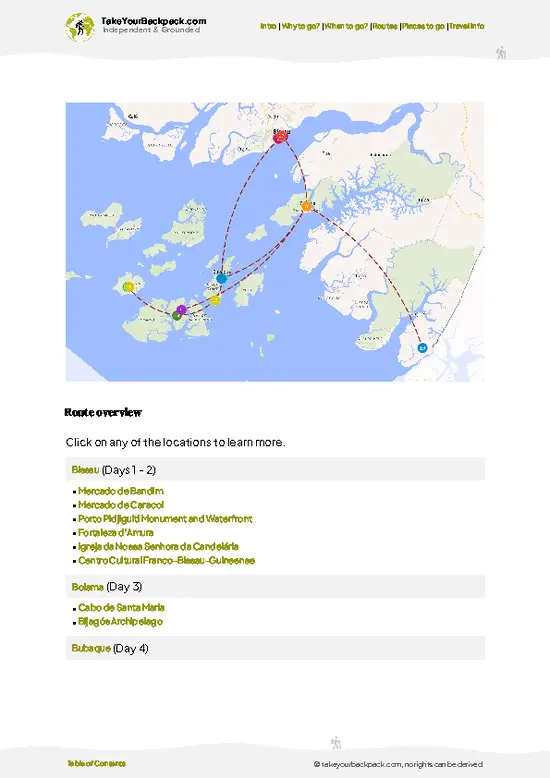
example page 2 from our offline Travel Guide for Guinea-Bissau
example page 3 from our offline Travel Guide for Guinea-Bissau
example page 4 from our offline Travel Guide for Guinea-Bissau
example page 5 from our offline Travel Guide for Guinea-Bissau
example page 6 from our offline Travel Guide for Guinea-Bissau
example page 7 from our offline Travel Guide for Guinea-Bissau
The digital guide (230 pages) contains:
53 highlights, ranked by travel appeal
Optimized 2, 3 & 5-day travel routes
Cities, national parks, landmarks, beaches
How to get around
Offline-friendly for travel without Wi-Fi
👉 Click to see all 30+ guide features

📅 Plan smarter in minutes, not weeks
Month by month travel advice
Festivals & national holidays
Budget expectations

🗺️ Go to the right places, skip the overrated ones
Honest pros & cons of destinations
Top hikes, parks & viewpoints
Lesser-known places most travelers miss
Clear “worth it vs skip it” guidance

🛏️ Travel smoothly without rookie mistakes
Best areas to stay
Transport systems explained simply
Common scams & safety advice
SIM cards, money & practical tips

🌍 Understand the country, not just visit it
Culture & traditions
52 Essential phrases & customs
Festivals worth planning around
Traveler-friendly historical context
Insights that make places more meaningful

📱 Built for real travel conditions
Fully downloadable PDF
Works completely offline
Optimized for phone use
Useful in remote areas & buses
Everything in one place
Save weeks of stressful planning
Get instant access to your full guide. 30‑day money-back guarantee.
+ Add another guide for just US$7.80

By proceeding you agree to our terms.
Sent to your inbox immediately after payment • 100% Secure Checkout
Best Backpacking Travel Advisor 2025 tourism awardBest Backpacking
Travel Advisor
2025
What others say about Take Your Backpack Guides:
⭐⭐⭐⭐⭐
Fantastic, amazing amount of information!
⭐⭐⭐⭐⭐
My goodness this is amazing, it's what I've been looking for hats off too you!
⭐⭐⭐⭐⭐
I think this is absolutely BRILLIANT
⭐⭐⭐⭐
Very complete and informative. It's still missing places, but I gotta to commend you
⭐⭐⭐⭐⭐
This is truly amazing, thank you, can't wait to explore it with my kids!
⭐⭐⭐⭐⭐
Awesome resource, thank you!
⭐⭐⭐⭐⭐
This is amazing! Can't wait to explore the ones I haven't seen
⭐⭐⭐⭐
I love this! Well done, great idea.
⭐⭐⭐⭐⭐
Thanks for taking the time to make this gem!
⭐⭐⭐⭐⭐
This might be the best website I've ever seen.
⭐⭐⭐⭐⭐
Congratulations, and thank you so much for your work; it's incredibly valuable.
⭐⭐⭐⭐
In all seriousness I think you did a great job pointing out the important spots
⭐⭐⭐⭐⭐
10/10 very good
⭐⭐⭐⭐⭐
As someone who's only just starting to visit regularly this is awesome, thank you.
⭐⭐⭐⭐
Thank you very much! I'm going to visit my dad, it's going to be very useful!
⭐⭐⭐⭐⭐
This is really cool! We'll be travelling for the first time and this definitely come in handy.
⭐⭐⭐⭐⭐
You are now our minister of culture, congratulations 👨‍💼
⭐⭐⭐⭐⭐
Just wanted to tell you that this is a pearl! Going to follow your recommendations.
⭐⭐⭐⭐⭐
This is so cool. I'll definitely be using the resource for my travels soon.
⭐⭐⭐⭐⭐
This is very impressive! Good work.
⭐⭐⭐⭐⭐
This is an amazing and informative site. Very well done!

🛏️ Where to stay?Best areas and accommodation options

When you’re gearing up for Carnival in Guinea-Bissau, your choice of where to stay can make or break your experience. Head straight to Bissau, the capital. This bustling hub is alive with energy, especially during the festival. You’ll find a mix of budget-friendly guesthouses and lively hostels that attract fellow backpackers. The camaraderie here is palpable; you’ll swap stories and tips over a shared meal or a cold drink.

Look for spots near the Praça dos Heróis. This area buzzes with locals and festival-goers alike. You’ll be close to the action, with easy access to parades and street performances. … read more 👉
When you’re gearing up for Carnival in Guinea-Bissau, your choice of where to stay can make or break your experience. Head straight to Bissau, the capital. This bustling hub is alive with energy, especially during the festival. You’ll find a mix of budget-friendly guesthouses and lively hostels that attract fellow backpackers. The camaraderie here is palpable; you’ll swap stories and tips over a shared meal or a cold drink.

Look for spots near the Praça dos Heróis. This area buzzes with locals and festival-goers alike. You’ll be close to the action, with easy access to parades and street performances. Safety is a priority, so stick to well-lit areas and travel in groups when possible.

Another option is the coastal town of Bolama. It’s a bit quieter but offers a unique charm. The laid-back vibe allows for deeper connections with locals and fellow travelers. Plus, you can explore the stunning beaches during downtime.

Whichever area you choose, prioritize social spaces. They’re the lifeblood of your adventure, keeping your energy high and your budget intact for the unforgettable moments that Carnival promises.

👛 Costs (as of 3 September 2026)Typical daily expenses

Carnival in Guinea-Bissau is a vibrant explosion of culture, but navigating the costs can be tricky. Here’s how to budget wisely for an authentic experience without draining your wallet.
  • Festival Tickets: Expect to pay around €5 to €15 for entry. Prices can vary based on the day and specific events. Some parades might be free, but securing a good spot often means buying a ticket.
  • Accommodation: Budget options range from €10 to €30 per night for hostels or guesthouses. Mid-range hotels can cost between €30 and €60. Book early to snag the best deals, as places fill up fast during the festival.
  • Local Transport: Public transport is affordable. A local bus ride costs about €0.50 to €1. Taxis are available, but negotiate the fare beforehand; expect to pay around €3 to €10 for short trips. Walking is
read more 👉
Carnival in Guinea-Bissau is a vibrant explosion of culture, but navigating the costs can be tricky. Here’s how to budget wisely for an authentic experience without draining your wallet.
  • Festival Tickets: Expect to pay around €5 to €15 for entry. Prices can vary based on the day and specific events. Some parades might be free, but securing a good spot often means buying a ticket.
  • Accommodation: Budget options range from €10 to €30 per night for hostels or guesthouses. Mid-range hotels can cost between €30 and €60. Book early to snag the best deals, as places fill up fast during the festival.
  • Local Transport: Public transport is affordable. A local bus ride costs about €0.50 to €1. Taxis are available, but negotiate the fare beforehand; expect to pay around €3 to €10 for short trips. Walking is also a great way to soak in the atmosphere.
  • Food & Drinks: Street food is your best friend here. Meals can cost as little as €2 to €5. Restaurants will charge around €5 to €15 for a meal. Don’t forget to try local drinks, which usually run about €1 to €3.
  • Miscellaneous Expenses: Set aside €10 to €20 for souvenirs, tips, or unexpected costs. This cushion helps you enjoy spontaneous experiences without stress.

Planning ahead keeps your energy high and your budget intact. Embrace the rhythm of Carnival while staying savvy about your spending.
⚠️ Prices can change and everyone travels differently, so take this as a rough guide. Hope it helps you plan your adventure!

🍲 FoodLocal Cuisine & Drinks

At the Carnival in Guinea-Bissau, food and drinks are a vibrant part of the experience, bursting with local flavor. You’ll find stalls serving up jollof rice, a spicy, tomato-infused dish that’s a festival staple. Pair that with grilled fish seasoned to perfection, often caught fresh from the coast. Don’t miss out on caldo de peixe, a hearty fish stew that warms you from the inside out.

For drinks, palm wine is a must-try. It’s sweet, slightly fizzy, and best enjoyed straight from the source. If you’re feeling adventurous, grab a bottle of cachaça, a local spirit that packs a punch.

When diving into the food scene, embrace the sharing culture. It’s common to swap bites with fellow festival-goers, creating a communal atmosphere. Lines can get long, so be patient; it’s part of the fun. Bring … read more 👉
At the Carnival in Guinea-Bissau, food and drinks are a vibrant part of the experience, bursting with local flavor. You’ll find stalls serving up jollof rice, a spicy, tomato-infused dish that’s a festival staple. Pair that with grilled fish seasoned to perfection, often caught fresh from the coast. Don’t miss out on caldo de peixe, a hearty fish stew that warms you from the inside out.

For drinks, palm wine is a must-try. It’s sweet, slightly fizzy, and best enjoyed straight from the source. If you’re feeling adventurous, grab a bottle of cachaça, a local spirit that packs a punch.

When diving into the food scene, embrace the sharing culture. It’s common to swap bites with fellow festival-goers, creating a communal atmosphere. Lines can get long, so be patient; it’s part of the fun. Bring cash, as many stalls don’t accept cards, and keep an eye on serving sizes—some portions are meant for sharing, while others are hefty enough for a solo feast.

Immerse yourself in the flavors and camaraderie; it’s all part of the Carnival magic.

FAQFrequently asked questions about Carnival

Carnival in Guinea-Bissau typically takes place in February or March, coinciding with the days leading up to Lent. The festival lasts about 3 to 4 days, featuring parades, music, and dancing.
Attending Carnival in Guinea-Bissau is generally free, as it is a public event held outdoors. However, some private parties or events during the festival may charge an entrance fee, usually around 5 to 10 USD.
No, you do not need tickets in advance to attend the main Carnival events in Guinea-Bissau. Most activities are open to the public, but if you plan to attend specific private parties, it is advisable to check for ticket requirements ahead of time.
⚠️ Things can change over time, so always validate details locally before you go.

Other Bissau-Guinean festivals near Carnival

Explore more nearby:


💡 Not sure where to go next?
Create a personalized itinerary for Guinea-Bissau including Carnival and the places that fit your trip.

Generate my itinerary

👉 Discover all festivals

Or checkout all Guinea-Bissau has to offer (think cities, towns, villages, national parks, hikes, beaches, festivals)
Country photo of Guinea-Bissau

We 💚 feedbackSumming up the experience

Carnival in Guinea-Bissau is electric. The rhythm of drums pulls you in, and the colors explode like fireworks. Expect a whirlwind of dance, laughter, and community spirit. But here’s the kicker: don’t underestimate the heat. Hydrate like it’s your job, or you’ll find yourself sidelined. The best surprise? The locals’ warmth. They’ll share their traditions with you, making you feel like part of the family. Embrace the chaos; it’s where the magic happens.

✍️ Help improve this page!
The information on this page is based on in-depth research, insights shared by experienced travelers, and feedback from the local travel community in Guinea-Bissau. While every effort is made to keep the information accurate and current, conditions can change — so if you spot anything incorrect or outdated, please get in touch.


🙋‍♂️ Give feedback

👋 Meet the founderWho’s Behind Take Your Backpack?

Johan, backpacker and founder of TakeYourBackpackHi, I’m Johan (Netherlands 🇳🇱), the creator of TakeYourBackpack. Over the past decade, I’ve backpacked through 80+ countries across six continents, gaining extensive experience with independent travel, long-term trips, and overland routes.

This site is built on a combination of firsthand travel experience and carefully curated insights from other backpackers. Many guides are based on places I’ve personally visited, while others bring together tips, observations, and practical advice shared by trusted travelers I’ve met along the way.

The goal is to provide realistic, experience-driven guidance — not generic itineraries — so you can explore destinations with better context, clearer expectations, and more confidence.

Get full country guide •
Instant download • 53 highlights • Full Offline guide