×

Guinea-Bissau🇬🇼 | festivalsBubaque Music Festivalisland stages, regional bands, late-night dancing | things to do and best time to go

Explore Bissau International Film FestivalExplore Carnival

Backpacking in Bubaque Music
🌟 Highlightfestival ranked #3
By Johan Kruseman 🇳🇱 | Updated September 3, 2026

Here’s the curveball: Bubaque Music Festival isn’t some slick, Instagram-perfect event with flawless logistics and a polished lineup. It’s gloriously unpredictable—sometimes the headliner is a local fisherman with a battered guitar, sometimes it’s a West African star who missed the last ferry and plays at sunrise instead. You’ll find it on Bubaque Island, the largest of the Bijagós Archipelago, a good 60 kilometers off Guinea-Bissau’s mainland. This isn’t a festival you stumble into by accident; you commit to the journey—ferries, tides, and all. The music? A wild, rhythmic collision of Afrobeat, traditional Bijagó drumming, and whatever else the Atlantic breeze blows in. The crowd is a mix of local islanders, a handful of intrepid travelers, and the odd expat who’s been coming for years. The vibe is raw, communal, and fiercely alive. If you crave polished sound systems and predictable schedules, look elsewhere. But if you want to dance barefoot in the sand, swap stories with strangers, and feel the pulse of Guinea-Bissau at its most authentic, this is the festival that rewards your effort.

Discover everything you want to know in the 📖 Guinea-Bissau Travel Guide.
Loading the map 🌍
CLICK TO FILTER
cities
towns
landmarks
national parks
hikes
beaches
attractions
festivals
regions
SHOW COUNTRY’S BESTSHOW ALL

✨ Why go?
Ranked #3 festival in Guinea-Bissau
What makes it a must-see festival

Backpackers flock to the Bubaque Music Festival in Guinea-Bissau for a reason: it’s a social energy powerhouse. This isn’t just a festival; it’s a temporary community where you’ll find camaraderie with fellow travelers and locals alike. The vibrant rhythms pull you in, making it easy to connect with others who share your passion for cultural immersion.

Planning your route around this festival isn’t just smart; it’s essential. It’s a chance to dive deep into the local culture while enjoying a lineup that rivals bigger, pricier events elsewhere. You’ll experience authentic music, dance, and food without breaking the bank.

Plus, it fits seamlessly into longer travel plans. Use Bubaque as a launchpad to explore the Bijagós Archipelago or the mainland’s hidden treasures. Just remember: accommodations … read more 👉
Backpackers flock to the Bubaque Music Festival in Guinea-Bissau for a reason: it’s a social energy powerhouse. This isn’t just a festival; it’s a temporary community where you’ll find camaraderie with fellow travelers and locals alike. The vibrant rhythms pull you in, making it easy to connect with others who share your passion for cultural immersion.

Planning your route around this festival isn’t just smart; it’s essential. It’s a chance to dive deep into the local culture while enjoying a lineup that rivals bigger, pricier events elsewhere. You’ll experience authentic music, dance, and food without breaking the bank.

Plus, it fits seamlessly into longer travel plans. Use Bubaque as a launchpad to explore the Bijagós Archipelago or the mainland’s hidden treasures. Just remember: accommodations can fill up fast, so book early to avoid the gotchas of inflated prices.

By weaving the festival into your journey, you preserve your energy and budget for the moments that truly matter—those spontaneous adventures and connections that make travel unforgettable.
Want to include Bubaque Music Festival in your Guinea-Bissau route?
Create a personalized Guinea-Bissau itinerary that includes Bubaque Music Festival and the places that fit your trip — based on your travel style, budget, and available time. Get your route in seconds.

Generate my trip

💡 HighlightsEssential experiences to have while celebrating the Bubaque Music

  1. Live gumbe and Creole-rooted performances — Energetic local music dominates: gumbé and other Creole-influenced styles blend West African rhythms with Afro-Brazilian echoes, producing call-and-response vocals, heavy percussion, and lots of spontaneous solos. It’s music you feel in your chest, and because the scene is small and friendly you’ll often end up sitting inches from the band while they play.
  2. Beach and island-stage atmosphere — Shows unfold right on sandy beaches, low-rise village squares, and under palms, so sunsets, tidal breezes, and the odd fishing boat make the soundtrack as much as the bands. The setting keeps everything relaxed and intimate — you can be barefoot at a gig, then walk a few steps into the water afterward.
  3. Traditional Bijagó dances and ceremony — Performances
read more 👉
  1. Live gumbe and Creole-rooted performances — Energetic local music dominates: gumbé and other Creole-influenced styles blend West African rhythms with Afro-Brazilian echoes, producing call-and-response vocals, heavy percussion, and lots of spontaneous solos. It’s music you feel in your chest, and because the scene is small and friendly you’ll often end up sitting inches from the band while they play.
  2. Beach and island-stage atmosphere — Shows unfold right on sandy beaches, low-rise village squares, and under palms, so sunsets, tidal breezes, and the odd fishing boat make the soundtrack as much as the bands. The setting keeps everything relaxed and intimate — you can be barefoot at a gig, then walk a few steps into the water afterward.
  3. Traditional Bijagó dances and ceremony — Performances include native dance forms and masked/costumed pieces that offer an authentic glimpse of Bijagó cultural expression, not just a tourist version. Those moments connect music to rituals, storytelling, and island identity in a way that bigger festivals rarely do.
  4. Hands-on workshops and spontaneous jam sessions — Drumming, singing, and dance workshops are common, plus musicians mix with the crowd for impromptu jams that anyone can join. It’s ideal for budget travelers who want to learn a rhythm or trade songs with locals instead of just watching from the sidelines.
  5. Local food, crafts, and community vibe — Stalls selling grilled fish, palm-wine, simple Creole dishes, and handmade crafts turn the festival into a low-key market and social hub; proceeds often support local vendors and cultural projects. The overall feel is communal and participatory — you leave with stories and connections, not just a wristband.
Spotted a mistake or missing something? Contact us.

🌤️ When to go?When is the celebration of Bubaque Music Festival?


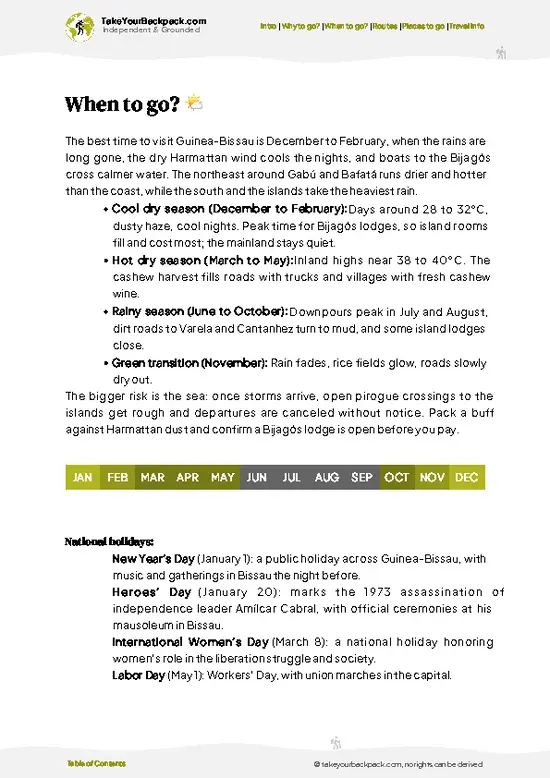
  • Topic: Weather – The festival runs best during the dry season, roughly November to May. Expect less rain, which means fewer mud battles and more reliable outdoor stages. Avoid the wet season (June to October) when heavy rains can turn the island into a slippery mess and disrupt performances.

  • Topic: Temperature – Daytime temps hover around 28-32°C (82-90°F) during the dry season, perfect for dancing without overheating. Nights cool down to about 22-24°C (72-75°F), so pack a light layer for comfort after sunset.

  • Topic: Daylight Hours – Guinea-Bissau sits near the equator, so daylight stays steady at about 12 hours year-round. This means you can plan your days without worrying about early sunsets cutting the fun short.

  • Topic: Crowds – The festival draws a lively but manageable crowd
read more 👉

  • Topic: Weather – The festival runs best during the dry season, roughly November to May. Expect less rain, which means fewer mud battles and more reliable outdoor stages. Avoid the wet season (June to October) when heavy rains can turn the island into a slippery mess and disrupt performances.

  • Topic: Temperature – Daytime temps hover around 28-32°C (82-90°F) during the dry season, perfect for dancing without overheating. Nights cool down to about 22-24°C (72-75°F), so pack a light layer for comfort after sunset.

  • Topic: Daylight Hours – Guinea-Bissau sits near the equator, so daylight stays steady at about 12 hours year-round. This means you can plan your days without worrying about early sunsets cutting the fun short.

  • Topic: Crowds – The festival draws a lively but manageable crowd during peak months (December to March). Arriving early helps you snag better accommodation and front-row spots without the crush of last-minute arrivals.

  • Topic: Seasonal Activities – Dry season aligns with other island activities like fishing and hiking, letting you layer your adventure beyond music. Wet season limits these options, so timing your visit here maximizes your overall experience.

  • Topic: Price Fluctuations – Expect prices to spike during the festival’s peak, especially for lodging and transport. Booking ahead during the dry season locks in better rates and avoids last-minute surges that drain your budget.


Pro-tip: Lock in your trip for the early dry season—November to January—when the weather is solid, crowds are lively but not overwhelming, and prices haven’t hit their peak yet.


source: climatestotravel.comJANJanuary: excellent for travelingFEBFebruary: not recommended for travelingMARMarch: not recommended for travelingAPRApril: not recommended for travelingMAYMay: not recommended for travelingJUNJune: not recommended for travelingJULJuly: not recommended for travelingAUGAugust: not recommended for travelingSEPSeptember: not recommended for travelingOCTOctober: not recommended for travelingNOVNovember: not recommended for travelingDECDecember: not recommended for traveling

✈️ The backpacker research shortcutGuinea-Bissau Travel Guide

An offline-friendly backpacking guide with optimized travel routes, ranked highlights, transport advice, and the best areas to stay.
example page 0 from our offline Travel Guide for Guinea-Bissau
example page 1 from our offline Travel Guide for Guinea-Bissau
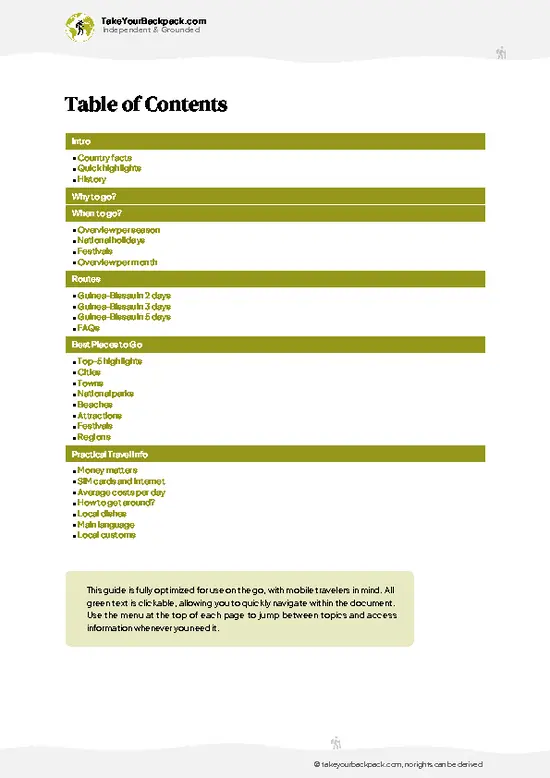
example page 2 from our offline Travel Guide for Guinea-Bissau
example page 3 from our offline Travel Guide for Guinea-Bissau
example page 4 from our offline Travel Guide for Guinea-Bissau
example page 5 from our offline Travel Guide for Guinea-Bissau
example page 6 from our offline Travel Guide for Guinea-Bissau
example page 7 from our offline Travel Guide for Guinea-Bissau
The digital guide (230 pages) contains:
53 highlights, ranked by travel appeal
Optimized 2, 3 & 5-day travel routes
Cities, national parks, landmarks, beaches
How to get around
Offline-friendly for travel without Wi-Fi
👉 Click to see all 30+ guide features

📅 Plan smarter in minutes, not weeks
Month by month travel advice
Festivals & national holidays
Budget expectations

🗺️ Go to the right places, skip the overrated ones
Honest pros & cons of destinations
Top hikes, parks & viewpoints
Lesser-known places most travelers miss
Clear “worth it vs skip it” guidance

🛏️ Travel smoothly without rookie mistakes
Best areas to stay
Transport systems explained simply
Common scams & safety advice
SIM cards, money & practical tips

🌍 Understand the country, not just visit it
Culture & traditions
52 Essential phrases & customs
Festivals worth planning around
Traveler-friendly historical context
Insights that make places more meaningful

📱 Built for real travel conditions
Fully downloadable PDF
Works completely offline
Optimized for phone use
Useful in remote areas & buses
Everything in one place
Save weeks of stressful planning
Get instant access to your full guide. 30‑day money-back guarantee.
+ Add another guide for just US$7.80

By proceeding you agree to our terms.
Sent to your inbox immediately after payment • 100% Secure Checkout
Best Backpacking Travel Advisor 2025 tourism awardBest Backpacking
Travel Advisor
2025
What others say about Take Your Backpack Guides:
⭐⭐⭐⭐⭐
Fantastic, amazing amount of information!
⭐⭐⭐⭐⭐
My goodness this is amazing, it's what I've been looking for hats off too you!
⭐⭐⭐⭐⭐
I think this is absolutely BRILLIANT
⭐⭐⭐⭐
Very complete and informative. It's still missing places, but I gotta to commend you
⭐⭐⭐⭐⭐
This is truly amazing, thank you, can't wait to explore it with my kids!
⭐⭐⭐⭐⭐
Awesome resource, thank you!
⭐⭐⭐⭐⭐
This is amazing! Can't wait to explore the ones I haven't seen
⭐⭐⭐⭐
I love this! Well done, great idea.
⭐⭐⭐⭐⭐
Thanks for taking the time to make this gem!
⭐⭐⭐⭐⭐
This might be the best website I've ever seen.
⭐⭐⭐⭐⭐
Congratulations, and thank you so much for your work; it's incredibly valuable.
⭐⭐⭐⭐
In all seriousness I think you did a great job pointing out the important spots
⭐⭐⭐⭐⭐
10/10 very good
⭐⭐⭐⭐⭐
As someone who's only just starting to visit regularly this is awesome, thank you.
⭐⭐⭐⭐
Thank you very much! I'm going to visit my dad, it's going to be very useful!
⭐⭐⭐⭐⭐
This is really cool! We'll be travelling for the first time and this definitely come in handy.
⭐⭐⭐⭐⭐
You are now our minister of culture, congratulations 👨‍💼
⭐⭐⭐⭐⭐
Just wanted to tell you that this is a pearl! Going to follow your recommendations.
⭐⭐⭐⭐⭐
This is so cool. I'll definitely be using the resource for my travels soon.
⭐⭐⭐⭐⭐
This is very impressive! Good work.
⭐⭐⭐⭐⭐
This is an amazing and informative site. Very well done!

🛏️ Where to stay?Where staying makes the most sense

When you’re gearing up for the Bubaque Music Festival, your choice of where to stay can make or break your experience. Aim for the heart of Bubaque Island, where the vibe is electric and the community is welcoming. This area buzzes with fellow backpackers, making it easy to connect and share stories over a cold drink after a day of music and exploration.

Look for accommodations near the waterfront. The sound of waves and the scent of salt in the air create an inviting backdrop. Plus, being close to the festival means you can pop back to freshen up or grab a snack without missing a beat.

Stay … read more 👉
When you’re gearing up for the Bubaque Music Festival, your choice of where to stay can make or break your experience. Aim for the heart of Bubaque Island, where the vibe is electric and the community is welcoming. This area buzzes with fellow backpackers, making it easy to connect and share stories over a cold drink after a day of music and exploration.

Look for accommodations near the waterfront. The sound of waves and the scent of salt in the air create an inviting backdrop. Plus, being close to the festival means you can pop back to freshen up or grab a snack without missing a beat.

Stay alert for the local guesthouses. They often offer a cozy atmosphere and a chance to mingle with locals and travelers alike. These spots are usually budget-friendly, but don’t let that fool you—many come with character and charm that pricier places lack.

Avoid the tourist traps that promise luxury but deliver disappointment. Instead, seek out places that prioritize community and authenticity. This way, you’ll save your energy and budget for the festival itself, where the real magic happens. Embrace the challenge of finding your perfect spot, and let the rhythm of Bubaque guide you.

👛 Costs (as of 3 September 2026)What things cost and how to budget

The Bubaque Music Festival in Guinea-Bissau is an electrifying experience, but knowing the costs can keep your energy focused on the fun instead of the financial surprises. Here’s the breakdown:
  • Festival Tickets: Expect to pay around €10 to €30 for a full festival pass. Prices can vary based on the lineup and how early you buy. Grab your tickets in advance to avoid last-minute hikes.
  • Accommodation: Options range from budget hostels at about €15 per night to mid-range hotels around €50. If you’re feeling adventurous, consider camping, which could cost as little as €5. Book ahead, especially during the festival, to secure a spot.
  • Local Transport: Getting around can be done cheaply. Local taxis or shared minibuses typically cost between €1 and €5 for short trips. If you’re venturing further, budget
read more 👉
The Bubaque Music Festival in Guinea-Bissau is an electrifying experience, but knowing the costs can keep your energy focused on the fun instead of the financial surprises. Here’s the breakdown:
  • Festival Tickets: Expect to pay around €10 to €30 for a full festival pass. Prices can vary based on the lineup and how early you buy. Grab your tickets in advance to avoid last-minute hikes.
  • Accommodation: Options range from budget hostels at about €15 per night to mid-range hotels around €50. If you’re feeling adventurous, consider camping, which could cost as little as €5. Book ahead, especially during the festival, to secure a spot.
  • Local Transport: Getting around can be done cheaply. Local taxis or shared minibuses typically cost between €1 and €5 for short trips. If you’re venturing further, budget around €10 to €20 for longer rides. Always negotiate fares upfront to avoid surprises.
  • Food & Drinks: Street food is your best friend here. Meals can cost as little as €2 to €5. If you opt for restaurants, expect to spend around €10 to €20 per meal. Don’t forget to budget for drinks; local beers are about €1 to €2, while cocktails can run €5 to €10.
  • Miscellaneous Expenses: Set aside around €20 to €50 for souvenirs, tips, or unexpected costs. This cushion will help you enjoy spontaneous moments without worrying about your wallet.

Planning ahead with these costs in mind will help you dive into the festival experience without the stress of hidden expenses. Keep your budget flexible, and you’ll have the freedom to soak in every beat and rhythm.
⚠️ Prices can change and everyone travels differently, so take this as a rough guide. Hope it helps you plan your adventure!

🍲 FoodLocal Flavors for Backpackers

At the Bubaque Music Festival, food and drinks are a vibrant part of the experience, bursting with local flavor. You’ll find stalls serving up jollof rice, a spicy, savory dish that’s a staple across West Africa. Pair it with grilled fish caught fresh from the Atlantic, seasoned to perfection. Don’t miss out on domoda, a rich peanut stew that warms you from the inside out.

For drinks, grab a coconut water straight from the shell—refreshing and hydrating under the sun. Local beers are also popular; try Super Bock for a crisp taste of Portugal’s influence. If you’re feeling adventurous, sample some homemade ginger beer; it packs a punch and is often served in shared cups, fostering a sense of community.

Etiquette is key here. Expect to share your food; it’s a sign of friendship. Lines can … read more 👉
At the Bubaque Music Festival, food and drinks are a vibrant part of the experience, bursting with local flavor. You’ll find stalls serving up jollof rice, a spicy, savory dish that’s a staple across West Africa. Pair it with grilled fish caught fresh from the Atlantic, seasoned to perfection. Don’t miss out on domoda, a rich peanut stew that warms you from the inside out.

For drinks, grab a coconut water straight from the shell—refreshing and hydrating under the sun. Local beers are also popular; try Super Bock for a crisp taste of Portugal’s influence. If you’re feeling adventurous, sample some homemade ginger beer; it packs a punch and is often served in shared cups, fostering a sense of community.

Etiquette is key here. Expect to share your food; it’s a sign of friendship. Lines can be long, but the wait is part of the fun—strike up conversations with fellow festival-goers. Bring cash; many stalls don’t accept cards, and having small bills will keep transactions smooth. Serving sizes can vary, so don’t hesitate to ask for recommendations. Dive in, savor every bite, and let the festival’s energy fuel your adventure!

FAQFrequently asked questions about Bubaque Music

Bubaque Music Festival typically takes place in November and lasts for about 3 days. The exact dates can vary each year, so planning for mid to late November is advisable.
The cost to attend Bubaque Music Festival is generally low, with entrance fees around 10 to 20 euros. Additional expenses may include travel to Bubaque Island and accommodation, which are not included in the ticket price.
Yes, it is recommended to get tickets in advance for Bubaque Music Festival, especially since the event attracts international visitors and local attendees. Early booking helps secure entry and better accommodation options on the island.
⚠️ Things can change over time, so always validate details locally before you go.

Other Bissau-Guinean festivals near Bubaque Music

Explore more nearby:


💡 Not sure where to go next?
Create a personalized itinerary for Guinea-Bissau including Bubaque Music and the places that fit your trip.

Generate my itinerary

👉 Discover all festivals

Or checkout all Guinea-Bissau has to offer (think cities, towns, villages, national parks, hikes, beaches, festivals)
Country photo of Guinea-Bissau

We 💚 feedbackIs it worth it?

The Bubaque Music Festival is a pulse of joy, where the air vibrates with rhythms that make you move. Expect a mix of local talent and unexpected international acts—it’s a delightful surprise. But here’s the kicker: accommodations can fill up fast, so don’t wait until the last minute. Embrace the chaos, dance like no one’s watching, and savor the street food. It’s all part of the experience. Keep your energy high; the festival is a marathon, not a sprint.

✍️ Help improve this page!
The information on this page is based on in-depth research, insights shared by experienced travelers, and feedback from the local travel community in Guinea-Bissau. While every effort is made to keep the information accurate and current, conditions can change — so if you spot anything incorrect or outdated, please get in touch.


🙋‍♂️ Give feedback

👋 Meet the founderWho’s Behind Take Your Backpack?

Johan, backpacker and founder of TakeYourBackpackHi, I’m Johan (Netherlands 🇳🇱), the creator of TakeYourBackpack. Over the past decade, I’ve backpacked through 80+ countries across six continents, gaining extensive experience with independent travel, long-term trips, and overland routes.

This site is built on a combination of firsthand travel experience and carefully curated insights from other backpackers. Many guides are based on places I’ve personally visited, while others bring together tips, observations, and practical advice shared by trusted travelers I’ve met along the way.

The goal is to provide realistic, experience-driven guidance — not generic itineraries — so you can explore destinations with better context, clearer expectations, and more confidence.

Get full country guide •
Instant download • 53 highlights • Full Offline guide