×

Guinea🇬🇳 | attractionsBoké Bauxite Heritage and Colonial-Era Wharf Areabauxite mining relics, colonial warehouses, riverside wharf | things to do and best time to go

Explore Kankan Traditional Market and Cloth-Dyeing AreaExplore Plage de Kassa

Backpacking in Boké Bauxite Heritage and Colonial-Era Wharf Area
👌 Worth visitingattraction ranked #11
By Johan Kruseman 🇳🇱 | Updated April 29, 2026

Red dust clings to your boots as you step off the battered ferry, the metallic tang of ore thick in the humid air. A battered wheelbarrow rattles past, pushed by a wiry teenager with hands stained the color of rust. The river glints with the memory of colonial ships, but now it’s mostly silent, save for the distant clang of metal on stone.

Boké’s Bauxite Heritage and Colonial-Era Wharf Area sits in northwestern Guinea, where the Rio Nunez meets the Atlantic, a few hours’ drive from Conakry if the roads are behaving. Here’s the truth: you won’t find crowds of selfie-stick tourists or glossy visitor centers. What you get instead is raw, unvarnished history—Guinea’s bauxite backbone laid bare, colonial warehouses crumbling beside the water, and locals who’ll size you up with curiosity, not sales pitches. It’s not cheap to get here, and the infrastructure is rough, but the payoff is a rare, unfiltered look at the forces that shaped modern Guinea. Compared to the Fouta Djallon’s waterfalls or the chaos of Conakry, Boké is quieter, heavier, and far more real.

Discover everything you want to know in the 📖 Guinea Travel Guide.


Get your Guinea guide
67 ranked highlights, routes & tips, works offline (282 pages)
Loading the map 🌍
CLICK TO FILTER
cities
towns
landmarks
national parks
hikes
beaches
attractions
festivals
regions
SHOW COUNTRY’S BESTSHOW ALL

✨ Why go?
Ranked #11 attraction in Guinea
What makes it a must-see attraction

Boké Bauxite Heritage and Colonial-Era Wharf Area isn’t your typical postcard spot. Yes, it’s crowded—especially with locals and workers rather than tourists—and the infrastructure is rough around the edges. But that’s exactly where its power lies. This place is a raw, unfiltered slice of Guinea’s industrial backbone, where the bauxite that fuels global aluminum production first hits the docks. It’s not just a wharf; it’s a living monument to the country’s complex colonial history and its ongoing struggle for economic identity. Backpackers who make the trek here aren’t chasing pretty views—they’re chasing context. The gritty atmosphere, the clang of cranes, and the endless conveyor belts tell a story that no polished museum can match. It’s a milestone on any Guinea route because it forces … read more 👉
Boké Bauxite Heritage and Colonial-Era Wharf Area isn’t your typical postcard spot. Yes, it’s crowded—especially with locals and workers rather than tourists—and the infrastructure is rough around the edges. But that’s exactly where its power lies. This place is a raw, unfiltered slice of Guinea’s industrial backbone, where the bauxite that fuels global aluminum production first hits the docks. It’s not just a wharf; it’s a living monument to the country’s complex colonial history and its ongoing struggle for economic identity. Backpackers who make the trek here aren’t chasing pretty views—they’re chasing context. The gritty atmosphere, the clang of cranes, and the endless conveyor belts tell a story that no polished museum can match. It’s a milestone on any Guinea route because it forces you to reckon with the real cost of globalization and resource extraction. The adrenaline comes from standing at the intersection of history, industry, and culture—where you can almost feel the weight of decades of labor and exploitation. If you want to understand Guinea beyond the surface, Boké’s industrial heart is where you start. It’s tough, it’s loud, and it’s unforgettable.
Want to include Boké Bauxite Heritage and Colonial-Era Wharf Area in your Guinea route?
Create a personalized Guinea itinerary that includes Boké Bauxite Heritage and Colonial-Era Wharf Area and the places that fit your trip — based on your travel style, budget, and available time. Get your route in seconds.

Generate my trip

💡 HighlightsDon't-miss highlights and experiences

The Colonial-Era Wharf: Where History Isn’t Sanitized
Forget the Instagram filters—this is not a pastel-hued boardwalk. The Boké wharf is raw, rusted, and unapologetically real. You’ll see battered iron rails, crumbling stonework, and the ghosts of colonial commerce everywhere you look. The wharf isn’t staged for tourists; it’s still used by locals, which means you’re walking through living history, not a museum diorama. The air smells of salt, oil, and old ambition. If you want a photo, you’ll have to earn it—dodging wheelbarrows and the occasional goat. This is the kind of place that makes you feel the weight of the past in your bones.

Bauxite Loading Operations: Industry Up Close
Boké’s bauxite is the reason the world knows its name, and you can watch the process in action. Barges and trucks … read more 👉
The Colonial-Era Wharf: Where History Isn’t Sanitized
Forget the Instagram filters—this is not a pastel-hued boardwalk. The Boké wharf is raw, rusted, and unapologetically real. You’ll see battered iron rails, crumbling stonework, and the ghosts of colonial commerce everywhere you look. The wharf isn’t staged for tourists; it’s still used by locals, which means you’re walking through living history, not a museum diorama. The air smells of salt, oil, and old ambition. If you want a photo, you’ll have to earn it—dodging wheelbarrows and the occasional goat. This is the kind of place that makes you feel the weight of the past in your bones.

Bauxite Loading Operations: Industry Up Close
Boké’s bauxite is the reason the world knows its name, and you can watch the process in action. Barges and trucks rumble with a rhythm that’s more industrial symphony than tourist show. There’s no velvet rope here; you’re close enough to feel the grit in your teeth. The scale is staggering—mountains of red ore, machinery that looks like it could eat a minivan, and workers who move with the practiced efficiency of people who know this is the heartbeat of the region. It’s not pretty, but it’s unforgettable, and it’s the real engine behind Guinea’s economy.

The Old Customs House: Colonial Bureaucracy in Stone
This squat, weathered building once controlled the flow of goods—and people—through Boké. The architecture is pure colonial pragmatism: thick walls, faded paint, and a sense of authority that lingers even as the jungle tries to reclaim it. Stand in the doorway and you can almost hear the arguments, the negotiations, the lives changed by a stamp or a signature. It’s a reminder that borders and trade are never just lines on a map—they’re lived realities, often messy and always consequential.

Local River Life: The Human Pulse
Step away from the wharf and you’ll find the Rio Nunez alive with dugout canoes, fishermen hauling nets, and kids splashing in the shallows. This isn’t staged for outsiders. The river is the community’s pantry, playground, and highway. Watch long enough and you’ll see a rhythm that predates colonialism and outlasts any mining boom. It’s a living lesson in adaptation and resilience, and it’s where Boké’s soul really shows.

Street Markets Near the Wharf: Commerce Without the Gloss
Skip the souvenir stands—there aren’t any. Instead, you’ll find open-air stalls selling smoked fish, kola nuts, and the kind of produce that still has dirt on it. The market is loud, chaotic, and refreshingly indifferent to your presence. If you want to understand Boké, eat what the locals eat and haggle for a handful of peanuts. The market is where the city’s energy crackles, and it’s the best place to trade stories with people who actually live here.
Spotted a mistake or missing something? Contact us.
🌤️ When to go?Seasonal considerations and timing


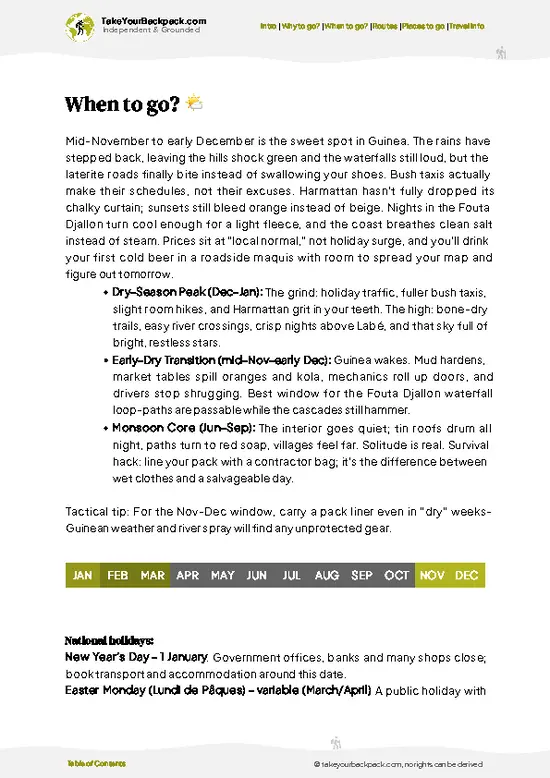
  • Weather: The best time to visit Boké’s Bauxite Heritage and Colonial-Era Wharf is during the dry season, from November to April. Rainfall drops sharply, making the dusty red earth easier to navigate and the wharf area less muddy. Avoid May through October when heavy rains can turn the area into a slippery mess and limit outdoor exploration.

  • Temperature: Expect daytime highs around 30-33°C (86-91°F) during the dry months, which is hot but manageable with shade and water. The wet season cools things slightly but brings humidity that can sap your energy fast.

  • Daylight Hours: Daylight stays fairly consistent year-round, roughly 11 to 12 hours, so you won’t lose much time to early sunsets. Plan your visits to the wharf early in the day to avoid the midday heat.

  • Crowds: This isn’t a tourist
read more 👉

  • Weather: The best time to visit Boké’s Bauxite Heritage and Colonial-Era Wharf is during the dry season, from November to April. Rainfall drops sharply, making the dusty red earth easier to navigate and the wharf area less muddy. Avoid May through October when heavy rains can turn the area into a slippery mess and limit outdoor exploration.

  • Temperature: Expect daytime highs around 30-33°C (86-91°F) during the dry months, which is hot but manageable with shade and water. The wet season cools things slightly but brings humidity that can sap your energy fast.

  • Daylight Hours: Daylight stays fairly consistent year-round, roughly 11 to 12 hours, so you won’t lose much time to early sunsets. Plan your visits to the wharf early in the day to avoid the midday heat.

  • Crowds: This isn’t a tourist hotspot, so crowds are minimal year-round. However, local activity peaks during the dry season when transport and trade are more reliable, giving you a chance to see the area buzzing with authentic daily life rather than staged tourism.

  • Seasonal Activities: The dry season aligns with local market days and traditional fishing activities, offering a richer cultural experience. The wet season sees less activity on the wharf, as heavy rains disrupt operations.

  • Price Fluctuations: Prices for local guides and accommodations remain stable year-round due to low tourist volume, but expect slightly better deals in the wet season if you don’t mind the rain and mud.


Pro-tip: Visit just after the rains end in November for fresh landscapes, active local life, and manageable weather—this window balances comfort and authenticity perfectly.


source: climatestotravel.comJANJanuary: excellent for travelingFEBFebruary: excellent for travelingMARMarch: excellent for travelingAPRApril: excellent for travelingMAYMay: fair for travelingJUNJune: below average for travelingJULJuly: below average for travelingAUGAugust: below average for travelingSEPSeptember: fair for travelingOCTOctober: fair for travelingNOVNovember: excellent for travelingDECDecember: excellent for traveling
when-to-go

✈️ The backpacker research shortcutGuinea Travel Guide

An offline-friendly backpacking guide with optimized travel routes, ranked highlights, transport advice, and the best areas to stay.
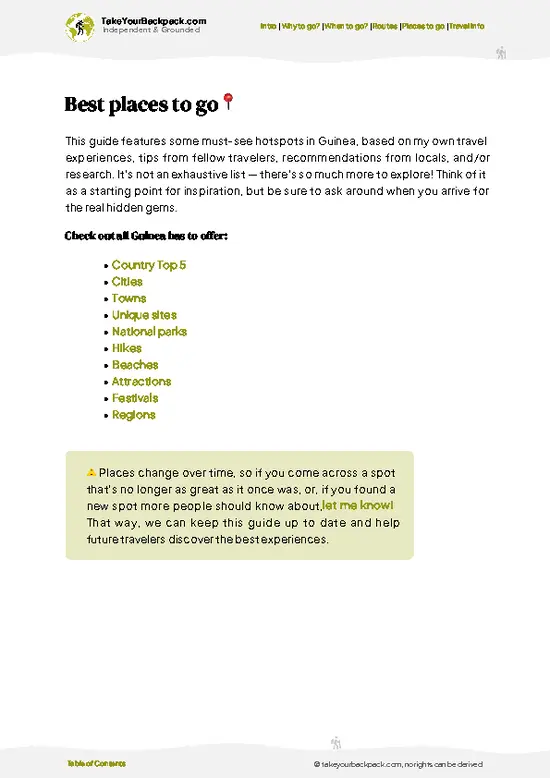
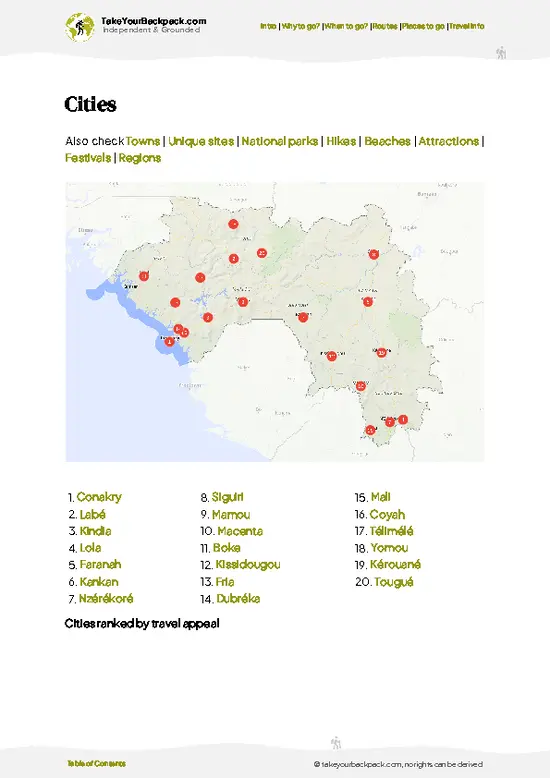
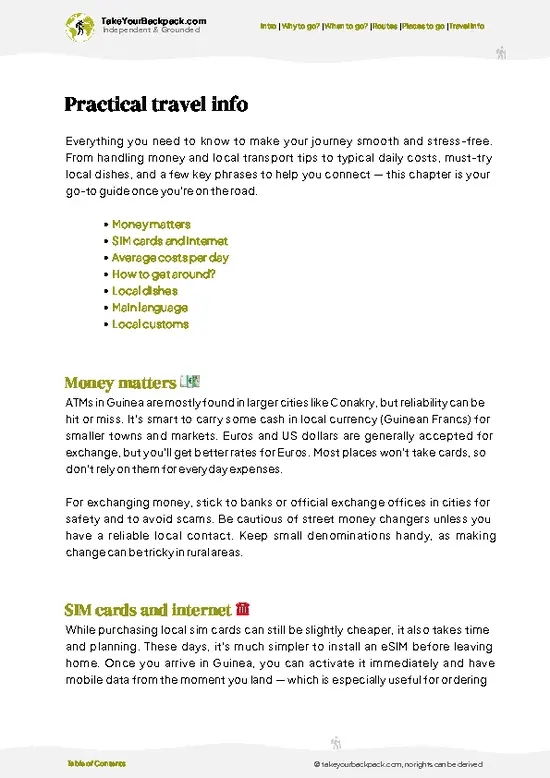
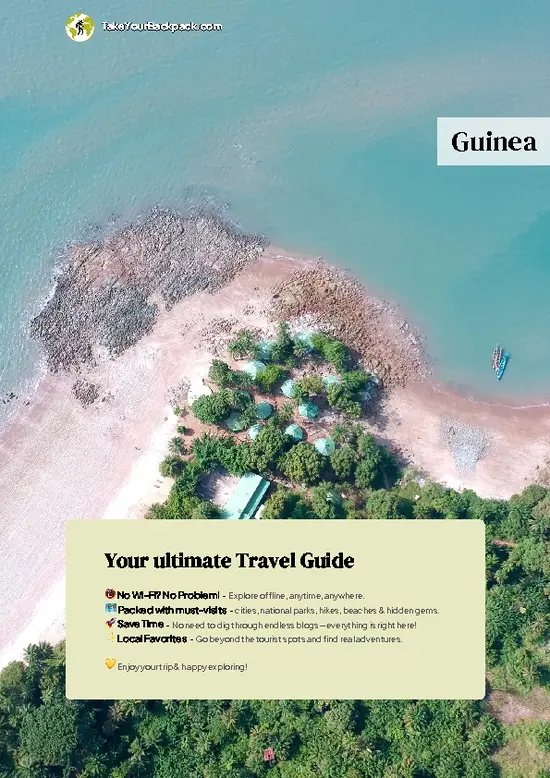
example page 0 from our offline Travel Guide for Guinea
example page 1 from our offline Travel Guide for Guinea
example page 2 from our offline Travel Guide for Guinea
example page 3 from our offline Travel Guide for Guinea
example page 4 from our offline Travel Guide for Guinea
example page 5 from our offline Travel Guide for Guinea
example page 6 from our offline Travel Guide for Guinea
example page 7 from our offline Travel Guide for Guinea
The digital guide (282 pages) contains:
67 highlights, ranked by travel appeal
Optimized 5, 10 & 15-day travel routes
Cities, national parks, landmarks, beaches
How to get around
Offline-friendly for travel without Wi-Fi
👉 Click to see all 30+ guide features

📅 Plan smarter in minutes, not weeks
Month by month travel advice
Festivals & national holidays
Budget expectations

🗺️ Go to the right places, skip the overrated ones
Honest pros & cons of destinations
Top hikes, parks & viewpoints
Lesser-known places most travelers miss
Clear “worth it vs skip it” guidance

🛏️ Travel smoothly without rookie mistakes
Best areas to stay
Transport systems explained simply
Common scams & safety advice
SIM cards, money & practical tips

🌍 Understand the country, not just visit it
Culture & traditions
52 Essential phrases & customs
Festivals worth planning around
Traveler-friendly historical context
Insights that make places more meaningful

📱 Built for real travel conditions
Fully downloadable PDF
Works completely offline
Optimized for phone use
Useful in remote areas & buses
Everything in one place
Save weeks of stressful planning
Get instant access to your full guide. 30‑day money-back guarantee.


By proceeding you agree to our terms.
Sent to your inbox immediately after payment • 100% Secure Checkout
Best Backpacking Travel Advisor 2025 tourism awardBest Backpacking
Travel Advisor
2025
What others say about Take Your Backpack Guides:
⭐⭐⭐⭐⭐
Fantastic, amazing amount of information!
⭐⭐⭐⭐⭐
My goodness this is amazing, it's what I've been looking for hats off too you!
⭐⭐⭐⭐⭐
I think this is absolutely BRILLIANT
⭐⭐⭐⭐
Very complete and informative. It's still missing places, but I gotta to commend you
⭐⭐⭐⭐⭐
This is truly amazing, thank you, can't wait to explore it with my kids!
⭐⭐⭐⭐⭐
Awesome resource, thank you!
⭐⭐⭐⭐⭐
This is amazing! Can't wait to explore the ones I haven't seen
⭐⭐⭐⭐
I love this! Well done, great idea.
⭐⭐⭐⭐⭐
Thanks for taking the time to make this gem!
⭐⭐⭐⭐⭐
This might be the best website I've ever seen.
⭐⭐⭐⭐⭐
Congratulations, and thank you so much for your work; it's incredibly valuable.
⭐⭐⭐⭐
In all seriousness I think you did a great job pointing out the important spots
⭐⭐⭐⭐⭐
10/10 very good
⭐⭐⭐⭐⭐
As someone who's only just starting to visit regularly this is awesome, thank you.
⭐⭐⭐⭐
Thank you very much! I'm going to visit my dad, it's going to be very useful!
⭐⭐⭐⭐⭐
This is really cool! We'll be travelling for the first time and this definitely come in handy.
⭐⭐⭐⭐⭐
You are now our minister of culture, congratulations 👨‍💼
⭐⭐⭐⭐⭐
Just wanted to tell you that this is a pearl! Going to follow your recommendations.
⭐⭐⭐⭐⭐
This is so cool. I'll definitely be using the resource for my travels soon.
⭐⭐⭐⭐⭐
This is very impressive! Good work.
⭐⭐⭐⭐⭐
This is an amazing and informative site. Very well done!

🛏️ Where to stay?Where staying makes the most sense

Boké’s Bauxite Heritage and Colonial-Era Wharf Area isn’t your typical backpacker hotspot. Let’s get real: this isn’t a polished tourist district with Instagram-perfect cafes on every corner. The crowds? Sparse, mostly local workers and a handful of curious travelers. The costs? Surprisingly low, but don’t expect luxury or slick amenities. What you get instead is raw, gritty authenticity—a front-row seat to Guinea’s industrial heartbeat and colonial past.

If you want to stay close, focus on the neighborhoods just outside the wharf zone. These areas are where the real life happens—markets buzzing … read more 👉
Boké’s Bauxite Heritage and Colonial-Era Wharf Area isn’t your typical backpacker hotspot. Let’s get real: this isn’t a polished tourist district with Instagram-perfect cafes on every corner. The crowds? Sparse, mostly local workers and a handful of curious travelers. The costs? Surprisingly low, but don’t expect luxury or slick amenities. What you get instead is raw, gritty authenticity—a front-row seat to Guinea’s industrial heartbeat and colonial past.

If you want to stay close, focus on the neighborhoods just outside the wharf zone. These areas are where the real life happens—markets buzzing with local chatter, street food stalls serving up bold flavors, and a mix of guesthouses that cater to budget travelers who value safety and social vibes over fancy decor. It’s not about plush beds but about meeting other travelers and locals who can share stories and tips.

Safety here is relative; stick to well-trodden streets after dark and keep your wits about you. The social scene is modest but genuine—expect communal spaces where you can swap travel tales over a shared meal or a cold drink. This is the kind of place where you trade polished comfort for connection and a deep dive into Guinea’s working-class soul. If you’re after a sanitized tourist bubble, look elsewhere. But if you want to feel the pulse of Boké’s heritage and meet people who make it tick, this is your zone.

👛 Costs (as of 14 March 2026)Money, prices, and spending tips

As of 2025, the entrance fee to the Boké Bauxite Heritage and Colonial-Era Wharf Area in Guinea is approximately €10 to €20. Additional costs may include guided tours, which can range from €15 to €30 per day, depending on the provider. Local transportation expenses vary; shared transport to nearby attractions may cost around €5 to €10 per person. Accommodations in the area are modest, with prices starting at approximately €20 per night for basic lodging. Please note that these prices are estimates and can fluctuate based on season and availability.

source: safabhe.com
⚠️ Prices can change and everyone travels differently, so take this as a rough guide. Hope it helps you plan your adventure!

Other Guinean attractions near Boké Bauxite Heritage and Colonial-Era Wharf Area

Explore more nearby:


💡 Not sure where to go next?
Create a personalized itinerary for Guinea including Boké Bauxite Heritage and Colonial-Era Wharf Area and the places that fit your trip.

Generate my itinerary

👉 Discover all attractions

Or checkout all Guinea has to offer (think cities, towns, villages, national parks, hikes, beaches, festivals)
Country photo of Guinea

We 💚 feedbackFinal thoughts on visiting Boké Bauxite Heritage and Colonial-Era Wharf Area

Boké’s bauxite docks aren’t a postcard-perfect escape—they’re gritty, noisy, and unapologetically industrial. Expect crowds of workers and locals going about their business, not tourists snapping selfies. But that’s exactly where the magic lies: in the raw pulse of a place shaped by hard labor and global demand. The unexpected surprise? The way the colonial-era wharf stands as a stubborn monument to history, telling stories you won’t find in guidebooks. Just don’t come expecting polished charm—come ready to witness a living, breathing chapter of Guinea’s backbone.

✍️ Help improve this page!
The information on this page is based on in-depth research, insights shared by experienced travelers, and feedback from the local travel community in Guinea. While every effort is made to keep the information accurate and current, conditions can change — so if you spot anything incorrect or outdated, please get in touch.


🙋‍♂️ Give feedback

👋 Meet the founderWho’s Behind Take Your Backpack?

Johan, backpacker and founder of TakeYourBackpackHi, I’m Johan (Netherlands 🇳🇱), the creator of TakeYourBackpack. Over the past decade, I’ve backpacked through 80+ countries across six continents, gaining extensive experience with independent travel, long-term trips, and overland routes.

This site is built on a combination of firsthand travel experience and carefully curated insights from other backpackers. Many guides are based on places I’ve personally visited, while others bring together tips, observations, and practical advice shared by trusted travelers I’ve met along the way.

The goal is to provide realistic, experience-driven guidance — not generic itineraries — so you can explore destinations with better context, clearer expectations, and more confidence.

Get full Guinea guide •
Instant download • 67 highlights • Full Offline guide