×

Guinea🇬🇳 | attractionsBoulbinet Fishing PortPainted pirogues, fish auction, smoking racks, net menders | things to do and best time to go

Explore Palais du PeupleExplore Kindia Central Market

Backpacking in Boulbinet Fishing Port
👌 Worth visitingattraction ranked #8
By Johan Kruseman 🇳🇱 | Updated October 22, 2026

Boulbinet is where Conakry’s fishermen haul in the catch, and the main draw is the color: painted wooden pirogues rocking in a crowded harbor while men mend nets and women haggle over silver piles of sardines and bonga. What gets overlooked is that it works as a day-long lesson in how the city eats, and the people here talk to you if you slow down. The port sits on the southern tip of Kaloum, in Guinea’s capital. Expect diesel, smoke, fish guts and wet planks underfoot, plus a constant shouting that sounds worse than it is. Crowds are local, so you stand out. Photography is touchy because people work here and dislike being treated as scenery, so ask first and offer to share the picture. Go in the morning, when boats land, and bring a local guide or a friendly contact.

Discover everything you want to know in the 📖 Guinea Travel Guide.


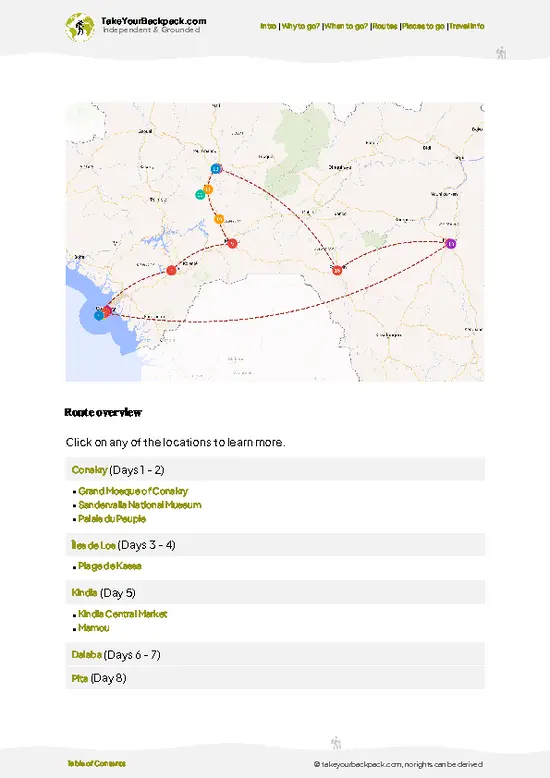
example page 0 from our offline Travel Guide for Guinea
example page 1 from our offline Travel Guide for Guinea
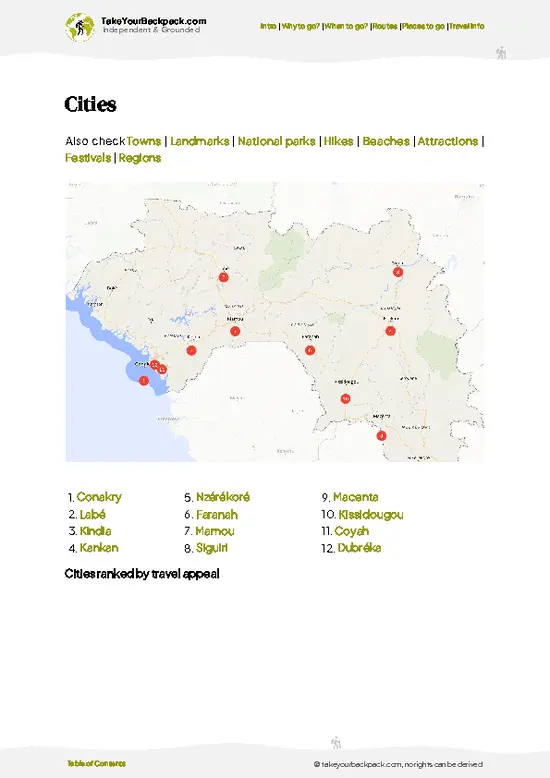
example page 2 from our offline Travel Guide for Guinea
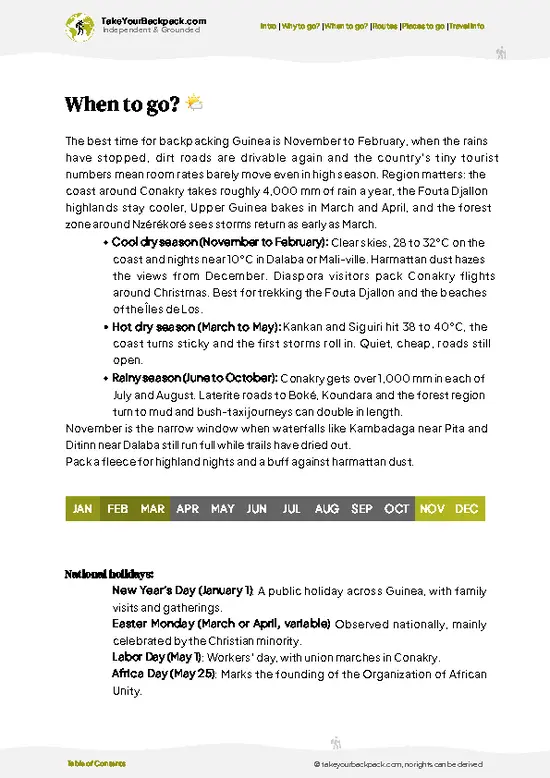
example page 3 from our offline Travel Guide for Guinea
example page 4 from our offline Travel Guide for Guinea
example page 5 from our offline Travel Guide for Guinea
example page 6 from our offline Travel Guide for Guinea
example page 7 from our offline Travel Guide for Guinea
Loading the map 🌍
CLICK TO FILTER
cities
towns
landmarks
national parks
hikes
beaches
attractions
festivals
regions
SHOW COUNTRY’S BESTSHOW ALL

✨ Why go?
Ranked #8 attraction in Guinea
Why visitors keep coming back

Boulbinet Fishing Port is the most direct look you will get at how Conakry feeds itself. The landing of the morning catch is the moment to be here, when pirogues nose into the shore and baskets of fish are carried up to waiting buyers. You see the whole chain in a few hundred meters: boat builders, net menders, smokers, ice sellers and market women. It is rough and loud, and that is the point.

The second reason is its place in the capital. The port lies at the end of the Kaloum peninsula, so it slots into a walk with the nearby waterfront and downtown districts. For a trip across Guinea, it gives you a grounded first or last day in the city, with real conversations that no museum visit can match. Bring patience, a small notebook and a sense of humor, and you leave understanding why the coast runs on fish and the wooden pirogue.

💡 HighlightsMust-see experiences and standout moments

  1. The Landing Beaches at Boulbinet: This is the main event. Wooden pirogues, painted in chipped blues, greens and reds, slide onto the sand and the crews haul in nets while the shoreline fills with shouting, laughing and the slap of wet rope. Come when the boats return, and expect to step around fish, puddles and children.
  2. Pirogue Fleet and Boat Building: Long, narrow hulls are carved and patched along the shore. Watching a crew caulk a plank or repaint a bow tells you more about Conakry’s coastal life than any museum label could.
  3. Fish Auction and Buyers’ Scrum: Women traders bargain loudly over baskets of sardine-like catch, barracuda and snapper. Prices move fast and the banter is half the show. Watch first, then ask before photographing anyone.
  4. Smoking and Drying Racks: Fish are laid over smoldering
… read more 👉
  1. The Landing Beaches at Boulbinet: This is the main event. Wooden pirogues, painted in chipped blues, greens and reds, slide onto the sand and the crews haul in nets while the shoreline fills with shouting, laughing and the slap of wet rope. Come when the boats return, and expect to step around fish, puddles and children.
  2. Pirogue Fleet and Boat Building: Long, narrow hulls are carved and patched along the shore. Watching a crew caulk a plank or repaint a bow tells you more about Conakry’s coastal life than any museum label could.
  3. Fish Auction and Buyers’ Scrum: Women traders bargain loudly over baskets of sardine-like catch, barracuda and snapper. Prices move fast and the banter is half the show. Watch first, then ask before photographing anyone.
  4. Smoking and Drying Racks: Fish are laid over smoldering fires and on racks in the sun. The smoke stings your eyes and clings to your clothes, but this is where you see how the catch travels inland.
  5. Ice and Net Repair Corners: Men sit cross-legged mending nets with quick, practiced fingers while porters carry blocks of ice on their shoulders. Small scenes, easy to miss, and they show how the work is organized.
  6. The Waterfront Views Toward the Islands: From the edge of the port you look across the water toward the Los Islands’ direction and the Conakry skyline. Hazy mornings give soft light for photos of the boats at anchor.
  7. Port-Side Grill Stalls: Vendors grill fresh fish over charcoal, served with onions, pepper sauce and bread. It is a cheap, smoky lunch eaten standing or on a plastic stool, and it is the freshest seafood you will find in the city.
Begin at Boulbinet Fishing Port with the landing beaches when the boats come in, since the energy of the arrival is the whole spectacle and everything else grows out of it.
Spotted a mistake or missing something? Contact us.
🌤️ When to go?Seasonal considerations and timing

  • Dry Season (November to April): Landing times are easiest now, with sunny days of 30 to 34°C (86 to 93°F) and calm seas that send more pirogues out. Harmattan haze can dull the sky from December to February. Cooler mornings sit near 22 to 24°C (72 to 75°F).
  • Rainy Season (June to October): Conakry gets some of the heaviest rain in West Africa, with July and August the wettest. Highs hover at 28 to 30°C (82 to 86°F), the dockside turns to mud, and rough water means smaller catches.
  • Transition (May and November): Storms build in May, and the air is sticky. Crowds on the quay stay steady all year because it is a working port, not a sightseeing stop.
  • Time of Day: Boats come in during the afternoon, and mornings are best for watching nets repaired and fish smoked.
Visit on a weekday afternoon in the … read more 👉
  • Dry Season (November to April): Landing times are easiest now, with sunny days of 30 to 34°C (86 to 93°F) and calm seas that send more pirogues out. Harmattan haze can dull the sky from December to February. Cooler mornings sit near 22 to 24°C (72 to 75°F).
  • Rainy Season (June to October): Conakry gets some of the heaviest rain in West Africa, with July and August the wettest. Highs hover at 28 to 30°C (82 to 86°F), the dockside turns to mud, and rough water means smaller catches.
  • Transition (May and November): Storms build in May, and the air is sticky. Crowds on the quay stay steady all year because it is a working port, not a sightseeing stop.
  • Time of Day: Boats come in during the afternoon, and mornings are best for watching nets repaired and fish smoked.
Visit on a weekday afternoon in the dry season, when catches are biggest and the light is good for photos.


source: climatestotravel.comJANJanuary: excellent for travelingFEBFebruary: excellent for travelingMARMarch: excellent for travelingAPRApril: excellent for travelingMAYMay: fair for travelingJUNJune: fair for travelingJULJuly: fair for travelingAUGAugust: fair for travelingSEPSeptember: fair for travelingOCTOctober: fair for travelingNOVNovember: excellent for travelingDECDecember: excellent for traveling
guinea-attraction-boulbinet-fishing-port v1
© Google |

✈️ The backpacker research shortcutGuinea Travel Guide

An offline-friendly backpacking guide with optimized travel routes, ranked highlights, transport advice, and the best areas to stay.
example page 0 from our offline Travel Guide for Guinea
example page 1 from our offline Travel Guide for Guinea
example page 2 from our offline Travel Guide for Guinea
example page 3 from our offline Travel Guide for Guinea
example page 4 from our offline Travel Guide for Guinea
example page 5 from our offline Travel Guide for Guinea
example page 6 from our offline Travel Guide for Guinea
example page 7 from our offline Travel Guide for Guinea
The digital guide (238 pages) contains:
✅ 53 highlights, ranked by travel appeal
✅ Optimized 5, 10 & 15-day travel routes
✅ Cities, national parks, landmarks, beaches
✅ How to get around
✅ Offline-friendly for travel without Wi-Fi
👉 Click to see all 30+ guide features

📅 Plan smarter in minutes, not weeks
✅ Month by month travel advice
✅ Festivals & national holidays
✅ Budget expectations

🗺️ Go to the right places, skip the overrated ones
✅ Honest pros & cons of destinations
✅ Top hikes, parks & viewpoints
✅ Lesser-known places most travelers miss
✅ Clear “worth it vs skip it” guidance

🛏️ Travel smoothly without rookie mistakes
✅ Best areas to stay
✅ Transport systems explained simply
✅ Common scams & safety advice
✅ SIM cards, money & practical tips

🌍 Understand the country, not just visit it
✅ Culture & traditions
✅ 52 Essential phrases & customs
✅ Festivals worth planning around
✅ Traveler-friendly historical context
✅ Insights that make places more meaningful

📱 Built for real travel conditions
✅ Fully downloadable PDF
✅ Works completely offline
✅ Optimized for phone use
✅ Useful in remote areas & buses
✅ Everything in one place
Stop searching, start planning
Get instant access to your full guide. 30‑day money-back guarantee.
+ Add another guide for just

By proceeding you agree to our terms.
Sent to your inbox immediately after payment • 100% Secure Checkout
Best Backpacking Travel Advisor 2025 tourism awardBest Backpacking
Travel Advisor
2025
What others say about Take Your Backpack Guides:
⭐⭐⭐⭐⭐
Fantastic, amazing amount of information!
⭐⭐⭐⭐⭐
My goodness this is amazing, it's what I've been looking for hats off too you!
⭐⭐⭐⭐⭐
I think this is absolutely BRILLIANT
⭐⭐⭐⭐
Very complete and informative. It's still missing places, but I gotta to commend you
⭐⭐⭐⭐⭐
This is truly amazing, thank you, can't wait to explore it with my kids!
⭐⭐⭐⭐⭐
Awesome resource, thank you!
⭐⭐⭐⭐⭐
This is amazing! Can't wait to explore the ones I haven't seen
⭐⭐⭐⭐
I love this! Well done, great idea.
⭐⭐⭐⭐⭐
Thanks for taking the time to make this gem!
⭐⭐⭐⭐⭐
This might be the best website I've ever seen.
⭐⭐⭐⭐⭐
Congratulations, and thank you so much for your work; it's incredibly valuable.
⭐⭐⭐⭐
In all seriousness I think you did a great job pointing out the important spots
⭐⭐⭐⭐⭐
10/10 very good
⭐⭐⭐⭐⭐
As someone who's only just starting to visit regularly this is awesome, thank you.
⭐⭐⭐⭐
Thank you very much! I'm going to visit my dad, it's going to be very useful!
⭐⭐⭐⭐⭐
This is really cool! We'll be travelling for the first time and this definitely come in handy.
⭐⭐⭐⭐⭐
You are now our minister of culture, congratulations 👨‍💼
⭐⭐⭐⭐⭐
Just wanted to tell you that this is a pearl! Going to follow your recommendations.
⭐⭐⭐⭐⭐
This is so cool. I'll definitely be using the resource for my travels soon.
⭐⭐⭐⭐⭐
This is very impressive! Good work.
⭐⭐⭐⭐⭐
This is an amazing and informative site. Very well done!

🛏️ Where to stay?Best areas and accommodation options

The Kaloum peninsula, the central district of Conakry, is the best base, since Boulbinet Fishing Port sits on its southern waterfront and you can reach it on foot or by a short moto-taxi ride. Kaloum is compact, has the most guesthouses and small hotels in the city, and its streets are busiest and safest during daylight, with the Grand Mosque, the National Museum and the main markets close at hand. Budget travelers will find simple guesthouses and mid-range places at fair prices, plus cheap street food stalls and small restaurants around Place des Martyrs and the Madina-style market stretches … read more 👉
The Kaloum peninsula, the central district of Conakry, is the best base, since Boulbinet Fishing Port sits on its southern waterfront and you can reach it on foot or by a short moto-taxi ride. Kaloum is compact, has the most guesthouses and small hotels in the city, and its streets are busiest and safest during daylight, with the Grand Mosque, the National Museum and the main markets close at hand. Budget travelers will find simple guesthouses and mid-range places at fair prices, plus cheap street food stalls and small restaurants around Place des Martyrs and the Madina-style market stretches nearby. Social hostel-style options are rare in Guinea, so you will mostly meet other travelers at shared-taxi stops, cafes and the occasional expat-run spot. Staying in Kaloum also puts you near the ferry to the Îles de Los. Avoid walking the quay after dark, and book a place with a generator, because power cuts are common. Further out, Dixinn and Ratoma have more nightlife but need a taxi to get back.

👛 Costs (as of 22 October 2026)Typical daily expenses

Boulbinet Fishing Port is free to enter, and a realistic backpacker day around it costs about US$38 including a bed, food and local transport.
CategoryBudget RangeLocal Reality
EntryUS$0No ticket. Someone may ask for a small tip to guide you or watch your bag.
Accommodation (high season)US$20 to 25Basic guesthouse in Kaloum, with fan or air conditioning. Prices dip in the rainy season to about US$15 to 20.
FoodUS$4 to 8Grilled fish with rice or fries at street stalls and small eateries. Fresh fish bought at the quay is cheapest.
Local transportUS$1 to 4Shared taxis and moto-taxis within Kaloum cost little, and negotiating the fare first is normal.
Photo and guide tipsUS$1 to 3Ask before photographing people and offer a small tip. Cash in Guinean francs is expected.
Total Daily BudgetUS$38Per person per day, based on the figures above.
⚠️ Prices can change and everyone travels differently, so take this as a rough guide. Hope it helps you plan your adventure!

FAQTraveler FAQ

One to two hours is enough at Boulbinet Fishing Port, and mid-to-late afternoon is the best time because the pirogues return and the catch is sorted on the quay. If you also want to see the smoking racks and the nearby Kaloum sights, such as the Grand Mosque, plan half a day. Entry is free.
Boulbinet Fishing Port is worth it because there is no entrance fee, so the only costs are a small tip of roughly US$1 to 3 for a guide or watchful helper and your transport. You get a close look at working life with hundreds of colorful pirogues, fish traders and smokers. Photographing people needs permission, and a short visit costs very little.
Boulbinet Fishing Port lies on the southern waterfront of Kaloum in central Conakry, a short moto-taxi or shared-taxi ride of about US$1 to 3 from most Kaloum guesthouses. From Gbessia airport, allow 30 to 90 minutes by taxi depending on traffic, and expect to pay roughly US$10 to 20. Walking from central Kaloum takes around 15 to 30 minutes, best in daylight.
⚠️ Things can change over time, so always validate details locally before you go.

Other Guinean attractions near Boulbinet Fishing Port

Explore more nearby:


💡 Not sure where to go next?
Create a personalized itinerary for Guinea including Boulbinet Fishing Port and the places that fit your trip.

Generate my itinerary

👉 Discover all attractions

Or checkout all Guinea has to offer (think cities, towns, villages, national parks, hikes, beaches, festivals)
Country photo of Guinea

We 💚 feedbackSumming up the experience

Boulbinet Fishing Port is best understood from the beach edge, where the boat builders work. Most first-timers rush to the auction and miss the hull carvers shaping planks by hand. I would stop there, ask what a pirogue takes to build, and wear shoes you can get wet and dirty.

✍️ Help improve this page!
The information on this page is based on in-depth research, insights shared by experienced travelers, and feedback from the local travel community in Guinea. While every effort is made to keep the information accurate and current, conditions can change — so if you spot anything incorrect or outdated, please get in touch.


🙋‍♂️ Give feedback

👋 Meet the founderWho’s Behind Take Your Backpack?

Johan, backpacker and founder of TakeYourBackpackHi, I’m Johan (Netherlands 🇳🇱), the creator of TakeYourBackpack. Over the past 3 decades, I’ve backpacked through 90+ countries across six continents, gaining extensive experience with independent travel, long-term trips, and overland routes.

This site is built on a combination of firsthand travel experience and carefully curated insights from other backpackers. Many guides are based on places I’ve personally visited, while others bring together tips, observations, and practical advice shared by trusted travelers I’ve met along the way.

The goal is to provide realistic, experience-driven guidance — not generic itineraries — so you can explore destinations with better context, clearer expectations, and more confidence.