×

Guinea🇬🇳 | attractionsPalais du Peupleassembly hall, modernist façade, civic plaza | things to do and best time to go

Explore Centre Culturel Franco-GuinéenExplore Conakry Fishing Port and Fish Market

Backpacking in Palais du Peuple
🌟 Highlightattraction ranked #8
By Johan Kruseman 🇳🇱 | Updated June 3, 2026

Everyone’s seen the glossy shots of Palais du Peuple—those hulking Soviet-era columns, the faded grandeur, the promise of “epic” Instagram backdrops. But here’s the truth: if you’re coming for architectural fireworks or a polished museum experience, you’ll be underwhelmed. The real reason to visit isn’t the building itself, but the pulse of Conakry outside its doors. Smack in the heart of Guinea’s capital, Palais du Peuple is where politics, protest, and pop concerts collide. For backpackers, it’s a crash course in Guinea’s living history—raw, unpredictable, and sometimes chaotic. Yes, the crowds can be intense, especially during events, and you’ll dodge more than a few hustlers. Entry is cheap, but don’t expect slick tours or English signage. Compared to Guinea’s wild highlands or the Fouta Djallon waterfalls, the Palais is less about natural beauty and more about witnessing the country’s soul in motion. It’s not pretty, but it’s real.

Discover everything you want to know in the 📖 Guinea Travel Guide.


Get your Guinea guide
67 ranked highlights, routes & tips, works offline (282 pages)
Loading the map 🌍
CLICK TO FILTER
cities
towns
landmarks
national parks
hikes
beaches
attractions
festivals
regions
SHOW COUNTRY’S BESTSHOW ALL

✨ Why go?
Ranked #8 attraction in Guinea
Why Palais du Peuple should be on your travel list

The Palais du Peuple in Guinea isn’t some postcard-perfect palace with manicured gardens and Instagram-ready angles. It’s loud, it’s sprawling, and yes, it’s crowded—especially when locals gather for events or political rallies. But here’s the kicker: this place is the beating heart of Guinea’s modern identity. It’s not just a building; it’s a symbol of post-colonial pride and the raw energy of a nation carving out its own story. Backpackers who make the trek aren’t just ticking off a tourist site—they’re stepping into a living, breathing piece of history that’s still pulsing with relevance.

The architecture is a bold mix of brutalist and local styles, which might not win beauty contests but screams authenticity. Inside, the walls have witnessed speeches that shaped a country’s future, protests … read more 👉
The Palais du Peuple in Guinea isn’t some postcard-perfect palace with manicured gardens and Instagram-ready angles. It’s loud, it’s sprawling, and yes, it’s crowded—especially when locals gather for events or political rallies. But here’s the kicker: this place is the beating heart of Guinea’s modern identity. It’s not just a building; it’s a symbol of post-colonial pride and the raw energy of a nation carving out its own story. Backpackers who make the trek aren’t just ticking off a tourist site—they’re stepping into a living, breathing piece of history that’s still pulsing with relevance.

The architecture is a bold mix of brutalist and local styles, which might not win beauty contests but screams authenticity. Inside, the walls have witnessed speeches that shaped a country’s future, protests that echoed the people’s will, and celebrations that united diverse cultures. For anyone traveling Guinea, the Palais du Peuple is a milestone—a checkpoint that signals you’re not just passing through but engaging with the country’s soul. The effort to get here, often through chaotic city streets and a swirl of local life, pays off with an adrenaline rush that no polished tourist trap can match. This is real Guinea, unfiltered and unforgettable.
Want to include Palais du Peuple in your Guinea route?
Create a personalized Guinea itinerary that includes Palais du Peuple and the places that fit your trip — based on your travel style, budget, and available time. Get your route in seconds.

Generate my trip

💡 HighlightsWhat this place is best known for

The Grand Auditorium: Guinea’s Stage for the Unexpected
Forget the filtered photos of empty halls and polished marble. The Grand Auditorium is rarely empty, and that’s the point. This is where Guinea’s biggest concerts, political rallies, and wildest cultural mash-ups actually happen. The acoustics are unapologetically loud—sometimes echoing, sometimes electric, always alive. If you’re lucky enough to catch a live performance here, you’ll feel the floor vibrate with the energy of a thousand voices, from griot storytelling to full-blown pop concerts. The crowd is the show as much as the performers. Don’t expect velvet-rope exclusivity; expect to be swept up in the chaos and color of real Guinean celebration.


The Brutalist Facade: A Monument to Ambition (and Irony)
The Palais du Peuple’s concrete … read more 👉
The Grand Auditorium: Guinea’s Stage for the Unexpected
Forget the filtered photos of empty halls and polished marble. The Grand Auditorium is rarely empty, and that’s the point. This is where Guinea’s biggest concerts, political rallies, and wildest cultural mash-ups actually happen. The acoustics are unapologetically loud—sometimes echoing, sometimes electric, always alive. If you’re lucky enough to catch a live performance here, you’ll feel the floor vibrate with the energy of a thousand voices, from griot storytelling to full-blown pop concerts. The crowd is the show as much as the performers. Don’t expect velvet-rope exclusivity; expect to be swept up in the chaos and color of real Guinean celebration.


The Brutalist Facade: A Monument to Ambition (and Irony)
The Palais du Peuple’s concrete exterior is not here to charm you. It’s a hulking, Soviet-era slab that looks like it was designed to outlast a nuclear winter. But that’s the point: it’s a monument to Guinea’s post-independence ambition, built with Chinese help in the 1960s. The architecture is blunt, imposing, and absolutely photogenic in a way that Instagram never quite captures—especially when the late afternoon sun throws long shadows across its geometric lines. It’s a place that dares you to look past the surface and see the pride (and contradictions) of a young nation trying to make a statement.


The People’s Plaza: Democracy, Drama, and Daily Life
Step outside and you’re in the thick of Conakry’s heartbeat. The plaza in front of the Palais is where the city’s real drama unfolds: political protests, spontaneous dance circles, wedding parties posing for photos, and street vendors hawking everything from roasted peanuts to phone credit. It’s not curated for tourists, and that’s exactly why it’s worth your time. You’ll see the full spectrum of Guinean society—students, elders, hustlers, dreamers—colliding in a space that’s as unpredictable as it is essential. If you want a sanitized, crowd-free experience, look elsewhere. If you want to feel the pulse of Guinea, this is ground zero.


National Events: The Unfiltered Spectacle
When Guinea throws a national celebration—Independence Day, major football victories, or state funerals—the Palais du Peuple is command central. These events are not for the faint of heart: the crowds are massive, the music is deafening, and the sense of collective pride is impossible to fake. You’ll witness pageantry that’s equal parts improvisation and tradition, with costumes, drumming, and speeches that can swing from raucous joy to solemn remembrance in a heartbeat. It’s messy, it’s moving, and it’s the kind of spectacle you’ll never find in a travel brochure.


The Murals and Interior Art: Stories in Concrete and Color
Inside, the Palais surprises with bursts of color and artistry that break up the concrete monotony. Murals and mosaics tell the story of Guinea’s struggles and triumphs—heroes of independence, scenes of daily life, and abstract patterns that hint at both hope and hardship. These aren’t museum pieces behind glass; they’re part of the living, breathing space, often overlooked by visitors rushing to the next event. Slow down, look up, and you’ll find the soul of the building in these details: raw, proud, and defiantly unpolished.
Spotted a mistake or missing something? Contact us.
🌤️ When to go?Choosing the right time of year


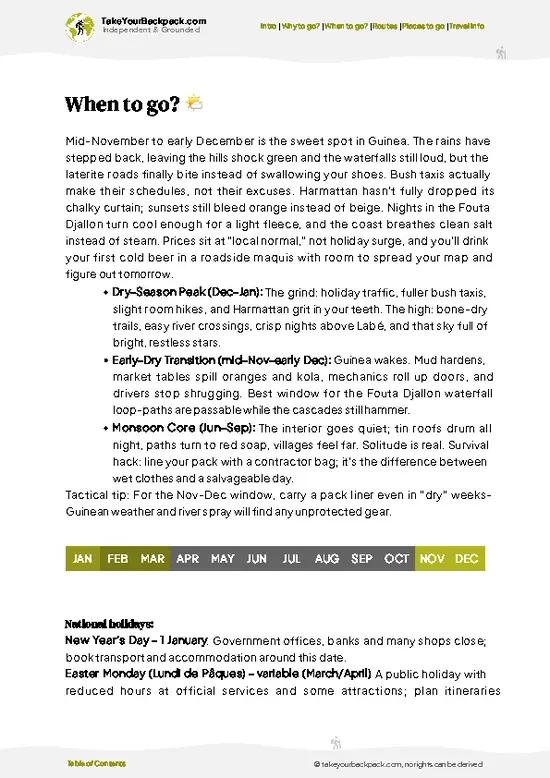
  • Topic: Weather and Temperature – The best time to visit Palais du Peuple is during the dry season, from November to February. Expect daytime temperatures around 25-30°C (77-86°F), which is far more comfortable than the sweltering heat and humidity of the rainy season (May to October) when temps can spike above 35°C (95°F) and heavy rains make outdoor exploration a slog.

  • Topic: Daylight Hours – Daylight is fairly consistent year-round, roughly 11-12 hours per day. However, visiting in the dry season means clearer skies and more reliable daylight for sightseeing without the risk of afternoon downpours cutting your day short.

  • Topic: Crowds – Palais du Peuple doesn’t suffer from tourist hordes like other global landmarks, but local events and government functions can swell crowds unpredictably.
read more 👉

  • Topic: Weather and Temperature – The best time to visit Palais du Peuple is during the dry season, from November to February. Expect daytime temperatures around 25-30°C (77-86°F), which is far more comfortable than the sweltering heat and humidity of the rainy season (May to October) when temps can spike above 35°C (95°F) and heavy rains make outdoor exploration a slog.

  • Topic: Daylight Hours – Daylight is fairly consistent year-round, roughly 11-12 hours per day. However, visiting in the dry season means clearer skies and more reliable daylight for sightseeing without the risk of afternoon downpours cutting your day short.

  • Topic: Crowds – Palais du Peuple doesn’t suffer from tourist hordes like other global landmarks, but local events and government functions can swell crowds unpredictably. The dry season sees a slight uptick in visitors, but it’s never overwhelming—just enough to feel the place’s pulse.

  • Topic: Seasonal Activities – November to February aligns with cultural festivals and public events in Conakry, offering a richer experience beyond the architecture. The rainy season shuts down many outdoor activities, so timing your visit to coincide with these months unlocks more authentic local interactions.

  • Topic: Price Fluctuations – Accommodation and transport prices tend to rise modestly during the dry season due to increased demand, but Guinea remains budget-friendly compared to other West African capitals. Visiting in the shoulder months of November or February can snag better deals without sacrificing weather quality.


Pro-tip: Aim for late November or early February to dodge the peak dry season rush and still enjoy pleasant weather, local festivities, and wallet-friendly prices.


source: climatestotravel.comJANJanuary: excellent for travelingFEBFebruary: highly recommended for travelingMARMarch: fair for travelingAPRApril: fair for travelingMAYMay: below average for travelingJUNJune: below average for travelingJULJuly: below average for travelingAUGAugust: below average for travelingSEPSeptember: below average for travelingOCTOctober: fair for travelingNOVNovember: highly recommended for travelingDECDecember: excellent for traveling
guinea-attraction-palais-du-peuple v1
© Google |

✈️ The backpacker research shortcutGuinea Travel Guide

An offline-friendly backpacking guide with optimized travel routes, ranked highlights, transport advice, and the best areas to stay.
example page 0 from our offline Travel Guide for Guinea
example page 1 from our offline Travel Guide for Guinea
example page 2 from our offline Travel Guide for Guinea
example page 3 from our offline Travel Guide for Guinea
example page 4 from our offline Travel Guide for Guinea
example page 5 from our offline Travel Guide for Guinea
example page 6 from our offline Travel Guide for Guinea
example page 7 from our offline Travel Guide for Guinea
The digital guide (282 pages) contains:
67 highlights, ranked by travel appeal
Optimized 5, 10 & 15-day travel routes
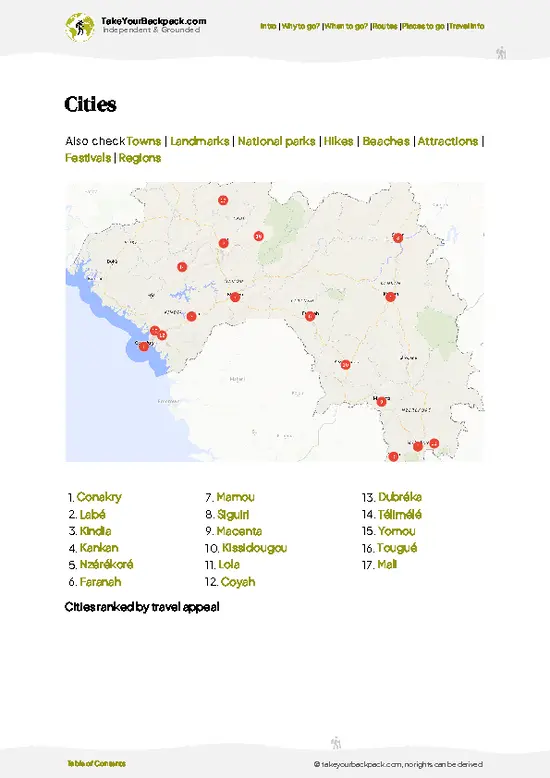
Cities, national parks, landmarks, beaches
How to get around
Offline-friendly for travel without Wi-Fi
👉 Click to see all 30+ guide features

📅 Plan smarter in minutes, not weeks
Month by month travel advice
Festivals & national holidays
Budget expectations

🗺️ Go to the right places, skip the overrated ones
Honest pros & cons of destinations
Top hikes, parks & viewpoints
Lesser-known places most travelers miss
Clear “worth it vs skip it” guidance

🛏️ Travel smoothly without rookie mistakes
Best areas to stay
Transport systems explained simply
Common scams & safety advice
SIM cards, money & practical tips

🌍 Understand the country, not just visit it
Culture & traditions
52 Essential phrases & customs
Festivals worth planning around
Traveler-friendly historical context
Insights that make places more meaningful

📱 Built for real travel conditions
Fully downloadable PDF
Works completely offline
Optimized for phone use
Useful in remote areas & buses
Everything in one place
Save weeks of stressful planning
Get instant access to your full guide. 30‑day money-back guarantee.


By proceeding you agree to our terms.
Sent to your inbox immediately after payment • 100% Secure Checkout
Best Backpacking Travel Advisor 2025 tourism awardBest Backpacking
Travel Advisor
2025
What others say about Take Your Backpack Guides:
⭐⭐⭐⭐⭐
Fantastic, amazing amount of information!
⭐⭐⭐⭐⭐
My goodness this is amazing, it's what I've been looking for hats off too you!
⭐⭐⭐⭐⭐
I think this is absolutely BRILLIANT
⭐⭐⭐⭐
Very complete and informative. It's still missing places, but I gotta to commend you
⭐⭐⭐⭐⭐
This is truly amazing, thank you, can't wait to explore it with my kids!
⭐⭐⭐⭐⭐
Awesome resource, thank you!
⭐⭐⭐⭐⭐
This is amazing! Can't wait to explore the ones I haven't seen
⭐⭐⭐⭐
I love this! Well done, great idea.
⭐⭐⭐⭐⭐
Thanks for taking the time to make this gem!
⭐⭐⭐⭐⭐
This might be the best website I've ever seen.
⭐⭐⭐⭐⭐
Congratulations, and thank you so much for your work; it's incredibly valuable.
⭐⭐⭐⭐
In all seriousness I think you did a great job pointing out the important spots
⭐⭐⭐⭐⭐
10/10 very good
⭐⭐⭐⭐⭐
As someone who's only just starting to visit regularly this is awesome, thank you.
⭐⭐⭐⭐
Thank you very much! I'm going to visit my dad, it's going to be very useful!
⭐⭐⭐⭐⭐
This is really cool! We'll be travelling for the first time and this definitely come in handy.
⭐⭐⭐⭐⭐
You are now our minister of culture, congratulations 👨‍💼
⭐⭐⭐⭐⭐
Just wanted to tell you that this is a pearl! Going to follow your recommendations.
⭐⭐⭐⭐⭐
This is so cool. I'll definitely be using the resource for my travels soon.
⭐⭐⭐⭐⭐
This is very impressive! Good work.
⭐⭐⭐⭐⭐
This is an amazing and informative site. Very well done!

🛏️ Where to stay?Where staying makes the most sense

The Palais du Peuple in Conakry is a landmark that draws attention, but let’s cut through the usual hype: this area isn’t a backpacker’s paradise in the classic sense. It’s busy, noisy, and the kind of place where you’ll feel the pulse of the city’s political and social life—sometimes a bit too close for comfort. Crowds swarm during events, and the cost of staying right next to the Palais can be surprisingly steep for what you get. Don’t expect polished hostels with Instagram-ready vibes.

That said, the real magic for backpackers lies just a bit further out, in neighborhoods like Kaloum and Quartier … read more 👉
The Palais du Peuple in Conakry is a landmark that draws attention, but let’s cut through the usual hype: this area isn’t a backpacker’s paradise in the classic sense. It’s busy, noisy, and the kind of place where you’ll feel the pulse of the city’s political and social life—sometimes a bit too close for comfort. Crowds swarm during events, and the cost of staying right next to the Palais can be surprisingly steep for what you get. Don’t expect polished hostels with Instagram-ready vibes.

That said, the real magic for backpackers lies just a bit further out, in neighborhoods like Kaloum and Quartier Industriel. These areas offer a gritty, authentic slice of Conakry life. They’re safer, more social, and where you’ll find the budget spots that attract solo travelers looking to connect with locals and other backpackers. The streets buzz with street food vendors, small markets, and bars where you can swap stories over a cold drink without breaking the bank.

Staying here means you’re close enough to the Palais to visit easily but far enough to dodge the chaos and inflated prices. It’s about embracing the city’s raw energy, not avoiding it. If you want the real Guinea experience, this is where you’ll find it—unfiltered, unpolished, and unforgettable in its own right.

👛 Costs (as of 16 April 2026)Typical daily expenses

As of the most recent estimates, the entrance fee to the Palais du Peuple in Conakry, Guinea, ranges from €5 to €10. Additional costs may include guided tours or special exhibitions, which can vary in price.

source: evendo.com
⚠️ Prices can change and everyone travels differently, so take this as a rough guide. Hope it helps you plan your adventure!

Other Guinean attractions near Palais du Peuple

Explore more nearby:


💡 Not sure where to go next?
Create a personalized itinerary for Guinea including Palais du Peuple and the places that fit your trip.

Generate my itinerary

👉 Discover all attractions

Or checkout all Guinea has to offer (think cities, towns, villages, national parks, hikes, beaches, festivals)
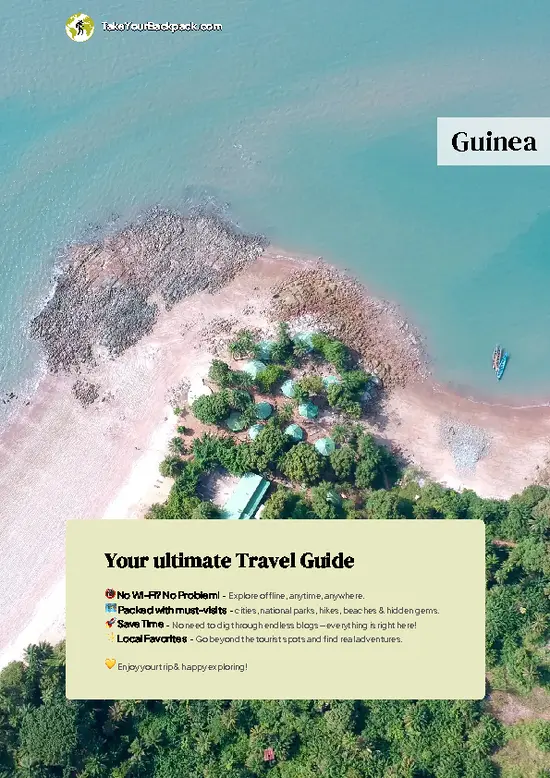
Country photo of Guinea

We 💚 feedbackSumming up the experience

The Palais du Peuple isn’t some polished postcard spot—it’s loud, a bit chaotic, and definitely not touristy. Expect crowds that feel more local rally than sightseeing calm. But here’s the kicker: the real magic is in the raw energy pulsing through the place. The architecture is bold, unapologetic, and tells a story you won’t get from any guidebook. If you’re ready to dive into Guinea’s heartbeat without the fluff, this is where you feel it. Just don’t come expecting quiet or easy photo ops.

✍️ Help improve this page!
The information on this page is based on in-depth research, insights shared by experienced travelers, and feedback from the local travel community in Guinea. While every effort is made to keep the information accurate and current, conditions can change — so if you spot anything incorrect or outdated, please get in touch.


🙋‍♂️ Give feedback

👋 Meet the founderWho’s Behind Take Your Backpack?

Johan, backpacker and founder of TakeYourBackpackHi, I’m Johan (Netherlands 🇳🇱), the creator of TakeYourBackpack. Over the past decade, I’ve backpacked through 80+ countries across six continents, gaining extensive experience with independent travel, long-term trips, and overland routes.

This site is built on a combination of firsthand travel experience and carefully curated insights from other backpackers. Many guides are based on places I’ve personally visited, while others bring together tips, observations, and practical advice shared by trusted travelers I’ve met along the way.

The goal is to provide realistic, experience-driven guidance — not generic itineraries — so you can explore destinations with better context, clearer expectations, and more confidence.

Get full Guinea guide •
Instant download • 67 highlights • Full Offline guide